

The Politics And Survival, Chronicles of Obunagha Community And Gbarain Kingdom by Anderson Samasi - HTML preview
Download the book in PDF, ePub, Kindle for a complete version.
Part One: The People of Gbarain
Kingdom
(1) Gbarain: Origin and Migration (1550 – 1700) (2) Establishment of Gbarain Settlements (1701 – 1800) (3) The Nedugo – Agbia Phenomenon
The Colonial Era (Pre-1960)
The Unification (1954)
The Return of Autonomous Communities (1993 – 1994)
The Case in Court (1994 – 2004)
(4) The People of Asaingbene
Ipadani (Now defunct community, 1701 – 1800)
The Birth of Orufa (1800 – 1900)
The Creation of Asaingbene Settlement (1901 – 1950) (5) Creation of Communities in Gbarain Kingdom (1994 – 2025) (6) Introduction of Christianity in Gbarain Kingdom (1908 –
1990)
(7) Development of Education in Gbarain Kingdom (1911 – 2024) (8) Kingship in Gbarain Kingdom
The Era of Gbarain Zibai Priests
Late Chief Michael Ambi Kwokwo Era (1961 – 2001)
King Funpere Gabriel Akah Era (2004 – ) pg. 1
(9) Gbarain Kingdom Inter-Communal Road Projects
The First Inter-Communal Road Project (1950s) The Igbogene-Polaku Road
Contribution of Engr. Chief D. H. S. Souza Okpofabiri (1982)
Gbarain Kingdom’s Self-Help Initiative (1984)
Contribution of Prof. Kimse Amaebi Biya Okoko (1988)
Chief Whyte Suwari led Agitation against SPDC (1992)
The Contribution of Mr. Tonye Baraseibai
Comrade Ebiye Okoko Led Agitation against SPDC (2005) (10) Gbarain Kingdom Water Supply Projects
Phase 1: The Hand Pump Era (Pre – 1960)
Phase 2: Chief Alfred Papareye Diete-Spiff Government (1973 Water Project)
Phase 3: Shell Petroleum Development Company of Nigeria Limited (SPDC) Water Project (2007)
Phase 4: Gbarain/Ekpetiama Community Development Board (G/E CDB) Water Supply Project (2011)
Phase
5:
Gbarain/Ekpetiama
Host
Community
Development Trust (HCDT) Water Project (2025/2026) (11) Electrical Power Supply in Gbarain Kingdom
The Self-Help Era (1980 – 1995)
Nigeria Fourth Republic (1999 –)
Niger Delta Power Holding Company Limited (NDPHC) Power Supply to Gbarain Kingdom (2020)
(12) Niger Delta University Teaching Hospital (NDUTH) pg. 2
(13) The Ethnocide of Taylor Creek Ownership (14) Gbarain Youth Federation
Tribute: Chief Whyte Suwari
References
pg. 3
Gbarain: Origin and Migration (1550 – 1700) The progenitor of Gbarain Kingdom known as ‘Gbarain-owei’ was the eldest son from one of the wives of Oporoza, a descendant of Ijo, the founder of the Ijaw ethnic nationality majorly inhabitants of the Niger Delta of Nigeria. Other male children from the mother of Gbarain-owei are Kumbo-owei, and Kabo-owei.
Oporoza, his wife, and his sons and other children were living along the borders of the Benin Kingdom, an area under the conquest of Benin Kingdom at the time. When the then King of Benin Kingdom died, succession conflict became inevitable among the children of the King. The late Benin king was having two sons but the first son had uncommon growths such as having more than five fingers on each hand. Hence, the kingmakers of the kingdom had reservations on making Him the next king of Benin due to his uncommon body features. And they concluded on making the second son the King of Benin Kingdom. The action of the king makers not considering the first son of the late king prompted the first son to perpetuate violence across the kingdom of Benin.
The violent atmosphere created by the late king’s first son led to the migration of some of its residents including Oporaza, his wives and children. Oporoza and his family migrated and settled pg. 4
in a place called ‘ Avein’ (Patani Local Government Areas of Delta State, Nigeria). During their stay at Avein, Oporoza died resulting from invaders attack. The three sons of Oporoza from one of his wives survived; Gbarain-owei, Kumbo-owei, Kabo-owei, and their children and wives. Hence, Kabo-owei succeeded their father, Oporoza as the head of the family and he made things difficult for his brothers1.
As their residency continued at Avein, Gbarain-owei and his children started experiencing the disappearances of their female siblings whenever they went out for hunting, fishing, and other purposes during the day. Owing to that, they migrated through creeks and rivers using canoes. They arrived and settled at a place (modernly, opposite Kaiama Town in Kolokuma-Opokuma Local Government Area of Bayelsa State), an uninhabited land, at then the modern Kaiama Town was not in existence. During their stay, they cultivated the land and majorly Bitter-Cola (Gbarain people call it Dabou), these crops were so fruitful and of great use to them so they named the settlement ‘Dabou-Igbangi’ (evidence of their settlement opposite modern Kaiama Town remains).
They remained in Dabou-Igbangi and continued their livelihood in fishing, hunting, and canoe caving among other activities.
1 See, National Archives Ibadan (NAI), File No. 26805, Vol. 2, CSO 26, J. C. W.
Rutherford, ‘Assessment Report on the Kabowe-Kumbowe sub-clans of the Okita Clan of the Western Ijo-sub-tribe, Warri Province, (1929), p.3.
pg. 5
During one of Gbarain-owei’s hunting expeditions, he discovered a flowing creek (modernly known as Taylor Creek or Gbarain-toru). Being marveled by the creek flow, he established a landmark (most likely a symbolic plant) and went back to Dabo-Igbangi (opposite modern Kaiama Town) and journeyed (the discovery journey was most likely during resceeding period of flooding season) using a canoe to the landmark they earlier established. Then continued journey to the intersection, where the water flow was diverted (the intersection point where Taylor Creek meets the River Nun). Then he journeyed back to Dabo-Igbangi. On his discovery journey, he experienced abundance of fishes in the creek, and fertility of the land (modernly the Taylor Creek area). On the experience of abundance of fishes, and fertile land, Gbarain-owei returned and took his family and established a settled along the creek. He named the area ‘ Amakiri-ebi-ama’
(modernly within the lands of Okotiama Community, still with the name. Agbia Community modernly adopted the name as their official communal slogan Amakiri-ebi-ama).
As Gbarain-owei and his children keep exploring the Amakiri-ebi-ama, they discovered other lakes within the area that were of use to their fishing activities, due to the abundance of fishes. The sons of Gbarain-owei are Okotie, Ogbolo, Egbe, Agbia, Nedugo, Ibiyai, and Ogoro. The seven sons migrated differently along the creek (modernly the Gbarain Kingdom/Taylor Creek area) to have pg. 6
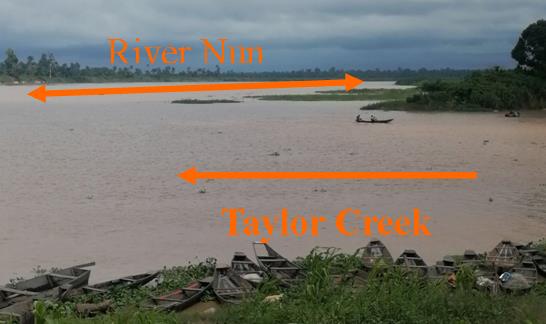
control of different lakes and lands within the area, and they established settlements.
The intersection where Taylor Creek meets the River Nun
(Photo taken on July 13, 2026 from Polaku Community)
Some oral historical accounts claim Gbarain-owei, Kumbo-owei, and Kabo-owei are the only sons of Oporoza but modernly, outside the three kingdoms established by the descendants of the three sons, Oporoza remains a town in modern Delta State. This points that, there must have been other children of Oporoza that remained in ‘Avein’, modernly in Delta State, Nigeria, that established the modern town of Oporoza, and other Ijaw kingdoms. Therefore, Oporoza must have had more than three sons or children. And they also claim Gbarain-owei did not pg. 7
migrate with his children to the Taylor Creek area (Gbairain Kingdom) but modern realities do not point to that. For instance, the Odiodi Lake (modernly located within the lands of Okotiama) was a common fishing point for all the descendants of Gbarain-owei. A fishing festival once existed in Gbarain kingdom owing to the Odiodi Lake. The common fishing at Odiodi Lake amidst several other Lakes evidences a common heritage for all the descendants of Gbarain-owei. Also, the then existence of the staff of Gbarain-owei which was the symbol of the Gbarain Zibai deity points to the one time presence of Gbarain-owei in the modern land of Gbarain Kingdom. And a priest of Gbarain Zibai deity was automatically the leader of the kingdom. Therefore, Gbarain-owei must have migrated to this modern settlement of Gbarain Kingdom with his children.
Several oral accounts and modern literatures claim Agbia, and Nedugo were not direct sons of Gbarain-owei, rather children of Ogboin. And they further claim Nedugo-Agbia as a community that metamorphosed from a settlement established by Ogboin.
But colonial government era literatures2 showed Agbia and Nedugo are distinct communities, established differently, even in communal administrations.3 Nedugo-Agbia (now defunct) never 2 Owonaro, S. K. (1949). The History of Ijo and Her Neighbouring Tribes in Nigeria. Lagos: Niger Printing Works 3 Please see The Nedugo – Agbia Phenomenon in page 18
pg. 8
reflected as a community.4 This evidenced that Agbia and Nedugo are sons of Gbarain-owei that established their settlements and owned fishing lakes and lands for farming activities as other sons.
Also, the claimants of Nedugo-Agbia as a community (now defunct) established by Ogboin are yet to express why a community name is a compound word of ‘Nedugo’ and ‘Agbia’.
The name Nedugo-Agbia showed it was a union and the members of the union maintained their identity. Therefore, Agbia and Nedugo are among the sons of Gbarain-owei that established the modern Gbarain Kingdom.
And the modern legal disputes between Okotiama Community and Kaiama Town over lands evidence the earlier settlement of the children of Gbarain-owei opposite Kaiama town, known as Dabo-Igbangi. Okotiama community possesses landed properties around Kaiama town thereby having boundaries with them.
4 Federal Ministry of Information and Culture. (1929). Brass Division Assessment Report . Enugu: National Archives pg. 9
Genealogy of Gbarain-owei
Ijo
Gbaraun
Oporoza
Okita
Gbarain-owei
Okita died when his children were toddlers thus, Oporaza his father took custody of his family.
pg. 10
Establishment of Gbarain Settlements
(1701 – 1800)
Okotiama
The children of Gbarain-owei were all settled at the Amakiri-ebi-ama (modernly within the area of Okotiama). When the children of Gbrain-owei migrated to other parts of along the Taylor Creek5, the lake and lands around their first settlement was retained by Okotie, and it became his area of influence and dominion. And his descendants established the modern communities of Okotiama and Ayama in Gbarain Kingdom.
Some oral accounts argue that Okotie is the first son of Gbarain-owei but some historical and modern accounts oppose the argument. Some argue that, if Okotie was the first son, why was the descendants of Egbe (Koroama Community), the persons that were declaring the beginning of the Odiodi6 Lake fishing festival open? Why was a female deity (Gbarain Ziba) situated in Okotiama, and Koroama had a male and a war deity (Opuada)?
5 Please see The Ethonocide Of Taylor Creek Ownership in page 110
6 Odiodi Lake fishing festival gatherings contributed to the creation of the modern Gbarain Uzu festival.
pg. 11
Ogboloma
Ogboloma community was first a settlement of Ogbolo and his family where they carried out fishing, hunting, and farming activities. The lakes and lands around the modern Ogboloma community was his and his family area of domination. With the passage of time, His descendants established the modern communities of Ogboloma and Ayakiri-ama7.
Koroama
One of the sons of Gbarain-owei, Egbe migrated to an area at the eastern end (close to modern Tunuama community) of modern Koroama community, where he and his family carried out their fishing and farming activities at the lakes and lands. Most of Egbe’s descendants migrated out of the settlement he established, and some descendants returned decades later. When some of Egbe’s descendants returned, they established the modern Gbarain kingdom community of Koroama at their current location.
The modern community cemetery of Koroama, is at the boundary with Tunuama Community by road and each family in Koroama have their space. This point to the first settlement established by Egbe, around there. And the modern indigenes of Koroama are 7 See Creation of Communities In Gbarain Kingdom (1994 - 2025) in page 31
pg. 12
mostly acclaimed migrants with ancestral links to Koroama, this evidence the account of the return of Egbe’s descendants, and establishment of Koroama (meaning a settled community) at its modern location. For instance, Egbe’s descendants remain modernly at Opokuman Kingdom in Gbarain-ama Community.
Also, some oral historical accounts claim Egbe and Ibiyai, are of the same mother which is why they settled in one location earlier.
Nedugo and Agbia
The descendants of Nedugo, and Agbia later made two settlements (modernly the areas of Agbia and Nedugo Communities of Gbarain kingdom). The two settlements developed into communities having their various autonomous lands for farming and fishing lakes. Owing to events of the 20th century, the two communities created the now defunct community of Nedugo-Agbia. But returned to their autonomous status of two communities (Nedugo and Agbia), through a court decision in the 21 century.8
Some oral historical accounts claim modern Nedugo and Agbia communities are of the same maternal progenitor owing to their dialect. Also, the modern proximity of the two communities could 8 Please see The Nedugo – Agbia Phenomenon in page 18
pg. 13
be considered as evidence of their common maternal ancestry and historical root.
Polaku
The descendants of Ibiyai established the modern Gbarain kingdom community of Polaku. Ibiyai and his family first settled very close Egbe’s settlement (modernly around the boundary of Koroama with Tunuama community). The settlement was then known as Ibiyai-ama. They were having their own fishing lakes and lands for farming activities. As time passed, the descendants of Ibiyai and Egbe (Modern Koroama) had a dispute over land during a palm oil processing gathering, and a descendant of Egbe was killed by a descendant of Ibiyai. And an abomination was done on the land (a plantain sucker was planted reversed) by the descendants of Egbe. And the implications of the abomination was mass death on the descendants of Ibiyai hence, they migrated to this modern location. Prior to the migration of Ibiyai descendant to the modern location, a man called Kpoun9 was already having a settlement established with his family. Hence, the descendants of Ibiyai settled alongside Kpoun and established the modern Polaku community.
9 A settler from Joinkrama (also known as JK4 Communiy modernly in Ahoada West Local Government Area of Rivers State) pg. 14
A descendant of Obunagha now in Tunuama community was having a shrine for traditional worship at the location of modern Polaku community. And there was an Ironwood tree (known as Aku in Gbarain) close to the shrine. The roots of the tree formed like a chair that worshipers sat and dialogued. And the tree had a big hole on its trunk. And that hole became a description of the worship site ‘ the Ironwook with the hole’, (in Gbarain dialect, Opolo bi emi Aku). The description of the worship site became popular with the name Opoleaku10 and later became ‘ Polaku’.
With the passage of time, the worship site became popular and people started referring to the worship site as Polaku.
Modern reality evidence such a traditional worship site owned by a descendant of Obunagha existed within modern Polaku community. Tunuama community, an autonomous modern community from Obunagha owns lands around modern Polaku community. Oral historical accounts claim, the great-grand parents of Tunuama community were the owners of the traditional worship site that once existed within modern Polaku.
Also, indigenes of modern Polaku community owning lands around Koroama community (modernly around the boundary of 10 Owonaro, S. K. (1949). The History of Ijo and Her Neighbouring Tribes in Nigeria. Lagos: Niger Printing Works pg. 15
Koroama when entering from Obunagha Community) points to the descendants of Ibiyai settlement around there.
Okolobiri and Obunagha
Ogoro and his family also migrated and settled in the modern location of Okolobiri community, having his fishing lakes and lands for farming. The progenitor of Obunagha community (Obunagha) was a descendant of Ogoro. As tIme passed, one descendant of Ogoro called Opukeme named a section of Okolobiri, Opuama (modernly, the section of Okolobiri known as Agala-ama). Also, the descendants of Obunagha, a son of Ogoro resettled with his family and children owing fishing lakes and lands for farming not far from his father’s family and siblings. The descendants of Obunagha established the modern communities of Obunagha and Tunuama in Gbarain kingdom. And the other descendants of Ogoro led by Okolo remained and established the modern communities of Okolobiri and Kumbo-ama in Gbarain kingdom11.
The settlement of Obunagha was first known as Beri-Obunagha (meaning a stubborn child) before Obunagha was established as a community.
11 Please see Creation of Communities In Gbarain Kingdom (1994 - 2025) in page 31
pg. 16
The dialect and proximity of modern Obunagha and Okolobiri communities are evidence that, they are of a common ancestral and historical root different from other modern communities in Gbarain kingdom. Also, the geographical and population size of Obunagha community prior to the rapid socio-economic development resulting from petroleum explorations shows its resettlement from his father, Ogoro’s household.
pg. 17
The Nedugo – Agbia Phenomenon
The Colonial Era: The communities of Nedugo and Agbia resulted from settlements established by the descendants of Gbarain-owei12. The two settlements transformed into autonomous communities, though they are of the same ancestry.
These communities existed as neighbors and brothers with independent communal administrations until the introduction of Christianity and European education in Gbarain Kingdom. Prior to the introduction of the Anglican brand of Christianity in Gbarain Kingdom by the Church Mission Society (C. M. S.), Nedugo and Agbia13 paid their taxes as autonomous communities to the colonial administration in Nigeria. The autonomy of the two communities is evident even during Nigeria’s first republic (1963 – 1966), these communities existed as autonomous communities in the Eastern Region of Nigeria.14
The Unification (1954): When the Church Mission Society established an Anglican Christian worship center at Nedugo Community in 1911, Agbia indigenes worshipped there also.
After decades of joint worship in Nedugo at a temporal worship 12 The progenitor of Gbarain Kingdom
13 Federal Ministry of Information and Culture. (1929). Brass Division Assessment Report . Enugu: National Archives 14 Appah, E. V. (1969). Administrative Divisions of Rivers State. Port Harcourt pg. 18
structure, a permanent place of worship became a necessity.
Therefore, worshippers from Agbia proposed a permanent site within their domain, but the Nedugo worshipers insisted on maintaining their communal identity hence, the two communities built separate permanent places of worship in 1952.15 With the facilitation of Christian missionaries from C. M. S., western education was introduced leading to the establishment of learning centers which transformed to schools.16
Since Agbia and Nedugo communities were worshipping at the same center, a single learning center was established by the missionaries, which was later transformed to a Primary School.
On establishment of the Primary School, the naming of the school was up for debate as the two communities objected to a name in each other communities; the indigenes from Agbia objected to naming the school after Nedugo and vice versa. Therefore, in 1954, the Primary School was accepted to be established at an equidistant location between the two communities with the two names on the official name of the school; Community Primary School, Nedugo – Agbia. The disagreement over the naming and establishment of the Primary School in 1954 resulted from the 15 Obuoforibo, B. A. (1998). History of Christianity in Bayelsa. Yenagoa: Archdeaconry House
16 Please see Development of Education in Gbarain Kingdom in page 44
pg. 19
disagreements over the building of a permanent place of worship in 1952.
Henceforth, the name Nedugo – Agbia gradually became an accepted description of the two communities as one. And it led to other joint assets and initiatives. For instance, when communities in Gbarain Kingdom were attending the Seigbaein Festival at Patani (modernly in Delta State, Nigeria), each community do go with a traditional war boat ( Omu Aru). And a specific number of men were required to ferry the boat to the festival. Due to incomplete number of men to ferry a war boat to the festival in both communities, Agbia and Nedugo jointly ferried a single war boat to the festival. Initiatives such as this further strengthened the Nedugo – Agbia nomenclature. Hence, the two communities established a joint communal administration following a traditional court judgment in their favor over their joint ferry to the Seigbaein Festival. In maintaining the status quo of the judgment, the Nedugo–Agbia union was established, creating a community. Thus, the now defunct Nedugo – Agbia Community was created out of events.
The Return to Autonomous Communities (1993 – 1994): As the two communities continued their joint administration, Nedugo indigenes observed most of the political offices in the Nedugo –
Agbia Community was being occupied by indigenes from Agbia pg. 20
extraction. And communal elections mostly favored the Agbia indigenes due to their population being slightly larger. Therefore, in 1993, the indigenes of Nedugo started agitation for a split in the Nedugo – Agbia administration formula and a return to the autonomous two communities of Nedugo and Agbia. The Nedugo indigenes publicly expressed their dissatisfaction in the continuation of the Nedugo – Agbia Community during the 1994
edition of the finale of Gbarain Uzu17 festival which was hosted by Obunagha Community on July 23, 1994; indigenes of Nedugo refused joint sitting space with Agbia indigenes. Prior to the Gbarain Uzu finale, on June 19, 1994, indigenes of Nedugo led by late Chief Nathan O. Awara sent a request of autonomy to late Chief M. S. Z. Akanza, the Amananaowei of now defunct Nedugo –
Agbia Community, but it was not honored.
Amidst several expressions and request for an autonomous community, the leaders of now defunct Nedugo – Agbia Community refused an autonomous Nedugo Community hence, the Nedugo indigenes sent a petition to the then government of Rivers State led by Lt. Colonel Dauda Musa Komo. The State government then directed the then Chairman of Yenagoa Local Government Area, Major Chris N. Bipelegha (Rtd.). The Chairman 17 Gbarain Uzu is an annual festival in Gbarain Kingdom. It is also known as New Yam Festival. And every year, the finale is hosted by a different community within the kingdom
pg. 21
then directed the Ibenanaowei of Gbarain Clan, late Chief Michael A. Kwokwo to have elaborate discussions and report back to him with a decision. The Ibenanaowei of Gbarain Clan invited all relevant stakeholders and held discussions for several days and arrived at a decision on October 15, 1994 to allow Nedugo exist as an autonomous community within Gbarain Kingdom from December 22, 199418. Following this decision by the kingdoms leadership, the leaders and supporters of a continued existence of Nedugo – Agbia Community summoned Nedugo and the kingdom’s leadership in court.
The Case in Court (1994 – 2004): On challenging the decision of the Gbarain Kingdom’s leadership in court by leaders and supporters of continued existence of Nedugo – Agbia Community, was a challenge to the indigenes of Nedugo financially. Thus, Sir, Mathias O. Otuogha of Nedugo volunteered to be responsible for all financial implications of the case. The case went on for ten years and a judgement was given on July 29, 2004, affirming the decision made on October 15, 1994 by the Ibenanaowei of Gbarain Clan, late Chief Michael A. Kwokwo, declaring Nedugo as an autonomous community in Gbarain Kingdom.
18 Please see Appendix Two in page 205
pg. 22
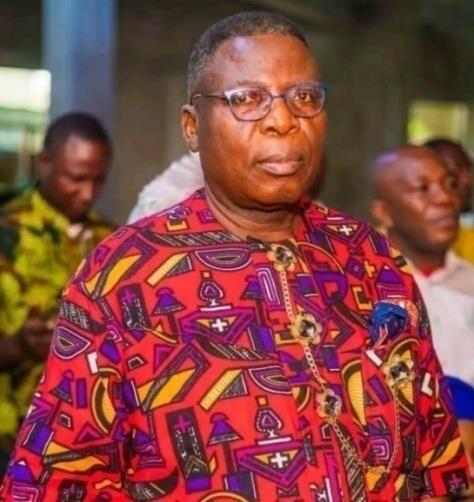
Sir Mathias Odumu Otuogha
Sponsor of the litigation that affirmed the autonomy of Nedugo Community.
Some groups were created within Nedugo – Agbia that supported the late Chief M. S. Z. Akanza administration of the community and insisted on not granting autonomy to Nedugo. Among such groups were Ogboin Committee of Friends, and Unity Government of Nedugo – Agbia. On declaring the autonomy of Nedugo Community in court, the Ibenanaowei of Gbarain Clan also declared the Unity Government of Nedugo – Agbia an illegal organization in Gbarain Kingdom.
All exhibits that were required by Nedugo Community in court were made available by Sir Mathias Odumu Otuogha, including pg. 23
the 1929 Brass Division Assessment Report, by Federal Ministry of Information and Culture from the National Archives.
pg. 24
The People of Asaingbene
Ipadani (Now defunct community, 1701 – 1800)
When the sons of Gbarain-owei discovered the flowing river of fishes and fertile land (modernly Gbarain kingdom), and established their first settlement (modernly within Okotiama Community), they later discovered an existing settlement not far from their established place of residence. The already existing settlement was known as Ipadani, a settlement of people most likely not ancestral to Izon. The two settlements existed as neighbors for several decades and there has been no account of conflict between the descendants of Gbarain-owei and the people of Ipadani. This is most likely because Ipadani Community was located across the creek discovered by Gbarain-owei and his children. No land border existed between them because it was a natural border of a flowing creek. The two settlements of different ethnic nationalities existed and grew at their own pace for several decades with no recorded conflict between them until communities were established by the descendants of Gbarain-owei along the flowing creek (Taylor Creek). And Ipadani became a very large farming community.
There was a time when a young woman was reported missing in a community (modernly within Kolokuma-Opokuma Local pg. 25
Government Area of Bayelsa State) ancestral to Izon. The missing woman went to farm and never returned home. And a hunter from Ipadani discovered her in the forest and took her to his community. The missing woman relatives and community fellows started a search mission for their sister in the forest but never found her. A man from her community on a different purpose later found her at Ipadani, and he approached the man who took her to Ipadani, but the Ipadani indigene refused and claimed custody of her permanently. The community man of the lost woman, hostage in Ipadani, returned and informed his community brothers of his discovery and failed efforts to bring back their sister home. On having the information of the discovery of their missing sister, they prepared for the invasion of Ipadani.
The Kolokuma-Opokuma people invaded Ipadani on a day the community was having festive activities. It was a surprise attack on Ipadani, hence, indigenes of the community fled with their families and properties they could get hold off. Ipadani was completely destroyed that day with no resident left. Owing to the invasion, some residents and indigenes of Ipadani settled among communities along the Taylor Creek (modernly Gbarain Kingdom), and became active members of the communities. They joined the communities and inter-married and lived amongst them permanently abandoning Ipadani as their community.
pg. 26
There is sufficient evidence (in oral and literature19) that the invasion of Ipadani was after the establishment of communities around the Taylor Creek (now Gbarain Kingdom) by Gbarain-owei and his children.
The Birth of Orufa (1800 – 1900)
The birth of Orufa resulted from a strong friendship between a descendant of Olobiriowei of Umgbouwaribo family in Obunagha Community, and Ngoku 20 of Okuruwari family in Okolobiri Community. In pursuit of an enduring friendship, the two men resolved to take wives from each other families; Ngoku will marry his friend’s sister from Umgbouwaribo family and vice versa. The agreement was honored by the two friends and they got married as agreed. After few years, Ngoku of Okolobiri and his wife gave birth to Orufa. While on the other hand, the Umgbouwaribo man was yet to have a child with the sister of Ngoku.
After further years, the Umgbouwaribo man objected to the agreement with his friend from Okuruwari family in Okolobiri and requested for a pull out with his sister. The two friends came 19 Tuaweri, J. O. (2008). A Brief History of Gbarain Kingdom. Yenagoa: John Ark John (Nigeria) Limited
20 High Court of Bayelsa State of Nigeria. (2024). Case Number: BYHC/YHC/CV/294/2023. Yenagoa: High Court of Bayelsa State of Nigeria.
pg. 27
to an agreement and parted ways. The Umgbouwaribo man took his sister and the son Orufa back to Obunagha Community and returned the sister of Ngoku of Okuruwari family in Okolobiri Community. Orufa was then part of his mother’s Umgbouwaribo family in Obunagha Community and lived his life there.
Orufa grew and established himself as man, and got married to woman known as Ekpeke, daughter of Doubara, a refugee from Ipadani. As earlier stated, when Ipadani Community was invaded by the Kolokuma-Opokuma persons, some indigenes of Ipadani Community fled and lived among communities in Gbarain Kingdom; Ipadani indigenes joined Gbarain communities, inter-married and lived amongst the people of Gbarain Kingdom, permanently abandoning Ipadani as their community. The wife of Orufa ancestors were indigenes of Ipadani, but after years of living among the Gbarain people, they adopted the Gbarain dialect, culture, and names as theirs.
Note: The efforts made by the people of Okuruwari Compound of Okolobiri to claim the corpse of late Apostle French Ikpilifu in 2023, evidences the Orufa lineage ancestry to Okolobiri.
pg. 28
Creation of Asaingbene Settlement (1901 – 1950)
Orufa and his wife, Ekpeke gave birth to Asain, Ikplifu, Izi, Dubatolo, and Geku. On knowledge of the onetime existence of Ipadani Community, and their mother an ancestral daughter, the children of Orufa explored the lands of the defunct Ipadani Community and started a settlement. The settlement was famous as a fishing camp owned by Asain (the first son of Orufa) before being recognized with the name ‘ Asaingbene’. A name coined from Asain and camp (Gbarain people call it Gbene), which means the ‘camp of Asain’.
The Asaingbene settlement was not recognized as a community but more of an extension of the indigenes of Obunagha Community until sometime in 1996. The settlement was regarded as part of Obunagha because most of the descendants of Orufa were considered indigenes of Umgbouwaribo family in Obunagha Community and they participated in Obunagha Community completely. The request to be recognized as an autonomous community in 1996 was led by late Chief Randolph Ikpilifu, and late Chief Parker Orufa. They were the first and second Paramount Rulers (Amananaowei) of Asaingbene Community respectively.
pg. 29
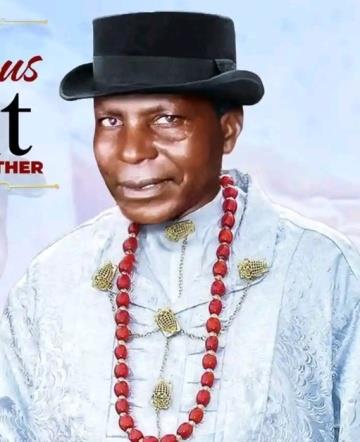
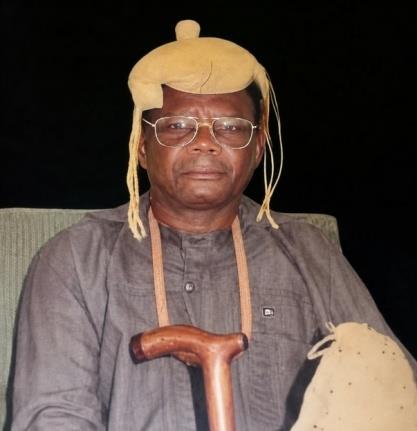
Chief Randolph Ikpilifu Chief Parker Orufa
pg. 30
Creation of Communities in Gbarain Kingdom (1994 – 2025)
Nedugo
Some indigenes of the now defunct Nedugo-Agbia Community sometime in 1993 led by late Chief Nathan O. Awara requested for the creation of an autonomous Nedugo Community owing to perceived political intimidation from Agbia section of the Community. The then leadership of Gbarain Kingdom led by His Royal Highness late Chief Michael A. Kwokwo was directed by the Rivers State government to have an elaborate discussion and make a decision on it. After discussions with all relevant stakeholders, the kingdom leadership granted their request and announced the creation of Nedugo Community from Nedugo-Agbia Community beginning from December 22, 1994. The leadership of the then Nedugo-Agbia Community challenged the kingdom’s decision in court. The court affirmed the decision of the kingdom’s leadership which resulted to the formal establishment of Nedugo Community on July 29, 2004.21
Asaingbene
The creation of Asaingbene Community was on the backdrop of descendants of Orufa’s desire to have an autonomous community 21 Please see The Nedugo – Agbia Phenomenon in page 18
pg. 31
established in their ancestral mother’s land which already had an existing settlement. They formally requested autonomy from the leadership of Obunagha Community, and their request was granted sometime in 1996. The request for autonomy was led by late Mr. Parker Orufa, and late Mr. Randolph Ikpilifu.
Ayama
The progenitor of modern Ayama Community is a descendant of Okotie. Some of the descendants of Okotie migrated to a location around the Keame Creek between Ogboloama and Nedugo modernly, and established a settlement there. With the passage of time over fear of armed invasion, they relocated back to their modern location close to other descendants of Okotie. When Okotiama settlement developed to a community, they remained as an independent family and compound called Olomani within the community until 2000. Members of Olomani family of Okotiama Community desired an autonomous community and the Ibenanaowei of Gbarain Clan, late Chief Michael A. Kwokwo approved and declared their autonomy sometime in 2000.
Note: Ayama Community ownership of lands between Ogboloma and Nedugo evidences their earlier settlement there.
pg. 32
Kumbo-ama
Owing to leadership, political, and economic considerations, three families in Okolobiri Community announced the creation of Kumbo-ama community from Okolobiri, sometime in June, 2014.
The leadership of Okolobiri challenged the three families in court and their actions were affirmed resulting to the formal creation of Kumbo-ama community sometime in 2017.
Tunuama
Tunuama Compound of Obunagha Community led by Chief Imomotimi Benson announced their autonomy as a community on May 19, 2017. Their motivations were economic owing to petroleum extraction activities in their domain. Their actions were challenged by the leadership of Obunagha Community in court, and the court affirmed the announcement of autonomy by Tunuama family, and State government’s recognition of Tunuama as a community was granted sometime in February, 2019.
Ayakiri-ama
A section of Ogboloma Community announced their autonomy as a community sometime in 2020, with the name Ayakiri-ama Community. Their reasons were socio-political and economical owing to petroleum exploitation. Their actions were challenged in court by the leadership of Ogboloma Community but the court pg. 33
affirmed the announcement of Ayakiri-ama Community on December 21, 2025.
Communities in Modern Gbarain Kingdom
Gbarain originally had seven villages, but consequentupon the creation of new autonomouse communities, there are Thirteen (13) communities in Gbarain kingdom as of 2026 and they include,
1. Polaku, 2. Koroama, 3. Tunuama, 4. Obunagha, 5. Okolobiri, 6.
Kumbo-ama, 7. Okotiama, 8. Ayama, 9. Ogboloma, 10. Ayakiri-ama, 11. Nedugo, 12. Agbia, and13. Asaingbene.
pg. 34
Introduction of Christianity in Gbarain Kingdom (1908 – 1990)
Christianity was introduced in Gbarain Kingdom through trading interests; it was through Gbarain businessmen trips to other kingdoms and settlements for business relationships. In 1908, Mr. Esinebu Gbarainbibi of Nedugo Community was at Joinkarama in Engene Kingdom (modernly in Rivers State Nigeria) with local gin for exchange of palm oil and kernel, jewels, clothes, gun powder etc. The common method of trade then was trade by barter. During his stay at Joinkarama, his attended a church worship at a Baptist Church for the first time and he enjoy it. Hence, each time he went in for trade by barter business, he did attend the worship services there. Therefore, in one of his return to Nedugo Community he practiced what he saw, learned and experienced in the Baptist Church at Joinkarama (in Rivers State) with his family and relatives. As they continue their Christian worship, other members of the community joined them, also from Agbia. And a fellowship center was established with Mr.
Esinebu Gbarainbibi as the leader.
As he practiced what he learned with his immediate family, siblings, and other members of the community using the Baptish Church methodologies, the leadership of the Baptish Church pg. 35
neither visited nor sent representations to Nedugo Community for follow up on their new Christian disciples. This is most likely owing to the leadership not being informed of the activities of Mr.
Esinebu Gbarainbibi in practice of Christianity at a community level using the Baptist Church methodologies.
Sometime in early 1911, the Church Missionary Society (C.M.S.) arrived at Obunagha Community from Kaiama town (modernly in Kolokuma-Opokuma Local Government Area, Bayelsa State), and it was because King Amaran Odo22 of Kaiama daughter, Ebisingha was married to Mr. Yeseibo of Obunagha Community. When King Amaran Odo and his son (Fetepigi Amaran)23 received Rev.
Craven Wilson, a C.M.S. missionary at Kaiama Town in 1892, they contributed to the expansion of Christianity by introducing children and siblings to the Christian faith. Hence, the arrival of Church Missionary Society (C.M.S.) at Obunagha in 1911 was facilitated by King Amaran Odo in view of introducing his daughter, Ebisingha to Christianity. Prior to the visit facilitated by King Amaran Odo of Kaiama, Mr. Dadiowei Fekoweimo of Obunagha earlier encountered the Baptish Church worship at at Joinkarama in Engene Kingdom owing to business interests. The 22 Tuaweri, J. O. (2008). A Brief History of Gbarain Kingdom. Yenagoa: John Ark John (Nigeria) Limited
23 Obuoforibo, B. A. (1998). History of Christianity in Bayelsa. Yenagoa: Archdeaconry House.
pg. 36
Church Missionaries Society visit to Obunagha was led by Rev.
Proctor, Rev. Reeks, and Rev. Garrard.
On arrival at Obunagha Community the Missionaries faced some resistance from indigenes of Obunagha that suspected they were invaders. The Missionary team included medical practitioners also. Hence, the sick in the community were administered medically, which was not known to the community at then. The rapid healing received by the son of Mr. Fekoweimo Kemebigha (Mr. Dadiowei) who welcomed the Missionaries, marveled others in the community hence, creating interest in Christianity among other indigenes and neighboring communities. Obunagha Community became the center of C.M.S. activities where Christian messages and medical outreaches were administered to other communities in Gbarain Kingdom. Indigenes of other communities in Gbarain Kingdom that witnessed and heard of the C.M.S. activities in Obunagha joined the Christian fellowship.
Two indigenes (Mr. Ayokumiemo Sei and Mr. Zikpeti Agbadagiri) of Polaku, and Manunanagha Bekeowei of Okotiama witnessed the C.M.S. activities in Obunagha and they also joined the Christian fellowship.
When Mr. Esinebu Gbarainbibi of Nedugo Community heard of the C.M.S. activities at Obunagha, he mobilized his family and other members of the Christian fellowship already established pg. 37
and joined the Obunagha fellowship. The first group of persons from Nedugo that followed Mr. Esinebu Gbarainbibi to Obunagha for worship are, Mr. Poppoi Jacob, Mr. Dubaselengi Zibigha, Mr.
Iwolo Enyenghen, Mr. Apinaowei Ineinsuogha, Mr. Obiyinghin Abugo, and Mr. Tibighoweri Akah. And those from Agbia24 are, Mr. Bokolo, Mr. Tiongoli Igbaragbara, Mr. Diribeni Finabagh, Mr.
Nathan Anisa, Mr. Anikori Igbaragbara, and Mr. Ikeniowei Benibolorogha. Indigenes across Gbarain kingdom including from Okolobiri, Koroama, Okotiama, and Ogboloma joined the Obunagha Christian fellowship in 1911.
On April 11, 1911 when the Anglican Church was officially established by the C.M.S. Missionaries in Obunagha, some members of the new church gave up their traditional means of worship through carved images and shrines, and they were all burnt. Some of the burnt carved images and shrines were, 1. Leitu-Oru owned by Ebisingha
2. Onum owned by Ituosiboere
3. Bebekiripali owned by Ikolosi
4. Agegha owned by Tungbo and
5. Osuogbosu owned by Ekperikuro
24 Obuoforibo, B. A. (1998). History of Christianity in Bayelsa. Yenagoa: Archdeaconry House.
pg. 38
When some indigenes who were not convinced by the C.M.S.
Missionaries in Obunagha, returned from their daily farming and fishing activities and heard the new development, they were surprised by the actions by some of their brothers and sisters in giving up their means of worship through carved images and shrines. The non-believers in the C.M.S. Missionaries expected a catastrophic response from the community based spirits they worshiped, notably unexplainable deaths in the community. But after days leading to weeks of no noticeable repercussion on the destruction of carved images and shrines, many indigenes joined the church including chiefs and priests of shrines across Gbarain Kingdom.
As the church in Obunagha experienced daily numerical growth, indigenes saw reasons to have their own places of worship at their various communities. Some of the reasons for establishing various places of worship in communities across Gbarain were logistical challenges and human misunderstandings.
1. C.M.S. Okotiama (modernly within geographical location of Ayama community) established 1911.
2. C.M.S. Nedugo the first church fellowship was established in 1908 with Baptist Church methodologies but transformed to a C.M.S fellowship in 1911.
pg. 39
3. C.M.S. Ogboloma established 1911.
4. C.M.S. Polaku established 1912.
5. C.M.S. Koroama established 1912.
6. C.M.S. Okolobiri established 1913.
The first site of the Obunagha church was around the centre of the community with a land granted by Chief Ekprku Olobiriowei Biri-inein from Ungbouwari Compound, Obunagha. The house was built through communal effort in 1916. The second semi-permanent building was at the plot of Late Mr Odi George in 1927
(modernly around the middle of the street close to the Taylor Creek in Obunagha). While the foundation stone for the present building was laid in 1956 and the land being donated by Mr.
Boudiowei. The Church was built by Jonah of Alagbafamo (now Onuebum in Ogbia LGA in Bayelsa state). The cost of the building was sixty pounds (£60). The building Committee Members were, (1) Mr. Gede Yeseibo, (2) Mr. Masa Tungbo (3) Chief Asara John Yeseibo (4) Mr. Dadiowei Fekoweimo (5) Mr. Mark Oponiponi (6) Mr. Okoko Gbadi (7) Mr. Simeon Ozogu (8) Mr. Azigbe Epkerikongha and (9) Mr. Orodubo Orupeh. And every other Anglican Church established by C.M.S. Missionaries across the Gbarain Kingdom developed at its pace, having permanent concrete structure places of worship.
pg. 40
Following the growth of the Anglican Church in Gbarain kingdom in the early 20th century, by mid-20th century Pentecostal Christianity was introduced in the kingdom. The first form of Pentecostal Christianity was the Cherubim and Saraphim (popularly known as White Garment Church). The first branch of Cherubim and Saraphim in Gbarain Kingdom was established in Koroama Community by Elder Kwokwo Tekegha in 1953. Others are,
1. Cherubim and Saraphim Polaku by Apostle Samuel Suwari in 1960.
2. Cherubim and Saraphim Agbia by Mother-in-Israel Ibinai Azuwaii in 1960
3. Cherubim and Saraphim Okolobiri by Mother-in-Israel Edinah Ayibanegiyefa Ogidi in 1962.
4. Cherubim and Saraphim Ogboloma by Mother-in-Israel Nancy Jeremiah, and Apostle Agent Opurupelebo in 1963.
These establishments were followed by their faithful followers establishing branches in other communities across Gbarain Kingdom. Other Pentecostal Christianity groups were also introduced in the kingdom, such as the Jehovah’s Witness in 1958
which started in Okolobiri Community. And modern Pentecostal Christianity groups such as Deeper Life Church, Greater pg. 41
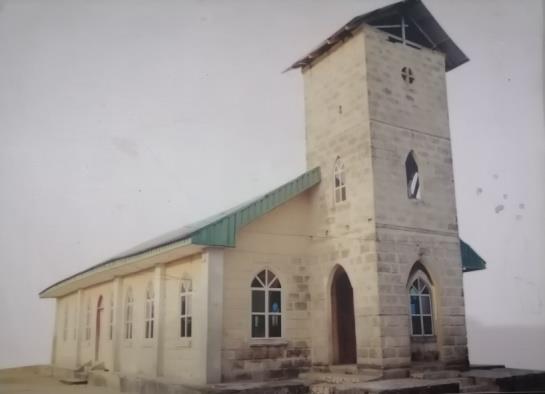
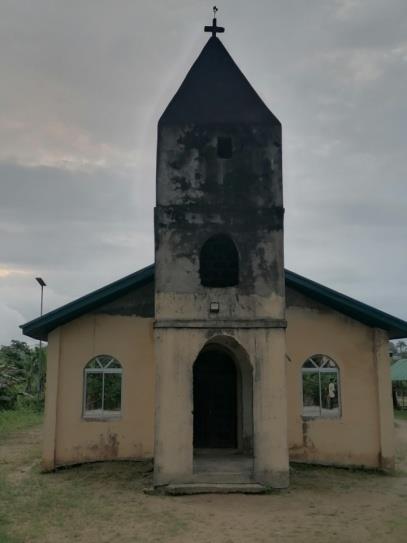
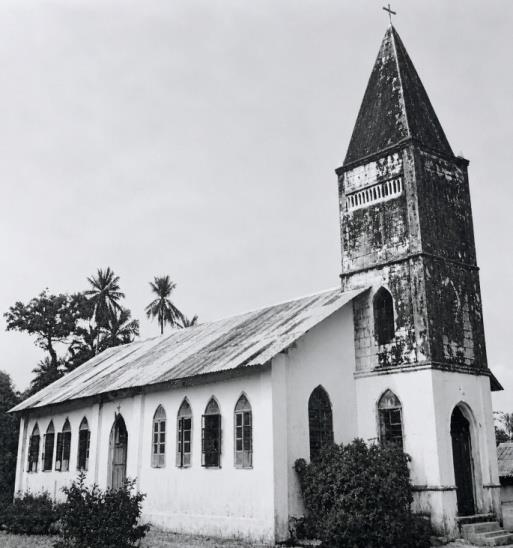
Evangelism World Crusade, The Redeemed Christian Church of God, Assemblies of God Church, Christ Embassy, and Living Faith Church (Winners Chapel), among many others were introduced from 1990.
Photo 1
Photo 2
Photo 3
pg. 42
Photo 1: St. Luke’s Anglican Church, Obunagha (Photo taken in 2020 after some renovations on the structure built in 1956).
Photo 2: St. Luke’s Anglican Church Ayama, with some renovations (Photo taken July 19, 2026).
Photo 3: St. Paul Anglican Church, Ogboloma built 1936 (Photo source: Tuaweri, J. O. (2008). A Brief History of Gbarain Kingdom).
pg. 43
Development of Education in Gbarain Kingdom (1911 – 2024)
Education as we know it today was a policy by the British colonial authority, implemented by Christian Missionaries funded and enabled by the leadership of the then British Empire. The encounter and acceptance of Christian Missionaries by indigenes of Gbarain Kingdom led to the establishment of learning centers across the kingdom. On the formal establishment of the first church by the Church Mission Society (C.M.S.) in 1911 at Obunagha Community and other communities in Gbarain kingdom, learning center were also established by the C.M.S., most of which were off shoots from Sunday School gatherings by Christian Missionaries. By 1940, there were learning centers for reading and writing in all the communities in Gbarain Kingdom, administered by church officials, but they were not officially considered schools because the colonial government was yet to post teachers and administrators to the centers. Though, the learning centers are now historically addressed as Village Schools.
The colonial government combined all the learning centers across Gbarain Kingdom and named it Group School, situating it at Obunagha Community in 1942. With the establishment of the pg. 44
Group School, all the learning centers by church officials were dissolved. Hence, everyone in Gbarain sent their children and wards to Obunagha community for education from 1942. The first head and administrator of the Group School was Mr. E. A.
Ukubo from Buguma25 (modernly a town in Rivers state). The Group School initially had it highest level at Standard Four (modernly Primary 4 class). Hence, interested indigenes in education floated the idea of having a Group School up to Standard Six (Primary 6) sometime in 1948, but authorities rejected the idea because, the head teacher of the Group School at then was not certified up to Standard Six. For the school to be upgraded, a teacher with Grade 2 Certificate was needed as Headmaster and administrator. Owing to the demands of Gbarain indigenes, the colonial authority transferred one R. J. E. Koripamo with the required certification but he was rejected by the Gbarain people, largely due to a established close relationship with Mr. E.
A. Ukubo (the first Headmaster of the Group School).
Other communities in Gbarain started agitation for the geographical centralization of the Group School that was situated at Obunagha Community. By 1949, the Group School was relocated from Obunagha to a geographical location between Okolobiri and Ogboloma communities (modern location of the 25 Tuaweri, J. O. (2008). A Brief History of Gbarain Kingdom. Yenagoa: John Ark John (Nigeria) Limited
pg. 45
Bayelsa State Primary School Board office), and was renamed to Taylor Creek Central School, Gbarain. The relocation and renaming was without an upgrade of the class level. The school remained Standard Four as its highest level, and was only upgraded to Standard Five (Primary Five) by 1950. Therefore, most Gbarain indigenes who were able to afford education outside the kingdom, completed their primary education to Standard Six (Primary Six) in towns such as Kaiama (modernly in Kolokuma-Opokuma Local Government Area), Amassoma (modernly in Southern Ijaw Local Government Area), Oloibiri (modernly in Ogbia Local Government Area), Twon Brass (modernly in Brass Local Government Area), and Nembe (modernly in Nembe Local Government Area), all in modern Bayelsa State, Nigeria. The Taylor Creek Central School Gbarain, was upgraded to Standard Six by the colonial authorities in 1953.
The school produced educated indigenes up Standard Six, and indigenes from each of the communities desired and had their own primary schools established between 1950 and 1974.
Amidst the establishment of primary schools across the kingdom, the relevance of the central was defeated hence, it ceased operations in 1974. And on the approval for a secondary school, the central school structure was used for starting operations of Government Secondary School, Okolobiri (now Gbarain-owei Grammar School, Okolobiri) in 1975. Gbarain-owei Grammar pg. 46
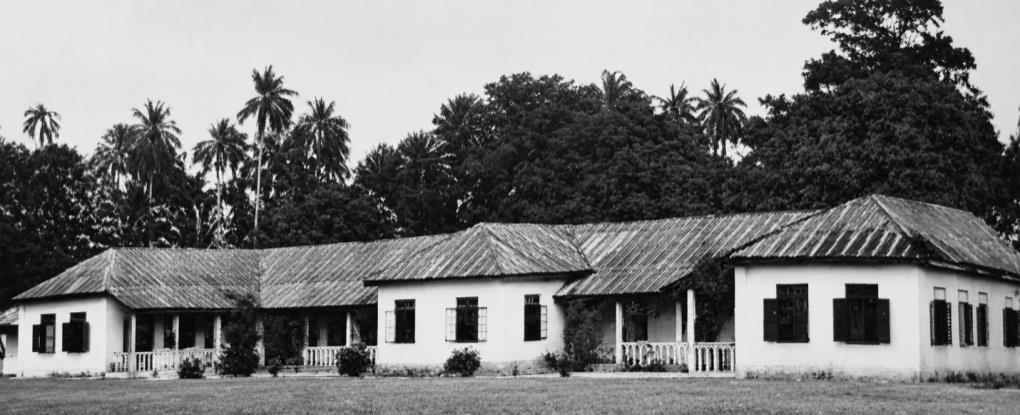
School was relocated to its modern location few years later. After relocation of the secondary school, the structure was also briefly used as a commercial school.
Taylor Creek Central School Gbarain, established 1949
(Photo source: Tuaweri, J. O. (2008). A Brief History of Gbarain Kingdom)
In 1967 when General Yakubu Gowon as Head of State appointed Alfred Papapreye Diete-Spiff as the Military Governor of Rivers State, and in 1971 Chief Melford Okilo was appointed Commissioner for Education in Rivers State. The government introduced an education policy that required a first degree certificate holder as Principal for a secondary school; this policy was a challenge to the people of Gbarain for their desire to have a secondary school, because at then there was no one with the required qualification in Gbarain. Therefore, Gbarain kingdom through its leadership led by Chief Michael A. Kwokwo nominated and commissioned late Chief Nathan I. Okoko of Obunagha, and late Mr. Jonnie Oforiata Tuaweri of Okolobiri to pg. 47
find a teacher with the requirement to enable the kingdom have its first secondary school. They kingdom leadership funded a budget for their logistics and they travelled across the country, notably the western and eastern regions of Nigeria between 1972
and 1974. Mr. Tima Iyalagha was found and he was made the Principal of Gbarain-owei Grammer School sometime in 1975, when the school started operations.
Late Engr. Chief D. H. S. Souza Okpofabiri of Ogboloma also contributed to the development of education in Gbarain Kingdom with an annual scholarship program. The program was initially designed to have at least one beneficiary from each of the Gbarain communities
Education in Gbarain Kingdom kept its pace of development and at the dawn of the 21st century, other secondary schools were established within the kingdom after the completion of a Six Classroom Blocks by Communities;
(1) Ogboin Compressive High School Nedugo-Agbia, established September 20, 1999 by the Bayelsa State Government, Nigeria.
(2) Ogbopuru Community Secondary School Koroama, established September 20, 1999 by the Bayelsa State Government, Nigeria.
pg. 48
(3) Community Secondary School, Polaku established September 20, 1999 by the Bayelsa State Government, Nigeria.
(4) Community Secondary School, Obunagha established on May 17, 2024 by the Bayelsa State Government, Nigeria.
Also, several privately owned Nursery, Primary, and Secondary Schools have been established within the kingdom since the dawn of the 21st century, notably Amoye Best Brain International School, Ogboloma (formerly Best Brain International School, Ogboloma) established September 19, 2005.
Though many are now defunct, likewise many are being privately established almost yearly.
Federal Polytechnic Okolobiri: The kingdom under the leadership late Chief Michael A. Kwokwo also proposed the establishment of Federal Polytechnic, Okolobiri26 to the Federal Government of Nigeria, and the Bayelsa State Government. This proposal was emphasized during the 2001 edition of the Gbarain Uzu festival (hosted by Okolobiri community), when the now defunct Gbarain/Ekpetiama Local Government Area Executive Chairman, Honourable Walter Ofonitoru Okpoi represented the then Bayelsa State Executive Governor at the event.
26 See Appendix One in page 202
pg. 49
Note: When the Group School was relocated to a geographical central area within the kingdom, indigenes of Obunagha Community protested against it. At then, each community was paying a tax to the church constituted authority to support the daily operations of the school. Hence, Obunagha Community halted paying the tax and its indigenes were suspended from attending the central school. And those that were financially capable in Obunagha sent their children out of the kingdom for education. After almost three years, Obunagha community reconciled with the rest of the kingdom’s communities, and resumed paying the required tax resulting to lifting of the suspension on Obunagha indigenes from attending. This disagreement happened between 1949 and 1952.
The Taylor Creek Central School structure is modernly part of the Bayelsa State Primary School Board facilities in Okolobiri, Gbarain Kingdom.
pg. 50
Kingship in Gbarain Kingdom
The Era of Gbarain Zibai Priests: The leadership of Gbarain Kingdom was solely on the priest27 of the kingdom’s goddess known as Gbarain Zibai, whose shrine was situated at Okotiama Community (the first settlement in Gbarain Kingdom). Prior to the colonialization of Africa by Europeans, following the General Act of Berlin, 1885, and the introduction of western civilization through Christian Missionaries, whoever the spirit of Gbarain Zibai choose as its priest, becomes the leader and administrator of Gbarain Kingdom. At the community levels, there are paramount rulers addressed as Amananaowei, who were subordinates to the Gbarain Zibai priest in administrating the kingdom.
Following the amalgamation of the North and South Protectorates of Nigeria in 1914, European countries led by the Great Britain aggressively increased colonial policies in Africa.
These policies include the funding of Christian Missionaries aimed at introducing their education, culture, governance, religion, and other socio-economic systems. These policies were implemented across Nigeria, including Gbarain Kingdom.
27 Kwokwo, M. A. (1986). An Outline History of the Gbarain Clan. Yenagoa: H.R.H Michael Ambi Kwokwo
pg. 51
Indigenes of Gbarain Kingdom were introduced to Christianity and other western systems through Western education. Gbarain indigenes embraced and adopted these western systems because it enabled them to do business and work with Westerners, and the new Western introductions solved their immediate wants and needs. For instance, medicines were given to sick persons and they recovered quickly, when compared to the then existing traditional means of healing the sick.
Based the foregoing backdrop, indigenes of Gbarain Kingdom started getting educated; being inculcated with western culture, religion, governance, and other systems. Hence, on the death of the then Chief Priest of Gbarain Zibai shrine sometime in 1960, indigenes of the kingdom desired and clamored for an educated leader, and not a GbaraIn Zibai priest, (with the introduction of Western culture, religion, education and other system, many lost belief in Gbarain Zibai). On the desires of the people of Gbarain Kingdom, the then Amananaowei of Obunagha Community, late Chief Asara John Yeseibo, resigned as the Amananaowei to take up the leadership of Gbarain Kingdom. He was then seen by many as the king of Gbarain Kingdom but he was never inaugurated to office. Most Gbarain indigenes saw him as the king due to his brilliance in conflict resolution; he and some elders formed a council where communal and inter-personal disputes were pg. 52
resolved fairly by them, and their council was renown across the kingdom28.
Chief Michael Ambi Kwokwo Era (1961 – 2001): In 1961, late Chief Michael Ambi Kwokwo of Koroama Community emerged as the Clan Head and king of Gbarain Kingdom with the title Ibenanaowei of Gbarain Clan. Late Chief Michael Ambi Kwokwo was a more educated and exposed person than Chief Asara John Yeseibo of Obunagha. The new king was then based in the city of Lagos and Port Harcourt, but visited the kingdom as responsibilities demanded. Chief Michael A. Kwokwo introduced a kingdom wide gathering called Gbarain Chiefs and People’s Conference; a platform where all indigenes of the kingdom congregate to discuss issues of concern to the kingdom and find solutions to existing problems within communities.
The Gbarain Chiefs and People’s Conference became famous and it was an event all indigenes of Gbarain kingdom look forward to.
The congresses were held at least twice a year at Okolobiri, the political headquarter; the Gbarain Uzu festival, and infrastructural development of the kingdom were the prominent issues for discussion annually. And during the congresses, if there are issues in communities raised, resolution committees were 28 Please see Late Chief Asara John Yeseibo Administration of Obunagha Community (1935 – 1960) in page 127
pg. 53
appointed immediately to resolve the issues and report back in the next congress date. Late Mr. Fred Agugu of Polaku Community was the Personal Secretary to Chief Michael A.
Kwokwo, and late Chief Theophilus Joel Akpuruku of Ogboloma Community was the Deputy Clan Head. Also, other prominent individuals such as late Prof. Kimse Amaebi Biya Okoko of Obunagha, late Engr. Chief D. H. S. Souza Okpofabiri of Ogboloma, among others supported the administration of Chief Michael A.
Kwokwo.
Chief Michael Ambi Kwokwo was the first classed ruler of Gbarain Kingdom by the government of old Rivers State. He started from a Third Class Chief and later, the stool was elevated to First Class sometime in 1994. The reign of Chief Michael A.
Kwokwo as the head of Gbarain Kingdom came to an end following his death sometime in the year 2001. On the death of Chief Michael Ambi Kwokwo, the Chiefs, Elders, and Youth of Gbarain kingdom appointed His Royal Highness Late Chief Judah Dubatei Sukuruowei (then Amananaowei of Okolobiri Community) as the Acting Ibenanaowei of Gbarain Clan, and constituted a constitution drafting committee on September 11, 2002 to draft a constitution reflecting the modern democratic tenets. The members of the constitution drafting committee comprised a recommendation of three persons from each of the ten communities Chiefs at that time. A draft constitution was pg. 54
approved on February 16, 2003 by the Chiefs, Elders, and Youth of Gbarain Kingdom, and was signed into use on September 21, 2003 by the Chiefs.
H.R.H. Chief Michael Ambi Kwokwo
Ibenanaowei of Gbarain Clan, 1961-2001
Chief Theophilus Joel Akpuruku
Deputy Ibenanaowei
pg. 55
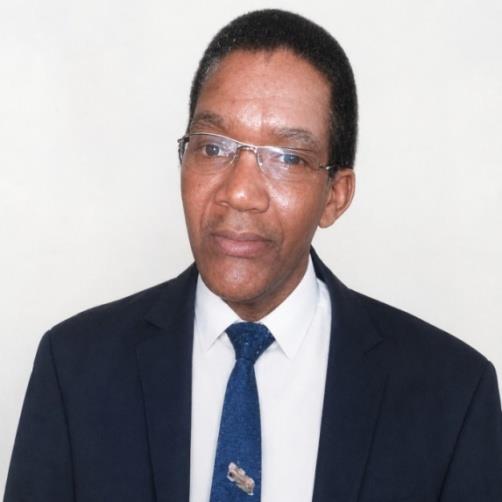
Mr. Fred Agugu of Polaku Community, the Personal Secretary to late Chief Michael A. Kwokwo, responsible for all the documentation during Chief Michael A. Kwokwo’s reign.
King Funpere Gabriel Akah Era (2004 –): Following the approval of the constitution, an Electoral Commission was constituted to conduct an election to the office of the Ibenanaowei of Gbarain Kingdom. The election was conducted on June 19, 2004 and His Royal Majesty King Funpere Gabriel Akah (the current Ibenanaowei of Gbarain Kingdom) was elected to the office.
pg. 56
Heads of Gbarain Kingdom
Name
Title
Period Community
Priest of Gbarain
1856 –
Chief Ikwai Akata
Zibai
1894
Okotiama
Chief Asimaowei
Priest of Gbarain
1895 –
Okotiama
Ikwai
Zibai
1935
Chief
Priest of Gbarain
1936 –
Okokoyanka
Zibai
1960
Okotiama
Asimaowei
Chief Michael
Ibenanaowei of
1961 –
Ambi Kwokwo
Gbarain Clan
2001
Koroama
Chief Judah
Acting
Dubatei
Ibenanaowei of
2001 –
Okolobiri
Sukuruowei
Gbarain Clan
2004
King Funpere
Ibenanaowei of
Gabriel Akah
Gbarain Kingdom
2004 –
Nedugo
pg. 57
Members of the First Constitution Drafting Committee Name
Portfolio
Community
Mr. Okpoine J. Okoro
Chairman
Okolobiri
Mr. M. M Jim
Vice Chairman
Agbia
Chief K. S. Ogidikpe
Secretary
Koroama
Mr. Bako Duba
Financial
Nedugo
Secretary
Mr. Baron Kuraiba
Treasurer
Agbia
Mr. Chapman
Provost/PRO
Polaku
Nanaboemi
Pst. Profit Ebiyekaki
Member
Koroama
Mr. Seaman James
Member
Koroama
Mr. Million Dadiowei
Member
Obunagha
Mr. Samuel K. Otoworo
Member
Okolobiri
Mr. Richard Kalabumo
Member
Okolobiri
Mr. Obi Otuogha
Member
Nedugo
Chief J.G. Orufa
Member
Asaingbene
Mr. Gilbert Asain
Member
Asaingbene
Mr. Clinton Benjamin
Member
Agbia
Mr. Igina J. T.
Member
Ayama
pg. 58
Chief Ibomo Kenigua
Member
Polaku
Mr. Luckner Ernest
Member
Polaku
Mr. Tarilayefa Dadiowei
Member
Obunagha
Mr. Ebitimi Okoko
Member
Obunagha
Mr. Mudani Mission
Member
Ogboloma
Mr. Elliot Timizi
Member
Ogboloma
Mr. Goodnews Tobia
Member
Ogboloma
Mr. Timiebi Ozobodo
Member
Okotiama
Mr. Dallas Johnborn
Member
Ayama
Mr. Timipa Angalapu
Member
Okotiama
Mr. Hustin Beintei
Member
Ayama
Source: ’The Constitution for the Traditional Administration of Gbarain Kingdom, 2002”
pg. 59
Chiefs (Amananaotu) of the Ten Communities that approved the 2003 Gbarain Kingdom Constitution ‘’The Constitution for
the Traditional Administration of Gbarain Kingdom, 2002”
Name
Community
HRH Chief Judah D. Sukuruowei
Okolobiri
HRH Chief Nathan O. Awara
Nedugo
HRH Chief Kumasi Benson Kurobiri
Agbia
HRH Chief Whyte Suwari
Polaku
HRH Chief Kingsway D. Kwokwo
Koroama
HRH Chief F. K. Tebepina
Ogboloma
HRH Chief Soberekon Okoko
Obunagha
HRH Chief O. Apinaowei
Ayama
HRH Chief Parker J. Orufa
Asaingbene
Source: ’The Constitution for the Traditional Administration of Gbarain Kingdom, 2002”
pg. 60
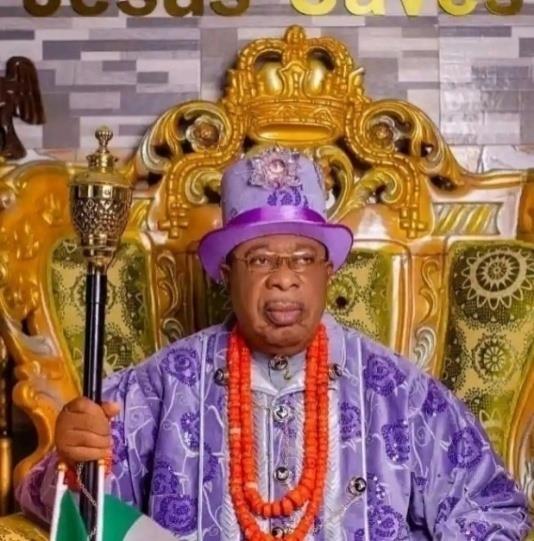
The Aspirants for the June, 2004 Ibenanaowei of Gbarain Kingdom election were,
Aspirant
Community
Mr. Funpere Gabriel Akah
Nedugo
Chief Joe D. Makurai
Agbia
Chief M. S. Z. Akanza
Agbia
Chief Banton. W. Akpuruku
Ogboloma
Chief Nathan O. Awara
Nedugo
Chief Timitimi P. Okponipre
Agbia
H.R.M. King Funpere Gabriel Akah
Ibenanaowei of Gbarain Kingdom (2004—)
pg. 61
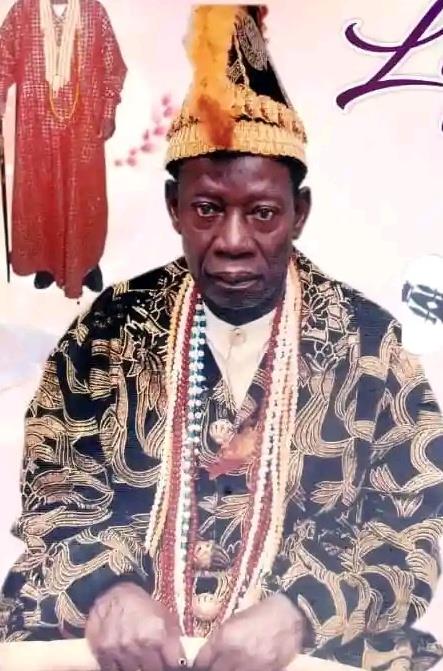
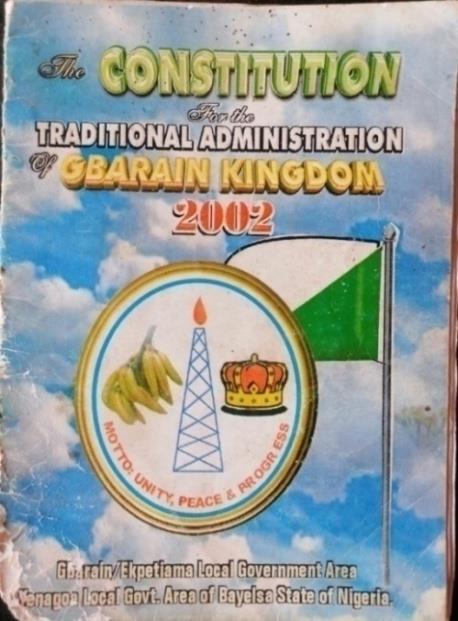
H.R.H. Chief Judah D. Sukuruowei
Former Acting Ibenanaowei, (2001-2004)
The first Constitution of Gbarain
Kingdom signed into use on
September 21, 2003
pg. 62
Note:
1. The then Amananaowei of Okotiama Community (Chief Natus Tuko) denied his signature on the Gbarain Kingdom’s Constitution because the Drafting Committee refused a proposal to recognize Okotiama as the political and traditional headquarter of the kingdom. Such provision would have altered State government’s recognition of Okolobiri as the political headquarter.
2. Some oral historical accounts claim the leader of Gbarain kingdom was addressed as ”The Sole Authority of Gbarain Kingdom” prior to Late Chief Michael Ambi Kwokwo as the Ibenanaowei of Gbarain Clan.
3. When Chief Michael Ambi Kwokwo was based more in Lagos, his Assistant, late Chief Theophilus Akpuruku Joel acted in his place in the affairs of the kingdom whenever necessary. Chief Michael Kwokwo died sometime in year 2001 and was buried sometime in 2002 at Koroama Community.
4. When the Electoral Commission for the election of Ibenanaowei was inaugurated in 2003, a delegate vote system was adopted. Each of the then ten communities nominated ten delegates each. And a zoning arrangement was agreed among the pg. 63
communities; the kingdom was designated as Gbarain Zone A, and Zone B. Gbarain Zone B communities include, Agbia, Nedugo, Ogboloma, Ayama, and Okotiama, while Gbarain Zone A communities include, Okolobiri, Obunagha, Koroama, and Polaku.
This was on the agreement that no zone would put forward aspirants for Ibenanaowei of Gbarain kingdom twice, consecutively.
5. The printing of the constitution was largely funded by Sir Mathias Odumu Otuogha of Nedugo Community.
pg. 64
Gbarain Kingdom Inter-Communal Road Projects The communities in Gbarain Kingdom traded and travelled among each other through the Taylor Creek and bush paths prior to the colonialization of the African continent by Europeans.
Thus, the kingdom has experienced a gradual road infrastructural development connecting all the communities within the kingdom, during and after colonial administration.
The First Inter-Communal Road Project (1950s) During the colonial era when Gbarain was made a local council area with Okolobiri it as headquarter, and later as headquarter for the Northern Ijaw District County Council in the 1950s within the Eastern Region of Nigeria, the first inter-communal road was envisioned and implemented. In 1952, a man called Mr. J. C. Egba, a civil servant as court clerk in Okolobiri, envisioned and implemented the first inter-communal road from Polaku to Okordia-Zarama Kingdom (within modern Yenagoa Local Government Area). The road ended at Okordia-Zarama because a Teacher Training College (TTC) was situated there. He mobilized the communities and marked an access road across the kingdom.
The section between Agbia, Igbogene, and Okordia-Zarama was first marked and cleared between 1949 and 1950. The road was pg. 65
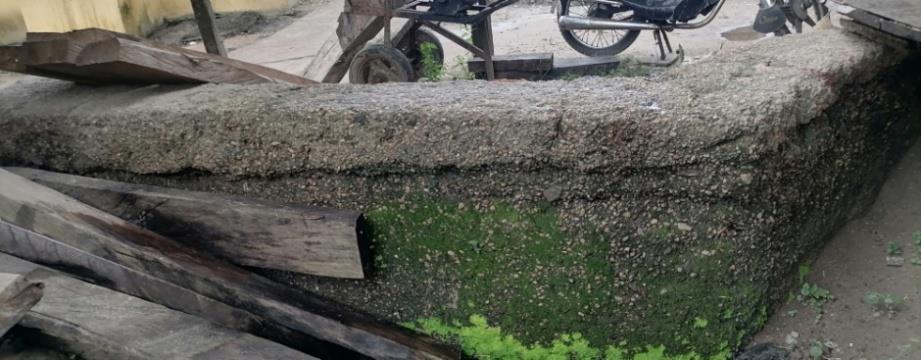
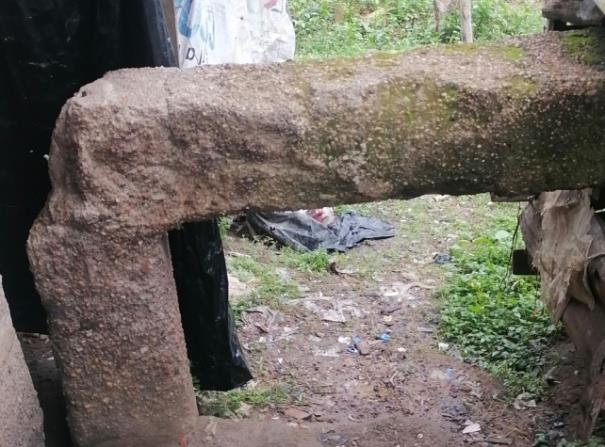
to enable easy access for civil servants and other government officials to access the District County Council headquarter. The project was funded by the colonial government. During that time, some demolitions of residential tents and houses were made across the kingdom. And Concrete – Wooden Bridges were also constructed across the water pathways in-between communities.
Concrete – Wooden Bridge, constructed between ‘County’ and Okolobiri in the 1950s. (Photos taken July 23, 2026) pg. 66
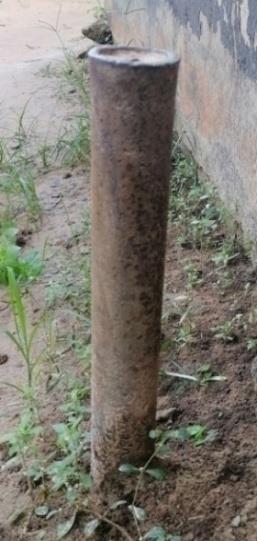
Concrete – Wooden Bridge, constructed
between ‘County’ and Okolobiri in the
1950s. (Photos taken July 23, 2026)
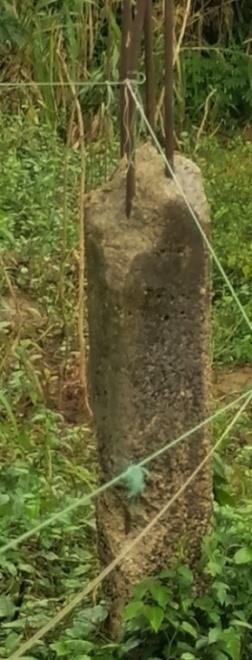
A marking of the 1950s
colonial road in Obunagha
Community.
(Photo taken on July 24, 2026)
pg. 67
The Igbogene-Polaku Road
The modern Igbogene-Polaku Road came to being as a collective effort from individuals and the entire kingdom. The road was identified by the then Eastern Region and Rivers State governments respectively, since 1967; the road was reported to be on the regional and state budgets annually, by successive government administrations, but the implementation was elusive. The road project started having attention during the administration of late Chief Melford Okilo as Governor (1979 –
1983) of Rivers State.
The Shell Petroleum Development Company of Nigeria Limited (SPDC) Construction (1972)
On discovery of petroleum deposits at Etelebou, Ogboloma Community, SPDC built a road from Igbogene to the site of their operations at Etelebou, at the start of their operations sometime in 1972. This was the first part of the Igbogene – Polaku Road.
The road ended at the creek between Nedugo and Ogboloma communities, without the bridge. The construction was awarded to Okmas Nigeria Limited.
pg. 68
Contribution of Late Engr. Chief D. H. S. Souza Okpofabiri (1982)
Chief D. H. S. Souza Okpofabiri of Ogboloma Community was a serving Commissioner in the administration of Chief Alfred Papareye Diete-Spiff in Rivers State. He served in the Ministries of Works and Finance, as he was a renowned engineer who was also the pioneer substantive Chairman (1973-1974) of the Nigerian Society of Engineers (NSE), Port Harcourt Branch.29 In one of his visits to his father at Ogboloma Community between 1980 and 1981, his father expressed desire to have the Igbogene-Polaku Road constructed. This was to reduce the logistic challenges experienced by the Commissioner, mostly during annual rainy seasons. Also, as a precaution to a possible situation of emergency during Keamae Creek crossing (the creek between Nedugo and Ogboloma communities), was a motivation for attention on the Igbogene-Polaku Road.
Therefore, Chief D. H. S. Souza Okpofabiri facilitated the construction of the Nedugo – Ogboloma Bridge and a road to Ogboloma Community, which was completed in 1982. This was a significant contribution to the actualization of the Igbogene-Polaku Road as it marked the possibility of actualizing the project after years of neglect.
29 https://www.nseph.org/past-chairmen
pg. 69
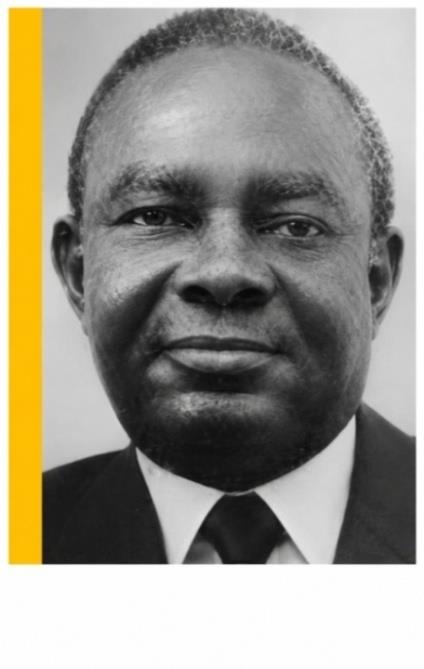
Engr. Chief D. H. S. Souza Okpofabiri
(Photo source: https://www.nseph.org/past-chairmen) Following the construction by Chief D. H. S. Souza Okpofabiri, the administration of late Chief Melford Okilo made efforts to continue the road by sending bulldozers to clear the road path in 1983 from Ogboloma to Polaku. But it was later abandoned.
Gbarain Kingdom’s Self-Help Initiative (1984) The people of Gbarain kingdom in building on the contributions of Chief Okpofabiri in the actualization of the Igbogene-Polaku Road project inaugurated a fund raising ceremony committee to continue the construction in 1984. The Gbarain kingdom raised a significant amount of money and a bulldozer operator was contracted and the clearing of the road path continued to Polaku.
pg. 70
The funds raised were only enough to clear the road path hence, the project was suspended again.
This Igbogene-Polaku road path did not follow the colonial times inter-communal road path. This path was outside residential areas across the kingdom’s communities thus, no damage was done to residents properties. It was a forest area that was being bulldozed for the road project.
Contribution of Late Prof. Kimse Amaebi Biya Okoko (1988) Professor Kimse A. B. Okoko of Obunagha Community served as Commissioner for Lands and Housing (1986 – 1989) in the Military Administration of Col. Anthony Ukpo as Governor (1986
– 1988) of Rivers state. During his tenure as Commissioner, he got to know the actual royalties due to Gbarain Kingdom from oil and gas exploration activities within the kingdom. Prof. Kimse A.
B. Okoko used his office and ensured those royalties were6 paid to the kingdom and not mismanaged either by government operatives or within the kingdom. The royalties were saved for few years, and Westminister Dredging Nigeria Limited was contracted for sand dredging across the kingdom; four sand dumps were established across the kingdom.
(1) Agalama Sand Dump: This was established after the Pinuba (the creek after Ogoroama Primary School field) of Okolobiri.
pg. 71
Modernly, the dump site was around the Bayelsa State Schools Board at Agalama, Okolobiri.
(2) Obunagha/Okolobiri Sand Dump: This was established at the modern location of the Greater Evangelism World Crusade (GEWC) church on the border of Obunagha and Okolobiri communities.
(3) Koroama Sand Dump: Was established close to the entrance to Koroama community when coming from Obunagha.
(4) Polaku Sand Dump: This was established close to the Taylor Creek, modernly close to the secondary school.
Also, Niger Construction Limited (NGERCAT) was contracted to put a sand layer from the four sand dumps on the road across the kingdom. With the sand layer, the road was used often by indigenes even during the rainy seasons. This contribution boosted the momentum in achieving a good access road to the kingdom. It was a significant progress contributed by Prof. Kimse Okoko.
pg. 72
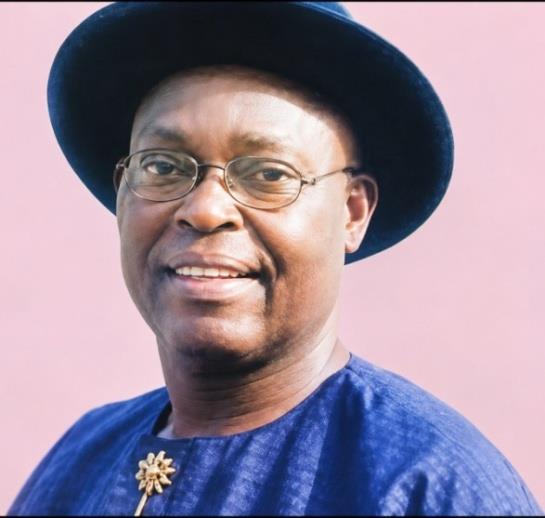
Professor Kimse Amaebi Biya Okoko
Note: Oil explorations activities officially started 1972 in Gbarain kingdom at Etelebou, Ogboloma Community. Other oil wells were discovered but only at Ogboloma activities were ongoing. The one at Obunagha at then was yet to start operations (the current site of Renaissance NLNG Supplies Project Camp). And several others were discovered including gas reserves.
Chief Whyte Suwari led Agitation against SPDC (1992)
The First Protest: The first agitation against Shell Petroleum Development Company of Nigeria Limited (SPDC) in Gbarain Kingdom was led by Chief Whyte Suwari of Polaku Community (then Paramount Ruler), sometime in 1992. Chief Whyte Suwari, pg. 73
a young man in his early thirties led a group of youths to stop the operations of SPDC at Etelebo, Ogboloma over the construction of Igbogene – Polaku Road. On arriving at the site, the head of operations at the SPDC site in Ogboloma promptly informed the landlord, late Chief Vincent Wozi. Based on the report from SPDC, Chief Vincent Wozi of Ogboloma armed his children and relatives and went in to the site in order to dislodge the Gbarain youths protest because he was not informed of the protest on his land.
On sight of Chief Whyte Suwari, Chief Vincent Wozi called for a meeting at the residence of the then Paramount Ruler of Ogboloma, late Chief F. K. Tebepina. The meeting was attended by Chief Whyte Suwari and his group, a delegation from SPDC, and Chief Vincent Wozi and his family. At the meeting, Chief Whyte apologized to Chief Vincent Wozi for not informing him prior to the protest. The meeting ended with no significant resolution regarding the Igbogene – Polaku Road.
The Follow-up Protest: The aftermath of the first Gulf War (1990
– 1991) between Iraq and a coalition led by the United States, impacted negatively on international oil market hence, OPEC
members increased their production targets, including Nigeria.
This development influenced the Nigerian federal government to license some discovered oil wells for operation, including those located within Obunagha Community (at then, the oil wells area pg. 74
was popularly called Patani Bou or Patani Location by Gbarain indigenes). A pipeline was to be constructed from Obunagha to Imirigi (in Ogbia L.G.A.) flow station.
Owing to the foregoing, within March, 1992 Chief Whyte Suwari requested for bush entry permission from late Mr. Edward Patani as he was then the landlord of the oil well area discovered at Obunagha Community. Chief Whyte Suwari then identified four Gbarain youths as his closest allies among others; Mr. Ebipa Etuele, Mr. Shadow Freetown Saiyou, Mr. Tonye Kwokwo and one of ‘Antagbala30’s son’ of Okolobiri. Indigenes from Nedugo-Agbia, Ogboloma, and Okotiama expressed reluctance in joining the protest, probably because they already had a bridge and road constructed by late Engr. Chief D. H. S. Souza Okpofabiri, and it was unlikely that Okotiama Community would be part of the road design due to its geographical location.
On March 13, 1992, around 7:00 a.m. they arrived at the oil well site at Obunagha, on arrival they requested for the suspension of all operations at the site and it was obeyed. The site drilling and pipeline construction to Imirigi flow station was being done by Jutag Drilling, a German company contracted by SPDC. The news of the suspension of operations immediately went viral by 30 The name could not be remembered but Antagbala is the father’s name from Okolobiri
pg. 75
afternoon, as radio stations in then Rivers State reported the breaking news. By then, other youths and indigenes from Okolobiri to Polaku joined the protest (they were pre informed) at the site in support of the suspension of all operations there.
The protest was for the construction of the Igbogene – Polaku Road by SPDC.
Later that evening, the head of operations informed the protest leader Chief Whyte that the Governor of Rivers State and his Deputy is on their way to the site. Chief Whyte further strengthened his threat that if the Governor did not arrive, the site would be completely burnt down. When the helicopter carrying the government delegation from Port Harcourt arrived, protesters occupied the helipad but after negations allowed the government officials to land. The delegation comprised Dr. Rufus Ada–George, Governor of Rivers State and Dr. Peter Odili, the Deputy Governor, and some of his assistants including Chief Chibuike Rotimi Amaechi.
A brief discussion was held at the site and further discussion with the government was postponed to the next day. The site meeting also concluded that Gbarain Kingdom should send a delegation to the Government House at Port Harcourt for further discussions, with the representation from the government and SPDC (the pg. 76
operator of the oil well). A 7-Man delegation was nominated to represent the Gbarain kingdom. The members includes, Chief Whyte Suwari, and Mr. Oyaine Kala-oru from Polaku Community
Mr. Henry Jesse, and Mr. Ashimota Dickson from Koroama Community
Mr. Tari Dadiowei, Mr. Ebitimi Okoko, and Mr. Abraham Patani from Obunagha Community
The Meeting at Port Harcourt: The government sent a helicopter to pick the Gbarain delegation the following morning to Port Harcourt. On arrival at the Government House, a psychological game of their seriousness was tested by a representative of SPDC; he offered to make each member of the delegation a Millionaire, which they all rejected. At the meeting, the Governor Dr. Rufus Ada–George requested for the suspension of the protest at the site, as discussions on the Igbogene-Polaku Road advance. The Governor confirmed that according to government records, the road was completed during the administration of late Chief Melford Okilo as governor of Rivers state. The delegation requested that if the road is completed, he should visit the road himself. The meeting ended with no significant progress and they returned home. The follow-up pg. 77
meetings was with a resolution of the government constructing Fifty-percent (50%) of the road and SPDC completing the other fifty-percent (50%).
After the Meeting at Port Harcourt: The action by the youths was commended by some members of the Ibenanaowei’s Council, notably by the Personal Secretary to the Ibenanaowei late Mr.
Fred Agugu of Polaku. He wrote a letter to all the elites in Gbarain Kingdom at then, commending the youths and calling on a united front in achieving the Igbogene – Polaku Road project.
The Government Fifty-percent (50%): The government constructed its quota of the road to near completion sometime in 1993 by Homan Engineering Company Limited, which was awarded on December 7, 1992. The government continued from the end point of Late Engr. Chief D. H. S. Souza Okpofabiri at Ogboloma Community to a section after Gbarain-owei Grammer School premises (the modern location around Gbarain Market).
On the creation of Oil Mineral Producing Areas Development Commission (OMPADEC) by the federal government of Nigeria sometime in July, 1992, the government quota of the road was transferred to OMPADEC for continuation.
Chief Whyte Suwari’s Individual Protests: Building on the publicity from the protest that got the attention of the State Government, Chief Whyte Suwari using his office as the pg. 78
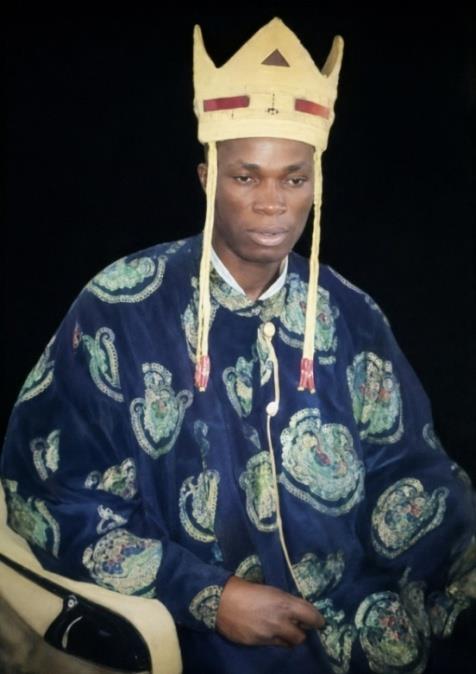
Amananaowei (Paramount Ruler) of Polaku Community wrote several protest letters31 to the State Government, SPDC, and other relevant stakeholders. He persistently reminded them of how resourceful Gbarain was to the national economy hence, the road should be considered. During the protest period, the Chief Whyte Suwari led group was later supported by the management of Homan Engineering Company Limited, which they hoped to get the contract for completing the Igbogene – Polaku Road if approved.
Chief Whyte Suwari
Paramount Ruler (Amananaowei), Polaku, 1991 – 2005
31 Please see Appendix Four page 227
pg. 79
The Contribution of Mr. Tonye Baraseibai Sometime in 1993 some Gbarain elites partnered with one Colonel Itonyo of Igbedi Community in Kolokuma-Opokuma and formed Gbarain Development Union (GDU); making Colonel Itonyo as the Secretary General. The aim of the GDU was to represent Gbarain Kingdom in engagements with SPDC and Government at all levels over the Igbogene – Polaku Road. The Gbarain Development Union (GDU) under the leadership of Colonel Itonyo wrote to OMPADEC requesting a change of design of the road. Following the request, OMPADEC redesigned the road from Igbogene – Polaku to Kaiama – Opokuma – Sabagreia Road. This redesigned of the road was unaccepted by some youth of Gbarain Kingdom led by Chief Whyte Suwari who initiated the protest that commanded the attention of the government to the kingdom in 1992.
Sometime in December, 1993 during a friendly visit to the residence of Chief Whyte Suwari, Mr. Tonye Baraseibai in company of Mr. Shadow Freetown Saiyor came to knowledge of the Igbogene – Polaku road redesign hence, Mr. Tonye Barasebai offered assistance in facilitating government stakeholder direct engagement in expressing their dissatisfaction of the road redesign. Mr. Tonye Barasebai facilitated a meeting between the youth led by Chief Whyte Suwari and the OMPADEC
pg. 80
Commissioner for Works and Projects, Engineer Joseph Inehikhare; Gbarain youth present at the meeting were Mr.
Kumbowei S. Ogidikpe of Koroama, Late Mr. Ineikiti Kwokwo of Koroama, Mr. Shadow Freetown Saiyor of Koroama, Mr. Ebipa Etuele of Polaku, Chief Whyte Suwari, and Mr. Tonye Barasebai, the facilitator of the meeting. During the meeting the youth of Gbarain informed the Commissioner of their planned protest at the SPDC facility at Etelebo, Ogboloma Community.
The Second Protest: The youth led by Chief Whyte Suwari, Mr.
Tonye Barasebai, Mr. Ebipa Etuele, and Mr. Shadow Freetown Saiyor met with Chief Vincent Wozi of Ogboloma Community to seek permission for a protest at the SPDC facility at Etelebo and it was granted by him as the landlord of the facility. On February 29, 1994 the youth began their protest, which they succeeded in halting all operations at the SPDC facility, after restricting all access roads to the site; all access roads to the facility were closed with trees logged by Gbarain youth. The government on notification of the protest deployed a large number of the Nigerian Police to Ogboloma Community. Discussions were held at Chief F. K. Tebepina’s residence between the youths and SPDC
officials in presence of security officials but significant progress was not made towards the road. As a follow up to the protest, a meeting was initiated by the management of OMPADEC inviting the members Gbarain Development Union, and the youth protest pg. 81
leaders. The Gbarain youth stated their demands during the meeting; the completion of the Igbogene – Polaku road, renovation of Okolobiri General Hospital, and renovation of Gbarain-owei Grammer School buildings.
Mr. Tonye Barasebai later approached a correspondent of the Guardian Newspaper for publication of their protest. The protest was published detailing the petroleum potential of Gbarain Kingdom, the profit estimates of federal government and SPDC, and the poor state of social amenities in the kingdom. Thus, another meeting was initiated sometime in April 12, 1994 by the then government of Rivers State inviting the Gbarain Kingdom representatives and SPDC. During the meeting, SPDC expressed that the delay in the completion of the road was due to delayed approval from the NNPC of which the government representative assured the approval in few days. The Gbarain representatives re-emphasized their demands during the meeting which include; the completion of the Igbogene – Polaku road, renovation of Okolobiri General Hospital, renovation of Gbarain-owei Grammer School buildings, elevation of the Gbarain kingship stool to First Class Chief status, upgrade of Polaku Trade Center to a Technical College among others.32 And these demands were requested in a formal document sent to the government.
32 Please see Appendix Six in page 237
pg. 82
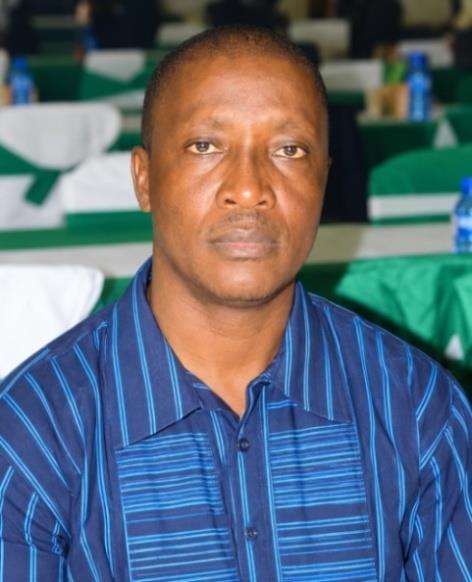
The Disagreement within Gbarain Kingdom’s Representatives: Owing to the request by the government, the youth protest leaders led by Mr. Tonye Barasebai prepared the document with the heading Gbarain Community and submitted it to the Rivers State government. On knowledge of the document, Gbarain elites initiated a Gbarain stakeholders meeting. During the meeting, the youth were humiliated for submitting the document to the government without the authorization of the Gbarain Kingdom leadership. Though, the youth actions were later supported by late Professor Kimse Okoko of Obunagha Community and late Barr. Dan Kimbiagha of Ogboloma Community. On the backdrop of the disagreement over authorization of documents, the youth protest leaders adopted Concerned Youth of Gbarain (CYG) as the official identification of their protest movement.
Mr. Tonye Baraseibai
pg. 83
False Accusation: There was an allegation of bribery against the Concerned Youth of Gbarain (CYG) from some persons within Gbarain Kingdom; they were accused of receiving Ten Million Naira from SPDC representatives to abandon the cause of the completion of the Igbogene – Polaku Road. But the allegation was proven to be false hence, the Gbarain Kingdom leadership formally delegated the Concerned Youth of Gbarain to be the sole representative of the kingdom in engagements with SPDC and government at all levels over issues of completion of the road.
Approval for Completion of the Road: The Federal Government of Nigeria approved the remaining Fifty percent (50%) of the road project through the Nigeria National Petroleum Corporation (NNPC) on April 20, 1994 directing Shell Petroleum Development Company Nigeria Limited (SPDC) to begin negotiations with Homan Engineering Company Limited. On approval by the federal government, other construction companies such as Okmas Nigeria Limited made serious advances to get the consent of the protest leaders and other stakeholders in the kingdom through financial gifts and other means. But Homan Engineering Company Limited was favored owing to their already established relationship with the Gbarain Kingdom and protest leaders. Be reminded that the fIrst Fifty percent (50%) of the road construction was awarded on December 7, 1992.
pg. 84
The Concerned Youth of Gbarain (CYG) and Homan
Engineering Company Limited: After being awarded the contract, the Managing Director of Homan Engineering, Engr.
Riyz Ghassan privately invited the Concerned Youth Of Gbarain (Chief Whyte Suwari, Mr. Tonye Barasebai, Mr. Ebipa Etuele, and Mr. Shadow Freetown Saiyor) and offered to fulfill whatever they wished financially, but youth declined the offer and insisted the road is their priority. Thus, nothing was offered to them and the construction commenced.
The Issue of Bridges: In 1994, Homan Engineering first opted for Box Culverts across water paths and creeks in-between communities. But the kingdom stakeholders objected to it, though some stakeholders gave their support to Homan Engineering. At the conclusion, the first Box Culvert was constructed between Obunagha and Okolobiri. Fortunately, during the flooding season the Culvert was covered by the flood waters. And during that period, SPDC officials were on supervision mission and they saw how the constructed Box Culvert was sub-merged in water. Therefore, approvals for proper Concrete Bridges were given immediately by SPDC.
Engineer Mark Kuro Amakoroma of Koroama was one of the persons that vehmently rejected the Box Culverts with his professional experience as an engineer. The Igbogene – Polaku pg. 85
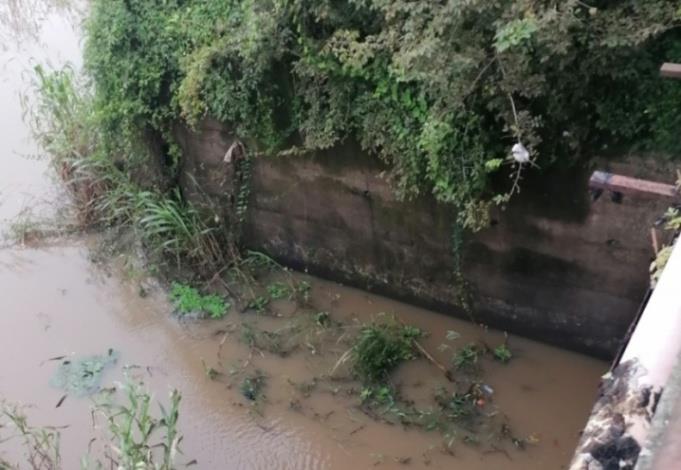
Road construction was brought to completion sometime in the year 2000.
Box Culvert under the bridge between Obunagha and Okolobiri (Photo taken on July 10, 2026)
Suspension of Chief Whyte Suwari: In a meeting called by the then Secretary to the Rivers State Government sometime in 1995, the Gbarain Chiefs and members of the Gbarain Development Union (GDU), the Concerned Youth of Gbarain (CYG), and SPDC
were invited. At the start of the meeting, the delegation of the Gbarain Chiefs raised an observation the Concerned Youth of Gbarain delegation were neither invited nor nominated to be part of the meeting but the Secretary to the Rivers State Government confirmed their invitation and all participated in the meeting. The members of CYG and CDU had some miscommunications during pg. 86
and after the meeting hence, it was counted as disrespect to the Ibenanaowei. In the following Gbarain Chiefs and Peoples Conference Meeting on September 29, 1995, Chief Whyte Suwari was suspended with a voice vote from the Gbarain Chiefs Council.
With the intervention of Prof. Kimse Okoko and others, also owing to the paused construction status of the Igbogene – Polaku Road by Homan Engineering Company Limited, His suspension was lifted sometime in 1998 by the Ibenanaowei, late Chief Michael A. Kwokwo.
Note: The Homan Engineering Company Limited construction pause of the road between 1995 and 1998 was due to financial constraints at the time, though Chief Whyte Suwari’s suspension was within the period of financial constraint.
Comrade Ebiye Kelvin Okoko Led Agitation against SPDC
(2005)
Following the 2005 adoption and implementation of the General Memorandum of Understanding (GMoU) by SPDC drafted in 2004. The Gbarain Youth Federation (GYF) led by late Comrade Ebiye Okoko of Obunagha as president was not pleased with some of the provisions. They demanded more inclusive infrastructural development for the entire kingdom. Among their demands was the reconstruction of the Igbogene – Polaku Road.
He mobilized the youth in Gbarain Kingdom and demonstrated pg. 87
severally, disrupting the operations of SPDC in Gbarain Kingdom.
Amidst several protests and arrest of late Ebiye Okoko over disruptions and breach of security (a senior SPDC staff was reportedly kidnapped), SPDC had an understanding with the youth to reconstruct the Igbogene – Polaku Road in 2005. The reconstruction contract was awarded to Zerock Construction Company and they started operations in 2006. The reconstruction understanding included the Ogboloma – Ayama –
Okotiama Road which was not included in the earlier Homan Engineering Company Limited contract.
During the reconstruction process, the youth discovered that the construction company’s method of construction was below the standard requirements for road construction. Therefore, Comrade Idokumo Odigiri (then Nedugo Youth President) of Nedugo led a youth protest against Zerock Construction Company within Nedugo Community in 2011. Comrade Sirwhite Saiyour of Koroama (then a member of the GYF leadership) later joined their protest and halted the construction activities of Zerock Construction Company. This led to an engagement with SPDC, Zerock Construction Company, Government officials, and Gbarain youth. Zerock Construction Company admitted the claim of the youth and accepted a standard reconstruction to completion of the road. The Igbogene – Polaku Road reconstruction according to standard was concluded sometime in 2012.
pg. 88
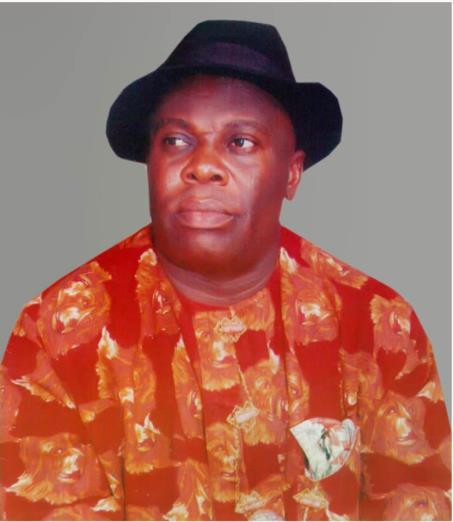
Comrade Ebiye Kelvin Okoko
GYF President, 2004 – 2007
Note: The incessant pot holes experienced along the Ogboloma –
Igbogene axis of the road and the rare sight of pot holes along the Obunagha – Polaku axis evidences the claim of an early sub-standard reconstruction by Zerock Construction Company. The incessant pot holes within Okolobiri are most likely owing to the activities special heavy duty equipments during the reconstruction.
pg. 89
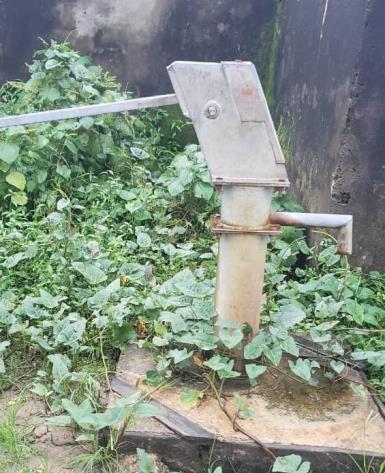
Gbarain Kingdom Water Supply Projects
Gbarain kingdom has been a recipient of several water supply projects from government schemes and as benefits from oil and gas operations in the kingdom. These projects could be classed in phases; Phase 1, 2, 3, 4, and 5. These programs were designed differently but with a common purpose of good water supply to the residents of Gbarain Kingdom.
Phase 1: The Hand Pump Era (Pre – 1960) During the colonial government, Hand Pumps were installed in some locations (evidences from Obunagha and Okolobiri) in Gbarain kingdom to supply water to residents. But the water from Hand Pumps were not good for drinking but residents mostly used it for cleaning purposes such as washing of cloths.
A Hand Pump modernly
installed in Okolobiri
Community
(Photo taken July 17, 2026)
pg. 90
Phase 2: Chief Alfred Papareye Diete-Spiff Government (1973 Water Project)
The first water supply project in Gbarain kingdom resulted from a government policy that was themed ‘‘Decentralization Policy”
by Chief Alfred Papareye Diete-Spiff led government in old Rivers State. Prior to the 1960 independence declaration, Okolobiri Community was made Northern Ijaw County Council headquarter in 1957 by the colonial government, and a secretariat was established (modernly the section of Okolobiri referred to as
‘‘County”), and it was maintained in the post-colonial Eastern Region government. There were departments for Agriculture, Housing, Health, and many others. The County Council extended from Agbere (modernly in Sagbama Local Government Area, Bayelsa state) to Otuokpoti (modernly in Ogbia Local Government Area, Bayelsa state).
Owing to Okolobiri being the County Council headquarters, the decentralization policy of the government favored Okolobiri and a water project was approved to serve civil servants resident within and around the Secretariat, and government operations in 1973. The water project was operated by one Mr. Asawire.
pg. 91
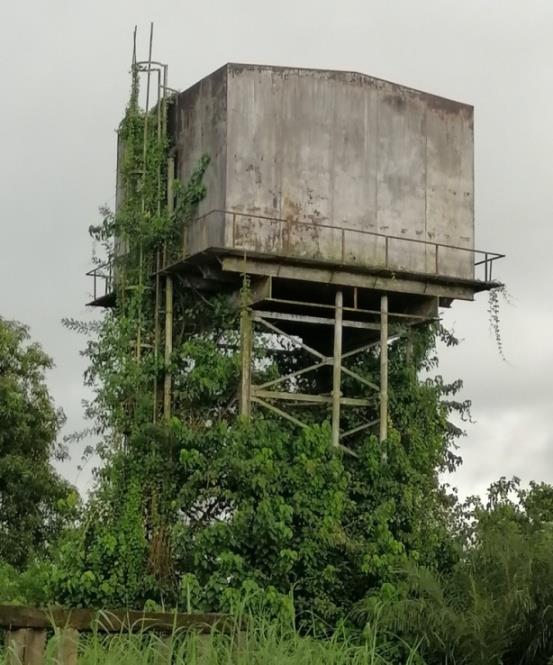
The Water Project by Chief Alfred Papareye Diete-Spiff government, installed in ‘‘County’’ Okolobiri Community in 1973
(Photo taken on July 10, 2026)
The water project served the County secretariat operations and residents of Okolobiri community. Sometime in the 1990s Mr.
Goodhead Tuaweri of Okolobiri community was contracted to construct a water supply line from the County project site to Obunagha community. This was to serve the civil servants resident within the secretariat residential quarters closer to Obunagha, and the rest of the community. Therefore, several water supply points were sited within Obunagha Community.
pg. 92
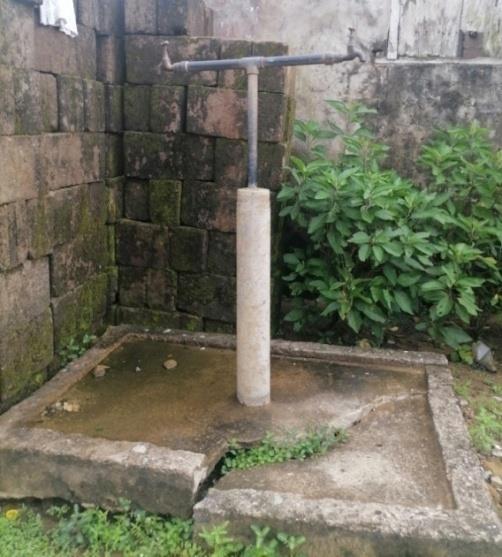
The project was operational for some years before being moribund due to changes in the Nigerian government structures and modus-oparandi.
A water supply point at Obunagha from the 1973 Water Project at ‘‘County’’ Okolobiri
(Photo taken on June 20, 2026)
Note: This water project was influenced to be sited at Okolobiri community from the then Rivers state government, by Late Engr.
Chief D. H. S. Souza Okpofabri of Ogboloma community. Also, another water project was sited at Ogboloma during same period.
He served as a Commissioner in the administration of Chief Alfred Papareye Diete-Spiff in Rivers State. He served in the Ministry of Works and Finance, as he was a renowned engineer pg. 93
who was also the pioneer substantive Chairman (1973-1974) of the Nigerian Society of Engineers (NSE), Port Harcourt Branch.33
Phase 3: Shell Petroleum Development Company of Nigeria Limited (SPDC) Water Project (2007)
The Shell Petroleum Development Company (SPDC) defined their relationship with the Gbarain Kingdom in 2005 through the adoption and implementation of the General Memorandum of Understanding (GMoU) by SPDC drafted in 2004. This adoption was at the displeasure of the Gbarain Youth Federation (GYF)34
led by late Comrade Ebiye Okoko of Obunagha as president. They demanded more inclusive infrastructural development for the entire kingdom which they expressed through several protest demonstrations, disrupting the activities of SPDC in the kingdom.
Among the GYF demands was a good water supply system, owing to the pollution of the Taylor Creek caused by one of the construction contractors of SPDC (Mife Construction Nigeria Limited). On the backdrop of this demand the construction of units of water treatment and supply stations for all communities in Gbarain Kingdom was approved by SPDC in 2006. It was a decentralized water supply system; each community in the kingdom having their various water treatment and supply within their community. Each community had at least three water 33 https://www.nseph.org/past-chairmen
34 See Gbarain Youth Federation in page 114
pg. 94
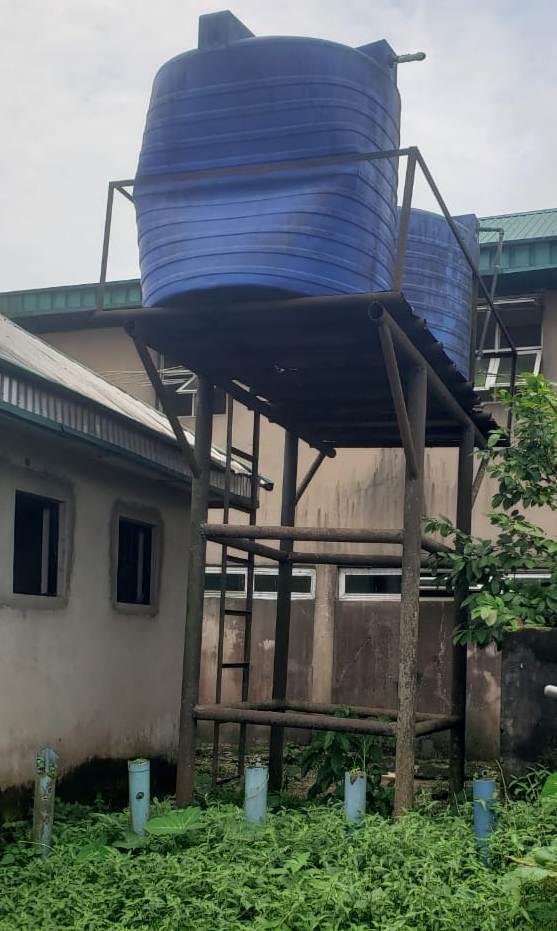
treatment and supply units. The project employed maintenance staffs and it was operational for few years and became moribund, owing to poor maintenance which most likely resulted from no defined maintenance system with responsibilities (between SPDC
and Communities).
SPDC Water Treatment and Supply Unit at Okolobiri Community. (Photo taken on July 18, 2026)
pg. 95
Phase 4: Gbarain/Ekpetiama Community Development Board (G/E CDB) Water Supply Project (2011) During the term of Comrade Zamabo Wozi as President (2010 -
2013) of the Gbarain Youth Federation (GYF), good water supply remained a key demand from SPDC. The youth experienced several forms of intimidation and harassment from security personnel around stationed assets and facilities linked to SPDC
hence, they changed their protest strategy. The GYF leadership appealed to community leaders across the kingdom and women were mobilized for protest against SPDC. Therefore, a general kingdom-wide women protest demonstration against SPDC was held in 2010. Thus, a central water supply project was approved for construction in Gbarain Kingdom. The project was awarded through the Gbarain/Ekpetiama Community Development Board (G/E CDB) in 2010 at Obunagha, while water supply pipelines were constructed to all communities in the kingdom for supply.
The project was at completion stage in 2011 and water supply operations preliminarily started in 2012. Water was supplied across the kingdom for some months. Though, the project was not officially reported completed until it went moribund, most likely owing to poor infrastructural maintenance culture.
pg. 96
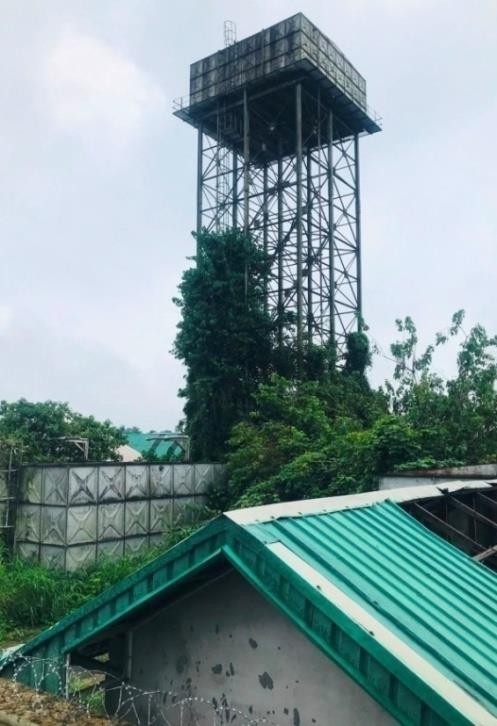
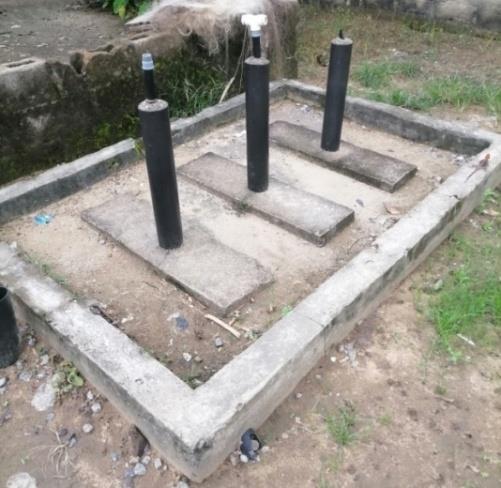
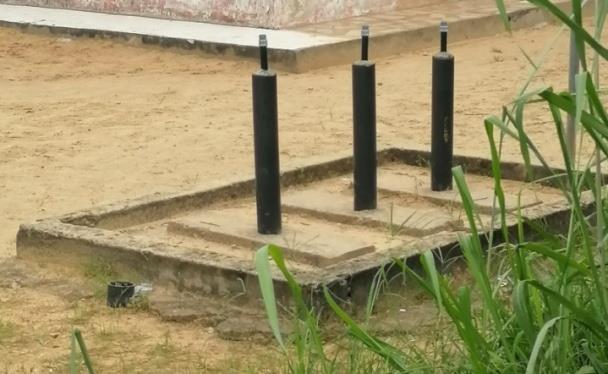
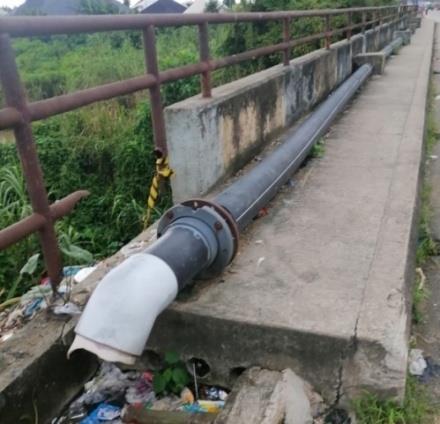
Photo 2
Photo 1
Photo 1: G/E CDB Water Supply Project at Obunagha (Photo taken July 20, 2026).
Photo 2: Water Supply Unit at Okotiama (Photo taken July 19, 2026).
Photo 3 Photo 4
pg. 97
Photo 3: Water Supply Unit at Polaku (Photo taken on July 13, 2026).
Photo 4: Water Supply Pipeline at Okolobiri (Photo taken on July 10, 2026).
The General Memorandum of Understanding (GMoU) system required communities to inaugurate a community level committee, which would be a representation at a cluster of communities’ development board. Hence, Gbarain and Ekpetiama35 oil and gas host communities were made a cluster, the Gbarain/Ekpetiama Community Development Board (G/E
CDB). The G/E CDB became an intermediary responsible for all developmental concerns and protests of host communities in the cluster. The concept is, SPDC fund and the development board indentifies, award, and supervise contracts for community development.
Phase 5: Gbarain/Ekpetiama Host Community Development Trust (HCDT) Water Project (2025/2026)
Following an agitation for a good water supply in view of sustainability, on the backdrop of several moribund water supply projects within the kingdom, the Gbarain Youth Federation 35 Ekpetiama is a kingdom close to Gbarain with very close dialect and culture pg. 98
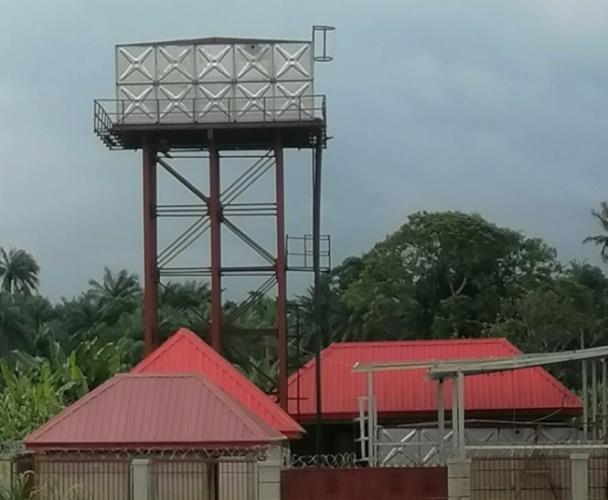
(GYF)36 led by Comrade Perediseghabofa Orufa as President (2022 – 2025), contributed to the proposal of a decentralized water supply scheme in 2024. Through the G/E HCDT, the project was approved and contracted. Owing to the decentralization proposal, the Gbarain Kingdom was divided into four units; Unit A (Okolobiri, Obunagha, Kumbo-ama, and Tunuama), Unit B
(Okotiama, Ayama, Ogboloma, and Ayakiri-ama), Unit C (Agbia, and Nedugo), and Unit D (Polaku, and Koroama). Construction of all four units started in 2025 and proposed to be completed by 2026.
Ongoing construction of Agbia, and Nedugo Water Project (Photo taken on July 31, 2026)
36 GYF is the umbrella body for all youth in Gbarain kingdom. Please see Gbarain Youth Federation in page 114
pg. 99
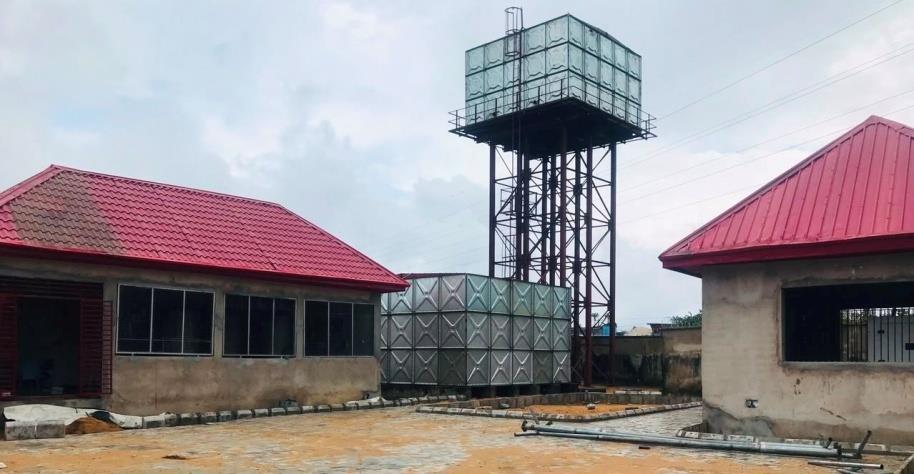
Ongoing construction of Okolobiri, Obunagha, Kumbo-ama, and Tunuama Water Project
(Photo taken on July 20, 2026)
On introduction of the Petroleum Industry Act (P.I.A.) by the Nigerian government in 2021, Shell Petroleum Development Company Nigeria Limited (SPDC) relationship with host communities adjusted to it. On implementation of the P.I.A. the Gbarain/Ekpetiama Community Development Board (G/E CDB) was restructured to Gbarain/Ekpetiama Host Community Development Trust ( G/E HCDT). The G/E HCDT functions as an intermediary between host communities and oil and gas exploration companies within their domain.
pg. 100
Electrical Power Supply in Gbarain Kingdom
The Self-Help Era (1980 – 1995)
The first form of communal electrical power supply experienced in Gbarain Kingdom was through self-help initiatives. These initiatives were fund raising ceremonies within communities.
Gbarain communities raised funds and purchased electrical materials for installation of electrical bulbs along the streets within communities. These efforts were aimed at having bright communities at night mostly during the Gbarain Uzu37 festive periods. Between 1980 and 1995, Gbarain communities through self-help initiatives logged small trees and used them as stands for the installation of street lights. These street lights were powered with electrical power generating sets; most of the generating sets were gifted to communities during the administration of late Chief Melford Okilo as Governor (1979 –
1983) of Rivers State. Ogboloma Community was also gifted with an electrical power generating set by Chief Engr. D. H. S. Souza Okpofabiri. Also, Engineer Kuro Amakoromo financially supported Koroama Community electrification sometime in 37 Gbarain Uzu is an annual festival in Gbarain Kingdom. It is also known as New Yam Festival. And every year, the finale is hosted by a different community within the kingdom
pg. 101

1983, which was a significant support leading to the installation of street lights.
In making the 1994 edition of the Gbarain Uzu festival more unique, Obunagha Community which hosted the finale organized a fund raising ceremony and acquired metal stands for street lights sometime in 1993. Okolobiri did similar fund raising ceremony and purchased wooden electrical poles with bulbs for installation along the community street. The Okolobiri community in Port Harcourt also did a fund raising ceremony aimed at the project and bought an electrical power generating set for the community. Koroama Community had a similar initiative and installed same along the community street. Almost all communities replaced wooden poles with metal poles before Nigeria’s fourth republic.
Metal stand for street lights once used
by Gbarain communities
(Photo taken July 16, 2026 at Koroama)
pg. 102
Contribution of the Concerned Youth of Gbarain (1994) The youth led by Chief Whyte Suwari, Mr. Tonye Barasebai, Mr.
Ebipa Etuele, and Mr. Shadow Freetown Saiyor February 29, 1994 protest against SPDC over infrastructural development of Gbarain primarily for the Igbogene – Polaku Road38, also included supply of electricity to the kingdom. During the April 12, 1994
meeting with officials of the Rivers State Military Administration, the Gbarain Kingdom representatives also demanded supply of electricity to all towns in Gbarain clan through the Kolo-Creek Gas Turbine or if possible from the Etelebou flow station39.
Owing to the demand, OMPADEC awarded the electrification of Gbarain Kingdom to News Engineering Company Limited in 1995, to be connected to the Kolo-Creek Gas Turbine at Imiringi, Ogbia Local Government Area. The company installed concrete electrical poles from Igbogene to Polaku.
Nigeria Fourth Republic (1999 –)
When the Nigerian fourth republic began with the 1998/1999
General Elections, late Chief Diepreye S. P. Alamieseigha was elected as governor of Bayelsa State in 1999; Gbarain Kingdom was connected to the then Kolo-Creek Gas Turbine at Imiringi, a completion of the OMPADEC Gbarain electrification project 38 Please see Gbarain Kingdom Inter-Communal Road Projects in page 103
39 Please see Appendix Six and Seven in pages 246 and 253
pg. 103
sometime in 2000. The kingdom was switched from the Imiringi Gas Turbine to the National Grid following the Power Sector reforms of the administrations of President Olusegun Obasanjo as president of the Federal Republic of Nigeria (1999 – 2007).
The Gbarain Gas Power Station, Koroama, Gbarain Kingdom During the administration of President Olusegun Obasanjo as president, the federal government of Nigeria sometime in 2006
awarded the construction of a 225MW Gas Turbine Power Station which is sited within Koroama Community, Gbarain Kingdom, to Rockson Engineering Company Limited. The contract was re-awarded in February 2011 during the administration of President Goodluck E. Jonathan as president of the Federal Republic of Nigeria. The value of the contract was increased from USD138,675,122.20 to USD220,101,976.79 in 2011. And the project was projected to be completed in 2016.
The project is also known as Gbarain Power Plant. It was owned by the Federal Government of Nigeria but under the administration of Dr. Goodluck E. Jonathan as President of Nigeria (2010 – 2015), it was sold to the Niger Delta Power Holding Company Limited which now operates the plant through one of its subsidiary companies, Gbarain Generation Company Limited.
pg. 104

Gbarain Power Plant, Koroama
Photo source: https://ndphc.net/gbarain
Niger Delta Power Holding Company Limited (NDPHC) Power Supply to Gbarain Kingdom (2020)
Among the founding objectives of the Gbarain Youth Federation (GYF), is a constant electrical power supply to Gbarain Kingdom.
Hence, when the Gbarain Power Plant started operations in 2018, it was an opportunity presented to archive this aim by the youth.
According to existing legal framework of power plants operations in Nigeria, the plant is to implement an electrical power supply to about Five Radius Kilometers Square from it facility, to neighboring residents and communities, as it Corporate Social Responsibility (C.S.R.). But this was not implemented by the operator of the Gbarain Power Plant as at the start of operations in 2018.
pg. 105
Thus, the leadership of the Gbarain Youth Federation (GYF)40 led Comrade Ebiye Orumokumo (of Koroama) as president formally protested against their operations over failure to fulfill their Corporate Social Responsibility (C.S.R.) to the Gbarain Kingdom.
The youths demanded a direct power supply to the kingdom from the plant which was part of the C.S.R. The operators of the plant (Niger Delta Power Holding Company Limited, NDPHC) opted to ignore the demand. Hence, the youth leader mobilized its members across the kingdom and halted operations of the plant in 2018. They demonstrated at the premises of the power plant for eight days consistently amidst intimidation by the Nigerian Police and Army; some youths sustained injuries.
The plant operators noting the consistency of the protesters in halting their operations, they engaged the youth leadership and discussions started. Prior to the discussions, the Presidency led by late President Muhamadu Buhari was informed, and it gave an order through the Federal Ministry of Power and Energy for the implementation of the C.S.R. Owing to the outcome of the discussions amidst the protest at the plant premise, the operators started installation of concrete electrical poles (funded by the operator) across the kingdom for a direct electrical power supply to Gbarain communities. On evidence of the operator’s effort to 40 GYF is the umbrella body for all youth in Gbarain Kingdom. Please see Gbarain Youth Federation in page 152
pg. 106
fulfill their C.S.R. the youths ended their protest at the plant’s premise. Also, the operator established a SubStation for the kingdom’s electrical power supply at Ogboloma Community sometime in 2019, as part of their understanding with the youth of Gbarain Kingdom.
When Comrade Iweribangikumo Okpoinipre (of Agbia) succeeded Comrade Ebiye Orumokumo as president of the Gbarain Youth Federation (GYF) in 2019, he continued the demand for an electrical power supply to Gbarain Kingdom from the Gbarain Power Plant. During the term of Comrade Iweribangikumo Okpoinipre, the youths noted a slow progress in implementing the understanding they had with the power plant operator. Hence, they embarked on another demonstration protest at the premises of the Gbarain Power Plant and halted operations in 2019. This round of protest lasted for about four days, and the plant operator requested each community in the kingdom to install a 500KVA Transformer in order to receive electrical power supply from the SubStation established by them at Ogboloma Community.
The youth leadership conveyed the protest outcome to the King of Gbarain Kingdom (H.R.M. King Funpere Gabriel Akah) and the various communities Paramount Rulers of the kingdom; the need for a 500KVA Transformer in each of the communities. Some pg. 107
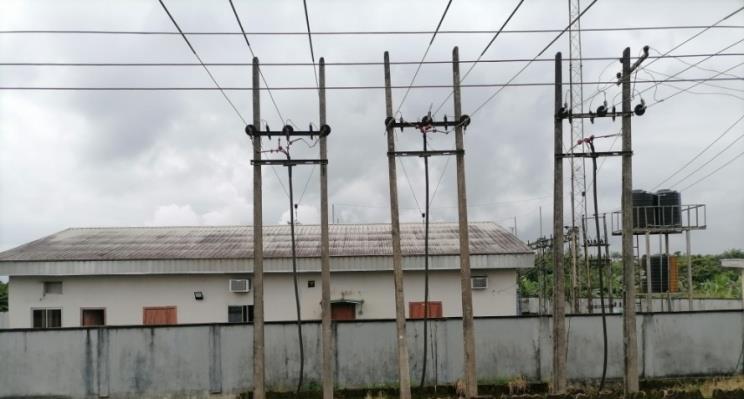
communities already had a 500KVA Transformer installed (Okotiama, Ayama, and Agbia) and other communities funded same installation or upgrade in their communities.
The kingdom first received electrical power supply from the Gbarain Power Plant sometime in September, 2020. The plant experience a major outage owing to a fire outbreak in late November, 2020 hence, the plant was shut down. It was restored months later, funded by the Bayelsa State Government, Nigeria.
The electrical power supply infrastructure to the kingdom from the Gbarain Power Plant remains thus, the continuation of supply is obvious.
Electrical power supply SubStation built by Niger Delta Power Holding Company Limited (owner and operator of the Gbarain Power Plant) at Ogboloma Community, Gbarain Kingdom. (Photos taken on August 3, 2026)
pg. 108
The Niger Delta University Teaching Hospital (NDUTH), Okolobiri
The administration of Chief Alfred Papareye Diete-Spiff as governor of Rivers State (1967 – 1975) approved the establishment of a general hospital, Okolobiri General Hospital in 1972. The first sets of medical doctors posted to the facility are, Dr. A. O. Okilo, Dr Gideon Atotu, and Dr. Sonron. The facility was renovated during the administration late Chief Melford Okilo as governor of Rivers State (1979 – 1983) and that improved the medical services that was offered.
When the Nigerian fourth republic began with the 1998/1999
General Elections, late Chief Diepreye S. P. Alamieseigha was elected as governor of Bayelsa State in 1999, and Okolobiri General Hospital was approved to the status of a teaching hospital and commissioned sometime in October, 2006; The Niger Delta University Teaching Hospital (NDUTH) Okolobiri, was commissioned by President Olusegun Obasanjo as president of the Federal Republic of Nigeria (1999 – 2007).
pg. 109
The Ethnocide of Taylor Creek Ownership The Gbarain Kingdom’s Taylor Creek at a time as the descendants of Gbarain-owei established communities along it coast, was owned by each community: every community owned a domain according to the land boundaries. There after, each community gave custody of their areas of domination of the creek to individual families for stewardship at the dawn of the 20th century. Thus, the stewardship of the creek was by four families across four communities in Gbarain; Igbainwari Family of Koroama, Okoro-wari Family (Jumbo Pele) of Okolobiri, Orufa descendants of Asaingbene, and Olomani Family of Okotiama (modernly the Ayama Community). Igbaiwari Family of Koroama owned a section encompassing from Polaku to the boundary of Koroama and Obunagha (modernly with Tunuama). Okoro-wari Family of Okolobiri owned from the end point of Igbaiwari family ownership to a section in Asaingbene, Orufa descendants of Asaingbene owned to a section around Okotiama, and the rest was owned by Olomani Family (Ayama Community). This was the status quo of the Taylor Creek.
This ownership structure enabled regulated fishing and systematic natural preservation of fishes in the natural creek. The owners of different sections of the creek regulated fishing pg. 110
activities in the creek; they decide when to carryout fishing activities and the type of fishing materials to be used at various periods of the year. For instance, during a certain period of the year, only fishing line and hook is permitted for fishing activities in the creek. And in some periods of the year, fishing at night is not permitted and vice versa. And when a general fishing activity is declared by the owners of the various sections of the creek, all fishing materials were permitted for fishing. And it usually last for a period of three days, which was more of a fishing festival across the kingdom. The periods for the three days fishing festival which all materials were permitted, was usually within a four month period (November – February) annually.
During the three days general fishing activities, owners of the various sections of the creek do pick their desired fishes from each of the fishing persons on their sections of the creek. And it was later transformed into a ticket system; where tickets are bought financially to engage in fishing activities during the three days period. And ticket price varies according to the fishing materials to be used. For instance, the ticket price for hook and line differs from nets.
The Ethnocide: The forgoing was the practice in Gbarain Kingdom until 1988, when late Mr. Enugu Oyaperemo and late Mr. Jerusalem Oyoro of Polaku Community sent some persons for pg. 111
fishing without authorization, and they were caught fishing with unauthorized fishing materials within a section owned by the Igbaiwari Family of Koroama. They were caught during the night and were handed over to the Nigerian police. The suspects insisted on their right and innocence hence, the case was charged to court. And sometime in 1989, the court decided that the suspects were on right standing with the Nigerian law in carrying out fishing activities, emphasizing the general ownership of all sections of the Taylor Creek. Therefore, the court decision ended the era of sectional ownership of the Taylor Creek in Gbarain Kingdom. The 1989 decision of the court on Igbainwari Family ownership affected every other community within the kingdom, ending the fishing culture of Gbarain people.
Note:
1. Before the three days fishing festival is declared by the sectional owners, spiritual consultations were done at the shrines of various deities believed to be the custodians of the creek. For instance, the Igbaiwari family of Koroama does spiritual consultations at the shrine of Toruta deity, likewise all other sectional owners of the Taylor Creek at various shrines.
pg. 112
2. Late Mr. Enugu Oyaperemo and late Mr. Jerusalem Oyoro were members of the political family of Sir (Dr.) Lambert Eradiri of Agudama-Ekpetiama hence, he supported them financially, and politically, ensuring the court decision favored them.
3. The Gbarain Kingdom creek was named after a freed African slave who later was sent back to Africa as a Christian Missionary with the name Taylor41. He is most likely the first explorer that made an entry into Gbarain Kingdom and reported back to the British Empire of the existence of settlements and communities.
41 Onwubiko, K. B. (1982). School Certificate History of West Africa. Aba: Africana-FEP.
pg. 113
Gbarain Youth Federation (GYF)
The Gbarain Youth Federation as an organization resulted from Gbarain young men’s desire to actively contribute to the development of the kingdom through an organized central youth body. The Gbarain Chiefs and People’s Conference42 introduced by late Chief Michael A. Kwokwo as Ibenanaowei of Gbarain Clan, was a platform where the kingdom’s development is discussed, and detailed information on the plans and actions of the kingdom’s leadership were decimated. From different editions of the Gbarain Chiefs and People’s Conference, the youth of Gbarain were informed of the pending increase of oil exploration activities by Shell Petroleum Development Company of Nigeria Limited (SPDC) in the kingdom.
The need for a central youth body became more germane when Chief Michael Ambi Kwokwo who was the Head of the kingdom passed on sometime in 2001. And the office of the Clan Head became vacant. Despite the vacancy, the Chiefs and Elders of the kingdom actions communicated lack of interest in bridging the gap in leadership of the kingdom to the youth. This was in addition to the poor state of infrastructure primarily road, and other social amenities in the kingdom, which was seen as a 42 Please see Kingship in Gbarain Kingdom in page 51
pg. 114
deliberate neglect of government at all levels and petroleum exploration companies in the kingdom, powered by the ignorance of the Elders and Chiefs. Hence, groups of friends with like minds started discussions on how they can meaningfully support the kingdom’s development desires as youth. And some elders also encouraged a common association of the kingdom’s youth.
In course of such discussions, the Gbarain Youth Federation idea was conceived; an organization that utilizes the youth energy in contributing to the development of the kingdom. The group of friends that initiated the idea is;
1. Comrade John D. Waripamo of Ogboloma Community 2. Hon. Ebiwari Wariowei of Koroama Community 3. Dr. Stephen Ogidikpe of Koroama Community 4. Hon. Bipele Otuogha of Nedugo Community 5. Hon. Tonye Ernest of Polaku Community
And other youth leaders in communities across the kingdom were approached by this group of friends and the idea of a youth federation was generally accepted. With the general acceptance of a common youth association, a kingdom youth congress was held in 2003, and a constitution drafting committee was constituted. A draft constitution was presented to the kingdom’s pg. 115
youth and it was adopted sometime in November, 2003.
Following the constitution adoption, elections were conducted to fill Eleven leadership positions of the association, now Gbarain Youth Federation. The offices are, 1. The President
2. Vice President
3. General Secretary
4. Assistant Secretary
5. Public Relations Officer
6. Financial Secretary
7. Treasurer
8. Organizing Secretary
9. Welfare Secretary
10. Provost
11. Women Leader
On the backdrop of elections producing a substantive leadership structure on April 11, 2004, led by late Comrade Ebiye K. Okoko of Obunagha, the Gbarain Youth Federation formally started it activities. This first leadership laid the foundational methods of achieving the aim of contributing to the development of Gbarain Kingdom. The Ebiye Okoko leadership prioritized three development parameters; good water supply, uninterrupted electrical power supply, and good road infrastructure. He pg. 116
adopted formal protests and demonstrations against multinational oil and gas exploration corporations within the kingdom in achieving the objective of Gbarain Youth Federation.
And he believed these multinational corporations must contribute to the development of the kingdom as their host.
Thus, protest demonstrations must disrupt oil and gas exploration activities to command attention to the developmental needs of the kingdom. This he implemented severally and favorable results were achieved. Owing to the passion in executing the activities of the Gbarain Youth Federation (GYF) by Comrade Ebiye Okoko, the organization became a known body representing the Gbarain youth within and outside the kingdom; establishing the organization as a stakeholder in Gbarain Kingdom. And successive leaderships of the GYF followed the methodology of Comrade Ebiye Okoko.
The GYF experienced some of its dark days when Comrade Ebiye Okoko was arrested during his term on accusations of kidnapping by Shell Petroleum Development Company of Nigeria Limited (SPDC). The Gbarain Youth Federation has also experienced some constitutional reforms. Following the conclusion H.R.H. Chief Akeri Reginald Okoro led leadership in 2016; the kingdom youth introduced a zoning arrangement for the offices in the leadership structure. The kingdom’s communities were divided into two pg. 117
zones and offices were defined for each zone in all succeeding leadership.
Key Achievements of Gbarain Youth Federation The GYF have achieved most of its first defined development parameters for the kingdom; water supply, road infrastructure, and uninterrupted electrical power supply.
1. Road Infrastructure43: The reconstruction of the Igbogene –
Polaku Road with inclusion of Ogboloma – Ayama – Okotiama axis between 2006 and 2012 resulted from GYF agitation through protest demonstrations.
2. Good Water Supply 44: The kingdom-wide water supply projects in 2007, 2011, and 2025/2026 resulted from agitations through protest demonstrations and contributions by GYF.
3. Electrical Power Supply45: The Niger Delta Power Holding Company Limited (NDPHC) Power Supply to Gbarain Kingdom which started in 2020 resulted from the protest demonstrations of the GYF.
4. General Memorandum of Understanding (GMoU) Review in 2011: During the term of Comrade Zamabo Wozi (2010 - 2013), 43 Please see Gbarain Kingdom Inter-Communal Road Projects in page 64
44 Please see Gbarain Kingdom Water Supply Projects in page 90
45 Please see Electrical Power Supply in Gbarain Kingdom in page 101
pg. 118
the youths continued their protest demonstrations for review of the then GMoU among other demands. Amidst several forms of intimidation and harassment from security personnel around stationed assets and facilities linked to SPDC, they changed their protest strategy. The GYF leadership appealed to community leaders across the kingdom and women were mobilized for protest against SPDC. Therefore, a general kingdom-wide women protest demonstration against SPDC was held in 2010. These demonstrations led to the GMoU review which increased the development budget for the kingdom and added a five percent (5%) allocation to fund women initiatives from the budget.
Presidents of Gbarain Youth Federation
Name
Period
Community
Late Comrade Eblye K. Okoko
2004 – 2007
Obunagha
Late Comrade Etin Koko
2007 – 2010
Okotiama
Comrade Zamabo Wozi
2010 – 2013
Ogboloma
HRH Chief Akeri R. Okoro
2013 – 2016
Ogboloma
Comrade Ebiye Orumokumo
2016 – 2019
Koroama
Comrade Iweribangikumo
Okpoinipre
2019 – 2022
Agbia
pg. 119
Comrade Perediseghabofa Orufa
2022 – 2025
Asaingbene
Comrade Gesiebi Apinaowei
2025 – 2028
Ayama
Note: Following the ill health and death of Chief Michael A.
Kwokwo and his secretary, Mr. Fred Agugu in 2001 and 2002
respectively, Prof. Kimse A. B. Okoko and other stakeholders piloted the Gbarain Chiefs and People’s Conference until the election of H.R.M. King Funpere Gabriel Akah as king of Gbarain Kingdom in 2004.
pg. 120
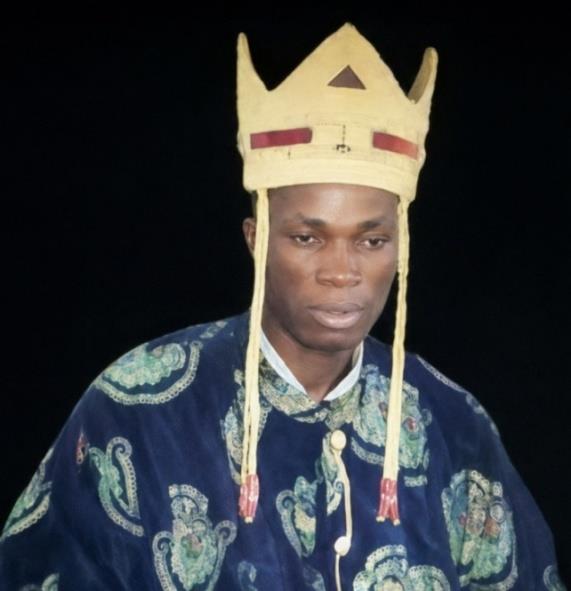
Tribute: Chief Whyte Suwari
Name
Chief Whyte Suwari
Year of Birth
1960
Community
Polaku Community
Paramount Ruler (Amananaowei) of
Previous Office
Polaku Community, 1991 – 2005
Leader of the first major youth protest
against SPDC which commanded the
presence of then Governor of River State,
Dr. Rufus Ada–George to Gbarain Kingdom
in 1992
Known for
His leadership role in actualizing the
Igbogene – Polaku Road. And his resistance to financial inducement by SPDC officials
over infrastructural development of
pg. 121
Gbarain Kingdom.
References
1. Appah, E. V. (1969). Administrative Divisions of Rivers State. Port Harcourt: E V Appah.
2. Federal Ministry of Information and Culture. (1929). Brass Division Assessment Report . Enugu: National Archives.
3. Gbarain Kingdom Constitution Drafting Committee, 2002.
(2003). The Constitution for the Traditional Administration of Gbarain Kingdom, 2002. Gbarain Kingdom: Gbarain Kingdom Constitution Drafting Committee, 2002.
4. High Court of Bayelsa State of Nigeria. (2024). Case Number: BYHC/YHC/CV/294/2023. Yenagoa: High Court of Bayelsa State of Nigeria.
5. Kelvin. (2012, October 8). Federal Executive Council (FEC) Approved Contracts for February 16, 2011. Retrieved August
5,
2026,
from
Nigerian
Tenders:
https://www.nigeriantenders.com/p/416/federal-executive-council---fec-approved-contracts.html 6. Kwokwo, M. A. (1986). An Outline History of the Gbarain Clan. Yenagoa: H.R.H Michael Ambi Kwokwo.
7. NDPHC. (n.d.). Gbarain Power Plant. Retrieved August 5, 2026, from Niger Delta Power HoldIng Company Limited: https://ndphc.net/gbarain
8. NDPHC. (n.d.). National Integrated Power Plant. Retrieved August 8, 2026, from Niger Delta Power Holding Company Limited:
pg. 122
https://web.archive.org/web/20221028115854/http://n dphc.net/gbarain
9. Obuoforibo, B. A. (1998). History of Christianity in Bayelsa.
Yenagoa: Archdeaconry House.
10. Onwubiko, K. B. (1982). School Certificate History of West Africa. Aba: Africana-FEP.
11. Owonaro, S. K. (1949). The History of Ijo and Her Neighbouring Tribes in Nigeria. Lagos: Niger Printing Works.
12. Oyadongha, S. (2006, April 7). Nigeria: 225mw Gas Power Station in Bayelsa to Cost $183m. Retrieved August 5, 2026,
from
allAfrica:
https://allafrica.com/stories/200604070123.html#:~:tex t=Yenagoa%20%E2%80%94%20The%20225MW%20Gb
arain%2DUbie,%24183.5%20million%2C%20approximat ely%20N24%20billion.
13. Tuaweri, J. O. (2008). A Brief History of Gbarain Kingdom.
Yenagoa: John Ark John (Nigeria) Limited.
pg. 123
Part Two: The People of Obunagha Community (15) Introduction: Obunagha Community
(16) Chief Asara John Yeseibo Administration (1935 – 1960) (17) Chief Patani Kemedise Administration (1960 – 1973) (18) Chief Nathan Ikokey Okoko Administration (1973 – 1984) (19) Chief Smart A. Wenigha Administration (1984 – 1998) (20) Late Chief Amiebi Orufa and Chief Soberekon Okoko Caretaker Administration (1998 – 2004)
(21) Chief Ayibatonye Igina Administration (2004 – 2008) (22) Chief Jordan Abraham Caretaker Administration (2008) (23) Late Chief Seth Fekoweimo Administration (2008 – 2013) (24) Chief Godgive Apoh Administration (2013 – 2015) (25) Chief Elijah Tietie Administration (2015 – 2018) (26) H.R.H. Hon. Peremobowei Yeseibo Administration of Obunagha Community (2018 – )
Tribute: Late Professor Kimse Amaebi Biya Okoko
pg. 124
Introduction: Obunagha Community
The progenitor of Obunagha Community ( Beri-Obunagha) was a descendant of Ogoro, one of the sons of Gbarain-owei46. The settlement of Obunagha was first known as Baeri-Obunagha (meaning a stubborn child), which resulted from the settlement established by the descendants of Baeri-Obunagha, one of the sons of Ogoro and grandson of Gbarain-owei. Baeri-Obunagha had five sons; Ungbo, Adia, Tunu, Okoni, and Odumu-owei. The descendants of these five sons established the modern community of Obunagha creating five compounds; Ungbowaribo, Tunuama, Adiawaribo, Okoniwaribo and Odumu. With the passage of time, the community was reduced to four compounds; Ungbowaribo, Tunuama, Adiawaribo, and Okoniwaribo, the representation of Odumu was almost extinct in the community, though the landed properties of Odumu remained. The absence of Odumu-owei descendants were owing to a death plague that affected his household though very few fled to other communities. Obunagha existed for a time without a representation from the descendants of Odumu-owei until the 1970s when late Chief Samasi Bikpobigha, and late Mr. Levi 46 Please see Establishment of Gbarain Settlements (1701 – 1800) in page 50
pg. 125
Kwokwo and others re-established Odumu Compound owing to them being Odumu-owei descendants.
Following the re-establishment of Odumu Compound in the late 1980s; the community returned to the original five compounds of Ungbowaribo, Tunuama, Adiawaribo, Okoniwaribo and Odumu.
This was the status quo until on May 19, 2017 when a section of Tunuama Compound declared autonomy from Obunagha Community and was recognized by the Bayelsa State government sometime in February, 2019. Thus, they became an autonomous community created from Obunagha.
Obunagha is currently undergoing a gradual transition from a semi-urban area to an urban area. With investments such as the Azikel refinery which stated construction on February 17, 2018, the fast going recreational industry with the establishment of several hotels and lodges, restaurants, bars, and Fido Water factory in December, 2016 among others in the community, have significantly contributed to this transition phase of the community. Thus, it is pertinent to historically reflect on the development of Obunagha according to various past administrations in the community.
pg. 126
Chief Asara John Yeseibo Administration of Obunagha Community (1935 – 1960)
Chief Asara Yeseibo of Okoniwaribo Compound was appointed by Obunagha Community Elders and congress to be the Paramount Ruler (Amananaowei) sometime in 1935. He was a brilliant and wise man among his peers within the community and across Gbarain Kingdom. On acceptance of the appointment as the Paramount Ruler of Obunagha, he became the ‘‘ Ogoro–V’’ (the traditional title of administrative head of Obunagha then). During his reign, he perfected a traditional conflict resolution council with no support from the colonial administration in Nigeria. He instituted a Conflict Resolution Council headed by him with men of proven integrity in the community. The success stories of the council became so pronounced within the community, and across Gbarain Kingdom thus, members of other communities in the kingdom referred inter-personal and family conflicts to the council. The council investigates and pronounced decisions that were unbiased and fair to all parties of a conflict. The integrity and commitment of the council made residents across Gbarain to refer them as the Ruling Council of Gbarain though at then, the pg. 127
Gbarain Zibai47 Priest was the traditional leader and head of Gbarain Kingdom.
During the reign of Chief Asara Yeseibo, there was a communal bond that made the community as a common family; the philosophy of ‘ One for All, All for One’ was practiced at a communal level. For instance, as palm oil processing was in vogue then, if one individual notifies the community for assistance in palm oil processing, all capable men in the community will join the individual on a specific day, abandoning almost every other activity for that member of the community.
The modern communal mourning for the dead (no one goes to farm), is a culture of the philosophy of ‘ One for All, All for One’. It is a practice that existed periods before the term of Chief Asara J.
Yeseibo as Paramount Ruler.
It was during the term of Chief Asara that the colonial government established the first school in Gbarain Kingdom at Obunagha, sometime in 1942; the Group School48. In addition to the fact that the presence of the first Anglican Church in Gbarain was established in Obunagha, which influenced the establishment of the first school in Gbarain, Chief Asara’s leadership style in 47 The deity of Gbarain Kingdom
48 Please see Development of Education in Gbarain Kingdom in page 44
pg. 128
Obunagha may have also contributed to that decision of the location of the first school in Gbarain Kingdom.
Before the appointment Chief Asara J. Yeseibo as the Paramount Ruler (Amananaowei) of Obunagha Community, there were other recorded administrative heads, they are,
Name
Traditional
Title
Chief Olobiri-Owei Brinei
Ogoro – I
Chief Ekpeku Brinei
Ogoro – II
Chief Ekperikongha Akangha
Ogoro – III
Chief Orupeh Ayafa
Ogoro – IV
Chief Asara J. Yeseibo resigned as the Paramount Ruler sometime in 1960, when the then Gbarain Zibai priest died and there was a clamor for an educated head of the kingdom. His resignation was to put himself forward to be the next administrative head of Gbarain Kingdom, though his aspiration was not achieved when late H.R.H. Chief Michael Ambi Kwokwo49 emerged as the head of Gbarain Kingdom as Clan Head in 1961. When Chief Asara resigned, the community congress appointed late Chief Patani Kemedise of Tunuama Compound who was a member of Chief 49 Please see Kingship in Gbarain Kingdom in page 51
pg. 129
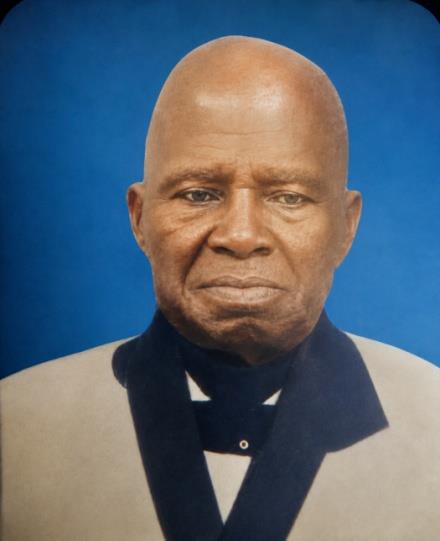
Asara’s council as the next Paramount Ruler (Amananaowei) becoming Ogoro – VI.
Chief Asara John Yeseibo (Ogoro–V)
Paramount Ruler (Amananaowei), Obunagha, 1935 – 1960
pg. 130
Chief Patani Kemedise Administration of Obunagha Community (1960 – 1973)
When Chief Asara Yeseibo resigned, he nominated Chief Patani Kemedise of Tunuama Compound to be his successor as Paramount Ruler (Amananaowei) and the community congress approved the nomination making Chief Patani Kemedise Ogoro –
VI in 1960. He administratively led Obunagha during the period of the Nigerian Civil War (1967 – 1970)50 and exhibited exceptional leadership attributes. For instance, when indigenes of Gbarain Kingdom volunteered and left the kingdom to join the Nigerian Army, Biafran soldiers invaded Gbarain and arrested most of the volunteers’ wives across the kingdom. But when the Biafran soldiers arrived Obunagha Chief Patani ensured that such arrests were not implemented on any woman by them. He debated the soldiers that he cannot determine the allegiance (either Biafra or Nigeria) of the volunteers as he was not pre-informed. It was during this debate with the Biafran soldiers that he made the phase ‘Die is one day, Born is one day, Shoot me water’ that was used after as a meme across Gbarain Kingdom.
50 The Nigerian Civil War is also known as the Biafran War, and Nigeria –
Biafra War. It was between the Nigerian Government and the then Eastern Region of Nigerian that attempted to create the State of Biafra, as an autonomous country from Nigeria.
pg. 131
Following his refusal for the arrest of women in Obunagha, they arrested him and sent him to a war time prison at Umuahia in the then Eastern Region (modernly within Abia State, Nigeria).
During his term in prison, he was a very useful prisoner to other inmates; other communities Paramount Rulers were also arrested. Chief Patani was known to smuggle palm fruits for other prisoners, which became most of their diet during their time in the prison. He was released after several months, and he returned to Obunagha to continue his leadership.
The Mr. John-Brown Orodubo Murder Case: Another notable event during the time of Chief Patani Kemedise as the Paramount Ruler of Obunagha was Mr. John-Brown Orodubo’s alleged murder of one Mr. Winke with his gun at a bush area that led to a court case which lasted between 1964 and 1966. Mr. Winke was paternally of Ogboloma Community and maternally from Obunagha, also married and resident in Obunagha hence, he participated in all communal activities of Obunagha. In one of the communal activities of assisting a member in local palm oil processing, Mr. John-Brown Orodubo had a misunderstanding with Mr. Winke which was not resolved. Later that day, Mr. John-Brown allegedly shot and killed Mr. Winke in a bush area and covered the body with grasses. Mr. Winke was declared missing by the community, and his body was found three days later.
pg. 132
When the body of Mr. Winke was found, indigenes of Ogboloma Community seek to avenge the death of their brother and almost declared war on Obunagha Community, but Chief Patani as the Paramount Ruler mediated and maintained peace between the two communities. He assured the Ogboloma leadership of justice and promised to find the suspect responsible for the death.
Therefore, deities were consulted by the Obunagha leadership, and owing to the direction of the deities, the suspect was found to be Mr. John-Brown Orodubo. He admitted to the act but claimed it was a fatal mistake on his part as a hunter. The community leadership handed Mr. John-Brown over to the Brass Division police, of which he was charged to court and was declared innocent. The court decision was based on a claim that He shot an animal as a hunter, and not a human.
The court judgment was not accepted by some indigenes of the community, and mostly the relatives of Mr. Winke at Ogboloma Community. Mr. Winke’s relatives at Ogboloma demanded restitution from Obunagha which was not fulfilled owing to the court judgment. Hence, they summoned Gbarain deities to action in fairness and equity which ended the case. Many who had belief on ancient communal deities argue that, the summon resulted to the sudden death of many prominent indigenes of Obunagha Community, and Gbarain Kingdom, and the rampant deaths of the pg. 133
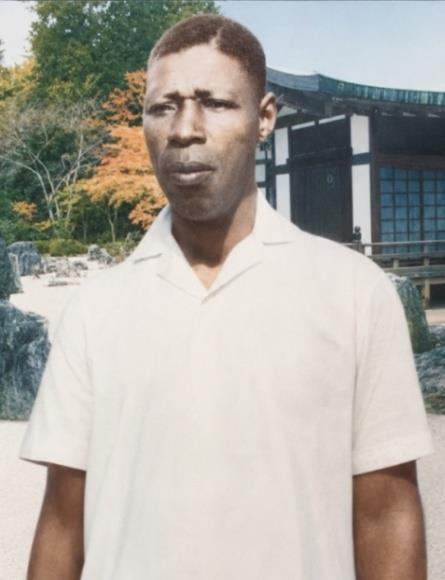
Chief Asara Yeseibo’s council51 members. At then, it was an abomination to kill a fellow human, and such acts were highly dreaded by indigenes of Obunagha and across Gbarain Kingdom.
Chief Patani Kemedise resigned as the Paramount Ruler sometime in 1973 over concerns on his educational background.
He claimed he was unable to significantly participate in government and other external functions over his limited good understanding of the English Language. He then nominated late Chief Nathan I. Okoko who had better understanding of the English Language to be the next Paramount Ruler to succeed him.
Chief Patani Kemedise (Ogoro – VI)
Paramount Ruler (Amananaowei), Obunagha, 1960 – 1973
51 Please see Late Chief Asara John Yeseibo Administration of Obunagha Community (1935 – 1960) in page 127
pg. 134
Note: During the period of Mr. John–Brown murder case, a resident of Okolobiri Community who was a relation of Mr. Mr.
John-Brown went missing in the farm and was never found. It was believed that the person was kidnapped by external criminal actors.
pg. 135
Chief Nathan Ikokey Okoko Administration of Obunagha Community (1973 – 1984)
The resignation of late Chief Patani Kemedise as Paramount Ruler was in recognition of the fast changing dynamics of the Nigerian society and governance on the backdrop of the declaration of independence and the aftermath of the Nigerian Civil War. Chief Patani Kemedise nominated late Chief Nathan Okoko of Okoniwaribo Compound who was a retired civil servant with the then Rivers State government to succeed him as the next Paramount Ruler of Obunagha Community. Chief Nathan was an educated man in western systems and was exposed to the structures of the then Nigerian governance system. Be reminded that the primary consideration for Chief Patani’s resignation was his limited understanding of the English Language.
When nominated, Chief Nathan Okoko initially declined, insisting on his economic status as a retired civil servant. He was convinced to accept the nomination and contribute to the development of the community from his experience as a retired civil servant. Also, it will be an advantage to the community to have an educated Paramount Ruler, owing to the fast changing political and economic dynamics of the Nigerian society. Thus, Chief Nathan I. Okoko accepted the nomination and the pg. 136
community congress appointed him as the next Paramount Ruler (Amananaowei) becoming Ogoro – VII sometime in 1973.
The era of Chief Nathan I. Okoko could be classified as a transition period in Obunagha Community. This is because it was an era when community leadership and structures experienced drastic changes in line with the tide of a fast changing Nigerian society; the creation of States, and the introduction of several economic and education policies by the Nigerian federal government. Chief Nathan led the community in view of these changes and ensured peaceful co-existence among all residents and neighboring communities. He also prioritized education in the community, based on his background as an educationist and infrastructural modernization of the community.
Chief Nathan inheriting the community primary school52 (which was structurally made of mud) saw the vulnerability when exposed to flood waters. Hence, he organized several fund raising ceremonies (known as Lunching) and private individual donations in view of relocating and having a concrete structure for the community primary school. The primary school was relocated to this current location in 1983 from its first location (the modern premises of late Mr. Coastman Poko). During the construction of the primary school, Chief Nathan Okoko also took 52 Please see Development of Education in Gbarain Kingdom in page 44
pg. 137
part as laborer, carrying sand and mortar; a demonstration of leadership. He ensured the concrete primary school structure is achieved for the community.
Also, he initiated the first concrete community conference hall around 1981 – 1982. Individual financial donations were made to the community and materials such as roofing sheets were donated to the community in achieving the concrete primary school structure and community conference hall. Owing to the commitment of Chief Nathan in modernization Community, Obunagha was the first community in Gbarain Kingdom to have a concrete community conference hall. Chief Nathan also started street electrification in Obunagha; small trees were logged to be used as stands for street lights. Funds were raised through community effort and electrical wires and lamps were bought, and the street of Obunagha was lightened up powered by an electrical power generating set gifted by the administration of late Chief Melford Okilo as Rivers State governor (1979 – 1983).
Prior to his retirement from the Rivers State Civil Service, he worked as a primary school Teacher, and Treasurer at Port-Harcourt City Council. Chief Nathan I. Okoko died sometime in 1984, fulfilling the natural design of life. His deputy late Chief Smart A. Wenigha was appointed to act in his place by the community until his burial later the same year.
pg. 138
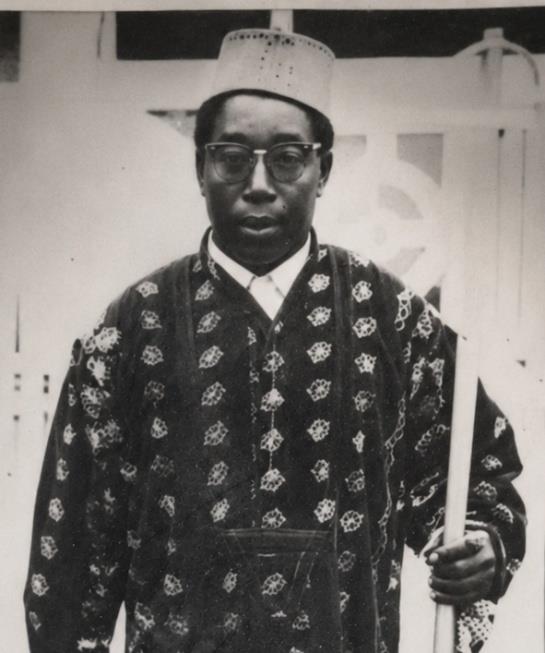
Chief Nathan I. Okoko (Ogoro – VII)
Paramount Ruler (Amananaowei), Obunagha, 1973 – 1984
pg. 139
Chief Smart A. Wenigha Administration of Obunagha Community (1984 – 1998)
Chief Smart A. Wenigha of Okoniwaribo Compound was appointed by the Obunagha Community congress as the substantive Paramount Ruler (Amananaowi) of Obunagha following the death and burial of late Chief Nathan Okoko sometime in 1984, becoming Ibolo53 – VIII. Chief Smart continued the modernization of the community as envisioned by Late Chief Nathan I. Okoko his former boss. During the administration, the wooden street light stands were changed to metal stands after a fund raising ceremony was organized. The administration also continued the construction of the community primary school and conference hall to completion.
In line with his vision for development, Chief Smart Wenigha supported the 1992 agitation against Shell Petroleum Development Company of Nigeria Limited (SPDC) on the lands of Obunagha, which was led by Chief Whyte Suwari of Polaku over the construction of the Igbogene – Polaku Road. He represented the community in all necessary engagements with SPDC and firmly supported the agitation in actualizing the road. Chief Smart 53 The traditional title of administrative head of Obunagha was changed from Ogoro to Ibolo due to the same title is used by OkolobirI Community. Ogoro is the progenitor of Obunagha and Okolobiri.
pg. 140
also granted the desires of the descendants of late Orufa to have an autonomous community established on Asaingbene fishing settlement sometime in 1996, which was considered an extension of Obunagha Community. The proposal for an autonomous Asaingbene was led by late Chief Randolph Ikpilifu and late Chief Parker Orufa.
During a community congress sometime in 1998, Chief Smart’s cabinet publicly expressed misunderstanding among themselves over financial miscommunication, which resulted to several resignations from the cabinet. The miscommunication was obvious between Chief Smart and his deputy Chief Napoleon Okoko. Thus, the community congress requested for the administration to step-down making space for a Caretaker administration to stabilize the community leadership until conclusion of investigations. A Caretaker administration was appointed which was led by late Chief Amiebi Orufa as Chairman, Chief Soberekon Okoko as Deputy, and Hon. Godday Okoko as Secretary.
pg. 141
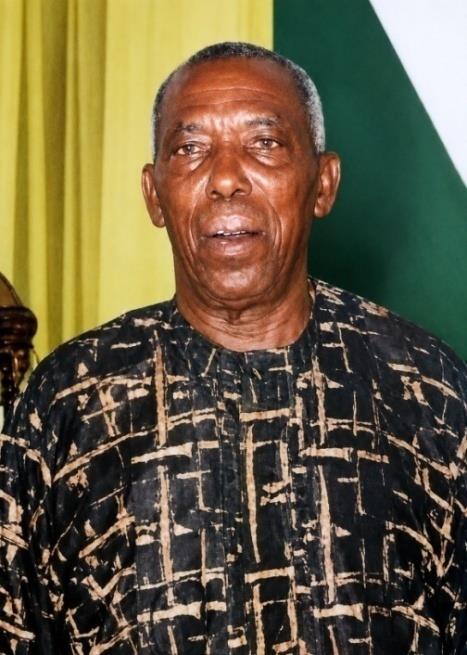
Chief Smart A. Wenigha (Ibolo – VIII)
Paramount Ruler (Amananaowei), Obunagha, 1984 – 1998
pg. 142
Chief Amiebi Orufa and Chief Soberekon Okoko Caretaker Administration of Obunagha Community (1998 – 2004)
As a resolution to the crisis within the administration of late Chief Smart A. Wenigha, the community congress held on November 19, 1998 asked the administration to step aside making way for a Caretaker Committee to stabilize the community. The Caretaker Committee was led by late Chief Amiebi Orufa of Ungbowaribo Compound as Chairman and Chief Soberekon Okoko of Okoniwaribo was appointed to be his deputy two weeks later.
The committee was task to stabilize the community leadership and ensure security of all residents amidst national security risks at the time. It was at the peak of the Niger Delta Militancy crisis; the Kaiama Declaration54 in 1998, and the Odi massacre/crisis55
in 1999. The Committee ensured that the community youth were not directly involved in any of these prevailing crises at the time.
54 On December 11, 1998, thousands of youth from more than 40 Ijaw Clans gathered at Kaiama, Bayelsa State, under the auspices of the Ijaw Youth Council (IYC), published the Kaiama Declaration. It called for self-determination, resource control, and a stop to the environmental damage brought on by oil extraction in the Niger Delta.
55 The Odi crisis, also known as the Odi massacre, occurred on November 20, 1999, when the Nigerian military brutally invaded Odi town in Bayelsa State.
The attack was ordered by President Olusegun Obasanjo's administration as payback for local criminals kidnapping and killing of twelve police personnel.
pg. 143
There were attempts of infiltrations of some external actors of those conflicts which may have implicated the community in those security issues, but the Caretaker Committee leadership was firm on it. Owing to the actions of the Committee, Obunagha Community was not implicated until those security issues were resolved by the Federal Government of Nigeria.
The Caretaker Committee also contributed to infrastructural development by expanding the then community conference hall, which was built during the term of late Chief Nathan I. Okoko as Paramount Ruler (Amananaowei). They engaged a Shell Petroleum Development Company of Nigeria Limited (SPDC) contractor, Mife Construction Nigeria Limited to contribute to the development of the community, of which they donated metal poles and roofing sheets. The Caretaker Chairman also got some financial donations from Crossrock Construction Company (another SPDC contractor). These donations resulted from their activities within the territory of Obunagha. Other financial donations were individually made towards the community conference hall and all were invested in the expansion of the hall.
The Committee also recycled some waste materials from the construction of the Igbogene – Polaku by Homan Engineering Company Limited and added it to the expansion of the hall which was achieved.
pg. 144
Following the Caretaker Committee Chairman, Chief Amiebi Orufa’s death and burial in 2002, Chief Soberekon Okoko was appointed Chairman and continued the activities of the committee and was instrumental in the discussions with government officials and SPDC representatives that led to the establishment of Shell Petroleum Development Company of Nigeria Limited (SPDC) facilities within Obunagha Community.
Chief Soberekon Okoko also contributed in the infrastructural maintainance of the community conference hall and primary school. He also represented the community in all engagements within the kingdom leading to the enthronement of a new Gbarain King in 2004. The tenure of the Caretaker Committee came to an end following an election to the office of the Paramount Ruler of Obunagha Community which was won by Chief Ayibatonye Igina sometime in 2004.
Chief Amiebi Orufa, 1998 – 2002 Chief Soberekon Okoko Chairman, Caretaker Committee Deputy, Caretaker Committee pg. 145
Note: Chief Soberekon Okoko is the first son of late Chief Nathan I. Okoko, Paramount Ruler (Amananaowei) of Obunagha, 1973 –
1984.
pg. 146
Chief Ayibatonye Igina Administration of Obunagha Community (2004 – 2008)
Following an election to the office of the Paramount Ruler (Amananaowei) of Obunagha Community sometime in late 2004, Chief Ayibatonye Igina of Okoniwaribo Compound secured the majority of the casted votes hence; he was declared the next Paramount Ruler of Obunagha becoming Ibolo – IX. Chief Ayibatonye Igina inherited a community transitioning to an era of regular direct engagement with Shell Petroleum Development Company of Nigeria Limited (SPDC). The engagement resulted from the choice of SPDC to establish the Gbarain – Ubie facility within the lands of Obunagha Community. The construction phase of the Gbarain – Ubie project presented several employments and trainings opportunities for indigenes of Obunagha Community.
Chief Ayibatonye Igina ensured that employment opportunities bordering around laborers and available skills are distributed equitably to all families within the community. Some indigenes were also sponsored by SPDC for skill acquisition trainings such as Wielding and Fabrication, Driving, and among others within the country. Due to the SPDC Gbarain – Ubie project, the pg. 147
community experienced a surge in migrants from other parts of the country into the community.
Sometime in early 2008, some indigenes expressed dissatisfaction towards the administration of Chief Ayibatonye Igina over his management of employment opportunities including sub-contractor opportunities within the Gbarain – Ubie project site. Chief Ayibatonye was also accused of not promoting and implementing the common interest of the community. The protests were received by the then Elders Council of the community and further engagements with relevant community stakeholders resulted to the need for a community congress. A congress was held at the community conference hall and persons with allegations against the administration were invited to make their presentations. All allegations were publicly presented and Chief Ayibatonye Igina defended all against him.
On the backdrop of an avalanche of allegations bordering on employment opportunities and sub-contractor opportunities, Chief Ayibatonye Igina orally tendered his resignation as the Paramount Ruler of Obunagha Community at the congress, which was later presented in writing to the Elders Council. The congress was presided over by late Professor Kimse Amaebi Biya Okoko.
Following the resignation of Chief Ayibatonye Igina, late Chief Jordan Abraham was appointed as the Chairman of a Caretaker pg. 148
Committee for at least three months to coordinate and supervise the conduct of elections to the office of the Paramount Ruler (Amananaowei) of Obunagha Community.
Chief Ayibatonye Igina (Ibolo–IX)
Paramount Ruler (Amananaowei), Obunagha, 2004 – 2008
pg. 149
Chief Jordan Abraham Caretaker Administration of Obunagha Community (2008)
The appointment of late Chief Jordan Abraham of Tunuama Compound as the Chairman of Caretaker Committee on the backdrop of the resignation of Chief Ayibatonye Igina was tasked with the responsibility of stabilizing the community, coordinate and supervise an election to the office of the Paramount Ruler of Obunagha Community. The Committee ensured peaceful co-existence during their term and an election was conducted on August 8, 2008. And late Chief Seth Fekoweimo was declared the next Paramount Ruler (Amananaowei) of Obunagha following the election.
Chief Jordan Abraham
Chairman, Caretaker Committee, 2008
pg. 150
Note: There were allegations of electoral malpractice by some concerned indigenes who later challenged the process in court.
The court affirmed the electoral process on the backdrop that there was no defined rules for the process, and the community is yet to have a documented legal framework guiding it affairs. The electoral process was presided over by late Professor Kimse Amaebi Biya Okoko.
pg. 151
Chief Seth Fekoweimo Administration of Obunagha Community (2008 – 2013)
Following the affirmation of the August 8, 2008 election by the court, Chief Seth Fekoweimo of Okoniwaribo Compound became the Paramount Ruler (Amananaowei) of Obunagha becoming Ibolo – X. He appointed Honorable Peremobowei Yeseibo as the Community Development Committee (CDC) Chairman, as his administration prioritized infrastructural development and modernization of the community. On the backdrop of the 2005
Shell Petroleum Development Company of Nigeria Limited (SPDC) General Memorandum of Understanding (GMoU) with Gbarain Kingdom, Chief Seth Fekoweimo agitated for its complete implementation. The implementation of the understanding resulted to the infrastructural and social development of the community.
The administration proposed the construction of concrete walkways on every road path within the community, which was funded through the implementation of the GMoU. Chief Seth administration introduced the first concrete walkways in the community. The administration’s desire for the development of the community motivated the demand for an electric power generating set to serve the community from SPDC while the pg. 152
GMoU proposed Back-up Electric Power Supply from the facility of the Gbarain – Ubie project site was under construction. The electric power generating set was delivered to the community sometime in 2009. The electric power generating set served the community with diesel supply from SPDC whenever the national power supply failed. The construction of the Back-up Electric Power Supply from the Gbarain – Ubie project site was completed sometime in December, 2010, introducing the next phase of development in the community. The completion of the Back-up Electric Power Supply in Obunagha attracted migrants from other parts of the country to the community, leading to an increase in population of residents. And an increasing population made the community a choice destination for business in Gbarain Kingdom.
Chief Seth Fekoweimo’s administration also desired an alternative route of the Igbogene – Polaku Road, for the community to the access the seat of Government of Bayelsa State and the Gbarain – Ubie project site. This motivated the proposal for the now popular Obunagha – LNG Road which was funded by SPDC. The road path clearing was awarded to late Mr. Funkiye Bikpo of Odumu Compound, which was followed by the construction to Bencov Construction Company. The construction was completed by Zerock Construction Company sometime in 2012. With the completion of the construction, Obunagha pg. 153
Community directly accesses the seat of Bayelsa State Government, the Gbarain – Ubie project, and the Niger Delta University main campus, Amassoma in record time.
The desire for the modernization of the community by the administration also motivated the proposal for a contemporary community conference hall. Chief Seth Fekoweimo ensured the approval of the project by SPDC despite the cost. The project was approved and awarded for construction through the General Memorandum of Understanding (GMoU) sometime in 2010 and it was completed sometime in 2016 during the administration of Chief Elijah Tietie. The administration also proposed the construction of concrete walkways to access the Taylor Creek. At then, most indigenes rely on the Taylor Creek for water supply, fishing purposes, and access to farms. Therefore, two access points were constructed with concrete, designed to resist erosion at the water front, funded through community self-help initiative.
And community primary healthcare centre was proposed and construction started during the administration, but it was completed and commissioned during the administration of Chief Elijah Tietie.
Sometime in early 2013, some indigenes who were not satisfied with the administration of Chief Seth Fekoweimo protested against the administration and requested for their resignation.
pg. 154
These protests were led by women and community based youth leaders. The protesters and their supporters called for a community congress and claimed dethronement of the Paramount Ruler (Amananaowei) and attempted an installation of a Caretaker Committee. But the attempted dethronement failed. One of the arguments for the protesters was an expiration of tenure which was not defined by any legal framework in the community at then.
The leadership crises motivated community elders and stakeholders engagement leading to a community congress presided by late Professor Kimse Amaebi Biya Okoko to resolve the crises. As a resolution, the congress adopted the drafting of a community constitution as a precaution to future crises. Thus, a Constitution Drafting Committee was inaugurated to draft and present the second constitution of Obunagha Community in 2013.
The members of the committee were:
Name
Portfolio
Mr. Pre-Ebi Kemepre Esq.
Chairman
Mr. Tonye Sampson
Secretary
Mr. Wosebi Wenigha
Member
Eng. Ebi-Ebi Torutein
Member
pg. 155
Miss. Ebimie Umbu
Member
Obunagha Community second constitution was signed into use on June 9, 2013. The constitution defined the guidelines for an election to the office of the Paramount Ruler of Obunagha. In compliance with the constitution, an electoral body was constituted and election was conducted. Following the election, Chief Godgive Apoh emerged with the majority of casted votes hence; he was declared the next Paramount Ruler (Amananaowei) of Obunagha community in late 2013.
Chief Seth Fekoweimo (Ibolo–X)
Paramount Ruler (Amananaowei), Obunagha, 2008 – 2013
pg. 156
Chief Godgive Apoh Administration of Obunagha Community (2013 – 2015)
In the 2013 election to the office of the Paramount Ruler (Amananaowei) of Obunagha Community, Chief Godgive Apoh emerged with the majority of casted votes hence; he was declared the next Paramount Ruler (Amananaowei) becoming Ibolo–XI. Chief Godgive Apoh of Tunuama continued the infrastructural development of Obunagha, primary intra-community concrete walkways through the implementation of the General Memorandum of Understanding (GMoU) with SPDC.
He also, started a welfare program for the elderly in the community, through which monthly stipends were paid to the elderly indigenes of the community. He also maintained the equitable distribution of employment opportunities from the Gbarain – Ubie project site to all Compounds in the community.
Sometime in March 2015, some indigenes who were not satisfied with the administration of Chief Godgive Apoh over his management of sub-contractor and job opportunities, and miscommunication of community expenditures petitioned the Elders Council for investigation. The Elders Council constituted an investigative panel to probe the administration and report back to them their findings and recommendation. The pg. 157
investigative panel reported to the Elders their findings of which Chief Godgive Apoh exonerated his administration of any wrong doing. The community experienced a period of leadership instability for few weeks over the allegations against Chief Godgive Apoh’s administration.
As a precaution to further instability in the community, the Elders Council called for a community congress and suspended Chief Godgive Apoh as the Paramount Ruler, also appointing his Deputy, Chief Elijah Tietie as Acting Paramount Ruler of Obunagha Community to steady the community leadership and for all petitions to have a conclusive report. Thus, Chief Godgive Apoh approached the Nigerian courts for interpretation of the Obunagha Community guiding laws in accordance with the Nigerian Constitution over the allegations against his administration of the community.
Chief Godgive Apoh (Ibolo–XI)
Paramount Ruler (Amananaowei), Obunagha, 2013 – 2015
pg. 158
Chief Elijah Tietie Administration of Obunagha Community (2015 – 2018)
Chief Elijah Tietie who was a Deputy continued the administration of Obunagha as Acting Paramount Ruler of Obunagha Community, following the suspension of Chief Godgive Apoh by the Elders Council sometime in April, 2015. The administration ensured peaceful co-existence of all indigenes and non-indigenes resident in the community. During which the community conference hall was completed sometime in 2016, and the community primary healthcare center completed and commissioned to start operations; the two projects were approved for construction during the administration of late Chief Seth Fekoweimo. The administration also represented the community in all legal disputes over the suspension of Chief Godgive Apoh in court and other law enforcement agencies such as the Nigerian Police invitations. The most challenging period of the administration was when a section of Tunuama Compound requested for an autonomous community sometime in 2017. The management of the request by Chief Elijah Tietie led to a declaration of autonomy without the consent of Chief Elijah Tietie on May 19, 2017.
pg. 159
The administration also engaged in discussions that led to the establishment of Fido Water factory in Obunagha Community, with production starting sometime in December, 2016. They maintained a peaceful and stable administration until the constitutional expiration of Chief Godgive Apoh tenure in 2018
which followed court’s decision on the suspension of Chief Godgive Apoh. The community constitution was reviewed in view of modern needs of the community and elections to the office of the Paramount Ruler among others were conducted. And Hon.
Peremobowei Yeseibo emerged with the majority of casted votes and was declared the next Paramount Ruler (Amananaowei) of Obunagha Community becoming Ibolo–XII.
Chief Elijah Tietie
Acting Paramount Ruler, Obunagha, 2015 – 2018
pg. 160
H.R.H. Hon. Peremobowei Yeseibo Administration of Obunagha Community (2018 – till date)
Following the 2018 election to the office of the Paramount Ruler of Obunagha Community, H.R.H. Hon. Peremobowei Yeseibo emerged with the majority of casted votes and was declared the next Paramount Ruler (Amananaowei) of Obunagha Community becoming Ibolo–XII. A coronation ceremony was held on November 30, 2019, attended by Bayelsa State government officials and the leadership of Gbarain Kingdom. During the ceremony, the State government representatives announced to the indigenes of Obunagha Community of the new status of the community leadership stool; a Gazetted stool by the Bayelsa State government.
H.R.H. Hon. Peremobowei Yeseibo administration continued with the construction of intra-communal roads funded by SPDC as previous administrations. It also implemented a welfare policy for senior indigenes of the community, where monthly financial assistance is paid to them directly. As contribution to the educational development of the community, the Bayelsa State government approved the establishment of a community secondary school on April 24, 202456 on the backdrop of request 56 Please see the Development of Education in Gbarain Kingdom in page 82
pg. 161
from the administration of H.R.H. Hon. Peremobowei Yeseibo to the Bayelsa State government. On establishment of the secondary school, the administration ensured uninterrupted operations of the school as it supported the government financially in the welfare of teachers; the administration remained responsible for the monthly wages of some teachers and other staff members. It also ensured a good class room block for the school; the administration renovated an existing class room block (formerly used by the Community Primary School) which was funded through financial donation from Samton Integrated Services as appreciation for an electrical upgrade project which was contrated to the company. The Local Government leadership through the Gbarain/Ekpetiam Rural Development Authority (RDA) leaderhip by Hon. Tolumona Mission also significantly contributed to the revotion of the exiting structure to start operation of the school. Also, the administration facilited the provision of student desks and office furnitures for the school operations through the Host Cmmunity Development Trust (HCDT).
Sometime in 2023, some groups emerged within the community claiming expiration of the administrations tenure, thus they demanded election to the office of the Paramount Ruler.
Sometime in August, 2023 chaos erupted during a community congress owing to the issue of the expiration of the pg. 162
administration’s tenure; some indigenes sustained injuries. The issue was taken to court for interpretation of the community laws in relation to the State government’s laws by the group claiming an expiration of tenure, and the court dismissed the case on March 18, 2024 as requsted by the claimants. The group not satisfied with the decision, attempted the conduct of election to the office of the Paramount Ruler, of which the Yenagoa Local Government Chairman, Hon. Bulodisiye Ndiwari halted the process emphasizing the superiority of the State laws over community based laws on June 11, 2024; the election was not in confines of the Bayelsa State laws.
The opposing group to the administration approached the court for interpretation of all relevant laws again. The court interpretation maintained the illegality of election to the office of the Paramount Ruler of Obunagha Community, on the backdrop of existing Obunagha Community and Bayelsa State laws on October 23, 2025. The court decision laid the path for a communal reconciliation process over the differences that emerged resulting from the issue of the administration’s tenure.
pg. 163
HRH Hon. Peremobowei Yeseibo (Ibolo–XII)
Paramount Ruler (Amananaowei), Obunagha, 2018 –
pg. 164
Obunagha Community Paramount Rulers
(Amananaowei)
Name
Period
Traditional
Title
Chief Olobiriowei Brinei
Ogoro – I
Chief Ekpeku Brinei
Ogoro – II
Late Chief Ekperikongha
Akangha
Ogoro – III
Chief Orupeh Ayafa
Ogoro – IV
Chief Asara John Yeseibo
1935 – 1960
Ogoro – V
Chief Patani Kemedise
1960 – 1973
Ogoro –VI
Chief Nathan I. Okoko
1973 – 1984
Ogoro –VII
Chief Smart A. Wenigha
1984 – 1998
Ibolo –VIII
Chief Amiebi Orufa
1998 – 2002
Caretaker
Chief Soberekon Okoko
2002 – 2004
Caretaker
Chief Ayibatonye Igina
2004 – 2008
Ibolo – IX
Chief Jordan Abraham
2008
Caretaker
Chief Seth Fekoweimo
2008 – 2013
Ibolo – X
Chief Godgive Apoh
2013 – 2015
Ibolo – XI
Chief Elijah Tietie
2015 – 2018
Acting
pg. 165
Chief Peremobowei Yeseibo
2018 – till
Ibolo – XII
date
Note: Anglican Church and colonial historic records show that, late Chief Ekpeku Brinei Olobiriowei granted the first worship site to the Church Mission Society (C.M.S.) sometime in 1916. And late Chief Orupeh Ayafa was the Paramount Ruler of Obunagha in the 1920s.
Compounds of Obunagha Community Paramount Rulers
Name
Compound
Chief Olobiriowei Brinei
Ungbowaribo
Chief Ekpeku Brinei
Ungbowaribo
Chief Ekperikongha Akangha
Ungbowaribo
Chief Orupeh Ayafa
Okoniwaribo
Chief Asara John Yeseibo
Okoniwaribo
Chief Patani Kemedise
Tunuama
Chief Nathan I. Okoko
Okoniwaribo
Chief Smart A. Wenigha
Okoniwaribo
Chief Amiebi Orufa
Ungbowaribo
pg. 166
Chief Soberekon Okoko
Okoniwaribo
Chief Ayibatonye Igina
Okoniwaribo
Chief Jordan Abraham
Tunuama
Chief Seth Fekoweimo
Okoniwaribo
Chief Godgive Apoh
Tunuama
Chief Elijah Tietie
Tunuama
Chief Peremobowei Yeseibo
Okoniwaribo
pg. 167
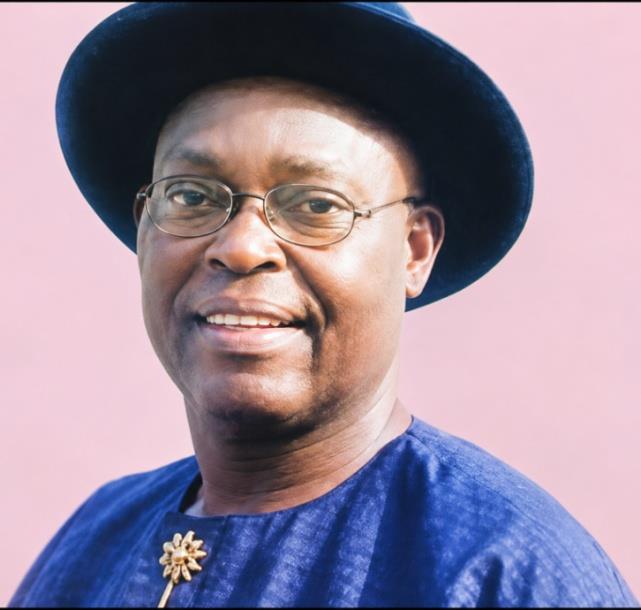
Tribute: Professor Kimse Amaebi Biya Okoko
Name
Professor Kimse Amaebi Biya Okoko
Year of Birth
1940
Date of Death
September 13, 2020
Community
Obunagha Community, Gbarain
Kingdom
Commissioner: Lands and Housing,
Rivers State, 1986 – 1989.
Occupied
President: Ijaw National Congress
Positions
(INC), 2000 – 2009.
Others include,
pg. 168
President: Conference of Ethnic
Nationalities of Niger Delta (CENND).
Pro-Chancellor: University Of Uyo,
Akwa Ibom State, and Niger Delta
University, Amassoma, Bayelsa State.
Nationally: Agitation for resource
control and restructuring of the
Nigerian State.
Ijaw Ethnic-Nation: His term as the INC
president is one of the most vociferous,
exciting, and fearless eras of regional
Known for
activism.
Obunagha Community: Father of
Obunagha Community who ensured
peaceful co-existence of all residents; he always intervene to ensure peace in
times of intra-community crisis
pg. 169