THE ULTIMATE GUIDE TO KICKING SUGAR by Flora Zhao - HTML preview
Download the book in PDF, ePub, Kindle for a complete version.
Chapter 1
WHY YOUR BRAIN CRAVES SUGAR
sumption can lead to consequences very similar to drug
abuse.
Blum explained that excessive sugar consumption
can trigger acute dopamine release.
“It’s like abusing alcohol or other drugs of abuse,” he
said. Over time, that can result in a chronic decrease in dopamine levels. Consequently, individuals may seek larger
quantities of sugar to experience the same level of plea-
sure, eventually leading to an addictive state where they consume more and more.
When you consume a large amount of refined sugar,
Activation of brain neurons in specific regions upon sucrose and cocaine administration.
“your brain lights up like a pinball machine due to the intense release of dopamine,” said James DiNicolantonio, a
tory of Neuronal Plasticity at the BRAINCITY Center of
cardiovascular research scientist and doctor of pharmacy
Excellence for Neural Plasticity and Brain Disorders, part at Saint Luke’s Mid America Heart Institute in Kansas
of the Nencki Institute of Experimental Biology, Polish
City, Missouri.
Academy of Sciences, in Warsaw, Poland.”
When ingesting refined sugar, the sweet receptors sig-
“Sugar/food becomes addictive if we value it over oth-
nal the brain’s reward system more effectively than when
er rewards.”
eating fruit. The levels of dopamine released by the brain far exceed what we can handle.
In 2023, a study published in the journal Translation-al Psychiatry revealed that when a mouse drinks water or
Is Sugar a Drug?
is injected with saline, the brain remains relatively calm.
However, when administered a sucrose solution or inject-
Sugar is irresistibly alluring, not only because it stimulates ed with cocaine, multiple regions of the brain’s neurons
the brain to produce dopamine, which brings joy, but also become activated (highlighted in the image).
because it triggers the production of endogenous opioids
“Our research shows how similarly both additive and
in the brain, which can lead to addiction and dependence.
nonadditive rewards are processed by our brains, both on
Blum said that the brain has glucose receptors, and
the whole-brain scale and on a cellular level,” said Anna when they are stimulated by sugar, it triggers a series of Beroun, the study’s lead author and head of the Labora-signaling pathways that ultimately lead to the production 8
9
WHY YOUR BRAIN CRAVES SUGAR
of addictive substances. This mechanism is inherently
For example, a prospective observational study pub-present “so that if you abuse sugar, you’re going to order lished in Addiction Biology in 2021 revealed that a signif-the brain–reward circuitry in a negative way, as if you use icant proportion of individuals with alcohol use disorder heroin.”
(40 percent) experienced an increased craving for sugar
An experiment revealed that mice fed large amounts during their inpatient alcohol detoxification.
of sugar intermittently exhibited withdrawal symptoms
Additionally, a study published in the journal Addic-when injected with a drug that blocks opioids. These
tion showed that children with a family history of alco-
symptoms included teeth chattering, forepaw tremors,
holism and depression were more likely to prefer intense
and headshakes.
sweetness. On average, these children opted for water with Sugar’s effect on the brain not only shares similarities
a sucrose concentration of 24 percent, equivalent to about with drugs but also, in certain circumstances, is even more 14 teaspoons of sugar in a glass of water—more than twice alluring.
the sugar concentration found in regular soda water.
Over the years, French researchers have conducted
In contrast, children without such familial back-
a series of animal experiments, with the results revealing grounds preferred water with a sucrose concentration of
that when given the choice between cocaine and sucrose,
18 percent.
rodents consistently preferred sucrose over cocaine. This preference held even for mice previously addicted to cocaine before the experiments.
“When we over-consume sugar, there is a release of
The Brain’s Sweet Dilemma
dopamine and endogenous opioids that cause a ‘high,’ but
then we get a ‘low.’ If we do this over a prolonged period of Sugar and the brain share an innate strong connection.
time, this can lead to dependency on sugar, especially in Unfortunately, modern diets are filled with highly refined those who are vulnerable,” said DiNicolantonio, summariz-sugars that evoke drug-like allure. In fact, the sweetness ing the addictive mechanism of sugar.
we consume today differs significantly from what our an-
When there is a deficiency of dopamine and endog-
cestors experienced.
enous opioids, one may feel sad, confused, sluggish, and
Russo vividly illustrated the body and brain’s con-
unable to concentrate, all of which can further drive the flicting views on sugar with a lively scene, noting that our desire to consume more sugar.
bodies resist certain sugars while being more receptive to Additionally, numerous human experiments have
others.
demonstrated the link between sugar and addiction.
“The brain says, ‘We need sugar; we must have sugar;
10
11
we can’t survive without it.’ On the other hand, the body disagrees, saying, ‘We don’t like all types of sugar,’” she added.
C H A P T E R 2
There is an ancient Chinese saying: “If you know the
enemy and know yourself, you need not fear the result of a hundred battles.” To quit sugar, one must first understand sugar. However, the truth is some sugars and sweet sub-Natural
stances are natural and even beneficial to the body.
Sweeteners:
Healthy
Alternatives
to Sugar
12
NATURAL SWEETENERS: HEALTHY ALTERNATIVES TO SUGAR
Stevia
“Compared to other types of
sweeteners, stevia could be beneficial
in helping people keep their glucose
levels under control or in a healthy
range after eating.”
Stephen Anton, professor in the Department of Physiology and Aging, University of Florida
Stevia has recently become one of the most popular natu-
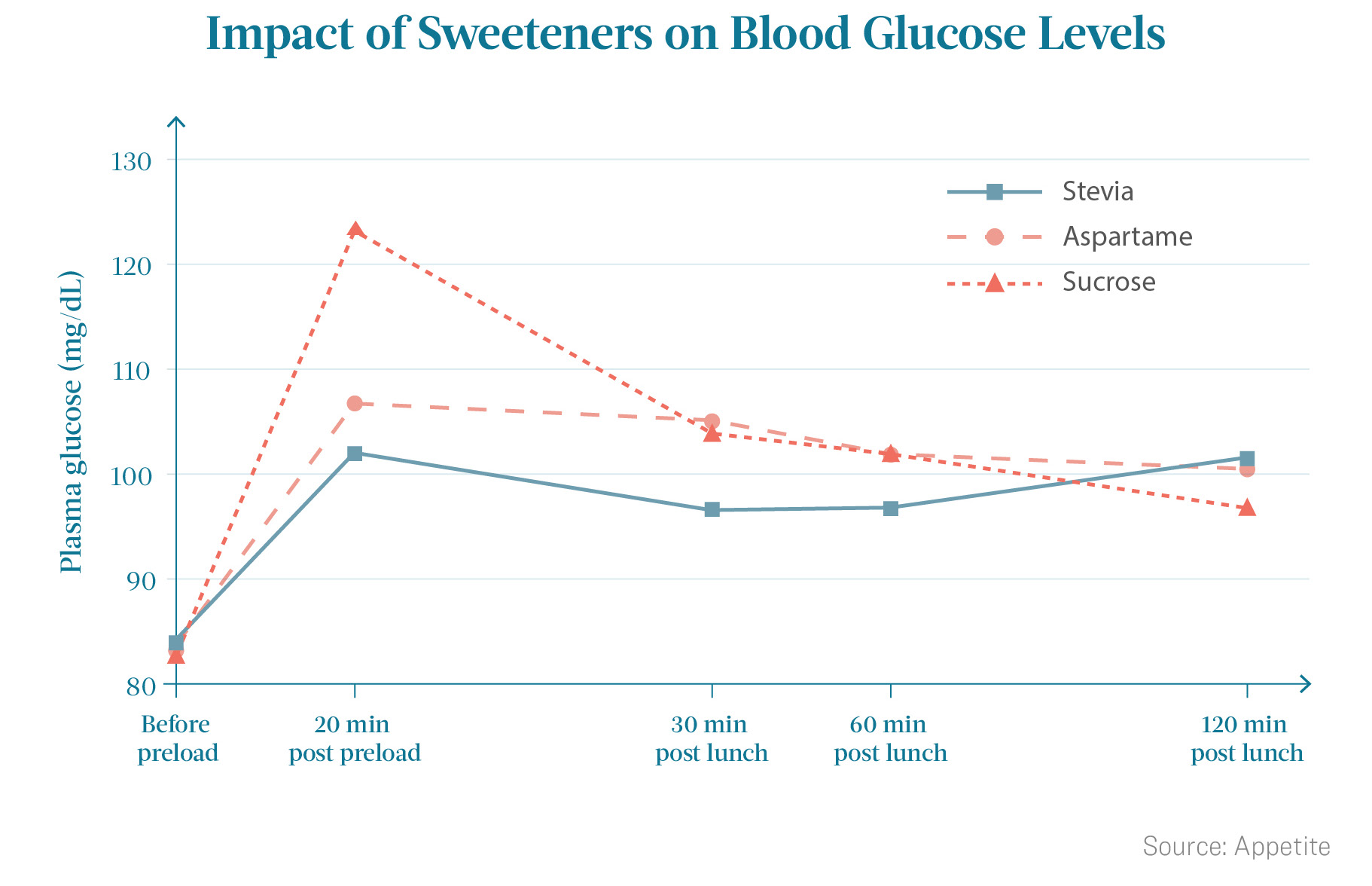
ral sugar substitutes. Sugar is known to raise blood sugar levels, but stevia can actually lower them. In fact, it was even used to treat diabetes in ancient times.
Stevia is also known as honey leaf, sweet leaf, or sweet
herb. According to a paper published in Nutrition Today, it belongs to the sunflower (Asteraceae) family and is native to southern Brazil and northern Paraguay. The indigenous
15