THE ULTIMATE GUIDE TO KICKING SUGAR by Flora Zhao - HTML preview
Download the book in PDF, ePub, Kindle for a complete version.
Chapter 3
NATURAL SUGARS: HONEY, MAPLE, AND COCONUT
Navindra Seeram, professor and chair of the Department
of distinct flavors, including vanilla, hazelnut, floral, and of Biomedical and Pharmaceutical Sciences at the Univer-coffee, and can even be spicy.
sity of Rhode Island College of Pharmacy, said during an
Canada is responsible for about 75 percent of the interview with The Epoch Times.
world’s maple syrup production, and its syrup is classified into two primary grades: Canada Grade A and Canada
Processing Grade. Then, Canada Grade A is further grad-
ed into four color classes:
How Is Maple Syrup Made?
• Golden: delicate flavor
• Amber: rich flavor
Maple syrup is a natural sweetener extracted from the sap
• Dark: robust flavor
of maple trees, collected and concentrated without the
• Very dark: strong flavor
addition of any chemicals. The method for collecting ma-
Canada Processing Grade maple syrup doesn’t have
ple sap and making syrup was introduced to early North
color classes and is commonly used for large-scale com-
American settlers by Native Americans. It takes about 40
mercial applications.
liters of tree sap to make 1 liter of maple syrup.
Sap collecting to make maple syrup typically starts
in late winter or early spring, usually from February to
March, and lasts only a few weeks. Maple trees accumu-
late starch during growth, which is converted into sugar
during the spring thaw. This sugar then mixes with water
absorbed by the tree’s roots to form maple sap. As the pressure changes due to rising temperatures and the ground
thawing, maple producers bore holes into the tree, and
taps are installed, allowing the sap to flow from the trunk.
Maple syrup can vary significantly from region to
region and tree to tree. Fascinatingly, maple syrup’s characteristics continuously evolve throughout the entire harvesting season. At the beginning of the season, the syrup is Holes are bored into the trunks of maple trees to tap maple sap.
(Marc Bruxelle/Shutterstock)
relatively clear with a slight sweetness. As the season pro-gresses, the syrup becomes darker and develops a range
66
67
NATURAL SUGARS: HONEY, MAPLE, AND COCONUT
The Composition of Maple Syrup
Maple’s Nutrient Cocktail
Based on data from the U.S. Department of Agriculture
In contrast to refined sugar, primarily composed of su-
(USDA), sugars comprise about 60 percent of maple syr-crose, maple syrup contains a diverse range of more than
up, while water accounts for 32 percent.
250 substances. These compounds either occur naturally
Maple syrup contains three types of sugars: sucrose,
in the maple tree or are formed during processing.
glucose, and fructose. Sucrose is a disaccharide composed
“It also contains a cocktail of other substances,”
of one glucose molecule and one fructose molecule, ac-
Seeram said.
counting for 98.3 percent of all sugars in maple syrup, fol-Maple syrup contains oligosaccharides, organic acids,
lowed by glucose (1.1 percent) and fructose (0.6 percent).
amino acids, vitamins, and various minerals. It’s also rich While sucrose makes up most of the sugar in maple
in phenolic compounds, which exhibit a range of biologi-
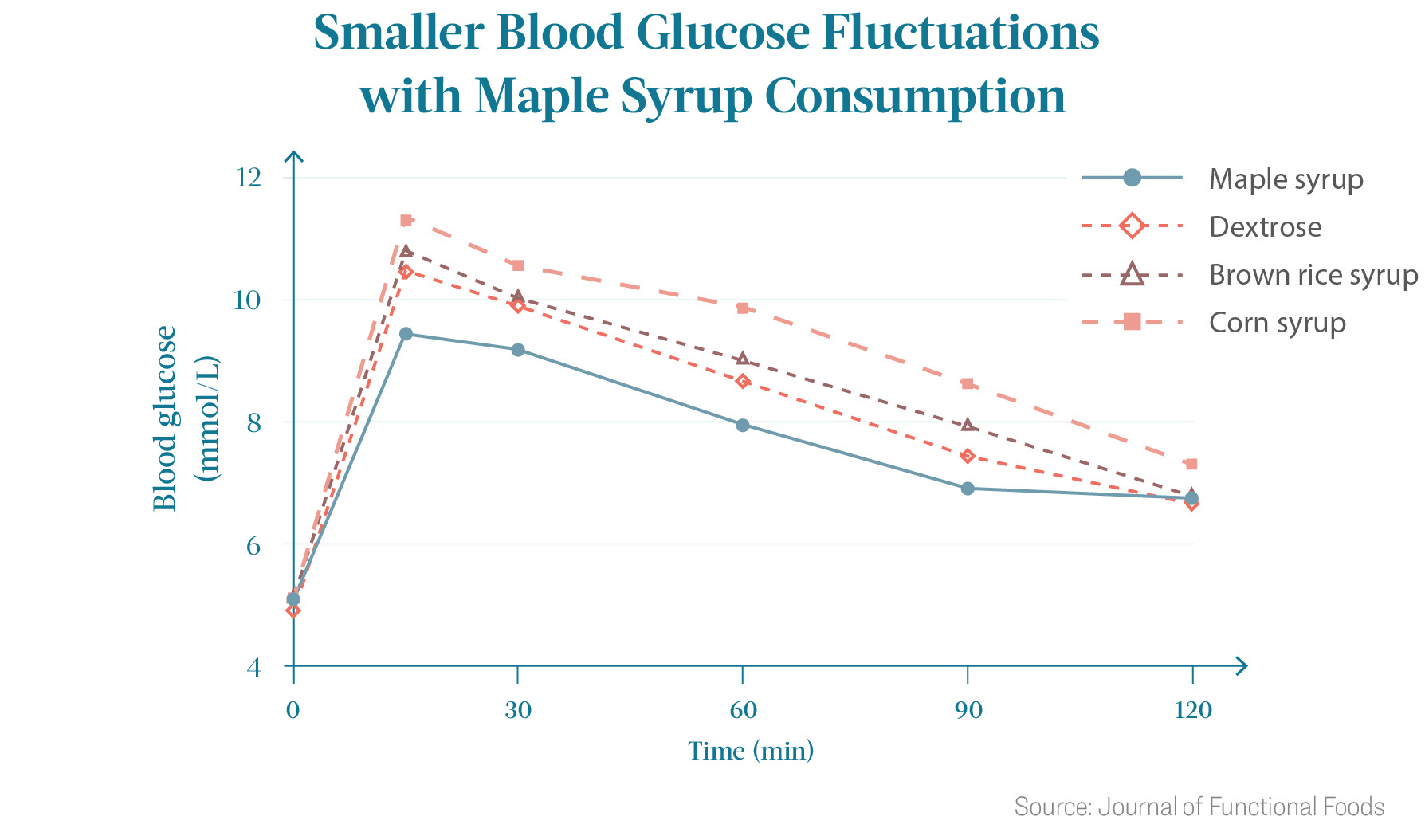
syrup, the GI of maple syrup is lower than that of sucrose, cal activities.
with maple syrup having a GI value of 54 and sucrose hav-There are more than 67 grams of carbohydrates in
ing an average GI value of 66. This means that consum-
100 grams of maple syrup. It also contains 225 milligrams ing an equal amount of maple syrup compared to sucrose
of potassium; 109 milligrams of calcium; magnesium,
would result in a relatively smaller increase in blood sugar manganese, zinc, and iron; and trace amounts of thiamin,
levels.
riboflavin, and niacin.
“Maple syrup is a much better option than refined
sugar. It’s actually sweeter, which is beneficial because you can get away with using less of it,” Amy Gonzalez, a regis-tered U.S. dietitian, told The Epoch Times. In other words, Maple Syrup as a Superfood
a smaller amount of maple syrup is required to achieve the same level of sweetness compared to refined sugar.
Seeram said maple syrup contains numerous substances
She explained that we can reduce the amount by a
that warrant further research and development. Its pheno-
quarter when using maple syrup as a substitute for regular
lic compounds exhibit a range of beneficial activities, in-sugar in cooking. For example, if a recipe requires 1 cup of cluding anti-mutagenic, anti-radical, antioxidant, anti-in-white sugar, 3/4 cup of maple syrup would suffice.
flammatory, antidiabetic, and even anti-cancer properties.
68
69