THE ULTIMATE GUIDE TO KICKING SUGAR by Flora Zhao - HTML preview
Download the book in PDF, ePub, Kindle for a complete version.
Chapter 3
NATURAL SUGARS: HONEY, MAPLE, AND COCONUT
Naturally Superior to Antibiotics
operative wound infections, burns, necrotizing fasciitis, nonhealing wounds, boils, venous ulcers, diabetic foot ul-
“Bacteria quickly learn how to fight off the effects of the cers, eczema, psoriasis, and dandruff. Additionally, it has antibiotic drugs, but they don’t have honey resistance,”
proven effective in both preventing and treating infec-
Nural Cokcetin, a research fellow at the Australian Institions caused by multidrug-resistant microorganisms.
tute for Microbiology and Infection in the science faculty In vitro studies have shown that honey can kill Heli-at the University of Technology Sydney, said in an inter-
cobacter pylori. Furthermore, eating honey can reduce the view with The Epoch Times.
duration of bacterial diarrhea.
Honey has been used to treat skin problems and
wound infections for thousands of years. For instance, ancient Greeks and Egyptians would apply honey topically
to the skin to treat wounds and burns. Honey’s effectiveness in treating wounds and eczema was also documented
in Persian traditional medicine. Interestingly, the concept of microorganisms such as bacteria and fungi causing
wound infections during those historical periods might
not have even been known.
The broad-spectrum antibacterial activity of honey
has been increasingly recognized and substantiated. In
recent years, the prevalence of wound infections caused
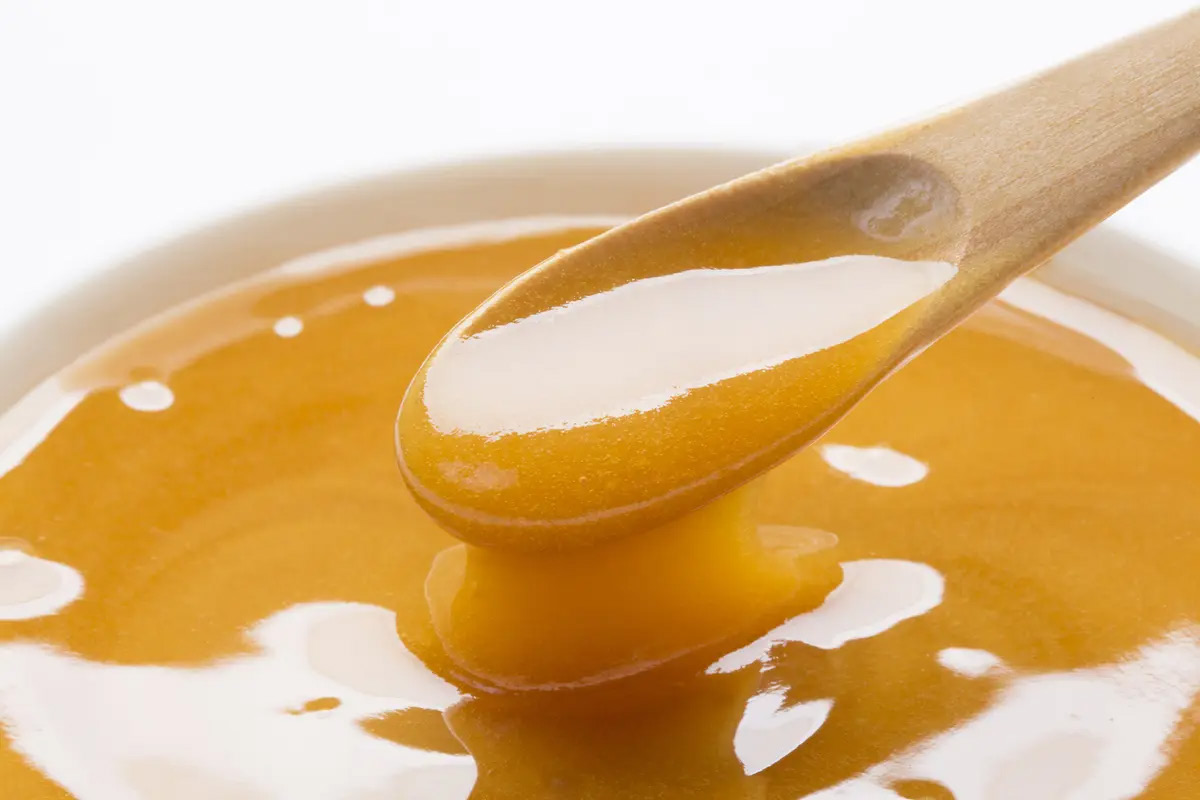
by antibiotic-resistant bacteria has become a major global health care challenge. Honey can disrupt biofilms that are (Africa Studio/Shutterstock)
formed by these resistant bacteria and sometimes pene-
trate the biofilm structure to eliminate the embedded bac-Key Antimicrobial Components
teria. An article published in the journal of the American Society for Microbiology in 2020 reported no document-
The antibacterial properties of honey originate from its in-
ed cases of bacteria developing resistance to honey.
herent characteristics and a diverse array of components
In clinical settings, medical-grade honey has been derived from both nectar-producing plants and bees them-utilized in various ways. It’s formulated into topical oint-selves. Additionally, some of these components are formed ments, dressings, and bandages for the treatment of post-during the maturation process of honey.
54
55
NATURAL SUGARS: HONEY, MAPLE, AND COCONUT
High Viscosity and pH
in honey originating from the honeybee’s hypopharyngeal
gland.
Honey has a high sugar content, reaching up to 82.5 per-
Bee defensin-1 is an antimicrobial peptide that can
cent. As a result, it has a viscous and syrupy consistency, kill various bacteria and microorganisms. Specifically, the exhibiting hygroscopic properties (ability to absorb mois-defensin protein has been shown to create pores within
ture) and high osmolarity. Bacteria that come into contact the bacterial cell membrane, leading to cell death.
with honey undergo dehydration and ultimately perish.
Additionally, bee defensin-1 can aid in wound healing
Honey is acidic due to its various organic acids, with
by stimulating keratinocytes, the most common type of
a pH value ranging from 3.2 to 4.5. Bacteria can’t survive skin cell.
in honey; their optimal pH typically ranges between 6.5
and 7.5.
Manuka Honey: Enhanced
Honey’s Weapon: Hydrogen Peroxide
Antibacterial
An important enzyme in honey derived from bees facili-
Manuka honey is often mentioned in studies regarding tates the oxidation of glucose, resulting in the production the antibacterial effects of various kinds of honey. As a of hydrogen peroxide.
globally recognized honey with high antibacterial poten-
Hydrogen peroxide is an effective bactericidal agent
cy, it possesses a unique natural component called meth-that can inhibit and kill microorganisms.
ylglyoxal (MGO).
Interestingly, water is necessary to induce honey’s
After honeybees gather nectar from the flowers of
hydrogen peroxide production. The maximum level of hy-
manuka trees, a natural substance that’s found in the trees drogen peroxide can be obtained by diluting honey to a
undergoes spontaneous dehydration, leading to the for-
concentration of 30 percent to 50 percent, according to a mation of MGO in the honey.
paper in the International Journal of Microbiology.
“The more of [methylglyoxal] there is, the more anti-
bacterial that honey is,” Dee Carter, a professor from the School of Life and Environmental Sciences at the Univer-Bee Defensin-1
sity of Sydney, told The Epoch Times.
MGO exhibits remarkable antibacterial properties by
Bee defensin-1 is another natural antibacterial component itself. It can alter the structure of bacterial fimbriae and 56
57