

Sci-Fi Film Fiesta: The Swingin' 60s - Volume 8: Way Out Worlds- by Chris Christopoulos - HTML preview
Download the book in PDF, ePub for a complete version.
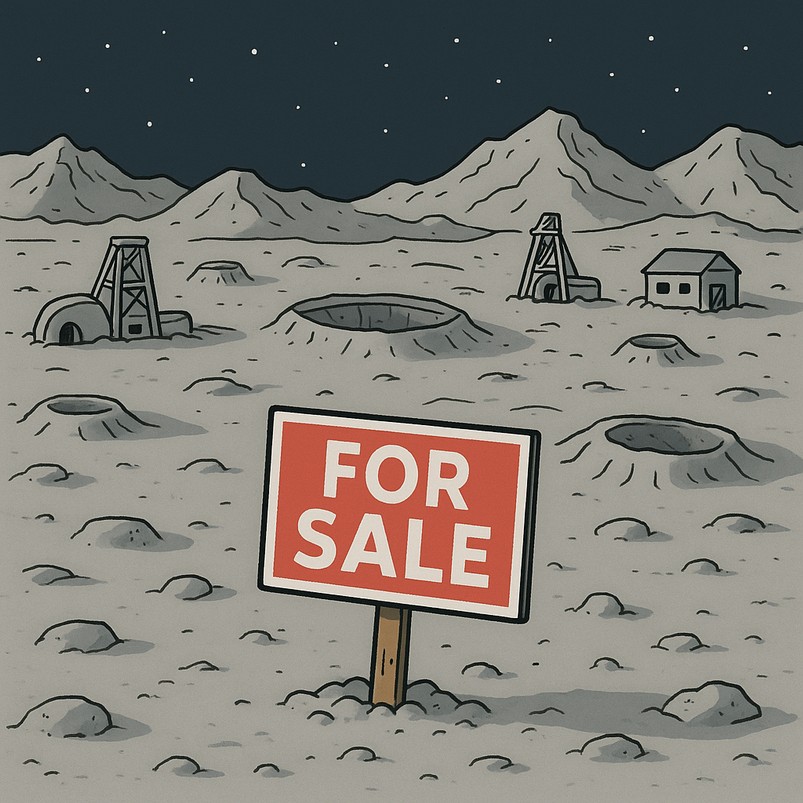
There are inevitably those like Clem’s brother who voyage out into space and “always thinks there'll be a bigger and better strike over the next hill.” Or those like Hubbard who see humanity’s presence in space as one big commercial opportunity to exploit it for profit and all it’s worth. On the other hand, people like Kemp saw space as an opportunity to explore, but after his Mars landing “the corporation decided that passengers was where the money was.” And it’s been thus ever since. Despite this, Kemp knew he could never be a passenger pilot and that for him there would always be “something over the hill.”
When Kemp and Clem arrive at the claim site, they found no sign of life so donning their space suits they went outside to investigate. Suddenly, they caught sight of a space-suited figured apparently standing some distance away. When they approached they soon make the shocking discovery that the space suit contained the deceased remains of Wally. It appeared that he died because he ran out of oxygen while prospecting for nickel. However, Wally hadn’t punctured his space suit and had to have had oxygen judging by his body’s condition. It appeared that he had one full and one empty oxygen pack and that to all intents and purposes, Wally had died as a result of a “stupid mistake.”
As Kemp and Clem returned to the moon bug, they were attacked by three armed men who open fire on them. They attempted to escape in the moon bug but soon had to abandon it. As they lay in wait for the attackers to approach, Kemp managed to kill two of the assailants before shooting the oxygen tank of the third. Kemp then attempted to save the third man by giving him one of Wally's oxygen packs but the man died because it contained something other than oxygen. The obvious conclusion: Wally must have been murdered.
With their moon bug damaged, Kemp and Clem had no choice but to take the vehicle that was used by the would-be hit squad. However, the moon bug was low on power and overheated before they could reach the Far Side 5 base. With only an hour's insulation charge left in their suits, they quickly exited their critically overheated vehicle just just before it exploded. There was nothing left for it, but to walk the rest of the way to Far Side 5
“When you get into trouble, you really jump off the top board,
don't you?”
When Kemp and Clem arrived at the base, they soon discover that Liz has come to investigate Kemp's suspect activities. Also present was Hubbard, Whitsun and Harry. In order to demonstrate a point, Kemp tricked Smith with the fake oxygen packs by compelling him to sniff one of them. All too quickly Smith declared that it could have been cyanide. However, Kemp revealed that he had taken the pack from his own suit that contained only good old fresh air. Smith felt that he had no choice but to admit that he was forced to substitute the packs with ones containing cyanide so that Wally could be disposed of before the asteroid crashed onto the moon at Wally's mine site.
With the plan revealed, Liz tried to arrest Hubbard but she was shot and killed in a shoot out with Harry. Kemp naturally refused to help Hubbard complete his crooked plan but Hubbard seemed to have him over a barrel by threatening to shoot Clem.
Having been forced to comply, Kemp and Karminski pilot the space ship with the others on board for the second leg of the mission to crash the asteroid on the lunar surface. On the way, Clem pointed out to Hubbard that“sapphire is only valuable as long as it's rare” and that if he were to “put 6,000 tons on the market” it would become “as valuable as coloured glass.” Hubbard however, as has already been pointed out, actually planned to use the sapphire to line rocket engines. After all, it's a ceramic and tougher than what had been used to line rocket tubes. Also, “it can stand more heat than stainless steel, 2,000° centigrade.” So why not use it to line rocket tubes” and enable bigger rocket engines to be built? Mankind’s expansion into space fuelled by the promise of limitless profit filling the avarice of the new style of ruthless venture capitalist and 21st century cosmic corporate carpet bagger which we’re so familiar with today. The likes of Hubbard never really die out, they just re-emerge in various guises and multiply.
Hubbard even tried to entice Kemp with the possibility that such an enterprise as he was proposing would “rapidly help progress space exploration to more distant planets and moons.” Good pilots like Kemp would be needed. A false rationalisation really screening Hubbard’s real motivation whereby the more powerful engines would power ships to Mercury and Jupiter’s moons and they would be his ships and anything that’s found would be his trade and at his prices. Acquisition of power, trade monopolies and cornered markets. The same ingredients that have manged to turn the Earth into a shit hole and is gradually spreading like a malignant tumour throughout the solar system.
The time soon came for the group to land on the asteroid and for Hubbard it was excellent timing as Wally's claim had expired half an hour previously. Therefore there would be “no legal problems.” However, his problems were about to start as Kemp, Clem and Karminski stealthily cooperated to dispatch Harry and Smith. Yep, space will kill you if given half a chance.
Kemp then managed to ignite the rockets attached to the the asteroid before Hubbard and Whitsun could get off, resulting in the asteroid crashing into the moon with the pair still ‘attached.’ I guess Kemp just forgot to leave them his cutters! There was little doubt that Hubbard and Whitsun would reach the moon’s surface before the others. At least that part of the plan worked for them and Hubbard certainly “made his mark on the moon, all right.”
The other more important part of the plan worked out exceedingly well for Clem who now found herself to be very wealthy on account of the fact that legally she was entitled to claim the sapphire since it was located on her brother's land. It could also be proved that Wally had been murdered, that he'd found nickel and that “the law doesn't allow profit by murder.”
How, you are probably wondering would I know so much about this Bill Kemp and the early days of space travel and colonisation, both of which have become faded memories in the minds of those who have little or no knowledge, sense or feeling for history? You see, when Kemp returned to Moon City with Clem, he did indeed find out what her hotel room was like. And that folks is where my own story began! My name, the one that I use is “Wild” Will Ganymede in accordance with the revived fashion for naming people in reference to where they were born. I believe they did this way back in history on earth. The name my folks gave me is William Kemp jr. Yep, William Kemp snr. and Clem were my parents, may they both rest in peace. It was they who told me about the events I just related to you and about the times they lived in. I hope wherever they are tha their spirits might be travelling to find out what is” over the next hill” to the accompaniment of the old song……..
♫Come on and take me soon.
Know that I'll be riding.
Oh, right into the moon.
Go find the world you're seeking.
Where stars are new in the making.
It's time to fly.
Deep space is calling you.…..♫
As to what became of all that wealth…..well that is a subject of another chapter of this memoir! As for me, well you could say as you’ll soon see that I’m the last of the free-minded and free-spirited space cowboys who is just trying to keep one step ahead of being extinguished by the powerful rapacious corporations, national governments and their bureaucracies with their suffocating sel-serving red tape, rules and regulations. While I’ve got breath in me I’ll keep trying.
Points of Interest
Moon Zero Two has been described as being much like a western dressed up as a science fiction film with its shoot outs, bar / saloon fights and survival in a new frontier. Then again that’s what many say in relation to science fiction movies and series in general, that they are at their basic level westerns. Moon Zero Two doesn’t quite pull off the western feel as it comes across as being somewhat too shiny and glossy without the hard edged grittiness one might expect.
The title song and film score seemed to follow the trend in such films of the swinging sixties which might have been designed to appeal to a younger audience by making the film seem groovy, hip and modern. Unfortunately such efforts tended to detract fro the film’s sci-fi theme and elements.
The floor show bar dance sequences were performed by the dance group, the Go-Jos. Speaking of the ladies, notice that the wigs worn by some of the female personnel of Moon City are much like those worn by the female characters in the lunar base of the TV series UFO (1970).
Apparently the moon suits worn by the actors caused some discomfort resulting in blisters from chafing, back problems from and weight loss.
The film was released three months after the Apollo 11 Moon landing. Comparisons with the reality and with a film like 2001 A Space Odyssey and budgetary constraints may not have helped to improve its standing with audiences and critics.
Much has been said about James Olson being miscast in the lead role. Perhaps, but he was a very capable actor and had the ability to take on roles and give an effective performance when called on to do so. This he certainly did in the sci-fi film The Andromeda Strain (1971).
Catherina von Schell can’t help but look lovely on screen. You might recall her playing the shape-shifting alien in the excellent TV series Space 1999 (1975).
For well-known comedian, Warren Mitchell this was not his first outing in a science fiction film. He also acted in the earlier film, Night Caller From Outer Space (1965).
On a more sombre notes, actor and dancer Yvonne Castelle was paralysed for life after an accident on the film's set, remaining bedridden for 10 years.
*************
Useful Resources
The films featured in “Way Out Worlds” were made during a remarkable period when the Moon was still a destination of dreams, Mars seemed just over the horizon, and the Solar System appeared full of mystery. Whether viewed through the lens of cinema, science, politics, or popular culture, they offer a fascinating glimpse into humanity’s hopes, fears, and expectations at the dawn of the Space Age.
Essential Film-Specific Resources
1. First Spaceship on Venus (1960) Based on a novel by Polish science-fiction writer Stanisław Lem, the film is particularly interesting as an East German–Polish response to the early Space Race. It depicts an international space crew years before such multicultural crews became common in Western science fiction.
Recommended reading:
• The Astronauts (1951) – the novel that inspired the film. • DEFA: East German Cinema 1946–1992 by Sean Allan and John Sandford. • The Mammoth Encyclopedia of Science Fiction by George Mann.
2. The Phantom Planet (1961)
Recommended reading:
• Keep Watching the Skies! by Bill Warren – still one of the definitive studies of 1950s and early-1960s science-fiction cinema.
• Fantastic Films of the Decades by Brian J. Robb. • Back issues of Famous Monsters of Film and magazine (many available digitally).
3. Robinson Crusoe on Mars (1964) Often regarded as one of the most scientifically plausible pre-Apollo space adventures, the film combines classic literature with realistic space exploration.
Recommended reading:
• Robinson Crusoe by Daniel Defoe
• A Fall of Moondust by Arthur C. Clarke. • The Case for Mars by Robert Zubrin.
4. Planet of the Vampires (1965) A visually stunning fusion of Gothic horror and science fiction from Mario Bava that would later influence films such as Alien.
Recommended reading:
• Mario Bava: All the Colors of the Dark by Tim Lucas. • Italian Gothic Horror Films, 1957–1969 by Roberto Curti. • Danse Macabre by Stephen King (for broader horror-film context).
5. Countdown (1968) A fascinating snapshot of late-1960s anxieties about beating the Soviets to the Moon.
Recommended reading:
• A Man on the Moon by Andrew Chaikin. • Failure Is Not an Option by Gene Kranz. • Moon Shot by Alan Shepard and Deke Slayton.
6. Moon Zero Two (1969) Often described as the first “Moon Western,” it combines lunar colonisation with frontier mythology and was released only months after the Apollo 11 landing.
Recommended reading:
• Hammer Films: An Exhaustive Filmography by Tom Johnson and Deborah Del Vecchio.
• The Encyclopedia of Hammer Films by Chris Fellner. • British Cult Cinema: Hammer Fantasy and Sci-Fi by Bruce Hallenbeck.
Space Race and Cold War Background
Understanding these films becomes much richer when viewed against the geopolitical backdrop of the era.
Essential Books:
• The Right Stuff by Tom Wolfe
• A Man on the Moon by Andrew Chaikin
• Space Race by Deborah Cadbury
• Red Moon Rising by Matthew Brzezinski
Science Fiction and the “New Worlds” Imagination:
Many of these films emerged from a period when humanity genuinely expected to colonise the Solar System within decades.
Essential Books:
• The Future as History by Robert L. Heilbroner
• Profiles of the Future by Arthur C Clarke
• The Exploration of Space by Arthur C. Clarke
• Cosmos by Carl Sagan
• Pale Blue Dot by Carl Sagan
Online Resources:
Space History
• NASA History Division
• NASA Image and Video Library
• European Space Agency
Film Research
• Internet Movie Database (IMDb)
• British Film Institute (BFI) Tur
• The Encyclopedia of Science Fiction
Science Fiction Culture
• Internet Speculative Fiction Database
• Project Gutenberg (for classic public-domain adventure and science-fiction works)
• Archive.org (vintage magazines, books and ephemera)
************
You may also like...
-
Charlie Charlie General Non Fiction by Remiro MejiasCharlie Charlie
Reads:
7Pages:
146Published:
Aug 2026Share with everyone, but trust no one.
Formats: PDF, Epub
-

A Little Book About Climate Change General Non Fiction by Tom WallaceA Little Book About Climate Change
Reads:
5Pages:
77Published:
Jul 2026The book aims to be a concise and accessible guide to the latest thinking on climate change, along with the related topics of depletion of natural resources a...
Formats: PDF
-
More Hubs that Provoke General Non Fiction by Roy T JamesMore Hubs that Provoke
Reads:
3Pages:
113Published:
Jun 2026This is a rather provocative collection of essays addressing fundamental questions about human nature, society, and our future. The aim is to look at all this...
Formats: PDF, Epub
-
Few More Thoughts General Non Fiction by Roy T JamesFew More Thoughts
Reads:
3Pages:
43Published:
Jun 2026We all know, human society is a violent one, and there is nobody who is not concerned. Everybody has a remedy, and all of it borders on the abstract, where, b...
Formats: PDF, Epub