

THE LONE WOLF (2025 Edition) by Michel Poulin - HTML preview
Download the book in PDF, ePub, Kindle for a complete version.
CHAPTER 14 – LENDING A HELPING HAND
09:55 (New York Time)
Monday, March 16, 1942
Control room of the U-800
Cruising submerged at schnorchel depth off the Bay of Massachusetts U.S. East Coast waters
Otto Kretschmer was having a nap in his cabin when the ship’s telephone fixed to the partition near the head of his bed rang. Accustomed to have his sleep interrupted frequently by his boat’s business, Otto took a deep breath to wake up, then grabbed the telephone’s handset and spoke in it.
‘’Captain speaking!’’
‘’This is Leutnant Spielberger, Herr Kapitän. We just intercepted a message from the U-503 to the U-Boote Command: it has been seriously damaged by a patrol aircraft and is in trouble off Cape Cod.’’
‘’I’m coming!’’ replied at once Otto, who put down the receiver before swinging his legs out of his bed and starting to dress quickly. Less than two minutes later, he was joining Spielberger at the sides of their chart table, on which the young lieutenant pointed a location to the east of Cape Cod to Otto.
‘’This is the location given by the U-503, Herr Kapitän. According to the message we intercepted, the U-503 is now unable to dive and also can move on only one diesel engine. It is trying to sail to Lorient by itself but they are rating their own chances to arrive alone as minimal.’’
Grabbing a compass, Otto measured quickly the distance between the two submarines and made a mental calculation.
‘’We could be there in about eight hours, just before sunset, at our maximum schnorchel speed. We may encounter an hornets’ nest once there and I want us to arrive with a full battery charge. Steer a course for the U-503 at fourteen knots, Leutnant.’’
‘’Yes, Herr Kapitän!’’
227
Next, Otto grabbed a ship’s intercom microphone and switched it to ship-wide call.
‘’Attention all hands, this is the captain speaking! We will now leave temporarily our patrol area to go lend a hand to our comrades of the U-503, who are in trouble off Cape Cod. Doctor List, be ready to receive possible combat casualties in about eight hours. We will go to battle stations in seven hours, or earlier if we encounter enemy ships or planes on the way.’’
Hooking back the microphone, Otto reviewed mentally what he knew about the U-503. It was a Type IXC long range submarine which had been commissioned less than a year ago. Its captain, Kapitänleutnant Otto Gericke, was a bit older than Otto but was a beginner as a submarine skipper, being presently on his first war patrol. Gericke and his crew had probably been taken by surprise by enemy patrol planes through lack of experience or vigilance, or both. A couple of years ago, Otto would have looked severely at such failings, but his years of combat experience had taught him that no human being was infallible, including himself. While still insistent about proper conduct and discipline, Otto was now ready to accept minor mistakes, as long as the culprit learned from the experience. He next thought about the kind of situation he was going to find when he would join up with the U-503. If the patrol plane which had damaged it saw it stay on the surface, then it was a certainty that more planes and possibly some warships would come to try sinking for good the submarine. Either he was going to find a patch of sea covered with debris, or he would find one big pack of troubles.
17:50 (New York Time)
Control room of U-800, at schnorchel depth
East of Cape Cod, coast of Massachusetts
‘’HERR KAPITÄN, I HAVE BOTH SURFACE AND AIR CONTACTS!’’ Erik Junker’s call attracted at once Otto to his radar station, where a number of blips were showing on the operator’s oscilloscope display. Junker then pointed in succession at each of the five peaks on his screen.
‘’This immobile dot ahead of us is most probably the U-503, Herr Kapitän: it is on the surface, is hardly moving and is trying to head East. The other surface dot, coming in at over thirty knots and presently nineteen kilometers from us, must be an American destroyer called in by a patrol aircraft. Of the three air contacts I have, two of them are probably patrol bombers heading for the U-503 to finish it off. The third one, a big and
228
slow aircraft, seems to be circling overhead of the U-503. In fact, it is both very big and quite slow for a plane. I don’t know exactly how to classify it.’’ Otto thought about that for a moment while fixing the large blip on the radar screen. A smile then appeared on his face.
‘’A blimp! It must be a coastal patrol blimp. Their low speed and long endurance actually make them ideal for anti-submarine work. If we don’t want it to trail us after this, we will have to shoot it down, if it proves low enough for our gunners to hit it. Those two patrol bombers, when will they arrive over the U-503, Herr Junkers?’’
‘’In maybe four minutes, well ahead of us, Herr Kapitän. The U-503 may well be sunk before we can get to it.’’
‘’Then, at the least, we will be able to save its crew. Let’s hope that those bombers will prove lousy at bomb aiming.’’
Not believing himself his own pious wish, Otto then returned to the tactical plot table, where he marked the location of the U-503 and of the oncoming American destroyer on the situation plot. Next, he grabbed an intercom microphone and switched it to ship-wide broadcasting.
‘’Attention all hands, this is the captain! We are soon going to engage in combat against both an incoming destroyer and against enemy airplanes. Gunners are to make themselves ready now to man their guns, both our deck gun and our anti-aircraft guns, as soon as we surface. I also want the rescue team ready to get on the open deck as soon as we are up. We may have only minutes to recuperate and save our comrades from the U-503, so you will have to work fast. I am however confident that all of you will perform your duties in the competent, professional manner that I have come to expect from you. Captain out!’’
Going next to the electronic warfare section, aft of the control room, Otto bent over the operator manning the radio listening station, Josef Knocke.
‘’Can you hear the American planes heading for the U-503, Herr Knocke?’’
‘’I sure can, Herr Kapitän!’’ replied Knocke, smiling while looking up at Otto. ‘’Two of them keep babbling all the time on the radio like a couple of busybodies. They just sighted visually the U-503 and say that visibility is fair to poor. The third aircraft present has a rather unusual call sign: ZNP-K-4. It is communicating on the radio in a rather more disciplined manner with the American destroyer rushing towards the U-503.’’
229
‘’ZNP-K-4… That must be the coastal patrol blimp we have presently on radar above the U-503. Do your best to jam its radio transmissions from now on, along with those of the two American bombers.’’
‘’Will do, Herr Kapitän!’’
With that taken care of, Otto took a few steps to stand near the passive hydrophone station’s operator.
‘’Can you hear that incoming American destroyer, Hartmann?’’
‘’Hell yes, sir! It must be pushing its engines to the limit. On the other hand, it will be impossible for him to hear anything with his sonar until he slows down drastically.’’
‘’Good! That should give us the element of surprise for the engagement to come.’’
Michel Hartmann raised an eyebrow at those last words: for a submarine commander to plan to attack a destroyer while enemy planes were overhead would have been described by many German submariners as ‘suicidal’. However, they were here to try to help comrade submariners in difficulty, while Otto Kretschmer’s legendary tactical prowess made him one of the rare submarine commanders who could possibly pull such a stunt and survive it.
Otto, returning inside the control room, waited another few minutes, until Erik Junker announced that the two American bombers were now heading back towards the coast after attacking the U-503. Once they were at a safe distance, Otto raised his watch periscope, hoping fervently that the U-503 had survived the aerial attack. He felt some relief on seeing in the distance the low silhouette of the Type IXC submarine still floating on the surface. However, it had a definite list to port and seemed to be slowly sinking by the stern. Cranking up the optical lens of the periscope to survey the sky, he saw at first only a thick, low cloud cover. On his second tour of the horizon, a big gray mass suddenly appeared in his field of view, floating just below the cloud cover.
‘’I HAVE AN AMERICAN PATROL BLIMP TO OUR TWO O’CLOCK, FLYING AT AN ALTITUDE OF AT MOST 2,000 METERS. I WANT OUR GUNNERS TO SHOOT IT DOWN AS SOON AS WE ARE ON THE SURFACE. HELM, PULL UP ON THE DIVE PLANES! BLOW THE BALLASTS! SURFACE! SURFACE!’’ The crew of the control room obeyed at once quickly but also methodically and efficiently, soon making the 5,800-ton submarine burst through the surface of the sea.
230
Some 1,700 meters above the waves, the crew of the U.S. Navy patrol blimp ZNP-K-4 were watching intently the
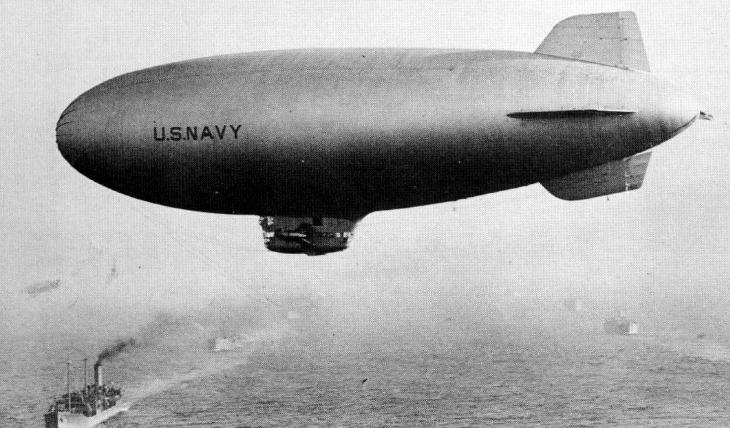
German submarine they had first
discovered and then hunted down,
when one of the observers shouted
out a surprised warning.
‘’ANOTHER SUBMARINE
JUST CAME UP ON THE SURFACE
TO OUR SEVEN O’CLOCK, MAYBE
HALF A MILE FROM THE FIRST SUBMARINE.’’
The pilot of the ZNP-K-4, Lieutenant-Commander John Bisset, twisted his neck to look at the newcomer and couldn’t help let out an exclamation.
‘’Holy shit! Look at that mother! It is like nothing I have seen before. Reynolds, grab your camera quickly and start taking picture of this baby. I bet that Navy Intelligence will want to learn about it.’’
As one of the observers hurried to get his camera, Bisset examined avidly the submarine which was now approaching the U-503. Its hull shape was completely different from those of other known submarines, being well rounded and streamlined, like the body of a killer whale or of a sperm whale. Its conning tower was also finely streamlined and was quite higher and longer than usual, giving a racy silhouette to the submarine. A tall vertical rudder fin stuck out of the water at the stern, completing a very unusual shape he had never seen before. At first, Bisset saw no guns on the deck of the submarine, but that changed soon…for the worst.
‘’What the hell? I can see three gun mounts now appearing on the decks of that sub, apparently coming up from underdeck wells.’’
His copilot, who had grabbed binoculars and was looking down at the newcomer, suddenly swore out loud.
‘’SHIT, THOSE MOUNTS ARE ANTI-AIRCRAFT CANNONS! WE BETTER GET THE HELL OUT OF HERE!’’
Bisset, knowing full well how vulnerable to anti-aircraft fire his big, lumbering blimp was at low altitude, didn’t argue with that and started at once a turn to the right, while pushing his two radial piston engines to maximum power. Despite his best efforts, however, a thick stream of tracer shells bracketed his blimp, quickly followed by a second burst
231
which hit its target. A number of shells pierced the gas envelope of the blimp, making helium gas escape from holes and rips, while more shells hit the command-and-control nacelle suspended under the sausage-shaped gas balloon. Two sharp explosions and a scream of pain told Bisset at once that he had been seriously hit. A third burst then hit his port side engine, on top of piercing more holes in the balloon. With one engine on fire and with his blimp starting to slowly lose altitude, Bisset realized that he would never make it all the way back to the coast. That left him only one viable option.
‘’WE’RE GOING DOWN, GUYS! I’M GOING TO STEER TOWARDS THE U.S.S. MAYO, WHICH IS NOW ONLY FIVE MILES AWAY. REYNOLDS, WHATEVER HAPPEN, MAKE SURE THAT YOUR CAMERA AND ITS FILMS ARE NOT LOST. SEAL THEM IN A WATER-TIGHT BAG!’’
‘’ON IT, SIR!’’
‘’CLARK, CHECK ON THE CREW! WHO WAS WOUNDED AND HOW BAD?’’
‘’IT’S MARANZANO, SIR: HE’S DEAD!’’
Tightening his jaws, Bisset had a last look at the mystery submarine, which had stopped firing at him and was now nearly side by side with the first German submarine.
‘’You will pay for this one day, you kraut, I promise!’’
On the surface, Otto didn’t waste time celebrating his latest victory: the hard part of this job was still ahead. While the weather was relatively fair for a March day in the North Atlantic, the waves were still quite strong and the wind, presently blowing at maybe thirty kilometers per hour, gave signs that it was picking up strength, with dark clouds on the horizon. To make things even harder, the Sun was about to set and would force him very soon to work in the dark, in a moonless night. Adding the fact that an American destroyer would soon show up, it all promised a frantic, risky rescue work. He would probably have clapped hands if he had known that the American blimp he had shot up was going to delay by precious minutes the arrival of the said destroyer by ditching beside it in the sea, forcing the destroyer to stop in order to retrieve the crew of the blimp. Climbing up to the open bridge of the U-800, Otto grabbed a signal lamp and started sending a visual message to the U-503.
‘To U-503, from U-800: state status and prepare to transfer your crew to me.’ Thankfully, someone occupied the kiosk of the damaged submarine and he got a lamp message response after less than a minute.
232
‘From U-503: am sinking slowly by the stern. Batteries leaking toxic vapors and diesel room flooding. Have number of wounded men. My men will start coming on deck for evacuation. Thank you for coming, U-800.’
Knowing that time was now counted, Otto didn’t take the time to reply to that, instead giving orders via the bridge intercom system.
‘’Attention all hands! All rescue teams on deck! Prepare to put our row boat and one inflatable boat in the water: we will use ropes to run a ferry operation between the two submarines. Make it quick, men: time is short.’’
His experienced crewmen went to work at once. With the gunners of the two anti-aircraft quad 20mm cannon mounts and of the big twin 10.5-centimeter turret still at their posts, other sailors pulled out on deck the four-meter dinghy stored in an aft deck well, plus one large inflatable raft taken out of the conning tower. Tying ropes to both ends of the dinghy and of the inflatable and holding the stern ropes, Otto’s men quickly put the two boats in the choppy, freezing waters beating against the flanks of the U-800. The men of the U-503 could have at the worst jumped into the sea with their life jackets and swim to the U-800, but the icy waters would more than probably claim a number of them through hypothermia, while the wounded would be nearly assured of dying. Otto thus wanted those men to stay as dry as possible by running his two boats like small ferries. With four men in each of the two boats paddling energetically, the boats quickly covered the twenty or so meters now separating the two submarines, with the rowers throwing to men on the deck of the U-503 the ropes attached to their bow. With strong pulling teams at each end and ready to run the boats back and forth between the two submarines, the first wounded men started loading up in the boats after less than six minutes. Here, another unusual feature of the masterfully designed U-800 helped them in no little measure. Gustav Premingen, evidently bent on making the U-800 as easy to operate and as comfortable as possible, had added on each side sets of access stairs between the weather deck and the waterline of the submarine, stairs which were covered by hydrodynamic, streamlined covers when not in use. Those stairs, meant to facilitate the transfer of personnel and supplies arriving by small boats, were now proving to be priceless, making the transfer of the wounded men from the U-503 so much easier and saving precious minutes. The ferry operation was still in operation when Kretschmer got a warning from his radar operator via the bridge intercom.
‘’Kapitän, from radar: we have one aircraft approaching rapidly from the Southwest! It will be over us in about three minutes.’’
233
Kretschmer swore to himself on hearing that: the transfer of men from the U-503 would still take at least fifteen more minutes. If he stopped his rescue operation now and dived under the surface to be safe from aircraft attacks, then dozens of German submariners could die, stranded on a sinking U-Boote. He then shouted orders in his intercom.
‘’ENEMY AIRCRAFT ON APPROACH FROM THE SOUTHWEST! MAN ALL THE GUNS FOR ANTI-AIRCRAFT ACTION! RESCUE TEAM, CONTINUE YOUR WORK!’’
Next, he turned around to look at the petty
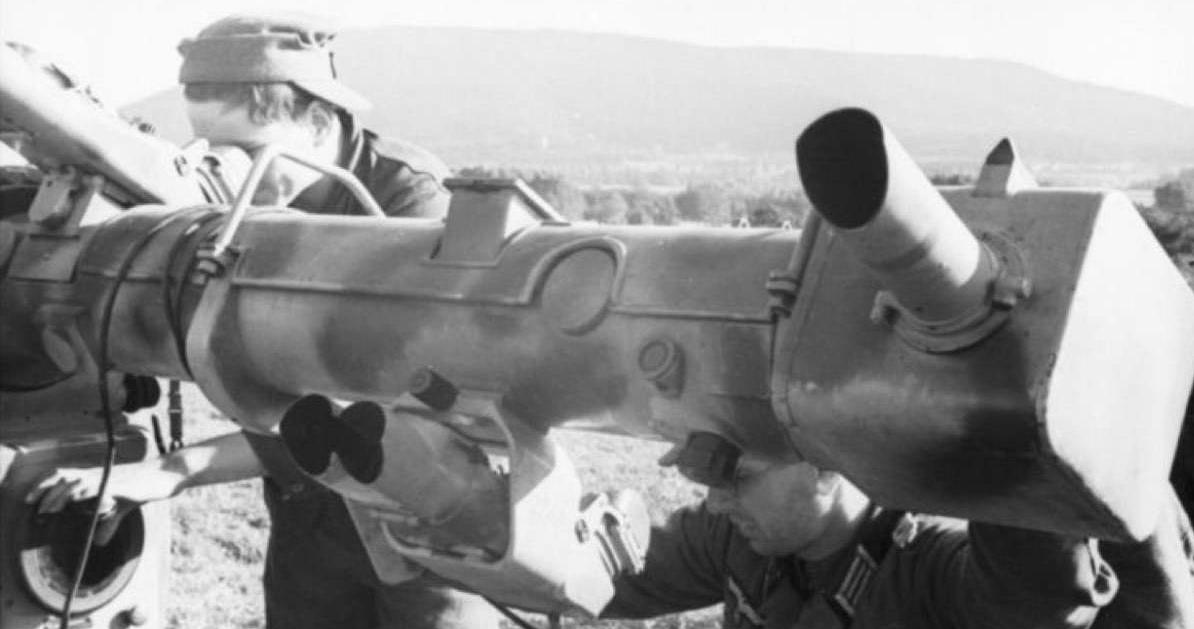
officer manning the FLAK ZAG 1.35-meter stereoscopic rangefinder housed in the
forward observation dome.
‘’GET TARGET DATA FROM OUR
RADAR AND BE READY TO DIRECT
OUR TWIN 10.5-CENTIMETER TURRET ON THIS INCOMING ENEMY PLANE!’’
‘’ON IT, HERR KAPITÄN!’’
Seeing as well that the two twin 20mm automatic cannons mounted inside the conning tower coming out on their retractable platforms, Otto grabbed his binoculars and started scanning the skies to the Southwest. The Sun was now close to settling down below the horizon, so if he could keep that incoming aircraft away for a few more minutes, he would then be able to complete the evacuation of the crew of the U-503.
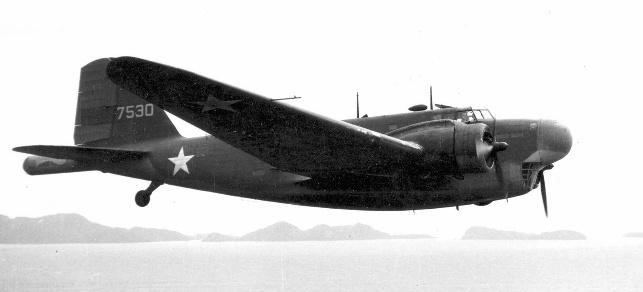
18:19 (Boston Time)
Douglas B-18/B BOLO medium
bomber
Flying towards the Northeast at low altitude
Lieutenant Rick Stark, from the 479th Anti-Submarine Group, based in Langley Field, Virginia, was gleeful at the thought that he could well sink his first German submarine in this war. Up to now, he had been flying his obsolete B-18 on anti-submarine patrols for over five months but had not sighted a single enemy submarine to date. While obsolete as a medium bomber, being rather slow and short-legged, his B-18/B was a variant of the BOLO specially adapted for the anti-submarine patrol role, with a nose radar and a tail magnetic anomaly detector, or MAD. His plane had been
234
frantically rearmed at Langley Field with depth charges, after the message that a German submarine had been damaged and forced to surface. While he was going to have to fly low during his attack in order to drop his depth charges, he was confident that he was going to sink that submarine with little difficulty: the German submarines typically had rather weak anti-aircraft armament, which often consisted in one or two 20mm automatic cannons. As for their main deck guns, they were mounted on a low-elevation mount ill-suited to anti-aircraft work. Turning briefly his head towards the rear, Stark shouted to his bombardier, Second Lieutenant Jeffrey Carlisle.
‘’That German submarine is supposedly on the surface and unable to dive, Jeff. Set our depth charges to explode at a depth of thirty feet: that should ensure that we will at the least damage seriously that submarine.’’
‘’GOT IT!’’
Next, Rick spoke to his radar operator, using his intercom.
‘’Do you have that German sub on your radar, Tony?’’
‘’Uh, wait one! YES! I have blips on my screen, dead ahead.’’
‘’Blips? How many? That Kraut was supposed to be by itself.’’
‘’I have two blips, one clearly much larger than the other. Maybe the Navy has already captured that German submarine.’’
That supposition made Rick swear under his breath. However, he was not surprised one bit about not having been informed by the Navy that one of their ships was already on the spot: cooperation and communication between the Navy and the Army Air Corps was pretty much non-existent, always had been.
‘’Alright, we will make sure to drop our eggs on the right target.’’ Rick had just finished saying that when his plane was shaken by an explosion, with a puff of black smoke some forty meters away marking the detonation of a large caliber anti-aircraft shell. A second explosion quickly followed, with the metallic pinging noise of shell fragments hitting his plane making the pilot swear out loud.
‘’Those fucking squids are shooting without bothering to check on who they are firing at.’’
Two explosions then shook his B-18, followed by two more explosions another five seconds later. A loud scream of pain then alarmed the pilot, who nearly shouted in his intercom.
‘’WHO HAS BEEN HIT?’’
His radio operator answered him nearly at once, sounding panicky.
235
‘’IT’S TONY, SIR! HE WAS HIT IN ONE LEG BY FRAGMENTS.’’ The pilot didn’t have time to reply to that before a 10.5-centimeter shell burst just in front of his B-18. Numerous fragments pierced the nose and canopy of the patrol bomber, with one of them hitting Stark in his throat, killing him nearly instantly. The copilot was also hit by fragments but was only wounded. However, the shock and pain from his wounds made him lose control of his plane for a few seconds. That was however sufficient to send the bomber, which had been flying low, crashing into the sea at a speed of 280 kilometers per hour, within four kilometers from the U-800. None of the six aviators survived that impact, with the downed B-18 bomber then sinking to the bottom. While Kretschmer, who had observed the downing of the American aircraft, was happy to see the success of his gunners, he didn’t celebrate in his mind the death of the American aviators: this had been a one on one combat and he was simply defending his submarine. This was what war was all about: kill or be killed. Otto then returned his attention to the rescue of the crew of the U-503.
By the time that the last man from the U-503, its captain, arrived aboard the U-800, the U-503’s stern section was completely under water. Otto went on the forward deck to personally greet the captain of the U-503, Kapitänleutnant Otto Gericke. Gericke, a man in his mid-thirties with a youthful face, saluted Otto as soon as he stepped on the deck to face him.
‘’Permission to come aboard, Herr Kapitän!’’
‘’Permission granted! Have you lost men in those air attacks? I counted only forty men, apart from you, who came aboard.’’
Gericke’s shoulders sagged and he lowered a bit his head before answering.
‘’Seven of my men were overcome by acid fumes from our damaged batteries inside the engines compartment. We tried to get them out but that resulted only in five more men being sickened by vapors before the incoming water forced us to seal the compartment.’’
‘’We will have time to mourn them later, after we leave: an American destroyer is approaching and should be here at any time now. In fact, I am surprised that it is not
here yet. Have you secured or destroyed your codes and your Enigma14 machine?’’
14 Enigma: Name of the cryptographic machine used by German forces in WW2 to encode high level radio messages. Deemed by the Germans as impossible to decipher, Enigma traffic was
236
Otto, who had assumed that Gericke would have taken that elementary security precaution, tightened his jaw when he saw his fellow officer hesitate, his eyes becoming shifty.
‘’I... I gave the order to do so, but I didn’t actually see it being done.’’ Doing his best not to explode with anger, Otto stared hard at Gericke for a moment, then twisted his head to shout an order to his gunners present on deck.
‘’MAIN GUNS, SWITCH TO ARMOR-PIERCING ROUNDS! SCUTTLE THE U-503! QUICKLY!’’
Otto then returned his eyes on Gericke, who had stiffened on hearing him shout.
‘’Get inside, Kapitänleutnant Gericke: we will talk about this later.’’ Gericke saluted him again, then went to the opened forward access hatch of the conning tower. Temporarily taking his mind off that incident, Otto then looked on as his gunners turned their 10.5-centimeter twin deck gun and started pumping shells into the U-503 from a distance of thirty meters, aiming at the waterline. In the meantime, other crewmen stowed back into place the dinghy and the inflatable boat, readying the U-800 for a quick dive. After four shells, the sinking rate of the U-503 increased noticeably, but Otto ordered his men to fire more shells, wanting to ensure that the Americans would have no chances of capturing the precious codes and Enigma machine aboard the U-503. The Type IX submarine finally shook for a last time after the seventh shell had hit it, then disappeared for good under the waves. Now satisfied, Otto motioned to his gunners with one arm.
‘’STOW BACK THE GUN UNDER THE DECK, THEN GET INSIDE AT THE DOUBLE!’’
By then, the Sun had set and Otto could hardly see anything around his submarine. A sudden flash of light from a distance on his starboard side made his head snap around as the last of his gunners was running inside the conning tower. That flash was followed a few seconds later by the scream of a shell passing overhead: that American destroyer was finally arriving and was probably shooting with the help of its radar. Otto ran inside the forward airlock compartment of the conning tower and closed and locked the heavy access hatch before slapping the intercom button located near the hatch.
‘’DIVE! DIVE! DIVE!’’
actually decoded by the Allies as early as 1940. That decoding operation was codenamed ‘ULTRA’ and was the Allies’ best kept secret of the war.
237
Letting a crewman who had been waiting by the interior hatch to close it behind him, Otto ran down to the control room and shouted more orders.
‘’DIVING PLANES FULL DOWN! ELECTRIC MOTORS TO MAXIMUM POWER! TURN NINETY DEGREES TO STARBOARD AS SOON AS WE ARE FULLY SUBMERGED!’’
AYE, KAPITÄN!’’
As he went to the attack periscope, which was presently down in its storage well, Otto realized that Gericke was standing in the back of the control room, apparently unsure what to do. Ignoring him from the moment, Otto grabbed the tube of the attack periscope, using it to stay on his feet as his submarine quickly adopted a fifty-degree nose-down angle while accelerating. The helmsman then turned hard to starboard, making the U-800 perform a tight diving turn that a dive bomber pilot would have applauded.
‘’CALL UP DEPTH AND SPEED AT TEN SECOND INTERVALS!’’
‘’PASSING 120 METERS! SPEED: TWELVE KNOTS!... NOW PASSING 230 METERS! SPEED: SEVENTEEN KNOTS!’’
‘’PULL UP FROM DIVE ONCE AT 300 METERS! CONTINUE
ACCELERATING!’’
‘’AYE, KAPITÄN!... NOW PASSING 300 METERS, PULLING UP DIVING PLANES. SPEED: 21 KNOTS!... WE ARE NOW LEVEL AT 360 METERS. SPEED: 24 KNOTS!... SPEED: 28 KNOTS! WE ARE NOW AT OUR MAXIMUM SPEED, HERR KAPITÄN.’’
Otto Gericke, still standing in his corner and watching, opened his eyes wide in disbelief on hearing the last announcement from the helmsman.
‘’You can do 28 knots underwater? But…that’s incredible!’’
‘’Welcome aboard the U-800, Kapitänleutnant Gericke.’’ said Otto, his tone sarcastic. He waited about two minutes as his submarine took its distances from its previous surface location, then gave more orders.
‘’SLOW DOWN TO THREE KNOTS! TURN TO HEADING 290! SONAR, START LISTENING ON PASSIVE MODE: TELL ME WHERE THAT DESTROYER IS NOW.’’
As if to answer him, a series of distant underwater explosions started reverberating through the hull of the U-800, with the senior sonar operator speaking up after a few more seconds.
238
‘’The enemy destroyer is dropping depth charges blind all over the zone where we were on the surface, Herr Kapitän. That destroyer is now at around our one o’clock and has lowered its speed considerably, probably in order to be able to use its sonar. Herr Kapitän, I am also picking up a distant group of ships coming our way from the South. From the power of their machinery and their speed, I would classify them as warships.’’
Otto raised an eyebrow on hearing those words, immediately interested.
‘’Concentrate on that group of warships, Herr Grote. Helm, take Heading 190, start rising gradually and as quietly as possible to periscope depth.’’
‘’Aye, Herr Kapitän!’’
Gericke gave Otto an alarmed look then: most U-boote commanders would have stayed away from an enemy flotilla, instead of getting near it.
‘’You are going to attack those warships?’’
Having grown quite annoyed at him by now, Otto nodded his head, then looked at Franz Streib.
‘’Leutnant Streib, please escort Kapitänleutnant Gericke and his officers to the officers’ wardroom, so that they can have some hot coffee. See also that the men of the U-503 are led to the cafeteria for some hot drinks and food.’’
‘’Right away, Herr Kapitän.’’
Soon, Otto found himself able to concentrate properly on his plan of attack as his submarine slowly rose towards the surface like a silent shark. The American destroyer which had dropped depth charges for many minutes had apparently abandoned its attacks by now, giving up after failing to make sonar contact with its prey. Otto however promised himself that this destroyer would soon become his prey. What his senior sonar operator said after a moment of concentrated listening to their ‘Grosser Balkon’ bow hydrophone array lit up his mind at once.
‘’Herr Kapitän, I can now better identify those approaching warships. They are doing approximately fifteen knots and I can count over a dozen ship signatures, including machinery and screw noises from four heavy units.’’
‘’A surface battle group!’’ said Otto, a ferocious grin appearing on his face. ‘’A perfect target to avenge the U-503. Torpedo officer, load all tubes with G7e eels, then flood the tubes in advance. Once the tubes will be emptied, reload with G7a eels: we will be dealing with a swarm of angry warships buzzing around or trying to escape.’’
239
‘’Understood, Herr Kapitän.’’
As his men worked feverishly to obey his orders, Otto felt at peace despite the fact that he was going into combat again: at least, this time he was going to attack men able to defend themselves, contrary to merchant navy sailors, who were basically sitting ducks when faced with a submarine. Also, sinking more enemy warships meant that those warships would not be able anymore to fire at Germans in the future. Otto did understand full well how important it was for Germany to be able to strangle the economy of Great Britain by cutting its maritime lifelines, but sinking enemy warships, especially destroyers and other escort ships, would in turn make the job of other German submariners that much easier.
‘’Herr Kapitän, I can now tell that the enemy is approaching in three parallel columns, with the heavy units in the center column.’’
‘’Good! Guide Herr Schültz at the helm and help him position us to pass between two of the columns, with our nose pointing at the center column.’’
‘’Understood, Herr Kapitän.’’
Letting his men do their job without interference while watching attentively, Otto was soon able to hear by himself the noises from big propellers passing nearby and reverberating through the hull of the U-800. With the night on and with no Moon to illuminate the ships’ wakes, there was no point in going up to the forward underwater observation dome. He however had another mean to accurately fire his torpedoes, a mean that he had not used up to now since the U-800 had entered service.
‘’Herr Wittgenstein, use our ‘Nibelung’ fire control system to calculate solutions for our torpedoes. Launch eels as you finalize each solution. I want four eels each from the forward tubes against the two leading enemy heavy units and two eels each from the aft tubes against two of the destroyers of the eastern column.’’
‘’Understood, Herr Kapitän! Initiating Nibelung attack procedures.’’ Using the acoustic signatures detected by their Grosser Balkon passive hydrophone array, located in the bow, Ulrich von Wittgenstein then used their S-Gerat active sonar, firing directional sound ‘pings’ to find the precise distance, heading, speed and direction of travel of each of his targets. Without raising a periscope mast once above the surface, the U-800 started firing volleys of torpedoes within a minute, with the enemy ships still apparently unaware of the presence of the submarine in their midst, less than 400 meters from the center column. That last point did not surprise Otto, though: the
240
vaunted ASDIC used by the Allies became nearly useless when travelling at high speeds, with the screw and machinery noises blanketing any sounds it could have picked up. Thus, a well-handled diesel-electric submarine sitting in a silent ambush position would nearly always end up on top against a hunting surface ship. The key words were however ‘well-handled’, something that was not always the case. Twenty seconds after the first torpedo launches, a series of distant underwater explosions was heard through the hull of the submarine, making its crew cheer: they had marked the first hits against enemy ships tonight. Out of the twelve torpedoes of the first salvo, a satisfying total of eleven found their mark, distributed among four separate targets. As the men in both the bow and stern torpedo rooms worked frantically to reload the twelve torpedo tubes, Otto moved discreetly his submarine to aft of the second enemy heavy unit which had been hit. He soon had the hissing, sinking big hull of that enemy warship nearly on top of him, making in turn the U-800 nearly impossible to detect by ASDIC. Using fully that opportunity, Otto stayed in that position, reloading his torpedo tubes while the American destroyers went amok, speeding up and pinging their sonar sets like madmen all over the place. Some of them even threw depth charges in the water but were careful not to drop them close to where sailors from torpedoed ships were swimming in the frigid water. The operator manning the radio intercept/DF station of the electronic warfare section then called via intercom to give news that made Otto grin in triumph.
‘’Herr Kapitän, the enemy just sent a mayday message in clear on the radio. It said ‘U.S.S. WASHINGTON, U.S.S. WASP and two destroyers torpedoed by German submarine 26 miles south of Cape Cod. WASP sinking, WASHINGTON gravely damaged, destroyer LANG broken in two and destroyer MADISON dead in the water’.’’
‘’Gott und Himmel! We hit a battleship and a fleet carrier! Let’s make sure that they get to the bottom. Leutnant Spielberger, climb to our forward observation dome and use the portable infrared night vision scope loaned from our Brandenburgers to verify the state of the enemy ships.’’
‘’I’m on it, Herr Kapitän!’’
The young lieutenant scrambled up the ladder leading up to the forward observation dome and reported less than a minute later via intercom, excitement in his voice.
‘’I can see clearly the hull bottom sections of the enemy ships through my infrared scope, Herr Kapitän. One large ship, possibly a cruiser, has left the central column in order to avoid the carrier and is going to pass by us, close to our stern.’’
241
‘’Excellent! He will be our next target. Herr Wittgenstein, how are we doing with the reloading of our tubes?’’
‘’We will need another four minutes before our first four bow tubes are reloaded, plus another twelve minutes until all tubes are reloaded, Herr Kapitän.’’
‘’Well, it will have to do. Reserve those four first bow tubes for that cruiser. Sonar, what do you hear on your hydrophones?’’
‘’A cacophony of ASDIC pings all over the place, Herr Kapitän. These guys are stepping on each other’s toes and are not following a group search pattern. It’s amateur night out there!’’
Otto chuckled at that last remark.
‘’Then, show them how things are done. Track that approaching cruiser and pass its bearing to the helm and the tactical plot table: we will follow it and shoot at it as soon as we have tubes reloaded.’’
‘’I’m on it, Herr Kapitän!’’
On the heavy cruiser U.S.S. WICHITA, the second-in-command of Task Force 39, Rear Admiral Robert C. Giffen, was swearing under his breath as he contemplated the disastrous situation in which the task force found itself now. Formed in order to go to Great Britain in order to help the British in the North Atlantic and relieve some of the pressure on the hard-pressed Royal Navy, Task Force 39 represented a sizeable part of what was left of the U.S. Atlantic Fleet, which had suffered some stinging losses in the last few months, thanks to German submarines. Or should he say ‘a German submarine’? The latest intelligence and operational reports concerning that dreaded U-800 had shaken Giffen, but not as much as he was now, with the fleet carrier U.S.S. WASP about to capsize in the heavy seas thanks to four solid torpedo hits which had flooded its machinery space and had cut all internal power. As for the battleship U.S.S. WASHINGTON, it was now making way at a much-reduced speed due to part of its engine rooms having been flooded. Giffen’s dilemma was that Admiral Wilcox, the task force commander, had reportedly been killed or had fallen overboard, which technically put Giffen in charge of TF 39. Did he continue with his diminished force towards Boston, as planned, leaving behind the WASP, or did he stay with the carrier to defend it and save its crew? He finally decided to leave behind three destroyers, leaving him five intact destroyers to protect his remaining ships from the submarine or submarines which had attacked the task force. The one thing that he did not realize or thought about was
242
that, by staying at a relatively high speed of fourteen knots, he was preventing his destroyers from being able to operate their sonar sets effectively. He was in the process of passing on new orders to his task force when a tremendous shock jarred the whole 14,000-ton heavy cruiser, sending Giffen down on his knees on the deck of his bridge. A second, then a third shock and explosion followed in quick succession, all hits apparently being around the stern area. Getting up on his feet, his first reaction was to step out on the open bridge wing to survey visually his ship. He could not see much at first in the dark night, with the wind and salt spray further impeding his vision. Then, he realized with a shock that the stern part of his cruiser had broken off and was quickly sinking: his ship was now doomed, however way he looked at it. As he stood on the bridge wing, he was able to see three torpedoes explode against the port flank of the U.S.S. WASHINGTON. That was too much for the already wounded battleship, commissioned less than a year ago. Its last working engines gone, it slowly stopped while starting to sink by the bow. As furious as this scene made him, Giffen knew that he now had no choice but to give an order he never imagined that he would ever give in his naval career.
‘’CAPTAIN ALEXANDER, HAVE THE CREW ABANDON SHIP!’’
18:45 (New York Time)
Hingham Naval Ammunition Depot Annex
Hingham, South Boston area
‘’Finally, soldiers who look and act like professionals. I was getting tired of this amateur shit show.’’
Herman Weiss, sitting behind the wheel of their captured U.S. Army medium truck parked at a dark street corner, smiled as he looked at his officer.
‘’You really want the enemy to be professional, Herr Leutnant? The more amateur they are, the easier it is for us.’’
‘’True!’’ said Hugo Margraff, disguised like his men to look like an American soldier. ‘’However, it is a lot more satisfying professionally to overcome a competent enemy rather than to slaughter a bunch of klutzes. With this said, however, I think it is time to do our move. Get your silenced-pistol ready and within easy reach.’’
243
Hugo, checking first his own silenced P-38 pistol, then twisted his head to speak through the small rear window of the cab to his other men, sitting in the rear cargo compartment of the GMC truck.
‘’We are going to enter the ammunition depot by a secondary gate guarded by two soldiers. We will use silenced weapons and knives only until I say otherwise. Me and Weiss will take care of the sentries, but be ready to act if more American soldiers suddenly show up. Speak only in English for the time being.’’ Looking back at his driver, Hugo pointed at the gate that they had been observing from a distance for nearly half an hour.
‘’Okay, let’s roll! Once at the gate, turn into the entrance and then stop, level with the sentries.’’
‘’You’re the boss, Loutenant!’’ replied Weiss, exaggerating his American accent. In reality, Weiss could speak English to perfection, without accent, and could also sound like a true British man. His disguise, like that of Hugo and of the other Brandenburg men, was however good only for a glance at night, as they had simply draped American Army greatcoats over their German combat uniforms and temporarily replaced their German helmets with helmets taken from dead American soldiers. Engaging gears, Weiss rolled out of its parking spot and turned on the street which ran parallel to the limits of the ammunition depot annex, which were marked by a ten-foot-high chain link fence topped with barbed wire. On the opposite side of the street from the depot were a long row of warehouses and fenced commercial storage yards. Thankfully for Hugo and his men, this area had little to no residential buildings, meaning that there were precious few potential witnesses to spot them and give the alert around. Hugo had actually spent the whole day rolling around the Boston area, doing visual reconnaissance in passing of the various locations of interest marked on his captured U.S. Army map as being government installations or public facilities. In this, that map had proven to be utterly priceless, saving him a lot of blind prodding around the city. Now, he had a detailed list of the targets he wanted to strike tonight, along with numerous written down notes about them, the Hingham Naval Ammunition Depot and Annex being the first and most important on his list.
As Weiss rolled at moderate speed towards the guarded gate, 300 meters ahead, Hugo examined again the ammunition depot annex, mentally choosing the first spots where he would plant explosive charges. The annex, recently built as an enlargement of
244
the naval ammunition depot, consisted of rows of big, well-spaced and illuminated concrete storage bunkers linked together by a network of paved roads and connected to the main depot and nearby South Boston Port by a rail line terminal, complete with loading cranes and loading docks. The annex and depot proper, which was situated next to it, covered a good four-kilometer square of surface and had to contain thousands of tons of ammunition and explosives, enough to devastate most of South Boston if set up to explode. Even if they could manage to destroy only this annex tonight, it would be enough by itself to constitute a crippling blow to the contribution of Boston to the American war effort. Hugo took his mind off that just before Weiss turned into the secondary gate driveway and stopped as planned, level with the two sentries, who stood on each side of the driveway in front of a steel pole gate. The sentry on Weiss’ side, who wore the rank insignias of a corporal and was armed with a Thompson .45 caliber submachine gun, eyed the truck markings suspiciously before addressing Weiss.
‘’What are you doing here, buddy? This is a Navy installation, not an army depot! Army trucks have no business here.’’
‘’You’re right, Corporal: my mistake!’’ replied Weiss before raising in a flash his silenced pistol and shooting the guard in the chest from a distance of three meters. Hugo followed suit half a second later, shooting the other sentry in the head before he could react. He then jumped out of the cab and started dragging the man he had killed towards the small gate guard shack.
‘’Do as I do, Weiss: let’s hide their bodies inside that shack.’’ Weiss jumped out at once and dragged the dead corporal inside the shack, piling his body over that of the other sentry. Looking at the insignias on the dead man’s uniform, he pointed them to Hugo.
‘’Look at those patches, Leutnant: they were Marines, not Army soldiers.’’
‘’That would explain why they were instantly suspicious about us. You were right, Weiss: maybe I prefer my American opponents to be amateurs rather than professionals. I think that I will grab that Thompson submachine gun and its spare magazines: they could prove useful in the near future.’’
‘’Shouldn’t we post two of our men here while we are inside, Leutnant? Leaving that gate apparently unguarded is bound to attract attention rather quickly.’’
245
‘’Gefreiter15 Weiss, you are right, again. Remind me later to recommend you for promotion to Obergefreiter. Tell Bayerlein and Haussmann to come out and take the place of the sentries.’’
‘’Yes, Leutnant!’’
Taking a minute to brief Bayerlein and Haussmann about what to do in case of visitors showing at the gate and also to inspect their disguises, Hugo then got back in the truck with Weiss, with the GMC rolling down and turning into the outer loop road linking nearly half of the ammunition storage bunkers in the depot annex. Stopping in front of the first bunker, Hugo quickly got out and ran to the steel double doors of the semi-buried bunker to inspect it. He found no lock or chains blocking the doors, so cracked open one of the heavy door panels and walked inside, grabbing his flashlight and lighting it to see around him. His heart nearly jumped out of his chest when he saw the long, deep rows of huge shells piled high on each side of the central alley.
‘’Mein Gott! Battleship shells, hundreds of them!’’
Going to the nearest shell and examining it, he read the markings on them.
‘’Fourteen-inch shells! This should make quite a nice bang.’’ Running back outside, he went to the back of the truck, where his men were nervously waiting for his orders.
‘’Lang, you go inside that bunker to our left and hide an explosive charge among the shells stored in there. Make sure to place enough explosives to set off those shells: they are fourteen-inch battleship gun shells and have a rather thick steel body. Set the fuse to explode in two hours, at precisely nine o’clock. Drücker, you go do the same in the bunker to our right. Once you two are done, advance by two bunkers and repeat the process. We will use first what is left of the dynamite we found in the Nahant Peninsula. If you find raw explosives in a bunker, then tell me at once, so that we can loot part of it for our use. Me and Stein will take care of the two next bunkers, while Weiss will stay with the truck and keep watch around us. Let’s get to work!’’
The next forty minutes or so passed like a blur for the Brandenburger men, who stealthily ran from bunker to bunker and placed explosive charges. To Hugo’s relief and content, Gefreiter Lang stumbled on a bunker full of one-pound TNT blocks and twenty-
15 Gefreiter: Rank equivalent to ‘corporal’. Obergefreiter is the equivalent of ‘master corporal’.
246
pound TNT demolition packs probably meant to be used by navy clearance divers to destroy beach obstacles. That bunker also contained hundreds of spools of electric initiation wires and of so-called ‘death chord’, flexible plastic tubes filled with explosives meant to initiate chains of explosive charges, plus boxes and boxes of detonators. Hugo didn’t hesitate then and took ten minutes of their precious time to load as much of those explosives, detonators and death chord spools as he could in the GMC truck before continuing to plant explosive charges inside the bunkers of the depot annex. As his men were placing charges inside the last bunkers of the annex, Hugo looked at the buildings of the adjacent naval ammunition depot complex, which included manufacturing and warhead filling facilities, debating if he should take the time to go plant explosives there as well. He finally decided against it, as some of the buildings seemed to be in operation, probably manned by an evening shift. Those buildings could also have guards around them, thus increasing the risk that his team be discovered before the charges they have placed could detonate. Besides, once the bunkers of the annex started to blow up, the depot complex itself would become too dangerous to work in it and could very well be destroyed by the blasts of exploding ammunition in the annex. He thus had his men get back in their truck and rolled back to the secondary gate where Bayerlein and Haussmann were still playing the role of American sentries. To Hugo’s surprise and shock, he saw that three more dead Americans were piled up inside the guard shack.
‘’What the hell happened here, Bayerlein?’’
‘’Oh, just one Marine sergeant who showed up with a pair of men meant to relieve the guards we killed, Herr Leutnant. Thankfully, they were too slow to react and didn’t have time to raise the alarm. By the way, we recuperated two more Thompson submachine guns, along with this.’’
Hugo grinned on seeing the backpack radio that Bayerlein presented him.
‘’Excellent! This will give us the possibility of listening on to enemy radio chat. Alright, get in the back of the truck…and please don’t smoke inside!’’ Climbing aboard the cargo compartment of the truck, the two soldiers quickly understood the warning given to them by their young officer, with Bayerlein exclaiming out loud.
‘’Himmel! We have enough here to blow half of Boston!’’
‘’Not quite, Bayerlein, but we did rig enough charges to ammunition piles here in this depot to effectively blow up half of Boston.’’ replied Franz Stein with a smile. ‘’In about one hour, it will be decidedly unhealthy to be around here.’’
‘’So, what’s our next stop, Unteroffizier?’’
247
‘’The naval yard fuel depot annex, in East Boston. We will go light a nice bonfire there.’’
‘’Yes! It is somewhat cold tonight and I wouldn’t mind something to warm myself up.’’
The men then fell silent as their truck started rolling again.
In the front cab, Hugo Margraff used his captured map to help guide Weiss through the large metropolitan Boston area. They first went westward, leaving Hingham along Highway 3A and going through Weymouth, then Quincy, joining Highway 93 and then turning north towards downtown Boston and its adjacent Seaport District. To get to their next target, the Boston Naval Yard Fuel Depot Annex, they needed to cross the downtown area and pass the Charlestown Bridge to go into Charlestown, where they would be able to cross the Highway One bridge into Chelsea and get to the fuel depot in East Boston. As they were temporarily stopped at a red light on the corner of Boylston Street and Tremont Street, Hugo’s eyes suddenly fell on a big khaki army staff car which came from his right and was about to turn north on Tremont Street: it sported a red plate with three silver stars hooked to its front bumper! Reacting purely by instinct, he pointed at once the staff car to Herman Weiss.
‘’That khaki staff car: follow it and don’t lose it!’’
Weiss didn’t respond verbally but obeyed him at once, passing the intersection as soon as the light was green and accelerating to catch up with the staff car, then slowing down to keep a discreet distance. While doing that, his pre-war experience as a taxi driver in Berlin proved quite handy indeed and he managed to stay within sight of the staff car without being noticed. As they were passing by the Boston Common Park, near the state capitol, the staff car turned left on Park Street, following it up to Beacon Street, which ran across the front of the Massachusetts State House. There, the staff car turned right on Beacon Street, then nearly immediately left, rolling along the eastern façade of the State House before turning into what had to be a parking lot reserved for politicians and important visitors at the back of the building. All the while, Herman Weiss followed from a respectful distance, slowing down further when he saw the staff car enter the reserved parking lot of the State House. By then, Hugo Margraff had a good idea about why that general officer was here: it could only be to meet with the Governor of the State of Massachusetts. Taking a quick decision, Hugo gave an order to Weiss.
248
‘’Don’t turn into that parking lot yet! Continue for maybe a hundred meters, then turn around to come back to the parking lot to enter it.’’
‘’Understood, Herr Leutnant!’’
Rolling until the next street intersection, Weiss went around a small park at the back of the State House and returned to the reserved parking lot, where the staff car they had been following was parked near a rear entrance. A policeman watching the parking lot came at a near run when the GMC truck entered the lot and started to back up to take a parking spot next to the staff car.
‘’HEY, YOU CAN’T PARK HERE! THIS LOT IS RESERVED FOR THE
MEMBERS OF THE STATE HOUSE AND THEIR GUESTS.’’
‘’I’m sorry, officer,’’ replied Hugo while stepping out of the cab, ‘’but I have an important and urgent classified message to deliver to the General. Where could I find him?’’
The policeman hesitated for a moment while glancing at the staff car parked nearby, but finally answered Hugo, who still wore the greatcoat and cap of the American lieutenant he had killed in the Nahant Peninsula.
‘’Uh, General Drum came to meet with the Governor in his office.’’
‘’And where is the Governor’s office, please?’’
‘’The Governor’s offices occupy the west end of the main building, on the third floor, Lieutenant.’’
‘’Thank you, sir!’’
As the policeman returned to his post at the eastern entrance of the parking lot, Hugo went to the back of his truck, where he spoke in a near whisper to his men.
‘’We have a Lieutenant General Drum presently meeting with the Governor of the state of Massachusetts. We are going to crash that meeting, but I want live prisoners as much as possible. We will trick our way inside, then will shed our disguises. If we are to attack the Massachusetts State House, then we will do it as German soldiers. Unteroffizier Stein, I will call you on your hand-held radio once the way inside is free. Then, rush in with the men, but keep the silencers on your weapons. Weiss will stay here and guard the truck. Questions?’’
‘’No, sir!’’
‘’Good! Change now and be ready to run inside.’’
249
With that said, Hugo then went to the staff car and bent down to look at the driver, a sergeant. The latter stiffened on seeing the rank insignias on Hugo’s American greatcoat and promptly saluted him while still sitting behind the wheel.
‘’Lieutenant? What can I do for you?’’
‘’Nothing really.’’ replied Hugo before raising his pistol and shooting the sergeant in the head from point blank range. Rearranging the dead man’s posture so that he would appear to be sleeping, Hugo then hid back his silenced pistol in a pocket of his coat and readjusted the silenced MP-41 submachine gun he carried in his back before walking towards the rear entrance of the State House, where two policemen were on guard duty. The two policemen watched him approach but didn’t react suspiciously to him, allowing Hugo to get within three steps of them before he raised his pistol again and shot both men in less than a second, hitting them in the head and killing them instantly. Looking quickly around him to ensure that nobody had witnessed that, he grabbed his captured hand-held radio and pulled its antenna out before speaking.
‘’Margraff to Stein: the way is clear. You can come in.’’
‘’On our way!’’
As he watched his men discreetly come out of their truck and then run at a crouch towards the rear entrance while using parked cars as partial cover, Hugo started shedding his American greatcoat and replaced his captured service cap with his German steel helmet. Once his men had joined him, he pointed the two dead policemen to them.
‘’ Hide those bodies first, then we will go in. The Governor’s offices are on the third floor of the west side of the main building. We will have to do things quickly, as I expect the alarm to be given soon. Have one man bring back my American coat and cap to the truck, then come back.’’
‘’Understood, Herr Leutnant! Lang, take care of the Leutnant’s disguise. Drücker and Bayerlein, you go hide those bodies.’’
Two more minutes and the whole group was back together and ready. Taking a deep breath first, Hugo then opened the rear door and jumped inside, his MP-41 at the ready. He found himself inside a well illuminated sort of lobby, with an opened door at the end of the room which seemingly connected with a large decorated rotunda. A man sitting behind a desk to the left of the entrance and wearing the uniform of some kind of security guard nearly jumped out of his chair on seeing Hugo’s German uniform. The latter shot him dead before he could scream or grab the telephone on the desk. Going
250
quickly to that desk, Hugo ripped out the telephone wire as his men ran towards the open door to the rotunda. Running to take back the lead, Hugo quickly glanced past the door and around the rotunda to check for people. Seeing no one but catching a glimpse to his far left of a staircase going up, he signaled his men to follow him before sprinting towards that staircase. The second and third person they saw were two more security guards posted in a large rotunda lobby facing the main entrances to the building. Those men, taken utterly by surprise, were also shot down mercilessly before they could shout the alert. Running up the stairs ahead of his men, Hugo nearly collided with a young civilian man carrying a pile of documents and who was about to come down the stairs. The horrified look that came to his face was frozen in place by a bullet to the forehead that exploded the back of his skull. Hugo stepped on the second floor, only to face a terrified woman who had just been sprayed by the blood and gore from the young man that had preceded her and who was about to scream with horror. Running to her, Hugo slapped his open hand over her mouth and pressed the muzzle of his submachine gun under her chin.
‘’Where is the Governor’s office? Speak or you die!’’
The woman’s eyes rolled in their sockets as she visibly fought to stop her urge to scream. Apparently unable to speak right away, she raised her right index and pointed to a set of double doors to Hugo’s left.
‘’That’s the entrance to the Governor’s offices? But we are only on the second floor! I was told that the offices were on the third floor. Are you trying to trick me?’’ The woman desperately shook her head, then managed her first words.
‘’This is the third floor, sir. The building changed since it was built but they kept calling it the third floor.’’
‘’Thank you!’’ said Hugo before punching her hard on the chin, knocking her out and projecting her backward down to the floor. She was going to have a hell of a bruise and would possibly lose a couple of teeth, but that was still better than being killed. Somehow, he still had problems with killing women. Posting one of his men near the top of the stairs in order to cover his back, Hugo ran to the set of double doors, pushing them open and bursting inside a sort of anteroom where a mature woman sat behind a desk, typing a letter. She immediately froze with fear and her mouth opened as if to scream. Hugo prevented that by shoving the muzzle of his silenced submachine gun inside her mouth, then smiled and spoke in a polite tone to the secretary.
‘’Can I have an appointment with the Governor, like right now, miss?’’
251
Her eyes as wide as saucers, the woman slowly raised a shaking left hand, pointing at a polished wood door with shiny brass handle.
‘’Thank you!’’
Hugo ripped off the wire of the secretary’s telephone before entering with four of his men in a large, comfortable, finely furnished and decorated office. Inside, he found three men in civilian suits and one man in army uniform discussing around a low coffee table in one corner while sitting in padded sofas. Raising and pointing his MP-41, he nearly barked a warning.
‘’THE FIRST MAN TO SCREAM OR TO TRY GIVING THE ALARM IS DEAD!’’ While the face of the man in army uniform, who had gray hair and who sported three rows of medal ribbons on his left chest, reddened with fury, the three civilians became suddenly pale and hurriedly raised their hands up. Walking to them and with his men covering him from multiple angles, Hugo went first to the army officer, who wore the three stars of a lieutenant general on his epaulettes, and took away the pistol he wore in a belt holster.
‘’Lieutenant General Drum, I presume?’’
‘’How dare you coming here, you young bastard?’’ spat the American general. Hugo stared back into his eyes and replied in a calm voice.
‘’Who dares wins! Now, get face down on the carpet and put your hands in your back, or I will kill you right where you stand, General.’’
Furious but unwilling to trigger what could turn into a massacre, Drum slowly obeyed him and went down on his belly. As one of his men quickly tied up and gagged the general, Hugo pointed his submachine gun at the three civilians.
‘’Present yourselves, gentlemen!’’
One of the men, a tall, thin one with a distinguished air, spoke first, doing his best not to sound intimidated.
‘’I am Leverett Saltonstall, Governor of the State of Massachusetts. Why are you doing this? Are you planning to kill us?’’
‘’Me, kill you? No, Governor: I am planning to leave with you and the general, at the least. Now, please get on your belly.’’
The Governor obeyed him reluctantly, allowing Hugo to face one of the two remaining civilian men. That one spoke at once even before Hugo to ask him, fear apparent on his face.
252
‘’I’m Senator David Ignatius Walsh. The one to my left is the Mayor of Boston, Maurice Tobin.’’
Hugo starred hard at him for a few seconds: that one seemed like it would be quite easy to interrogate him.
‘’A senator will also make a good catch. Get down on your belly! You too, Mayor Tobin! Unteroffizier Stein, we will bring the general, the governor and the senator with us. Tie their hands but not their feet and gag them. As for the mayor, we will leave him behind, so tie his feet as well.’’
‘’Yawoll, Herr Leutnant!’’
As the politicians were being tied and gagged, Hugo bent down over Tobin and spoke to him.
‘’Mayor Tobin, you will be able to tell your government that it better starts thinking about how many Germans presently held in American jails it would be ready to exchange in order to get back your governor and your senator. As for General Drum, he will stay in Germany for the duration of the war.’’
‘’You really believe that you will be able to escape us?’’
‘’Why not? It has been quite easy up to now: you Americans are quite soft as soldiers.’’
Hugo then shoved a handkerchief inside Tobin’s mouth, gagging him. Getting back up, he signaled his men to grab their three prisoners and to put them back on their feet.
‘’Time to go, men!’’
Leading his men and the prisoners, Hugo passed by the man he had posted near the staircase and started going down, taking some advance on his group. Down at the level of the entrance rotunda, he found a small group of civilian men and women watching one man who was checking out one of the dead security guards. A woman in the lot saw him first and screamed, becoming hysterical in an instant.
‘’NAZIS! NAZI SOLDIERS ARE HERE, IN BOSTON! EEEK!’’ Before he could even threaten them, the group dispersed at once at a run, disappearing through the various doors around the rotunda. Unwilling to simply murder a whole bunch of civilians and knowing that the alert would now be given anyway, Hugo let them flee and urged his group to hurry down the stairs. Thankfully, no one else confronted them afterwards inside the building and they were able to go out and walk to their truck, where the three prisoners were unceremoniously pulled up and inside the canvas-
253
covered cargo compartment. Getting back in the cab of the truck, Hugo pointed the nearby street.
‘’Go! Direction: the naval fuel depot.’’
Herman Weiss engaged at once his truck into gears, his engine already running, and pushed hard on the accelerator. Just as they were exiting the parking lot of the State House, the night sky to the Southeast suddenly lit up with a series of huge flashes that kept lighting up on the horizon. Maybe forty seconds later, the noise from titanic explosions started shaking the whole city, making Hugo grin with ferocious pleasure.
‘’The concert has now started, gentlemen. It should be quite a show to watch all night long. We just need to add a little bonfire to it to make it perfect.’’
20:53 (New York Time)
Ammunition ship U.S.S. RAINIER (AE-5)
At dockside, South Boston Seaport District
The captain of the ammunition ship U.S.S. RAINIER, tied at dockside in the South Boston Seaport District, watched with horror as the continuous string of powerful explosions from the Hingham Naval Ammunition Depot projected countless pieces of debris and unexploded ordnance all around, destroying or damaging buildings, starting fires and shaking the whole Boston area. The Bethlehem Hingham Shipyard, Fore River Shipyard and Victory Destroyer Plant, all close to the ammunition depot, must have been turned into hell grounds by now. While his ship was quite far from the ammunition depot, some debris and pieces of ordnance had already fallen as far as South Boston and its Seaport District, causing random fires and spreading panic. His ship had just finished being loaded with 5,000 tons of aircraft bombs, most of them being high-capacity 500-and 1,000-pound general purpose bombs meant to be shipped to Great Britain, to be used there by the heavy bombers of the still forming United States Army 8th Air Force. Unfortunately, his ship had not yet being resupplied with fuel and food for the transatlantic trip to come and he was not ready to leave dockside yet, but wished right now that he could. One explosion bigger than the others then lit up the whole night sky, projecting more debris many kilometers up and away. The captain of the RAINIER instinctively ducked when a heavy shell flew over past his ship and fell in the water just off the Boston Downtown District, creating a big geyser of water. He was straightening up to look again when a sinister whistling noise froze his blood. While he was unable to
254
see it coming, his eyes caught the flash caused by the impact of an unexploded fourteen-inch caliber, half ton battleship shell, against the forward weather deck of his ship. The shell, armed by the acceleration imparted on it by the explosion that had sent it high up in the air, was initiated by its delayed impact fuse as it was plowing through the piles of aircraft bombs stored in the Number Two Hold of the U.S.S. RAINIER. Those high-capacity general purpose bombs in turn exploded nearly as one into a titanic blast with a force of 2.3 kilotons, vaporizing the 13,855-ton ammunition ship and its crew. The fireball and blast wave in turn destroyed or heavily damaged the docks, ships and warehouses in the Seaport District, obliterating all the buildings within 600 meters and killing or gravely wounding everyone within one kilometer of the epicenter of the explosion. The water around the unfortunate U.S.S. RAINIER was evaporated instantly by the fireball, exposing momentarily the harbor floor and causing in turn a tsunami formed by water surging in to fill the void. That tsunami, reaching a height of fifteen meters, threw many ships docked across the bay in East Boston against their quays and damaged or even sank them. Thousands of Boston citizens who had been in front of their windows to watch the blasts from the Hingham ammunition depot were either killed, disfigured or blinded when their windows blew up in their faces due to the shockwave from the explosion of the U.S.S. RAINIER. The debris which then rained all over the Boston area crashed through roofs, starting a multitude of fires around the city which instantly overwhelmed the city’s fire department. The South Boston Army Base, covering 23 hectares of surface and situated adjacent to the Seaport District and its Army Port of Embarkation, was utterly destroyed by the gigantic blast, its warehouses and barracks blown away and its occupants, including some Army troops waiting to be shipped overseas, killed to the last.
The GMC medium truck carrying the Brandenburg men was nearing the Highway One bridge linking the Charlestown and Chelsea Districts, on its way to the Boston Naval Fuel Depot Annex in East Boston, when the U.S.S. RAINIER blew up. While greatly diminished by the distance, the shockwave hit the back of the truck nearly strongly enough to make Herman Weiss lose control of his vehicle, while the men inside the rear cargo compartment were blown into a pile against the front partition, on top of their three prisoners who had been laid on their belly on the floor of the compartment. The Germans picked themselves up with difficulty, swearing, as Weiss slowed down but continued on his way, to cross the bridge into Chelsea District.
255
‘’Mein Gott, that was much closer! What could it be?’’ exclaimed young Heinrich Bayerlein while taking back his place on one of the side benches. Franz Stein, watching the huge fireball now rising above the Seaport District, understood quickly what had happened.
‘’Probably an ammunition ship hit by debris from the Hingham Ammunition Depot. Thousands of people must have died in that blast.’’
He said those last words with sorrow in his voice, as he fully realized the amount of pain that this explosion must have caused, even though he also understood how damaging to the American war effort this catastrophe was going to be.
16:27 (New York Time)
Tuesday, March 17, 1942
The Oval Office, White House
Washington, D.C.
Both Admiral King and General Marshall expected the President to lose his temper on hearing all the bad news coming from the East Coast. Surprisingly, Roosevelt didn’t scream or banged his fist on top of his desk. Instead, he stared hard at his two top military commanders, with his chief of staff, Admiral Leahy, looking on from one side with Secretary of War Henry Stimson and Secretary of the Navy Frank Knox. Maybe the cascade of bad news from the last few months had inoculated him against more bad news.
‘’So, you are telling me that a handful of German soldiers landed by submarine on our East Coast was able to turn Boston into a disaster area, and this after having blown up Fort Williams in Portland and Fort Ruckman, north of Boston? Is that it, General Marshall?’’
The Army Chief of Staff, standing at attention with King in front of Roosevelt’s presidential work desk, did his best not to show his embarrassment as he answered.
‘’Basically: yes, Mister President! From what we know about those soldiers, they are part of an elite unit of the German Army, the Brandenburg Regiment, which engages in sabotage, infiltration of enemy lines, raids deep in the enemy rear and the like. While their actions infuriate me, I must give them dues for daring and competence as soldiers. On the other hand, most of the men we use to defend our coasts, while brave and patriotic enough, have had only basic or even rudimentary training and had no prior
256
experience of combat. Our coastal forces are also wholly insufficient to properly cover and protect all the ground they are tasked to defend and often have to use obsolete or inadequate equipment, Mister President. The truth is that we are presently trying to multiply the size of the Army by a factor of more than ten and are only half way at best in the process of training and equipping our new divisions. To stop the training of those divisions now to redeploy them along our coasts would prove very damaging in the long run in my opinion, Mister President.’’
‘’And what am I supposed to say in the meantime to the American public, especially to our citizens living along our East Coast, General? To hunker down and hope for those Germans to go away? By the way, do we know at least approximately where they are right now?’’
‘’Not really, Mister President. Their last noted act of sabotage was the blowing up of the Boston Naval Fuel Depot Annex, at around ten o’clock last night. Since then, they have disappeared from sight. Some of my staffers believe that they have gone back aboard their submarine by now, with their three prisoners. I however gave orders to keep our coastal forces at maximum alert and to watch for any landings or embarkations along our shores, in case they are still on our soil.’’ Roosevelt grunted, apparently not very convinced, before looking at Admiral Ernest King, the head of the Navy.
‘’And that submarine which landed those soldiers, that U-800: why are your ships apparently incapable of finding and sinking it, Admiral King? We didn’t have that much problem chasing other German submarines before, don’t we?’’ The irascible admiral tightened his jaws at first, keeping in the words he would have preferred to use now, and forced himself to speak in a calm voice.
‘’Mister President, you should understand that this U-800 is no ordinary German submarine. It is the prototype of a revolutionary class of boat that is vastly superior in performances and armament to any other submarine in the World. First, it is very heavily armed, with up to twelve torpedo tubes and with launch tubes for sea mines. It also carries aboard a very large quantity of torpedoes, more than forty if some are to believe, thus can stay on station along our coasts for extended periods of time. Secondly, it is a very quiet design equipped with advanced sonar systems, which makes it extremely difficult to locate when submerged. Third, and most important of all, is the fact that it has submerged speed, endurance and diving depth performances that we are still assessing but which are way superior to those of our own submarines…or to those
257
of other known German submarines. During the last battle with the U-800 last night off Cape Cod, when it sank the battleship WASHINGTON, the carrier WASP, two cruisers, five destroyers and one destroyer tender of Task Force 39, one sonar operator on one of our surviving destroyers swore that he briefly detected the U-800 as it was speeding underwater at 25 knots or more.’’
All the others present stared in disbelief at King on hearing his last words, with Roosevelt speaking first after that.
‘’Twenty-five knots, underwater? How is that possible?’’
‘’Our experts think that it has a lot to do with its hull shape, Mister President: it is highly streamlined and could be said to be looking like the race car of submarines. It is definitely a very impressive design, which I would love to know more about, so that we could improve our own submarine designs.’’
A nasty thought then came to Roosevelt’s mind, who gave a cautious look at King.
‘’That U-800, you said that it was a prototype, Admiral. Do you have any information about more submarines like it being either built or in service in Germany right now?’’
‘’We have no information about that, Mister President. Our intelligence services are however working on that as a high priority intelligence requirement. I do fervently hope that there are no other submarines like that U-800: it has already cost us some dreadful casualties in ships and men.’’
‘’Talking of casualties, what is the present status of Task Force 39, Admiral King? Prime Minister Churchill is still expecting it in Scapa Flow within three weeks.’’ King nearly lost control of his temper then, having had more than enough about British ‘requests’ and ‘suggestions’.
‘’Mister President, Prime Minister Churchill can forget about Task Force 39, or indeed about any other American naval reinforcement for the moment. The sad truth is that we lost so many ships in the last few months due to German submarine activity along our coasts that we are now in no position to send warships to the aid of the Royal Navy.’’
King then continued right away, not letting time to Roosevelt to protest.
‘’Since last November, we lost a total of two light fleet carriers, two battleships, five cruisers, 22 destroyers, two destroyer tenders, four Coast Guard cutters, one supply ship, six large troopships and two minesweepers to German submarines along our East Coast, Mister President. We also lost dozens of merchant ships, including many tanker
258
ships. In fact, I suspect that this U-800 may have done all that damage by itself alone. What is left of our Atlantic Fleet is presently grossly insufficient to protect our own coasts or even our merchant ships. To strip more ships in order to send them to Great Britain now would be completely irresponsible. Furthermore, with the destruction of the Boston Naval Ammunition Depot and of the Boston Naval Fuel Depot Annex, the port of Boston is presently unable to support major naval activities, while the entrance channel of the port of Portland and of Casco Bay is still blocked by ships sunk by mines three days ago. Worst still, with the loss of the Boston Ammunition Depot, we have lost our primary point of naval ammunition supply on the East Coast. I am sad to say that those German saboteurs did a masterful job in both Portland and Boston, Mister President.’’ The President’s shoulders sagged on hearing so many bad news, news that he could not deny or ignore.
‘’Does anybody have any good news for me this afternoon, gentlemen?’’
‘’I may have, Mister President.’’ answered King. ‘’We have not detected any activity that could be connected to the U-800 or its team of saboteurs in over twelve hours. Those saboteurs may have gone back to the U-800, which may itself be on its way back to Germany after expending a godly number of torpedoes during its cruise.’’
‘’I do hope that you are right, Admiral.’’ could only say Roosevelt, who then looked at his chief of staff. ‘’Admiral Leahy, Mayor Tobin was told by these German raiders that Germany would be ready to return Governor Saltonstall and Senator Walsh in exchange for German nationals presently held in our jails. I want you to canvass the FBI and the Army to compile a list of Germans presently held in the United States or Canada, including especially any captured German spy. We will then start negotiations with the Germans via our respective embassies in Spain. Oh, if any of these Germans is about to be executed for acts of sabotage or spying, suspend their execution at once.’’
‘’I will get on it right after this, Mister President.’’
‘’Good! Now, let’s discuss how we are going to help the people of Boston…’’
21:55 (New York Time)
Beach shoreline, Salem area
North of Boston
Hugo Margraff, annoyed at hearing Lieutenant General Drum starting to mumble and twist around again while lying on his back behind a group of bushes, went to him
259
and administered a hard knock to the groin of the American general, turning his mumbling into a muffled scream of pain.
‘’You really are having a hard time understanding your situation, General. If you continue like this, we will have to knock you unconscious and I don’t care how big the bruise will be on your head. Now, for the last time, stay still and be quiet!’’ Hugo then went back to his initial place between two bushes, where he had been at the predetermined hour to send by flashlight a visual signal towards the sea that would tell the U-800 that they were present and ready to be picked up. Hopefully, the U-800 was also going to be present for the rendezvous and would signal back to him that they could put their rubber boat in the water and return to the submarine. At precisely ten o’clock by his watch, he raised his flashlight, its lens towards the sea, and made the prearranged signal, repeating it at fifteen seconds intervals for one minute. To his immense relief, his signal was answered by a blinking light from the dark sea after his second signal, to which he sent a confirmation signal. Patting the shoulder of Franz Stein, he gave a short order to his men.
‘’Time to hit the water, men! Carry the boat to the waterline, then come back for the prisoners: I will watch them in the meantime.’’
Stein and the five other soldiers under Hugo quickly grabbed their inflatable rubber boat and, lifting it from the sandy shoreline, ran with it to the waterline. With two men staying with the boat, Stein and four men soon returned to pick up and push their three American prisoners towards the boat, Hugo carrying the rear, ready to cover their retreat in the case someone spotted them. Thankfully, there was nobody else on this deserted stretch of beach and they were able to row away into the night, starting their outboard engine once fifty meters off the beach. Using his compass to head towards where he had seen the light signal from the U-800, Hugo saw a low, long dark mass appear ahead of him on the water after a minute of sailing. Heading towards the port side boarding staircase of the submarine, his boat finally bumped gently against the steel hull of the U-800. Men present on deck immediately threw ropes to the Brandenburg men, who grabbed them and secured them to their boat, which was then pulled alongside and held in place. Franz Stein was the first to step on the submarine, in order to help the three prisoners come aboard. Once the three Americans and seven German commandos were safely on deck, their boat was pulled out of the water, in order to be stowed back inside the submarine. Otto Kretschmer, who had been watching the operation from the
260
unpressurized bridge of the conning tower, came down to greet Hugo and his men with enthusiastic handshakes.
‘’Great job, men! We were able to watch the explosions and fires in Boston from out at sea. You really blew and burned your way through Boston!’’ He then noticed a bit late the three prisoners, two of them wearing civilian suits, being pushed towards the opened forward access hatch.
‘’Uh, who are these three men, Leutnant Margraff?’’
‘’Prisoners we took after storming the Massachusetts State House, Herr Kapitän. They are Lieutenant General Hugh Drum, Commander of the U.S. Eastern Theater of Operations, Governor Leverett Saltonstall of Massachusetts and Senator David Walsh, representing Massachusetts in Washington. We basically accidentally encountered the general’s staff car as it was going to the State House and decided on a whim to follow it. I figure that the good Governor and Senator Walsh could be very useful in arranging an exchange with the Americans and thus get back some of our citizens presently held in the United States. As for General Drum, I believe that the Abwehr will be most happy to chat with him.’’
‘’I guess so! Uh, if you find that my submarine is a more crowded place now, it is because we went to retrieve the crew of the U-503, which had been disabled by American aircraft bombs. We however made the U.S. Navy pay a high price in return for the loss of the U-503. Since I have now only five torpedoes left aboard and with so many more men to feed, I believe that it is now time for us to go back to Lorient. Again, great job, Leutnant!’’
‘’Thank you, Herr Kapitän!’’
Before going inside the submarine, Hugo had a last look in the direction of Boston, where multiple fires were still burning fiercely, including the one they had started at the Navy Fuel Depot Annex. He could truly say now that he had left his mark on the city.