The Adventures of Philip and Sophie DOUBLE FEATURE by Drew Eldridge - HTML preview
Download the book in PDF, ePub, Kindle for a complete version.
Chapter 12
The Cave
Ava hauled the boy through over three miles of darkness before arriving at their lair. She dropped him. He was too out of breath to cry and in too much pain to faint. All he could do was lay there wild-eyed, wheezing and quivering.
It was a simple cave. There was one room, four stone walls and a low ceiling. But it was also very colorful. Each wall was covered with paintings. Some were of himself and Ava. Others were of trees, "owers or other things he liked. But most of them were pictures of inventions he designed, like new weapons, traps or gliders. Beneath were scattered tools, parts and all the failed attempts to build them. There was a corner in his cave for food and another for wood. Near the front and back entrances were racks of various weapons. The #re pit was in the middle, next to where he slept.
Ava sni$ed around the cave and inspected the front entrance to make sure there were no intruders. She went outside, where there was a little terrace that overlooked the great valley. Their cave was on the side of a mountain.
All the paths up to the terrace were blocked or booby-trapped and the ice building up at the bottom would make it very di%cult for anyone to climb. For now, they were safe.Ava descended again and went over to the wood pile.
She put a few logs together then brought over some "int.
83
“Here,” she said, handing it to him.
With his one working arm and the very last of his strength, he reached out and struck it against another rock to make a spark. He felt some more of the broken bones in his body shift as he did so, but still didn’t have enough breath to cry out. Instead, he just collapsed again. He wouldn’t be moving anymore that night.
The spark caught fire. Ava shuffled it closer to him and examined his wounds. It was bad. Very bad. Both his legs were broken in different spots. One arm was broken. He had deep gashes, scrapes and burns. But she didn’t say anything. Then, she went to their food pile and brought over his favorite dish. A big smelly fish with some strawberry jam.
“Eat,” she said coldly. “You’ll need your strength.”
“S-s-strength?” muttered the boy. “F-f-for what?”
“For the pain. I need to straighten you out and clean your wounds. It’s going to hurt.”
Our hero chuckled. Or was he crying? Ava couldn’t tell. It was going to hurt? More pain? What did that even mean? He felt like he was already in as much pain as possible.
“Eat!” Ava insisted, this time with a growl. But our hero refused.
“No!” He looked at her with fury and de#ance in his eyes. “Leave me . . . alone.”
Ava glared at him. He glared right back. Then #nally, she gave in.
“Fine,” she said. “Well . . . aren’t we grouchy today?”
She turned around and put the food back onto the pile.
“But I guess I shouldn’t be surprised. You’ve always been a picky eater, ever since you were a baby. A spoiled little brat. Always whining and complaining. Nothing was ever good enough for you. Even though I brought you nothing but the best gourmet meals.”
“Oh, please,” groaned the boy. “Gourmet meals? You 84
brought me chewed up worms and slugs! I hated that gruel! Ouch!”
It hurt to talk, but Ava knew she had to do something to keep his mind o" the pain, or he’d faint and never wake up. Even worse, he looked like he wouldn’t have minded.
She had to keep him attentive and alert.
“Any wolf cub would have been happy to get such a meal.”
“Well, #ne—but I wasn’t a wolf!”
“Indeed. You were a frail, little, ugly weakling—bald and babbling. I was so disappointed. How in the world was I going to turn something so pathetic and useless into a soldier?”
“You could have started by protecting me! I was only a baby. The bugs . . . I remember you sitting there, doing nothing, letting them eat me.”
“You deserved it,” replied Ava. “Served you right for letting them. Besides, you needed to learn. Life is war.
And you did learn.” Then Ava’s eyes started to light up and she smiled. “Ah, yes! I still remember it! You made your #rst tiny little #st. You slammed it into them, one by one. Crushed your enemies! Crawled all around the cave!
Destroyed them utterly!” Ava almost had tears in her eyes as she recalled it. “Your #rst genocide . . . I was so proud . . .”
“You’re . . . insane . . .” answered the boy. He looked away and closed his eyes like he didn’t want to talk about it anymore.
“Well,” said Ava. “You say that now. But there is a method to my madness. You have to admit—it came in handy the time the bat attacked you.”
This got his attention again. He looked up at Ava surprised.
“What? The bat? You were there . . . when the bat attacked me?” Ava smiled and nodded at him. “But it al-85
most killed me. You were there? Watching? As that THING tried to eat me alive!?”
Though our hero was only about one year old at the time, he remembered it like it was yesterday. He had ex-terminated and consumed all the bugs he could "nd in the cave and felt like he could "nally get a good night’s sleep.
He found some comfortable mud to lie in. But in the middle of the night, he felt something sni#ng and licking behind his ear. He thought it was the big furry creature.
That was what he called Ava. But when he reached be-side himself to touch the phantom, he felt leathery skin . . .
a fuzzy belly . . . and a little crinkly face . . . with two sharp fangs. It squealed at him as it attacked.
“Ahh!” he remembered screaming. “Help! Help!”
These were our hero’s "rst words. “Help! Help! Helllp!”
But none answered.
“I can’t believe it,” said the boy. “I thought you were away at the time. You were THERE? And you did NOTHING!?”
“Why would I? I was testing you.”
“A test?”
“Yes. I wanted to see how you’d react when faced with an opponent your own size. Would you curl up into a bal , and let yourself be destroyed—or fight? And I wasn’t disappointed. It had you on your back. You were losing! But then I saw the anger build up. Oh, you had a rage inside you, boy.
You grabbed that bat by his two big stupid ears and pushed him off. Then you got on top of him and gave him a taste of his own medicine. You made your little fist again and bashed his brains in with it! And then you ate his brains! Slurped em right up!” Ava made a slurp sound as she told the story, making our hero cringe. “Then you tore him to pieces and found his heart. You ate it whole. It was . . . magnificent.
And the bats never bothered you again after that, did they?”
“No.”
86
“It’s then I knew you had real potential. But there was still one last test.”
“The climb,” the boy muttered, remembering.
“Yes.”
Our hero endured many months in the cave, surrounded by darkness, freezing temperatures and the worst imaginable smells. His baby food was vomit, worms and bugs—all of which made him ill. The air felt poisonous.
He was always coughing and his skin was bumpy and itchy from getting bitten.
Eventually, he started exploring. He felt his way along the cave #oor. He found rocks, bones and soon the stone walls of the cave.
He discovered two special walls as well. One was black and the other was white. The black wall frightened him. It was colder and quieter. He heard bats there—#apping, squeaking and giggling.
“Join us . . .” they whispered to him.
“Come down and play . . . Tee hee!”
He scurried away and never went near it again.
But the white wall was di$erent. It was warm and pretty. The air nearby was fresher. It sent down all kinds of curious echoes and shadows. Sounds and shapes of things he’d never seen or heard before. It made him curious and want to approach. But it was at the top of a path too steep to climb. Every time he tried, he fell and hurt himself.
“It didn’t occur to you to help at all?” our hero answered as Ava cleaned his wounds. “Agh! Ouch! Ouch!”
It was working. The talk was keeping him awake and distracted. But she still needed more time.
“No, it didn’t,” she continued. “As I said, you needed to learn. There is no ‘help’ out here. You needed to learn to help yourself. And if you couldn’t help yourself—because you were too weak—then you needed to learn to 87
become strong. And you did learn this too—when the pain eventually became unbearable.”
Our hero remembered it well. Life got even harder for him down there. Much of it was because there weren’t any diapers or bathrooms. As you can imagine, it started smelling very bad very quickly and began attracting swarms of new bugs. They joined forces and waged constant, perpetual war upon him. The only way he survived was to cover himself in thick oozing mud.
This was also when the nightmares started to come.
Our hero began having horrifying dreams about being a bat. His face would be crinkly! He’d have pointed ears, leathery skin and fangs! All day long, he’d hang upside down at the black wall, squeaking! He would wake up in a panic and check himself to make sure it wasn’t real. But that was the scariest part of all. He couldn’t check! It was too dark to see. There were no mirrors. He couldn’t even feel his own skin anymore. Maybe it was true. Maybe he was a bat—or becoming one. The thought of it tormented him just as much as their taunting.
“Join us! Join us!”
“It’s fun being a bat! Squeak, squeak!”
He felt like he was starting to go mad. Eventually, he snapped—just as Ava had predicted.
“No!” he cried. This was his second word. He wasn’t going to become one of those things! Nor was he going to become bug food! He had to get to the white wall somehow. He sat up and tore the mud o# himself.
“Ah, pain!” sighed Ava, remembering. “Nature’s greatest teacher! Finally, you realized what you needed to do.”
Day and night, our hero crawled as fast as he could around the cave. He crawled back and forth. He crawled in circles. He crawled up on top of things. Even when he skinned his hands and knees and was bleeding all over the $oor! It didn’t matter. Nor did it matter how terrible his 88
food tasted anymore. If insects and gruel gave him energy and made him grow, then that’s what he needed to eat. He began stu!ng himself with the biggest, juiciest bugs and worms he could "nd. Even big, hairy spiders! He would throw it all up, of course. But even that didn’t stop him.
He’d pool it together with his hands and then slurp it up from the #oor! He was that desperate to get strong. And it made Ava very proud to watch.
“That isn’t all I learned,” said the boy, trying not to look as Ava straightened out his bones. “Agh! Ouch!”
“No?”
“No. I learned that the white wall . . . couldn’t have been a wall. It was . . . something else—a door.”
“How did you "gure that out? You had never seen it up close yet.”
“I just knew it,” he answered. “It was the only thing that made any sense. Why else would I have been so miserable down there? I had desires for things too—things that weren’t in the cave. Why would they be in me? Why was it that when I smelled the air from the white wall, my mouth watered? There had to have been food. And if there was food, then it was a place.”
The fateful day "nally arrived.
“I remember it was storming,” our hero recalled. Ava remembered it too. It was the "rst thunderstorm of spring.
“I was scared.”
Flashes lit up the cave as if the white wall were angry.
Thunder shook the ground like an earthquake. Parts of the ceiling began to crack and crumble. Water poured in like a rushing river, causing a great #ood. He had to climb up onto a rock just to keep himself from being washed away—
washed down to the black wall where the bats were! The big furry creature got up and began its ascent towards the light, leaving him behind. Now! Now was the time!
Our hero leaped and plunged into the roaring waters.
He couldn’t swim. And in some parts, when the water had 89
mixed with the mud, it felt like quicksand pulling him down. But it didn’t stop him. He paddled! He willed himself through, all the way, until he got to the foot of the path. He reached and stretched up with his little arms, just like he’d been practicing, dug his "ngers into the mud, and hauled himself up using one arm at a time.
It didn’t matter that he was sinking or sliding, how blinding the white wall was the closer he got, or that worms were getting in his mouth and bugs in his teeth. It didn’t matter that he lost all of his "nger nails from having to dig them into the rocks. He wasn’t going to stay there any longer! He’d either ascend or be buried trying. Anything but that place. Just thinking of it made him angry. It gave him extra strength during the moments when he would have ordinarily given up. Finally, he reached the top! Emerged victorious! Breathing his "rst breath of fresh air! He arrived just as the storm was dispersing and the sun was coming out. The light of it dazzled his senses. He lost his balance and tumbled forth out of the cave entrance onto the grassy terrace.
His eyes were open, but he couldn’t see. The light was blinding. He could feel it burning through his eyeballs and brain. But it wasn’t a bad pain. It was a good kind.
The kind of pain like when our foot falls asleep, and then slowly starts to wake up. That’s how his whole head was feeling. And eventually, he did begin to see.
First, he saw the shadows. For he had seen those before in the cave. His eyes were already well-adjusted to them. Then, he saw something new: colors! Greens!
Blues! Reds! Next, he saw re$ections. He felt a puddle in front of him. He dunked his head in and washed o% the mud. He looked at it and saw himself. He wasn’t a bat! He was a—well, he didn’t know. But he wasn’t a bat! And that was very good news. Then, he looked up and saw the whole valley in all its beauty and splendor.
90
But one thing caught his attention more than anything else. Something bright red and sweet-smelling! It was a big plump strawberry on a little bush. He crawled over and plucked it. He put it in his mouth and bit down, tasting all the sweet juices. Now, his mouth felt like it was waking up! It overwhelmed him and tears of joy began streaming down his face, a feeling he had never felt before. And for the very !rst time, our hero smiled.
“You are a very odd creature, aren’t you?” said Ava to him then, as she was watching. Those were her !rst words to him. The boy heard her voice and looked up. So, that’s what the big furry creature looked like. He stared at her in amazement and smiled even bigger, his face covered with red mush. “But you know, this isn’t the end. It is only the beginning. You are destined to become a soldier.” Our hero had no idea what she was talking about at that age.
But he liked the sound of her voice. “Enjoy your strawberries, little one. Rejoice. You have earned them.” Then, she walked away to leave him alone more. “Just don’t get too comfortable. Your training starts tomorrow. That’s when the real pain begins.”
Our hero sat there all afternoon, admiring the view.
But he wondered where the white door had gone. He looked around for it. Finally, he turned his eyes up. What he saw startled him so much that he dropped his strawberries. There was that burning feeling again! He had to use his hands to block it this time. What was the white door doing up there? Our hero then learned that he’d been mis-taken once again. It wasn’t a door. It wasn’t a wall. It was what he would soon come to call “the sun.” And he learned it was a very special thing too! For not only was it a thing he saw, but the thing by which he saw everything else. It was the giver of light and warmth and strawberries
—and therefore the best thing of all. He sat staring at it.
Then, the moon—and eventually the stars.
The boy was so young then. He only remembered bits 91
and pieces. Recalling that triumphant day used to bring him joy. But now it just made him sad. He was back where he started! Weak! Helpless! Half-blind in the dark and in constant pain.
“Why are you telling me all this?” he asked.
“Because,” answered Ava. “You seem to have forgotten.”
She "nished cleaning and straightening out his wounds.
“I haven’t forgotten,” said the boy.
“Then why don’t you eat anything? Why do you have that look, like you’ve given up?”
“Because,” he answered. “Even if I do survive, what then?”
“What do you mean?”
“I mean—look around! Look at my life . . .”
“What about it? It’s a good life. A lot better than most have.”
“I know. But that isn’t what I—”
“You chose this life. You wanted to be the guardian.
That comes with risks. You knew that ever since you started.”
“It isn’t the "ghting I’m talking about. It’s after. I like what I do. It’s just—something’s not right. I don’t have a home.”
“This is your home.”
“No, it isn’t. I’m sure of it.” Our hero looked around.
“I’m not happy here.”
“Well, we’ve searched everywhere else for something better.”
“Have we?” our hero asked. “I’m not sure.”
He realized that once he started protecting others, he’d stopped looking. But did they really search everywhere? If he desired it, then maybe—just like the strawberry—that was a sign it was still out there somewhere.
His imagination started to run wild thinking about what it 92
might be like. Ava noticed such thoughts started bringing color back to his face. His breathing returned to normal.
He looked like his old self again. Maybe, she thought, that would be the key to his surviving.
“I’ll tell you what,” she said. “I’ll make you a deal.”
Our hero looked up at her and listened. “You get through this winter alive and, come this spring, we will embark on a journey to !nd this place you speak of.”
“Really?” The boy’s eyes lit up.
Ava nodded.
“Alright,” he answered, surprised by the suggestion.
His mind started racing again.
“Good. Then you can start with this.”
Ava brought over the !sh and jam again and dropped it on him. Our hero !nally conceded and started eating.
But where would this place be? In what direction? It was nothing but mountains on every side of the valley. If he chose wrongly, they might never !nd it. He couldn’t help feel a little worried.
“Look,” said Ava. She caught a glimpse of light from the entrance. “The sunset is coming out. Your favorite.
Just in time . . .”
Our hero gazed out of the entrance. The storm was passing. A bright golden light peeked through the clouds and over the horizon.
“Where does it go?” he thought dreamily, just as he had that afternoon on the way back from the Life Tree.
“Someplace it’s always warm, probably. Someplace it’s comfortable. Someplace where there are lots of strawberries—and who knows what else?” Then, it suddenly occurred to him. “Wait a minute—of course! The sun!
Towards the sun! Over that horizon!” That was where his next adventure lay! That was where he would !nd his home. Or, if he couldn’t, someone who might be able to help him.
93

Chapter 13
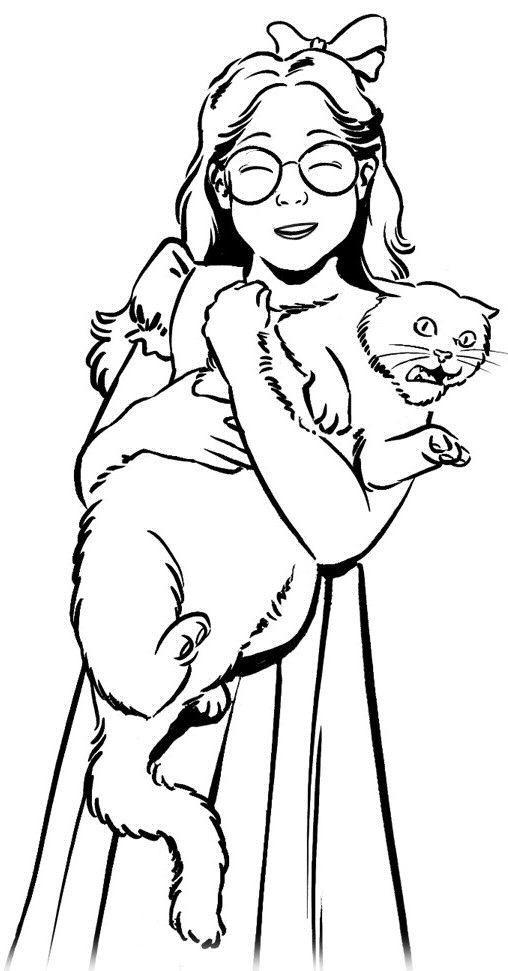
Sophie, the Magical Girl from Nibelheim In a little village at the foot of a mountain, there lived a young girl named Sophie. She was fast asleep in her soft, warm bed and the sun was just beginning to peek through her window. It would have been a very pleasant morning to sleep in. Unfortunately, there was a cat in the house who felt di"erently.
“Meow . . .” he muttered. “What is this?” The cat had
#u"y white fur and was exceptionally plump. He struggled to pull himself onto the girl’s bed. “The sun’s up and she’s still sleeping? Unbelievable—the things I have to put up with!”
He climbed on top of her and wiggled. The whole bed shook with him. “Girl! Ahem! I say, girl! Awake this instant! I am ready for my breakfast!” But it didn’t work.
“Hello? Anyone home?” He crept up to her head and nudged it. Still nothing. “Hmph, very well then . . . you’ve left me no choice. Feel my razor-sharp claws!” He drew them and gently combed them down her cheeks. “There, how do you like that? More? Okay . . .” Finally, she began to stir.
The girl was very pretty. She had long blonde hair, blue eyes and large, round spectacles. Every morning, she had to reach for them to see.
97
“Oh, hello Samson!” she sighed dreamily with a yawn.
“Good morning!”
“Good morning?” the cat whined. “What’s so good about it? It would be a lot better if I had eaten by now.
Look at me! I’m practically starved!”
“Hmm . . . did you have strange dreams, too?”
“What? Dreams? No! Are you listening to me? Read my lips, girl! Food!”
“MmmHmm . . . MmmHmm . . . I see,” replied Sophie, very interested. She patted him on the head and scratched his chin. Then, she reached forward and gave him a great bighug.
“Ugh! Unhand me! Help!”
“Oh, Samson! I wish I knew what you were really saying,” the girl sighed, squeezing him. “Hey, maybe I could
#nish your portrait today. You’d like that, wouldn’t you?”
She rolled out of bed and picked him up.
“No! NO!”
Then she hauled him across the room and plopped him on a pedestal.
“There, that’s better. Alright, now hold still!”
She gave him a treat to distract him while she put on his costume.
“Here is your hat!” she sighed. “And here is your sash!
And don’t forget your little sword!”
He posed handsomely in the hopes of earning another kibble.
“Perfect!”
The whole bedroom was covered with portraits of Samson. In one, he was dressed as a knight in shining armor. In another, he was a scholar with a monocle. The funniest of all was Samson the king. Beside them, were shelves of books she’d written. Though only ten years old, Sophie had already authored hundreds of stories. There were mysteries, romances, fairy tales and even scripts for plays. Every year, she put one on at the village festival.
98
There were two desks she did this at, each with a great bay window. The larger of the two faced the farmyard.
The other overlooked the village and ocean. The rest of her room was buried under props, costumes and even more books.
“There! Finished!” she declared triumphantly. “Well, 99
what do you think?” She turned it around so he could see.
“I call it—Samson the Swashbuckler!”
But the cat just glared at her.
“Hideous!” he meowed indignantly. “Look at the double chin you’ve given me! And those beady little eyes!
I don’t look like THAT! Why can’t you paint me the other way?”
The only portrait he liked was the one depicting him as a ferocious snow lion. She gave him extra big muscles and laser eyes. Beneath the painting, it read: “The Delight and Terror of the Universe.”
“Now, THAT’s me!” he said pointing. Then he dove o", hitting the ground with a great thud, and waddled away.
But of all the books in Sophie’s room, there was one that was most precious to her. It was precious to everyone in the village. So precious, that it was simply called “The Book.” Her people believed it was written by the Creator of the whole world. It contained descriptions of this Creator, an explanation of how and why He created it, lists of rules He wanted people to follow, as well as biographies, poetry, stories and famous letters of people who had done the best job at following those rules.
It was the tradition of everyone in the village to spend some time in the morning not only reading this book, but singing little songs and praying to the Creator as they made beautiful, decorated copies of it they could share with strangers. Sophie herself had a whole shelf of them which she poured her heart into with every pen and needle stroke. As she worked, she’d daydream about all the people who might read them—and their smiles!
But on this morning, young Sophie couldn’t help feel a little sad as she approached her desk, for something terrible had recently happened.
100
An evil king who’d arisen in those lands had made another new law. Book-giving journeys, invitations to Book-giving parties and even mailing them away was now strictly forbidden. No one was allowed in or out of any village. If anyone was caught disobeying, he’d send his armies to destroy them.
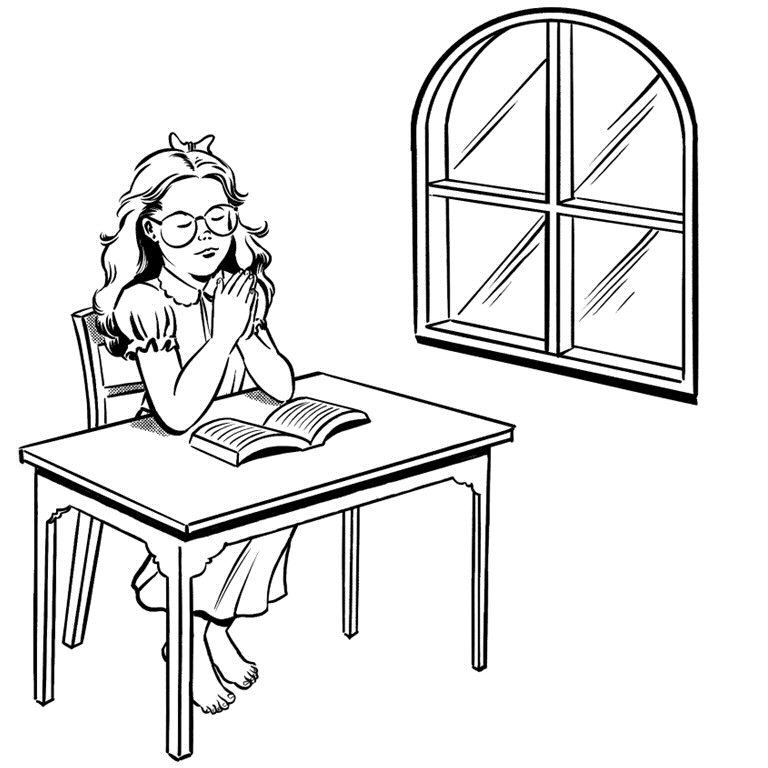
Sophie sat down where, out of the corner of her window, she could see his mountain fortress. Black smoke rose from it. Every year, it grew bigger and scarier. She put her hands together and closed her eyes.
“God . . .” she sighed worriedly. “Please help us.
Please deliver our people from the Dragon King.”
Little did she know, her Creator already had a plan—
and she was going to be a part of it!
In the last book, we learned about the young hero of 101
our story: the battle in the Life Tree . . . the journey through the treacherous tunnel to Snake Mountain . . . the betrayal of his friend, Henry the Bear . . . and his tragic fall. He had been left broken and battered on an icy cave
"oor. It was there, he had the idea for his biggest adventure yet—an adventure to the world beyond the horizon.
This book is all about our heroine and how she got involved in that adventure too.
Sophie was very di$erent from our hero. Far from being raised by a wolf in the wild, she grew up in a comfortable well-ordered village with a happy family. She never had to eat bugs, %ght or kill anyone. Having things like soap, hairbrushes and toothpaste, she looked and smelled much nicer too! But the biggest di$erence was the power she had. If the hero of our story had “super-strength,” then you could say our heroine had a “super-mind.” A mind that endowed her with certain special abilities.
Unfortunately, these powers were very hard to control and tended to spook people. So, much of her time growing up was spent learning how to conceal them. As he was swinging through the branches—galivanting with apes and trying to get stronger— she was at home in her arm-chair doing quite the opposite: practicing how to focus and be sneaky. It wasn’t always easy, but by now she was an expert at it! As we follow her along throughout her day, why don’t we see if she can conceal them from you too?
Watch our heroine very closely, reader. See if you can guess what her powers are.
102
Chapter 14
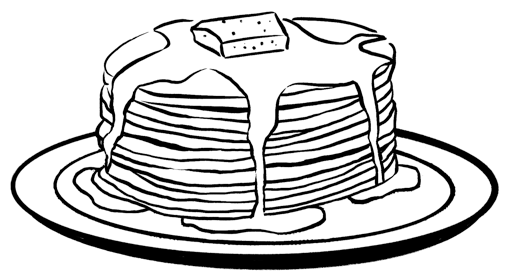
Perfect Pancakes—and Other Mysteries Sophie "nished her prayers early that morning, for an irresistible smell was coming from the kitchen. She got up from her desk and tiptoed to her bedroom door. Slowly, she opened it and peeked outside.
Her mother was cooking her favorite breakfast. There was batter, blueberries and maple syrup on the counter.
Samson was standing on his hind legs trying to reach the bacon. There was also a tray of freshly-baked cookies.
They were white, with even whiter icing on top! Gooey strawberry "lling dripped down the sides! She licked her lips and wondered how she might acquire one without being caught.
Our heroine peeked up at the clock. It read 8:13.
Then she looked at her mother. She was strolling around the kitchen, stirring the batter in a little bowl as she checked all the ingredients. She stirred it seven times every six and a half seconds. Then Sophie closed her eyes and just listened. She heard little birds chirping . . . the wind chimes clinking and clanking. She thought about all the other mornings she’d come out to the kitchen. Then, she thought some more. Somehow, reader, in the span of only a few seconds, our heroine could predict the exact moment her mother’s back would be turned. Samson watched in awe and with burning jealousy as she casually strolled up and popped a cookie in her mouth.
“Oh! OH! That blasted girl! Why does SHE always 103
get away with everything? Hey, down here! I want a cookie too!”
“Good morning, mother,” said Sophie picking up a napkin. Her mother’s name was Julie. Apart from her being a grown up, the two of them looked almost identical.
Even their voices sounded the same.
“Oh, there you are,” she replied. “Good morning! Did you sleep well?”
Sophie wandered over to the piano and started playing a little tune.
“I had another odd dream . . .”
“Really? What was it about?”
“I don’t know. Something about birds in a nest arguing . . . a grumpy ape . . . a wolf . . . a bear and . . . and . . .”
“And?” asked her mother.
Sophie thought about it and shrugged.
“I guess I forgot.”
“You’ve always had such interesting dreams. Ever since you were little!”
“When I can remember them!”
“Hey, what song is that you’re playing? I’ve never heard it before.”
“Hmm. I’m not sure!”
“Is it one you wrote?”
“No, I think it was in the dream.”
“Sounds a little sad.”
“Yeah, maybe . . .”
“Well, perhaps it would be a good song for one of your plays this year!”
Sophie closed the piano and went over to set the table.
Houses were quite a bit smaller and simpler back then.
Everything was made of wood, metal or stone. Rooms like the kitchen and dining room were usually joined together.
It also took a long time to wash dishes and clothes because everything had to be done by hand. Instead of driving cars, people rode horses or bicycles. But they did have one 104
thing that we don’t. These were special gems called Terra Crystals.
“Can you pass me a yellow, darling? I need to set the timer.”
“Sure!”
There were six di!erent kinds. You could "nd them scattered around the earth, usually deep underground.
Each was a distinct color and had a unique power that could be harnessed.
The yellow ones were a little like batteries. You could power a clock, lamp or lighter with them. If you held one in your hand for too long, it would make your hair stand up. If you banged two together, you would see a spark and feel a little shock. Blue Terra Crystals cooled air around them and puri"ed water. The greens made cuts and bruises heal faster. They also made plants grow taller. Red crystals were warm and could catch "re easily. They burned for a very long time without creating any smoke.
In winter, people put them in their pockets to keep their hands warm. But you had to be very careful where you left them out. Sophie saw one on her counter that morning a little too close to the sunlight. She hurried over and put it back in the drawer.
Last, there were pink and purple crystals. These were a little different from the others. The purple crystals were called “Chaos Crystals.” They were known for causing problems, like mutations and certain kinds of illnesses. This is a part of why no one in Sophie’s village ever went over the mountains towards the middle of the continent. Legend had it that a giant Chaos Crystal asteroid once crashed there, giving the continent its strange crater-like shape. The shards in the soil seemed to make the climate more extreme there and attract the most violent, unpredictable storms. It made the trees grow tall and strange, and could make animals unusually strong. As far as anyone on the coast knew, 105
there weren’t any people in the middle. Certainly, no little boys!
Pink crystals didn’t really do anything on their own, but they counteracted the purple crystals and could borrow the power of any crystal they were touching. Folks often wore them around their neck for good luck, or slept with them under their pillows for pleasant dreams.
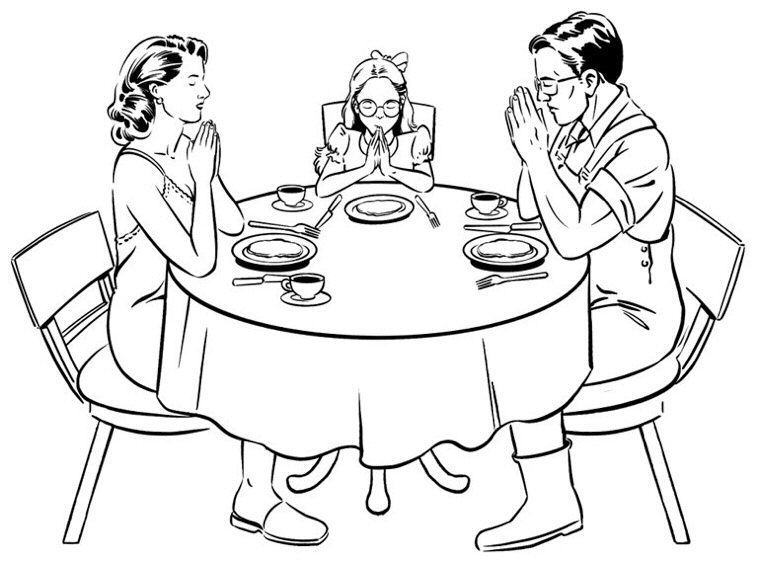
“Expecting someone?” asked Julie, noticing Sophie setting the table for one more.
“Most certainly. Mr. Stanley will be here soon . . .”
Julie looked outside the kitchen window but didn’t see anyone. Then she looked out another. Still no one.
“Mail on Sunday?”
Sophie shrugged. She was too focused on making the tea. Mr. Stanley liked it at precisely eighty-seven degrees, with no less than one and three quarters scoops of sugar, except around the holidays. A pretty blue crystal helped Sophie cool it to exactly the right temperature. After she poured the tea, she brought it over to the table. No sooner did it touch the coaster than they heard a knock at the back door.
“That’s odd,” said Julie.
Our heroine smiled.
106
An Unexpected Visit
Mr. Stanley was a tall and thin fellow, dressed all in blue. He had a great big mustache and perfectly white teeth.
“Good morning!” he said, coming in.
Sophie curtsied and welcomed him.
Her mother, however, was still stunned. How did Sophie know he was coming? There were almost never visi-tors on Sunday mornings. Everyone was too busy getting ready for church. Mr. Stanley never mentioned coming over. Nor had he ever come through the back door before.
Yet, at the exact moment Sophie expected him, there he was! But eventually, Julie realized how silly she must have looked standing there. She snapped out of it and welcomed their guest.
“Good morning, Charles! Please, sit down and join us!
Sophie made you some tea.”
“Oh,” he said, turning to her. “You knew I was coming?”
The two grown-ups looked at our heroine curiously.
The room fell completely silent. Quickly, Sophie had to think of an explanation.
“I . . .” she muttered, “must have seen you out of the window or something.”
That made sense, reader. There were plenty of windows, after all. The grown-ups thought about it for a moment, looked at each other and shrugged. Julie went back to cooking breakfast and Mr. Stanley sat down. A very close call!
Sophie loved to chat with Mr. Stanley in the mornings. She could get all the latest news that way. Who was getting married? Were there any new books? Even little things, like what color someone might have painted their ceiling. Sophie needed to know everything.
107
“So,” she said, sitting down across from him. “Is there any word about the Wilsons?”
“Yes!” he replied, getting excited. “It’s a boy!”
Sophie and Julie’s eyes lit up. “How wonderful!” they cheered at the same time. Sometimes they seemed more like sisters. It wasn’t always clear which of them was more grown up either.
“I wonder what they’ve named him!” exclaimed Julie,
!inging up her mixing spoon. Batter soared through the air and made a big splash. Samson scurried over to lick it up.“Oh! Can’t I run over there now?” Sophie begged.
“I’m sure he must be adorable. Eek! I can’t wait!”
They both started chattering and giggling hysterically, much to Mr. Stanley’s amusement. All of the girls in the village were like that, reader. To the People of the Book, babies were the most lovely and precious gifts.
“Now, be patient you two!” laughed Mr. Stanley heartily. “You’ll see him this afternoon! We’re having a party after church, remember? There will be a baby shower for the Wilsons—and a wedding for Jonathan and Beth!”
“And we can’t forget about Fred and Elizabeth’s anniversary,” added Julie, $nally beginning to calm down.
“Fifty years they’ve been married!”
“Has it been $fty years?” asked Mr. Stanley.
“Indeed!”
“Goodness! Time does !y! Which reminds me—” Mr.
Stanley then started digging into his pocket. “It’s why I came. I was wondering if you could take a look at this for me, Sophie. It’s for my wife.”
He pulled out a piece of paper and handed it to our heroine. She opened it eagerly.
“How lovely! A poem!”
“You always were such a romantic, Charles!” remarked Julie, trying not to spill more of the batter.
108
“Well, it’s supposed to be a poem,” Mr. Stanley answered. “I know what I want to say. I’ve got it all there.
But, alas, I cannot rhyme! And it just doesn’t sound right when I try. It’s our anniversary soon too, you see. I want to surprise her! But what a mess it is! Would you take a look at it for me, Sophie, and just—you know—do your thing?”
“I would be honored!” she answered.
“Thank you! Thank you!”
She already had three or four ideas, but she got the feeling like Mr. Stanley still had more to say.
“And,” he continued, blushing. He was such a kind man. Sophie liked him a lot. “If I might ask just one more thing of you . . .”
“Anything,” she answered.
“Might I take some #owers from your garden? It’s why I came through the back door. You always have the best
#owers in the village! When I looked, I couldn’t believe it.
The exact ones my wife likes—all growing together in the same spot! As if someone planted it there just for us and our special day!”
“They’re yours,” answered Sophie delightedly.
The joy this brought to Mr. Stanley’s face made our heroine’s heart leap. But she still wasn’t finished. She got up and went over to a drawer, where she drew out a bright blue bow to tie them with. The strange thing, reader, was that it was exactly the bow Mr. Stanley had imagined—right down to the smallest detail. His expression turned from joy to the same astonishment Julie had felt that morning. How? How could Sophie have possibly known?
“What’s wrong?” Sophie asked, pausing. “You don’t like it?”
“No, no! That’s not it. It’s just—”
He took the bow and examined it. How very odd!
Even the little frills on the side—precisely the same! Sophie tilted her head, confused.
“I don’t know, Sophie,” he answered, starting to 109
“I don’t know, Sophie,” he answered, starting to chuckle. “Sometimes . . . I think you can read minds!”
Our heroine froze and turned bright red. Her mother froze too. It wasn’t the "rst time someone had made that remark about her daughter. Her mother was curious to see how she’d respond. But Sophie just stood there perfectly still.“Ah, hah!” she then laughed awkwardly. What else could she do? They were clearly onto her. “Oh, hah! Oh, Mr. Stanley! Please! Mind reading? Everyone knows that’s impossible. How silly!” She froze again, waiting to see how they’d react.
What a strange, strange girl Sophie was, Mr. Stanley thought. He adored her, but sometimes she was just so odd! On the other hand, he had indeed made a joke.
Maybe he was just really funny? Yes, that must have been it! Upon realizing this, he started to laugh along with her.
“Ah, hah! Ah, hah! Hah, hah, hah! You’re right. How silly, indeed!”
Julie joined in. By the end, they’d all nearly giggled themselves to the #oor.
“Right,” he "nally said, wiping the tears from his eyes.
“Anyways, I’m o$! Thanks again, Sophie! You’re the best!
Julie, it was a pleasure seeing you, as always!”
“You won’t stay for breakfast?” she asked.
“We’re having pancakes!” exclaimed Sophie. “You’ll love them. They’re perfect.” She slapped her hands on the table. “PERFECT!”
“I’m sure they are!” he replied, standing up and petting her on the head. “But, alas, I must be getting home.
We have a big afternoon to prepare for! Please, give my regards to John. Bye everyone! Cheerio!”
Sophie ran up and hugged her dear mailman tightly.
Then he left out the back door to collect the #owers.
“He’s so wonderful, isn’t he?” remarked Sophie, looking down at the poem. “He loves her very much . . .”
“Yes, he certainly does,” sighed Julie.
110
The Man from the Sea
Sophie sometimes wondered why she had her powers.
Was she born with them? Did she acquire them somehow? Why her? Maybe it would remain a mystery forever.
She wondered it again that morning as she continued helping her mother set the table. Fortunately, a clue presented itself that would get her one step closer to discovering the answer.
“Have I ever told you, Sophie,” her mother suddenly remarked, “about how Mr. Stanley and I were once en-gaged to be married?”
Sophie dropped the dishes she was carrying—making a large clank on the table—and gasped in amazement.
“No! You never told me THAT!”
“Well . . . ’tis true . . .”
Our heroine dragged a chair into the kitchen and placed it in front of her mother. She plopped down in it and gazed up with a big smile on her face, like a student sitting at a desk, eager to receive the day’s lesson.
“I’m guessing you want to hear about it,” said Julie.
Sophie didn’t even have to answer.
“Very well then,” her mother sighed. “If you insist.”
And she told her the story. “Where shall I start?” She slowly paced back and forth, blushing. “Well, I was just a little older than you are when it happened. I was living at home with my mother and father. Charles was the boy next door. We were very close friends. We played together . . . studied together . . . helped on each other’s farms.
He was terribly handsome! And I knew he liked me . . .”
“Go on . . .” urged Sophie, very interested.
“Well, one afternoon, we went for a walk in a little wood. I remember it like it was yesterday. The sun was out. There were bright #owers everywhere! We found a little $eld full of bunnies, and started feeding them. Sud-111
denly, he got down on one knee. He said, ‘Dearest Julie, you are the fairest creature in all the land! And have the purest heart! I should very much like you to be my wife. I love you—and promise to love you forever!’”
“Really!?” exclaimed Sophie. Her spectacles nearly
!ung o". She had to push them back into place. “And what did you say?”
“Well, I didn’t know what to say. So . . . I said yes!”
Sophie laughed and laughed—nearly falling out of her chair.“I know!” giggled Julie along with her. “Believe me, I was as shocked as you are. But why wouldn’t I say yes? It made perfect sense! He was a wonderful boy—kind, polite . . .”
“Handsome . . .” teased Sophie.
“Our families were thrilled. We both knew they’d been planning it. But . . . I started feeling nervous. Something just wasn’t right.”
“You weren’t in love with him.”
“No . . . I’m afraid I wasn’t. But how could I tell him?
He was so sweet. Oh, you should have seen him.”
Our heroine kept listening eagerly.
“So, what did you do?”
“Well, I don’t think I realized it at the time. Or at least not right away. It was all so confusing. I was only thirteen.
Nothing like this had ever happened to me before! One day I saw him coming over with his family to make wedding plans. Everyone was excited. My sisters had designed the dress, shoes—everything! We just needed to set the date and talk about living arrangements. Was I going to move in with them? Were we going to build our own house? Did I even feel ready to leave yet? I was so young! I was happy where I was. I didn’t want things to change. It was all happening so fast! Well, I began to feel terribly frightened by it all. So, just as I heard them knocking on the door, I jumped out the window and ran away!”
112
Sophie was really enjoying this story. Her mother was so embarrassed. She’d never seen her so red before.
“How ridiculous! Wherever did you run o! to?” she asked, trying not to laugh too much.
“Nowhere! I just ran! I didn’t know what else to do. I ran and ran until I got to the sea. I cried. I prayed. I laughed—because of how silly it all was! What was I doing? Charles was such a sweet young man. What was wrong with me? I stood there gazing out at the ocean. The sun was setting. I cried out to God and begged he’d send a ship to come take me away—or to give me some kind of sign about what I should do. If marrying Charles was what God wanted, I would. I just needed to know #rst, that’s all! And that’s when I saw it . . .”
“Oh! OH! Father’s ship!” Sophie shouted, slamming her #sts on her thighs. She recognized this story now.
“Yes!”
She knew her parents met near the sea that way. She had heard it many times. But she never knew the reason her mother had been there in the #rst place.
“How romantic!” Sophie sighed.
“I suppose,” chuckled Julie. “But I promise you, it wasn’t very exciting at the time! No, it wasn’t a ship. It was a shipwreck. Someone had crashed there! I still remember it. Just as I #nished praying, I saw it scattered across the rocks. The wind suddenly picked up. A great wave came and washed it to shore. A man tumbled out. He fell into the water. I had to dive under to save him. And, well, you know the rest. I dragged him ashore and revived him . . .”
“So, you kissed him?” Sophie teased.
“Heavens, no!” answered Julie. “What do you take me for? I had no choice! He wasn’t breathing. I had to resusci-tate him.” Sophie felt like teasing her mother some more, but let it go. “When he came to, he couldn’t walk. He had no memory of what had happened or even who he was. I asked him to wait while I went to #nd help, but he begged 113
me not to tell anyone. He looked like he was in some kind of trouble.”
“What kind of trouble?” Sophie asked.
“I didn’t know. But it looked serious. Oh, he was so handsome! And such power in his voice. How could I resist? I obeyed his every word. Instead of telling anyone, I dragged him to a nearby cave on the beach and stayed until nightfall, nursing his wounds. I visited every evening in secret—sneaking him meals, reading him stories, teaching him all about God and the Book. He taught me about the world beyond the sea, science and strange new music. We fell in love that summer. By the end, he was fully healed and had rebuilt his ship to leave. But we couldn’t part! I brought him back to our village, introduced him, and taught him our ways here. Charles saw right away how I felt. He understood why I’d been acting so silly all summer. He forgave me and bestowed his blessing on us. Soon after that, your father and I were married.”
Sophie loved hearing the tale of her parents meeting.
It had always been her favorite. But now that she was getting older and closer to that age herself, it sometimes made her feel worried. Especially the part about marriage, for one day she would be married, too. What if the man she married wanted her to leave her house? What if he lived on the other side of the village? What if it happened early like it did for her mother? Sophie was only ten. That was just a few years away! And, most worrying of all, what if she married someone who discovered her powers and didn’t like them? Maybe they would think she was some kind of— Well, she didn’t like to think about it.
“Mother,” Sophie asked then, solemnly. “Where did father come from?”
She already knew what her mother was going to say, but couldn’t help asking.
114 “Well, that’s the great mystery,” Julie sighed. “No one
“Well, that’s the great mystery,” Julie sighed. “No one knows . . .”
Sophie sighed too.
But then our heroine suddenly got an idea. Maybe she inherited her powers from her father! Yes—he was very strange, after all. Come to think of it, some of the strange things that happened around her sometimes seemed to happen around him. Or did they? It was hard to tell.
Maybe he was good at hiding them too. He was also the only one in the village her powers never seemed to work on. If only she could "nd out where he came from, then maybe she could discover the answer. Her mother noticed how worried she was and tried to cheer her up.
“But we can guess where he’s from . . .” she said.
“Hmm?”
Sophie looked up curiously.
“I think your father was a pirate!” said Julie. She drew up her mixing spoon like a sword. “Maybe he was in a great battle with a monster—a kraken!—and was #ung overboard! Pow, like that!” More batter #ew through the air. Samson was very happy. “He hit his head and forgot!”
Sophie liked this game. But what an awful suggestion!
A pirate?
“No!” she answered, defending his honor. Sophie loathed pirates. Sometimes, she saw them around the village border. They were dirty, smelly and rude. “No, if that were true, he’d have bad teeth!”
“Well, what do you think, then?” Julie asked, challenging her.
Sophie thought about it.
“I think . . . I think he might have been a knight,” she said, grabbing the roller. Now, she had a sword too. “Or maybe a musketeer. He was in the middle of rescuing a princess, but had a spell cast on him by the evil sorcerer, Kalthazar.” Our heroine was a very talented actress: “‘On guard, yee fool’ said he. ‘I should have known t’was you.
115
You are the man who killed my brother! And now, I am the man who is going to kill you!’”
Julie was quite the actress also. They often starred together in the plays Sophie wrote for the village festival.
“So, you think! But you are deceived! I am not Kalthazar, but his twin sister. And my power is even greater. Hazza!”
Sophie and her mother chased each other around, giggling, making swishing sounds and an even greater mess of the kitchen. Neither of them noticed that Sophie’s father had been standing in the doorway watching the whole time. When they "nally did, they both froze and turned bright red.
Sophie’s father was a tall and powerful looking man.
He had broad shoulders and a perfectly straight posture, like an army commander. His eyes were deep blue, like Sophie’s, and his gaze was piercing. But the expression on his face was soft and gentle. Even gentler, was his voice.
“Good morning,” he said plainly.
Was he upset? Was he angry? Did he even notice the mess they’d made? With him, it was so hard to tell. He always looked so calm and steady. Sophie curtsied and greeted him.
“Good morning, Father.”
She bowed her head extra low and for a much longer time than usual. Then her father started to smile. The man didn’t smile much, reader, but when he did, it was a grand, kingly smile. But he couldn’t hold back any longer
—and broke into laugher. What a mess they’d made, indeed! Sophie laughed too and charged into his arms. He picked her up and hugged her tightly.
116