

The Career Switch Playbook into Product Management by Nkeonye Akumah - HTML preview
Download the book in PDF, ePub, Kindle for a complete version.
Chapter 10: Career Growth Pathways (1,200
words)
Building a career in product management—or any professional field—is rarely a straight line. Growth comes from understanding the paths available, recognizing where your strengths and interests lie, and making intentional choices. In this chapter, we explore how to move from associate to senior roles, transition into leadership, specialize versus generalize, switch industries, and build your personal brand.
Associate to Senior Roles
Early in your career, your focus is on learning, contributing, and proving your ability to handle responsibilities. Career growth from an associate to a senior product role usually happens in stages.
1. Master Your Core Responsibilities As an associate or junior product professional, your goal is to execute effectively. Deliver features, gather insights, and contribute to the roadmap. Reliability and consistency are noticed quickly.
2. Develop Strategic Thinking Moving to a senior role means shifting from execution to strategy. Start connecting your day-to-day work to broader business goals. Ask yourself: How does this feature impact revenue, retention, or customer satisfaction?
3. Document Your Impact
Keep track of projects, metrics improved, and problems solved. Quantifying your achievements makes it easier for managers to justify promotions and helps you reflect on your progress.
4. Seek Feedback and Mentorship Regular feedback helps you identify blind spots and areas for improvement. A mentor— someone who has been through similar growth—can provide guidance on what it takes to move to a senior role.
5. Take Initiative
Senior roles require ownership. Volunteer for high-visibility projects, propose solutions to existing problems, and demonstrate leadership qualities, even before you have the title.
Moving into Leadership
Leadership is more than a title—it’s the ability to influence, guide, and inspire others. Transitioning from an individual contributor to a manager or director involves new skills and mindsets.
1. Shift from Doing to Enabling As a leader, your primary role is to empower others. Focus on mentoring, removing roadblocks, and helping your team succeed rather than executing tasks yourself.
2. Master Communication
Leaders must communicate clearly with multiple audiences—executives, peers, and team members. Learn to present insights, provide constructive feedback, and build consensus.
3. Think About Team Growth Great leaders grow people, not just products. Invest in team development, recognize achievements, and create opportunities for learning.
4. Understand Organizational Strategy Leadership requires understanding company-wide objectives. Align your team’s goals with broader business priorities to drive meaningful impact.
5. Lead Through Influence, Not Authority Early in leadership, you may not have full decision-making power. Learning to influence stakeholders, negotiate, and advocate for your team is critical.
Specializing vs Generalizing
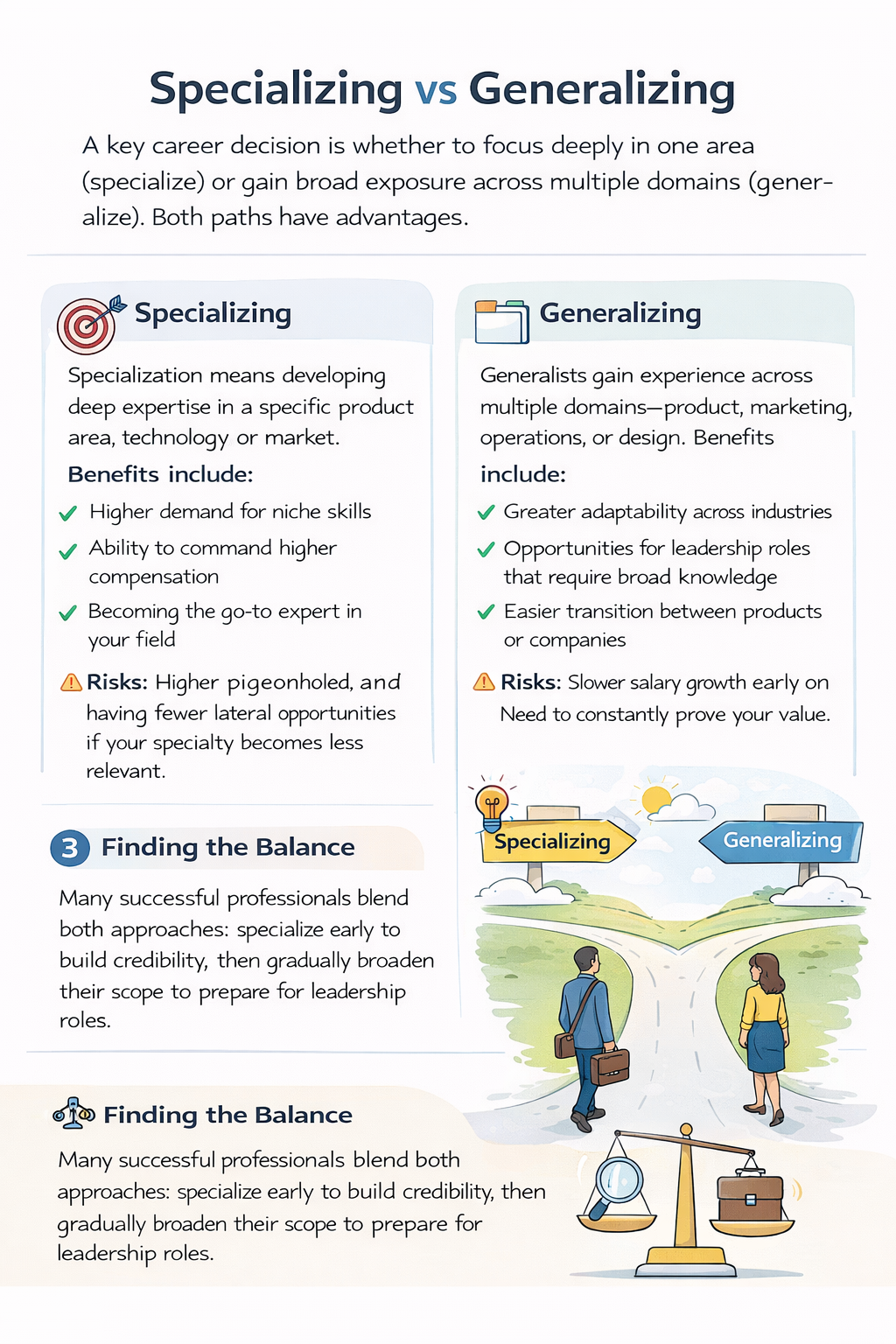
A key career decision is whether to focus deeply in one area (specialize) or gain broad exposure across multiple domains (generalize). Both paths have advantages.
1. Specializing
Specialization means developing deep expertise in a specific product area, technology, or market. Benefits include:
o Higher demand for niche skills
o Ability to command higher compensation
o Becoming the go-to expert in your field
Risks include being pigeonholed and having fewer lateral opportunities if your specialty becomes less relevant.
2. Generalizing
Generalists gain experience across multiple domains—product, marketing, operations, or design. Benefits include:
o Greater adaptability across industries
o Opportunities for leadership roles that require broad knowledge
o Easier transition between products or companies
Risks include slower salary growth early on and the need to constantly prove your value.
3. Finding the Balance
Many successful professionals blend both approaches: specialize early to build credibility, then gradually broaden their scope to prepare for leadership roles.
Switching Industries
Product skills are transferable, but moving to a new industry requires strategic planning.
1. Leverage Transferable Skills Core skills like problem-solving, data analysis, product thinking, and stakeholder management are relevant across industries. Highlight these when applying for new roles.
2. Learn the Industry Language Every sector has its jargon, metrics, and user expectations. Invest time in understanding the new industry through research, online courses, or informational interviews.
3. Start with Adjacent Roles Transitioning into a completely new industry can be easier through roles that bridge your current experience. For example, a fintech PM might move to insurtech before exploring broader finance roles.
4. Network Strategically
Connections in your target industry can accelerate your transition. Attend events, join professional communities, and reach out to people for mentorship or advice.
5. Be Patient and Persistent Industry switches often take longer than internal promotions. Treat it as a long-term investment and remain open to lateral moves that build credibility in your new domain.
Building Your Personal Brand
Your personal brand is how others perceive your expertise, values, and potential. It influences career opportunities, promotions, and partnerships.
1. Showcase Your Work
Share case studies, insights, or lessons learned on platforms like LinkedIn, Medium, or personal blogs. Highlight your problem-solving approach and impact.
2. Develop Thought Leadership Speak at meetups, webinars, or conferences. Offer opinions on trends in your industry. This positions you as someone knowledgeable and forward-thinking.
3. Build a Network
Personal branding isn’t just about visibility—it’s about relationships. Connect with peers, mentors, and leaders. Offer help, share knowledge, and engage meaningfully.
4. Stay Consistent and Authentic Your brand should reflect your real strengths and interests. Authenticity builds trust and makes your contributions memorable.
5. Continuously Learn and Adapt As industries and technologies evolve, so should your brand. Stay updated, expand your skillset, and share fresh insights to maintain relevance.
Charting Your Path
Your career growth is a combination of skill development, strategic choices, and relationships. Moving from an associate to a senior role requires consistent impact and strategic thinking. Leadership roles demand a shift toward influence, enabling others, and aligning with company objectives. Deciding whether to specialize or generalize helps define your trajectory, while switching industries or building a personal brand opens new opportunities.
Ultimately, the most successful professionals plan thoughtfully but remain adaptable. They combine deliberate skill-building with a willingness to learn, explore, and take calculated risks. By understanding the available pathways and actively shaping your career journey, you position yourself for long-term success and fulfillment.