

The Career Switch Playbook into Product Management by Nkeonye Akumah - HTML preview
Download the book in PDF, ePub, Kindle for a complete version.
Chapter 8: Your First 90 Days in a Product Role
Starting your first product role is an exciting yet challenging journey. The first three months often set the tone for your performance, relationships, and growth in the company. While you may feel pressure to prove yourself, your goal should be to build a strong foundation by understanding the product, learning the metrics, ‘building relationships, delivering early wins, and avoiding common beginner mistakes. This chapter will guide you through a practical roadmap for navigating your first 90 days successfully.
Understanding the Product
Before you can make meaningful contributions, you need a deep understanding of the product. This goes beyond knowing features—it’s about grasping the why behind the product, who the users are, and how it fits into the broader market.
1. Study the Product Inside Out Take time to explore all the product’s features, user flows, and edge cases. Use the product as a customer would, noting areas of friction and delight. Ask yourself: What problem does this solve? How does it benefit the user?
2. Learn the Product’s Vision and Strategy Align yourself with the company’s mission and roadmap. Understanding why certain features exist, and why others are planned, helps you make informed decisions and demonstrate strategic thinking.
3. Talk to Users
If possible, sit in on customer calls, read support tickets, and observe user behavior. Direct exposure to your audience will help you empathize with users and prioritize initiatives effectively.
4. Document Your Learnings Keep a personal knowledge repository. Note product nuances, key competitors, and customer pain points. This habit will save you time and make you a go-to resource for your team.
Building Relationships with Teams
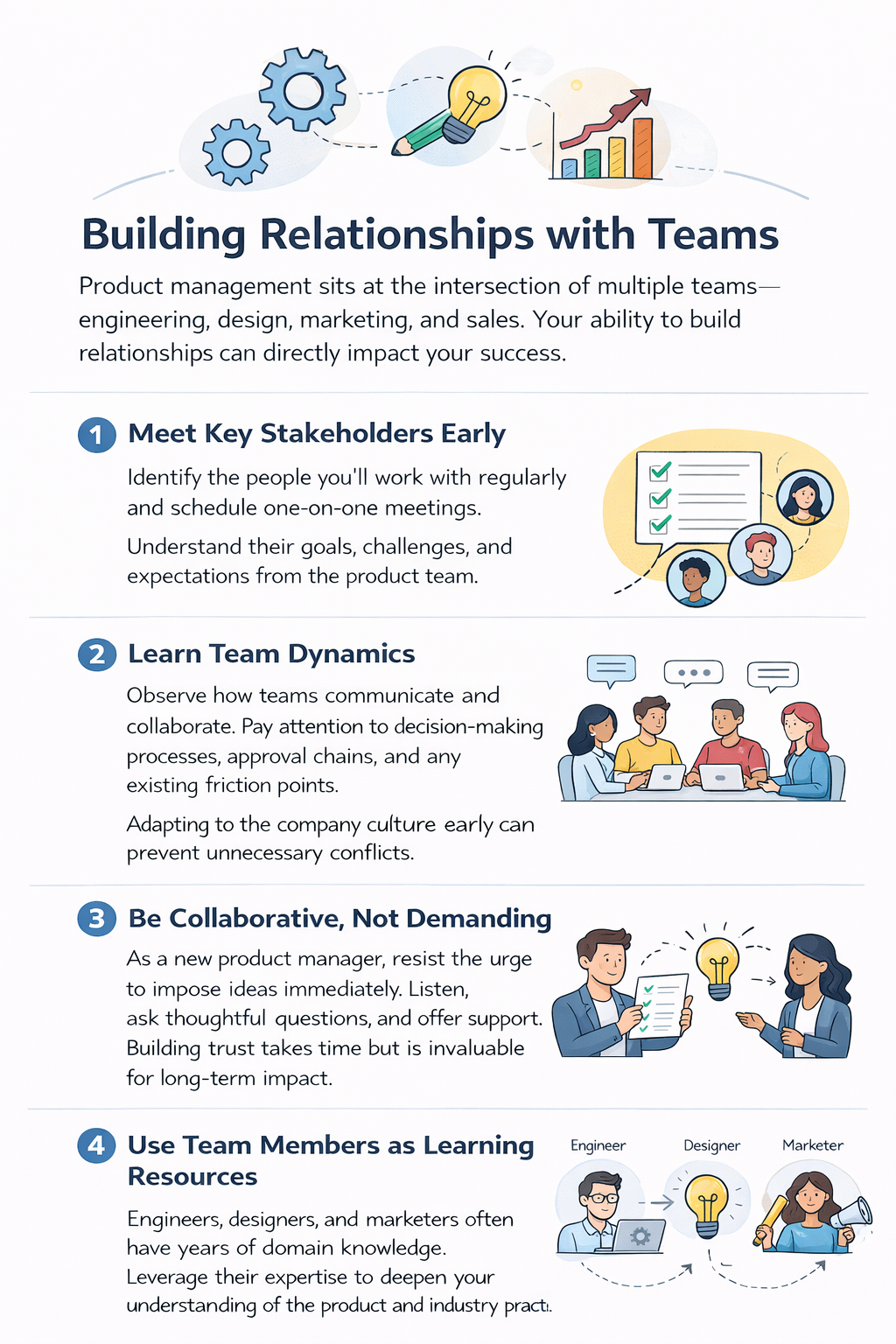
Product management sits at the intersection of multiple teams—engineering, design, marketing, and sales. Your ability to build relationships can directly impact your success.
1. Meet Key Stakeholders Early Identify the people you’ll work with regularly and schedule one-on-one meetings. Understand their goals, challenges, and expectations from the product team.
2. Learn Team Dynamics
Observe how teams communicate and collaborate. Pay attention to decision-making processes, approval chains, and any existing friction points. Adapting to the company culture early can prevent unnecessary conflicts.
3. Be Collaborative, Not Demanding As a new product manager, resist the urge to impose ideas immediately. Listen, ask thoughtful questions, and offer support. Building trust takes time but is invaluable for long-term impact.
4. Use Team Members as Learning Resources Engineers, designers, and marketers often have years of domain knowledge. Leverage their expertise to deepen your understanding of the product and industry practices.
Learning the Metrics
Data is at the heart of product decisions. Understanding the right metrics will help you measure success, identify issues, and justify your proposals.
1. Know the North Star Metric Every product typically has a key metric that aligns with the company’s goals—like daily active users, conversion rate, or revenue growth. Understand how this metric is defined, measured, and influenced by product decisions.
2. Track Supporting Metrics In addition to the North Star, track engagement, retention, and satisfaction metrics. These indicators provide context and help you identify where improvements are needed.
3. Learn the Tools
Familiarize yourself with analytics platforms, dashboards, and reporting tools used in your company. Knowing how to extract and interpret data efficiently saves time and builds credibility.
4. Ask Questions About Trends Don’t just memorize numbers—seek to understand the story behind them. For example: Why did a feature see low adoption? How does seasonality impact usage? Your curiosity will set you apart.
Delivering Early Wins
Early wins are about demonstrating impact without overstepping your experience. They build credibility and give you momentum.
1. Start Small, Show Results Identify low-effort, high-impact opportunities. Fixing a minor usability issue, clarifying confusing copy, or suggesting a small enhancement can create visible value quickly.
2. Communicate Your Contributions Share your progress with stakeholders in a humble, informative way. Use data to back up your contributions, and link them to broader product goals.
3. Learn From Each Win
Reflect on what made a particular initiative successful. Which decisions worked? What could have been done better? Early wins are not just about outcomes—they are learning experiences.
4. Align Wins With Strategic Goals Ensure your initiatives support the product roadmap and company objectives. Wins that align with strategy are noticed more and build lasting credibility.
Avoiding Common Beginner Mistakes
Even the most talented new product managers can fall into traps. Awareness is the first step toward avoiding them.
1. Rushing to Make Changes Avoid pushing major changes before understanding the product and team dynamics. Quick fixes without context can backfire and damage trust.
2. Neglecting Relationships Technical skills are important, but relationships often define your success. Ignoring team dynamics or failing to collaborate can lead to resistance and missed opportunities.
3. Over-relying on Data or Intuition Alone Data is crucial, but it doesn’t tell the whole story. Balance analytics with user feedback, stakeholder insights, and qualitative understanding.
4. Being Afraid to Ask Questions Pretending to know everything can be costly. Asking questions shows humility, curiosity, and a willingness to learn—all traits respected in successful product managers.
5. Not Documenting Decisions Failing to document reasoning or decisions leads to confusion and repeated debates. Keep clear notes on why choices were made and share them with relevant stakeholders.
Wrapping Up Your First 90 Days
The first 90 days in a product role are about laying the foundation. Your focus should be on learning, building trust, understanding the product deeply, and contributing in meaningful ways. Remember, your goal isn’t to impress with grand gestures but to create steady, visible value while establishing credibility.
By understanding the product, cultivating strong relationships, mastering the metrics, delivering early wins, and avoiding common pitfalls, you set yourself up for long-term success. Treat this period as an investment in your knowledge, network, and reputation—the returns will follow in your ability to lead, influence, and drive meaningful product outcomes.