

The Career Switch Playbook into Product Management by Nkeonye Akumah - HTML preview
Download the book in PDF, ePub, Kindle for a complete version.
Chapter 6: Gaining Experience Without a Job Title
(1,200 words)
One of the biggest frustrations for aspiring product professionals is this question:
“How do I gain experience if no one hires me without experience?”
The truth is simple. You do not need a formal product title to build product experience. You need exposure to real problems, real users, and real decisions.
Experience is not only what appears on your job contract. It is what you have practiced, tested, improved, and delivered.
This chapter will show you practical ways to gain meaningful experience before you officially hold a product title.
Internships and Apprenticeships
Internships are one of the most direct entry points into product work. They provide structured exposure to real teams, real workflows, and real expectations.
Why Internships Matter
Internships help you:
• Understand how product teams communicate
• Observe how priorities are set
• See how decisions are made under pressure
• Learn how feedback is handled
You may not lead strategy immediately. That is normal. Focus on learning how experienced professionals think.
Even small responsibilities matter:
• Preparing meeting notes
• Tracking metrics
• Writing documentation
• Supporting research
• Updating task boards
Each task teaches you how product systems function.
How to Approach an Internship
Do not treat internships as passive learning.
Instead:
• Ask thoughtful questions
• Volunteer for additional responsibility
• Request feedback regularly
• Study how senior team members frame problems
Observe patterns:
• What data do they rely on?
• How do they handle disagreement?
• How do they justify priorities?
Apprenticeships work similarly but may last longer and involve deeper mentorship. If available, they provide structured guidance from experienced product leaders.
The key benefit is exposure. Seeing product in action removes fear and builds confidence.
Startup Experience
Startups are intense learning environments.
Unlike large corporations with defined roles, startups often require flexibility. You may handle research, user feedback, roadmap planning, and testing all in the same week.
Why Startups Accelerate Learning
Startups offer:
• Faster decision-making
• Direct access to founders
• Visibility into business challenges
• Immediate impact
In a startup, you quickly see how product decisions affect growth, revenue, and customer satisfaction.
You also experience constraints:
• Limited budget
• Small teams
• Changing priorities
These constraints sharpen your problem-solving skills.
What You Learn in a Startup
You learn to:
• Prioritize ruthlessly
• Test ideas quickly
• Accept imperfect information
• Balance speed with quality
You may not have a formal “Product Manager” title. But if you are contributing to user research, feature decisions, or roadmap discussions, you are building product experience.
Document your contributions carefully. Later, you can turn them into structured portfolio case studies.
Freelance Product Work
Freelancing is another powerful way to gain experience. You do not need large clients. Even small businesses need product thinking.
What Freelance Product Work Looks Like
You might:
• Analyze website conversion rates
• Improve checkout flow
• Conduct customer feedback analysis
• Redesign onboarding steps
• Suggest feature improvements
Small companies often lack structured product processes. You can provide clarity.
Why Freelancing Is Valuable
Freelancing teaches:
• Managing client expectations
• Defining scope clearly
• Handling feedback professionally
• Delivering within deadlines
It also builds confidence. When a client implements your recommendation and sees improvement, you experience real impact.
Freelancing forces ownership. There is no large team to hide behind. Your thinking must be clear and practical.
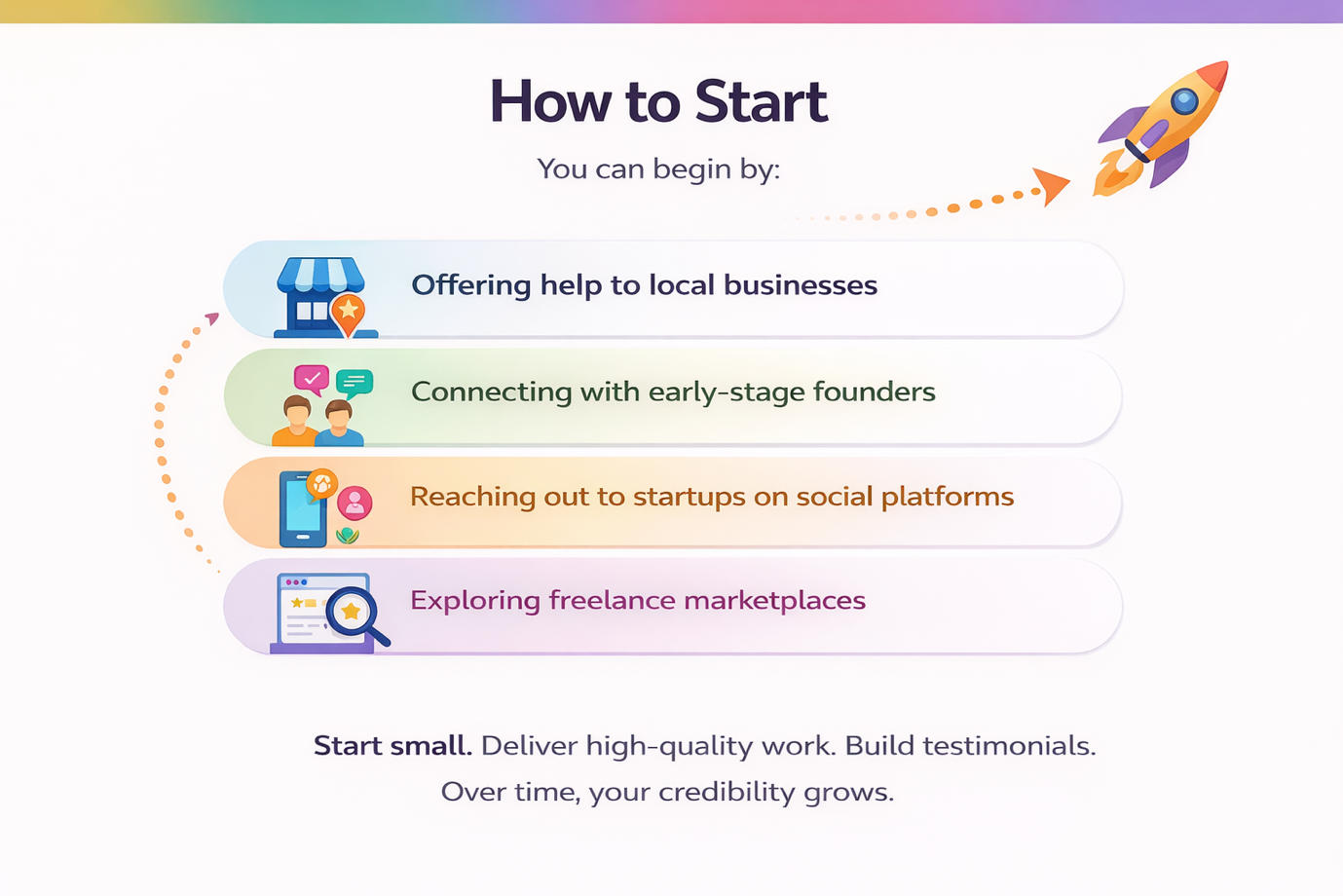
How to Start
You can begin by:
• Offering help to local businesses
• Connecting with early-stage founders
• Reaching out to startups on social platforms
• Exploring freelance marketplaces
Start small. Deliver high-quality work. Build testimonials. Over time, your credibility grows.
Volunteering for Nonprofits
Nonprofit organizations often operate with limited resources. Many struggle with outdated digital systems, unclear messaging, or inefficient processes.
Your product skills can create meaningful social impact.
Why Nonprofits Are Strong Learning
Environments
Nonprofits provide:
• Real user challenges
• Budget constraints
• Clear mission-driven goals
You may help:
• Improve donation flow
• Optimize volunteer onboarding
• Analyze user engagement
• Redesign websites
• Create digital strategy plans
Working with nonprofits builds empathy. You learn to design for impact, not just profit.
Skills You Develop
You strengthen:
• Communication
• Stakeholder management
• Prioritization under constraints
• Outcome measurement
Nonprofits also appreciate initiative. If you propose structured improvements, they are often open to collaboration.
This type of work strengthens both your portfolio and your sense of purpose.
Building Your Own Mini Product
One of the most powerful ways to gain experience is building something yourself.
It does not need to be complex. It needs to solve a real problem.
What Is a Mini Product?
A mini product could be:
• A simple mobile app
• A web tool
• A newsletter
• A niche marketplace
• A digital template product
• A community platform
The goal is not perfection. The goal is learning the full product cycle.
What You Learn from Building Your Own Product
When you build your own product, you experience:
1. Problem discovery
2. Market validation
3. Feature prioritization
4. Basic design decisions
5. User testing
6. Launch planning
7. Feedback collection
8. Iteration
You understand firsthand how difficult trade-offs can be.
You also learn emotional resilience:
• Users may ignore your launch.
• Feedback may be critical.
• Growth may be slow.
But this experience builds maturity faster than theory ever can.
Start Small
Avoid large, unrealistic ideas.
Instead of:
“A global social media platform.”
Try:
“A budgeting tool for university students.”
Or:
“A productivity template for freelancers.”
Define:
• Clear target audience
• Clear problem
• Clear minimum feature set
Launch quickly. Gather feedback. Improve.
Even if the product does not grow large, the learning is priceless.
Shifting Your Mindset About
Experience
Many people wait for permission to start learning.
They believe:
“I will gain experience once I get the job.”
In reality, the process works in reverse:
You gain experience first. Then you get the job.
Experience means:
• Practicing structured thinking
• Solving real problems
• Communicating decisions
• Measuring impact
Titles come later.
Turning Experience into Evidence
As you gain experience through internships, startups, freelancing, volunteering, or personal projects, document everything.
Record:
• The problem
• Your role
• Your approach
• Your decisions
• The outcome
Even small improvements count.
For example:
• Increased email open rate by 10%
• Reduced checkout steps from 5 to 3
• Improved volunteer onboarding clarity
Numbers make your impact concrete.
When preparing for interviews, these examples become powerful stories.
Final Thoughts
You do not need to wait for the perfect opportunity.
Start where you are.
• Intern if possible.
• Join startups if available.
• Offer freelance help.
• Support nonprofits.
• Build your own small product.
Each step builds confidence, clarity, and capability.
Experience is not defined by job titles. It is defined by responsibility, impact, and growth.
The more initiative you take now, the smoother your transition into a formal product role will be.