Bussiness is Money by Kazi Rejwan Islam - HTML preview
Download the book in PDF, ePub, Kindle for a complete version.
NAVIGATING THE FINANCIAL

FEELINGS

____
As you navigate your business journey, you'll experience a rollercoaster
of emotions that influence your financial decisions. Understanding and
managing these emotions isn't just helpful—it's essential for making
better choices that drive your business forward.
Your brain processes financial decisions through both emotional and
logical channels, with emotions often taking the lead.
When you face a financial choice, your emotional response kicks in within
milliseconds, before your analytical thinking begins. This quick emotional
reaction helped our ancestors avoid danger, but in today's complex
business environment, it can lead to rushed decisions.
Think about the last time you faced a major investment decision. Your
immediate reaction—whether excitement or fear—shaped how you
viewed the opportunity. Research from SpringerLink (2024) shows that
these emotional responses create "tags" in your brain that influence your
final choice, even after careful analysis.
Your emotions serve as both allies and potential obstacles in decision-
making. They can sharpen your intuition, helping you spot opportunities
and dangers before conscious analysis catches up.





For instance, that uneasy feeling about a potential business partner

might reflect subtle warning signs your conscious mind hasn't processed

yet. However, emotions can also cloud your judgment, leading to
impulsive choices or decision paralysis when feelings become
overwhelming.
To navigate this balance effectively, it's crucial to recognize when
emotions are signaling important insights while also ensuring they don’t
overpower rational thinking.
Making Better Decisions Through Emotional
Awareness
The CLEAR decision model offers a practical framework for balancing
emotions with logic:
1. Catch your emotional state- Take a moment to identify what you're
feeling.
2. List objective facts- Write down the concrete information you have.

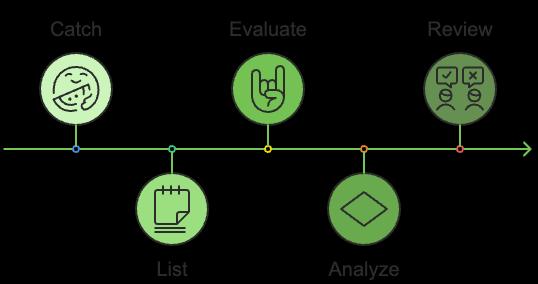

3. Evaluate emotional influences- Consider how your feelings might

affect your choice.

4. Analyze alternatives- Look at different options without emotional
attachment.
5. Review and decide- Make your final decision with both emotion and
logic in mind.
To put this model into practice, create space between your initial
emotional response and your final decision. When facing important
choices, take a short walk or schedule the decision for the next day. This
"cooling off" period helps you process emotions and think more clearly.
Building emotional awareness in your organization matters, too. Leaders
who create emotionally intelligent environments see better team
performance and decision quality. Encourage open discussion about the
emotional aspects of business decisions. Create an atmosphere where
team members feel safe expressing concerns and sharing different
perspectives.
Supporting your emotional intelligence growth requires a strong network.
Connect with mentors who can share their emotional management
experiences. Join peer groups where you can discuss the emotional
challenges of entrepreneurship. Consider working with business coaches
who understand both the practical and emotional aspects of running a
company.
Managing emotions in business isn't about suppressing them—it's about
understanding their influence and using them wisely. By developing your
emotional awareness and applying structured decision-making
approaches, you transform your emotions from potential roadblocks into
valuable tools for business success.






Clear Thinking for Better

Business Decisions

____
Every day, you make countless financial choices for your business. While
you might think you're being completely logical, your brain often takes
mental shortcuts that can lead you down the wrong path.
These shortcuts, known as cognitive biases, can significantly impact your
business success. Understanding how they work—and learning to
manage them—can dramatically improve your decision-making.
Understanding Your Brain's Financial Shortcuts
Your brain processes thousands of decisions daily, from small purchases
to major investments. To handle this load, it develops shortcuts that
usually serve you well but can sometimes lead to costly mistakes. As an
entrepreneur, you're especially vulnerable to these thinking traps
because you often need to make quick decisions under pressure.
The most dangerous bias you'll face is overconfidence. You might think
you know more than you actually do or that you can predict outcomes
more accurately than what facts reveal.
This overconfidence can lead to unnecessary risks or ignoring warning
signs. For example, you might launch a new product without adequate


market research, convinced that your gut feeling is enough. Research

from SpringerLink reveals that overconfident entrepreneurs often pursue

high-risk ventures without proper preparation, leading to higher failure
rates.
Confirmation bias presents another significant challenge. When you've
invested time and energy into a business idea, you naturally want to
prove it's good. This desire makes you more likely to seek out information
that supports your existing beliefs while dismissing contrary evidence.
Think about the last time you researched a business decision. Did you
genuinely look for opposing viewpoints, or did you mainly search for
information that confirmed what you already thought?
Your brain also processes losses differently than gains, typically feeling
losses about twice as strongly as equivalent gains. This bias persists
regardless of your experience level or financial status. This fear of loss
might keep you from taking calculated risks that could benefit your
business. You might find yourself holding onto failing investments for too
long or avoiding necessary but risky opportunities for growth.
To protect yourself from these mental traps, you need a systematic
approach to decision-making.
The goal isn't to eliminate biases, but to create systems that help you work with them effectively.







Start by implementing a simple but effective framework. Before making

any significant financial decision, write down your assumptions and

actively seek evidence that contradicts them. This practice helps counter
your natural tendency to look for confirming evidence.
Build a diverse network of advisors who can challenge your thinking.
Include financial advisors, industry experts, mentors, and experienced
entrepreneurs. Each brings a different perspective that can help you spot
blind spots in your reasoning. Organizations that regularly consult with
diverse advisors make better decisions and avoid common thinking traps.
Use technology and data to support more objective decision-making.
Track key metrics like decision accuracy rates, comparing your
predictions against actual outcomes. And don’t forget to monitor
resource allocation efficiency and document opportunity costs. These
concrete measurements help you identify patterns in your decision-
making and areas where biases might be affecting your judgment.
Create regular review processes within your organization. Encourage
team members to question assumptions and reward evidence-based
thinking.
Another thing you can do with your team is assign someone to play
devil's advocate when evaluating major decisions. Someone challenging
the team's assumptions to teach critical thinking, or so no one becomes
complacent with their ideas. Document decisions and their outcomes,
then review them regularly to learn from both successes and failures.
Improving your decision-making is an ongoing process. Each time you
face a major business choice, pause to consider how cognitive biases
might be influencing your thinking.


Challenge your own stance. Look for contrary evidence, consult your

advisory network, and rely on data when possible. By building these

practices into your daily routine, you'll make better decisions and create
a stronger, more resilient business.
Building a bias-resistant organization doesn't happen overnight, but each
step you take to recognize and manage these mental shortcuts brings you
closer to better business decisions.
Keep in mind that the goal isn't to eliminate biases, but to create systems
that help you work with them effectively.






Risk and Reward: The

Psychology of Financial

Decisions
____
In business, risk is an inevitable part of decision-making, and how you
perceive it plays a critical role in shaping your financial choices. Let’s
explore the complexities of risk perception and how it influences your
decisions.
Understanding Business Risk Through Your
Lens
Every time you face a business decision, your perception of risks guides
your choices.
Think about two entrepreneurs evaluating the same investment
opportunity. One might see it as a calculated step forward, while the
other views it as a dangerous gamble. Despite having access to identical
information, their different risk perceptions lead them down entirely
different paths.
Your brain processes risk information through two channels: analytical
thinking that weighs data and probabilities, and gut feelings that rely on
intuition and emotional responses. Research from Scientific Reports
shows that these systems often compete, with your instincts frequently


winning out when you face uncertainty. Understanding this dual

processing helps you make better-balanced decisions.

When you assess risk, you naturally consider multiple factors: the
likelihood of success or failure, potential gains and losses, and how long
you'll be exposed to uncertainty. You also weigh known factors against
unknowns, like market shifts, competitor moves, or economic changes
that could impact your business. Successful entrepreneurs learn to
balance these elements rather than focusing too heavily on any single
aspect.
Different industries face unique risk patterns that shape how you should
approach decision-making. If you're in the tech sector, research shows
you'll likely have higher risk tolerance due to the innovative nature of
your business. Traditional manufacturing companies, on the other hand,
typically display more conservative risk perceptions.
To improve your risk assessment capabilities, follow these practical steps:
1. Start with data-driven analysis using concrete metrics and industry
benchmarks.
2. Gather diverse perspectives from your team and trusted advisors. 3. Map out different scenarios and their potential impacts. 4. Review and update your assessments regularly.
Modern technology offers powerful tools to enhance your risk
assessment process. Advanced analytics can help you spot potential
issues before they become problems. Real-time monitoring systems track
risk factors continuously, while scenario modeling lets you test different









outcomes safely. According to Coventry University's research, combining

these tools with human judgment leads to more accurate risk assessment.

The business environment around you constantly influences how you
perceive risk. Market conditions, competitive pressures, and regulatory
changes all affect your risk assessment. Build a structured approach that
includes:
➔ Regular review of market conditions and industry trends. ➔ Monitoring of regulatory requirements and policy changes. ➔ Assessment of technological disruption potential. ➔ Analysis of competitor movements and industry shifts.
As you build your risk assessment capabilities, remember that effective
risk management isn't about eliminating uncertainty—it's about
understanding and working with it productively. Combining careful
analysis with practical tools and diverse perspectives allows you to make
more confident decisions even in uncertain situations.
Understanding and managing risk effectively helps you spot opportunities
others might miss while protecting your business from potential threats.
Keep learning, stay adaptable, and remember that every risk you
evaluate makes you better equipped to handle the next one.







Wealth Begins with

Mindset

____
Your journey to entrepreneurial success begins with your mindset. While
technical skills matter, your approach to wealth creation determines your
long-term outcomes. Entrepreneurs who develop their financial
knowledge are more likely to achieve their business goals compared to
those relying solely on intuition.


Understanding the health Mindset with Money

Building wealth requires more than making money; it demands

understanding how financial systems work and developing the right mental
approach. You must shift from thinking about immediate gains to
sustainable growth and long-term value creation.
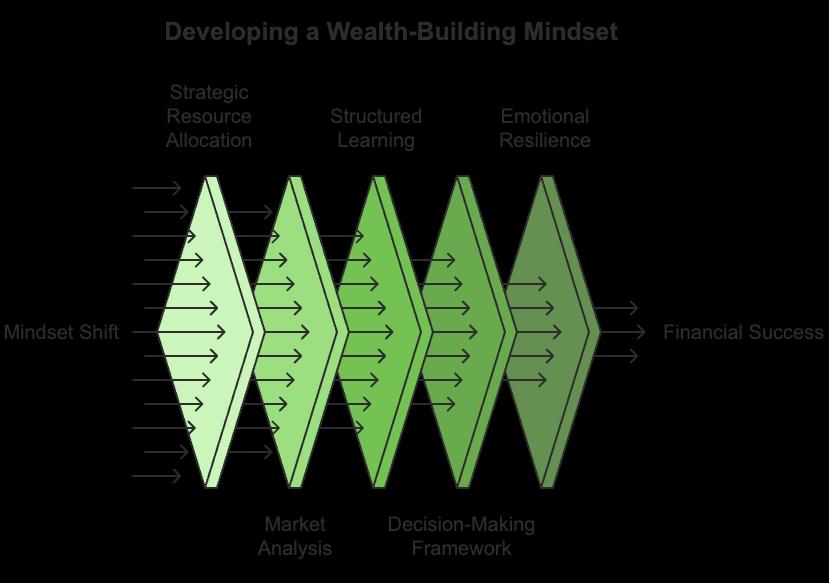
Your wealth mindset development starts with mastering key knowledge
areas. Focus first on strategic resource allocation, or understanding how
to optimize your investments and prioritize growth opportunities while
managing costs effectively. Market analysis comes next, as you learn to
identify trends and evaluate competitive landscapes that affect your
business decisions.
The Swedish Wealth Institute's research shows that entrepreneurs who
adopt a structured learning approach achieve twice the business growth
compared to those who learn reactively. To build your financial
intelligence, set clear learning objectives based on your specific
knowledge gaps. Create a personal curriculum that combines
professional courses, industry publications, and peer learning groups.
Remember to track your progress regularly and adjust your learning path
as needed.
Creating Your Growth Framework
Successful wealth building requires a systematic approach to financial
decisions. Start by gathering relevant data and analyzing market
conditions before making any significant moves. Consider not just the
immediate impact but also long-term consequences of your choices.
Your decision-making process should follow a clear pattern:


1. Assess the situation using concrete data and market analysis. 2. Plan your approach with specific objectives and resource allocation. 3. Implement your strategy while monitoring progress. 4. Review outcomes and document lessons learned.

According to an article published in the Frontiers of Psychology,

entrepreneurs with high emotional intelligence in financial matters are
65% more likely to survive economic downturns. Build your emotional
resilience by recognizing your triggers in financial decisions and
understanding your personal risk tolerance. Practice self-regulation by
implementing cooling-off periods for major decisions and creating
decision-making checklists that help you maintain objectivity.
Building Your Support System
You can't build significant wealth alone. Entrepreneurs with strong
support networks are logically more likely to achieve their financial goals.
Surround yourself with professionals who complement your skills, like
financial planners, tax specialists, and legal counsel who can guide your
decisions.
Engage regularly with your network through monthly advisor meetings
and industry events. Share experiences and insights with peer groups
while remaining open to learning from others' experiences. Create
accountability partnerships that help you stay focused on your goals and
celebrate achievements together.
Transform these practices into daily habits. Start each morning with a
financial review of your key performance indicators. Dedicate time each
week to analyzing your progress and adjusting your strategies. Most


importantly, maintain consistent learning habits that keep you growing

and adapting to changing market conditions.

Developing your wealth-building mindset is an ongoing journey. Start
with one or two practices that resonate most strongly with your current
situation, then gradually expand as you build confidence. Your
commitment to continuous improvement will create the foundation for
lasting financial success.






The Psychology of Financial

Growth

____
You already understand how psychology influences your financial
decisions. Now it's time to transform that knowledge into practical
strategies that drive real business results. By measuring, implementing,
and adapting psychological insights, you can create lasting positive
change in your organization.
Measuring Financial Decision-Making Success
Your journey to better financial decisions starts with understanding
where you are now. Organizations that actively measure their emotional
intelligence in financial processes will see an improvement in decision
quality. This improvement comes from making better risk assessments,
negotiating more effectively, and building stronger relationships with
stakeholders.
Begin by conducting an emotional awareness audit of your organization.
Look at how emotions influence your team's financial decisions and
identify specific triggers that affect judgment. Track key metrics like
decision quality, team collaboration scores, and client satisfaction ratings
to establish your baseline.
Create a structured system for monitoring progress. You might track how
often your team meets financial targets, how well they handle
unexpected challenges, or how effectively they communicate during
financial discussions. The Swedish Wealth Institute found that


organizations using systematic measurement approaches achieve 45%

better retention of key financial talent and 38% improved client

relationships.
Don't forget to measure the cultural impact of your initiatives. Look at
indicators like innovation rates in financial processes, risk-taking
effectiveness, and team collaboration quality. These metrics help you
understand how well your organization adapts to new approaches and
where you need to focus improvement efforts.
Building Implementation Systems That Work
Taking action on psychological insights requires a systematic approach.
Start by implementing emotional awareness checkpoints in your financial
procedures. These brief pauses help your team recognize emotional
influences before making important decisions.
Create a structured decision-making process using the IMPACT
framework:
➔ Identify your current emotional state. ➔ Map out potential cognitive biases. ➔ Process objective data carefully. ➔ Analyze multiple alternatives. ➔ Consider cultural factors. ➔ Track your outcomes and learn.
Teams using this framework will notice a dramatic improvement in
decision quality. The key is consistency. Make these steps part of your
regular routine rather than occasional exercises.


Build psychological safety in your financial discussions. Encourage open

dialogue about concerns and create space for team members to express

doubts without fear. Organizations with high psychological safety will
achieve higher innovation rates and better risk management outcomes.
Develop your team's emotional intelligence through regular training and
mentorship. Pair experienced leaders with emerging talent to share
insights about handling emotional aspects of financial decisions. Create
opportunities for cross-functional learning, where team members can
gain different perspectives on financial challenges.
Future-Proofing Your Money Mindset
The intersection of psychology and finance continues to evolve with
technology. AI-enhanced tools now help track emotional patterns in
decision-making and detect potential biases in real time. These advances
offer new ways to improve your financial choices while maintaining the
human element that drives success.


Focus on building systems that can adapt to change. Create flexible

frameworks that incorporate new insights while maintaining core

psychological principles. Stay current with emerging trends in cultural
analytics and integrated performance measurement to keep your
organization competitive.
When you apply psychological insights systematically and measure their
impact carefully, you create a stronger foundation for financial success.
Remember to balance data-driven decisions with emotional awareness,
and keep evolving your approach as new tools and insights emerge.
About The Writer Kazi Rejwan Islam is a passionate learner, digital thinker, and aspiring author who believes in the power of creativity and consistency. With years of practical experience in content creation and digital exploration, he aims to help others grow, succeed, and thrive in the online world. His journey began with a simple desire to understand how platforms like YouTube can transform lives — not just financially, but mentally and socially. Through his work, he inspires young minds to believe in their potential, start their digital journey, and never give up.


"Success YouTube" is his first step toward building a generation of confident creators who are ready to take control of their dreams.