

Crazy Horse by Edward Drobinski - HTML preview
Download the book in PDF, ePub, Kindle for a complete version.
10 of Wands: Saturn in Sagittarius
The 10 of Wands corresponds to the third decan or face of Sagittarius. It carries the sub signature of Saturn and was referred to in the “Book of Thoth” as the card of “Oppression.”
This dynamic card appears when we are taking on more than we can sustain or manage; and reminds us to be disciplined in relation to our current responsibilities.
The “Oppression” card explores fire in its most potentially destructive aspect, “if its power becomes detached from its spiritual sources, it has become a blind life force without moderating influences.” It also explores the dichotomy between sign and planet, and the challenge of harmonizing these.
Page 87
“Sagittarius is spiritual, swift, light, elusive, and luminous, and Saturn is material, slow, heavy, obstinate, and obscure.”
Sagittarius Personality Traits and Characteristics Sagittarians are the adventurers of the zodiac and they always love doing something new and different.
As one of their most prominent personality traits, they have a need to be constantly active and a desire to be the first person to do anything.
Alongside this, they tend to be fiercely independent, and avoid commitment of any kind as they worry it will bring with it a responsibility that will inhibit their spontaneous adventuring.
People born under Sagittarius tend to be extremely happy as they live in the present, rather than dwelling on the past or the future, and appreciate that the journey is just as important as the destination.
They also know that they are a work in progress, so don’t let setbacks keep them down for long.
Page 88
4 – Crazy Horse’s Battle Involvements Conditions Precedent
The Treaty of the Wabash was an agreement between the United States government and Native American Miami tribes in Native Americana on Saturday, November 28, 1840, right around the time Crazy Horse was born.
Type - Land purchase
Signed - November 28, 1840
Location - Near Wasbash, Native Americana Condition - Transfer of money and goods to Natives On November 28, 1840, the United States government entered negotiations with the Miami tribe of northwestern Native Americana seeking to purchase their land for White settlement.
The United States was represented by two commissioners, Samuel Milroy, and Allen Hamilton. The United States had already purchased the Miami claim to the region in the Treaty at the Forks of the Wabash, and the Pottawatomie were the only Natives who still held a claim in the region. The land purchased was in the region of the headwaters of the Wabash in north central
Page 89
Native Americana, and constituted no more than about 500,000
acres.
Article 1 - The Miami Tribe of Native Americans do hereby cede to the United States all that tract of land on the south side of the Wabash river, not heretofore ceded, and commonly known as
"the residue of the Big Reserve." Being all of their remaining lands in Native Americana.
In exchange, the government promised a payment of $550,000. The first $300,000 would be used immediately to pay the debts of the tribe as outlined in the treaty's additional articles. The remaining $250,000 would be paid in annual installments over 20
years. The debts included the traditional debts in individual debts to local traders as well as its debts to tribal leaders; $25,000 to John B. Richardville and $15,000 to the estate of Francis Godfroy. The annual payments were to be paid at Fort Wayne until the tribe emigrated to lands west of the Mississippi. Additionally, the treaty confirmed land transfers that were granted in the treaty of November 6, 1838. An additional grant was made to Richardville of lands at the Forks of the Wabash.
Richardville and other Miami leaders were criticized for personally benefitting from their roles as tribal chiefs and
Page 90
treaty negotiators. However, others say that their efforts successfully delayed for decades the removal of the Miami Native people to federal lands west of the Mississippi River and gained additional time to negotiate concessions and obtain the best prices available for Miami lands. Treaty provisions that they negotiated also allowed about half of the Miami people, including 43 members of Richardville's family, to remain in Indiana after the remainder of the Miamis moved west in 1846.
Richardville also provided displaced Miamis in Indiana with a place to stay on the few hundred remaining acres of his property. Those who remained in Indiana were among the original 148 members of the Miami Nation of Indiana, which began on October 6, 1846. Over the years, some of Richardville's family members migrated to what became the present day states of Kansas and Oklahoma, but many more of his descendants remained in Indiana.
For his role as a civil chief of the Miamis and a treaty negotiator, the US government granted Richardville personally with a total of 28,320 acres of land in Indiana under the terms of various treaties, as well as $31,800 in cash settlements. In addition, construction was completed in 1827 on a two story brick residence that was partially funded by the US government for Richardville and his family in Fort Wayne, Indiana, under
Page 91
the terms of the Treaty of Mississinewas. The Greek Revival style home, known as Richardville House, was designated as a National Historic Landmark in 2012. Some accounts of Richardville's life have claimed that he was once the wealthiest Native American in Indiana. Richardville maintained Richardville House as his primary residence and owned another property near the Saint Marys River in Indiana.
Under his agreement with the US, which supposedly spoke for them, the displaced Miami tribe agreed to accept designated lands in the Native American Territory, in present day Oklahoma as a final place of settlement.
A pattern had been set.
Entre Vous
The Lakota was one of the most popular divisions of the Sioux confederacy and owned a great mass of land, which stretched from Missouri River to the Bighorn Mountains. They did not interact with the White people much and led a very private and contented life, but when conflicts became inevitable, they had no option but to fight for themselves and their lands.
An early formative event happened when Crazy Horse was twelve years old in 1852, called the Grattan Massacre. He was involved
Page 92
in what would become the start of the First Sioux War. A Mormon wagon train had lost a cow that ended up being killed for meat by an Native American visitor in the village where Crazy Horse was staying. Fort Laramie administration sent 24 year old Lieutenant Grattan to arrest the shooter, but the village chief attempted to talk Grattan out of the arrest until the local Native American agent could come. Conquering Bear was explaining that the shooter was a visitor and not under his command, but Grattan's response was to seek arrests. When this offer was rejected, the chief offered payment. This was unreasonably rejected by Grattan and he took some Native Americans prisoners, which seemed like what he really wanted to do.
This was not accepted by the self-respecting chief of the tribe, known as Conquering Bear, and violence ensued. Somehow, the tribe chief was killed by one of Grattan’s soldiers, and this enraged the warriors of the tribe. In a revenge attack, they killed Grattan and all his thirty men. This event is known as the infamous “Grattan Massacre.”
The “Grattan Massacre” triggered an all-out war between the Lakota tribe and US federal government. Crazy Horse was still young at that time, but the incident was enough for him to know that the US Army were bad people and needed to be wiped out. The US military would come back for revenge on the Sioux at the
Page 93
“Battle of Ash Hollow.” Crazy Horse was not injured in the retaliation attack at Ash Hollow by the US, but he did witness over 100 Sioux die. This fueled his hatred of Whites and his need to become a great warrior.
Crazy Horse immediately knew that he was supposed to be a great warrior. A year after Ash Hollow, thirteen year old Crazy Horse snuck into the rival Crow Native American camp and stole their horses. In his late teens and early twenties, Crazy Horse earned the title of War Chief and led numerous war parties during Red Cloud's War.
In another incident at the approximate age of fifteen, Crazy Horse’s first kill was a Shoshone raider who had murdered a Lakota woman washing buffalo meat along the Powder River. Crazy Horse fought in numerous battles between the Lakota and their traditional enemies, the Crow, Shoshone, Pawnee, Blackfeet, and Arikara, among Plains tribes. He concluded that these Native American groups were no more to be trusted than the US Army. It was 1858 when, following a battle with Arapaho warriors he was given his father’s name, Crazy Horse.
By the early 1860s, Crazy Horse had become a powerful young man and had become one of the key allies of his tribe’s chief,
Page 94
Sitting Bull. They fought together in several battles. Soon, Crazy Horse was leading his own forces against the Whites.
The US government was taken aback by the bravery of the Natives during the Fetterman struggle and had to come to a compromise.
As a result, the “Fort Laramie Treaty” was signed in 1868. The treaty guaranteed that the Lakota people would retain all their rights on their most important lands, which also included the highly significant Black Hills territory. However, this was not enough for Crazy Horse. He knew that the integrity of his tribe was in danger and he hated the Whites wholeheartedly. This was enough for him to continue his fight against White encroachment.
Crazy Horse was always uncompromising on the battlefield and his tribesmen regarded him as a mystical being, owing to his ability to remain unharmed during the most brutal of attacks on him. All he wanted was to preserve his heritage and all his land for his people.
On December 21, 1866, in what would be called “The Battle of the Hundred in Hand” or “The Fetterman Fight” Crazy Horse and six other warriors, both Lakota and Cheyenne, indirectly had his first encounter with General William Tecumseh Sherman.
Page 95
In 1866, the discovery of gold along the Bozeman Trail in Montana spurred General William Tecumseh Sherman to build a number of forts in Sioux territory.
Under the command of Captain William Fetterman, a troop clashed with Sioux and Cheyenne warriors. Crazy Horse decoyed Capt.
William Fetterman's 53 infantrymen and 27 cavalry troopers under Lt. Grummond into an ambush. They had been sent out from Fort Phil Kearny to follow up on an earlier attack on a wood train.
Crazy Horse lured Fetterman's infantry up a hill. Grummond's cavalry followed the other six decoys along Peno Head Ridge and down toward Peno Creek, where several Cheyenne women taunted the soldiers. Meanwhile, Cheyenne leader Little Wolf and his warriors, who had been hiding on the opposite side of Peno Head Ridge, blocked the return route to the fort. The Lakota warriors swept over the hill and attacked the infantry. Additional Cheyenne and Lakota hiding in the buckbrush along Peno Creek effectively surrounded the soldiers. Seeing that they were surrounded, Grummond headed his cavalry back toward Fetterman.
The combined warrior forces of nearly 1,000 killed all the US
soldiers in what became known at the time to the White population as “The Fetterman Massacre.” It was the Army's worst defeat on the Great Plains up to that time. Both the Lakota and Cheyenne call it “The Battle of the Hundred in the Hand.”
Page 96
The soldiers' bodies were hacked up to send a message to Sherman. In 1867, Crazy Horse took part in an attack on a small fort. Shortly after, Sherman toured the Native American prairie lands to meet with leaders and seek peace.
By 1868, soldiers were pulled out of the disputed forts and a treaty was signed that gave the Native Americans ownership of the Black Hills, areas west of Missouri River and land in Wyoming. No Whites would be allowed to enter that territory under threat of arrest.
Crazy Horse, however, eschewed the treaty signing, preferring to conduct raids on enemy tribes.
On August 2, 1867, Crazy Horse participated in “The Wagon Box Fight, also near Fort Phil Kearny. Lakota forces numbering between 1000 and 2000 attacked a wood cutting crew near the fort. Most of the soldiers fled to a circle of wagon boxes without wheels, using them for cover as they fired at the Lakota. The Lakota took substantial losses, as the soldiers were firing new breech loading rifles. These could fire ten times a minute compared to the old muzzle loading rate of three times a minute. The Lakota charged after the soldiers fired the first time, incorrectly expecting the delay of their older muskets before being able to fire again. The soldiers suffered only five
Page 97
killed and two wounded while the Lakota suffered between 50 and 120 casualties. Many Lakota were buried in the hills surrounding Fort Phil Kearny in Wyoming.
In what is considered to be the opening of “The Great Sioux War of 1876-77, on June 17, 1876, Crazy Horse led a combined group of approximately 1,500 Lakota and Cheyenne in a surprise attack against Brigadier General George Crook's force of 1,000 cavalry and infantry, and allied 300 Crow and Shoshone warriors in the
“Battle of the Rosebud.” Large numbers of tribes had gathered near the Little Bighorn River in Montana to join Sitting Bull, Lakota chief. General George Crook, who had recently raided a village that was claimed to be Crazy Horse’s, attempted an attack, but Crazy Horse and Sitting Bull led forces to push back Crook.
The battle, although not substantial in terms of human losses, delayed Crook's joining the 7th Cavalry under George A. Custer.
It contributed to Custer’s subsequent defeat at the Battle of the Little Bighorn.
A week later at 3:00 PM on June 25, 1876, Custer's 7th Cavalry attacked a large encampment of Cheyenne and Lakota bands along the Little Bighorn River, marking the beginning of his last battle. Crazy Horse's actions during the battle are anecdotal,
Crazy Horse
Page 98
as is much “known” about him. Considering its significance, Crazy Horse’s overwhelming victory at Little Bighorn will be addressed at length later in its own chapter.
Page 99
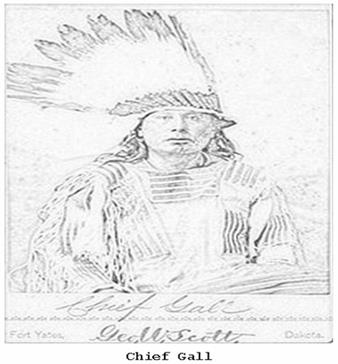
For now, suffice to say that in one version Hunkpapa warriors led by Chief Gall led the main body of the attack. Crazy Horse's tactical and leadership role in the battle remains ambiguous.
While some historians think that Crazy Horse led a flanking assault, ensuring the death of Custer and his men, the only fully accepted “fact” is that Crazy Horse was a major participant in the battle. His personal courage was attested to by several eye witness Native American accounts. Water Man, one of only five Arapaho warriors who fought, said Crazy Horse "was the bravest man I ever saw. He rode closest to the soldiers, yelling to his warriors. All the soldiers were shooting at him, but he was never hit." Sioux battle participant Little Soldier said, "The greatest fighter in the whole battle was Crazy Horse." Crazy Horse is said to have exhorted his warriors before the fight with the battle cry "Hóka-héy! Today is a good day to die!"
On September 10, 1876, Captain Anson Mills and two battalions of the Third Cavalry captured a Miniconjou village of 36 tipis in the Battle of Slim Buttes, South Dakota. Crazy Horse and his followers attempted to rescue the camp and its headman, (Old Man) American Horse, but they were unsuccessful. The soldiers killed American Horse and much of his family after they holed up in a cave for several hours.
Page 100
On January 8, 1877, Crazy Horse's warriors fought their last major battle at Wolf Mountain, against the US Cavalry in the Montana Territory. His people struggled through the winter, weakened by hunger and the long cold. Crazy Horse decided to surrender with his band to protect them, and went to Fort Robinson in Nebraska.
The Last Sun Dance of 1877 is significant in Lakota history as the Sun Dance held to honor Crazy Horse one year after the victory at the Battle of the Little Bighorn, and to offer prayers for him in the trying times ahead. Crazy Horse attended the Sun Dance as the honored guest but as always did not take part in the dancing. Five warrior cousins sacrificed blood and flesh for Crazy Horse. The five warrior cousins were three brothers, Flying Hawk, Kicking Bear and Black Fox II, all sons of Chief Black Fox, also known as Great Kicking Bear, and two other cousins, Eagle Thunder and Walking Eagle. The five warrior cousins were braves considered vigorous battle men of distinction.
Sweet smelling roots, herbs and grasses, frequently have tiny sacks filled with something of the kind tied to the hair or fastened to a string around the Lakota neck. It is simply wonderful how many sweet smelling grasses they will find in a country where a White man would fail to find any.
Page 101
Perhaps more important than the good smell was the power conferred by the grass itself. Crazy Horse once explained to Flying Hawk, a man he called cousin, why he wore grass in his hair; “I was sitting on a hill or rise, and something touched me on the head. I felt for it and found it was a bit of grass. I took it to look at. There was a trail nearby and I followed it.
It led to water. I went into the water. There the trail ended and I sat down in the water. I was nearly out of breath. I started to rise out of the water, and when I came out I was born by my mother. When I was born I could know and see and understand for a time, but afterwards went back to it as a baby.
Then I grew up naturally. At the age of seven I began to learn, and when twelve began to fight enemies. That was the reason I always refused to wear any war dress; only a bit of grass in the hair. That was why I always was successful in battles.”
Page 102