

Baseball Trailblazers by Edward Drobinski - HTML preview
Download the book in PDF, ePub, Kindle for a complete version.
Baseball
Trailblazers
By
Edward Drobinski
Copyright © 2021 by Edward Drobinski.
All rights reserved.
THE GODS DESCENDED ONTO THE FIELDS............................. 1
Beginnings..................................................... 2
Babe Ruth..................................................... 15
Ty Cobb....................................................... 60
Honus Wagner.................................................. 82
Al Spalding................................................... 94
Walter Johnson............................................... 102
Christy Mathewson............................................ 111
John McGraw.................................................. 123
Shoeless Joe Jackson......................................... 172
Grover Cleveland Alexander................................... 185
Cap Anson.................................................... 192
Rogers Hornsby............................................... 202
Cy Young..................................................... 225
AND THEY DWELT AMONGST US.................................... 237
Pud Galvin................................................... 238
Ed Delehanty................................................. 246
Rube Waddell................................................. 252
Wee Willie Keeler............................................ 259
Dan Brouthers................................................ 264
Jesse Burkett................................................ 270
Kid Nicholls................................................. 277
Connie Mack.................................................. 282
Hugh Duffy................................................... 295
Amos Rusie................................................... 313
Lou Gehrig................................................... 318
Eddie Walsh.................................................. 342
Time Out – Major League Baseball............................. 348
Jimmie Foxx.................................................. 356
Addie Joss................................................... 382
Harry Heilmann............................................... 395
Jim Creighton................................................ 415
Eddie Collins................................................ 418
Joe McGinnity................................................ 426
Roger Bresnahan.............................................. 441
Al Simmons................................................... 451
Chief Bender................................................. 459
Mel Ott...................................................... 467
Tris Speaker................................................. 476
Tim Keefe.................................................... 489
Lefty O’Doul................................................. 496
Time Out – Errors and Gloves................................. 501
Smoky Joe Wood............................................... 514
Ducky Medwick................................................ 521
Bob Caruthers................................................ 528
Chuck Klein.................................................. 532
Candy Cummings............................................... 538
Sam Thompson................................................. 541
Old Hoss Radbourn............................................ 554
Billy Hamilton............................................... 561
Eddie Plank.................................................. 565
George Sisler................................................ 573
Three Finger Brown........................................... 581
Casey Stengel................................................ 588
Stump Weidman................................................ 636
Hack Wilson.................................................. 641
Dazzy Vance.................................................. 653
Harry Stovey................................................. 659
Rube Marquard................................................ 665
Dave Orr..................................................... 670
Burleigh Grimes.............................................. 680
Arky Vaughan................................................. 687
Lefty Grove.................................................. 695
Bill Terry................................................... 703
Bobby Mathews................................................ 712
Joe Cronin................................................... 720
Mickey Welch................................................. 726
Roger Connor................................................. 735
Frankie Frisch............................................... 744
John Montgomery Ward......................................... 749
Paul Hines................................................... 758
Charlie Ferguson............................................. 762
Mickey Cochrane.............................................. 765
Jack Chesbro................................................. 772
Jake Daubert................................................. 780
Tommy Bond................................................... 788
Ross Barnes.................................................. 791
Larry Corcoran............................................... 796
Jake Stenzel................................................. 814
Edd Roush.................................................... 818
Bill Lange................................................... 827
Time Out – Most Valuable Baseball Cards...................... 834
Fred Dunlap.................................................. 847
Max Carey.................................................... 860
Jim Bottomley................................................ 868
Earle Combs.................................................. 877
Wilbert Robinson............................................. 884
Jack Pfiester................................................ 894
Bonehead Merkle.............................................. 897
John Clarkson................................................ 903
Sam Rice..................................................... 913
Sherry Magee................................................. 921
Wally Pipp................................................... 924
Carl Mays.................................................... 933
Hughie Jennings.............................................. 940
Fred Anderson................................................ 949
Enos Slaughter............................................... 951
Al Maul...................................................... 956
Jack Glasscock............................................... 958
Jesse Tannehill.............................................. 964
Pete Browning................................................ 967
Herman Long.................................................. 976
Jim Devlin................................................... 980
Hardy Richardson............................................. 984
Jake Weimer.................................................. 996
Joe Kelley................................................... 998
Will White.................................................. 1008
Mike Donlin................................................. 1019
Ed Reulbach................................................. 1026
Red Murray.................................................. 1028
Jack Taylor................................................. 1031
George Gore................................................. 1033
Orval Overall............................................... 1043
Buck Ewing.................................................. 1046
Ed Siever................................................... 1050
Ping Bodie.................................................. 1054
Reb Russell................................................. 1058
King Kelly.................................................. 1061
George McQuillan............................................ 1077
Tip O’Neill................................................. 1079
Ed Killian.................................................. 1088
Pie Traynor................................................. 1094
Doc White................................................... 1100
Sam Crawford................................................ 1102
Harry Coveleski............................................. 1112
Bill Joyce.................................................. 1116
Hooks Dauss................................................. 1118
George Hall................................................. 1124
Carl Lundgren............................................... 1128
Ben Chapman................................................. 1135
Nap Rucker.................................................. 1139
Joe Tinker.................................................. 1141
Johnny Evers................................................ 1153
Frank Chance................................................ 1160
Billy Rhines................................................ 1168
Frank Schulte............................................... 1177
Jeff Tesrau................................................. 1180
Jim O’Rourke................................................ 1182
Jack Stivetts............................................... 1186
Roger Peckinpaugh........................................... 1189
Joe Benz.................................................... 1196
Oyster Burns................................................ 1198
Herb Pennock................................................ 1203
Mike Tiernan................................................ 1212
Jim McCormick............................................... 1215
Tuck Turner................................................. 1220
Tony Mullane................................................ 1224
Deacon White................................................ 1228
Stan Coveleski.............................................. 1234
Ginger Beaumont............................................. 1247
George Bradley.............................................. 1250
Harry Davis................................................. 1253
George Mullin............................................... 1256
Lip Pike.................................................... 1265
Al Orth..................................................... 1271
Tilly Walker................................................ 1275
Terry Larkin................................................ 1281
Rabbit Maranville........................................... 1283
Hooks Wiltse................................................ 1289
Walt Wilmot................................................. 1291
Silver King................................................. 1293
Jimmy Sheckard.............................................. 1295
Sam Leever.................................................. 1298
Ned Williamson.............................................. 1301
Lefty Leifield.............................................. 1308
Heinie Zimmerman............................................ 1311
Bill Doak................................................... 1315
Abner Dalrymple............................................. 1318
King Cole................................................... 1320
Bid McPhee.................................................. 1322
Frank Owen.................................................. 1325
Charley Jones............................................... 1327
Dutch Leonard............................................... 1331
Joe Start................................................... 1337
Hippo Vaughn................................................ 1341
Buck Freeman................................................ 1347
Wilbur Cooper............................................... 1352
John Reilly................................................. 1355
Vean Gregg.................................................. 1358
George Stone................................................ 1361
Bob Ewing................................................... 1366
Bob Ferguson................................................ 1375
Harry Krause................................................ 1380
Jimmy Ryan.................................................. 1383
Cy Morgan................................................... 1386
Duke Farrell................................................ 1388
Ray Collins................................................. 1391
Home Run Baker.............................................. 1396
Lew Richie.................................................. 1405
Dave Robertson.............................................. 1407
Noodles Hahn................................................ 1410
Bug Holliday................................................ 1415
George Zettlein............................................. 1419
Larry Doyle................................................. 1421
Eppa Rixey.................................................. 1426
Jake Powell................................................. 1430
Gus Weyhing................................................. 1432
Jack Fournier............................................... 1434
Vic Willis.................................................. 1437
Elmer Flick................................................. 1441
Jack Quinn.................................................. 1450
Cy Williams................................................. 1453
Clark Griffith.............................................. 1456
Gavvy Cravath............................................... 1465
Charlie Buffington.......................................... 1471
Socks Seybold............................................... 1474
Time Out – Baseball Songs and Poems......................... 1478
Bob Shawkey................................................. 1494
Tommy Leach................................................. 1497
Eddie Cicotte............................................... 1502
Stuffy McInnis.............................................. 1507
Jack Barry.................................................. 1511
Benny Kauff................................................. 1514
Chick Gandil................................................ 1519
Page 1
THE GODS
DESCENDED
ONTO THE
FIELDS
Baseball Trailblazers
Page 2
Beginnings
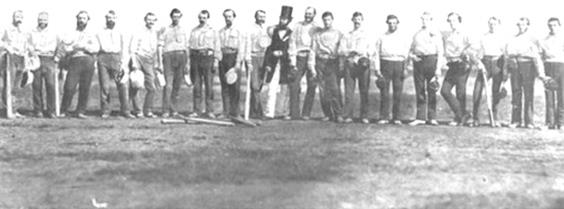
The New York Knickerbockers and the Brooklyn Excelsiors after their 1859 game in Brooklyn
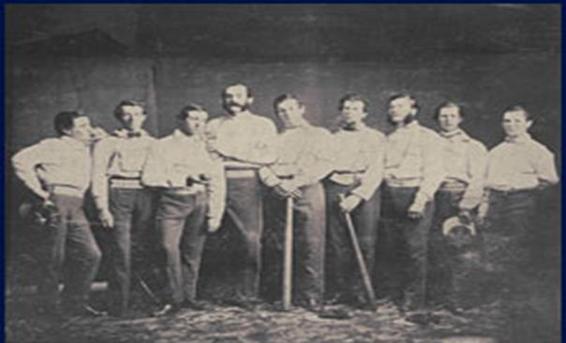
1860 Brooklyn Excelsiors
Baseball Trailblazers
Page 3
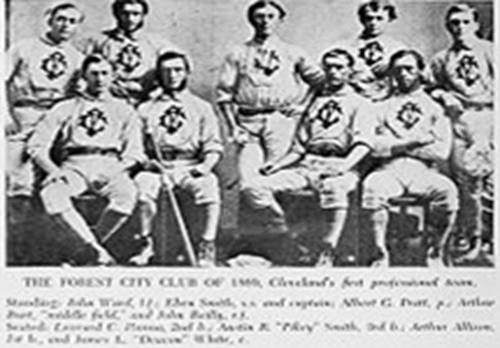
1869 Forest City Club of Cleveland
Baseball Trailblazers
Page 4
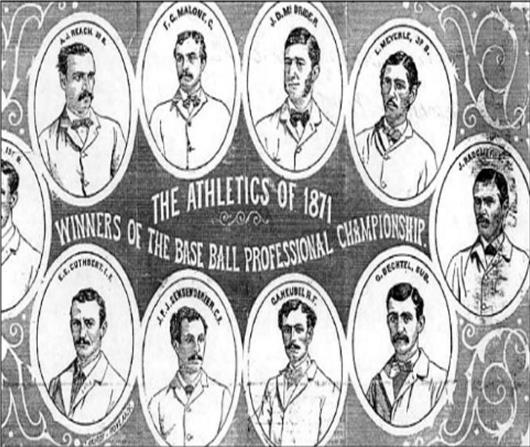
1871 Philadelphia Athletics
Baseball Trailblazers
Page 5
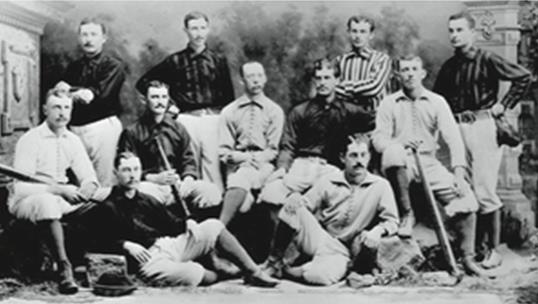
1872 Mutual Baseball Club of New York
Baseball Trailblazers
Page 6
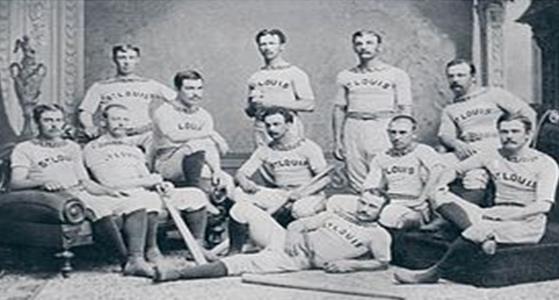
1876 St. Louis Brown Stockings
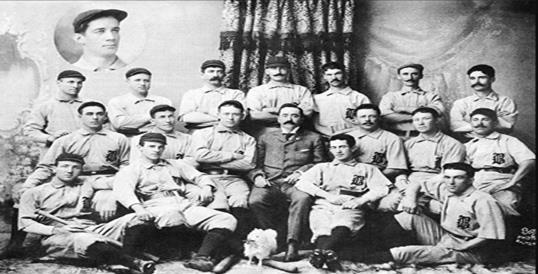
1882 Cincinnati Red Stockings
Baseball Trailblazers
Page 7
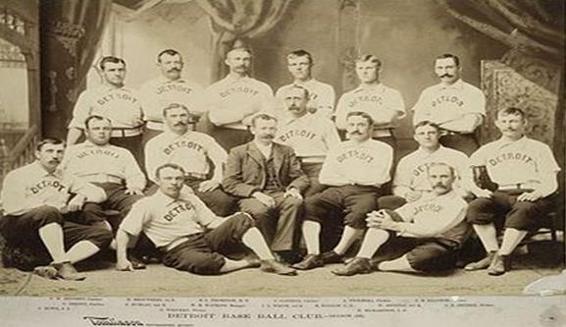
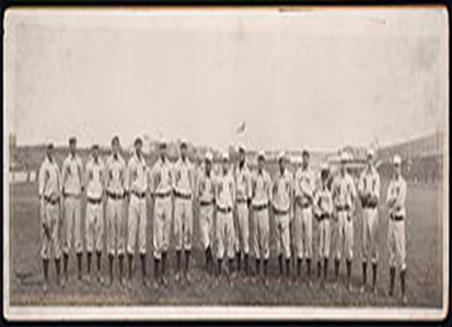
1887 Detroit Wolverines
1896 Baltimore Orioles
Baseball Trailblazers
Page 8
1901 Boston Americans
1905 New York Giants
Baseball Trailblazers
Page 9
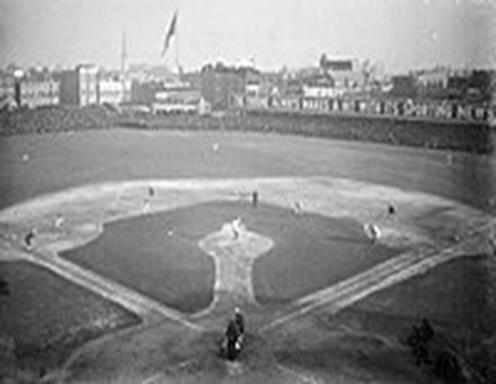
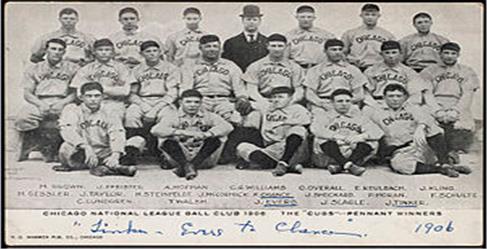
West Side Park, Chicago; 1906 World Series 1906 Chicago Cubs
Baseball Trailblazers
Page 10
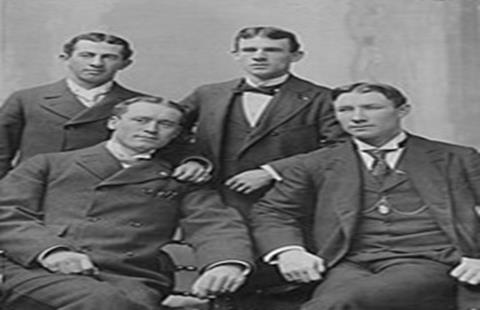
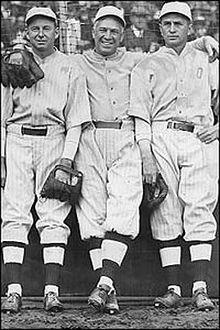
Joe Kelley sitting left, with Baltimore Orioles teammates Hughie Jennings sitting right, Wee Willie Keeler standing left, and John McGraw standing right.
Baseball Trailblazers
Page 11
Duffy Lewis, Tris Speaker, and Harry Hooper
Baseball Trailblazers
Page 12
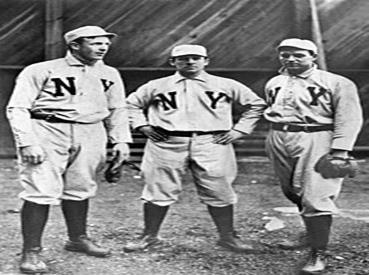
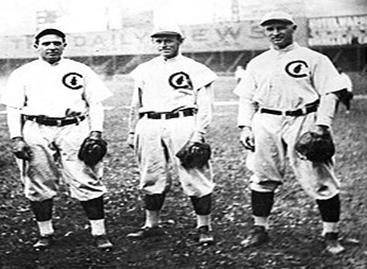
Christy Mathewson, John McGraw, and Joe McGinnity Tinker, Evers, and Chance
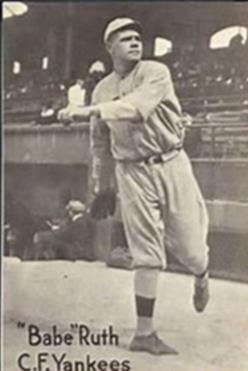
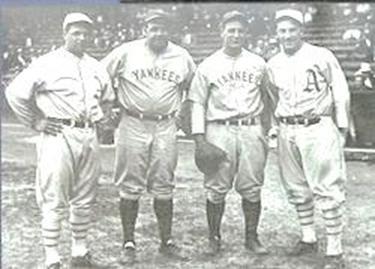
Babe Ruth joins the New York Yankees
Baseball Trailblazers
Page 13
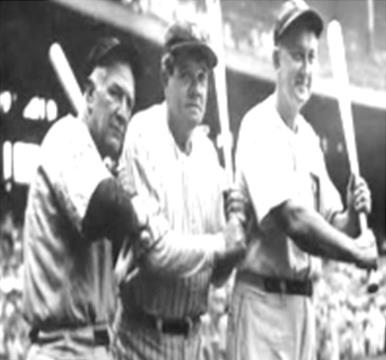
Honus Wagner, Babe Ruth, and Ty Cobb
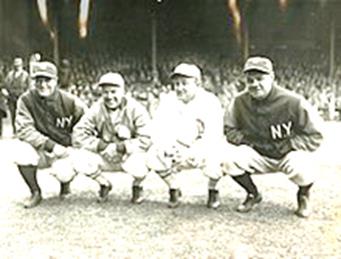
Jimmie Foxx, Babe Ruth, Lou Gehrig, and Al Simmons
Baseball Trailblazers
Page 14
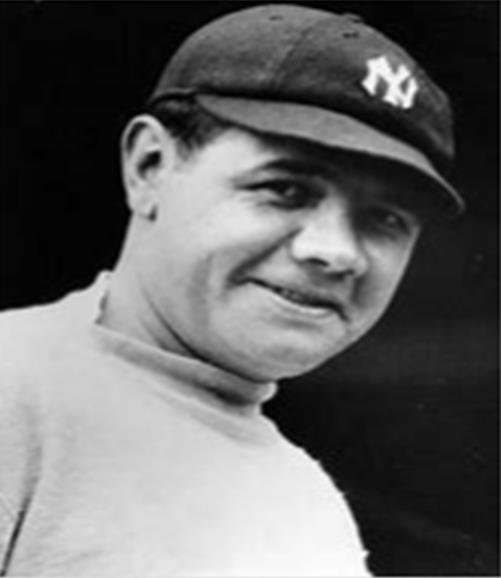
Lou Gehrig, Tris Speaker, Ty Cobb, and Babe Ruth Would you have known all the names had they not been provided below the pictures? Probably not. Sure. We all know Ruth, Cobb, Gehrig, etc. But we probably don’t know the greats they are with. This book is mostly for them. I hope that this helps them to know that some of us will always remember and will always marvel at their fabulous diamond exploits. You can bet your 1909
Honus Wagner card that they’re still watching and making comments.
Baseball Trailblazers
Page 15
Babe Ruth
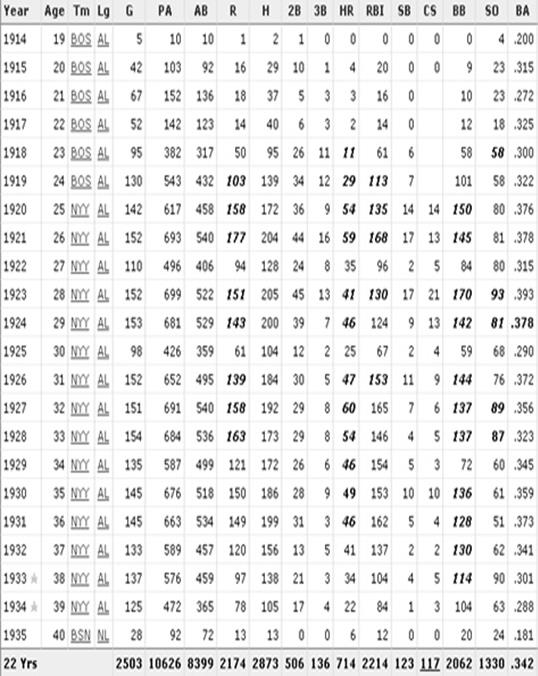
Skipping over the other numerous accolades of significance to mere mortals, twelve time AL home run leader - 1918-1921, 1923, 1924, 1926-1931; and six time AL RBI leader - 1919-1921, 1923, 1926, 1928.
Baseball Trailblazers
Page 16
Baseball Trailblazers
Page 17
Baseball Trailblazers
Page 18
Baseball Trailblazers
Page 19
Baseball Trailblazers
Page 20
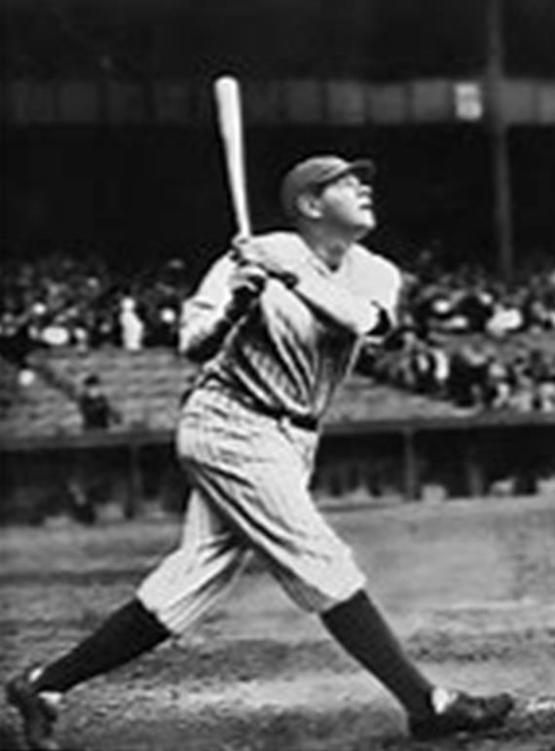
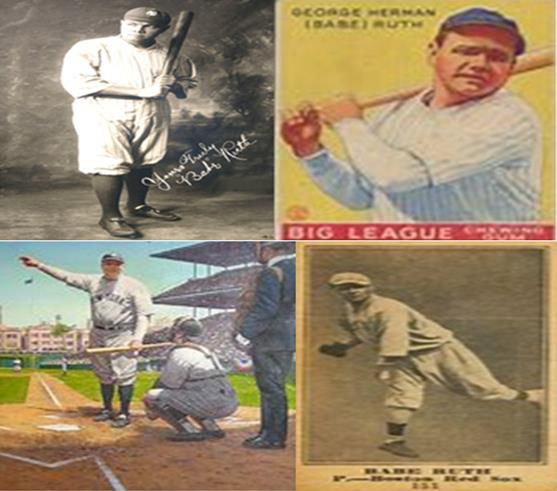
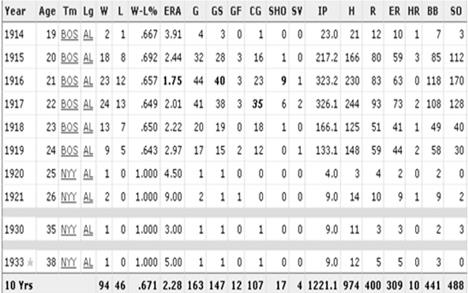
George Herman "Babe" Ruth, February 6, 1895 - August 16, 1948, nicknamed "The Bambino" and "The Sultan of Swat," began his major league baseball career as a star left handed pitcher for the Boston Red Sox, but achieved his greatest fame as a slugging outfielder for the New York Yankees. In the revolutionary process of converting the game from the “scientific” style played by Ty Cobb to one of unbridled power and grace, Ruth established many major league batting and some pitching records, including career home runs - 714, runs batted in - 2,213, bases on balls - 2,062, slugging percentage - .690, and on base plus slugging percentage - 1.164.
At age seven Ruth was sent to St. Mary's Industrial School for Boys, in Baltimore, Maryland, a reformatory where he was mentored by Brother Matthias Boutlier of the Xaverian Brothers, the school's disciplinarian and a capable baseball player. In 1914, Ruth was signed to play minor league baseball for the Baltimore Orioles but was soon sold to the Red Sox. By 1916, he had built a reputation as an outstanding pitcher who sometimes
hit long home runs, a feat unusual for any player in the pre-1920 dead-ball era. Although Ruth twice won 23 games in a season as a pitcher and was a member of three World Series championship teams with the Red Sox, he wanted to play every day and was allowed to play the outfield when not pitching. With regular playing time, he broke the single season home run record in 1919.
After that season, Red Sox owner Harry Frazee sold Ruth to the Yankees. The trade fueled Boston's subsequent 86 year championship drought and popularized the "Curse of the Bambino"
superstition. In his 15 years with the Yankees, Ruth helped the team win seven American League pennants and four World Series championships. His big swing led to escalating home run totals that not only drew fans to the ballpark and boosted the sport's popularity but also helped usher in baseball's live ball era, which evolved from a game of strategy to a sport where the home run was a major factor. As the main part of the Yankees' vaunted
"Murderers' Row" lineup of 1927, Ruth hit 60 home runs, which extended his single season record by a single home run. Ruth's last season with the Yankees was 1934. He retired from the game the following year, after a short stint with the Boston Braves.
During his career, Ruth led the AL in home runs during a season 12 times.
During Ruth's career, he was the target of intense press and public attention for his baseball exploits and off field penchants for drinking and womanizing. After his retirement as a player, he was denied the opportunity to manage a major league club, most likely due to poor behavior during parts of his playing career. In his final years, Ruth made many public appearances, especially in support of American efforts in World War II. In 1946, he became ill with nasopharyngeal cancer and died from the disease two years later. Ruth remains a part of American culture, and in 2018 President Donald Trump posthumously awarded him the Presidential Medal of Freedom.
George Herman Ruth Jr. was born in 1895 at 216 Emory Street in the Pigtown section of Baltimore, Maryland. Ruth's parents, Katherine (née Schamberger) and George Herman Ruth Sr., were both of German ancestry. According to the 1880 census, his parents were born in Maryland. His paternal grandparents were from Prussia and Hanover. Ruth Sr. worked a series of jobs that included lightning rod salesman and streetcar operator. The elder Ruth then became a counterman in a family owned combination grocery and saloon business on Frederick Street.
George Ruth Jr. was born in the house of his maternal grandfather, Pius Schamberger, a German immigrant and trade
unionist. Only one of young Ruth's seven siblings, his younger sister Mamie, survived infancy.
Many details of Ruth's childhood are unknown. As a child, Ruth spoke German. When Ruth was a toddler, the family moved to 339
South Woodyear Street, not far from the rail yards. By the time he was six years old, his father had a saloon with an upstairs apartment at 426 West Camden Street. Details are equally scanty about why Ruth was sent at the age of seven to St. Mary's Industrial School for Boys, a reformatory and orphanage. Perhaps because George Sr. was a saloon owner in Baltimore and had given Ruth little supervision growing up, he became a delinquent and Baby Ruth was sent to St. Mary's because George Sr. ran out of ideas to discipline and mentor his son. As an adult, Ruth said that as a youth he ran the streets, rarely attended school, and drank beer when his father was not looking. At any rate, Ruth entered St. Mary's on June 13, 1902. He was recorded as
"incorrigible" and spent much of the next 12 years there.
Although St. Mary's boys received an education, students were also expected to learn work skills and help operate the school, particularly once the boys turned 12. Ruth became a shirt maker and was also proficient as a carpenter. The boys, aged 5 to 21, did most of the work around the facility, from cooking to shoemaking, and renovated St. Mary's in 1912. The food was
simple, and the Xaverian Brothers who ran the school insisted on strict discipline. Corporal punishment was common.
Ruth was sometimes allowed to rejoin his family or was placed at St. James's Home, a supervised residence with work in the community, but he was always returned to St. Mary's. He was rarely visited by his family. His mother died when he was 12
and, by some accounts, he was permitted to leave St. Mary's only to attend the funeral. How Ruth came to play baseball there is uncertain. According to one account, his placement at St. Mary's was due in part to repeatedly breaking Baltimore's windows with long hits while playing street ball. By another, he was told to join a team on his first day at St. Mary's by the school's athletic director, Brother Herman, becoming a catcher even though left handers rarely play that position. During his time there he also played third base and shortstop, again unusual for a left hander, and he had to wear mitts and gloves made for right handers. He was encouraged in his pursuits by the school's Prefect of Discipline, Brother Matthias Boutlier, a native of Nova Scotia. A large man, Brother Matthias was greatly respected by the boys both for his strength and for his fairness. For the rest of his life, Ruth would praise Brother Matthias, and his running and hitting styles closely resembled his teacher's. Ruth stated; "I think I was born as a hitter the first day I ever saw
him hit a baseball." The older man became a mentor and role model to Ruth. Ruth revered Brother Matthias which is remarkable, considering that Matthias was in charge of making boys behave and that Ruth was one of the great natural misbehavers of all time. George Ruth caught Brother Matthias'
attention early, and the calm, considerable attention the big man gave the young hell raiser from the waterfront struck a spark of response in the boy's soul.
The school's influence remained with Ruth in other ways. He was a lifelong Catholic who would sometimes attend Mass after carousing all night, and he became a well-known member of the Knights of Columbus. He would visit orphanages, schools, and hospitals throughout his life, often avoiding publicity. He was generous to St. Mary's as he became famous and rich, donating money and his presence at fundraisers, and spending $5,000 to buy Brother Matthias a Cadillac in 1926.
Most of the boys at St. Mary's played baseball in organized leagues at different levels of proficiency. Ruth later estimated that he played 200 games a year as he steadily climbed the ladder of success. Although he played all positions at one time or another, he gained stardom as a pitcher. According to Brother Matthias, Ruth was standing to one side laughing at the bumbling pitching efforts of fellow students, and Matthias told him to go
in and see if he could do better. Ruth had become the best pitcher at St. Mary's, and when he was 18 in 1913, he was allowed to leave the premises to play weekend games on teams that were drawn from the community. He was mentioned in several newspaper articles, for both his pitching prowess and ability to hit long home runs.
In early 1914, Ruth signed a professional baseball contract with Jack Dunn, who owned and managed the minor league Baltimore Orioles, an International League team. The train journey to spring training in Fayetteville, North Carolina, in early March was likely Ruth's first outside the Baltimore area. The rookie ballplayer was the subject of various pranks by the veterans, which were probably also the source of his famous nickname. It spoke of his actual age.
Ruth made his first appearance as a professional ballplayer in an inter-squad game on March 7, 1914. He played shortstop and pitched the last two innings of a 15-9 victory. In his second at bat, Ruth hit a long home run to right field. Ruth made his first appearance against a team in organized baseball in an exhibition game versus the major league Philadelphia Phillies.
Ruth pitched the middle three innings and gave up two runs in the fourth, but then settled down and pitched scoreless fifth and sixth innings. In a game against the Phillies the following
afternoon, Ruth entered during the sixth inning and did not allow a run the rest of the way. The Orioles scored seven runs in the bottom of the eighth inning to overcome a 6-0 deficit, and Ruth was the winning pitcher.
Once the regular season began, Ruth was a star pitcher who was also dangerous at the plate. The team performed well, yet received almost no attention from the Baltimore press. A third major league, the Federal League, had begun play, and the local franchise, the Baltimore Terrapins, restored that city to the major leagues for the first time since 1902. Few fans visited Oriole Park, where Ruth and his teammates labored in relative obscurity. Ruth may have been offered a bonus and a larger salary to jump to the Terrapins. When rumors to that effect swept Baltimore, giving Ruth the most publicity he had experienced to date, a Terrapins official denied it, stating it was their policy not to sign players under contract to Dunn.
The competition from the Terrapins caused Dunn to sustain large losses. Although by late June the Orioles were in first place, having won over two-thirds of their games, the paid attendance dropped as low as 150. Dunn explored a possible move by the Orioles to Richmond, Virginia, as well as the sale of a minority interest in the club. These possibilities fell through, leaving Dunn with little choice other than to sell his best players to
major league teams to raise money. He offered Ruth to the reigning World Series champions, Connie Mack's Philadelphia Athletics, but Mack had his own financial problems. The Cincinnati Reds and New York Giants expressed interest in Ruth, but Dunn sold his contract, along with those of pitchers Ernie Shore and Ben Egan, to the Boston Red Sox of the American League on July 4th.
On July 11th, 1914, Ruth arrived in Boston with Egan and Shore.
Ruth later told the story of how that morning he had met Helen Woodford, who would become his first wife. She was a 16 year old waitress at Landers Coffee Shop, and Ruth related that she served him when he had breakfast there. He won his first game as a pitcher for the Red Sox that afternoon, 4-3, over the Cleveland Naps. His catcher was Bill Carrigan, who was also the Red Sox manager. Ruth lost his second start, and was thereafter little used until the following year. In his major league debut as a batter, Ruth went 0 for 2 against left hander Willie Mitchell, striking out in his first at bat. Ruth was not much noticed by the fans, as Bostonians watched the Red Sox's crosstown rivals, the Braves, begin a legendary comeback that would take them from last place on the Fourth of July to the 1914 World Series championship.
Ruth's new teammates considered him brash, and would have preferred him, as a rookie, to remain quiet and inconspicuous.
When Ruth insisted on taking batting practice despite being both a rookie who did not play regularly and a pitcher, he arrived to find his bats sawn in half. Ruth had received a raise on promotion to the major leagues, and quickly acquired tastes for fine food, liquor, and women, among other temptations.
Manager Carrigan allowed Ruth to pitch two exhibition games in mid-August. Although Ruth won both against minor league competition, he was not restored to the pitching rotation. It is uncertain why Carrigan did not give Ruth additional opportunities to pitch.
On July 30th, 1914, Boston owner Joseph Lannin purchased the minor league Providence Grays, members of the International League. The Providence team had been owned by several people associated with the Detroit Tigers, including star hitter Ty Cobb, and as part of the transaction, a Providence pitcher was sent to the Tigers. To soothe Providence fans upset at losing a star, Lannin announced that the Red Sox would soon send a replacement to the Grays. This was intended to be Ruth, but his departure for Providence was delayed when Cincinnati Reds owner Garry Herrmann claimed him off of waivers. After Lannin wrote to Herrmann explaining that the Red Sox wanted Ruth in Providence
so he could develop as a player, and would not release him to a major league club, Herrmann allowed Ruth to be sent to the minors. Carrigan later stated that Ruth was not sent down to Providence to make him a better player, but to help the Grays win the International League pennant.
Ruth joined the Grays on August 18th, 1914. After Dunn's deals, the Baltimore Orioles managed to hold on to first place until August 15th, after which they continued to fade, leaving the pennant race between Providence and Rochester. Ruth was deeply impressed by Providence manager "Wild Bill" Donovan, previously a star pitcher with a 25-4 win-loss record for Detroit in 1907.
In later years, he credited Donovan with teaching him much about pitching. Ruth was often called upon to pitch, in one stretch starting and winning four games in eight days. On September 5th at Maple Leaf Park in Toronto, Ruth pitched a one hit, 9-0
victory, and hit his first professional home run, his only one as a minor leaguer. Recalled to Boston after Providence finished the season in first place, he pitched and won a game for the Red Sox against the New York Yankees on October 2nd, getting his first major league hit, a double. Ruth finished the season with a record of 2-1 as a major leaguer and 23-8 in the International League for Baltimore and Providence. Once the season concluded, Ruth married Helen in Ellicott City, Maryland.
In March 1915, Ruth reported to Hot Springs, Arkansas, for his first major league spring training. Despite a relatively successful first season, he was not slated to start regularly for the Red Sox, who already had two left handed pitchers. The established stars Dutch Leonard had broken the record for the lowest earned run average for a single season in 1914 at 0.96, and Ray Collins, who was a 20 game winner in both 1913 and 1914.
Ruth was ineffective in his first start, taking the loss in the third game of the season. Injuries and ineffective pitching by other Boston pitchers gave Ruth another chance, and after some good relief appearances, Carrigan allowed Ruth another start. He won a rain shortened seven inning game, and ten days later, the manager had him start against the New York Yankees at the Polo Grounds. Ruth took a 3-2 lead into the ninth, but lost the game 4-3 in 13 innings. Ruth, hitting ninth, as was customary for pitchers, hit a massive home run into the upper deck in right field. At the time, home runs were rare in baseball, and Ruth's majestic shot awed the crowd.
Carrigan was sufficiently impressed by Ruth's pitching to give him a spot in the starting rotation. Ruth finished the 1915
season 18-8 as a pitcher. As a hitter, he batted .315 and had four home runs. The Red Sox won the AL pennant, but with the pitching staff again healthy, Ruth was not called upon to pitch
in the 1915 World Series against the Philadelphia Phillies.
Boston won in five games; Ruth was used as a pinch hitter in Game Five, but grounded out against Phillies ace Grover Cleveland Alexander. Despite his success as a pitcher, Ruth was acquiring a reputation for long home runs.
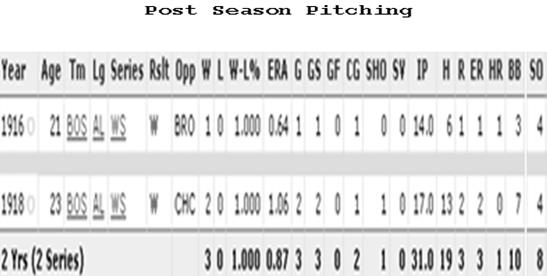
In 1916, there was attention focused on Ruth for his pitching, as he engaged in repeated pitching duels with the ace of the Washington Senators, Walter Johnson. The two met five times during the season, with Ruth winning four and Johnson one. Ruth had a no decision in Johnson's victory. Two of Ruth's victories were by the score of 1-0, one in a 13 inning game. For the season, Ruth went 23-12, with a 1.75 ERA and nine shutouts, both of which led the league. His nine shutouts set a league record for left handers. The Red Sox won the pennant and World Series again, this time defeating the Brooklyn Robins in five games.
Ruth started and won Game 2, 2-1, in 14 innings.
Carrigan retired as player and manager after 1916. Ruth, who played under four managers who are in the National Baseball Hall of Fame, always maintained that Carrigan, who is not enshrined there, was the best skipper he ever played for. There were other changes in the Red Sox organization that off season, as Lannin sold the team to a three man group headed by New York theatrical
promoter Harry Frazee. Jack Barry was hired by Frazee as manager.
Ruth went 24-13 with a 2.01 ERA and six shutouts in 1917, but the Sox finished in second place in the league, nine games behind the Chicago White Sox in the standings. On June 23rd at Washington, when home plate umpire 'Brick' Owens called the first four of his pitches as balls, Ruth threw a punch at him, and was ejected from the game and was later suspended for ten days and fined $100. Ernie Shore was called in to relieve Ruth, and retired all 26 batters he faced to win the game. Shore's feat was listed as a perfect game for many years. In 1917, Ruth was used little as a batter, other than for his plate appearances while pitching, and hit .325 with two home runs.
The United States entered World War I at the start of the season and it overshadowed baseball. Conscription was introduced in September 1917, and most baseball players in the big leagues were of draft age. This included Barry, who was a player-manager, and who joined the Naval Reserve in an attempt to avoid the draft, only to be called up after the 1917 season. Frazee hired International League President Ed Barrow as Red Sox manager. Barrow had spent the previous 30 years in a variety of baseball jobs, though he never played the game professionally.
With the major leagues shorthanded due to the war, Barrow had many holes in the Red Sox lineup to fill.
Ruth also noticed these vacancies in the lineup. He was dissatisfied in the role of a pitcher who appeared every four or five days and wanted to play every day at another position.
Barrow used Ruth at first base and in the outfield during the exhibition season, but he restricted him to pitching as the team moved toward Boston and the season opener. At the time, Ruth was possibly the best left handed pitcher in baseball, and allowing him to play another position was an experiment that could have backfired.
Inexperienced as a manager, Barrow had player Harry Hooper advise him on baseball game strategy. Hooper urged his manager to allow Ruth to play another position when he was not pitching, arguing to Barrow, who had invested in the club, that the crowds were larger on days when Ruth played, as they were attracted by his hitting. In early May, Barrow gave in; Ruth promptly hit home runs in four consecutive games, one an exhibition, the last off of Walter Johnson. For the first time in his career, Ruth was assigned a place in the batting order higher than ninth.
Although Barrow predicted that Ruth would beg to return to pitching the first time he experienced a batting slump, that did
not happen. Barrow used Ruth primarily as an outfielder in the war shortened 1918 season. Ruth hit .300 with 11 home runs, enough to secure him a share of the major league home run title.
He was still regularly used as a pitcher, and had a 13-7 record with a 2.22 ERA.
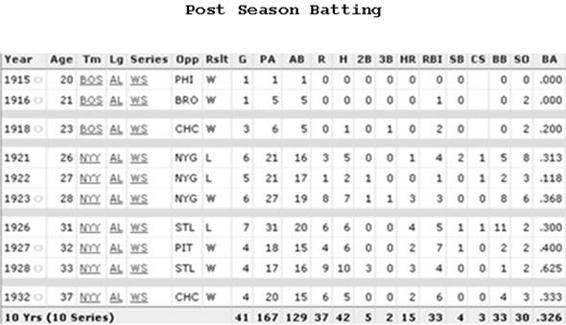
In 1918, the Red Sox won their third pennant in four years and faced the Chicago Cubs in the World Series. The season had been shortened because the government had ruled that baseball players who were eligible for the military would have to be inducted or work in critical war industries, such as armaments plants. Ruth pitched and won game 1 for the Red Sox, a 1-0 shutout; as well as winning game 4, 3-2, with relief help in the ninth. Ruth's effort gave his team a three games to one lead, and two days later the Red Sox won their third Series in four years, four games to two. Before allowing the Cubs to score in game 4, Ruth pitched 29+2/3 consecutive scoreless innings, a record for the World Series that stood for more than 40 years.
With the World Series over, Ruth gained exemption from the war draft by accepting a nominal position with a Pennsylvania steel mill. Many industrial establishments took pride in their baseball teams and sought to hire major leaguers. The end of the war in November set Ruth free to play baseball without such contrivances.
During the 1919 season, Ruth was used as a pitcher in only 17 of his 130 games and compiled an 8-5 record. Barrow used him as a pitcher mostly in the early part of the season, when the Red Sox manager still had hopes of a second consecutive pennant. By late June, the Red Sox were clearly out of the race, and Barrow had no objection to Ruth concentrating on his hitting, if only because it drew people to the ballpark. Ruth had hit a home run against the Yankees on Opening Day. Relieved of his pitching duties, Ruth began an unprecedented spell of slugging home runs, which gave him widespread public and press attention. Even his failures were seen as majestic. One sportswriter said; "When Ruth misses a swipe at the ball, the stands quiver."
Two home runs by Ruth on July 5th, and one in each of two consecutive games a week later, raised his season total to 11, tying his career best from 1918. The first record to fall was
“Socks” Seybold’s 1902 AL single season mark of 16. Ruth matched that on July 29th, then pulled ahead toward the major league record of 25, set by Buck Freeman in 1899. By the time Ruth reached this in early September, it was “discovered” that Ned Williamson of the 1884 Chicago White Stockings had hit 27, though in a ballpark where the distance to right field was only 215 feet. On September 20th, "Babe Ruth Day" at Fenway Park, Ruth won the game with a home run in the bottom of the ninth
inning, tying Williamson. He broke the record four days later against the Yankees at the Polo Grounds, and hit one more against the Senators to finish with 29. In spite of Ruth's hitting heroics, the Red Sox finished sixth, 20 games behind the league champion White Sox.
Being from New York City, owner Frazee had been regarded with suspicion by Boston's fans when he bought the team. He won them over with success on the field and a willingness to build the Red Sox by purchasing or trading for players. He offered the Senators $60,000 for Walter Johnson, but Washington owner Clark Griffith was unwilling. Even so, Frazee was successful in bringing other players to Boston, especially as replacements for players in the military. This willingness to spend for players helped the Red Sox secure the 1918 title. The 1919 season saw record breaking attendance, and Ruth's home runs for Boston made him a national sensation. In March 1919 Ruth was reported as having accepted a three year contract for a total of $27,000, after protracted negotiations. Nevertheless, on December 26th, 1919, Frazee sold Ruth's contract to the New York Yankees.
Not all the circumstances concerning the sale are known, but brewer and former congressman Jacob Ruppert, the New York team's principal owner, reportedly asked Yankee manager Miller Huggins what the team needed to be successful. "Get Ruth from Boston,"
Huggins supposedly replied, noting that Frazee was perennially in need of money to finance his theatrical productions. In any event, there was some precedent for the Ruth transaction. When Boston pitcher Carl Mays left the Red Sox in a 1919 dispute, Frazee had settled the matter by selling Mays to the Yankees.
Why Frazee needed cash in 1919 is still a mystery. The most often told story is that Frazee needed money to finance the musical “No, No, Nanette,” but that play did not open until 1925, by which time Frazee had sold the Red Sox.
There were other financial pressures on Frazee, despite his team's success. Ruth wanted to renegotiate his contract, signed before the 1919 season. He demanded that his salary be doubled, or he would sit out the season and cash in on his popularity through other ventures. Ruth's salary demands were causing other players to ask for more money as well. Additionally, Frazee still owed Lannin as much as $125,000 from the purchase of the club.
Frazee sold the rights to Babe Ruth for $100,000, the largest sum ever paid for a baseball player. The deal also involved a $350,000 loan from the Yankees’ Ruppert to Frazee, secured by a mortgage on Fenway Park. The transaction was contingent on Ruth signing a new contract, which was quickly accomplished. Ruth
agreed to fulfill the remaining two years on his contract, but was given a $20,000 bonus, payable over two seasons. The Red Sox, winners of five of the first 16 World Series, those played between 1903 and 1919, would not win another pennant until 1946, or another World Series until 2004, a drought attributed in baseball superstition to Frazee's sale of Ruth and sometimes dubbed the "Curse of the Bambino." The Yankees, on the other hand, had not won the AL championship prior to their acquisition of Ruth. They won seven AL pennants and four World Series with Ruth, and lead baseball with 40 pennants and 27 World Series titles in their history.
At the end of April 1920, the Yankees were 4-7, with the Red Sox leading the league with a 10-2 mark. Ruth had done little, having injured himself swinging the bat. Both situations began to change on May 1st, when Ruth hit a tape measure home run that sent the ball completely out of the Polo Grounds, a feat believed to have been previously accomplished only by Shoeless Joe Jackson. The Yankees won, 6-0, taking three out of four from the Red Sox. Ruth hit his second home run on May 2nd, and by the end of the month had set a major league record for home runs in a month with 11, which he promptly broke with 13 in June. Fans responded with record attendance. On May 16th, Ruth and the Yankees drew 38,600 to the Polo Grounds, a record for the
ballpark, and 15,000 fans were turned away. Large crowds jammed stadiums to see Ruth play when the Yankees were on the road.
The home runs kept on coming. Ruth tied his own record of 29 on July 15th and broke it with home runs in both games of a doubleheader four days later. By the end of July he had 37. On September 4th, he both tied and broke the organized baseball record for home runs in a season, snapping Perry Werden's 1895
mark of 44 in the minor Western League. The Yankees played well as a team, battling for the league lead early in the summer, but slumped in August. The pennant and the World Series were won by Cleveland, who surged ahead after the Black Sox Scandal broke on September 28th and led to the suspension of many of the White Sox’ top players, including Shoeless Joe Jackson. The Yankees finished third, but drew 1.2 million fans to the Polo Grounds, the first time a team had drawn a seven figure attendance. The rest of the league sold 600,000 more tickets, many fans there to see Ruth, who led the league with 54 home runs, 158 runs, and 137 runs batted in.
Yankees business manager Harry Sparrow had died early in the 1920 season. Ruppert and Huston hired Barrow to replace him. The two men quickly made a deal with Frazee for New York to acquire some of the players who would be mainstays of the early Yankee
pennant winning teams, including catcher Wally Schang and pitcher Waite Hoyt. The 21 year old Hoyt became close to Ruth.
Ruth hit home runs early and often in the 1921 season, during which he broke Roger Connor's mark of 138 home runs in a career.
Each of the almost 600 home runs Ruth hit in his career after that extended his own record. After a slow start, the Yankees were soon locked in a tight pennant race with Cleveland, winners of the 1920 World Series. On September 15th, Ruth hit his 55th home run, shattering his year old single season record. In late September, the Yankees visited Cleveland and won three out of four games, giving them the upper hand in the race, and clinched their first pennant a few days later. Ruth finished the regular season with 59 home runs, batting .378, with a slugging percentage of .846. Ruth's 177 runs scored, 119 extra base hits, and 457 total bases set modern era records that still stand.
Some make the case that this was the best offensive year anyone ever had.
The Yankees had high expectations when they met the New York Giants in the 1921 World Series, every game of which was played in the Polo Grounds. The Yankees won the first two games.
However, Ruth badly scraped his elbow during game 2 when he slid into third base. He had walked and stolen both second and third bases. After the game, he was told by the team physician not to
play the rest of the series. Despite this advice, he did play in the next three games, and pinch hit in game 8 of the best of nine series, but the Yankees lost, five games to three. Ruth hit
.316, drove in five runs and hit his first World Series home run.
After the Series, Ruth and teammates Bob Meusel and Bill Piercy participated in a barnstorming tour in the Northeast. A rule then in force prohibited World Series participants from playing in exhibition games during the offseason, the purpose being to prevent Series participants from replicating the Series and undermining its value. Baseball Commissioner Kenesaw Mountain Landis suspended the trio until May 20th, 1922, and fined them their 1921 World Series checks. On March 6th, 1922, Ruth signed a new contract for three years at $52,000 a year. This was more than twice the largest sum ever paid to a ballplayer up to that point.
Despite his suspension, Ruth was named the Yankees' new on field captain prior to the 1922 season. During the suspension, he worked out with the team in the morning and played exhibition games with the Yankees on their off days. He and Meusel returned on May 20 to a sellout crowd at the Polo Grounds, but Ruth batted 0 for 4 and was booed. On May 25th, he was thrown out of the game for throwing dust in umpire George Hildebrand's face;
then climbed into the stands to confront a heckler. Ban Johnson ordered him fined, suspended, and stripped of position as team captain. In his shortened season, Ruth appeared in 110 games, batted .315, with 35 home runs, and drove in 99 runs. Despite Ruth's off year, the Yankees managed to win the pennant and faced the New York Giants in the World Series for the second consecutive year. In the Series, Giants manager John McGraw instructed his pitchers to throw him nothing but curveballs, and Ruth never adjusted. Ruth had just two hits in 17 at bats, and the Yankees lost to the Giants for the second straight year, by 4-0, with one tie game.
After the season, Ruth was a guest at an Elks Club banquet, set up by Ruth's agent with Yankee team support. There, each speaker, concluding with future New York mayor Jimmy Walker, censured him for his poor behavior. An emotional Ruth promised reform, and, to the surprise of many, followed through. When he reported to spring training, he was in his best shape as a Yankee, weighing only 210 pounds.
The Yankees' status as tenants of the Giants at the Polo Grounds had become increasingly uneasy, and in 1922, Giants owner Charles Stoneham said the Yankees' lease, expiring after that season, would not be renewed. Ruppert and Huston had long contemplated a new stadium, and had taken an option on property
at 161st Street and River Avenue in the Bronx. Yankee Stadium was completed in time for the home opener on April 18, 1923, at which Ruth hit the first home run in what was quickly dubbed
"the House that Ruth Built.” During the 1923 season, The Yankees were never seriously challenged and won the AL pennant by 17
games. Ruth finished the season with a career high .393 batting average and 41 home runs, which tied Cy Williams for the most in the major leagues. For the third straight year, the Yankees faced the Giants in the World Series, which Ruth dominated. He batted .368, walked eight times, scored eight runs, hit three home runs and slugged 1.000 during the series, as the Yankees christened their new stadium with their first World Series championship, four games to two.
In 1924, the Yankees were favored to become the first team to win four consecutive pennants. Plagued by injuries, they found themselves in a battle with the Senators. Although the Yankees won 18 of 22 at one point in September, the Senators beat out the Yankees by two games. Ruth hit .378, winning his only AL
batting title, with a league leading 46 home runs.
Ruth did not look like an athlete; he was described as
"toothpicks attached to a piano," with a big upper body but thin wrists and legs. Ruth had kept up his efforts to stay in shape in 1923 and 1924, but by early 1925 weighed nearly 260 pounds.
His annual visit to Hot Springs, Arkansas, where he exercised and took saunas early in the year, did him no good as he spent much of the time carousing in the resort town. He became ill while there, and suffered relapses during spring training. Ruth collapsed in Asheville, North Carolina, as the team journeyed north. He was put on a train for New York, where he was briefly hospitalized. A rumor circulated that he had died, prompting British newspapers to print a premature obituary. In New York, Ruth collapsed again and was found unconscious in his hotel bathroom. He was taken to a hospital where he suffered multiple convulsions. After sportswriter W. O. McGeehan wrote that Ruth's illness was due to binging on hot dogs and soda pop before games, it became known as "the bellyache heard 'round the world." However, the exact cause of his ailment has never been confirmed and remains a mystery. Playing just 98 games, Ruth had his worst season as a Yankee; he finished with a .290 average and 25 home runs. The Yankees finished next to last in the AL
with a 69-85 record, their last season with a losing record until 1965.
Ruth spent part of the offseason of 1925-26 working out at Artie McGovern's gym, where he got back into shape. Barrow and Huggins had rebuilt the team and surrounded the veteran core with good young players like Tony Lazzeri and Lou Gehrig, but the Yankees
were not expected to win the pennant. Ruth returned to his normal production during 1926, when he batted .372 with 47 home runs and 146 RBIs. The Yankees built a 10 game lead by mid-June and coasted to win the pennant by three games. The St. Louis Cardinals had won the National League with the lowest winning percentage for a pennant winner to that point (.578) and the Yankees were expected to win the World Series easily. Although the Yankees won the opener in New York, St. Louis took games 2
and 3. In game 4, Ruth hit three home runs, the first time this had been done in a World Series game, to lead the Yankees to victory. In the fifth game, Ruth caught a ball as he crashed into the fence. The play was described by baseball writers as a defensive gem. New York took that game, but Grover Cleveland Alexander won Game Six for St. Louis to tie the Series at three games each, then got very drunk. He was nevertheless inserted into Game Seven in the seventh inning and shut down the Yankees to win the game, 3-2, and win the Series. Ruth had hit his fourth home run of the Series earlier in the game and was the only Yankee to reach base off Alexander. He walked in the ninth inning before being thrown out to end the game when he attempted to steal second base.
The 1926 World Series was also known for Ruth's promise to Johnny Sylvester, a hospitalized 11 year old boy. Ruth promised
the child that he would hit a home run on his behalf. Sylvester had been injured in a fall from a horse, and a friend of Sylvester's father gave the boy two autographed baseballs signed by Yankees and Cardinals. Ruth's 1926 salary of $52,000 was far more than any other baseball player, but he made at least twice as much in other income, including $100,000 from 12 weeks of vaudeville.
The 1927 New York Yankees team is considered one of the greatest squads to ever take the field. Known as Murderers' Row because of the power of its lineup, the team clinched first place on Labor Day, won a then AL record 110 games and took the AL
pennant by 19 games. There was no suspense in the pennant race, and the nation turned its attention to Ruth's pursuit of his own single season home run record of 59 round trippers. Ruth was not alone in this chase. Teammate Lou Gehrig was a slugger who was capable of challenging Ruth for his home run crown. He tied Ruth with 24 home runs late in June. Through July and August, the duo was never separated by more than two home runs. Gehrig took the lead, 45-44, in the first game of a doubleheader at Fenway Park early in September. Ruth responded with two blasts of his own to take the lead, as it proved permanently, as Gehrig finished with 47. Even so, as of September 6th, Ruth was still several games off his 1921 pace, and going into the final series against the
Senators, had only 57. He hit two in the first game of the series to tie the record. The following day, September 30th, he broke it with his 60th homer, in the eighth inning off Tom Zachary to break a 2-2 tie. "Sixty! Let's see some son of a bitch try to top that one," Ruth exulted after the game. In addition to his career high 60 home runs, Ruth batted .356, drove in 164 runs and slugged .772. In the 1927 World Series, the Yankees swept the Pittsburgh Pirates in four games. The National Leaguers were disheartened and defeated after watching the Yankees take batting practice before game 1, with ball after ball leaving Forbes Field. The 1927 New York Yankees. Even today, the words inspire awe. All baseball success is measured against the '27 team.
The following season started off well for the Yankees. But the Yankees were plagued by injuries, erratic pitching and inconsistent play. The Philadelphia Athletics, rebuilding after some lean years, erased the Yankees' big lead and even took over first place briefly in early September. The Yankees, however, regained first place when they beat the Athletics three out of four games in a pivotal series at Yankee Stadium later that month, and clinched the pennant in the final weekend of the season. Ruth's play in 1928 mirrored his team's performance. He got off to a hot start and on August 1st, he had 42 home runs,
but then slumped for the latter part of the season. Ruth's batting average also fell to .323, well below his career average. Nevertheless, he ended the season with 54 home runs.
The Yankees swept the favored Cardinals in four games in the World Series, with Ruth batting .625 and hitting three home runs in Game Four, including one off Alexander.
Although the Yankees started well, the Athletics soon proved they were the better team in 1929, splitting two series with the Yankees in the first month of the season, then taking advantage of a Yankee losing streak in mid-May to gain first place.
Although Ruth performed well, the Yankees were not able to catch the Athletics. Connie Mack had built another great team. Tragedy struck the Yankees late in the year as manager Huggins died at 51 of erysipelas, a bacterial skin infection. Despite their past differences, Ruth praised Huggins and described him as a "great guy." The Yankees finished second, 18 games behind the Athletics. Ruth hit .345, with 46 home runs and 154 RBIs.
On October 17, the Yankees hired Bob Shawkey as manager. Ruth had politicked for the job of player-manager, but Ruppert and Barrow never seriously considered him for the position. Shawkey, a former Yankees player and teammate of Ruth, would prove unable to command Ruth's respect.
On January 7th, 1930, salary negotiations between the Yankees and Ruth broke down; but culminated two months later compromise, with Ruth settling for two years at an unprecedented $80,000 per year; 2.4 times greater than the next highest salary, a record margin.
In 1930 Ruth hit .359 with 49 home runs and 153 RBIs. He also pitched his first game in nine years, a complete game victory.
However, the Athletics won their second consecutive pennant and World Series, as the Yankees finished in third place, sixteen games back. At the end of the season, Shawkey was fired and replaced with Cubs manager Joe McCarthy, though Ruth again unsuccessfully sought the job.
McCarthy was a disciplinarian, but chose not to interfere with Ruth, who did not seek conflict with the manager. The team improved in 1931, but was no match for the Athletics, who won 107 games, 13 games in front of the Yankees. Ruth, for his part held up his end, and hit .373, with 46 home runs and 163 RBIs.
In the 1932 season, the Yankees went 107-47 and won the pennant.
Ruth's effectiveness decreased somewhat, but he still hit .341
with 41 home runs and 137 RBIs. He was sidelined twice due to injuries during the season. The Yankees faced the Cubs, McCarthy's former team, in the 1932 World Series. There was bad
blood between the two teams as the Yankees resented the Cubs only awarding half a World Series share to Mark Koenig, a former Yankee. The games at Yankee Stadium had not been sellouts; both were won by the home team, with Ruth collecting two singles, though scoring four runs as he was walked four times by the Cubs pitchers. In Chicago, Ruth was resentful at the hostile crowds that met the Yankees' train and jeered them at the hotel. The crowd for game included New York Governor Franklin D. Roosevelt, the Democratic candidate for president, who sat with Chicago Mayor Anton Cermak. Many in the crowd threw lemons at Ruth, and others, as well as the Cubs themselves, shouted abuse at Ruth and other Yankees. They were briefly silenced when Ruth hit a three run home run off Charlie Root in the first inning, but soon revived, and the Cubs tied the score at 4-4 in the fourth inning, partly due to Ruth's fielding error in the outfield.
When Ruth came to the plate in the top of the fifth, the Chicago crowd and players, led by pitcher Guy Bush, were screaming insults at Ruth. With the count at two balls and one strike, Ruth gestured, possibly in the direction of center field, and after the next pitch, a strike, may have pointed there with one hand. Ruth hit the fifth pitch over the center field fence.
Estimates were that it traveled nearly 500 feet. Varying accounts exist, including a film of Ruth’s gesture. The incident has gone down in legend as Babe Ruth's called shot. The Yankees
won game 3, and the following day clinched the Series with another victory. During that game, Bush hit Ruth on the arm with a pitch, causing words to be exchanged and provoking a game winning Yankee rally.
Ruth remained productive in 1933 at age 38. He batted .301, with 34 home runs, 103 RBIs, and a league leading 114 walks, as the Yankees finished in second place, seven games behind the Senators. Athletics manager Connie Mack selected him to play right field in the first Major League Baseball All-Star Game, held on July 6th, 1933, at Comiskey Park in Chicago. He hit the first home run in the All-Star Game's history, a two run blast against Bill Hallahan during the third inning, which helped the AL win the game 4-2. During the final game of the 1933 season, as a publicity stunt organized by his team, Ruth was called upon and pitched a complete game victory against the Red Sox, his final appearance as a pitcher.
In 1934, Ruth played in his last full season with the Yankees.
By this time, age and years of high living were starting to catch up with him. His conditioning had deteriorated to the point that he could no longer field or run. He accepted a pay cut to $35,000 from Ruppert, but he was still the highest paid player in the major leagues. He could still handle a bat, recording a .288 batting average with 22 home runs. However,
this was merely mortal by Ruth's previous standards. Ruth was selected to the AL All-Star team for the second consecutive year, even though he was in the twilight of his career. The Yankees finished second again, seven games behind the Tigers.
By this time, Ruth knew he was nearly finished as a player. He desired to remain in baseball as a manager. He was often spoken of as a possible candidate as managerial jobs opened up, but nothing ever came to fruition. Just before the 1934 season, Ruppert offered to make Ruth the manager of the Yankees' top minor league team, the Newark Bears, but he was talked out of it by his wife, Claire, and his business manager, Christy Walsh.
Early in the 1934 season, Ruth openly campaigned to become the Yankees manager. However, the Yankee job was never a serious possibility as Ruppert always supported McCarthy, who would remain in his position for another 12 seasons. When the time came, all Ruppert wanted was for Ruth to leave the team without drama or hard feelings.
During the 1934-35 offseason, Ruth circled the world with his wife. The trip included a barnstorming tour of the Far East. At his final stop in the United Kingdom before returning home, Ruth was introduced to cricket by Australian player Alan Fairfax, and did well. But, Ruth lost all interest in cricket upon learning that the best batsmen made only about $40 per week.
Also during the offseason, Ruppert had been sounding out the other clubs in hopes of finding one that would be willing to take Ruth as a manager and/or a player. While the barnstorming tour was underway, Ruppert began negotiating with Boston Braves owner Judge Emil Fuchs, who wanted Ruth as a gate attraction.
The Braves had enjoyed modest recent success, finishing fourth in the National League in both 1933 and 1934, but the team drew poorly at the box office. Unable to afford the rent at Braves Field, Fuchs had considered holding dog races there when the Braves were not at home, only to be turned down by Landis. After a series of phone calls, letters, and meetings, the Yankees traded Ruth to the Braves on February 26, 1935. Ruppert had stated that he would not release Ruth to go to another team as a full-time player. For this reason, it was announced that Ruth would become a team vice president and would be consulted on all club transactions, in addition to playing. He was also made assistant manager to Braves skipper Bill McKechnie. In a long letter to Ruth a few days before the press conference, Fuchs promised Ruth a share in the Braves' profits, with the possibility of becoming co-owner of the team. Fuchs also raised the possibility of Ruth succeeding McKechnie as manager, perhaps as early as 1936. Ruppert called the deal "the greatest opportunity Ruth ever had."
There was considerable attention as Ruth reported for spring training. He did not hit his first home run of the spring until after the team had left Florida, and was beginning the road north in Savannah. He hit two in an exhibition game against the Bears. Amid much press attention, Ruth played his first home game in Boston in over 16 years. Before an opening day crowd of over 25,000, Ruth accounted for all the Braves' runs in a 4-2
defeat of the New York Giants, hitting a two run home run, singling to drive in a third run and later in the inning scoring the fourth. Although age and weight had slowed him, he made a running catch in left field that sportswriters deemed the defensive highlight of the game.
Ruth had two hits in the second game of the season, but it quickly went downhill both for him and the Braves from there.
The season soon settled down to a routine of Ruth performing poorly on the few occasions he even played at all. He grew increasingly annoyed that McKechnie ignored most of his advice.
McKechnie later said that Ruth's presence made enforcing discipline nearly impossible.
Ruth soon realized that Fuchs had deceived him, and had no intention of making him manager or giving him any significant off-field duties. He was there to put on pre-game batting practice displays of power. He later said his only duties as
vice president consisted of making public appearances and autographing tickets. Ruth also found out that far from giving him a share of the profits, Fuchs wanted him to invest some of his money in the team in a last ditch effort to improve its balance sheet. As it turned out, Fuchs and Ruppert had both known all along that Ruth's non-playing positions were meaningless.
By the end of the first month of the season, Ruth concluded he was finished even as a part time player. As early as May 12th, he asked Fuchs to let him retire, but was persuaded to stay on a while more, primarily for the tributes which had been arranged.
Ruth played in the third game of the Pittsburgh series on May 25th, 1935, and added one more tale to his playing legend. He went 4 for 4, with three home runs, the last two off old Cubs nemesis, Guy Bush. The final home run sailed out of the park over the right field upper deck, the first time anyone had hit a fair ball completely out of Forbes Field. Ruth was urged to make this his last game, but he had given his word to Fuchs and played in Cincinnati and Philadelphia – not well.
Of the five members in the inaugural class of Baseball Hall of Fame in 1936; Ty Cobb, Honus Wagner, Christy Mathewson, Walter Johnson and Ruth; only Ruth was not given an offer to manage a baseball team.
Ruth played much golf and in a few exhibition baseball games, where he demonstrated a continuing ability to draw large crowds.
This appeal contributed to the Dodgers hiring him as first base coach in 1938. Ruth got along well with everyone except team captain Leo Durocher, who was hired as Burleigh Grimes'
replacement as manager at season's end. Ruth then left his job as a first base coach and would never again work in any capacity in the game of baseball.
As early as the war years, doctors had cautioned Ruth to take better care of his health. In 1946, Ruth began experiencing severe pain over his left eye and had difficulty swallowing. In November 1946, Ruth entered French Hospital in New York for tests, which revealed that he had an inoperable malignant tumor at the base of his skull and in his neck. His name and fame gave him access to experimental treatments, and he was one of the first cancer patients to receive both drugs and radiation treatment simultaneously. Having lost 80 pounds, he was discharged from the hospital in February and went to Florida to recuperate. He returned to New York and Yankee Stadium after the season started. The new commissioner, Happy Chandler, proclaimed April 27, 1947, Babe Ruth Day around the major leagues, with the most significant observance to be at Yankee Stadium. A number of teammates and others spoke in honor of Ruth, who briefly
addressed the crowd of almost 60,000. By then, his voice was a soft whisper with a very low, raspy tone.
Ruth showed dramatic improvement during the summer of 1947. He was able to travel around the country, doing promotional work for the Ford Motor Company on American Legion Baseball. He appeared again at another day in his honor at Yankee Stadium in September, but was not well enough to pitch in an old timers game as he had hoped. The improvement was only a temporary remission, and by late 1947, Ruth was in bad shape.
On June 13th, 1948 Ruth visited Yankee Stadium for the final time in his life, appearing at the 25th anniversary celebrations of "The House that Ruth Built." By this time he had lost much weight and had difficulty walking. Introduced along with his surviving teammates from 1923, Ruth used a bat as a cane. Ruth made one final trip on behalf of American Legion Baseball, then entered Memorial Hospital, where he would die. Thousands of New Yorkers, including many children, stood vigil outside the hospital during Ruth's final days. On August 16th, 1948, at 8:01
PM, Ruth died in his sleep at the age of 53. His open casket was placed on display in the rotunda of Yankee Stadium, where it remained for two days. 77,000 people filed past to pay him tribute. His funeral Mass took place at St. Patrick's Cathedral; a crowd estimated at 75,000 waited outside.
Ruth was not just a power hitter. He was also the Yankees' best bunter, and an excellent outfielder. Ruth's penchant for hitting home runs altered how baseball is played. Prior to 1920, home runs were unusual, and managers tried to win games by getting a runner on base and bringing him around to score through such means as the stolen base, the bunt, and the hit and run.
Advocates of what was dubbed "inside baseball" included Giants manager John McGraw. Ruth's breakout performance during the 1920
season and the response in excitement and attendance, settled, for all time to come, that the American public is nuttier over the home run than the clever fielding or the hitless pitching.
Viva el Home Run and two times viva Babe Ruth, exponent of the home run, and overshadowing star. There will never be another.
Baseball Trailblazers
Page 60
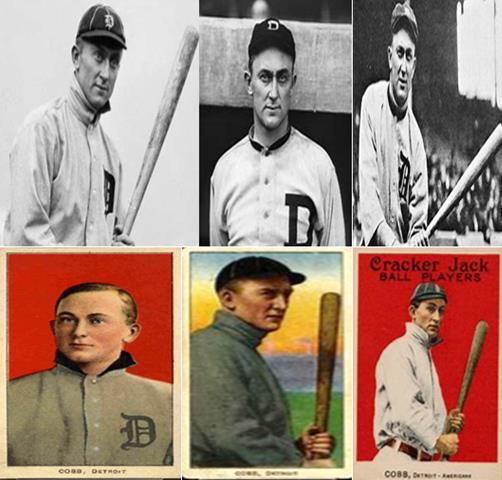
Ty Cobb
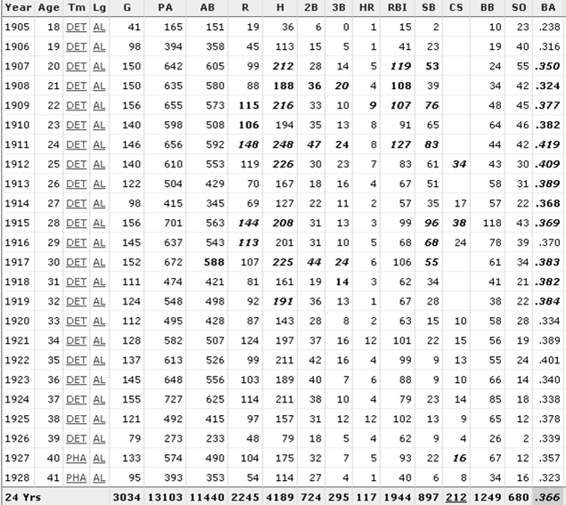
AL MVP – 1911; Triple Crown – 1909; twelve time AL batting champion - 1907–1915 and 1917–1919; AL home run leader – 1909; four time AL RBI leader - 1907–1909 and 1911; six time AL stolen base leader - 1907, 1909, 1911, and 1915–1917; major league baseball record .366 career batting average.
Baseball Trailblazers
Page 61
Tyrus Raymond Cobb, December 18, 1886 – July 17, 1961, nicknamed
“The Georgia Peach,” was born in Narrows, Georgia, a small rural
community of farmers that was unincorporated. He was the first of three children born to William Herschel Cobb, 1863–1905, and Amanda Chitwood Cobb, 1871–1936. Cobb's father was a state senator.
Cobb spent 22 seasons with the Detroit Tigers, the last six as the team's player-manager, and finished his career with the Philadelphia Athletics. In 1936, Cobb received the most votes of any player on the inaugural Baseball Hall of Fame ballot.
Cobb set 90 major league baseball records during his career. His combined total of 4,065 runs scored and runs batted in is still the highest ever produced by any major league player. He still holds several records including the highest career batting average - .366, and most career batting titles with 12. He retained many other records for a half century or more, including most career hits - 4,189, most career runs - 2,245, and most career stolen bases – 897. He still holds the career record for stealing home 54 times.
Cobb's legacy includes a large college scholarship fund for Georgia residents financed by his early investments in Coca-Cola and General Motors. A well-known philanthropist, Cobb's reputation as a violent man was fanned by his first biographer, sportswriter Al Stump, whose stories about Cobb have been
discredited as sensationalized, and has largely proven to be fictitious.
When he was still an infant, his parents moved to the nearby town of Royston, where he grew up. He became fascinated with baseball as a child, and decided he wanted to play professional ball one day. His father was vehemently opposed to this idea, but by his teen years, Ty was trying out for area teams. He played his first years in organized baseball for the Royston Rompers, the semi-pro Royston Reds, and the Augusta Tourists of the South Atlantic League, who released him after only two days.
He then tried out for the Anniston Steelers of the semipro Tennessee–Alabama League, with his father's stern admonition ringing in his ears; "Don't come home a failure!" After joining the Steelers for a monthly salary of $50, Cobb promoted himself by sending several postcards written about his talents under different aliases to Grantland Rice, the Atlanta Journal sports editor. Eventually, Rice wrote a note in the Journal that a
"young fellow named Cobb seems to be showing an unusual lot of talent." After about three months, Cobb returned to the Tourists and finished the season hitting .237 in 35 games. In August 1905, the management of the Tourists sold Cobb to the American League's Detroit Tigers.
On August 8th, 1905, Cobb's mother fatally shot his father with a pistol that his father had purchased for her. Court records indicate that Mr. Cobb had suspected his wife of infidelity and was sneaking past his own bedroom window to catch her in the act. She saw the silhouette of what she presumed to be an intruder and, acting in self-defense, shot and killed her husband. Mrs. Cobb was charged with murder and then was acquitted on March 31st, 1906. Cobb later attributed his ferocious play to his late father, saying; "I did it for my father. He never got to see me play. But I knew he was watching me, and I never let him down."
In 1911, Cobb moved to Detroit's architecturally significant and now historically protected Woodbridge neighborhood, from which he would walk with his dogs to the ballpark prior to games. The Victorian duplex in which Cobb lived still stands.
Three weeks after his mother killed his father, Cobb debuted in center field for the Detroit Tigers. On August 30, 1905, in his first major league at bat, he doubled off Jack Chesbro of the New York Highlanders, who had won 41 games the previous season.
Cobb was 18 years old at the time, the youngest player in the league by almost a year. Although he hit only .240 in 41 games, he signed a $1,500 contract to play for the Tigers in 1905.
As a rookie, Cobb was subject to severe hazing by his veteran teammates, who were jealous of the young prospect. The players smashed his homemade bats, nailed his cleats in the clubhouse, doused his clothes before tying knots in them, and verbally abused him. Cobb later attributed his hostile temperament to this experience; "These old-timers turned me into a snarling wildcat." Tigers’ manager Hughie Jennings later acknowledged that Cobb was targeted for abuse by veteran players, some of whom sought to force him off the team. "I let this go for a while because I wanted to satisfy myself that Cobb has as much guts as I thought in the very beginning," Jennings recalled.
"Well, he proved it to me, and I told the other players to let him alone. He is going to be a great baseball player and I won't allow him to be driven off this club."
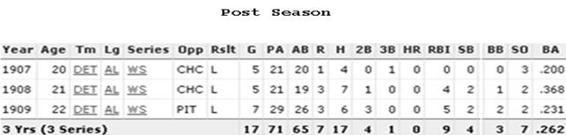
The following year, 1906, Cobb became the Tigers' full time center fielder and hit .316 in 98 games, setting a record for the highest batting average for a 19 year old, and he never hit below that mark again. After being moved to right field, he led the Tigers to three consecutive American League pennants in 1907, 1908 and 1909. Detroit would lose each World Series; however, Cobb's postseason numbers were far below his career standard. Cobb did not get another opportunity to play on a pennant winning team.
He finished the 1907 season with a league leading .350 batting average, 212 hits, 49 steals and 119 runs batted in. At age 20, he was the youngest player to win a batting championship.
Reflecting on his career in 1930, two years after retiring, he told Grantland Rice; "The biggest thrill I ever got came in a game against the Athletics in 1907 (on September 30). The Athletics had us beaten, with Rube Waddell pitching. They were two runs ahead in the 9th inning, when I happened to hit a home run that tied the score. This game went 17 innings to a tie, and a few days later, we clinched our first pennant. You can understand what it meant for a 20 year old country boy to hit a home run off the great Rube, in a pennant winning game with two outs in the ninth."
In September 1907, Cobb began a relationship with The Coca-Cola Company that lasted the remainder of his life. By the time he died, he held over 20,000 shares of stock and owned bottling plants in Santa Maria, California, Twin Falls, Idaho, and Bend, Oregon. He was also a celebrity spokesman for the product.
The following season, the Tigers finished ahead of the Chicago White Sox for the pennant. Cobb again won the batting title with a .324 average, but Detroit suffered another loss in the World Series. In August 1908, Cobb married Charlotte Marion Lombard, the daughter of prominent Augustan Roswell Lombard. In the
offseason, the couple lived on her father's Augusta estate, “The Oaks,” until they moved into their own house on Williams Street in November 1913.
The Tigers won the AL pennant again in 1909. During that World Series, Cobb's last, he stole home in the second game, igniting a three run rally. But that was the high point for him, finishing with a lowly .231, as the Tigers lost to Honus Wagner and the powerful Pirates in seven games. Although he performed poorly in the postseason, he won the Triple Crown by hitting
.377 with 107 RBI and nine home runs, all inside the park.
Going into the final days of the 1910 season, Cobb had a .004
lead on Nap Lajoie for the American League batting title. The prize for the winner of the title was a Chalmers automobile.
Cobb sat out the final two games to preserve his average. Lajoie hit safely eight times in a doubleheader but six of those hits were bunt singles down the third base line. Later it was rumored that the opposing manager had instructed his third baseman to play extra deep to allow Lajoie to win the batting race over the generally disliked Cobb. Although Cobb was credited with a higher batting average, it was later discovered that one game had been counted twice, so that Cobb actually lost to Lajoie. As a result of the incident, AL president Ban Johnson was forced to arbitrate the situation. He declared Cobb the rightful owner of
the title, but car company president Hugh Chalmers chose to award one to both Cobb and Lajoie.
Cobb was having a tremendous year in 1911, which included a 40
game hitting streak. Still, "Shoeless" Joe Jackson led him by
.009 points in the batting race late in the season. Near the end of the season, Cobb's Tigers had a long series against Jackson's Cleveland Naps. Fellow Southerners Cobb and Jackson were personally friendly both on and off the field. Jackson "fell off" to a final average of .408, twelve points lower than Cobb's
.420; a 20th century record which traditionally stood until George Sisler tied it and Rogers Hornsby surpassed it with .424, the record since then except for Hugh Duffy's .438 in the 19th century. Nap Lajoie’s re-calculated .426 of 1901 is now considered the apex.
“I often tried plays that looked recklessly daring, maybe even silly. But I never tried anything foolish when a game was at stake, only when we were far ahead or far behind. I did it to study how the other team reacted, filing away in my mind any observations for future use.” — Ty Cobb.
Cobb led the AL that year in numerous other categories, including 248 hits, 147 runs scored, 127 RBI, 83 stolen bases, 47 doubles, 24 triples and a .621 slugging percentage. Cobb hit eight home runs but finished second in that category to Frank
Baker, who hit eleven. He was awarded another Chalmers car, this time for being voted the AL MVP by the Baseball Writers'
Association of America.
On May 12, 1911, playing against the New York Highlanders, he scored from first base on a single to right field, then scored another run from second base on a wild pitch. In the seventh inning, he tied the game with a two run double. The Highlanders catcher vehemently argued the safe call at second base with the umpire in question, going on at such length that the other Highlanders infielders gathered nearby to watch. Realizing that no one on the Highlanders had called time, Cobb strolled unobserved to third base, and then casually walked towards home plate as if to get a better view of the argument. He then suddenly broke into a run and slid into home plate for the eventual winning run. It was performances like this that led Branch Rickey to say later that Cobb "had brains in his feet."
Describing his gameplay strategy in 1930, Cobb said, "My system was all offense. I believed in putting up a mental hazard for the other fellow. If we were five or six runs ahead, I'd try some wild play, such as going from first to home on a single.
This helped to make the other side hurry the play in a close game later on. I worked out all the angles I could think of, to keep them guessing and hurrying."
On May 15th, 1912, Cobb assaulted a heckler, Claude Lucker in the stands in New York's Hilltop Park where the Tigers were playing the Highlanders. Lucker was a Tammany Hall lackey and two bit punk, who often berated Cobb when Detroit visited New York. In this game, the two traded insults with each other through the first couple of innings. Cobb at one point went to the Highlander dugout to look for the Highlander's owner to try to have Lucker ejected from the game, but his search was in vain. He also asked for the police to intervene, but they refused. The situation climaxed when Lucker allegedly called Cobb a "half-nigger." Cobb said that he was "reflecting on my mother's color and morals." He went on to state that he warned Highlander manager Harry Wolverton that if something wasn't done about that man, there would be trouble. No action was taken. At the end of the sixth inning, after being challenged by teammates Sam Crawford and Jim Delahanty to do something about it, Cobb climbed into the stands and attacked Lucker, who it turned out was handicapped. Some onlookers shouted at him to stop because the man had no hands, to which Cobb reportedly retorted, "I don't care if he got no feet!" The crowd cheered Cobb on in the fight. Though extremely rare in the 21st century, attacking fans was not so unusual an activity in the early years of baseball, nor was it unusual for a fan to come on the field to attack a player. Other notable baseball stars who assaulted heckling fans
include Babe Ruth, Cy Young, Rube Waddell, Kid Gleason, Sherry Magee, and Fred Clarke.
The league suspended him, and his teammates went on strike to protest the suspension, and the lack of protection of players from abusive fans, before the May 18th game in Philadelphia. For that one game, Detroit fielded a replacement team made up of hastily recruited college and sandlot players plus two Tiger coaches and lost 24–2. The strike ended when Cobb urged his teammates to return to the field. This incident led to the formation of a players' union, the "Ballplayers' Fraternity,” an early version of what is now called the Major League Baseball Players Association, which garnered some concessions from the owners.
During his career, Cobb was involved in numerous other fights, both on and off the field, and several profanity laced shouting matches. For example, Cobb and umpire Billy Evans arranged to settle their in game differences through fisticuffs under the grandstand after the game. Members of both teams were spectators, and broke up the scuffle after Cobb had knocked Evans down, pinned him and began choking him. In 1909, Cobb was arrested for assault for an incident that occurred in a Cleveland hotel. Cobb got into an argument with the elevator operator around 2:15AM when the man refused to take him to the
floor where some of his teammates were having a card game. The elevator operator stated that he could only take Cobb to the floor where his room was. As the argument escalated, a night watchman approached and he and Cobb eventually got into a physical confrontation. Cobb would later plead guilty to simple assault and pay a $100 fine.
In 1913, Cobb signed a contract worth $12,000 for the six month season, making him likely the first baseball player in history to be paid a five figure salary.
In 1915, Cobb set the single season record for stolen bases with 96. He also won his ninth consecutive batting title, hitting