

Essentials of geology a comprehensive manual with 1300+ MCQs, answers, feedbacks, and illustrative figures by Ali Kareem Neamah - HTML preview
Download the book in PDF, ePub, Kindle for a complete version.
b) False physical or chemical characteristics.
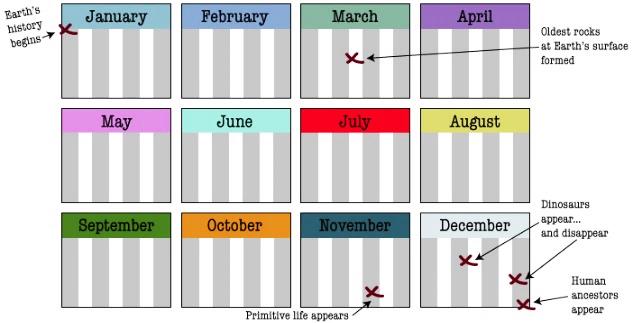
Feedback: If you equate all Earth history to one calendar year, all recorded human history
occupies only the last 34 seconds of December
31 in our analogy.

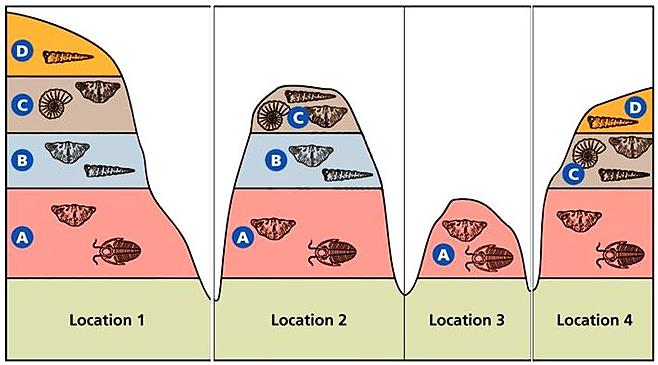
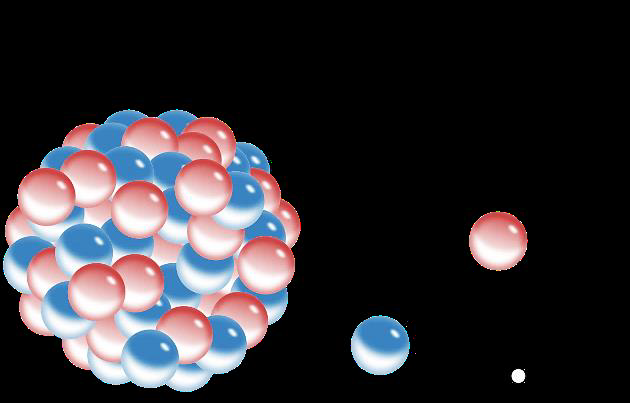
a) -------------------------------------------------------------- -------------------------------------------------------------- 1189. Correlation matches up rock layers 1191. James Hutton pioneered radiometric across distances on the basis of similar age dating. sequences of rock layers and similar fossils a) True in the layers. b) False True b) False Feedback: James Hutton did not pioneer radiometric age dating. Here is why: Feedback: Correlation in geology involves James Hutton was a Scottish geologist who matching rock layers across different locations lived from 1726 to 1797. He is considered the based on similarities in their sequences and the father of modern geology and the originator of fossils found within them. This helps geologists the principle of uniformitarianism, which states establish the relative ages of rock formations that the present is the key to the past and that and build a coherent picture of Earth's natural processes operate at the same rates geological history. and in the same ways throughout geologic time. Radiometric age dating is a technique that uses
the decay of radioactive isotopes to measure
the age of materials such as rocks or fossils. It
was first developed in the early 20th century,
long after Hutton’s death, by scientists such as
Ernest Rutherford, Bertram Boltwood, Arthur
Holmes, and Willard Libby. Hutton did not have
access to radiometric age dating methods, but
he used other lines of evidence, such as the
a) 1190. The boundary surface between two was much older than commonly believed at his stratigraphic formations is called a key bed. time. He estimated that the Earth was millions True or even billions of years old, while most of his -------------------------------------------------------------- fossil succession in rocks, to infer that the Earth unconformities, cross-cutting relationships, and
b) False contemporaries adhered to a biblical
Feedback: The boundary surface between two around 4000 BC. chronology that placed the Earth’s creation at stratigraphic formations is not called a key bed, --------------------------------------------------------------
separate. Contacts can be conformable, period of potassium-40 is half of this, and the meaning that the layers are continuous and number of years is cut in half for each parallel, or unconformable, meaning that there succeeding half-life period. two different rock types or ages meet and 40 is 1.3 billion years; the second half-life but a contact. A contact is the surface where 1192. The first half-life period of potassium-
is a gap or discordance between the layers due a) True to erosion or deformation. A key bed, also b) False called a marker bed, is a distinctive layer of rock
serves as a useful marker or reference horizon potassium-40 is 1.3 billion years, but the or sediment within a sequence of layers that Feedback: The first half-life period of
for correlation and dating purposes. Key beds second half-life period of potassium-40 is also are valuable in stratigraphy, which is the study 1.3 billion years, and the number of years
245
remains the same for each succeeding half-life Feedback: Eighteenth- and nineteenth-century period. Here is why: scientists did attempt to estimate the age of the
The half-life of a radioactive substance is Earth using various methods, including the
defined as the time for half of the original nuclei analysis of sediment thickness, rates of
to decay (or the time at which half of the original geologic processes, and Earth's temperature.
nuclei remain). The half-life of a radioactive However, these early attempts had crucial flaws
substance is constant and does not depend on and often resulted in incorrect and inconsistent
how much material is left or how long it has age estimates. It wasn't until the development
been decaying. of radiometric dating methods in the 20th

Therefore, the first half-life period of potassium- century that more accurate estimates of Earth's
40 is 1.3 billion years, which means that after age were obtained. this time, half of the original amount of --------------------------------------------------------------
potassium-40 will decay into argon-40. The 1195. Grains of zircon in Australian second half-life period of potassium-40 is also sandstones have been dated at 4.57 billion
1.3 billion years, which means that after another years old, which is the currently accepted
1.3 billion years, half of the remaining amount age of Earth. of potassium-40 will decay into argon-40. The a) True number of years does not change for each b) False succeeding half-life period, but the amount of
potassium-40 decreases by half each time. Feedback: Grains of zircon in Australian For example, if we start with 100 g of sandstones have been dated at 4.57 billion
potassium-40, then after one half-life (1.3 billion years old, but this is not the currently accepted
years), we will have 50 g of potassium-40 and age of Earth. The currently accepted age of
50 g of argon-40. After two half-lives (2.6 billion Earth is estimated to be 4.54 ± 0.05 billion years
years), we will have 25 g of potassium-40 and (4.54 × 10^9 years ± 1%). This age may
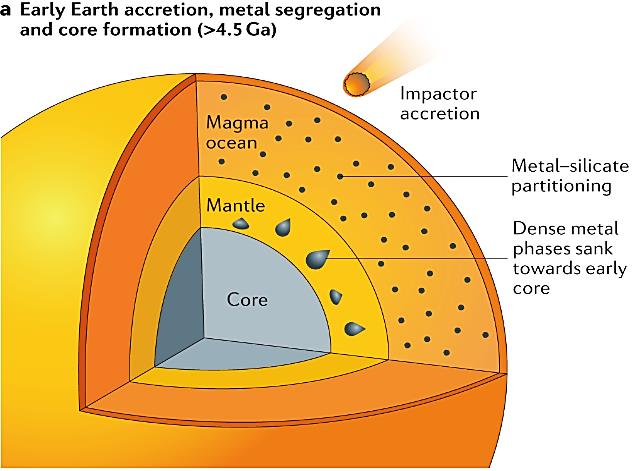
75 g of argon-40. After three half-lives (3.9 represent the age of Earth’s accretion, or core
billion years), we will have 12.5 g of potassium- formation, or of the material from which Earth
40 and 87.5 g of argon-40, and so on. formed. This dating is based on evidence from
-------------------------------------------------------------- radiometric age-dating of meteorite material
1193. Closure temperature is: and is consistent with the radiometric ages of
a) The temperature at which a rock system the oldest-known terrestrial material and lunar
ceases to interchange parent or daughter samples. The grains of zircon in Australian
product with surrounding material. sandstones are from the Jack Hills of Western
b) The temperature cutoff below which Australia, and they are the oldest-known
radiometric decay occurs at a fixed half-life minerals on Earth. They have been dated by
for each particular isotope. using uranium-lead isotopic analysis to be
c) The temperature below which each of the between 4.4 and 4.57 billion years old, which
geologic features that is a Principle of means they formed very soon after the Earth
Relative Age-Dating is stable and reliable. itself. However, these zircons are not
d) The temperature below which the Principle representative of the bulk composition of the
of Baked Contacts is valid. Earth, as they are derived from ancient granites
e) The temperature at which the parent isotope that have been eroded and transported by
N-40 ceases to decay to Ar-39. water. Therefore, they do not give a direct date
for the age of the Earth, but rather a lower limit
Feedback: Closure temperature is the for it. temperature at which a mineral or rock has
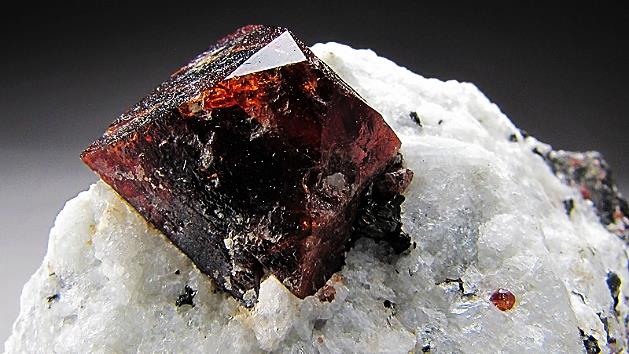
cooled to the point where it no longer allows the
exchange of parent or daughter isotopes with
its surroundings. This is a critical concept in
radiometric dating because it represents the
point at which the "clock" for radioactive decay
starts. Above the closure temperature, isotopic
exchange can occur, and below it, the isotopic
ratios remain fixed and can be used for dating
purposes.
--------------------------------------------------------------
1194. Eighteenth- and nineteenth-century --------------------------------------------------------------
scientists tried to determine Earth’s age by 1196. The largest subdivisions of time on the analyzing the thickness of sediments, the geologic column are eras, which are broken
rates of geologic processes, and Earth’s down into smaller units called eons, then temperature, but crucial flaws in these periods, then epochs. techniques gave incorrect ages. a) True
a) True b) False b) False
246
Feedback: The largest subdivisions of time on Collecting a rock sample: This involves the geologic column are eons, which are broken finding a suitable rock that contains the
down into smaller units called eras. Eras are minerals or fossils that are suitable for
further divided into periods, and periods are radiometric dating. For example, some
subdivided into epochs. So, the correct order is: minerals such as zircon, biotite, and muscovite
Eon > Era > Period > Epoch. are commonly used for uranium-lead dating,
-------------------------------------------------------------- while some fossils such as wood or bone are
1197. The oldest rocks found so far in our commonly used for carbon-14 dating. The rock
solar system are 4.57 billion year old sample should be large enough to provide

meteorites, leading scientists to conclude enough material for analysis, and should be
that this is the approximate age of Earth. free of contamination or alteration by
a) True weathering or metamorphism. b) False Separating the minerals of interest: This
involves crushing the rock sample and
Feedback: The statement is true. Scientists separating the minerals or fossils that contain
use the age of meteorites to estimate the age the isotopes of interest from the rest of the rock.
of the Earth because meteorites are thought to This can be done by using physical methods
have formed from the same cloud of gas and such as sieving, magnetic separation, or
dust that formed the Earth and the rest of the density separation, or by using chemical
solar system. Therefore, the oldest meteorites methods such as dissolution, precipitation, or
are thought to be approximately the same age extraction. The separated minerals or fossils
as the Earth. Other evidence that supports the are then cleaned and prepared for further
age of the Earth being 4.57 billion years old analysis. includes: Extracting the isotopes of interest: This The age of the oldest rocks found on Earth, involves isolating the parent and daughter
which are about 4.4 billion years old. isotopes from the minerals or fossils by using
The age of the Moon, which is thought to have various techniques such as mass spectrometry,
formed from a collision between the Earth and alpha spectrometry, beta counting, or liquid
another object about 4.5 billion years ago. scintillation counting. These techniques
The age of the oldest stars, which are about measure the mass, energy, or radiation emitted
13.8 billion years old. The Earth is thought to by the isotopes and separate them according to
have formed much later than the first stars. their atomic number or mass number. -------------------------------------------------------------- Measuring the concentrations and ratio of
1198. What are the four steps of radiometric the two isotopes: This involves calculating the
age dating a geologic material? amounts and ratios of the parent and daughter
a) Collecting a rock sample; separating the isotopes in the sample by using mathematical
minerals of interest; extracting the isotopes formulas or calibration curves. These values
of interest; measuring the concentrations are then used to determine the age of the
and ratio of the two isotopes. sample by using the radioactive decay law and
b) Collecting a rock sample; grinding the the half-life of the parent isotope. The age can
entire rock sample; extracting the isotopes be expressed as an absolute age in years, or
of interest; measuring the concentrations as a relative age in terms of geological periods
and ratio of the two isotopes. or events.
c) Collecting a rock sample; grinding the --------------------------------------------------------------
entire rock sample; mixing in a control 1199. Which of the following methods may be amount of the parent isotope; measuring used to age-date a sedimentary rock? the concentrations and ratio of the two a) Magnetostratigraphy. isotopes. b) Dendrochronology.
d) Collecting a rock sample; grinding the c) Seasonal changes in growth rings in
entire rock sample; measuring the travertine deposits and shelled organisms.
concentrations & ratio of the two isotopes; d) Radiometric decay. testing the half-life at the average e) None of the possible answers are correct. temperature and pressure at which the rock
has existed. Feedback: Sedimentary rocks are rocks that
e) All the possible steps are necessary. are formed by the accumulation and
cementation of sediments, such as sand, clay,
Feedback: Radiometric dating is a technique or organic matter. Sedimentary rocks can be
that uses the decay of radioactive isotopes to difficult to date directly using radiometric
measure the age of materials such as rocks or methods, which are based on the decay of
fossils. It relies on measuring the proportions of radioactive isotopes within minerals. This is
a parent isotope and its daughter product in a because sedimentary rocks are composed of
sample, and knowing the half-life of the parent. fragments of other rocks that have been
The four steps of radiometric age dating a eroded, transported, and deposited over time,
geologic material are: and may have lost or gained some isotopes
247
during these processes. Therefore, none of the Feedback: Lord Kelvin initially estimated the possible answers are correct, as they are not age of the Earth based on its cooling rate,
methods that can be used to age-date a assuming it was a solid body. However, the
sedimentary rock directly. However, some of discovery of radioactive decay in the early 20th
these methods can be used to date other century provided a more accurate method for
materials or events that are associated with dating the Earth's age. Radioactive decay
sedimentary rocks, such as fossils, volcanic releases heat, affecting the Earth's
ash layers, or glacial deposits. temperature, and this process was not
-------------------------------------------------------------- considered in Kelvin's calculations. The

1200. Which of the following statements is recognition of radioactive decay as a significant
FALSE? factor led to the realization that Kelvin's
a) Conglomerates containing land plants estimate was too young. This highlights the
probably formed in an alluvial fan or a importance of considering multiple factors in
stream channel. determining the Earth's age.
b) Marine limestone overlying alluvial-fan --------------------------------------------------------------
conglomerate indicates the sea level rose 1202. Which of the following is NOT useful in at that site. identifying mountain belts that have eroded
c) Limestone containing coral fossils probably away and therefore do not have obvious
developed in a shallow sea. topographic features?
d) Gneiss radiometrically dated as 4.4 billion a) Folds and faults.
years old is the oldest whole rock yet found. b) Unconformities.
e) Igneous and metamorphic rocks are c) Coesite, a variety of quartz.
commonly found in mountain belts. d) Foreland sedimentary basins.
e) Basement uplifts.
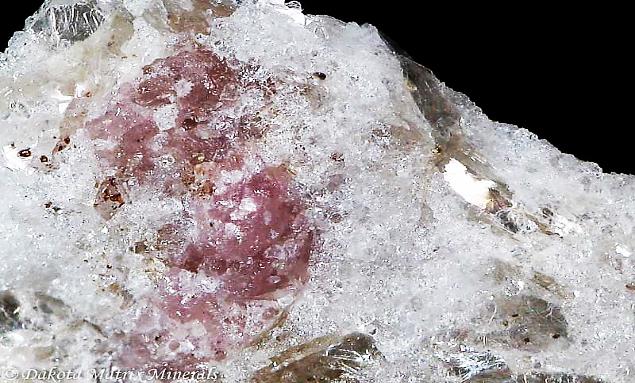
Feedback: The oldest whole rock yet found is not gneiss, but a type of rock called faux Feedback: Coesite is not useful in identifying amphibolite, which is an ancient volcanic mountain belts that have eroded away because
deposit. The faux amphibolite rocks are part of it is a high-pressure polymorph of quartz that
the Nuvvuagittuq greenstone belt in northern forms under very high pressure and moderate
Quebec, Canada, and they have been dated to temperature conditions, such as those
be between 3.8 and 4.28 billion years old. produced by meteorite impacts or deep
Gneiss is a type of metamorphic rock that forms subduction. Coesite is not related to mountain
from the high-temperature and high-pressure building or erosion, and is usually found in very
alteration of other rocks, such as granite or small grains within other rocks. schist. Gneiss has a banded or foliated texture,
and is composed of minerals such as quartz,
feldspar, mica, and hornblende. The oldest
gneiss rocks found on Earth are from the
Acasta Gneiss in Canada’s Northwest Territories, and they are about 4.03 billion years
old. However, these gneiss rocks are not the
oldest whole rocks, but rather fragments of
older rocks that have been reworked by
metamorphism.
--------------------------------------------------------------
1201. How was Lord William Kelvin’s --------------------------------------------------------------
estimate of the age of Earth affected by the 1203. Identify the FALSE statement. There is
discovery of radioactive decay? very little rock record for Earth’s first 400
a) There was no affect upon his estimated age million years because:
of Earth. a) The surface was one vast ocean of hot
b) water. Scientists realized his estimated age was
too old. b) Intense meteorite bombardment may have
c) Scientists realized his estimated age was destroyed land surfaces & exposed rock.
too young because he had missed a c) Nearly all rock older than 3.6 Ga has been decimal place when using halflife in his destroyed by erosion or metamorphised.
calculation. d) Surface rock was so hot that the
d) Age-dating via radioactive decay eventually radiometric clock were not working to
showed that his estimated age of Earth was record time. almost accurate.
e) Feedback: This statement is not accurate. Scientists realized his estimated age was
too young because he had overestimated While the early Earth did experience extreme
how quickly Earth was cooling off. conditions, it wasn't a "vast ocean of hot water."
Instead, it had a dynamic environment with
volcanic activity, and the presence of water in
248
both liquid and vapor forms. The conditions pressures, high salinity, high acidity, and low
were harsh, with frequent volcanic eruptions, oxygen levels. They also had to find sources of
but it wasn't a uniform ocean of hot water. energy and carbon to sustain their metabolism
-------------------------------------------------------------- and growth. Oxygenated ocean water and
1204. Which geologic time interval saw the atmosphere didn’t exist when the earliest life
first continents, the first life, and possibly the forms began, and the ability of organisms to
first plates? extract energy from sunlight didn’t evolve until
a) Hadean later. b) Phanerozoic --------------------------------------------------------------

c) Proterozoic 1207. Which of the following is NOT one of d) Paleozoic the smaller continents formed by the break
e) Archean up of Pannotia?
a) Laurentia
Feedback: The Archean Eon is the second b) Siberia oldest of the four eons of Earth’s geologic time c) Laramidia scale, lasting from about 4.0 to 2.5 billion years d) Baltica ago. It is preceded by the Hadean Eon, which e) Gondwana is an informal interval that extends from about
4.6 to 4.0 billion years ago, and followed by the Feedback: Pannotia was a supercontinent that Proterozoic Eon, which lasts from about 2.5 to existed during the late Neoproterozoic era,
0.541 billion years ago. The Archean Eon saw about 600 million years ago. It formed when the
the first continents, the first life, and possibly the previous supercontinent Rodinia broke up and
first plates on Earth. reassembled, and it broke up again into smaller
-------------------------------------------------------------- continents that later formed the basis of the
1205. Which of the following has nothing to modern continents. The smaller continents that
do with fossils? formed by the break up of Pannotia were:
a) Stromatolites Laurentia, which included most of present-day b) Rodinia North America, Greenland, Scotland, and parts
c) Cyanobacteria of Ireland and Norway. d) Ediacaran fauna Siberia, which included most of present-day e) Conodonts Siberia and parts of Kazakhstan and Mongolia.
Baltica, which included most of present-day
Feedback: Rodinia is not a fossil, but a name northern Europe, such as Scandinavia, Finland,
given to a supercontinent that existed between Poland, Germany, and the Baltic states. about 1.2 and 0.75 billion years ago. It was Gondwana, which included most of present-composed of several landmasses that later day South America, Africa, India, Australia,
broke up and reassembled to form other Antarctica, Arabia, and parts of southern
supercontinents, such as Pannotia and Europe and Asia. Pangaea. --------------------------------------------------------------
-------------------------------------------------------------- 1208. Which of the following has nothing to 1206. Which of the following statements is do with the K-T (Cretaceous-Tertiary)
FALSE? The first life forms: boundary?
a) Occurred in oxygen-rich, shallow, warm a) Iridium.
ocean waters. b) Shocked quartz.
b) Were simple cells of bacteria and c) Chicxulub.
cyanobacteria (blue-green algae). d) Bolide (meteorite).
c) Lived in the Archean eon. e) Banded-iron formations. d) Date back to between 3.5 and 3.8 billion
years. Feedback: Banded-iron formations (BIFs) are
e) Were prokaryotic cells. associated with the oxygenation of Earth's
atmosphere, but this event occurred long
Feedback: The first life forms on Earth did not before the K-T (Cretaceous-Tertiary) boundary.
occur in oxygen-rich, shallow, warm ocean BIFs are sedimentary rocks that primarily
waters, but rather in oxygen-poor, deep, hot formed between 2.5 and 1.8 billion years ago
hydrothermal vents or in oxygen-poor, shallow, during the Archean and Proterozoic Eons.
acidic coastal waters. The first life forms on These formations are characterized by
Earth were simple cells of bacteria and alternating bands of iron-rich and silica-rich
cyanobacteria (blue-green algae) that lived in minerals, and they are significant in the
the Archean eon, between 3.5 and 3.8 billion geological record as indicators of past changes
years ago. These life forms were prokaryotic in Earth's atmospheric and oceanic conditions.
cells, which means they lacked a nucleus and Iridium: Iridium is indeed associated with other membrane-bound organelles. The first life extraterrestrial objects like meteorites. Elevated
forms on Earth had to cope with harsh iridium levels at the K-T (Cretaceous-Tertiary)
conditions, such as high temperatures, high boundary played a crucial role in supporting the
249
hypothesis that an asteroid impact was 1211. Identify the FALSE statement. Internal responsible for the mass extinction event. differentiation: Shocked quartz: This type of quartz is created a) Resulted in Earth’s having different by the immense pressure generated during materials at different depths within itself. impact events, making it an important indicator b) Began when Earth partially melted 4.5 Ga. of asteroid or meteorite impacts. It is indeed c) Involved heavy molten iron sinking to relevant to the study of the K-T boundary. Earth’s center. Chicxulub: The Chicxulub crater, located on d) "Stirred" Earth’s interior and hastened the Yucatán Peninsula in Mexico, is the impact Earth’s cooling. site associated with the asteroid or meteorite e) Happened before, or possibly impact that is believed to have caused the mass simultaneously with, Earth’s collision with a

extinction event at the K-T boundary. protoplanet. Bolide (meteorite): Bolides are indeed extraterrestrial bodies like meteorites. In the Feedback: Earth's internal differentiation, context of the K-T boundary, the impact of a which led to the formation of distinct layers
large bolide is thought to have led to the mass based on density, did not hasten Earth's
extinction. cooling. In fact, it had the opposite effect and
-------------------------------------------------------------- significantly slowed down Earth's cooling
1209. This common, cheap, and useful form process. This is because the separation of
of limestone consists of microscopic marine materials into different layers created insulation
algae shells and shrimp feces. Thick and reduced the rate at which heat could
Cretaceous-age deposits of it are common escape from the planet's interior. in Europe.
a) Sand
b) Iron
c) Siliceous silt
d) Chalk
e) Clay
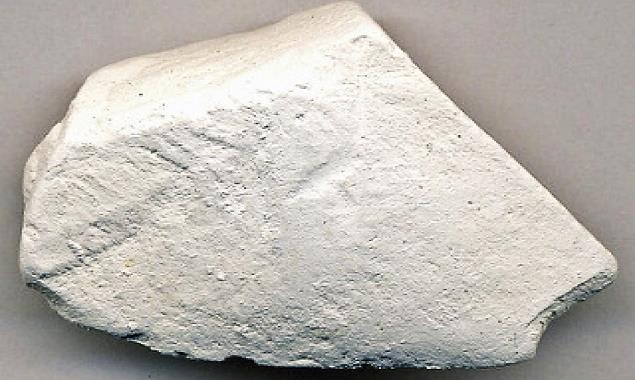
Feedback: Chalk is a type of limestone primarily composed of microscopic marine
algae shells and other organic debris. It is a
common rock found in Cretaceous-age
deposits in various parts of the world, including
Europe.
--------------------------------------------------------------
1212. Which of the following statements is
FALSE?
a) Human ancestors first appeared in the late
Mesozoic.
b) The human genus Homo first appeared
more than 2 million years ago.
c) Fossils of modern humans (Homo sapiens)
date back to about 150,000 years ago.
-------------------------------------------------------------- d) The Cenozoic is known as the Age of
1210. Mammals. Which of the following are fossil plants? a) e) Huge mammals such as giant beavers, Trilobites.
b) bears, sloths, and mammoths lived during Gymnosperms and angiosperms.
c) the Cenozoic but are now extinct. Graptolites and archeocyathids.
d) Pterosaurs and plesiosaurs.
e) Feedback: Human ancestors, specifically the Bolides.
first primates, appeared in the Paleocene,
Feedback: which is part of the early Cenozoic era, not the Gymnosperms and angiosperms
are both types of fossil plants. Gymnosperms late Mesozoic. The Cenozoic era is often
include conifers, cycads, and ginkgoes, while referred to as the Age of Mammals and is when
angiosperms are flowering plants. These plant the evolution of early primates and, eventually,
fossils provide important insights into the the human genus Homo took place. history of plant evolution and Earth's past --------------------------------------------------------------
environments. 1213. The Great Oxygenation Event, which
Trilobites are Paleozoic animals; pterosaurs added abundant oxygen to the atmosphere
and plesiosaurs are Mesozoic reptiles; bolides beginning about 2.4 Ga, was due to the: are extraterrestrial bodies like meteorites. a) Greater abundance and variety of Edicaran
-------------------------------------------------------------- fauna.
250
b) Evolution of photosynthetic organisms. of oxygen-producing photosynthetic organisms
c) Evolution of multicellular organisms. during the Proterozoic and the Great
d) Appearance of photosynthetic plants on Oxygenation Event around 2.4 billion years
land. ago. Prior to that event, oxygen levels in Earth's
e) None of the possible answers is correct. atmosphere were minimal or virtually
nonexistent.
Feedback: Photosynthetic cyanobacteria, also --------------------------------------------------------------
known as blue-green algae, were some of the 1215. Identify the FALSE statement. earliest life forms capable of photosynthesis. a) During the Cenozoic, North and South They played a crucial role in releasing oxygen America became joined by the isthmus of

as a byproduct of photosynthesis, gradually Panama, creating the eventual need for a
leading to the oxygenation of Earth's canal. atmosphere during the Great Oxygenation b) Organisms with oxygen-based metabolism Event. The Great Oxygenation Event (GOE), produce energy efficiently, so they can
also known as the Oxygen Catastrophe or evolve larger bodies than nonoxygenated
Oxygen Revolution, occurred approximately organisms can. 2.4 billion years ago during the Proterozoic c) When climate warms, sea level goes down Eon. This event marked a significant turning due to increased evaporation. point in Earth's history and had a profound d) Shells on eggs keep them from drying out impact on the planet's atmosphere, biology, so the eggs and the mother aren’t tied to a and geology. Prior to the GOE, Earth's water environment. atmosphere had little to no oxygen (O2). The e) Humans shouldn’t call dinosaurs failures; early atmosphere was likely composed of they existed for more than 150 million
gases such as methane (CH4), carbon dioxide years, while our genus, Homo, has been
(CO 2), water vapor (H2O), and nitrogen (N2). around only 2.4 million years. However, the emergence and proliferation of
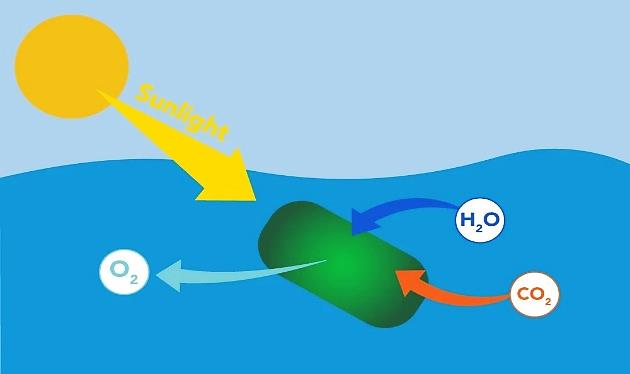
photosynthetic cyanobacteria fundamentally Feedback: When climate warms, sea level changed the composition of the atmosphere. actually goes up, not down, due to two main
Photosynthetic cyanobacteria were among the factors: thermal expansion and ice melt.
first organisms capable of harnessing sunlight Thermal expansion is the increase in volume of
to convert carbon dioxide and water into seawater as it heats up. Ice melt is the addition
organic matter while releasing oxygen as a of freshwater to the oceans from melting
byproduct. This process, known as oxygenic glaciers, ice sheets, and ice caps on land. As
photosynthesis, gradually increased the the global temperature rises, more ice on land
concentration of oxygen in the atmosphere over melts and flows into the sea, raising the water
millions of years. level. Evaporation is the process of liquid water
turning into water vapor and leaving the surface
of the ocean. Evaporation does not affect sea
level significantly because most of the water
vapor eventually returns to the ocean as
precipitation (rain or snow). The net change in
water volume due to evaporation and
precipitation is relatively small compared to
thermal expansion and ice melt.
--------------------------------------------------------------
1216. Identify the FALSE statement. a) Outgassing of mantle rock probably
a) component of Earth’s Hadean atmosphere? c) There was intense meteorite bombardment Hydrogen of Earth about 4 Ga that destroyed Earth’s b) Oxygen earliest crustal rock. c) Methane d) Eighty percent of Earth’s continental crust d) Ammonia existed by the end of the Hadean eon. e) Nitrogen e) 1214. b) The Moon is now almost 20 times as far Which of the following was NOT a from Earth as it originally was. -------------------------------------------------------------- created Earth’s early Hadean atmosphere.
Geologists generally agree that plate
Feedback: tectonics activity began in the Archean During the Hadean Eon, Earth's Eon.
early atmosphere was primarily composed of
gases such as hydrogen, methane, ammonia, Feedback: This statement is not accurate. and water vapor. It lacked significant amounts During the Hadean eon, Earth's surface was of oxygen. The presence of free oxygen in the dominated by intense volcanic activity, and the atmosphere is a relatively recent development formation of continental crust as we know it in Earth's history and is associated with the rise today had not yet occurred. Most of Earth's
251
continental crust formed during the Archean of supercontinents that existed at different
eon, not the Hadean eon. times in Earth’s history.
--------------------------------------------------------------
1219. Identify the FALSE statement. a) Dinosaurs are thought to have possibly
been warm-blooded reptiles.
b) A 1950s experiment with methane,
ammonia, and electric sparks suggested
that life could have originated in warm

surface waters, but scientists now believe
the atmosphere lacked sufficient methane
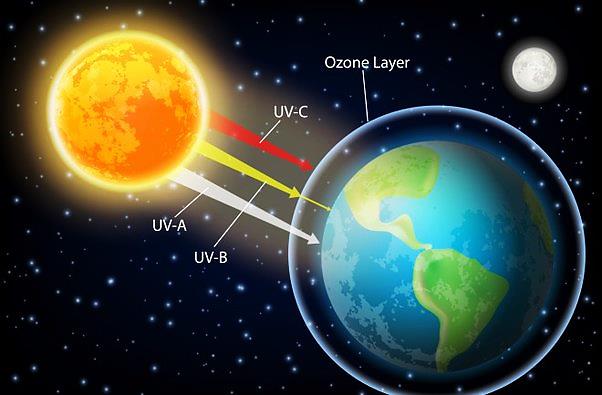
1217. Identify the FALSE statement. During from harmful ultraviolet rays. the Pleistocene Ice Age: d) Multiple orogenies over time create great a) Continental glaciers in the Northern mountain ranges; the Taconic, Acadian, Hemisphere advanced and retreated at and Alleghenian orogenies all produced the -------------------------------------------------------------- c) Atmospheric oxygen and nitrogen react to form nitrogen oxide, which protects land life and ammonia for this to have occurred.
b) Appalachians. least twenty times.
Sea level fell because water was tied up as
c) an interglacial time interval that began The continental shelf west of Alaska was 11,000 years ago. ice. e) We currently live in the Holocene, which is
exposed, and allowed migration of animals
d) Feedback: Atmospheric oxygen and nitrogen and people from Asia to North America.
joining Asia and North America and a do not react to form nitrogen oxide (NO The Bering Strait served as a land bridge
partial land bridge connected Asia to way that directly protects land life from harmful ultraviolet rays. Nitrogen oxides are produced x ) in a
e) through various chemical processes, including Australia.
America. combustion and lightning, but they primarily Continental glaciers covered all of North
contribute to air pollution and do not serve as a
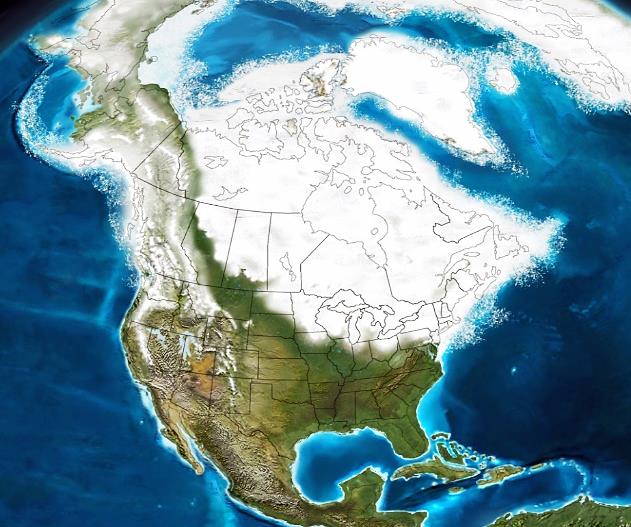
Feedback: direct protective mechanism against UV During the Pleistocene Ice Age, radiation. The Earth's atmosphere provides continental glaciers did not cover all of North protection from UV rays through the presence America. While there were significant ice of the ozone layer. Oxygen (O sheets covering parts of North America, 2 ) can be converted to ozone (O particularly in the northern regions, they did not 3 ) in the upper atmosphere, which absorbs and scatters UV extend to cover the entire continent. radiation.
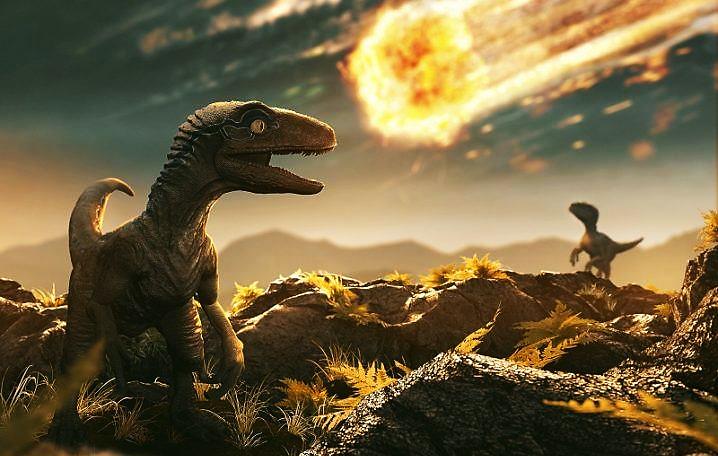
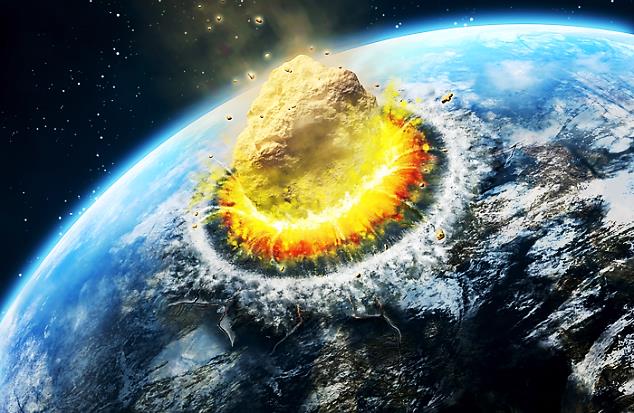
1218. Rodinia, Pannotia, Grenvillia, and a) Generated 2-km-high tsunamis. Pangaea are all names of supercontinents. b) Generated a hot-air blast and blaze that a) True caused worldwide forest fires. b) False c) Ejected debris into the atmosphere that caused months of winter-like night -------------------------------------------------------------- 1220. Geologists believe that the impact of a 13km wide meteorite 65 million years ago: --------------------------------------------------------------
Feedback: The Grenville is an orogeny not conditions that halted photosynthesis. supercontinent. It is a geological event that d) Ejected chemicals into the atmosphere that occurred during the Precambrian eon, produced acid rain. specifically during the Proterozoic era. It played e) All the possible answers are correct. a significant role in the formation of mountain ranges and the assembly of the supercontinent Feedback: Geologists believe that the impact Rodinia. The other three names are all names of a 13km wide meteorite 65 million years ago,
252
often associated with the Chicxulub crater in the 1222. Gymnosperms (naked-seed plants like Yucatán Peninsula, resulted in various conifers) were widespread in the late
catastrophic effects, including generated 2km Paleozoic and angiosperms (flowering
high tsunamis, generated a hot-air blast and plants) gained dominance in the late
blaze that caused worldwide forest fires, Mesozoic. ejected debris into the atmosphere that caused a) True months of winter-like night conditions that b) False halted photosynthesis, and ejected chemicals
into the atmosphere that produced acid rain. Feedback: Gymnosperms are seed plants that These combined effects contributed to the do not produce flowers or fruits, such as

mass extinction event known as the conifers, cycads, ginkgoes, and gnetophytes.
Cretaceous-Paleogene (K-T) extinction, which Angiosperms are seed plants that produce
had a profound impact on life on Earth, flowers and fruits, such as magnolias, roses,
including the extinction of the dinosaurs. apples, and grasses. Gymnosperms were
widespread in the late Paleozoic Era, which
lasted from about 541 to 252 million years ago.
Angiosperms gained dominance in the late
Mesozoic Era, which lasted from about 252 to
66 million years ago. Angiosperms diversified
rapidly and adapted to various habitats,
displacing many gymnosperms and becoming
the most diverse and abundant group of plants
on Earth.
--------------------------------------------------------------
-------------------------------------------------------------- the middle Paleozoic. True 1223. The first feathered birds appeared in 1221. a) Banded-iron formations ( BIFs ) are
forming today along mid-ocean ridges. b) False
a) True
b) Feedback: The first feathered bird, False
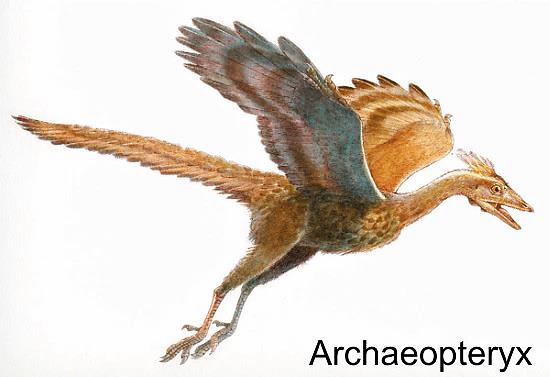
Archaeopteryx, appeared much later in the
Feedback: Jurassic Period of the Mesozoic Era, not in the Banded-iron formations ( BIFs ) are
not forming today along mid-ocean ridges. They middle Paleozoic. Archaeopteryx, one of the
are primarily associated with ancient geological earliest known feathered birds, existed during
periods, especially during the Archean and the Late Jurassic Period of the Mesozoic Era,
Proterozoic eons. These formations were around 150 million years ago. It is considered
created under specific conditions that were one of the transitional forms between feathered
prevalent in the past but are not commonly dinosaurs and modern birds. found in the modern oceans. Banded-iron
formations ( BIFs) are distinctive units of sedimentary rock consisting of alternating
layers of iron oxides and iron-poor chert. They
can be up to several hundred meters in
thickness and extend laterally for several
hundred kilometers. They are thought to record
the oxygenation of the Earth’s oceans by
photosynthetic cyanobacteria. The oxygen
combined with dissolved iron in seawater to
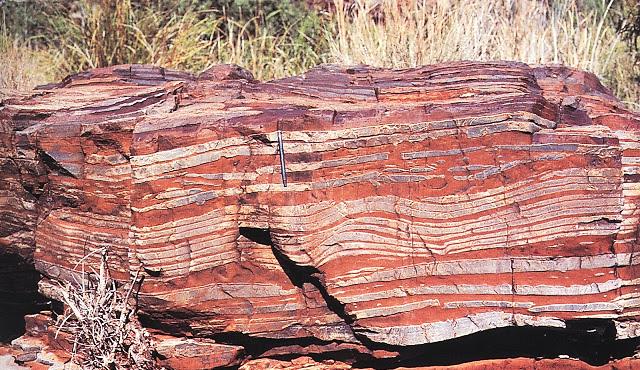
form insoluble iron oxides, which precipitated -------------------------------------------------------------- out, forming a thin layer on the ocean floor. 1224. Theoretically, " snowball Earth " of the Each band is similar to a varve, resulting from late Proterozoic Eon would have stayed ice- cyclic variations in oxygen production. covered forever were it not for greenhouse warming caused by carbon monoxide from volcanoes. a) True b) False
Feedback: The greenhouse warming that could have ended the snowball Earth was
caused by carbon dioxide (CO2), not carbon monoxide (CO), from volcanoes. Carbon
monoxide is a minor volcanic gas that does not
-------------------------------------------------------------- have a significant greenhouse effect, while
253
carbon dioxide is a major volcanic gas that can and move on land, but still depended on water
trap heat in the atmosphere. According to the for reproduction. Amphibians diversified and
snowball Earth hypothesis, the planet’s surface became abundant in the Carboniferous and
became entirely or nearly entirely frozen during Permian periods, but declined in diversity and
one or more of Earth’s icehouse climates, the abundance during the Mesozoic era due to
most recent of which occurred before 650 competition from reptiles and other vertebrates.
million years ago during the Cryogenian period. --------------------------------------------------------------
One of the challenges of this hypothesis is to 1226. The Paleozoic Era, like the Mesozoic explain how the Earth could escape from a Era, may have ended with mass extinction

frozen state. One possible solution involves the of life forms due to a huge meteorite impact.
outgassing of massive amounts of carbon a) True dioxide by volcanoes, which could have b) False warmed the planetary surface rapidly by
enhancing the planet’s so-called greenhouse Feedback: The Paleozoic Era ended with the effect, especially given that major carbon Permian–Triassic extinction event, which is dioxide sinks (rock weathering and thought to have been caused by intense
photosynthesis) would have been dampened volcanic activity. There is no evidence of a
by a frozen Earth. major meteorite impact during the Permian–
-------------------------------------------------------------- Triassic extinction event. The Mesozoic Era
1225. It wasn’t until the late Mesozoic that ended with the Cretaceous–Paleogene
vascular plants with woody tissues, seeds, extinction event, which is thought to have been
and veins shared the land with spiders, caused by the Chicxulub impact, a giant
scorpions, insects, and crustaceans, while asteroid or comet that struck Earth about 66
jawed fish cruised the oceans and the first million years ago. amphibians left water to visit land.
a) True
b) False
Feedback: Vascular plants with woody tissues, seeds, and veins existed long before the late
Mesozoic. The first vascular plants appeared in
the Silurian period, about 420 million years ago.
The first seed plants evolved in the Devonian
period, about 360 million years ago. The first
woody plants were also present in the Devonian
period, such as the progymnosperm
Archaeopteris. The first veins, or vascular --------------------------------------------------------------
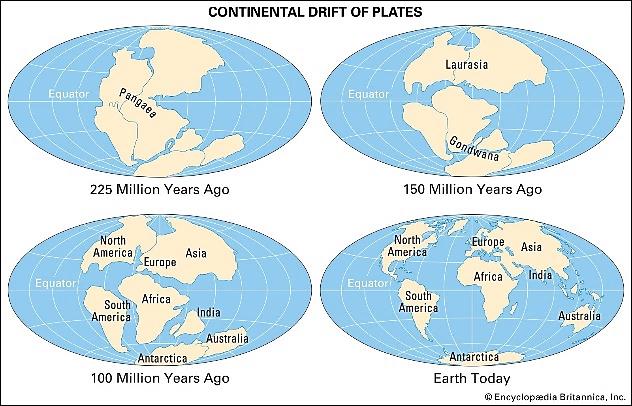
bundles, are found in the stems and leaves of 1227. The continents that comprised
vascular plants. Pangaea came together in the early
Spiders, scorpions, insects, and crustaceans Paleozoic but began to split apart soon
are all arthropods, a diverse group of animals afterward, during the late Paleozoic. with jointed appendages and exoskeletons. a) True The first arthropods appeared in the Cambrian b) False period, about 540 million years ago. The first
spiders and scorpions evolved in the Silurian Feedback: The continents that comprised
period, about 430 million years ago. The first Pangaea came together during the late
insects appeared in the Devonian period, about Paleozoic, particularly during the Carboniferous
400 million years ago. The first crustaceans and Permian periods. Pangaea began to break
also emerged in the Cambrian period, and apart during the Mesozoic Era, not the late
diversified into many forms in the Ordovician Paleozoic. and Silurian periods.
Jawed fish are vertebrates that have jaws and
paired fins. They belong to the group
Gnathostomata, which evolved from jawless
fish in the Silurian period, about 440 million
years ago. Jawed fish include cartilaginous fish
(such as sharks and rays) and bony fish (such
as ray-finned fish and lobe-finned fish). Jawed
fish dominated the oceans throughout the
Paleozoic and Mesozoic eras.
The first amphibians were tetrapods, or four-
limbed vertebrates, that evolved from lobe-
finned fish in the Devonian period, about 370
million years ago. They were able to breathe air --------------------------------------------------------------
254
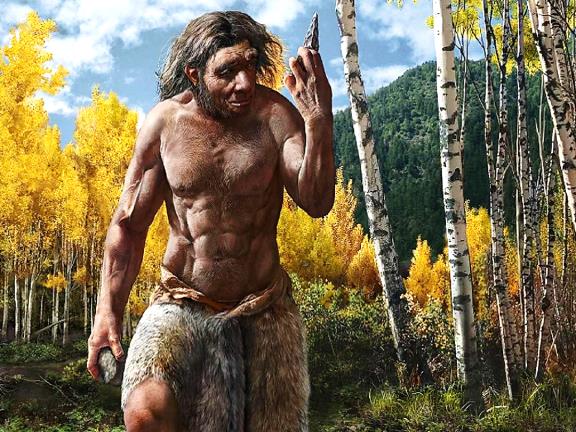
1228. For improved scientific accuracy, the to around 40,000 years ago, while the last
movie Jurassic Park should be renamed known evidence of Denisovans dates to around
"Cretaceous Park" because its largest 50,000 years ago. Therefore, Homo sapiens
dinosaur "villain," the Tyrannosaurus rex, coexisted with these other humanoid species
lived in the Cretaceous period. for at least 150,000 years, and possibly longer.
a) True
b) False
Feedback: The Tyrannosaurus rex lived in the Late Cretaceous period, which was about 68 to

66 million years ago. The Jurassic period was
earlier in the Mesozoic Era, and it ended about
145 million years ago. Therefore, the
Tyrannosaurus rex could not have lived in the
Jurassic period. In addition to the
Tyrannosaurus rex, there are a number of other
dinosaurs in the movie Jurassic Park that lived
in the Cretaceous period, such as the
The only dinosaurs in the movie that lived in the Triceratops, Velociraptor, and Brachiosaurus. --------------------------------------------------------------
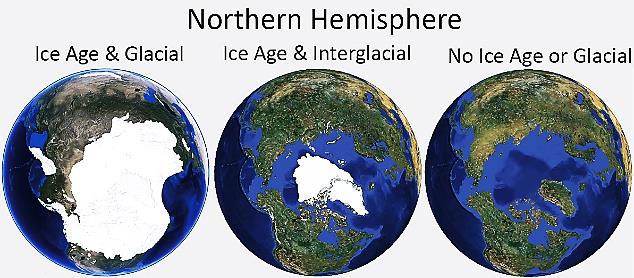
a) compression; radioactive elements didn’t The Earth has experienced ice ages throughout its history. The first known ice yet exist to contribute heat energy. age occurred during the Proterozoic Eon, about True 2.4 billion years ago. There have been several b) False other ice ages since then, including the Cryogenian ice age (about 720 to 635 million Feedback: Radioactive elements were present years ago) and the Pleistocene ice age (about on Earth during the Hadean Eon. In fact, 2.58 million years ago to 11,700 years ago). radioactive elements played a major role in The Cenozoic Era is the current era, and it heating the Earth during the Hadean. began about 66 million years ago. So, the Earth -------------------------------------------------------------- True b) False 1229. During the Hadean, Earth kept getting hotter due to meteorite impact and Feedback: Compsognathus. ages until the Cenozoic Era. a) Jurassic period are the Dilophosaurus and the 1231. The Earth did not experience its first ice
Radioactive elements decay over time, did experience ice ages before the Cenozoic releasing heat energy in the process. This heat Era. energy helped to melt the Earth's interior and create the Earth's core. In addition to radioactive elements, meteorite impacts and
compression also contributed to the Earth's
heat during the Hadean. However, radioactive
elements were a major source of heat during
this time period.
1230. Homo sapiens (modern humans) -------------------------------------------------------------- coexisted with other humanoid species --------------------------------------------------------------
a) 500,000 to 50,000 years ago. a) Slash-and-burn agricultural practices of b) 350,000 to 35,000 years ago. early humans. c) 2.5 million to approximately 11,000 years b) The closing of a sea-gap between North ago. America and South America. d) when to when? contributed to the onset of the modern ice ages? (Neanderthals and Dinisovans) from about 1232. Which of the following may have
e) 25,000 to approximately 11,000 years ago. A Miocene-Pliocene c) –boundary meteorite 200,000 to 25,000 years. impact. d) Increased thermohaline circulation in the Feedback: This is because Homo sapiens, or world’s oceans . modern humans, evolved in Africa around e) The uplift of the Sierra Nevada range, in 200,000 years ago and began to disperse out western North America. of Africa around 60,000 years ago. During their migration, they encountered and interbred with Feedback: The onset of the modern ice ages, other types of humans, such as Neanderthals or the Late Cenozoic Ice Age, was influenced and Denisovans, who had already occupied by several factors, such as changes in the Eurasia for hundreds of thousands of years. Earth’s orbit, atmospheric composition, plate The last known evidence of Neanderthals dates
255
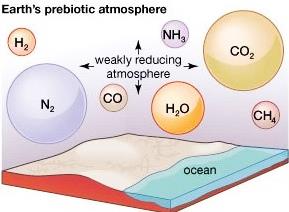
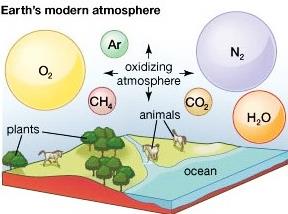
tectonics, ocean currents, and volcanic activity. dissolved into these newly formed oceans. This
The closing of a sea-gap between North process played a crucial role in shaping Earth's
America and South America, also known as the atmosphere and creating the conditions for the
formation of the Isthmus of Panama, was one development of life as we know it today. The
of the major events that affected the global removal of significant amounts of water vapor
climate and contributed to the glaciation of and carbon dioxide contributed to the
Antarctica and the Northern Hemisphere. The dominance of nitrogen in our current
isthmus formed around 3 million years ago and atmosphere. The Great Oxygenation Event,
altered the ocean circulation patterns, leading which occurred much later, introduced oxygen

to a cooler and drier climate in many regions. as a significant component of the atmosphere
-------------------------------------------------------------- and had a profound impact on the evolution of
1233. The modern Alpine-Himalayan life on Earth.
mountain chain can be attributed to all of the
following except:
a) Northward drift of parts of former
Gondwanaland.
b) Continent-continent convergence.
c) Buoyancy of continental crust.
d) Plate tectonic processes.
e) The Grenville Orogeny.
Feedback: The modern Alpine-Himalayan mountain chain is a result of the collision of the
African, Arabian, and Indian plates with the
Eurasian plate over the past 100 million years.
This collision is driven by plate tectonic
processes, which involve the movement and
interaction of large segments of the Earth’s crust and upper mantle. The collision also
involves continent-continent convergence,
which means that two continental plates are
pushing against each other, creating high
mountains and deep crustal roots. The
buoyancy of continental crust, which is less
dense than oceanic crust and mantle material,
prevents it from being subducted into the
mantle, and instead causes it to deform and
uplift. The Grenville Orogeny was a much older --------------------------------------------------------------
event that occurred between 1.3 and 1 billion 1235. Approximately what percentages of years ago, during the Mesoproterozoic era. It plankton species and plant species,
was associated with the assembly of the respectively, died off at the time of the
supercontinent Rodinia, which later broke apart Cretaceous-Tertiary impact event? to form the precursors of the modern a) Approximately 95 percent of plankton continents. The Grenville Orogeny affected a species and 80 percent of plant species.
large portion of North America, as well as parts b) Approximately 99 percent of plankton of Europe and Africa, but it had no direct species and 85 percent of plant species.
connection to the formation of the Alpine- c) Approximately 95 percent of plankton Himalayan mountain chain. species and 80 percent of plant species.
-------------------------------------------------------------- d) Approximately 80 percent of plankton 1234. Prior to the formation of oceans of species and 50 percent of plant species.
liquid water, Earth’s atmosphere consisted e) Approximately 50 percent of plankton primarily of: species and 40 percent of plant species.
a) H2O (water, but primarily in steam [water
vapor] form) and carbon dioxide. Feedback: This is because the Cretaceous-
b) Nitrogen and carbon dioxide. Tertiary impact event, also known as the
c) Nitrogen and methane. Cretaceous-Paleogene extinction event, was a
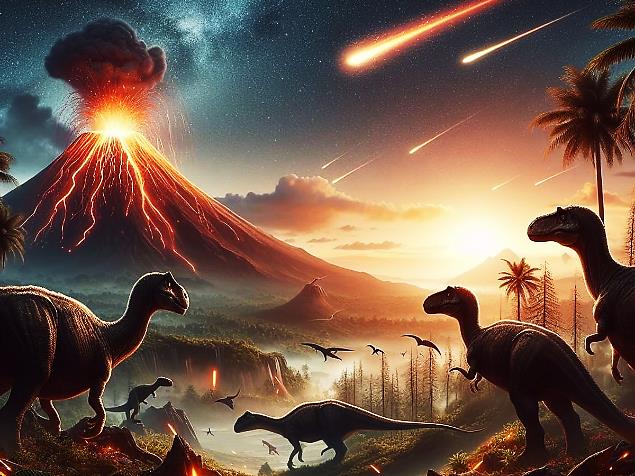
d) Nitrogen and oxygen. sudden mass extinction of three-quarters of the
e) Carbon dioxide, methane, and hydrogen plant and animal species on Earth,
sulfide. approximately 66 million years ago. The event
was caused by the impact of a massive asteroid
Feedback: The early Earth's atmosphere was that created a global environmental
composed primarily of water vapor and carbon catastrophe, mainly through blocking sunlight
dioxide. As the planet cooled, water vapor and halting photosynthesis. condensed to form oceans, and carbon dioxide
256
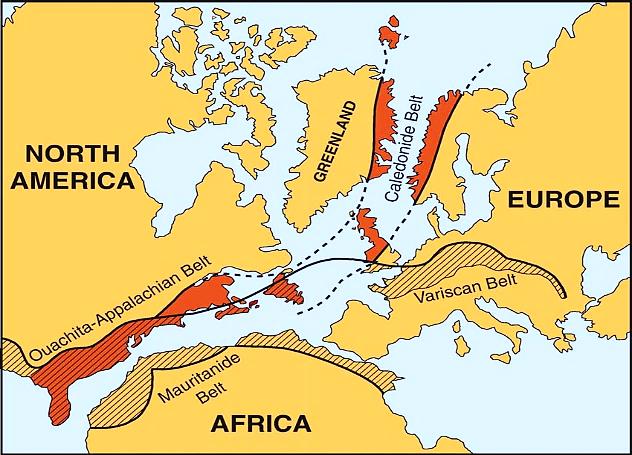
The impact event had a devastating effect on a) The Arkanasian Orogeny. marine life, especially plankton, which are the b) The Appalachian Orogeny. base of the ocean food chain. Plankton include c) The Grenville Orogency. microscopic algae (phytoplankton) and animals d) The Hercynian Orogeny. (zooplankton) that float in the water. The impact e) The Alleghanian Orogeny. event reduced the amount of light and nutrients
available for plankton, causing a massive die- Feedback: The evidence of the Alleghanian off of about 95 percent of plankton species. Orogeny can be found in both the Ouachita and
The impact event also affected terrestrial life, Appalachian Mountains. This orogeny was a

especially plants, which rely on photosynthesis significant tectonic event during the late
to produce energy and oxygen. The impact Paleozoic era, and it resulted in the formation
event created dust, smoke, and ash that of these mountain ranges. blocked sunlight and reduced global
temperatures. This caused a widespread loss
of vegetation and a decline in plant diversity.
About 80 percent of plant species went extinct,
especially those that were adapted to warm and
humid climates.
--------------------------------------------------------------
1238. What is an epicontinental sea? a) A long, narrow sea near a continent. b) A sea of intermediate salinity, less saline
1236. A shallow sea found along the edge of a Which of the following was NOT a continent. characteristic of the Cretaceous period? e) A sea into which clastic-dominated a) Eruption of huge basalt plateaus at several sediments are being deposited. -------------------------------------------------------------- c) A shallow sea present on continental crust. d) than normal ocean water.
c) ocean ridges. sea that covers part of a continent. It is also known as an epeiric sea. It is usually connected Expansion of Earth due to the increased to an ocean by a river, strait or “arm of the sea”. rate of crustal formation. An epicontinental sea is different from a bay, d) Unusually high sea levels. which is directly connected to the ocean. An b) Unusually rapid generation of new oceanic Feedback: An epicontinental sea is a shallow crust and high spreading rates at mid-places on the ocean floor.
e) Unusually warm average global climate. epicontinental sea may form when the sea level
Feedback: rises or the land sinks due to tectonic Characteristics of the Cretaceous movements. An example of an epicontinental period included the eruption of large basalt sea is the Baltic Sea, which lies in the middle of plateaus on the ocean floor, unusually rapid a shield and was the centre of an ice sheet generation of new oceanic crust with high during the Quaternary glaciations. spreading rates at mid-ocean ridges, and -------------------------------------------------------------- unusually high sea levels. These factors 1239. Which statement about what are now contributed to the warm, greenhouse climate of the West Coast and the East Coast of North the Cretaceous period. The expansion of Earth America is true , with respect to the early- due to increased crustal formation is not a middle Paleozoic Era? characteristic of the Cretaceous period. While a) Both the West Coast and the East Coast the other options describe conditions and were experiencing orogenyrilobites. features of the Cretaceous period, the idea of b) Both the West Coast and the East Coast Earth's expansion is not supported by scientific were passive margins. evidence related to this specific geologic time c) The West Coast was a passive margin, and period. the East Coast was experiencing orogeny. -------------------------------------------------------------- d) The West Coast was experiencing 1237. Evidence of which orogeny can be orogeny, and the East Coast was a passive found in both the Ouachita and Appalachian margin. Mountains?
257
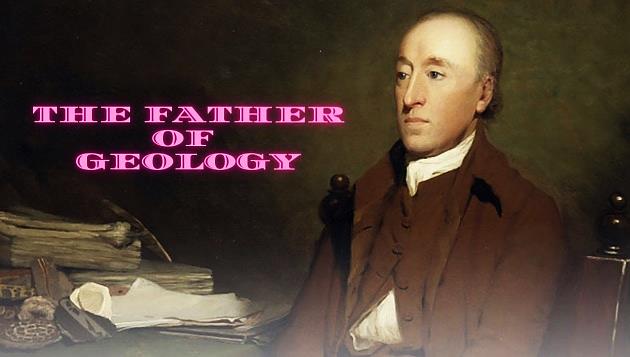
e) The West Coast was experiencing uniformitarianism, which suggests that the
orogeny, and the East Coast was subsiding processes we observe today on Earth have
regionally. been operating in a similar manner throughout
geological history. Hutton's ideas laid the
Feedback: During the early-middle Paleozoic foundation for the development of modern
Era, the West Coast of North America was a geological principles and the understanding of
passive margin. A passive margin is a Earth's long history. His work, including his
geological term for a continental margin that is book "Theory of the Earth," significantly
not an active plate boundary. It typically contributed to the field of geology and our

experiences relatively little tectonic activity, understanding of Earth's processes and history.
such as mountain building or major
earthquakes. In contrast, the East Coast of
North America was experiencing orogeny
during this time. Orogeny refers to the process
of mountain building, typically associated with
the collision of tectonic plates. The collision of
continents and the resulting compression of
rocks can lead to the formation of mountain
ranges, and this was happening along the
eastern margin of North America during the
1240. 1242. In which type of radioactive decay is a Banded-iron formations contain layers fast-moving electron emitted from a neutron of what rock or mineral, in between the in the nucleus? layers of iron oxides? -------------------------------------------------------------- -------------------------------------------------------------- early-middle Paleozoic Era.
a) a) Alpha decay Calcite or limestone. b) Beta decay b) Dolomite or limestone. c) Electron capture c) Any carbonate minerals or marble. d) Fission track d) Halite or other evaporite rock or minerals. e) None of the previous answers. e) Quartz or chert.
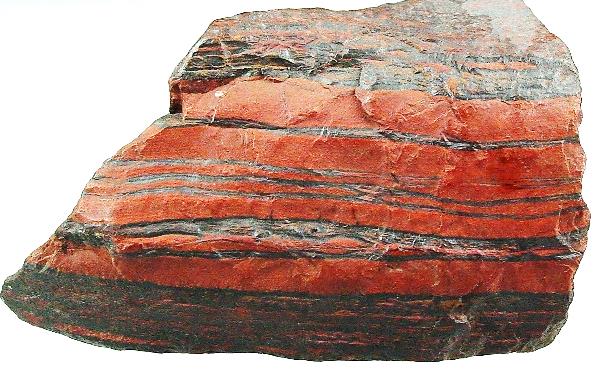
Feedback: Feedback: In beta decay, a neutron in the Banded iron formation consists of nucleus is transformed into a proton, and a fast- layers of iron oxides (typically either magnetite moving electron (beta particle) is emitted. This or hematite) separated by layers of chert (silica- process helps to maintain the balance of rich sedimentary rock). Chert is a fine-grained protons and neutrons in the nucleus. The other sedimentary rock composed of microcrystalline options mentioned represent different types of or cryptocrystalline quartz. It may also contain radioactive decay, but only beta decay involves small amounts of other minerals such as the emission of a fast-moving electron. calcite, dolomite, or iron oxides. Chert is often
red in color due to the presence of hematite.
-------------------------------------------------------------- --------------------------------------------------------------
1241. Who is generally considered the 1243. Because of the heat and pressure
founder of modern geology? exerted during metamorphism, daughter
a) Werner atoms were driven out of a mineral being
b) Lyell analyzed for a radiometric date. The date
c) Steno obtained from this mineral will, therefore, be
d) Cuvier _________ its actual age of formation. e) Hutton a) Younger than.
b) Older than.
Feedback: James Hutton, an 18th-century c) The same as. Scottish geologist, is often regarded as the d) It can’t be determined. founder of modern geology. He is best known e) None of the previous answers. for his pioneering work on the concept of
258
Feedback: Radiometric dating assumes that 1246. What is being measured in radiometric the system is closed, meaning that no parent or dating is: daughter atoms are added or removed from the a) The time when a radioactive isotope sample. If this assumption is violated, then the formed. date obtained will be inaccurate. For example, b) The time of crystallization of a mineral if some of the daughter atoms are driven out of containing an isotope. the sample by heat and pressure during c) The amount of the parent isotope only. metamorphism, then the ratio of parent to d) When the dated mineral became part of a daughter atoms will be higher than it should be, sedimentary rock. and the date will appear older than the actual e) When the stable daughter isotope was age of formation. Conversely, if some of the formed. parent atoms are lost from the sample, then the

ratio of parent to daughter atoms will be lower Feedback: Radiometric dating measures the than it should be, and the date will appear relative proportions of a radioactive parent
younger than the actual age of formation. It's isotope and its stable daughter product in a
important to note that radiometric dating is a sample, and uses the known rate of decay of
powerful tool when applied appropriately and the parent to estimate the age of the sample.
under the right conditions, but the potential for The parent isotope must have been
sample contamination or alteration must always incorporated into the sample at the time of its
be considered when interpreting the results. formation, which is usually the time of
-------------------------------------------------------------- crystallization of a mineral. The other options
1244. If a flake of biotite within a sedimentary are incorrect because they do not reflect the
rock (such as a sandstone) is radiometrically actual process of radiometric dating. dated, the date obtained indicates when: --------------------------------------------------------------
a) The biotite crystal formed. 1247. The idea that the facies seen in a b) The sedimentary rock formed. vertical sequence replace one another
c) The parent radioactive isotope formed. laterally is: d) The daughter radioactive isotope(s) a) Smith’s dictum.
formed. b) Walter’s law.
e) None of the previous answers. c) Steno’s principle.
d) Gressly’s model.
Feedback: Biotite is a mineral that can be used e) Darwin’s theory.
dating technique that measures the ratio of 87Rb Feedback: Walther’s law, named after the 87 to for rubidium-strontium dating, a radiometric Sr in a sample. The decay of 87Rb to 87Sr geologist Johannes Walther (1860-1937),
occurs at a constant rate, and the initial ratio of states that the vertical succession of facies
these isotopes depends on the source of the reflects lateral changes in environment. This
magma from which the biotite crystallized. means that the different types of sedimentary
Therefore, by measuring the current ratio of rocks or sediments that are stacked vertically
87Rb to 87Sr in a biotite flake, one can estimate on top of each other were deposited in adjacent
the age of the biotite crystal, which reflects the environments that shifted horizontally over
time when it formed from the magma. time. For example, a vertical sequence of
-------------------------------------------------------------- sandstone, shale, and limestone may indicate a
1245. The atomic number of an element is transition from a beach, to a lagoon, to a reef
determined by the number of __________ in environment. Walther’s law is based on the its nucleus. observation that the present-day distribution of
a) Protons. sedimentary environments is spatially
b) Neutrons. continuous and can be traced laterally.
c) Electrons. Therefore, the same principle can be applied to
d) Protons and neutrons. the past, assuming that the sedimentation was
e) Protons and electrons. continuous and uninterrupted by erosion or
non-deposition.
Feedback: Protons are positively charged --------------------------------------------------------------
particles that are found in the center of the 1248. The most commonly used time-atom, along with neutrons, which have no stratigraphic unit is the: charge. The number of protons in the nucleus a) System defines the identity and chemical properties of b) Period the element. For example, hydrogen has one c) Epoch proton in its nucleus, so its atomic number is 1. d) Member Helium has two protons in its nucleus, so its e) Formation atomic number is 2. The elements are arranged
in the periodic table in order of increasing Feedback: A time-stratigraphic unit, or a atomic number. chronostratigraphic unit, is a body of rock that
-------------------------------------------------------------- is defined by the geological formations that
259
were formed during a specific interval of different adaptations and preferences for their
geologic time. Each of its boundaries is habitats. synchronous, meaning that they represent the
same moment in time across the globe.
A system is a time-stratigraphic unit that
corresponds to a period in geologic time. A
period is a subdivision of an era, which is a
major division of geologic time. For example,
the Jurassic period is part of the Mesozoic era,

and the Jurassic system is the body of rock that
was formed during the Jurassic period. A
system may consist of several series, which are
smaller time-stratigraphic units that correspond
to epochs in geologic time. An epoch is a
subdivision of a period, which is a smaller
division of geologic time. For example, the
Paleocene epoch is part of the Paleogene
period, and the Paleocene series is the body of
rock that was formed during the Paleocene
epoch.
A system is the most commonly used time-
stratigraphic unit because it represents a
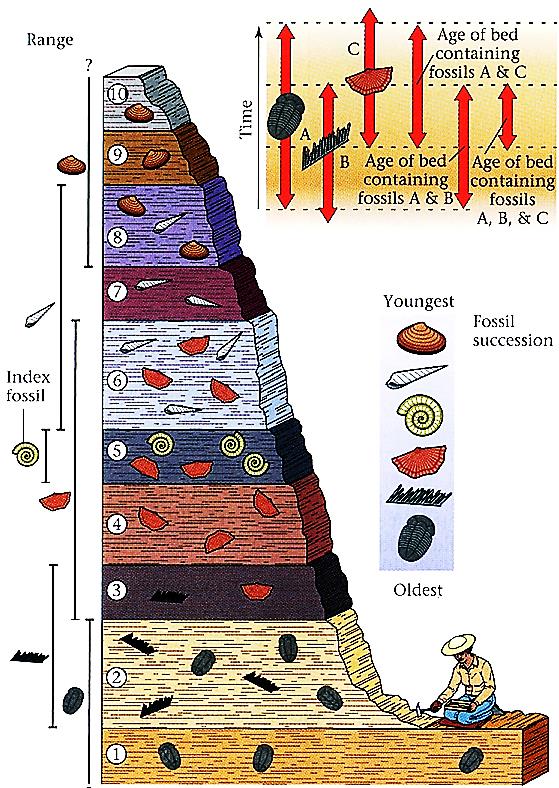
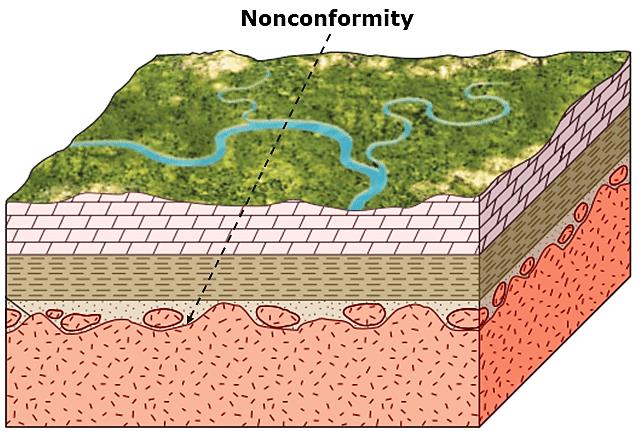
significant and recognizable interval of geologic -------------------------------------------------------------- history, and it can be correlated with other 1250. Which one of the following terms is systems around the world based on their fossil used to describe an erosion surface cut into content and magnetic polarity. A system also metamorphic rocks that is covered by has a relatively large extent and thickness, sedimentary rocks? making it easier to map and study than smaller a) Stratigraphic break. units such as series or stages. b) Guide fossil. -------------------------------------------------------------- c) Geologic anomaly. 1249. According to the principle of fossil d) Nonconformity. succession: e) Sedimentary facies. a) A dike is older than the sedimentary rock it cuts through. Feedback: A nonconformity is a type of b) Time-stratigraphic units are defined by unconformity, which is a break or gap in the rock type. geologic record resulting from erosion or non- c) Fossil assemblages succeed one another deposition or both. An unconformity separates in a regular and predictable order. younger rocks from older rocks, indicating that d) A marine regression takes place when the some part of the geologic history is missing. A sea rises and invades a continent. nonconformity occurs when an erosion surface e) The geologic column and time scale are is cut into igneous or metamorphic rocks that based on the theory of evolution. are overlain by sedimentary rocks. This means that the igneous or metamorphic rocks were Feedback: According to the principle of fossil exposed at the Earth’s surface and eroded succession, also known as the law of faunal before the sedimentary rocks were deposited succession, different fossil species appear and on top of them. A nonconformity represents a disappear in a predictable sequence in significant time gap between the formation of sedimentary rocks. This means that the the older and younger rocks. different types of fossils that are found in rocks of different ages reflect the changes in life forms
that occurred through geologic time. The
principle of fossil succession allows geologists
to correlate rocks of different regions and
establish a relative time scale for the Earth’s history. The principle of fossil succession was
first recognized by William Smith, an English
engineer and geologist, in the early 19th
century. He observed that the same kinds of
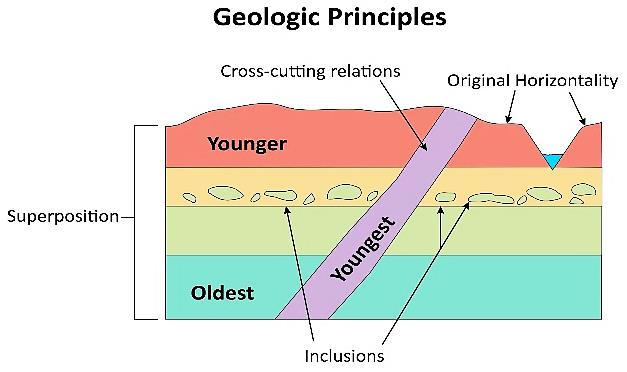
fossils were always found in the same order in -------------------------------------------------------------- the rock layers, and that they were different 1251. The principle of inclusions holds that: from those found in older or younger layers. a) All aspects of the fossil record are The principle of fossil succession also implies important in deciphering Earth history. that fossils are indicators of their environment and climate, as different organisms have
260
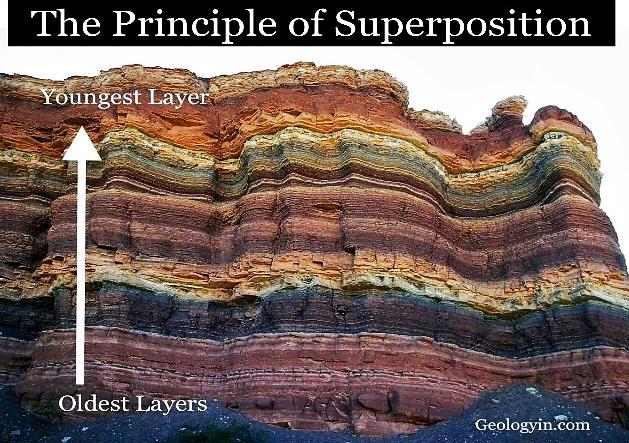
b) Walter’s law applies only to conformable Feedback: The principle of superposition
sequences of strata. states that in an undisturbed sequence of
c) Fragments in a layer of rock are older than sedimentary rocks, the oldest layer is at the
the layer itself. bottom and the youngest layer is at the top. This
d) An eon is made up of two or more eras. principle is based on the observation that
e) Concurrent range zones are useful in time- sediments are deposited horizontally or nearly
stratigraphic correlation. horizontally, and that younger sediments are
deposited on top of older ones. Therefore, by
Feedback: This is the definition of the principle examining the vertical order of rock layers,

of inclusions, which states that any rock geologists can infer their relative ages, meaning
fragments or inclusions found in another rock which ones are older or younger than others.
are older than the rock that contains them. This The principle of superposition is one of the most
principle is based on the logic that the important principles of stratigraphy, which is the
inclusions must have existed before they were study of the arrangement and sequence of rock
incorporated into the host rock. The principle of layers. inclusions can be used to determine the relative
ages of rocks and their environments of
formation.
--------------------------------------------------------------
1254. The geologic column and relative
-------------------------------------------------------------- geologic time scale were established by the
1252. A group is a lithostratigraphic unit made 1840s based on:
up of: a) The theory of evolution.
a) At least three periods. b) The principle of unconformities. b) Four systems. c) Superposition and faunal succession. c) A disconformity and a nonconformity. d) Lithostratigraphic biozones. d) Biozones and members. e) The rate of radioactive decay. e) Two or more formations.
Feedback: These are two of the most important
Feedback: A group is a lithostratigraphic unit principles of stratigraphy, which is the study of
that consists of a series of related formations the arrangement and sequence of rock layers.
that have been classified together to form a The principle of superposition states that in an
group. A formation is the primary unit of undisturbed sequence of sedimentary rocks,
lithostratigraphy, which is the element of the oldest layer is at the bottom and the
stratigraphy that deals with the description and youngest layer is at the top. The principle of
nomenclature of the rocks of the Earth based faunal succession, also known as the law of
on their lithology and their stratigraphic fossil succession, states that different fossil
relations. A formation is a body of rock that is species appear and disappear in a predictable
defined and recognized on the basis of its order in sedimentary rocks, and that the same
lithologic properties or combination of lithologic kinds of fossils are always found in the same
properties and stratigraphic relations. A group order in the rock layers. These principles were
may sometimes be combined into supergroups, first recognized by William Smith, an English
which are larger lithostratigraphic units. engineer and geologist. He also coined the term
-------------------------------------------------------------- geologic column to describe the vertical
1253. Geologists use the principle of succession of rock strata and their
superposition to determine: corresponding fossils. By correlating the strata
a) How long ago a fossil organism lived. and fossils from different regions, Smith and
b) The duration of a marine regression. other geologists were able to establish a
c) Absolute ages for geologic events. relative geologic time scale that divided Earth’s
d) Whether fossil remains have been altered. history into major units based on their
e) The relative ages of rocks in a vertical characteristic fossils. The relative geologic time
sequence. scale does not assign numerical ages to the
261
rock layers or events, but only indicates their a) Stromatolite. order and duration relative to each other. b) Greenstone belt. -------------------------------------------------------------- c) Craton. 1255. Which one of the following is a trace d) Black smoker.
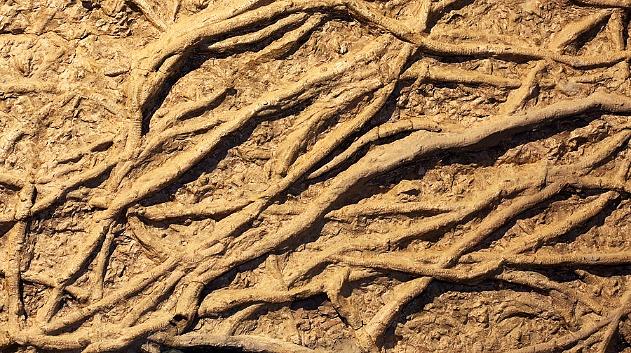
fossil? e) Komatiite.
a) Clam shell.
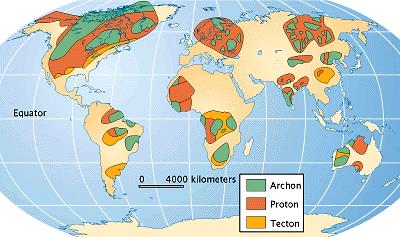
b) Dinosaur bone. Feedback: A craton is the ancient, stable part c) Worm burrow. of a continent that is composed of a shield and
d) Disconformity. a platform. A shield is the exposed part of the

e) Biozone. craton, where the basement rock is visible at
the surface. A platform is the covered part of the
Feedback: A worm burrow is an example of a craton, where the basement rock is overlain by
trace fossil, which is a fossil record of biological younger sedimentary rocks. A craton has a
activity but not the preserved remains of the thick crust and a deep lithospheric root that
plant or animal itself. Trace fossils contrast with extends into the mantle. A craton is resistant to
body fossils, which are the fossilized remains of tectonic deformation and has often survived
parts of organisms’ bodies, usually altered by cycles of merging and rifting of continents.
later chemical activity or mineralization. A worm Archon, proton, and tecton are terms used to
burrow is a type of trace fossil that shows the classify cratons based on the age and thermal
activity of a worm or a similar organism that dug history of their basement rocks. into the substrate, such as sediment, soil, or
rock. A worm burrow may consist of an
impression or a cast of the tunnel or cavity
created by the worm. A worm burrow may also
contain fecal pellets or other organic matter
produced by the worm. A worm burrow can
provide information about the behavior,
ecology, and environment of the worm and its
substrate.
--------------------------------------------------------------
1258. The origin of life from nonliving matter
is known as:
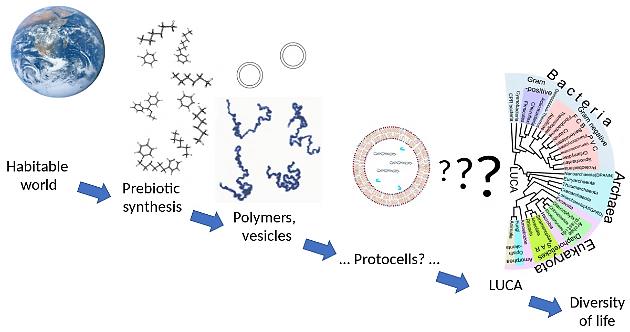
a) Outgassing. b) Abiogenesis. c) Cratonization. d) Biotic accretion. e) Polymerization.
-------------------------------------------------------------- Feedback: Abiogenesis is the natural process 1256. Ultramafic lava flows (komatiites) are by which life has arisen from non-living matter, found mostly in: such as simple organic compounds. a) Sandstone deposits of passive continental Abiogenesis proposes that the first life-forms margins. generated were simple and gradually became b) Banded iron formations. increasingly complex. Biogenesis, in which life c) The lower volcanic units in greenstone is derived from the reproduction of other life, belts. was presumably preceded by abiogenesis. d) Pyroclasticgneiss rift deposits. e) Cenozoic volcanic deposits.
Feedback: Ultramafic lava flows, also known as komatiites, are typically found in the lower
volcanic units of greenstone belts. Greenstone
belts are geological formations that contain a
variety of volcanic and sedimentary rocks, and
they are often associated with ancient
continental shields. Komatiites are known for
their exceptionally high magnesium content --------------------------------------------------------------
and are believed to have been more common 1259. Photochemical dissociation is a in the Archean Eon but are rare in modern process whereby: geological formations. a) Plants synthesize organic molecules. -------------------------------------------------------------- b) Carbon dioxide forms as a metabolic waste 1257. The ancient, stable part of a continent product of animal respiration.
made up of a shield and platform is called a:
262
c) Continents grow along their margins by e) Green because they contain the minerals
accretion. chlorite and epidote.
d) Gases emitted from Earth’s interior release
methane and ammonia into the Feedback: Granite-gneiss complexes are atmosphere. common in Archean terrains and are often
e) Water molecules are disrupted to yield associated with ancient continental crust.
hydrogen and oxygen. These rocks have undergone extensive
metamorphism and are characteristic of the
Feedback: Photochemical dissociation is a Archean Eon. process in which the energy from sunlight is --------------------------------------------------------------

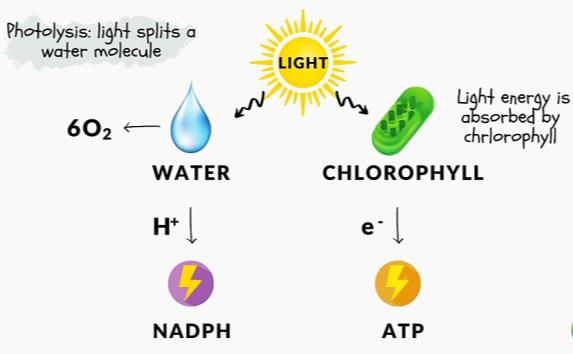
used to break apart water molecules (H2O) into 1262. Many scientists think that the first self-their constituent elements, hydrogen (H) and replicating system was a(n): oxygen (O). This process can occur in the a) ATP cell. upper atmosphere, particularly in the presence b) Autotroph. of ultraviolet (UV) radiation from the Sun. The c) Proteinoid. dissociation of water into hydrogen and oxygen d) RNA molecule. is an important step in understanding the e) Stromatolite. evolution of Earth's atmosphere and the
formation of molecules that contribute to its Feedback: Many scientists believe that the first composition. self-replicating system may have been an RNA
molecule, as RNA can both store genetic
information and catalyze chemical reactions,
similar to the functions of DNA and proteins.
This hypothesis is part of the RNA world
hypothesis, which suggests that RNA-based
life forms existed before DNA-based life forms.
--------------------------------------------------------------
1260. Stromatolites are produced by
cyanobacteria which is also known as:
a) Blue-green algae.
b) Eukaryotic cells.
c) Black smokers.
d) Heterotrophs.
e) Polymers.
Feedback: Stromatolites are layered structures created by the growth of cyanobacteria, often
referred to as blue-green algae. These ancient -------------------------------------------------------------- microbial communities played a significant role 1263. Which one of the following sequences in Earth's early history and the development of of geologic time designations is in the the atmosphere. correct order from oldest to youngest? a) Archean-Phanerozoic-Proterozoic. b) Proterozoic-Phanerozoic-Archean. c) Phanerozoic-Archean-Proterozoic. d) Archean-Proterozoic-Phanerozoic. e) Proterozoic-Archean-Phanerozoic.
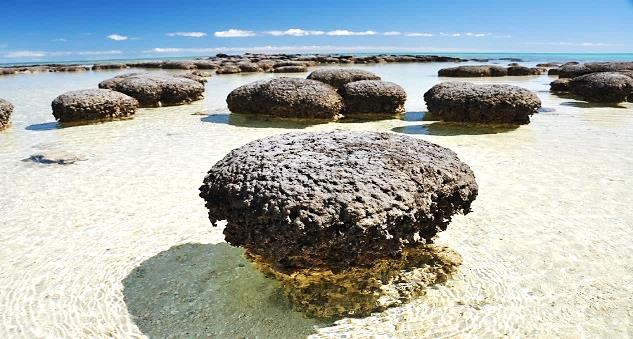
Feedback: This sequence represents the major divisions of Earth's history, with the
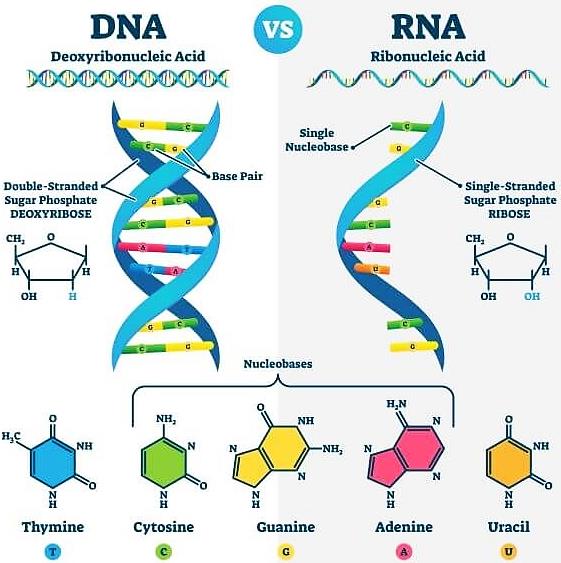
Archean being the oldest and the Phanerozoic
1261. Granite-gneiss complexes are: years ago. During the Archean, the Earth's a) The most widespread Archean-age rocks. crust began to form, and the first continents and b) Found at oceanic spreading ridges. oceans appeared. It's a time when life was just c) Most likely turbidite deposits. beginning to emerge in the form of simple, d) Noted for their fossil plants and animals. single-celled organisms. -------------------------------------------------------------- Archean: This is the oldest eon in Earth's history, ranging from about 4 billion to 2.5 billion being the most recent.
263
Proterozoic: Following the Archean, the Earth's crust and mantle. Greenstone belts are
Proterozoic eon spans from about 2.5 billion to also important economic resources, as they
541 million years ago. This eon saw the often contain ore deposits of valuable metals.
development of more complex life forms,
including the first multicellular organisms. It also
includes important events like the formation of
supercontinents and the first appearance of
oxygen in the atmosphere.
Phanerozoic: The Phanerozoic eon is the most recent eon, covering the last 541 million years

up to the present day. It's characterized by the
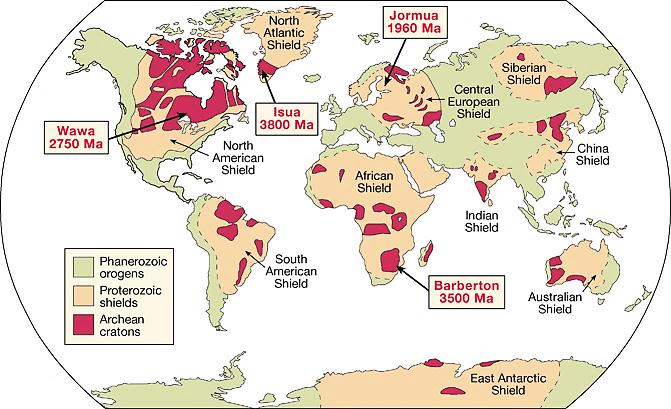
proliferation of complex life forms, including the
rise and fall of the dinosaurs, the evolution of
mammals, and the appearance of humans. It's
also when we find the majority of the fossil --------------------------------------------------------------
record. 1265. The exposed part of the craton in North -------------------------------------------------------------- America is called the: 1264. The origin of greenstone belts is not a) Canadian shield.
fully resolved, but many geologists think that b) Wyoming province. some of them formed in: c) Adirondack terrane.
a) Continental shelf environments. d) Michigan basin. b) Backarc marginal basins. e) Midcontinent platform. c) Carbonate-evaporite depositional areas. d) Transform boundary shear zones. Feedback: The exposed part of the craton in e) River floodplain environments. North America is known as the Canadian
Shield. It is a large geological shield that covers
Feedback: Greenstone belts are zones of a significant portion of Canada and parts of the
variably metamorphosed mafic to ultramafic northern United States. volcanic sequences with associated
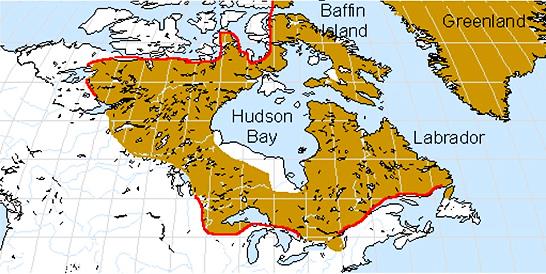
sedimentary rocks that occur within Archaean
and Proterozoic cratons between granite and
gneiss bodies. The name comes from the green
hue imparted by the color of the metamorphic
minerals within the mafic rocks: the typical
green minerals are chlorite, actinolite, and other
green amphiboles. Greenstone belts also often
contain ore deposits of gold, silver, copper, zinc
and lead. --------------------------------------------------------------
There are two main hypotheses for the 1266. The widely accepted theory explaining formation of greenstone belts: the origin of eukaryotic cells holds that these
Backarc basin hypothesis: Greenstone belts cells formed by: formed in backarc basins, which are small a) Endosymbiosis. ocean basins that form behind volcanic island b) Parthenogenesis. arcs. Backarc basins are formed by the c) Binary fission. extension of the crust behind an island arc as it d) Pangenesis. moves over a subduction zone. e) Autotrophism. Oceanic plateau hypothesis: Greenstone belts formed on oceanic plateaus, which are Feedback: According to the endosymbiotic large, elevated regions of the ocean floor. theory, eukaryotic cells evolved through a
Oceanic plateaus are thought to form by process of endosymbiosis, where smaller
plumes of hot mantle material that rise through prokaryotic cells were engulfed by larger
the crust and cause it to melt. prokaryotic cells and eventually became
The backarc basin hypothesis is the more organelles within the host cell. This theory
widely accepted hypothesis for the formation of explains the presence of organelles like
greenstone belts. This is because greenstone mitochondria and chloroplasts in eukaryotic
belts are often found in association with other cells, which are believed to have originated
geological features that are associated with from free-living bacteria that were incorporated
backarc basins, such as ophiolites and island into ancestral eukaryotic cells. arc volcanics. --------------------------------------------------------------
Greenstone belts are important geological 1267. Cells with a membrane-bounded features because they provide a window into nucleus and internal structures called
the early Earth. The rocks in greenstone belts organelles are called cells: are some of the oldest rocks on Earth, and they a) Komatiitic. contain a wealth of information about the early b) Endosymbiotic.
264
c) Porphyritic. 1270. A large landmass composed mostly of d) Aphanitic. Greenland and North America that evolved
e) Eukaryotic. during the Proterozoic is called:
a) Grenvillia.
Feedback: Eukaryotic cells are characterized b) Ediacara. by having a membrane-bounded nucleus and c) Laurentia. internal structures called organelles, which d) Pannotia. distinguish them from prokaryotic cells like e) Romania. bacteria.

Feedback: Laurentia is a large landmass that included parts of what is now Greenland and
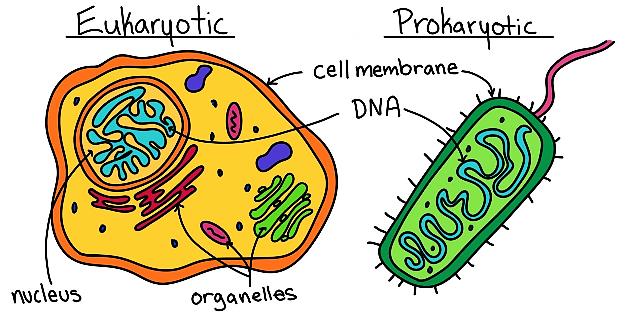
North America. It played a significant role in the
geological history of the Proterozoic and later
became part of the supercontinent Pangaea.
--------------------------------------------------------------
1268. The Mesoproterozoic of Laurentia was
a time of:
a) Widespread glaciation.
b) Origin of animals with skeletons.
c) Igneous activity unrelated to orogenic
activity.
d) Origin of the oldest known greenstone
belts.
e) Formation of Pangaea.
Feedback: During the Mesoproterozoic era in Laurentia, there was widespread igneous
activity that was unrelated to orogenic
(mountain-building) activity. This era was --------------------------------------------------------------
-------------------------------------------------------------- Granite-gneiss complex. a) 1269. One type of Proterozoic rock that b) Turbidite deposit. indicates some free oxygen was present in c) Ophiolite. the atmosphere is: d) and the formation of igneous rocks. of mantle rocks overlain by oceanic crust and deep sea sediments is a(n): characterized by various geological processes 1271. A sequence of rocks on land made up
a) Continental red bed. Continental red beds. e) Supercycle. b) Carbon- conglomerate assemblages. c) Ultramafic lava flows. Feedback: An ophiolite is a sequence of rocks d) Wilson cycle deposits. that includes mantle rocks, oceanic crust, and e) Prokaryotic accumulates. deep-sea sediments. It provides a unique
Feedback: window into the Earth's oceanic lithosphere and Continental red beds are is often found on land as a result of tectonic sedimentary rocks that are typically red in color processes that have brought oceanic material due to the presence of oxidized iron (iron oxide to the Earth's surface. Ophiolites are valuable or rust). The formation of these red beds for studying the composition and structure of suggests that free oxygen (O 2 ) was present in oceanic crust and the processes associated the atmosphere because the iron in these rocks with plate tectonics. would have only oxidized in the presence of
oxygen. Therefore, the presence of continental
red beds in the Proterozoic indicates the
presence of some free oxygen in the Earth's
atmosphere during that time.
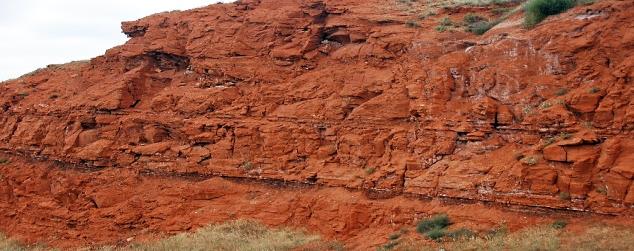
-------------------------------------------------------------- --------------------------------------------------------------
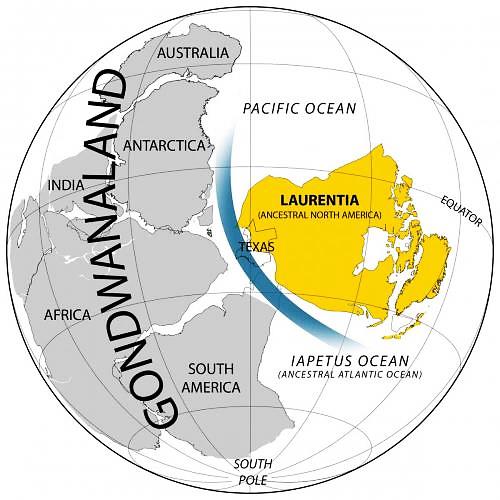
265
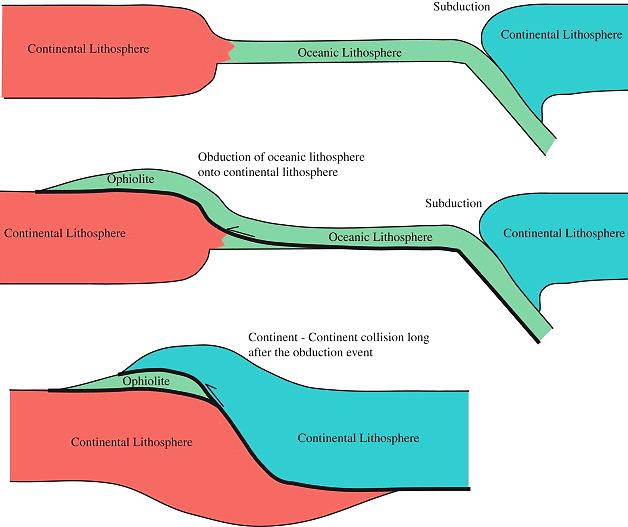
1272. oceanic plate or a continental plate. This The oldest known animal fossils are process is a key mechanism in plate tectonics tectonic plate, which can be either another
found in the ________ fauna of Australia.
a) and often leads to the formation of deep-sea Ediacaran.
b) trenches, volcanic arcs, and earthquakes. Pannotian.
c) -------------------------------------------------------------- Wilsonian.
d) 1275. Which one of the following was a Stromatolinian.
e) supercontinent during the Proterozoic? Grenvillian.
a) Pangaea.

Feedback: b) Rodinia The Ediacaran fauna, found in the Ediacaran Period of the late Precambrian, c) Ediacara. contains some of the oldest known animal d) Laurasia. fossils. These fossils represent early and often e) Mesoamerica. enigmatic multicellular life forms that predate
the Cambrian explosion, a significant period of Feedback: Rodinia was a supercontinent that
biological diversification in Earth's history. existed during the Proterozoic eon,
approximately 1.3 billion to 750 million years
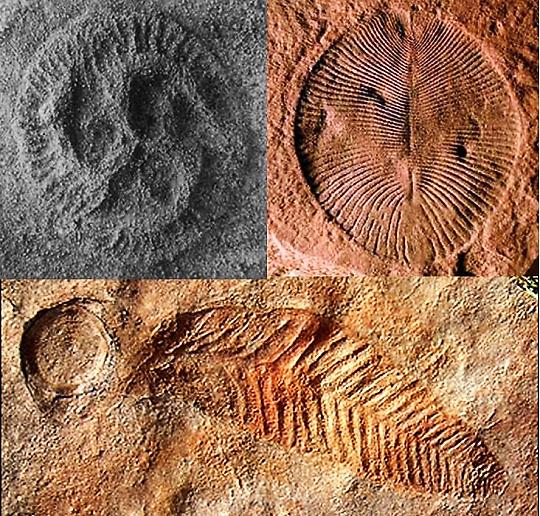
ago. It was one of the Earth's earliest
supercontinents, and its formation and breakup
played a significant role in the geological history
of our planet.
--------------------------------------------------------------
1273. Columnar masses of rock resulting
from the activities of cyanobacteria (blue-
green algae) are:
a) Heterotrophs.
b) Endosymbionts.
c) Orogens.
e) -------------------------------------------------------------- d) Stromatolites.
Trilobites.
of rock that form as a result of the activities of Cyclothem. b) Mobile belt. cyanobacteria (blue-green algae) and other c) Platform. microorganisms. These structures are some of d) Feedback: mountain building is a(n): Stromatolites are columnar masses a) 1276. An elongated area marking the site of the earliest known evidence of life on Earth and Shield. e) Craton. can be found in various geological formations.
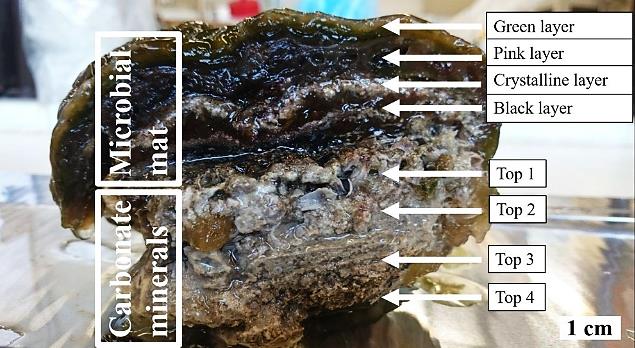
Feedback: An elongated area marking the site of mountain building is referred to as a mobile
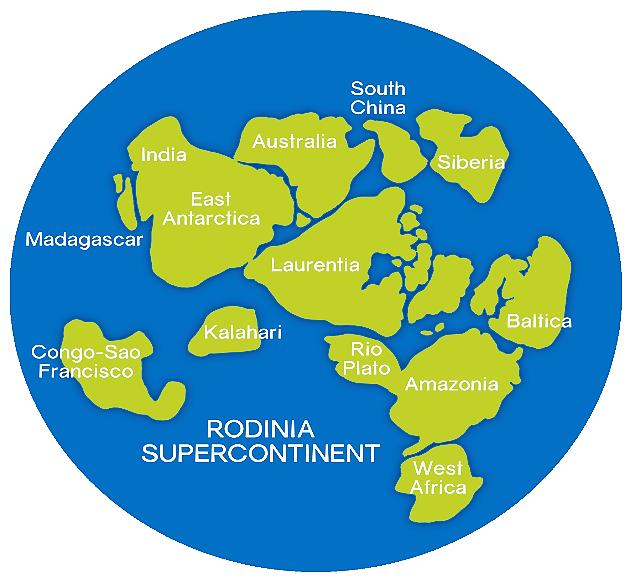
belt. This term is often used to describe regions
where tectonic forces have caused significant
deformation and uplift, leading to the formation
of mountain ranges or other geological
structures.
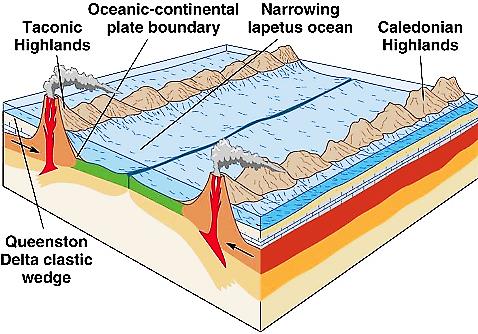
--------------------------------------------------------------
1274. The sliding of oceanic lithosphere
beneath a continent or island arc is called:
a) Rotation.
b) Tension.
c) Subduction.
d) Polar wandering.
Feedback: Subduction is the process where oceanic lithosphere slides beneath another --------------------------------------------------------------
266
1277. During which period did extensive 1279. A major transgressive–regressive
continental glaciation of the Gondwana cycle bounded by craton-wide
continent occur? unconformities is a(n):
a) Cambrian. a) Biostratigraphic unit. b) Silurian. b) Cratonic sequence. c) Devonian. c) Orogeny. d) Carboniferous. d) Shallow sea. e) Permian. e) Cyclothem.

Feedback: Extensive continental glaciation of Feedback: A major transgressive-regressive the Gondwana continent occurred during the cycle bounded by craton-wide unconformities is
Carboniferous period. This period, also known commonly referred to as a cratonic sequence.
as the Carboniferous period, was characterized These sequences represent significant
by the presence of vast swamp forests that geological events in which sea levels rise
eventually led to the formation of coal deposits, (transgressive phase) and then fall (regressive
and it experienced multiple glaciation events in phase), leading to the deposition of
the Southern Hemisphere as part of the larger sedimentary layers and the formation of
ice age cycle. unconformities between them.
--------------------------------------------------------------
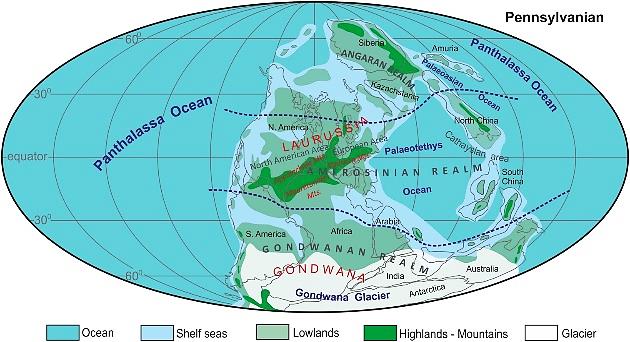
1280. The economically valuable deposit in a
cyclothem is:
a) Gravel. b) Metallic ore. c) Coal. d) Carbonates. e) Evaporates.
Feedback: In a cyclothem, the economically valuable deposit is often coal. These cyclical
sedimentary sequences can contain alternating
-------------------------------------------------------------- layers of marine and nonmarine sediments,
1278. Repetitive sedimentary sequences of with coal beds typically forming in the
alternating marine and nonmarine nonmarine (terrestrial) environments. Coal is a
sedimentary rocks are: valuable resource for energy production and
a) Cyclothems. has been a significant economic deposit in
b) Reefs. various regions. c) Orogenies.
d) Evaporates.
e) Tillites.
Feedback: Repetitive sedimentary sequences of alternating marine and nonmarine
sedimentary rocks are called cyclothems.
These sequences often reflect changes in sea
level and environmental conditions over time
and are commonly associated with the
Carboniferous period's sedimentary record. --------------------------------------------------------------
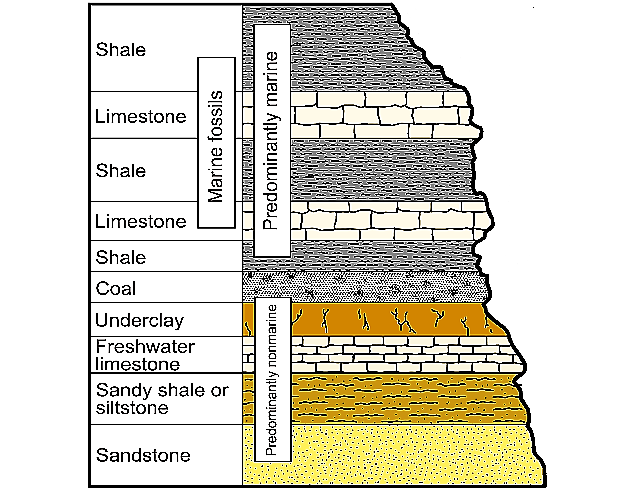
1281. What type of invertebrates dominated
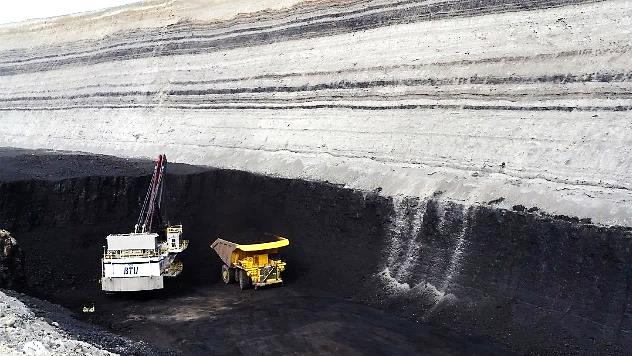
the Ordovician invertebrate community?
a) Epifloral planktonic primary producers. b) Infaunal nektonic carnivores. c) Infaunal benthic sessile suspension
feeders.
d) Epifaunal benthic mobile suspension
feeders.
e) Epifaunal, benthic, sessile, suspension
feeders.
Feedback: These organisms lived on the ocean floor (benthic), were attached and did not
move (sessile), and fed by capturing
suspended food particles from the water
-------------------------------------------------------------- (suspension feeders). This type of lifestyle was
267
common among many marine invertebrates c) Diatoms. during the Ordovician period. d) Dinoflagellates. -------------------------------------------------------------- e) Graptolites. 1282. Labyrinthodonts are:
a) Plants. Feedback: Acritarchs are a diverse group of b) Fish. organic-walled phytoplankton that left behind
c) Amphibians. fossilized organic cysts. They were a significant
d) Reptiles. part of the Paleozoic phytoplankton community
e) None of the previous answers. and are commonly used in biostratigraphy to

date sedimentary rocks from that era.
Feedback: Labyrinthodonts are an extinct group of amphibians that lived from the
Devonian to the Triassic periods, about 419 to
201 million years ago. They are considered to
be the earliest tetrapod vertebrates, meaning
they had four limbs and could move on land.
They are named after their complex teeth,
which had folded enamel surfaces that
resembled a labyrinth. They ranged in size from
small to large, and had lizard-like or crocodile-
like bodies. Some of them had external gills,
while others had lungs. They were mostly
carnivorous, feeding on fish, insects, and other
animals.
--------------------------------------------------------------
1283. Organisms that manufacture their own
food are:
a) Autotrophs.
b) Herbivores. --------------------------------------------------------------
c) Benthos. 1285. Which group of planktonic d) Epifaunal. invertebrates that were especially abundant
e) None of the previous answers. during the Ordovician and Silurian periods
are excellent guide fossils?
Feedback: Organisms that manufacture their a) Brachiopods. own food through processes like b) Cephalopods. photosynthesis or chemosynthesis are called c) Fusulinids. autotrophs. They can produce organic d) Graptolites. compounds and energy from inorganic e) Trilobites. substances, often using sunlight as an energy
source. This ability to produce their own food Feedback: Graptolites are excellent guide sets them apart from heterotrophs, which rely fossils, especially during the Ordovician and
on consuming other organisms for their Silurian periods. These planktonic colonial
nutrition. organisms left behind well-preserved fossils
that are widely used for biostratigraphy and
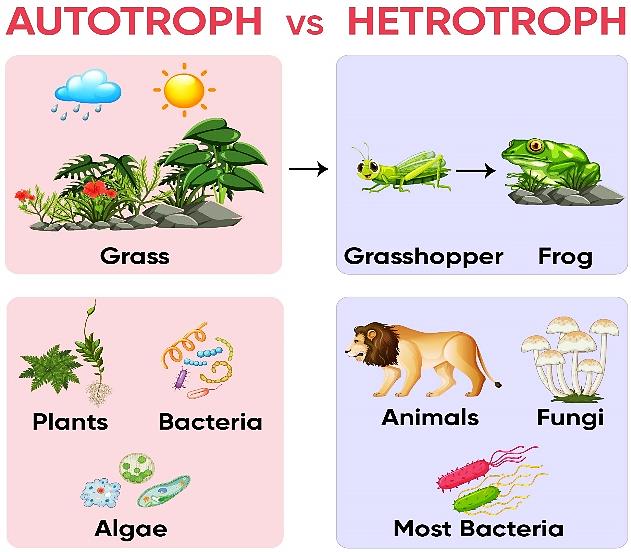
correlating rock layers.
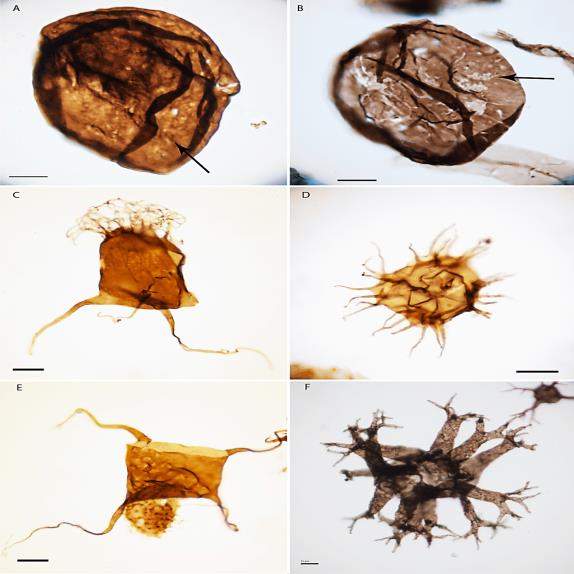
-------------------------------------------------------------- --------------------------------------------------------------
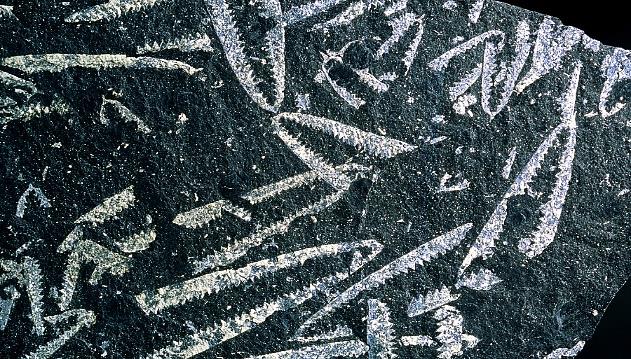
1284. Brachiopods are: The major organic-walled 1286.
phytoplankton group of the Paleozoic Era a) Benthic mobile carnivores. was: Benthic mobile scavengers. b)
a) Acritarchs. c) Benthic suspension feeders. b) Nektonic carnivore-scavengers. Coccolithophorids. d)
268
e) Planktonic primary producers. Feedback: An exoskeleton offers several
advantages, including preventing desiccation
Feedback: Brachiopods are marine (drying out), protection against environmental invertebrates characterized by their two- factors like UV radiation, serving as a defense
shelled, hinged shells that resemble those of against predators, and providing attachment
clams but are not closely related. They are filter sites for muscles. feeders, using a lophophore (a specialized --------------------------------------------------------------
feeding organ) to capture tiny food particles 1289. Mass extinctions occurred at, or near from the water. Brachiopods are benthic the end, of which three periods? organisms, meaning they live on the ocean a) Cambrian, Ordovician, Permian. floor, and they are not mobile like some other b) Cambrian, Silurian, Devonian. marine animals. Their unique shell morphology c) Ordovician, Devonian, Permian. and ecological role make them important guide d) Silurian, Devonian, Permian. fossils in the study of Earth's history, as their e) Cambrian, Devonian, Permian. presence can help determine the age of

sedimentary rocks in which they are found. Feedback: Mass extinctions indeed occurred
at or near the end of these three periods in
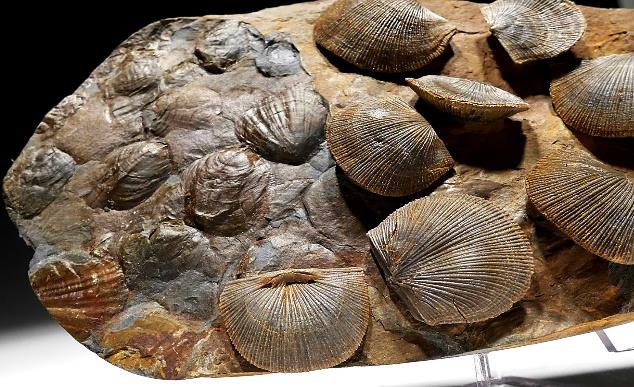
Earth's history. These extinction events were
significant and had a profound impact on the
evolution of life on our planet. The Ordovician-
Silurian extinction, Devonian extinction, and
Permian-Triassic extinction are among the
major mass extinctions in Earth's history, each
associated with different environmental and
biological factors. These events shaped the
course of evolution and the diversity of life on
-------------------------------------------------------------- Earth. 1287. The earliest reef-like structures were
constructed by:
a) Bryozoans.
b) Mollusks.
c) Archaeocyathids.
d) Sponges.
e) Corals.
Feedback: These ancient reef-like structures were constructed by a group of organisms --------------------------------------------------------------
known as archaeocyathids, which were 1290. Based on similarity of embryo cell sponge-like animals that lived during the early division, which invertebrate phylum is most
Cambrian period. These structures are among closely allied with the chordates? the earliest examples of reefs in the fossil a) Mollusca. record. b) Echinodermata.
c) Porifera. d) Annelida. e) Arthropoda.
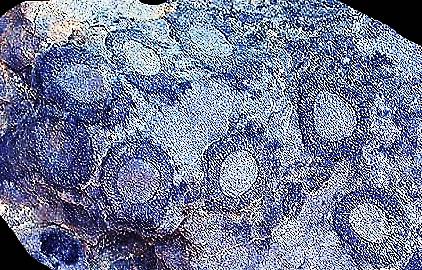
Feedback: The invertebrate phylum most closely allied with the chordates based on
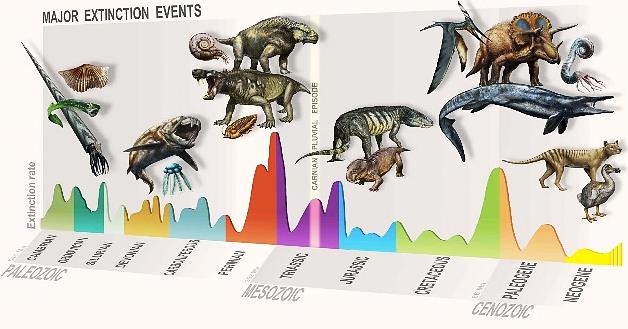
similarity of embryo cell division is
Echinodermata. This similarity in embryonic
development is a key piece of evidence for their
-------------------------------------------------------------- evolutionary relationship. 1288. -------------------------------------------------------------- An exoskeleton is advantageous
because it: 1291. The age of the Burgess Shale is:
a) Prevents drying out in an intertidal a) Cambrian.
environment. b) Ordovician.
b) Provides protection against ultraviolet c) Silurian.
radiation. d) Devonian.
c) Provides protection against predators. e) Mississippian. d) Provides attachment sites for development
of strong muscles. Feedback: The Burgess Shale is a famous
e) fossil deposit located in the Canadian Rockies All of the previous answers.
and dates back to the Cambrian period,
269
specifically the middle Cambrian continental blocks, and these are considered (approximately 508 million years ago). It the precursors to the modern continents. The
contains exceptionally well-preserved fossils of six major continental blocks within Pannotia
various early marine organisms, providing were: valuable insights into the diversity of life during Laurentia: This would later become North that time. America and parts of northern Europe.
Baltica: This would become parts of northern Europe, including Scandinavia and the Baltic
region.

Siberia: The core of what is now the Siberian landmass.
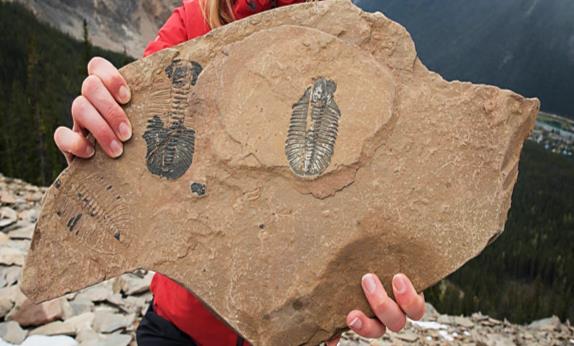
Gondwana: This supercontinent included the landmasses that would become South
America, Africa, Antarctica, India, Australia,
and parts of Asia.
Kazakhstania: This landmass is now part of Central Asia.
-------------------------------------------------------------- South China: The area that would become 1292. The three invertebrate groups that southeastern China.
comprised the majority of Cambrian These continents would go through further
skeletonized life were: cycles of fragmentation and collision,
a) Trilobites, archaeocyathids, brachiopods. eventually leading to the configuration of the
b) Echinoderms, corals, bryozoans. continents we recognize today. c) Brachiopods, archaeocyathids, corals.
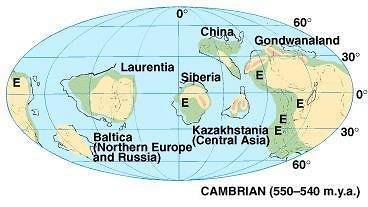
d) Trilobites, echinoderms, corals.
e) Trilobites, brachiopods, corals.
Feedback: Trilobites were a group of arthropods that lived in the Cambrian period.
They were characterized by their segmented
bodies, which were divided into three parts: the
head, thorax, and abdomen.
Trilobites had a variety of body shapes and sizes, and they were some of the most diverse
animals of the Cambrian period.
Archaeocyathids were a group of sponges --------------------------------------------------------------
that lived in the Cambrian period. They were 1294. The ____ and ____ were times of characterized by their cup-shaped skeletons, major reef building. which were made of calcium carbonate. a) Cambrian, Ordovician. Archaeocyathids were some of the first animals b) Ordovician, Silurian. to develop skeletons, and they played an c) Silurian, Devonian. important role in building reefs in the Cambrian d) Devonian, Mississippian. period. e) Mississippian, Pennsylvanian. Brachiopods are a group of marine invertebrates that have been around for over Feedback: The Silurian Period was a time of
500 million years. They are characterized by extensive reef development. The most
their bivalve shells, which are hinged together important reef builders were the tabulate and
like a clamshell. Brachiopods were very diverse rugose corals, which appeared in the
in the Cambrian period, and they played an Ordovician and became abundant and diverse
important role in the Cambrian ecosystem. in the Silurian. The Devonian Period is
-------------------------------------------------------------- sometimes called the “Age of Fishes” because
1293. of the great diversity and abundance of fish that How many major continents were there
at the beginning of the Cambrian? evolved during this time. It is also known as the
a) 3 continents “Age of Reefs” because of the spectacular reef
b) 4 continents complexes that developed in various parts of
c) the world. The main reef builders were again 5 continents
d) 6 continents the tabulate and rugose corals, the
e) 7 continents stromatoporoids, and the calcareous algae, but
they were joined by new groups such as the
Feedback: During the beginning of the bryozoans, which were colonial animals with
Cambrian period, approximately 541 million calcified skeletons, and the chaetetids, which
years ago, the Earth's landmasses were were sponge-like animals with calcareous
grouped together in a supercontinent known as tubes. "Pannotia." Pannotia consisted of several --------------------------------------------------------------
270
1295. Which of the following groups did anatomical features, including a more
amphibians evolve from? advanced jaw structure and teeth compared to
a) Coelacanths. earlier reptiles. This group represents a
b) Ray-finned fish. transitional phase in reptile evolution toward the
c) Lobe-finned fish. development of mammalian characteristics.
d) Pelycosaurs. Over time, some therapsids evolved into early
e) Therapsids. mammals, eventually leading to the diverse
range of mammals we have today. This
Feedback: Amphibians evolved from lobe- transition is significant in the history of life on

finned fish. This transition is a significant event Earth as it marked the emergence of mammals
in the history of vertebrate evolution, as it as a distinct group. marked the shift from aquatic life to terrestrial --------------------------------------------------------------
life in early vertebrates. 1298. An organism must possess which of
the following during at least part of its life
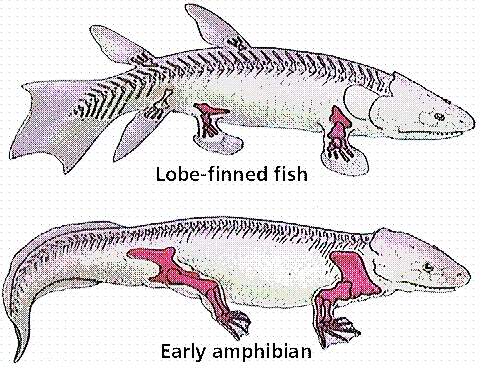
cycle to be classified a chordate?
a) Notochord, dorsal solid nerve cord, lungs. b) Vertebrae, dorsal hollow nerve cord, gill
slits.
c) Vertebrae, dorsal hollow nerve cord, lungs. d) Notochord, ventral solid nerve cord, lungs. e) Notochord, dorsal hollow nerve cord, gill
slits.
Feedback: Chordates are a phylum of animals
-------------------------------------------------------------- that share four key features during at least part
1296. of their life cycle: a notochord, a dorsal hollow Which plant group first successfully
invaded land? nerve cord, pharyngeal slits, and a post-anal
a) tail. Seedless vascular.
b) Gymnosperms; --------------------------------------------------------------
c) Naked seed bearing. 1299. The Age of Fish is which period? d) a) Cambrian. Angiosperms.
e) Flowering. b) Silurian.
c) Devonian.
Feedback: The seedless vascular plants were d) Pennsylvanian. the first group of plants to successfully invade e) Permian. land. These plants include early forms like ferns
and horsetails and played a crucial role in Feedback: The Age of Fish corresponds to the paving the way for the evolution of more Devonian period. During the Devonian, which is
advanced plant groups like gymnosperms and often called the "Age of Fish," fish diversity and
angiosperms. abundance increased significantly. This period
saw the evolution of various types of jawed fish,

including the first appearance of some groups
of bony fish and early sharks. It was a pivotal
time in the history of vertebrate evolution as fish
adapted to various aquatic environments,
leading to the development of more advanced
forms of fish. This period laid the foundation for
the subsequent evolution of tetrapods (four-
limbed vertebrates) and terrestrial life.
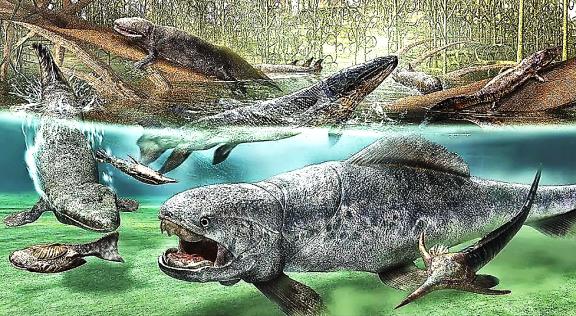
--------------------------------------------------------------
1297. Which reptile group gave rise to the
mammals?
a) Labyrinthodonts.
b) Acanthodians.
c) Pelycosaurs.
d) Protothyrids.
Feedback: 1300. Which evolutionary innovation allowed Therapsids are a group of reptiles reptiles to colonize all of the land? that are believed to have given rise to a) e) Therapsids. --------------------------------------------------------------
Tear ducts.
mammals. They are characterized by certain b) Additional bones in the jaw.
271
c) The middle-ear bones. 1303. Which algal group was the probable d) An egg that contained a food-and-waste ancestor to vascular plants?
sac and surrounded the embryo in a fluid- a) Yellow. filled sac. b) Blue-green.
e) Limbs and a backbone capable of c) Red.
supporting the animals on land. d) Brown.
e) Green.
Feedback: This innovation is associated with the development of the amniotic egg, which Feedback: Green algae, specifically the group allowed reptiles to reproduce successfully on known as charophytes, is believed to be the

land. The amniotic egg is often referred to as closest living relative to land plants (vascular
the "terrestrial egg" because it has several plants). This group shares several important
adaptations that enable it to thrive in a characteristics with land plants and is thought
terrestrial environment. These adaptations to have given rise to the first terrestrial plants.
include a waterproof shell, membranes for Green algae are considered a key step in the
protection and nutrient exchange, and an evolutionary transition from aquatic algae to
enclosed fluid-filled sac that helps prevent land plants. desiccation (drying out) and provides a stable
environment for the developing embryo.
--------------------------------------------------------------
1301. Pelycosaurs are:
a) Jawless fish.
b) Jawed armored fish.
c) Reptiles.
d) Amphibians.
e) Plants.
Feedback: Pelycosaurs were a group of early -------------------------------------------------------------- reptiles that lived during the Paleozoic Era. 1304. In which period were amphibians and They are known for their distinctive sail-like seedless vascular plants most abundant? structures on their backs, which were likely a) Permian. used for thermoregulation. Pelycosaurs are not b) Pennsylvanian. fish, amphibians, or plants; they are reptiles that c) Mississippian. played a significant role in the early evolution of d) Silurian. terrestrial vertebrates. e) Cambrian.
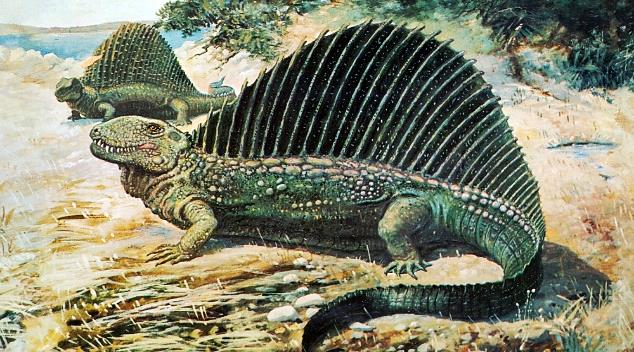
Feedback: The Pennsylvanian period, part of the Carboniferous period, was characterized by
lush swampy environments and an abundance
of amphibians and seedless vascular plants.
This period saw the development of extensive
coal-forming swamps due to the proliferation of
1302. The Cenozoic Era consists of two organisms. periods: the ______ and _______ a) Paleogene and Neogene. b) Permian and Cretaceous. c) -------------------------------------------------------------- a time when both terrestrial and aquatic ecosystems were dominated by these plant life, which later became fossil fuels. It was
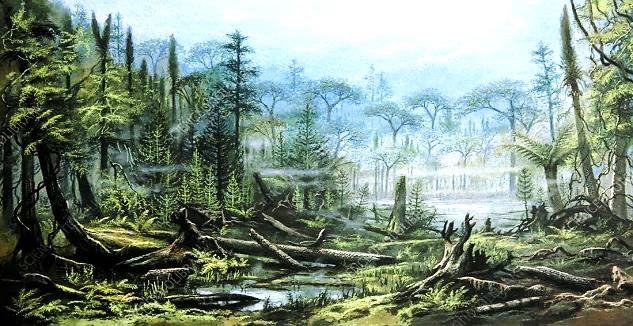
Proterozoic and Archean.
d) Mesozoic and Triassic.
e) Miocene and Eocene.
Feedback: The Cenozoic Era consists of two periods: the Paleogene (66 million to 23 million
years ago) and the Neogene (23 million to 2.6 --------------------------------------------------------------
million years ago). These two periods replaced 1305. The discovery of Tiktaalik roseae is the older term Tertiary, which is no longer used significant because it is: by the International Commission on a) The ancestor of modern reptiles. Stratigraphy. The Cenozoic Era also includes b) An intermediate between lobe-finned fish the Quaternary Period (2.6 million years ago to and amphibians. the present), which is sometimes considered as c) The first vascular land plant. a sub-period of the Neogene. d) The “missing-link” between amphibians -------------------------------------------------------------- and reptiles.
272
e) The oldest known fish. such as coral reefs, open oceans, polar
regions, and freshwater. Some dinoflagellates
Feedback: Tiktaalik roseae is an important are symbiotic with corals and other animals,
fossil discovery because it represents a providing them with organic carbon and
transitional form between lobe-finned fish and oxygen. Some dinoflagellates are
early tetrapods (amphibians). It lived during the bioluminescent, producing light when late Devonian period and had features of both disturbed. Some dinoflagellates are also toxic,
fish and tetrapods, such as limb-like fins with causing harmful algal blooms or red tides that
joints, suggesting that it could support itself in can affect marine life and human health. shallow water and possibly move on land. This

fossil provides crucial insights into the evolution
of vertebrates from water to land and helps
bridge the gap between aquatic and terrestrial
life forms.
--------------------------------------------------------------
1306. Triassic rifting between which two
continental landmasses initiated the
breakup of Pangaea?
a) India and Australia.
b) Antarctica and India.
c) South America and Africa.
d) North America and Eurasia.
e) Laurasia and Gondwana.
--------------------------------------------------------------
Feedback: During the Triassic period, Laurasia 1308. What is the order geologic time scales and Gondwana began to rift apart, initiating the are divided (largest to smallest): breakup of the supercontinent Pangaea. This a) Epoch, Period, Era. process eventually led to the formation of the b) Era, Epoch, Period. modern continents. c) Period, Epoch, Era.
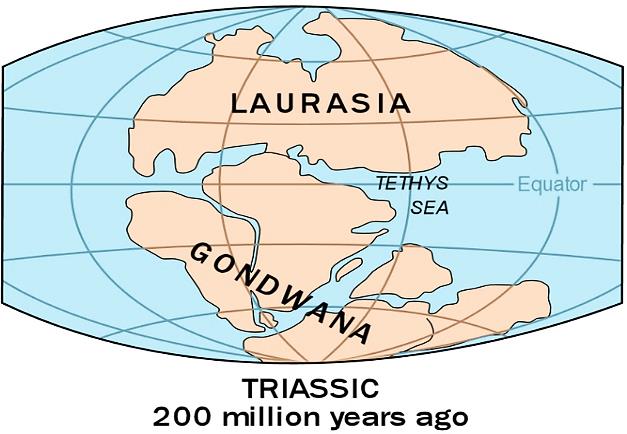
d) Era, Period, Epoch.
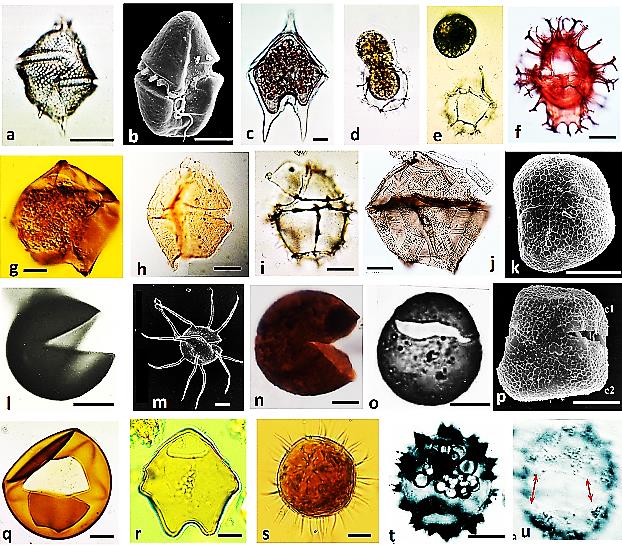
Feedback: The geological time scale is divided into larger units called Eras, each of which is
further subdivided into Periods, and each
Period is divided into Epochs. This hierarchical
structure helps geologists organize and
categorize Earth's history.
--------------------------------------------------------------
1309. Because of their rapid evolution and
nektonic lifestyle, the _____ are good guide
fossils.
a) Amphibians. b) Cephalopods.
-------------------------------------------------------------- c) Burrowing worms. 1307. Which of the following were common d) Saurischians.
during the Mesozoic, and are the major e) Bivalves. primary producers in the warm seas today?
a) Ammonoids. Feedback: Cephalopods, particularly b) Nautiloids. ammonites, are considered excellent guide
c) Coleoids. fossils because of several key factors: d) Dinoflagellates. Rapid Evolution: Ammonites underwent e) Rudists. relatively rapid evolutionary changes, resulting
in numerous species with distinct
Feedback: Dinoflagellates are a group of morphological characteristics. This rapid
unicellular algae that have two flagella and a evolution makes them useful for stratigraphic
cell wall made of cellulose plates. They were correlation and dating of rock layers. common during the Mesozoic era, especially in Abundance: Ammonites were once the Cretaceous period, when they formed large widespread and diverse in the world's oceans,
blooms that contributed to the formation of which means they left behind a rich fossil
chalk deposits. They are also the major primary record. Fossils of ammonites are often found in
producers in the warm seas today, where they sedimentary rocks, making them accessible for
account for about 40% of the marine study. photosynthesis. Dinoflagellates are diverse and Distinctive Shapes: Ammonites exhibit a wide adaptable, and can live in various habitats, variety of coiled shell shapes and
273
ornamentation, making it relatively easy to Feedback: Eupantotheres were an early group differentiate between species based on their of mammals that are considered to be the
shell characteristics. This distinctiveness aids probable ancestors of placental and marsupial
in their identification and use as guide fossils. mammals. This is a significant group in the
Stratigraphic Range: Ammonites existed from context of mammalian evolution because it
the Devonian period to the end of the represents a point in history where mammalian
Cretaceous period, spanning a significant reproductive strategies were diversifying.
portion of geologic time. This long stratigraphic Placental mammals, like humans, have a
range allows them to be used for dating rocks placenta that nourishes developing embryos in

from a wide range of time periods. the womb, while marsupials, like kangaroos,
Overall, the combination of rapid evolution, give birth to relatively undeveloped young,
abundant fossils, distinctive features, and a which then continue to develop outside the
long stratigraphic range makes cephalopods, womb in a pouch. Eupantotheres played a role
especially ammonites, valuable for in the early evolution of these different
understanding Earth's geological history and reproductive strategies within the mammalian
correlating rock layers. lineage.
--------------------------------------------------------------
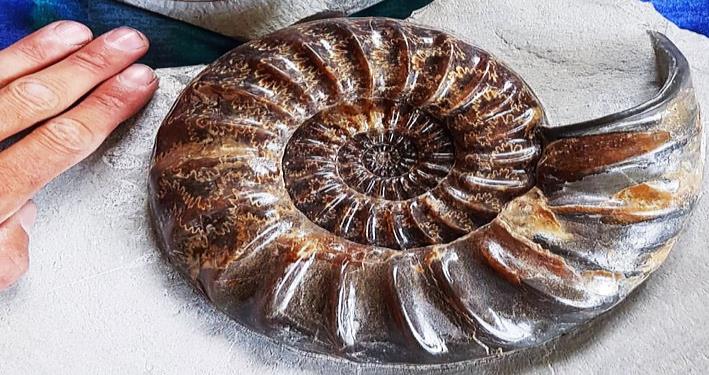
1312. The Himalayas formed when the plate
collided with the plate.
a) Farallon/Pacific. b) Nazca/Cacos. c) African/European. d) Indian/Asian. e) Australian/South American.
Feedback: The Himalayan mountain range was formed as a result of the ongoing collision
between the Indian Plate and the Eurasian
-------------------------------------------------------------- Plate. This collision, which began around 50
1310. Theropods were: million years ago and continues today, has led
a) Long-necked marine reptiles. to the uplift of the Himalayan mountains,
b) Egg-laying mammals. making them one of the most geologically
c) Bipedal, carnivorous dinosaurs. active and significant mountain ranges on
d) Dome-headed, herbivorous mammals. Earth. The convergence of these two tectonic
e) Flying reptiles. plates has caused the crust to thicken and fold,
resulting in the impressive topography of the
Feedback: Theropods were bipedal, Himalayas. carnivorous dinosaurs. These dinosaurs were
characterized by their two-legged stance, sharp
teeth, and predatory nature. They are perhaps
most famous for including some of the largest
and most well-known dinosaurs, such as
Tyrannosaurus rex and Velociraptor.
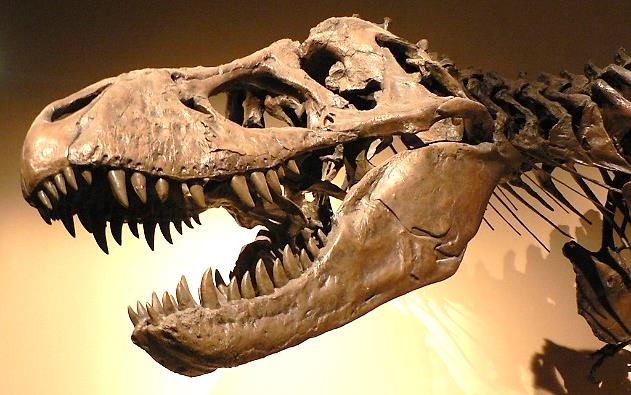
--------------------------------------------------------------
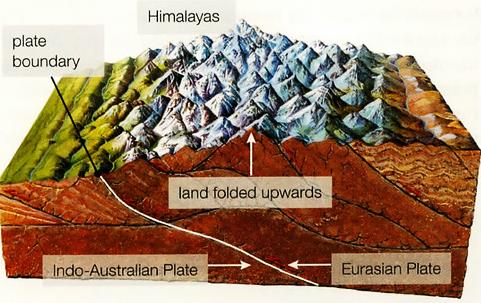
1313. The San Andreas Fault formed when
the North American plate overrode the:
a) Ouachita subduction zone. b) Zuni epeiric sea.
-------------------------------------------------------------- d) Pacific-Farallon ridge. e) c) Andes Mountains.
a) Probable ancestor of placental and Feedback: The San Andreas Fault formed as a marsupial mammals. result of the movement and interaction between b) 1311. Atlantic Coastal Plain. The eupantotheres were the:
c) Most dolphin-like of all ichthyosaurs. the North American plate and the Pacific- Largest of all sauropods. Farallon ridge, which is a divergent plate d) First vertebrate animals capable of flight. boundary. This interaction led to the e) Most diverse bivalve gymnosperms. development of this significant fault system in
274
California. The San Andreas Fault is a materials older than about 50,000 years due to
transform fault boundary where the Pacific the decreasing amount of carbon-14 available
Plate and the North American Plate slide past for measurement. For older materials, other
each other horizontally. It marks the boundary dating methods like radiometric dating of
between these two major tectonic plates and is isotopes with longer half-lives are employed.
one of the most well-known and studied fault
systems in the world. The movement along the
San Andreas Fault has resulted in significant
seismic activity and is responsible for the

creation of much of California's mountainous
terrain. It's an excellent example of plate
tectonics in action and has been extensively
studied to understand the dynamics of plate
boundaries and the potential for earthquakes in
the region.
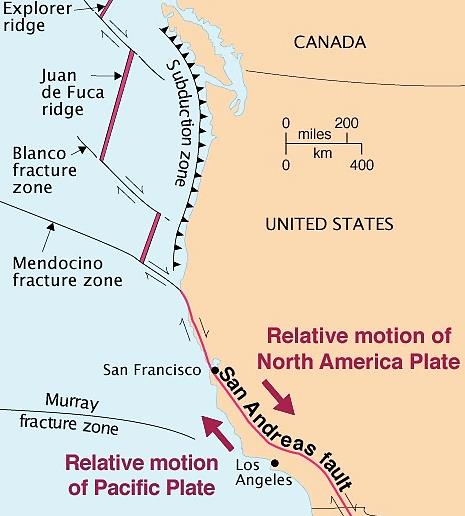
--------------------------------------------------------------
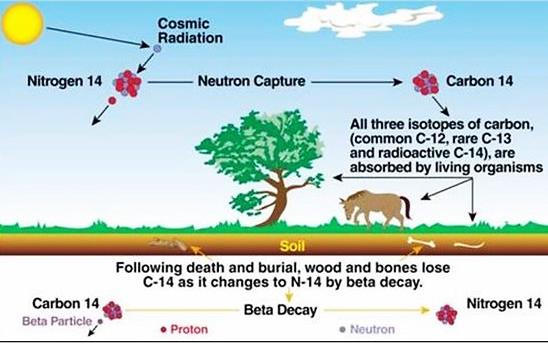
1315. During the Cenozoic Era, Earth’s
temperature was highest during the:
a) Pleistocene. b) Pliocene. c) Eocene. d) Cretaceous. e) Neogene.
Feedback: During the Cenozoic Era, the Eocene epoch, which occurred approximately
56 to 34 million years ago, experienced some
of the highest global temperatures in Earth's
recent history. This period was characterized by
a greenhouse climate with elevated
temperatures and high levels of carbon dioxide
1314. Carbon dating is used on: tropical today. a) Organic samples. b) Minerals. c) Metamorphic rocks. d) -------------------------------------------------------------- of the Eocene epoch supported the growth of lush tropical rainforests in regions that are not (CO 2) in the atmosphere. The warm conditions
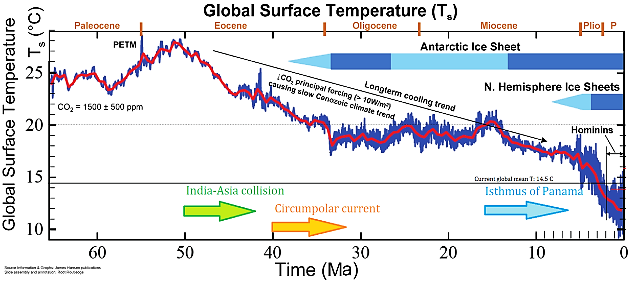
Igneous rocks.
Feedback: Carbon dating, also known as radiocarbon dating, is a widely used method for
determining the age of organic materials
containing carbon-14 isotopes. This technique
relies on the fact that carbon-14 is a radioactive
isotope with a known decay rate, and it's --------------------------------------------------------------
incorporated into living organisms through the 1316. One of the major components of the carbon cycle. When an organism dies, it stops Cenozoic marine invertebrate fauna was:
absorbing carbon-14, and the isotope starts to a) Foraminifera. decay. By measuring the remaining amount of b) Cetaceans. carbon-14 in a sample, scientists can estimate c) Proboscidians. how long it has been since the death of the d) Ungulates. organism, providing a way to date the sample. e) Ammonites. Carbon dating is particularly useful for dating
archaeological and geological samples that Feedback: Foraminifera are a major contain once-living materials, such as wood, component of the Cenozoic marine invertebrate
bone, shell, and plant remains. It's effective for fauna. These are single-celled organisms with
dating samples up to around 50,000 years old, calcium carbonate shells (tests) that make up a
making it a valuable tool for understanding the significant portion of marine microfossils. They
timing of events in Earth's recent history. It's are important for paleontologists and geologists
important to note that carbon dating has studying the Cenozoic Era because their
limitations and may not be suitable for dating fossilized remains are widely distributed and
275
provide valuable information about the ancient Atlantic coastal plain, contributing to the
marine environments and climates. formation of its geological features.

--------------------------------------------------------------
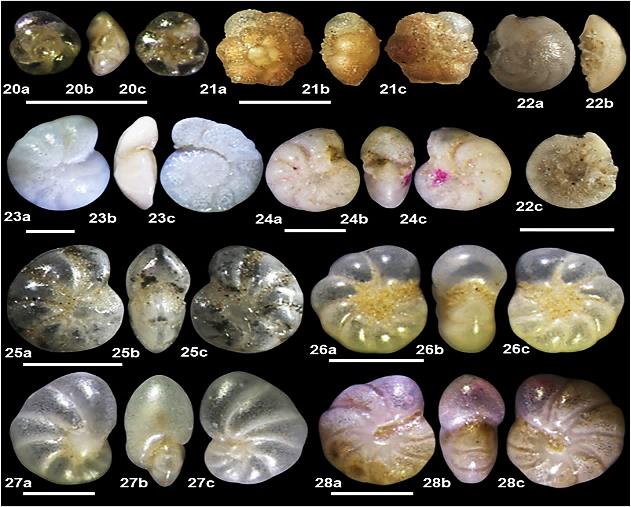
1319. A fossil found over a large area
deposited within a short time period is ____.
a) A specimen interval. b) An index fossil. c) A time differential.
-------------------------------------------------------------- d) An indicator marker. 1317. Which one of the following has been
proposed to account for Pleistocene Feedback: An index fossil is a fossilized
extinctions? organism that is useful for dating and
a) correlating the strata in which it is found. It is Meteorite impact.
b) typically a species that had a wide geographic Climate change.
d) existence. When found in rock layers, it can be Migration of mammals from Australia. used as an indicator of the time period during c) distribution and a relatively short-lived Evolution of grasses.
e) Increased energy from the Sun.
which those rocks were deposited.
Feedback: The Pleistocene extinctions, often referred to as the Quaternary extinction event,
are believed to have been primarily driven by
climate change. During this period, there were
significant fluctuations in global climate,
including repeated glacial and interglacial
periods. These changes in climate led to shifts
in vegetation and available food resources for
animals, affecting ecosystems and causing the
extinction of many large mammal species.
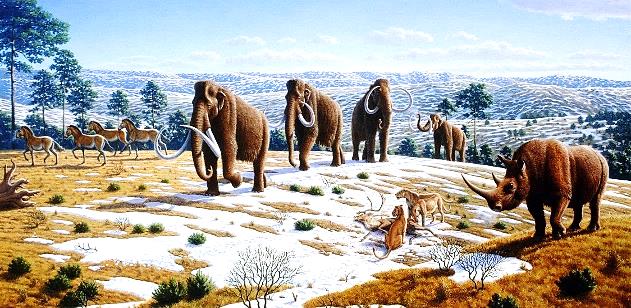
--------------------------------------------------------------
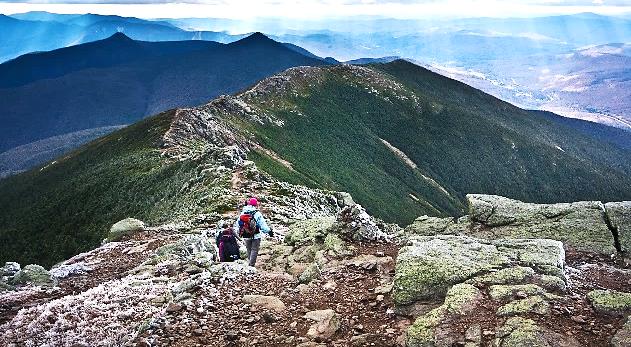
1320. Paleozoic is an example of ______. a) An epoch. b) An era. c) A period. d) An eon.
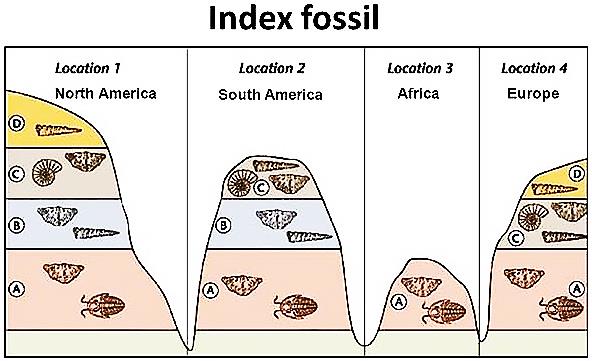
-------------------------------------------------------------- Feedback: Paleozoic is one of the three 1318. Most of the Cenozoic-age sediment on geological eras of the Phanerozoic Eon, which
the Atlantic coastal plain was eroded from covers the time span from 541 to 252 million
the: years ago. An epoch is a subdivision of a
a) Rocky Mountains. period, which is a subdivision of an era. An eon
b) Cascade Range. is the largest unit of geologic time,
c) Appalachian Mountains. encompassing several eras. d) Ozark Plateau. --------------------------------------------------------------
e) Farallon ridge. 1321. The Precambrian is the ________ time
span in Earth's history.
Feedback: Most of the Cenozoic-age sediment a) Youngest. on the Atlantic coastal plain was eroded from b) Latest. the Appalachian Mountains. Over millions of c) Earliest. years, weathering and erosion of the d) Middle. Appalachian Mountains supplied sediments
that were transported and deposited on the Feedback: The Precambrian is the earliest
time span in Earth's history. It represents the
276
vast portion of Earth's history before the
Phanerozoic Eon, which includes the
Paleozoic, Mesozoic, and Cenozoic Eras with
their abundant fossil record. The Precambrian
encompasses approximately 4.6 billion years of
Earth's history, from the planet's formation to
the beginning of the Cambrian Period, when
complex life forms with hard parts started to
appear in the fossil record. This long span of

time is divided into several eons, eras, and
periods, but it's characterized by a scarcity of
well-preserved fossils compared to the later
Phanerozoic Eon.
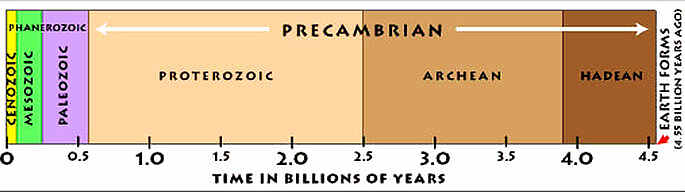
--------------------------------------------------------------
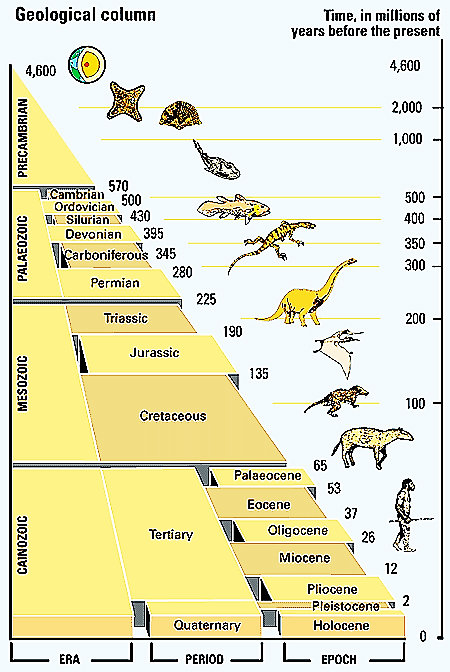
1322. Earth today is in ______________.
a) Cenozoic era, Quaternary period,
Holocene epoch.
b) Precambrian epoch.
c) Devonian period, Quaternary era.
d) a) Bacteria, fish, birds, humans. Triassic interglacial.
b) Bacteria, birds, fish, humans.
Feedback: The Cenozoic era is the current c) Humans, birds, fish, bacteria. geological era and began approximately 66 d) Humans, fish, birds, bacteria. million years ago, following the end-Cretaceous
mass extinction event. It is often referred to as Feedback: Bacteria are the oldest and most the "Age of Mammals." The Quaternary period diverse group of living organisms on Earth.
is a subdivision of the Cenozoic era and They first appeared about 4 billion years ago,
encompasses the last 2.6 million years. It is soon after the formation of the planet. Fish are
known for repeated glaciations (ice ages) and the earliest vertebrate animals, evolving from
the appearance of humans. The Holocene aquatic invertebrates about 500 million years
epoch is the most recent epoch within the ago. Birds are the descendants of feathered
Quaternary period and represents the period of dinosaurs, which emerged about 150 million
relatively stable and warm climate during which years ago. Humans are the most recent group,
human civilization developed. belonging to the primates, which evolved from
-------------------------------------------------------------- mammalian ancestors about 65 million years
1323. ago. Absolute dating measures ________. a) -------------------------------------------------------------- The radioactive decay of material.
b) 1325. What percent of isotopes of U-238 The depth of the fossil relative to sea level.
c) would be remaining after 2 half-lives? Climate CO 2 concentration.
d) a) 100% The movement of tectonic plates.
b) 75%
Feedback: Absolute dating techniques, such c) 50% as radiometric dating, measure the radioactive d) 25% decay of certain isotopes in minerals to
determine the absolute age (in years) of rocks Feedback: After 2 half-lives, half of the and fossils. This method relies on the remaining U-238 isotopes will have decayed.
predictable decay rates of radioactive isotopes This means that 25% of the original U-238
and is widely used in geology and archaeology isotopes would be remaining. U-238 has a half-
to determine the age of geological formations life of approximately 4.468 billion years. After
and archaeological artifacts. It provides a one half-life, half of the original U-238 isotopes
numerical age estimate, unlike relative dating will have decayed, leaving 50%. After two half-
methods that only establish the relative order of lives, half of the remaining 50% will have
events. decayed, resulting in 25% remaining. This
-------------------------------------------------------------- pattern continues with each successive half-
1324. life. In what order do these appear in the
geologic record ( oldest to youngest)? --------------------------------------------------------------
1326. Trilobites are found in the ________. a) Cenozoic.
277
b) Mesozoic. 1328. The radioactive decay of material can c) Paleozoic. be used to determine the age of fossils. This
d) Cretaceous. is called:
a) Fossil dating.
Feedback: Trilobites were ancient marine b) Complete dating. arthropods that lived primarily during the c) Relative dating. Paleozoic era, which is often referred to as the d) Absolute dating. "Age of Trilobites" due to their abundance and
diversity during this time. These creatures are Feedback: The radioactive decay of materials, known for their distinctive segmented such as isotopes found in minerals or fossils, is

exoskeletons, which made them excellent used in absolute dating methods to determine
candidates for fossilization. Fossils of trilobites the actual numerical age of rocks, fossils, or
are found in Paleozoic-aged sedimentary rocks archaeological artifacts. This contrasts with
around the world, providing valuable insights relative dating, which determines the order of
into the Earth's ancient oceans and events or objects in relation to one another but
ecosystems. Their fossils are important for does not provide specific numerical ages. understanding the history of life on Earth and
are often used as index fossils for dating rocks
from the Paleozoic era.
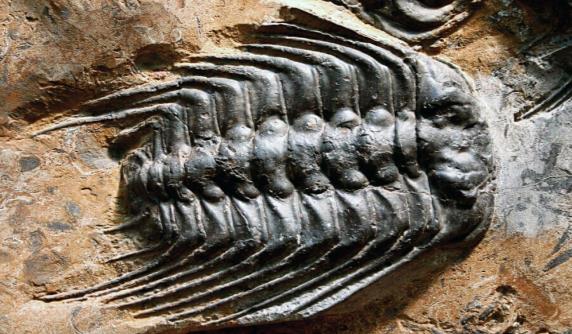
1327. Which of these is the best indication of -------------------------------------------------------------- the relative age of a rock layer? --------------------------------------------------------------
b) a) Index dating. other layers. b) Relative dating. c) The distance the layer extends over the c) Absolute dating. Earth. a) The thickness of the layer. a layer is older or younger from another is: The position of the layer compared to 1329. The method used when determining if
d) Fossil fractionation.
d) The chemical makeup of the layer.
Feedback: Relative dating is the method used
best indicated by its position in relation to other archaeological feature is older or younger than layers of rock. This principle is known as the Feedback: The relative age of a rock layer is to determine whether one geological or
another. It establishes the relative order of
Law of Superposition, which states that in an events or the sequence of deposition by
undisturbed sequence of sedimentary rocks, examining the position of rocks, fossils, or
the youngest rocks are at the top, and the artifacts in relation to one another within
oldest rocks are at the bottom. This allows stratigraphic layers. This method doesn't
geologists to determine the relative order of provide specific numerical ages but helps
rock layers and the events that occurred in geologists and archaeologists understand the
Earth's history. Other factors like thickness, chronological relationships between different
extent, and chemical makeup can provide objects or layers. additional information, but they are not as
reliable for determining relative age as the
position of the layers.
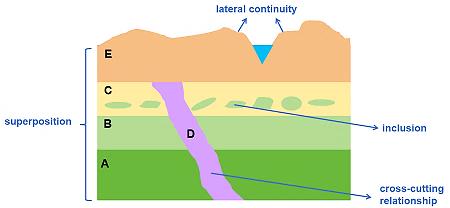
--------------------------------------------------------------
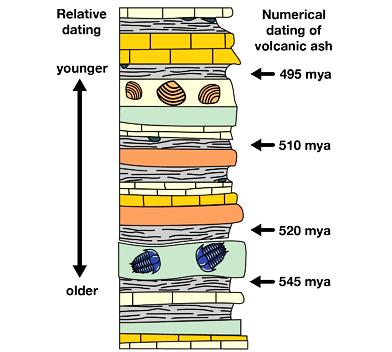
--------------------------------------------------------------
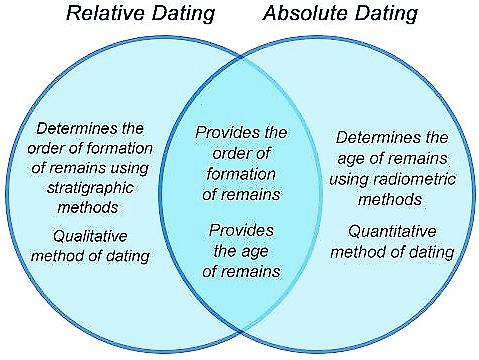
278