

Move to Mexico: A Guide For Families by Scott Paton - HTML preview
Download the book in PDF, ePub for a complete version.
Mérida: Culture, Safety, and Slow Living for Families
Why Families Choose Mérida
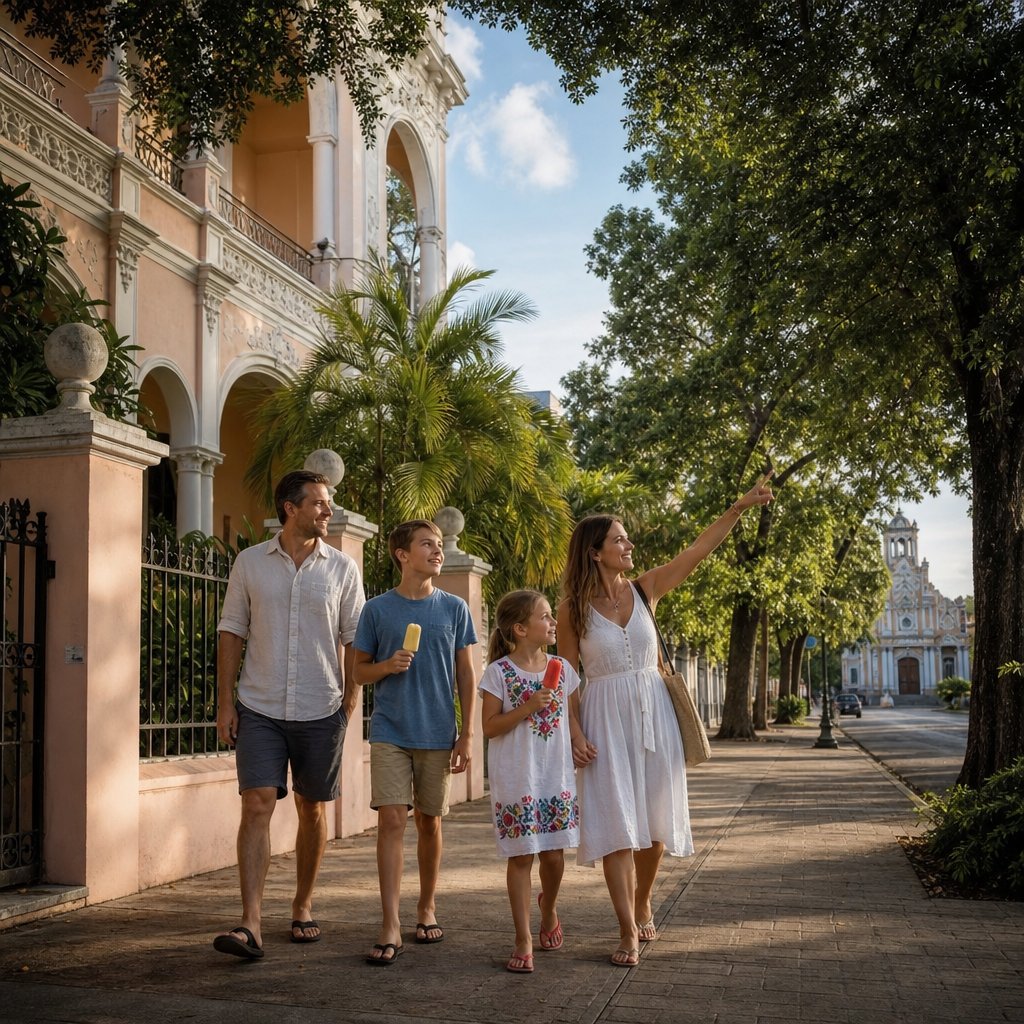
If safety is the number one item on your list—and for most parents relocating young children, it is—Mérida makes an unusually easy case. The Yucatán capital has landed at or near the top of Mexico's safest-city rankings for more than a decade, routinely posting homicide and violent-crime rates below those of many mid-sized US cities. What that means in daily life is tangible: parents let their twelve-year-olds walk to the corner tiendita for a bag of limes, families stroll the Paseo de Montejo on Sunday nights, and the word you'll hear repeated at school pickup is tranquilo.
You won't be the first family to make the leap, either. Mérida has one of Mexico's largest and most established English-speaking expat communities, concentrated in the historic Centro and the leafy north. That maturity matters: there are ready-made Facebook groups, newcomer meetups, English-speaking pediatricians, and parents who have already vetted the schools and can tell you which one actually fits a shy eight-year-old. Your kids will find playmates whose families have walked the same road.
Then there's the culture, which quietly becomes part of your children's education. Yucatecan cuisine—cochinita pibil, panuchos, sopa de lima—gives even picky eaters something to love, and the region's deep Mayan heritage turns a weekend outing to Uxmal or Chichén Itzá into living history. Kids grow up casually bilingual in a place where ancient pyramids are a short drive away.
The honest caveat is the heat. Mérida is hot year-round and brutally so from April through June, when afternoons routinely top 38°C (100°F). Successful families adapt by borrowing the local rhythm: active mornings, a shaded or air-conditioned midday break, and outdoor play again after five. Prioritize housing and schools with reliable cooling, and the climate becomes a manageable quirk rather than a dealbreaker.
Schools in Mérida: International and Bilingual Options
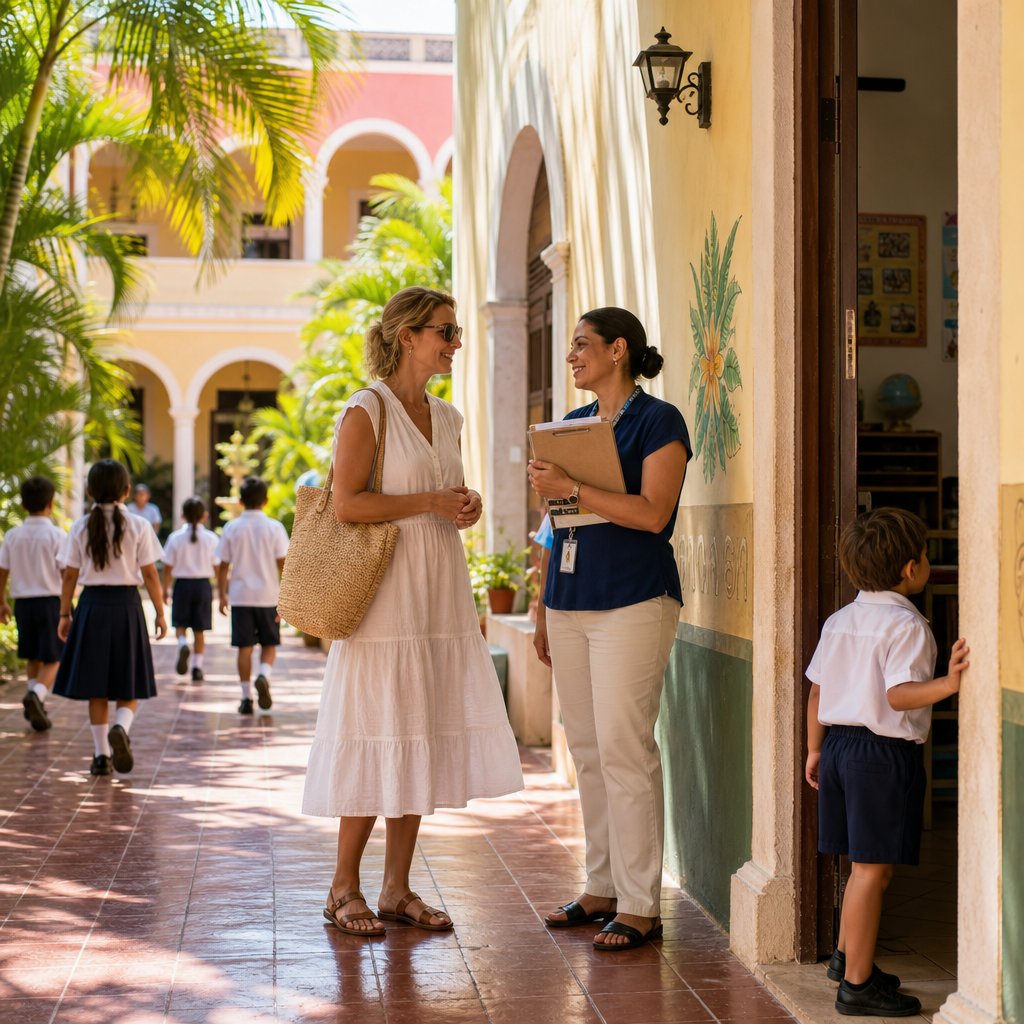
Mérida's school market is smaller than Monterrey's or Guadalajara's, but it punches above its weight. Two institutions anchor the English-medium scene, and most expat families you meet at the plaza will have an opinion about both.
The American School of Yucatán (Colegio Americano) is the city's most established international option, running a US-style curriculum from preschool through high school with AdvancED accreditation and an increasingly international student body. It leans heavily into English instruction and attracts many binational and remote-worker families. Colegio Montejo, by contrast, is a well-regarded bilingual colegio—roughly half English, half Spanish—with deep local roots, strong SEP recognition, and a reputation for academic rigor that makes it a favorite among Mexican professional families as well as expats.
For families thinking long-term, the key credential to confirm is the IB Diploma Programme, available at the upper-secondary level at select Mérida schools and a smart choice if your teenager may apply to universities in the US, Canada, or Europe. Verify the specific school's IB authorization directly—Mérida has fewer fully authorized IB schools than the larger cities, so this can narrow your shortlist quickly.
Budget expectations are gentler here than up north. Annual tuition at Mérida's top English-medium and bilingual schools runs roughly MXN 60,000 to 180,000, plus one-time enrollment fees, uniforms, and books that can add 15–25% in year one.
The catch is capacity. The best schools fill up, and waiting lists are common, especially at the lower grades where families enroll early and rarely leave. Plan to apply six to twelve months ahead of your intended start date. If you're aiming for the August start of the Mexican school year, begin inquiries no later than the preceding autumn, and schedule tours during your scouting trip rather than hoping for a spot on arrival.
Family-Friendly Neighborhoods and Housing in Mérida
Most relocating families gravitate to the Norte, the modern spine of the city running along Prolongación Paseo de Montejo toward Altabrisa. This is where you'll find the biggest concentration of expat families, largely because the American School of Yucatán and several bilingual colegios sit within a short drive, and because the area is built for daily family logistics: the Galerías and Altabrisa malls, Starmédica and Clínica de Mérida hospitals, pediatric offices, and chain supermarkets like City Market are all close at hand. Neighborhoods like Altabrisa, Montebello, and the Montejo corridor skew newer, with wider streets and more reliable infrastructure than the historic core.
Families who crave walkable, colonial life choose Centro Histórico instead. Here your kids grow up among pastel townhouses, Sunday bike closures on Paseo de Montejo, and the Plaza Grande's weekend festivities. The trade-off: older plumbing, street noise, fewer parking options, and longer school commutes. It suits families with younger children, flexible work, and a tolerance for charm over convenience.
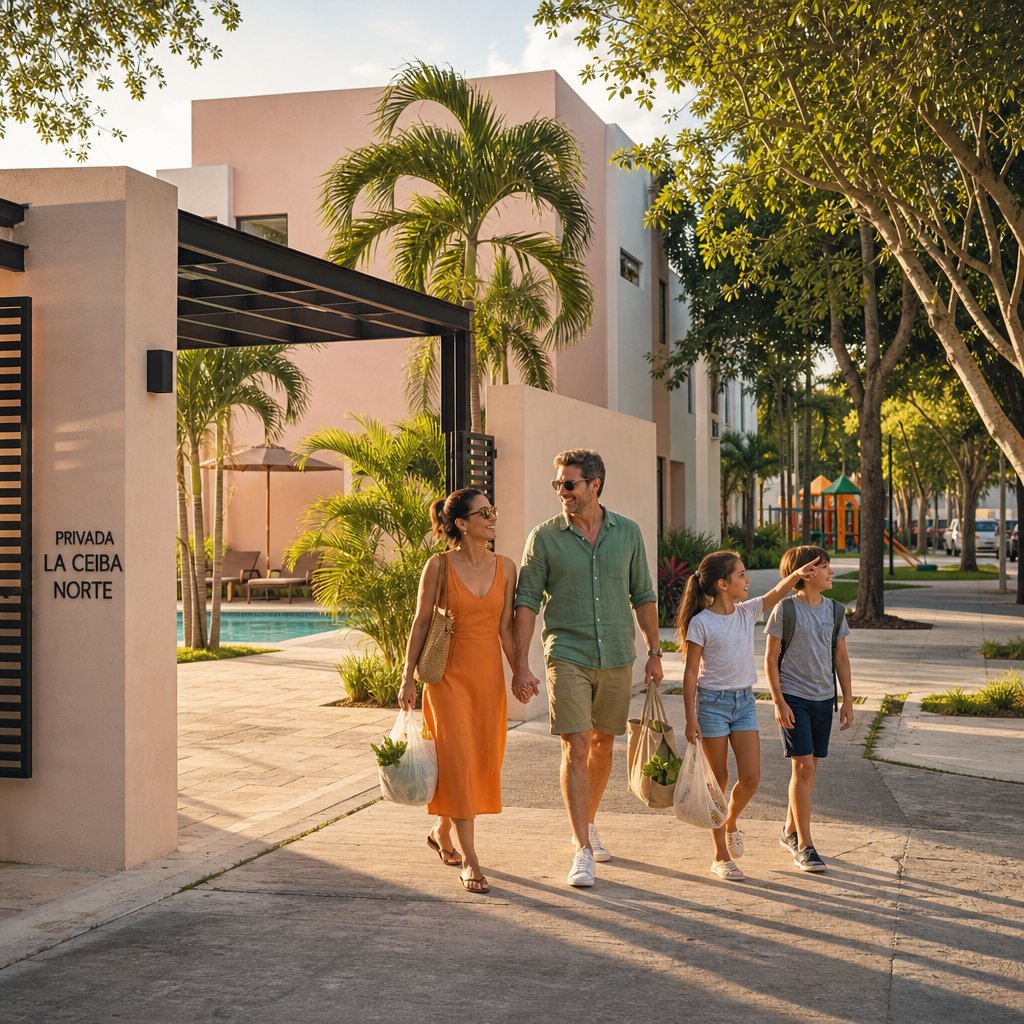
For three-bedroom homes, expect roughly USD 800 to 2,000 per month. The lower end gets you a solid unfurnished house in a standard Norte colonia; the upper end buys a furnished home inside a gated fraccionamiento with a shared pool, landscaped common areas, and 24-hour security—features many families with young kids prize, especially given Mérida's heat.
These private communities (fraccionamientos) cluster in the Norte and northeast, places like Privada Arborea or developments off the Periférico. They offer playgrounds, controlled entry, and ready-made neighbor networks of both Mexican and expat families.
- Best for school access: Altabrisa, Montebello
- Best for walkability: Centro Histórico
- Best for young kids + security: fraccionamientos in the Norte
- Budget tip: unfurnished long-term leases run 20–30% cheaper than furnished.
Pediatric Healthcare and Family Safety in Mérida
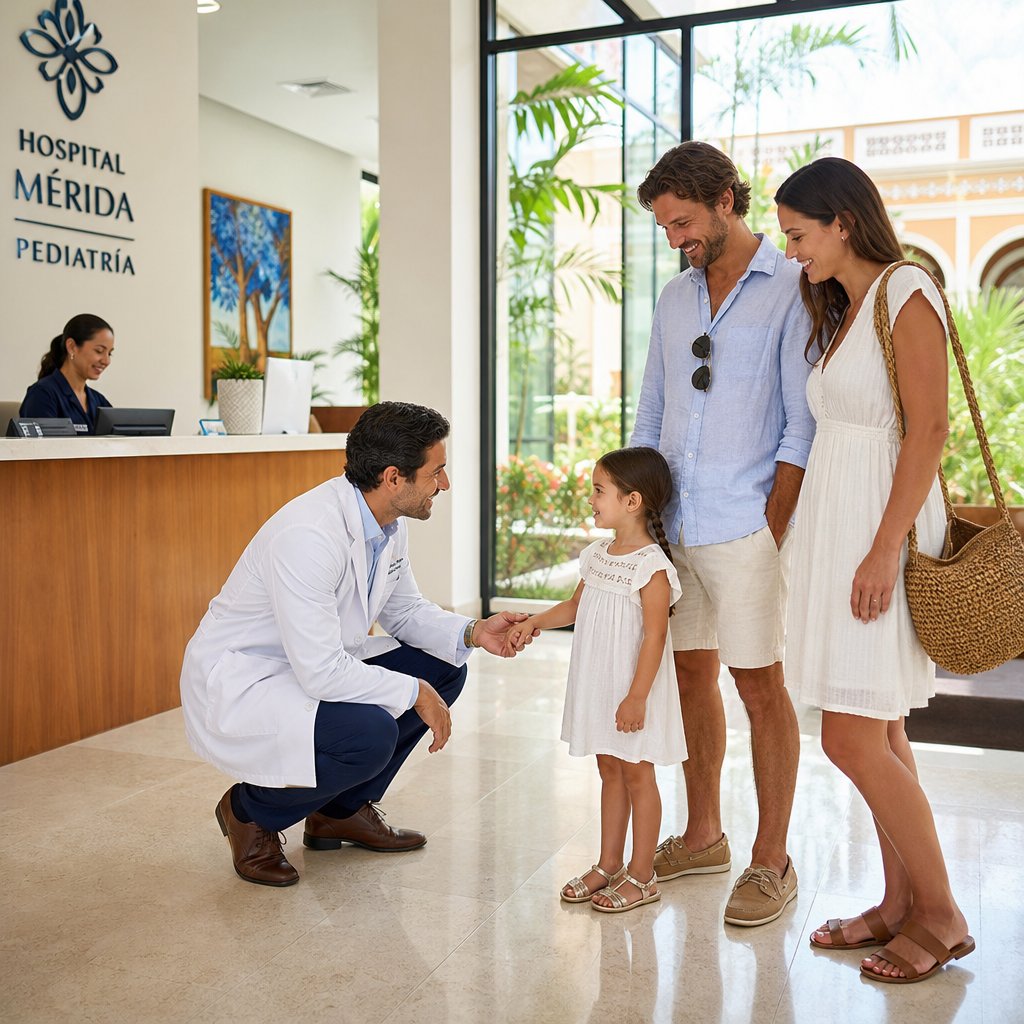
For a city its size, Mérida punches well above its weight on healthcare—one reason it has become a magnet for medical tourism from the US and Canada. Two private hospitals anchor the system for expat families. Hospital Clínica de Mérida, on Avenida Itzáes, is the long-established name locals trust for everything from stitches to surgery. Star Médica, up in the Norte near the Altabrisa cluster, is newer, gleaming, and conveniently close to where most expat families settle. Both have 24-hour emergency rooms, pediatric specialists, and NICUs.
You'll find English-speaking pediatricians across the private sector—many trained in the US or Mexico City and accustomed to foreign families. Expect to pay roughly MXN 600–1,000 for a private consultation, often with same-day availability. Ask your relocation agent or a local expat Facebook group for a shortlist before you arrive; a trusted pediatrician is one of the first anchors a new family needs.
On safety, Mérida consistently lives up to its reputation as Mexico's safest large city. Violent crime is genuinely rare, and families routinely let older kids walk to the corner store or bike around gated fraccionamientos. That said, don't let the calm make you careless—petty theft (opportunistic car break-ins, grabbed phones at busy markets) does happen. Lock cars, keep valuables out of sight, and teach kids the usual street smarts.
The one seasonal variable worth planning for is weather. Hurricane season runs June through November, and while Mérida sits inland enough to avoid direct coastal battering, heavy rain, flooding, and power outages do occur. Keep a basic family kit: bottled water, flashlights, a battery pack, and a few days of non-perishables. Download the local civil protection alerts, and if you rent, confirm your home has a backup water tank (tinaco)—a standard feature that keeps the taps running when service hiccups.