

CODENAME: ATHENA (2025 Edition) by Michel Poulin - HTML preview
Download the book in PDF, ePub, Kindle for a complete version.
CHAPTER 22 – NEW WEAPONS
10:25 (GMT)
Tuesday, December 17, 1940
Vickers-Armstrong Tank Plant
Newcastle, England
“My god, it’s a beauty!”
“It effectively has quite a look to it, George.”
Both Nancy and George Townsend were looking for the first time at the completed tank
prototype inside the Vickers-Armstrong’s experimental shop. The well-sloped lines of
the tank armor, designed to deflect projectiles, did in fact give it a decidedly sporty
silhouette to the vehicle. Its low profile, as directed by Nancy to keep it a difficult target,
belied its mass of 43 tons. The long, thick barrel of a 3.75-inch caliber high velocity gun
stuck out of the rear-mounted turret, with its muzzle still protruding in front of the chassis.
Townsend walked slowly around the tank, checking its features in detail. Finally
climbing on the front of the tank, with its highly-slopped upper glacis plate he pointed at
the engine’s radiator, visible under an armored louver on the left front side of the chassis
roof.
“Why did they put the engine in the front of the vehicle, instead of the usual rear
position?”
“For two good reasons, George: first, this way the engine and the transmission
provide additional protection to the crew from projectiles fired from the frontal arc;
second, this permits the same chassis to be easily adapted to other roles. In this case,
we also produced prototypes of armored personnel carrier, self-propelled artillery gun,
command vehicle and engineer vehicle variants from this same chassis.”
The awed expression on Townsend’s face made her most uncomfortable.
‘’George, don’t go thinking that I’m such a genius. I did not invent all these things;
I merely imported the ideas from my era.’’
‘’If you say so. Shall we look inside?’’
‘’By all means.’’
299
Nancy deftly jumped on the tank and entered the turret via the commander’s hatch,
sliding forward in the gunner’s seat. At her request, Townsend took the commander’s
seat, behind and above hers. Nancy then checked the position and accessibility of the
various controls and was mostly satisfied. Taking out a notepad and a pen, she started
noting down the few points that she felt could be improved. Townsend, for his part, was
like a kid playing with a big new toy.
‘’This is fantastic! Do tanks look like this in 2012?’’
‘’Externally, yes. Internally, no. There are practically no electronics inside this
tank, apart from the radio set behind you. Nearly half of the price tag of tanks in my era
was for the electronic systems filling them.”
Townsend looked behind him and saw a radio on a shock-absorbing rack behind his
seat. Besides the radio was an ammunition storage rack for the main gun’s shells,
contained in individual protective tubes inside the turret bustle and with the tubes
surrounded by water-filled liners. On the left side of the turret, across from the massive
gun breach, was the seat and working space for the loader. Nancy’s voice then got his
attention.
“Alright, George, imagine that you are the commander of this tank. You are
leading it into combat, hatches closed. You have a ring of eight periscopes on your
cupola, to help you see outside. You also have in front of you a large optical device with
something like handlebars on each side of it. Grab them and look in the sight.”
“Wow! How much magnification does that sight have?”
“Ten! Now, if you wanted to pivot the turret yourself to, let’s say, designate a
target to the gunner, you would just need to turn and twist those handle bars to do it.
Since the power is off, it won’t work right now. You know, I think that I’d like to do a little
road test of this beast. Let me just advise the chief engineer, I will be back soon.”
“You can drive a tank?”
“I was once a liaison officer with a Russian unit participating in a peacekeeping
operation in the Balkans. They became quite fond of me and let me try all their
equipment, apart from giving me short courses in how to drive their armored vehicles.
Now, let me go out to talk to the engineer.”
She squeezed by him through the hatch, then disappeared at a trot inside an office
giving directly into the experimental shop. She was back after a few minutes, a map in
her hands. She climbed back on the tank and handed the map to Townsend.
300
‘’This is a map of the Vickers facilities, including the tank dirt track, here.” ‘’I see it. Where are the intercom box and earphones?’’
‘’To your right. Do not switch it on before the engine is well started.’’
Nancy then disappeared inside the driver’s hatch, forward and to the right of the turret.
After a minute or so, the powerful Rolls-Royce Meteor engine came to life in a low
rumble. Townsend flipped the intercom on and put the protective helmet with its
integrated earphones and microphone on his head, then activated his microphone.
‘’Can you hear me, Nancy?”
‘’Loud and clear! Are you ready to roll?’’
‘’Anytime you want.”
The feeling of power which surged inside Townsend as the heavy vehicle started moving
was overwhelming. Passing through the doors of the shop, which had just been opened
by a Vickers worker, the tank rolled into the gray daylight, taking up speed cautiously as
Nancy gained familiarity with the manual transmission. They stopped at the start of the
dirt track, where Nancy tried on-the-spot turns. While it all seemed to go well to
Townsend, she was not too pleased and said so on the intercom.
“I can’t reverse the tracks’ motion to make a pivot turn. They will have to rethink
the steering system. Let’s try the turret traverse. On my mark, turn the turret one full
turn to the left at full speed. Mark!”
Townsend then twisted his control handlebars to the left. The massive, rectangular
turret started rotating quickly, stopping on the order of Nancy.
“10.8 seconds for a full rotation. That’s better than I expected. Try the
elevation.”
Once satisfied with that too, Nancy started rolling on the dirt track. She found the
prototype tank speedy but a bit short on torque. Also, the gearbox was relatively easy to
use but the turns were jerky.
“I bet these idiots used a simple clutch and brake steering system instead of a
multi-geared regenerative steering system as I requested.”
“Whatever you say, Nancy.” replied Townsend, out of his depth in this matter.
Lord Beaverbrook was enjoying this trip to the Vickers factory with the chief of the
Imperial General Staff: it gave him an excuse to get out of the confines of his office and
let him see some nature. They were about a mile from the factory’s main gate when
301
movement to his right and the roar of a powerful engine attracted his attention and that
of Sir Dill. They were startled to see a huge tank with an impressively large gun racing
with Dill’s car on a dirt track running parallel to the road. The tank was actually nearly
keeping up with the car.
“Look at that thing go, Sir Dill!”
“By Jove! Jarvis, how fast are we going?”
The government driver looked at his speedometer, then at the tank.
“We are doing 45 miles per hour, Sir. I didn’t know that any tank could go this
fast.”
“Me neither.” echoed Sir Dill, his eyes riveted on the speeding tank. He saw that
the tank was now approaching a fairly pronounced bump on the dirt track.
“These maniacs better slow down soon or they will break their suspension on that
bump.”
The tank effectively flew off the ground as it hit the bump at full speed, but it crashed
back down in a cloud of dirt and simply kept going, only rocking back and forth on its
suspension for a second. Lord Beaverbrook looked at Sir Dill, a wide grin on his face.
“I’ll be buggered if the army doesn’t buy this beast, Field Marshal.”
“I will certainly pass along a commentary to this effect if the rest of the
demonstration proves as impressive as this, Lord Beaverbrook.”
As the official car was entering the Vickers factory, the tank swung behind it and
followed it to the experimental shop, where both vehicles stopped inside, side-by-side.
The driver and commander of the tank emerged from their hatches and, jumping on the
ground and saluting as Dill and Beaverbrook stepped out of their car. The field marshal
returned their salute smartly, then walked to the tank to shake their hands. He then
hesitated and stopped, staring at the driver.
“You! God and heaven, you are to be found everywhere, Colonel Laplante.”
“It’s part of my job, sir, and I love it that way. May I present you my army
assistant, Major George Townsend, from the Royal Commandos?”
As they exchanged greetings, the shop’s chief-engineer hurried to join them. Nancy
presented him to Dill and Beaverbrook.
“Sirs, this is Charles Taylor, chief designer at Vickers-Armstrong. He built this
tank for us.”
“Congratulation, sir, your tank was most impressive on the track.”
302
“Er, how did it go, by the way? This was the first time that the prototype left the
shop.”
“Indeed? This makes it even more impressive then.”
“If I may, Sir Dill,” said Nancy, “I took notes during this road test. May I brief
Mister Taylor on it?”
“By all means! Do you mind if I eavesdrop, Colonel?”
“Even if I minded, would you leave, sir?”
“Touché! Go ahead, Colonel, I’m listening.”
Lord Beaverbrook and Sir Dill listened with growing bemusement as Nancy then
launched into a highly technical discussion with the chief designer. They in fact did not
fully understand half of the terms she or Taylor used. Beaverbrook finally could not
resist tapping Nancy’s shoulder to get her attention.
“Er, Miss Laplante, are you some sort of engineer on top of everything else you
do?”
She smiled with candor, obviously flattered.
“No sir! It is just that, as a professional military affairs correspondent, I routinely
interviewed weapons experts and engineers, apart from the soldiers who use the
equipment they design. You have to study widely to learn their techno-babble. If not,
you end up looking like an idiot.”
‘’Mister Taylor,’’ cut in Sir Dill, ‘’how long before this tank can be put into
production?’’
“Well, count about a month to correct the few things noted by Miss Laplante and
to improve the gearbox, then another two weeks for us to tool up for production. We
should be starting low-rate production of this tank and its variants after the New Year.”
‘’Variants? What are these?’’
Charles Taylor pointed towards the door of the adjacent shop, guiding the visitors from
London towards it.
‘’Let me show you some of the surprises we have in store for the Germans, Sir.’’
303
11:06 (GMT)
Friday, December 20, 1940
Coastal Command Short Sunderland seaplane
Northwest of the Irish coast, North
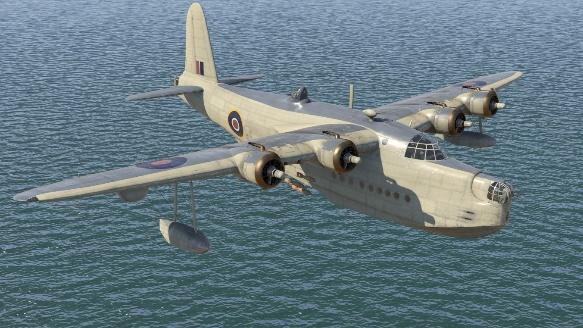
Atlantic
‘’Ah, smart man! Thanks, Gridley!’’
Flight lieutenant Bill Hurst accepted with a
smile the steaming cup of tea offered by his
forward gunner while looking at the sea through the windshield of his big four-engine
Short Sunderland seaplane.
“How is our PhD doing, by the way?”
Gridley shrugged. Since the new radar mounted in the nose had broken down an hour
ago, the pilot had been asking him the same question about every ten minutes.
“Last time I checked on him, he was still fiddling around the guts of that radar set,
sir. Er, could I ask a question, sir?”
“Ask, my fellow forward gunner.”
“Well, sir, I wanted to know if this Doctor Jones knew well that woman from 2012,
Nancy Laplante. Is it true that he works directly with her?”
Bill Hurst and his copilot, Steve Cheshire, smiled at Gridley’s question: a lot of RAF
crews dreamed about the Canadian woman popularly nicknamed ‘Super Nancy’. Many
argued that a woman couldn’t possibly have done half of the things she had been
reported to have done. Others, particularly the women auxiliaries, swore by her. Gridley
was in the latter category.
“Yes, he works directly with Super Nancy. Why didn’t you ask him yourself?”
“Well, he was so busy that I didn’t dare disturb him for that, sir.”
“You didn’t want to disturb me for what, exactly?”
Gridley nearly jumped out of his skin at hearing Jones’ voice from right behind him. The
physicist’s hands were dirty from the repair work he had been doing and he had taken
off his tie and suit jacket. He was smiling as he used a rag to clean his hands as best he
could.
304
“The radar set is up and operating, Mister Hurst. It was simply a bad connection
inside the emitter. What did Mister Gridley want from me?”
Despite the discreet but frantic signs by Gridley not to say it, Hurst was too happy to pay
him back for the countless practical jokes the gunner had made in the past.
“Airman Gridley is a big fan of Major Laplante and wanted to know if you knew
her well.”
The young scientist’s eyes sparkled with amusement as he looked at the gunner. He
then pointed an index at the pilot.
“You owe Lieutenant Colonel Laplante a beer, Mister Hurst.”
“She’s a lieutenant colonel already?” exclaimed Gridley.
“She is! To answer your question, yes, I know her well.”
“Could you tell us about her, please, sir?” asked the gunner like a kid asking for
his Christmas gifts.
“Well, no wrong in that, but I should watch my radar set…”
“Take the time, Doctor Jones.” said Hurst. “We are still forty minutes away from
our patrol area.”
The pilot, even if he wouldn’t publicly acknowledge it, was as interested as Gridley in
hearing stories about the woman who had only recently been officially and publicly
confirmed to be a time traveler from the year 2012. The terse official statement in the
newspapers and on BBC radio had however been short on details about Nancy Laplante
and her personal background. Jones smiled and nodded his head before taking out his
wallet and producing a small picture of Nancy, taken while she was visiting his home.
She was seen sitting beside Vera, Jones’ wife, and with his baby daughter in her arms, a
warm smile on her face. He passed the picture to Gridley as he spoke.
“Alright! I suppose that you know that she arrived on September the second near
Northolt. I met her for the first time on the night of that same day, in Northolt. I had
been sent from London to check the personal equipment she had in her car when she
was abducted in 2012 by unknown persons and transported back in time here.”
“Who could be those persons, sir?” Interrupted Gridley.
“Our best bet is by persons from the far future. I saw their burned bodies that
same night: their craft had collided with a German bomber shortly after leaving Laplante
and her car in a field. It seems that she is now with us for the duration.”
305
“No offence to her,” said Hurst, “but I have some problems believing that a
woman could do everything they say about her.”
“You better believe it, mister. Everything they said in the newspapers about her
is true. Yet, they don’t know half of the things about her.”
“There are rumors about her being quite a libertine, Doctor.”
“By present British standards she is, but you have to remember that she comes
from a society that has little in common with ours. I saw films produced in her time and
which depicted life in 2012. Sex by then is not the taboo subject it is now. In fact, I find
her tolerance and open-mindedness quite refreshing compared to the hypocrisy I
encounter so often in England. Now, if you will excuse me, I better return to my radar
set.”
An hour later, the radio operator advised Flight Lieutenant Hurst that an
unescorted convoy had been attacked by submarines and was calling for help.
Checking the location of the convoy on his map, he saw that they could be there in
twenty minutes. Hurst switched on the intercom.
“Attention all crew! We are heading towards a convoy hunted down by German
submarines. Man your stations!”
Hurst then thought about where the Germans could be now. Against an unescorted
convoy, they would probably attack on the surface, diving only if necessary and probably
using their wolfpack tactics. In that case, one or more submarine would follow the
convoy on the surface, relaying its position by radio to other submarines lying in ambush
ahead of the convoy. In that case…”
“Doctor Jones, start watching your scope carefully: we may be over some
submarines very soon.”
“Don’t worry, Mister Hurst.” came the reply on the intercom. “This radar can
detect a periscope at over five miles or a surfaced submarine at twelve miles. If they are
there, we will get them.”
Hurst silently wished to himself that he could be as confident as the scientist.
After another tense ten minutes, Jones’ voice came back on the intercom. “Contact! I have an isolated echo at heading 290, distance six thousand yards,
possibly a periscope.”
306
“Alright everybody, keep your eyes open for a periscope.”
Hurst then turned his big seaplane on the heading given by Jones.
“Radar to pilot, heading of echo now 005 relative, distance three thousand
yards.”
“I see it!” suddenly yelled Gridley on the intercom. “Right to our front! Definitely
a periscope, sir.”
“Good work, Gridley! Steve, open the bomb bay doors.”
“Bomb bay doors opened!”
“Arm the experimental weapon.”
Flipping a switch, the copilot activated the 1000-pound anti-submarine munitions
dispenser in the bomb bay. Jones’ voice came again on the intercom.
“Radar to pilot, if I may make a suggestion, do a wide turn once over the
submarine and approach it from the rear at an altitude of one hundred feet at your lowest
airspeed, then fire the dispenser just before you overfly the periscope. Set the firing
sequence to fast ripple.”
“You’re the scientist, we’ll do!”
Hurst then nodded to Cheshire to do as Jones had said. Performing a wide turn, the
Sunderland dipped low and came up on the unsuspecting submarine from the rear.
“Now, Steve!”
The copilot then savagely pushed the firing button of the dispenser. The twenty depth
bombs, each weighing fifty pounds, were quickly ejected downward at pre-calculated
angles in a noise resembling that of a machine gun burst.
“Nice pattern.” commented Hurst as he did a tight turn to observe the results of
their shooting. There were now twenty splashes on the sea, bracketing the periscope in
a wide oval pattern. One, then two geysers suddenly erupted.
“HIT! MY GOD, WE HIT IT TWICE!” screamed Hurst. “Gunners, get ready for
action! Steve, arm our two 250-pound bombs!”
Cheers rang out when the submarine broke through the surface. They soon saw men
run out of the conning tower to a 37mm cannon mounted aft of the periscope. Even then,
Hurst could see that the submarine was already developing a list.
“The bastards still want to fight. Gunners, fire at will!”
The Short Sunderland was not nicknamed ‘The Porcupine’ for nothing. Its twelve
machine guns raked the top of the submarine, toppling the Germans trying to man their
307
cannon. The two bombs dropped by the Sunderland then bracketed the submarine, with
one bomb apparently performing a hit and exploding. The submarine soon started
sinking nose first, its propellers bursting the surface and turning in the air. More
Germans ran out, but this time to jump into the sea.
“Cease firing! They are abandoning their sub.”
“Should we land to pick them up?” Asked Steve Cheshire. Hurst thought for a
moment.
“Naah! The sea is too rough for that. We will drop a rubber raft and signal their
position.”
As his copilot took care of that, Bill Hurst contacted Jones by intercom.
“Congratulations, Doctor! Both your radar and this munitions dispenser worked
magnificently. We will now be able to make life much harder for the German
submarines.”
“The Athena Section is always glad to be of help.”
15:06 (GMT)
Friday, December 27, 1940
Athena Section, Home Office Building
London, England
“Hey, look who’s back!” exclaimed loudly George Townsend, as weary-looking
Doug Wilson and Reginald Jones entered the Athena Section’s office.
“God!” added Peter Stilwell, raising his nose from his paperwork. “You both look
spent.”
“Not spent, just… well, I don’t know how to say it.” answered Wilson as he sat
heavily behind his desk. Townsend and Stilwell looked at each other in puzzlement.
The Royal Navy officer turned towards Reginald Jones, who was at the section’s tea
table, preparing himself a steaming cup with an absent-minded look on his face.
“Well, something went wrong during the demonstration of the new bombs?”
Jones shook his head and answered in a monochord voice.
“No, everything went very well, too well in fact.”
“What do you mean, Doc?”
308
“What I mean is that both de demonstrations of the 1000-pound dual purpose
munitions dispenser and of the Fuel Air Explosives bombs went perfectly. What got to
Doug and me was when the Handley Page Halifax bombers dropped the two-ton and
four-ton F.A.E. bombs on the target area. Even with Nancy’s warnings about the blast
power of F.A.E. weapons, I was not ready for the effect they made. Nobody was! Their
power was just overwhelming. We stood over a mile away from the target, with the
bombs hitting close to the center of their target, and we were still nearly thrown to the
ground by the blast of the four-ton bomb. That thing had the blast power of at least
twenty tons of TNT, for God’s sake! This was the most powerful weapon I have ever
seen in my life. May God pity the Germans when we drop it on them.”
All four men, along with Jennifer Collins, who had been typing at her desk, were
silent for a moment, thinking about the consequences of their work. Doug Wilson finally
looked around the office.
“Where is the boss, by the way?”
“In her office.” answered Stilwell. “She received minutes ago a wooden crate
from some ceramic factory and insisted on opening it by herself in her office. I guess
that she wants to make a surprise of it.”
“A ceramic factory?” repeated Jones with a dubious tone. “That’s right! It must be one of those little pet projects of hers which she keeps to
herself until it is proven to work satisfactorily. I wonder what it could be about.”
“Wonder no more, guys. What do you think?”
They all looked at Nancy, now standing just outside the door of her office, and paused.
“My God! An imperial stormtrooper, here?”
Townsend’s remark was close to the truth: Nancy was wearing a helmet with armored
faceplate and a vest of plate armor over her torso. The armored vest was actually a
khaki canvas vest with armor plates inside its lining and with numerous large equipment
pouches sewn on the outside. The helmet looked like an antique Greek hoplite helmet,
with a curved plate protecting the neck and cheeks. The faceplate had a narrow
horizontal eye slit in it and could be pivoted upwards to uncover the face. Nancy did just
that, a wide grin becoming then visible to her assistants.
“How do you like our new assault vest and helmet?”
309
They crowded around her at once to examine the armor in detail. The helmet had an
integrated radio headset and microphone, with a standard connector dangling at the end
of a short corkscrew wire. It also had an integrated flashlight mounted on the left side of
it, with a red filter lens which could be flipped over the normal lens for blackout
conditions. The armor plates inside the carrier pockets of the vest covered the chest,
abdomen, groin, ribs, back, shoulders and throat. There were enough pouches sewn to
the front and sides of the vest to carry the normal load of a soldier. There were even
front and back epaulettes so that the wearer could display his or her rank slip-ons.
Townsend, as the ground-pounder of the group, was particularly impressed with the kit.
“This is really well designed. How much protection does it give?”
“The plates and the front of the helmet will stop a 7.92mm machine gun bullet
from close range.” answered Nancy. Townsend looked at her in total disbelief.
“This must weigh a ton, then.”
“Actually, the vest weighs about thirty pounds, while the helmet weighs five
pounds. They are too heavy for everyday use by infantrymen but this kit is intended for
special high-risk missions and possibly for mechanized infantrymen.”
“How could it stop 7.92mm bullets and weigh no more than that?”
“The plates are made of aluminum oxide ceramic, also called Alumina,
sandwiched between two layers of aluminum. The ceramic is of the same type used in
the special armor of our new main battle tank. Let me show you some test plates which
were sent along with this kit.”
Going back in her office, Nancy brought out two curved armor plates with bullet impacts
on them. One had received three widely spaced bullets and had stopped them. The
other had four bullet entrance holes tightly grouped together. Turning the plate around,
Nancy pointed to an exit hole in it.
“These plates are meant to stop isolated bullets. Once hit a couple of times, you
simply insert a new plate in the canvas carrier vest.”
“Damn, I like this! Can I try it on?”
“Certainly!”
Nancy took off the helmet, then undid a pair of straps holding the bottom of the front and
back halves of the vest and another strap holding the groin plate from flapping between
her legs, then slipped it over her head. Townsend put the vest and helmet on, then
jumped up and down on the spot to test its comfort.
310
“Hey, it doesn’t feel that heavy, actually.”
“That’s because the weight is equally distributed around your torso. Wait until
you try to do a forced march while wearing this, though.”
The telephone rang in Nancy’s office, cutting her off.
“Excuse me for a moment, guys.”
She was back after a minute, a malicious look on her face.
“General Ismay wants to see me for a minute. Can you lend me back this armor?
I’d like to see if he scares easily.”
They all chuckled as Nancy put the armor back on. After thinking for a moment, she
went in her office and got her personal Enfield assault rifle.
“I might as well look like a real stormtrooper.”
She then left the section’s office, her faceplate lowered and her rifle at the ready, with
her assistants grinning in anticipation. A scream of fright was followed by the angry
voice of Mary Miles.
“YOU BLOODY MANIAC!”
The four men and Jennifer Collins broke out in laughter then.
Nancy passed two secretaries and a bureaucrat in the hallway, on her way to
Ismay`s office. Their frightened expression as they glued themselves to the walls to let
her pass was proof enough to her that the new armor could have a significant
psychological impact on enemy soldiers, apart from its main function as a protective
equipment. The layers of neoprene foam sandwiching the plate pockets, on top of
making the vest more comfortable to wear and cushioning any eventual impact,
prevented the plates from clanking between them. She soon entered the Prime
Minister’s office suite, passing in front of a startled secretary before coming to attention
and saluting in General Ismay’s office.
“Lieutenant Colonel Laplante, reporting as ordered, sir!”
General Ismay stopped reading the file he had in his hand and raised his eyes to her
with a greeting smile on his face before nearly jumping out of his chair.
“Jesus, Colonel!”
He took a few seconds to calm down before continuing, time Nancy used to raise the
faceplate of her helmet.
“What are you up to now, Colonel? Playing the role of Joan of Arc?”
311
“Actually, sir, she always has been one of my childhood role models. Her
common name was Jeanne de Domrémy, not Joan of Arc. I wanted to show you the
new assault armor and helmet I had designed. If you and Sir Dill like it, it can be put into
production quickly.”
Ismay got to his feet and went to examine more closely her armor. Nancy took a good
five minutes to describe it to Churchill’s military secretary, who was most impressed.
“We will have to go see Sir Dill about this armor, right after I show you what my
call to you was about.”
Returning to his desk, he took an official-looking document and handed it silently to
Nancy, who started reading it. It was an Act of Parliament, signed by the King. She felt
growing joy as she read, finally looking at General Ismay, who smiled to her.
“I thought that you would appreciate learning firsthand about this. It was the last
act of Anthony Eden as War Minister. As of today, all women auxiliaries in the British
Forces are to be fully integrated, with equivalent ranks and pay to male soldiers. This
act also opens to women a number of combat and combat support positions, including
bomber aircrews, anti-aircraft artillery crews, army signalers and Coastal Command
aircrews.”
“Oh, sir, this is so…”
Overtaken with joy, she took a step forward and kissed Ismay, who, while surprised, did
nothing to stop her. He then cleared his throat.
“Well, I have to say that this is the first time I get to be kissed by a woman
wearing armor.”
“Sir, this is such a nice surprise. How could I ever thank you and the Prime
Minister?”
‘’By accompanying Sir Anthony Eden to Washington on his first trip abroad as the
new Foreign Minister. You will go preach to the Americans about our new weapons and
the need to help us with their industrial might.’’
312