

CHILDREN OF TIME (2025 Edition) by Michel Poulin - HTML preview
Download the book in PDF, ePub, Kindle for a complete version.
CHAPTER 17 – STRATEGIC GAMBLE
01:21 (Taiwan Time)
Sunday, April 17, 2016 ‘A’
YUAN-Class Chinese diesel attack submarine
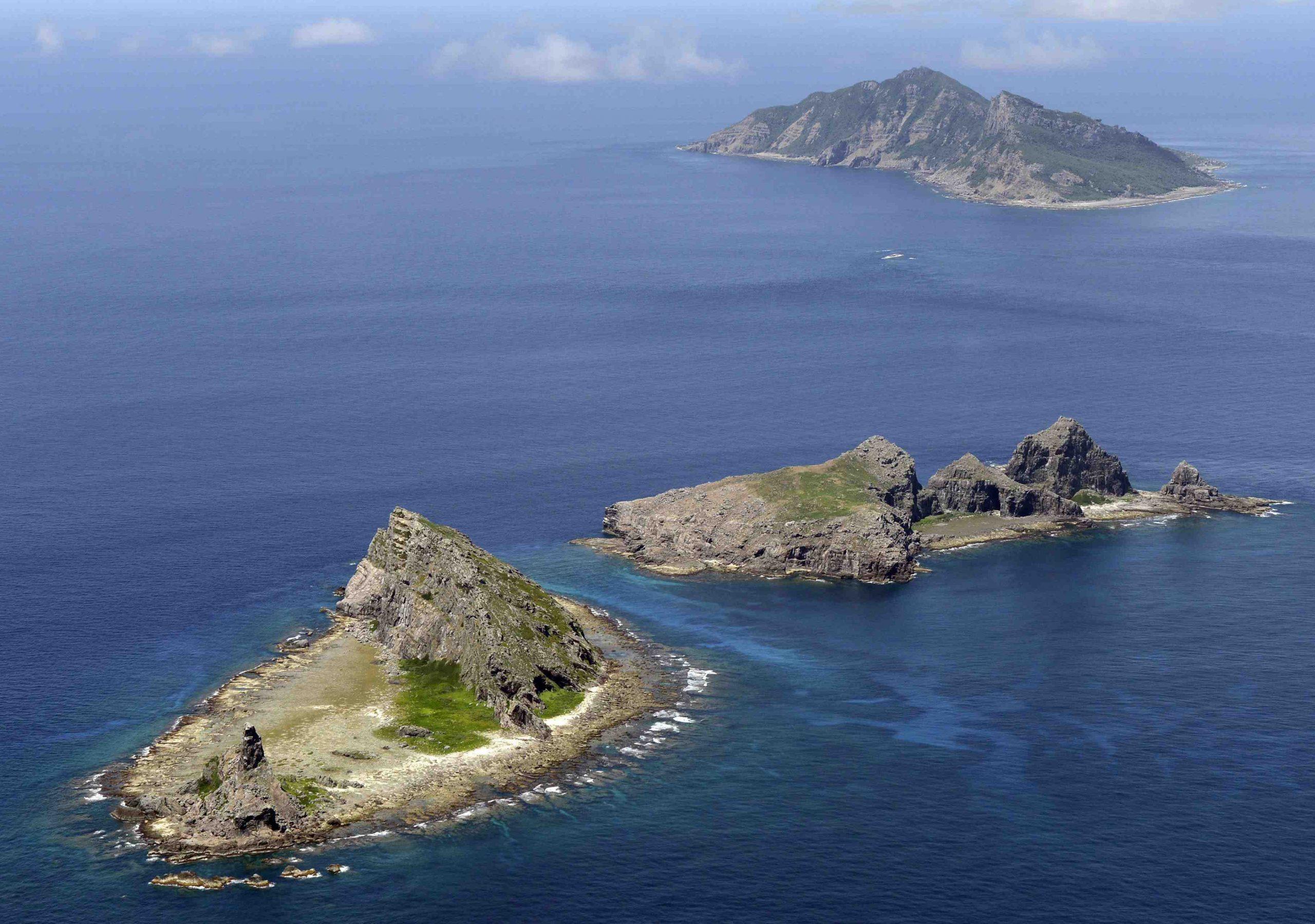
One kilometer from the main islet of Uotsuri-Shima/Diaoyu Dao Senkaku/Diaoyu Islands, Sea of Japan
After performing a last visual horizon search with his periscope, the captain shouted a series of short orders to his crew in the cramped control room of his diesel attack submarine.
‘’SURFACE! SURFACE! COMMANDOS TO THE DECK HATCHES!’’ As compressed air blew into the submarine’s ballast tanks, making it rise to the surface, the 32 People’s Liberation Army (Navy) Marines who had spent close to 24 uncomfortable hours in extremely cramped conditions inside the submarine hurried to get in position under the forward and aft deck hatches. The submariners posted at each
460
of the hatches soon got orders by telephone and shouted in turn at the waiting commandos.
‘’WE HAVE SURFACED! CLIMB ON THE DECK!’’
With a submariner climbing first the ladder in order to open the heavy access hatch, the heavily loaded and armed Marines climbed up quickly, emerging in the darkness of a moonless night, with a moderate sea around their submarine. Barely visible as a dark mass about one kilometer away was the islet of Diaoyu Dao, as it was called by the People’s Republic of China, the biggest islet in the contested Diaoyu archipelago, which was also known as the Senkaku Islands in Japan and as the Tiaoyutai Islands in Taiwan. Once the 32 Marines were on the wet deck, four inflatable rubber boats, still not inflated, were lifted through the hatches, along with their small outboard engines. Compressed air hoses were next through the hatches, helping to inflate the rubber boats in less than one minute. With the Marines then loading up in their four boats, sailors closed back the access hatches, allowing the submarine to sink back under the surface and leaving the rubber boats to float on the water. The Marines, both anxious and excited at the same time and conscious of the importance of their role in this historic moment, started up their outboard engines and raced towards the islet of Diaoyu Dao. At about the same moment, another submarine was delivering a further 32 Marines to occupy the much smaller islets of Bei Xiaodao and Nan Xiaodao, closely paired together and situated a few kilometers away to the East. Yet another submarine launched ten minutes later its own 32 Marines to occupy the second largest islet of the archipelago, Huangwei Yu, situated about ten kilometers to the Northeast of Diaoyu Dao. The Chinese Marines were not expecting any resistance on the ground, the islets being uninhabited, and did not encounter any Japanese as they beached their rubber boats and jumped out on the wet sand. Each team of eight Marines then grabbed the handles of their respective boat and carried them at a run to the foot of the rocky promontory which occupied most of the 4.32 square kilometers of surface of Diaoyu Dao. After camouflaging as best they could their rubber boats, the Chinese Marines, heavily loaded with weapons, ammunition and supplies, started the arduous climb up the rocky hill that extended from one end of the islet to the other. They arrived at the summit of the crest one hour later, exhausted, dripping with sweat but also happy. On a command from the platoon commander, one of the Chinese Marine unfurled a big PRC flag attached to an aluminum pole, planting solidly the pole in the ground under the triumphant shouts of his comrades: the Diaoyus were now effectively Chinese territory.
461
The YUAN-Class diesel attack submarine which had carried them to the archipelago was not resting on its laurels right then, as it was part of a much bigger and complicated plan, along with eleven other YUAN and SONG-Class boats and 26 older MING and ROMEO-Class diesel attack submarines. While the older, much noisier MING and ROMEO-Class boats were on their way to form a patrol line east and north of the Diaoyus and would send warning of any Japanese ship approaching the archipelago, the twelve newer and more quiet submarines were going to take ambush positions at carefully chosen locations. With luck, the Japanese navy would rush in, expecting only a few Chinese maritime coastal patrol boats around what they called the Senkaku Islands. If it did, it would then find out the hard way that China was not going to back away from this fight.
01:32 (Taiwan Time)
Japanese Coast Guard patrol vessel HOTAKA
Three kilometers south of Kuba-Shima/Huangwei Yu islet
‘’Sir, I am getting a small radar echo close to Kuba-Shima. It just appeared suddenly out of nowhere.’’
The duty officer of the patrol boat, who had been preoccupied for the last hour about shadowing a group of four Chinese fishing trawlers which had been acting in a suspicious manner, gave an impatient look at his bridge radar operator.
‘’How close is it from Kuba-Shima?’’
‘’Less than one kilometer, sir.’’
‘’And you didn’t see it prior to that?’’ replied the officer, his tone inferring that his operator had been somewhat negligent. The Japanese Coast Guard was not a combat naval force per say and its ships were not heavily armed, nor did they have much in terms of sensors. However, the surface search radar of their patrol vessel should not have missed any boat within such a short range. A shout of alarm from one of the bridge watch sailors then distracted the young navy lieutenant from the reported radar echo.
‘’SIR! THE FOUR CHINESE TRAWLERS HAVE TURNED HARD PORT AND ARE NOW HEADING TOWARDS KUBA-SHIMA.’’
462
The duty officer took the time to look for himself, using his binoculars, before giving orders.
‘’ENGINES FULL AHEAD! HELM, STEER TO 340! CUT THE PATH OF THOSE TRAWLERS!’’
‘’AYE SIR!’’
Swearing under his breath and wondering what game the Chinese were playing; the lieutenant then activated the ship’s intercom.
‘’Captain to the bridge! Captain to the bridge!’’
The boat’s skipper, a lieutenant-commander, showed up on the small bridge four minutes later, as the patrol vessel was about to cut the path of the four Chinese trawlers. The duty officer was just starting to explain quickly what was happening when a shout from a lookout made them snap their heads around.
‘’ONE TRAWLER JUST VEERED ON A COLLISION COURSE TOWARDS US.’’ The two Japanese officers froze for a moment, watching the nearest Chinese trawler, now less than a hundred meters away, as it plowed resolutely straight at them. The captain of the HOTAKA then shouted an urgent order to the helmsman.
‘’HELM, STEER HARD STARBOARD!’’
The helmsman reacted at once, but it was already too late. Driven through with fanatical resolution, the trawler’s charge caught the patrol vessel halfway in its turn, with the trawler’s steel bow slicing through the port aft hull of the Japanese boat. The impact sent all the Japanese present on the bridge down violently on the deck. Electrical power went off at once, while the engine room, now opened to the sea, flooded quickly. The trawler, its bow severely damaged, was nonetheless able to back out after the collision, with its crew starting to put their rescue raft in the water and with another trawler already approaching to assist it. The Japanese sailors struggling to save themselves from their sinking patrol boat however got no help from the Chinese trawlers. What they got instead was machine gun fire which raked their decks and superstructures, killing or wounding the sailors who were visible to the trawlers. The unlucky patrol vessel sank in less than nine minutes, without being able to send a single radio call for help and with its few surviving sailors abandoned on the surface of the sea. As the Japanese survivors struggled to stay afloat, the third and fourth Chinese trawlers sped to close to the shore of the nearby islet and each launched four rubber boats full of PLA(N) Marines. As soon as the second trawler was done rescuing the crew of the first trawler, it also headed towards the islet, launching four more rubber boats loaded with supplies and ammunition
463
for the islet occupation force. The same scenario basically played out near the other islets of the archipelago, but without any Japanese interference, the now sunk HOTAKA having been alone in the area at the time.
04:11 (Taiwan Time) / 05:11 (Japan Time)
Home of Admiral Nakamura Hideki
Yokosuka, Japan
Nakamura Hideki, Chief of the Maritime Staff and head of the Japanese Maritime Self-Defense Force, woke up with a grumble when his bedside telephone rang. Grabbing quickly the handset, so that the ringing wouldn’t wake up his wife, he looked at his alarm clock and swore: a call at such an hour could only mean bad news.
‘’Admiral Nakamura!’’
The old admiral then recognized the voice of Navy Captain Toyoda, the duty operations officer on night shift at the JMSDF fleet headquarters in Yokosuka. Toyoda, a normally calm, controlled man, sounded positively agitated.
‘’Admiral, we just heard a public radio and television message from the Chinese government announcing that it has seized control of the Senkaku Islands and that it was declaring a one hundred kilometer military restricted zone around them.’’
‘’WHAT?’’ Shouted Nakamura, waking up in a hurry and also waking up his wife with his shout. ‘’Didn’t we have a ship or two in that zone?’’
‘’There was a Coast Guard patrol vessel near the Senkaku Islands, but that boat is not responding to our radio calls, sir. I have just tasked one of our P-3 maritime patrol aircraft out of Naha to go investigate: it should be over the Senkaku Islands in two and a half hours.’’
‘’Get a fighter escort for that P-3, Captain Toyoda: we should be ready for the worse. What do we have in terms of ships that can be there quickly?’’
‘’We have the HYUGA Battle Group sailing presently off Okinawa, sir, plus one diesel attack submarine patrolling along the eastern coast of Taiwan. The Coast Guard can also send two patrol vessels out of Naha.’’
‘’Then, redirect them towards the Senkakus: we need to assess as quickly as possible what the Chinese have landed there, if anything is indeed there. I have a hard time believing that the Chinese government would pull such a stunt, especially after their
464
South China Sea debacle of four months ago. Have a full situation briefing ready for me on my arrival at fleet headquarters. I should be there in less than thirty minutes.’’
‘’Understood, Admiral!’’
Nakamura’s wife turned around in the bed and watched him get up and head for the bathroom to shave.
‘’Something’s wrong, Hideki?’’
‘’Could be! I will know more in the next hour. Don’t worry and go back to sleep.’’
15:16 (Washington Time) / 04:16 (Taiwan Time)
Saturday, April 16 (Washington) / Sunday, April 17 (Taiwan) The Oval Office, The White House
Washington, D.C., U.S.A.
Hillary Rodham-Clinton was having a conversation with a group of congressmen about a proposed law bill when her secretary rushed inside the Oval Office after two quick knocks on the door. Hillary would normally have chided her for disturbing her meeting like this but she noticed at once the concerned expression on the face of her secretary.
‘’Yes, Alice?’’
‘’Madam President, Secretary of State Rice just called: China claims to have seized by force the Senkaku Islands from the Japanese. It is in the news right now.’’ As the congressmen present looked at each other with consternation, Hillary got up at once from her easy chair in the coffee corner of the Oval Office and walked quickly to the television set sitting against one wall, switching it on and tuning it to the CNN News channel. She then effectively saw an anchorman recapitulating the main points of an official declaration to foreign medias just made by the Chinese government. She listened on for a bit more than a minute, then switched off the television set and faced the congressmen.
‘’I am sorry if I have to cut our meeting short, gentlemen, but you will understand that this is a major crisis that needs immediate attention.’’ One of the congressmen nodded his head at that.
‘’Indeed, Madam President! Two of our biggest trade partners, fighting it off in the Pacific? Will you invoke our defensive alliance treaty with Japan and send in the Navy?’’
465
‘’Let’s find out first what is really happening. Right now, we only have a Chinese government declaration to go about. Besides, you know that we haven’t been exactly supportive of the Japanese stance and conduct concerning those islands. However, this certainly justifies putting our forces in the Pacific on full alert. Be assured that I will keep the Congress appraised about our position on this as it evolves. Thank you for your time, gentlemen.’’
As the congressmen filed out of the Oval Office, Hillary faced her secretary.
‘’Alice, call the Principals of the National Security Council and tell them that I want to see them in the Situation Room in two hours.’’
‘’Yes, Madam President!’’
As her secretary hurried back to her adjacent office, Hillary went to sit back behind her presidential work desk, feeling dread. If this turned into a full blown war between China and Japan, the consequences for the United States and for the rest of the World could be incalculable. In truth, she had always felt that the Japanese position about the ownership of the Senkaku Islands was questionable at best, the archipelago being much closer to mainland China than to mainland Japan. In fact, simple geography would militate for Taiwan to own the islands, the Senkakus being a mere 170 kilometers from the Taiwanese capital of Taipei, while mainland China was 330 kilometers away and the Japanese island of Okinawa was 410 kilometers away. As for mainland Japan, it was a good 800 kilometers away from the Senkakus. As for the various historical arguments being thrown around by Japan, China or Taiwan, they all could be argued for or against, depending on who you asked. More importantly, as one congressman had just said, Japan and China were two of the largest trading partners of the United States, with China being as well a major nuclear power. This was definitely going to need more finesse than brawn.
12:54 (California Time) /
04:54 (Taiwan Time)
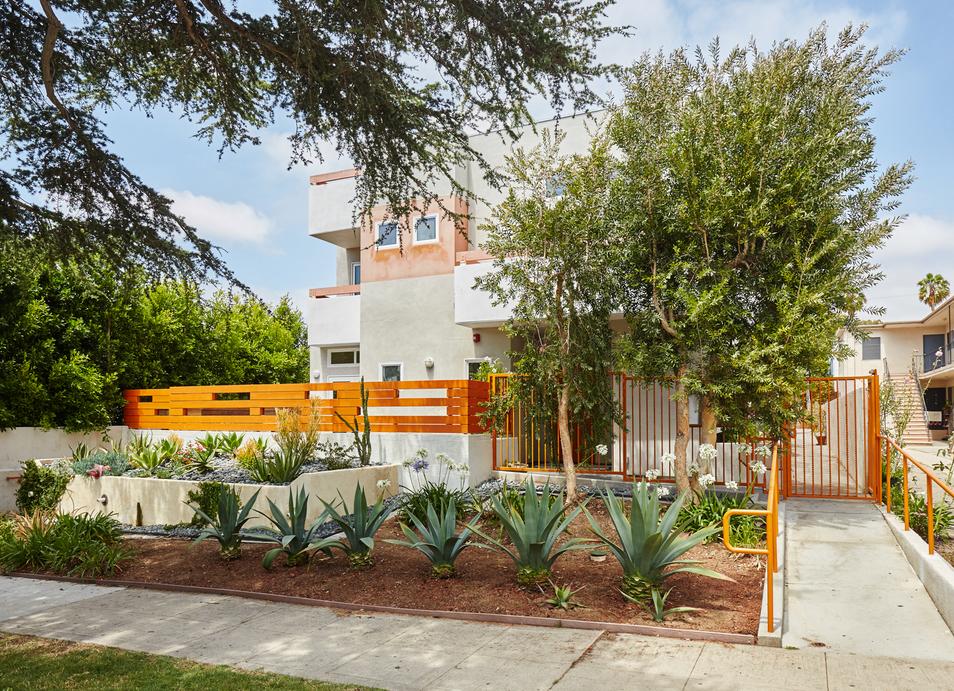
Unit # 103, 1827 16th Street
Santa Monica, California, U.S.A.
Nancy had been living for less
than a month in her new condo in
Santa Monica but she already loved it. It had been vacant when she had bought it for a
466
bit over 700,000 dollars, a fair price considering its size and its fabulous location in Santa Monica. With two large bedrooms, two full bathrooms, one washroom and a huge lounge and dining room distributed around two levels, along with three balconies and a dual spot in the underground gated garage, her new place sat less than 200 meters from the Santa Monica Freeway, giving her an easy access to the whole of the Los Angeles area, including Hollywood. It was also less than two kilometers away from the beautiful Santa Monica Beach, where she had taken to running daily on the sand and swimming to keep in top physical shape. Nancy had however decided to keep her old condo in Boucherville, as well as her lakeside cottage of Lake Manitou, north of Montreal, as secondary residences, for many reasons. One reason was sentimentality, as she still loved Montreal. Another was to keep them as jumping points for the Time Patrol in this century, with the secret underground module under her cottage being especially important to her. She had also kept her old 2010 Mitsubishi OUTLANDER, parked in her condo’s garage in Boucherville, as a ready mean of transport around Montreal area for herself and for visiting Time Patrol agents. Sylvie Comeau, who had been missing terribly her native 1941 Montreal, had already used Nancy’s Boucherville condo once with her two adopted Neanderthal children, Kin and Ani, to discreetly tour modern Montreal with them. As a consequence of keeping her old car in Boucherville, Nancy had made a further dent into her savings account and had bought a new car, an inexpensive and economical Japanese compact model, for her Los Angeles area travel. She had toyed for a moment with the idea of buying a more expensive and prestigious, flashy car, like a Porsche 911 Turbo, but had decided against it for many reasons. One was the state of the road traffic in the Los Angeles area, with its massive road jams which made the use of a fast sports car redundant. Another was to avoid the attention of both car thieves and paparazzi photographers, the latter becoming more and more of a pest for Nancy. With a new role promised to her in a soon to be produced major film, life in this century was again looking good to her after the pain of having to move away from Montreal.
Nancy was tossing for herself a fresh salad in her big kitchen when her cell phone rang. Fishing it out and looking at the caller I.D. number, she smiled to herself and opened the line.
‘’Yes, Christiane, what can I do for you today?’’
Christiane Amanpour’s tone of voice told Nancy at once that something serious was up.
467
‘’Nancy, I’m afraid that CNN will need your services in Japan, badly. I hope that you are available at this time.’’
‘’I am free for another three to four weeks. What is going on in Japan? I haven’t watched the news since early this morning.’’
‘’News are still sketchy, but the Chinese just seized by force the Senkaku Islands from the Japanese and have announced a military restricted zone around them.’’ That sobered up Nancy quickly. Even though she made a point of not reading in advance about the detailed future of the 21st Century, in order not to involuntarily create a causality loop by her actions, she fully realized how dangerous the dispute about the Senkaku Islands, or Diaoyu Islands as the Chinese called them, could become. She also knew how difficult and dangerous covering such a crisis could be.
‘’Can CNN press the Japanese consulate in Los Angeles in issuing quickly to me a visa as a reporter?’’
‘’We certainly can do that for you, Nancy. While we have affiliate reporters in Tokyo who will be able to cover the political reactions there for us, what we need is somebody who can get close to the disputed area and report from there. You would be perfect for that.’’
‘’Agreed! I will do my best to cajole my way aboard a Japanese ship as an embedded reporter. I will fly out to Japan as soon as I can get a visa.’’
‘’Thanks, Nancy! You are saving my skin…again. I will advise you soonest about your visa.’’
Amanpour then closed the line, leaving Nancy thoughtful in front of her kitchen counter as she started listing in her head the special equipment she would need to bring with her to Japan. One thing was already clear in her mind: guns would not be part of that list.
07:49 (Taiwan Time)
230 kilometers east of the Senkaku Islands
Sea of Japan
The atmosphere was tense inside the main cabin of the Japanese Lockheed P-3C ORION maritime patrol aircraft as it flew towards the main islets of the Senkaku Islands. Even while still well out of the newly declared Chinese restricted zone, the operators of the P-3C had already detected multiple radar and radio signals coming from the direction of the Senkakus, including a powerful radar signal from a Chinese KJ-2000
468
early warning aircraft. Everything indicated that the Chinese already had a significant air presence over the Senkakus, something that did not augur well for the four-engine turbo propeller patrol aircraft. The two F-15J fighter-bombers escorting the P-3C were decidedly proving to be a wise precaution for this mission.
‘’Electronic Warfare Officer to Pilot: I am now intercepting encrypted data link transmissions coming from that suspected KJ-2000 airborne surveillance aircraft. My guess is that this KJ-2000 is not alone over the Senkakus. We can possibly expect Chinese fighters over there.’’
‘’Are you seeing any return transmissions to that KJ-2000?’’ asked the pilot of the P-3C via his intercom. The EW officer checked his instruments again before answering.
‘’None yet, but that could mean that whatever is there is keeping strict electronic silence and is taking its cues from the KJ-2000. I can however certify that we are now well within the effective detection range of that Chinese airborne radar: the Chinese know that we are coming, sir.’’
That made the pilot pause as he weighed the risks that this entailed to his aircraft and crew. Even with two F-15Js as close escorts, his P-3C would be hideously vulnerable in any aerial engagement, and this didn’t even take into consideration the threat of missiles from possible Chinese ships close to the islands. Up to now they had not detected any Chinese warships east of the Senkakus on their surface search radar, but their passive electronic surveillance gear was picking up plenty of Chinese naval radar signals from beyond the Senkakus. The pilot then decided to kick the decision to continue on or not upstairs.
‘’Communications Officer, send an encrypted message to Fleet Headquarters, exposing what we have already been detected and asking if we should push on to the Senkakus. Emphasize that we need a quick decision on that.’’
‘’Understood, sir!’’
The copilot gave a sarcastic look at his commander.
‘’A quick decision from Fleet Headquarters, sir? Those desk jockeys are more argumentative than my grand-mother. We may well be back in Naha before they finish debating what to do next.’’
That made the pilot chuckle.
‘’You’re quite right about that, Tetsuo. Still, I don’t like the way things are looking right now.’’
469
As the pilot had predicted, the Fleet Headquarters did not reply at once to their query. Instead, it was the leader of the pair of escorting fighter-bombers who contacted the P-3C a few minutes later.
‘’Himeji Two, this is Ryu Leader: my air search radar is now picking a total of seven aircraft circling over Uotsuri-Shima. We may hit a rather rough welcome committee, over.’’
The pilot and copilot of the patrol aircraft exchanged knowing looks before the pilot replied on the radio.
‘’Understood, Ryu Leader. We are waiting for instructions from Fleet
Headquarters. In the meantime, we are continuing on course, Himeji Two out!’’ The pilot then heard a brief break in the radio static, as if the leader of the fighter pair had been tempted to say something but had refrained at the last moment. In that he could not blame the F-15J pilot: this mission was sounding more and more ill-advised by the minute. However, the necessity of ascertaining what the Chinese presence was on the Senkaku Islands could not be denied. Another two minutes later, they finally received a response from Fleet Headquarters. It was not however the one the commander of the P-3C had hoped for, making him swear.
‘’We are to push on and ‘test’ the Chinese response? Do those idiots in Yokosuka realize what that could mean for us?’’
‘’That sounds to me like an order coming from the Prime Minister’s office, sir.’’ volunteered the copilot. ‘’This crisis is as much a political as a military one.’’
‘’You may be right, Tetsuo. Still, I don’t like it one bit. I will let our escort jocks know about this decision now.’’
As he expected, the response from the F-15J leader visibly lacked in enthusiasm. Then came another piece of unwelcome news from the electronic warfare officer of the patrol aircraft.
‘’Sir, that KJ-2000 has started to emit strong radar jamming signals targeted at the air search radars of our two F-15s and at our own air navigation radar.’’
‘’How effective is that jamming?’’
‘’Unfortunately too effective, sir. Our radar is now all but blanketed by parasites, while the radars of the F-15s will certainly suffer some range degradation due to it.’’
‘’Damn! What a fine time to turn half-blind. Very well, do your best to counter that jamming.’’
470
The next transmission the pilot and commander of the P-3C got was ten minutes later, as they were about to enter the Chinese military restricted zone declared around the Senkakus. This time it came from the F-15J leader and was made in an urgent tone.
‘’Himeji Two, this is Ryu Leader. I can now see on my radar two widely separated pairs of fast moving aircraft, with one pair on each of our flanks. We are being caught in a pincer!’’
‘’Ryu Leader, we are aborting the mission.’’ replied the P-3C commander after only a short hesitation. ‘’This is becoming hopeless.’’
‘’TOO LATE! I HAVE MULTIPLE MISSILE LAUNCHES!’’ Blood rushed to the pilot’s brain as he realized at once that his aircraft was very well about to be destroyed. He then got back control on himself and gave a number of orders, both on intercom and on the radio.
‘’EVASIVE ACTIONS! EW OFFICER, FIRE MISSILE COUNTER-MEASURES! COMMUNICATIONS OFFICER, SEND THE FOLLOWING TO FLEET HQ: WE ARE UNDER MISSILE FIRE!’’
The P-3C pilot then concentrated on turning around his aircraft and going to full power. On his part, the F-15J leader decided to fight back, splitting his pair in order to face both of the enemy pairs of fighters. The F-15Js, their radars still impaired by the jamming from the Chinese KJ-2000 airborne surveillance aircraft, fired in turn a salvo of AIM-120 AMRAAM long range air-to-air missiles. The Japanese AMRAAM and Russian-made Chinese Vympel R-27 missiles, NATO codenamed AA-10 ALAMO, crossed path before their radar guidance seekers locked on their respective targets. None of the aircraft were yet within visual sight of each other before missiles started exploding. The radar jamming from the KJ-2000, which was still well beyond effective missile range from the Japanese F-15J fighters, weighed heavily in the outcome of that encounter, with the Japanese missiles seeing their own effective detection range dramatically reduced. Both of the F-15Js were hit and shot down, along with three of the four Chinese SU-30MKK FLANKERs. The surviving Chinese fighter was then free to fire more missiles, this time at the fleeing P-3C ORION. One missile was decoyed away by the ORION, but another exploded in proximity to it, putting two of its engines on fire and peppering its fuselage with shrapnel. The Chinese SU-30MKK quickly caught up with the wounded patrol aircraft and then finished it with a burst from its 30mm internal cannon. The message from that brief air battle, while expensive for both sides, was loud and clear for
471
the Japanese authorities and for the rest of the World: China was ready to fight a war for the possession of the Senkaku Islands. Whether Japan was also willing to wage war was the next pertinent question.
That question became moot less than one hour later, when the HYUGA Battle Group, which had been rushing in at a speed of 25 knots, was attacked nearly simultaneously by both Chinese submarines and aircraft as it was arriving on the edge of the restricted zone around the Senkakus. With the Japanese rear-admiral who commanded the battle group still waiting for newer, less restrictive rules of engagement, or ROEs, from Tokyo and with two of his escorting destroyers busy prosecuting a sonar contact from an old, noisy MING-Class diesel attack submarine, the HYUGA was ambushed by one of the modern YUAN-Class diesel attack submarines prepositioned around the restricted zone. With its sonar equipment all but blanked out by the noise from the high speed run of the flotilla, the 18,000-ton helicopter carrier and its destroyer escorts never heard the quiet YUAN-Class submarine until it was too late. Four out of the six heavy torpedoes fired at the HYUGA struck its port side and exploded, causing immediate and massive flooding and taking out its main power. Taking rapidly a heavy list to port, the HYUGA was hit a few minutes later by the second and ultimate salvo from the Chinese submarine. As an antisubmarine helicopter from the destroyer HARUNA was dropping in the ocean a torpedo which would prove fatal to the Chinese submarine, three more heavy torpedoes struck the port side of the HYUGA, sealing its fate. Another torpedo of that last salvo, missing the HYUGA, went on and hit the destroyer AKIZUKI, which was approaching to rescue the crew of the flagship, seriously damaging it.
As the remaining seven intact Japanese warships destroyed the MING-Class submarine, which had actually been playing the role of decoy for the waiting YUAN-Class boat, they came under massive air attack from a Chinese force of eight H-6M medium bombers and 22 JH-7A attack aircraft. All of them were equipped with anti-ship missiles and they were supported by four more JH-7A with electronic jamming pods. With a swarm of 102 Chinese missiles swamping their air defenses, all but two of the Japanese destroyers were hit and either sunk or gravely damaged, with the unlucky AKIZUKI absorbing one of the missile impacts. A second wave of Chinese aircraft which followed 45 minutes later finished off the destroyers KONGO, HARUNA and MAKINAMI
472
as they lay nearly powerless on the surface, unable to withdraw to safety. Only one destroyer, escorting the badly damaged AKIZUKI, returned to port intact. That savage blow to the Japanese navy however proved costly as well to the Chinese. Apart from losing two attack submarines, they lost two medium bombers and nine attack aircraft in the battle. However, China was able and willing to absorb such losses. As for the Japanese government, it now had no choice but to prosecute this war to the fullest, on pain of losing face in front of its own people and of the rest of the World.
23:26 (Washington Time) / 12:26 (Taiwan Time)
Saturday, April 16 (Washington) / Sunday, April 17 (Taiwan) Situation Room, The White House
Washington, D.C., U.S.A.
The mood was somber indeed around the conference table of the Situation Room in the White House as Admiral Huntsman, the commander of the United States Pacific Command, gave his part of the briefing via a video satellite link.
‘’…a total of nearly 2,000 Japanese sailors are also dead or missing at sea, while a further 49 returned as wounded. The popular mood in Japan is now downright ugly, with unanimous calls for revenge. I am afraid that there is now no way that we could convince the Japanese to show restraint, Madam President.’’
‘’Have the Japanese asked yet for any help from us, Admiral?’’ asked Hillary Rodham-Clinton, who had already spent eight very stressful hours today and who felt the fatigue.
‘’Officially, not yet, Madam President. The Japanese Prime Minister doesn’t wish to show so-called weakness by asking for our help at this time and thus making others around the World say that Japan has to rely on us for its own defense. Unofficially, Admiral Nakamura, their Chief of the Maritime Staff, has contacted me to ask urgently for discreet delivery of extra stocks of ship-borne missiles, particularly surface-to-air and anti-ship missiles. Their fleet, like the rest of their armed forces, is notoriously weak in terms of quantities of war stocks held in inventory. Their navy may have very modern ships and well trained crews, but it is not in my opinion ready to face a long war against an enemy as huge as China. To that request I answered that I would refer it on an urgent basis to Washington. Should we heed the Japanese request for missiles, Madam President?’’
473
‘’Yes, Admiral! Spare what you can, but be discreet about it.’’
‘’And what are the marching orders for my fleet, Madam President? Is the United States going to join Japan in this war?’’
‘’No!’’ replied at once Hillary, both surprising and shocking Huntsman. ‘’Your ships and aircraft are to stand well clear of the Chinese declared restricted zone around the Senkaku Islands, and this until further notice from me. We will limit for the moment our assistance to Japan to providing logistical and intelligence support.’’
‘’But we do have a military alliance treaty with Japan, Madam President.’’
‘’Admiral,’’ said firmly Hillary, ‘’the official position of the United States at this time concerning the Senkaku Islands is that the ownership of these islands and their surrounding waters is a matter of international dispute between Japan, Taiwan and China, and that resolving that dispute is up to either some multilateral agreement between the parties concerned, or to the International Tribunal on the Law of the Sea and to the United Nations. By officially buying the Senkaku Islands and declaring it Japanese-controlled territory in 2012, Japan was the first to skew the rules of that game.’’
Seeing by the expression on Huntsman’s face that he didn’t like what she had said, Hillary looked straight at the camera linking the Situation Room with the Pacific Fleet headquarters and raised noticeably her voice.
‘’Do you have a problem with this, Admiral Huntsman?’’
Realizing that the President was ready to have him relieved if he kept balking, Huntsman shook his head.
‘’No, Madam President! Your directive is clear.’’
‘’Good! You will get official policy guidelines concerning the Senkaku crisis by tomorrow morning.’’
Hillary then signaled to her military aide to cut the link with Hawaii and looked at the Chairman of the Joint Chiefs of Staff.
‘’General, this present crisis may just cause a meltdown in international trade and banking, with grave consequences for the economy of the United States. The diplomatic and military consequences could also be dire. The last thing I need now is for someone in the military chain of command to play a Curtiss LeMay on me. If Admiral Huntsman ignores or undermines in any way the guidelines approved by me, then I want him relieved of command at once.’’
474
General Raymond Odierno understood at once her reference to General Curtiss LeMay who, as Chief of Staff of the Air Force during the Kennedy administration, had done his best to undermine the directives from President Kennedy during the Cuban Missile Crisis of 1962, judging him to be ‘too soft on Communists’.
‘’I understand, Madam President. Talking of intelligence support to the Japanese, we have fresh overhead imagery of the Senkaku Islands which were just analyzed. What they show is a rather disturbing picture.’’
Odierno then signaled for his aide to project a series of high resolution satellite pictures on the giant viewing screen of the Situation Room. He then commented them for Clinton.
‘’Without baffling you with our usual, obtuse military jargon, Madam President, I can tell you that these pictures show that the Chinese have effectively occupied the Senkaku Islands and that they are in the process of landing sizeable garrisons on them. We can see on these satellite pictures a number of amphibious landing ships landing various combat and support vehicles, including some surface-to-air missile systems and at least two air surveillance radars. They are also landing a large quantity of supplies. To make a long story short, the Chinese are in the process of fortifying the Senkakus. Given a week or two, it will be next to impossible for the Japanese to retake by force those islands without sustaining horrendous casualties in the process. Unfortunately, today’s naval battle all but insured that the Japanese will not back down from this fight.’’
‘’And by providing them these satellite pictures, we will only push them into rushing in head first before the door slams shut in their face.’’ added glumly Hillary. ‘’This is decidedly looking like it’s turning into a lose-lose situation for us.’’
16:05 (Japan Time) / 15:05 (Taiwan Time)
Monday, April 18, 2016 ‘A’
Headquarters of the Japanese 1st Airborne Brigade Camp Narashino, Narashino
Chiba Prefecture, Japan
‘’Excuse me, General, but a reporter is here to see you.’’
Brigadier General Shimori Kenji, Commander of the 1st Airborne Brigade, looked up from the operational plan he was drafting and at his personal aide, irritation on his face.
‘’This is no damn time for me to waste with a reporter, Captain! Turn him away!’’
475
‘’But, sir, she has a letter of introduction from the Defense Minister authorizing her to go in operation with our brigade as an embedded reporter.’’
‘’WHAT? DID YOU SAY THAT SHE’S A WOMAN?’’
‘’Yes, General.’’ said the captain, feeling in his small shoes. ‘’She’s the famous CNN war correspondent, Nancy Laplante. She came with one of the minister’s aides.’’ Shimori frowned, but nodded his head nonetheless.
‘’Hay! Let her and the minister’s aide in.’’
As the young captain left, Shimori hurried to cover or turn over his papers and maps concerning the Senkaku Islands, then put on a mask of welcome just before a Japanese man in a good suit and a tall gaijin woman in informal civilian outdoors clothes entered his office. The trio exchanged polite bows before the Japanese civil servant spoke.
‘’We are very sorry to disturb you at such a time, General Shimori, but the Minister of Defense deemed this to be important matter, politically speaking. I am Kurozawa Nishi, Second Aide to The Honorable Minister of Defense, and this is Miss Nancy Laplante, war correspondent for the American news network CNN. This letter of introduction and safe conduct from the Minister will explain the reasons of our visit.’’ Shimori took the document presented by Kurozawa and read it quickly. What he saw made him look with utter surprise and disbelief at Laplante, who stood a good five centimeters taller than him.
‘’The Minister told you about our impending operation, miss?’’ Nancy nodded gravely, not wanting to appear pushy or arrogant.
‘’Only after I basically guessed in advance by myself what is coming and then asked him to be allowed to land with your assault troops on Uotsuri-Shima, General.’’
‘’But, but how could you have guessed all that, Miss Laplante?’’
‘’General, I do not wish to brag or to appear to brag, but I served twelve years as an intelligence officer in the Canadian Forces and went through enough combat situations around the World to be able to figure out what is going to happen in the next few days. If Japan wishes to retake the Senkaku Islands from China, it will then have to do it in a hurry, before the Chinese can fortify the islands and land sizeable garrisons on them. This means having to move fast and strike hard. Your brigade, along with the 1st Helicopter Brigade and the Special Forces Group, is the only Japanese force capable of performing quick response combat operations. Also, only two islets of the Senkaku Islands are big enough to justify a helicopter assault on them: Uotsuri-Shima and Kuba-Shima, with Uotsuri-Shima being by far the biggest and most important.’’
476
‘’Wait! How do you know that we are planning to land by helicopter there? Did the Minister tell you that?’’
‘’No, he didn’t tell me that, General.’’ answered calmly Nancy. ‘’An amphibious landing by ship would take way too much time to prepare and launch, while a mass parachute jump would be folly, with most of the jumpers probably landing in the water around the islets and drowning. Only an heliborne force can take quickly the Senkaku Islands, now that there are Chinese troops on them. As you can see in the Minister’s letter, I have already signed a waiver absolving the Japanese Self-Defense Forces from any responsibility concerning my personal safety and asks only that I be allowed to go along with your assault troops and to land with them on Uotsuri-Shima. I already have my own field gear and clothing, including water and rations for five days in my backpack. As for ensuring the operational security of your operation, I will record my film footage and will only retransmit it to CNN with the permission of one of your officers in the field, or when the operation will be over. I also stressed to the Minister that I am considering myself neutral in this conflict, for obvious professional reasons, and he accepted that, General.’’
Shimori looked at her with grudging respect: it was evident that she was a true professional when it came to war. In fact, even though he hated to think about it, he was probably the amateur compared to her. In his long career as an officer in the Japanese Ground Self-Defense Force, he actually had never been fired upon in anger and had never killed an enemy in battle. That, except for a very few, had been true of all the members of the Japanese Self-Defense Forces until yesterday, something that often led to snide remarks by American soldiers stationed in Japan, many of whom had fought repeatedly in Iraq and Afghanistan. Giving back to Nancy Laplante her ministerial letter of introduction, the brigadier general bowed to the minister’s aide.
‘’Thank you for escorting Miss Laplante to my headquarters, Mister Kurozawa. You can tell the Minister that his directives will be followed and that Miss Laplante will be able to go with our paratroopers to the Senkaku Islands.’’
‘’And I thank you for your comprehension, General. I wish you and your troops the best of luck in the incoming operation.’’
‘’Thank you, Mister Kurozawa.’’
The minister’s aide then left the office, leaving Shimori alone with Nancy Laplante. The general took the time to close the door behind Kurozawa before looking with puzzlement at Nancy.
477
‘’Could you just tell me how you managed to convince the Minister of Defense to let you come with us to Uotsuri-Shima, Miss Laplante?’’
Nancy smiled to him while shrugging her shoulders.
‘’Actually, it’s quite simple, General: The Honorable Minister of Defense happens to be one of my biggest fans.’’
As Shimori rolled his eyes, Nancy became most serious.
‘’I suppose that your troops and helicopters will have to depart soon for the Senkakus, General.’’
The Japanese general gave her a sober look in response.
‘’We actually fly out tonight, Miss Laplante. Our helicopters will then land on the decks of our ships, which are about to leave port right now. Our soldiers should land on Uotsuri-Shima just before dawn tomorrow.’’
19:08 (Japan Time)
Camp Kisarazu, Kisarazu
Chiba Prefecture, Japan
A young Japanese paratrooper who had just jumped out of his truck, along with his big backpack and his Howa TYPE 89-F assault rifle, looked quickly around him at the sprawling helicopter base. Camp Kisarazu was the base of the 1st Helicopter Brigade, which was tasked to transport them to the Senkaku Islands after a first stop aboard the helicopter carrying destroyers of the Senkaku Task Force. The young paratrooper was understandably nervous, since this would be the first time he would be in real combat, like nearly all of his comrades. His platoon sergeant then shouted a few orders, making his men form a single file and then leading them, along with the other platoons of their battalion, towards the long line of parked CH-47J heavy transport helicopters. Due both to space limitations aboard the ships of the task force and to the limited number of helicopters available, it had proved impossible to include the whole airborne brigade in the operation. As a consequence, only the 1st Infantry Battalion (Airborne) and part of the 2nd Infantry Battalion, plus the heavy 120mm mortars of the Airborne Artillery Battalion, would participate in the operation.
Each platoon was assigned to a specific CH-47J, with the men told to put down their gear and wait outside for the moment. The officers and NCOs then went to a last
478
minute orders group given by Brigadier General Shimori near one of the helicopters. The paratroopers, left to themselves for a moment, did their best to calm their nervous tension by chatting and smoking in small groups. One of the soldiers then noticed something and made a remark to his group.
‘’Hey, isn’t that a woman over there, near the command group?’’ All eyes went at once to the distant silhouette, which wore dark civilian clothes and had long dark hair.
‘’It sure looks like a woman, and a civilian at that.’’ said a second soldier. ‘’Some functionary from the Ministry of Defense, maybe, or a public relations officer.’’
‘’I hope that she is pretty.’’ said a third soldier. ‘’Then, maybe we could convince her to come with us aboard the ships.’’
The obvious thinking behind those words made the soldiers of the group laugh briefly. The young men then fell mostly silent, thinking about their own wives or girlfriends, whom they may very well never see again. While having wished fervently to eventually see real combat as soldiers, most of them had never believed that the Senkaku Islands dispute would come to this, the first true combat operation by the Japanese ground forces since 1945.
At the orders group, the assembled officers and senior NCOs were in for a shock when Brigadier General Shimori started speaking to them.
‘’Gentlemen, I know that this operation’s plan was already cooked up in a big hurry, but I decided on further, last minute changes to it.’’ What Shimori did not say was where he got the ideas for these last minute changes. He was a proud man and believed himself to be a most competent combat officer, but he also had enough of an open mind to recognize a superior plan, even when it came from a woman. He just didn’t say that openly, so that his authority on his men would not be diminished. With a corporal holding a flashlight to illuminate a photo map of the main islet of Uotsuri-Shima, he pointed at the long ridgeline running west to east along the top of the promontory occupying most of the four kilometer square island.
‘’Apart from our heavy mortar teams, which will still land on the northern beach line, the helicopters will land the men of our 1st Battalion along the ridgeline, right on top of the summit, instead of landing them at the foot of the promontory. This way, we will be able to immediately dominate any enemy position on the island. The same thing will be done with the men of the 2nd Battalion tasked with taking Kuba-Shima.’’
479
‘’But, General, it will be very difficult to find space to land on top of that ridgeline, especially at night.’’ objected the commander of the helicopter unit, a lieutenant colonel.
‘’Probably, but it will also help keep our casualties from enemy fire low. Furthermore, the airstrikes planned for just before our assault will cut down much of the trees topping the ridgeline, thus facilitating our landings. If your helicopters can’t lower enough to touch the ground, then your helicopters will do a hover and the men will either jump down or rappel down. Do you have enough rappel ropes in your unit’s stores to fit two rappel ropes per helicopter, Colonel?’’
‘’Uh, I will have to check on that, General.’’
‘’Then, do it at once, Colonel!’’
As the aviator hurried away, one paratroop company commander raised one hand to ask a question.
‘’Why this last minute change to the plan, General? It may sow confusion among our men.’’
‘’Because it will save them the nearly impossible task of climbing that mountain under fire, Major. It is easier to push a rock downhill than to roll it uphill. Also, the force on top position has a big advantage in a close combat fight, especially if grenades are exchanged. Remember our few urban combat practices: the accepted doctrine is to fight from the roof down whenever possible. Well, think of the ridgeline as being the roof and the beaches as being the basement. Our landings may be more difficult because of this change, but it will avoid us a lot of grief further on, once combat starts.’’ The officers around him nodded in understanding, seeing the wisdom of his decision.
‘’Uh, General, may I ask who is that woman who came with you?’’ asked a young captain. Shimori smiled to that, having expected that question.
‘’That woman is a war correspondent from CNN who will land with our troops on Uotsuri-Shima. Her name is Nancy Laplante.’’
‘’The so-called Terminatrix?’’ nearly shouted the captain, while exclamations went around the group.
‘’Also known as ‘The Taliban Exterminator’ and ‘The Shadow Dancer’, on top of being the World champion in karate. Yes, gentlemen, we will have a true combat veteran and a first class fighter with us. Concerning her, here are my instructions about how to interact with her. First, understand that she is here as a foreign reporter, so has to technically stay neutral in this war. She is not armed and will not fight on our side, however much you would love that. Second, I already instructed her about the
480
operational security rules of this operation. She will record her footage at first and will not retransmit it without our permission, or before the end of this operation. If she wants to interview our men, or even some Chinese prisoners, let her do it. Third, she has her own equipment and supplies, so don’t worry about having to support her logistically. She even has her own means of communications, thanks to a satellite telephone and a portable satellite link unit. Fourth, according to an understanding between her and me, she will be free of her movements once on the ground. She may even camp separately by herself, away from our troops. Do you have any questions, gentlemen? No? Then, have your men rest for the moment, until we get those rappel ropes I requested. We should be departing in about one hour. Dismissed!’’
With the officers and NCOs returning to their respective sub-units, a final inspection of the soldiers’ weapons and kits was conducted. It was completed before a truck showed up and dropped two long ropes besides each helicopter, with the helicopter crews then fixing the ropes to the rescue winch assemblies above the forward side doors of the CH-47Js. Once secured, the ropes were pulled inside and rolled, ready to be thrown out and unraveled if needed. As that was done, Nancy made a quick tour of a few of the groups of waiting soldiers, to record personal interviews with individual paratroopers. The black helmet she wore, which had been modified to act as a fixed mount for a video camcorder broken down into its sub-assemblies, attracted a question from one of the soldiers she was interviewing.
‘’Excuse me, miss, but I never saw a helmet like yours before. Why fix parts of a camera to it like that?’’
‘’Well, you never saw a helmet like mine because there are no others around, soldier. I designed and built it myself, using the components of a video camera model which I often use as a war correspondent. It basically allows me to film in action while letting my two hands free, something which could save my life in a combat situation. The lens and camera unit itself are fixed to the left side of my helmet, while the remote viewing panel, mounted on a swivel point, can be flipped in front of my left eye to help me point the camera and zoom in. A semi-directional microphone is fixed on the right side of the helmet, along with a dual white and infra-red lamp. The power pack and retransmission unit are fixed around the back of the helmet and the whole thing is protected by a waterproof and shock-resistant cover. I can also adapt a light
481
intensification scope to the camera lens, to shoot scenes at night. It is a recent addition to my field equipment and this assignment will be the first time I use it.’’
‘’Wow! That’s quite nifty, miss! You look like a sort of space Marine with this on, like the ones in the movie ‘ALIENS’. I loved that movie.’’
‘’You did? Good for you, trooper!’’
The order to board the helicopters finally came and the nearly 900 Japanese paratroopers hurried inside the waiting machines, which soon started their turboshaft engines in long whining noises. An old couple sitting on the balcony of their apartment, situated just outside the base, watched the long line of heavy helicopters fly over them, their positioning lights flashing on. The couple had watched the news about the Senkaku crisis on television nearly all day and the man, a World War Two veteran of the Imperial Japanese Army, understood at once where all those helicopters and soldiers were heading. Struggling to get up on his old legs, the veteran then shouted as loudly as he could towards the departing helicopters while rising his fist in the air.
‘’MAKE THE EMPEROR PROUD, MEN! BANZAI! BANZAI! BANZAI!’’
03:56 (Taiwan Time)
Tuesday, April 19, 2016 ‘A’
Flight deck of the helicopter carrier JS IZUMO
206 kilometers east of Uotsuri-Shima
Sea of Japan
Nancy was about to step on the loading ramp of the CH-47J heavy helicopter she was assigned to ride in when the young paratrooper following her in the line spoke to her in a low voice, trying to be discreet.
‘’Miss Laplante, you have seen combat often. Are you still scared when you go in battle?’’
Instead of feeling insulted, Nancy smiled to the soldier, who was visibly apprehensive.
‘’Only liars, idiots and fools pretend that they don’t get scared in combat, trooper. You want to know a secret of mine? On my first battle, I peed in my panties. But don’t tell that to anyone.’’
‘’Uh, of course, miss.’’
482
The young paratrooper, now feeling a bit better about himself, then followed her inside the helicopter. The order to start the engines was given four minutes later, with the helicopters soon lifting from the deck of the recently built, 20,000-ton ship that was the flagship of the Japanese Maritime Self-Defense Force. They quickly disappeared in the dark, moonless night, while the ships which had transported them turned around to wait at a relatively safe distance from the Senkaku Islands, away from marauding Chinese submarines.
At about the same time, the Chinese KJ-2000 airborne surveillance aircraft on station above the Senkakus/Diaoyus suddenly found its radar scopes filling with parasite signals and becoming nearly useless. The Chinese radar operators aboard the plane were not really surprised by that, having expected the Japanese to eventually try to jam their radars. This could mean either the coming of the expected Japanese riposte to their stinging naval defeat of two days ago or an attempt at deception. However, when the plane commander tried to radio that information to the mainland and to the ships and planes around the islands, he promptly got jammed on his radio frequencies as well. Fuming, the Chinese officer could only hope that his four escorting SU-30MKK fighters would catch on the fact that they were being jammed and react accordingly. Those four Chinese fighters were however finding out that their own air search radars were being swamped by intense jamming from multiple sources, leaving them with only their infrared search and track sensor balls, or IRST, as working detectors. That system had however only a limited range.
Unbeknown to the Chinese, a powerful air armada was already rushing at them, intent on preparing the area for the arrival of the paratroopers and their helicopters. The first wave of that armada consisted of no less than twelve F-15J fighter-bombers tasked with clearing the skies over the Senkakus of any Chinese plane and with sinking any Chinese ships nearby. Another twelve F-15J, with orders to keep their external fuel drop tanks on for the moment, followed some distance behind, with the task of establishing a strong air superiority umbrella over the islands. Following in a third wave were 36 Mitsubishi F-2 fighters loaded with GPS-guided JDAM bombs and with napalm canisters, with the job of eliminating as much as possible of the Chinese ground garrisons on Uotsuri-Shima and on Kuba-Shima, and this before the arrival of the paratroopers. With the day-old satellite pictures of the Senkaku Islands provided by the United States, the
483
Japanese air staffs had been able to carefully pinpoint every visible Chinese position, vehicle or weapon system on the islands and to program their exact GPS coordinates into the fire control computers of the F-2 fighters, coordinates which would let them drop each bomb within ten meters of their assigned targets. With a total of 144 500-pound JDAM bombs carried by the F-2s, the attack force had more than enough firepower to blanket the Chinese garrisons’ positions. More aircraft stood ready on the ground in Okinawa, fully armed and fueled, with the mission of taking the relay from the first air armada during the hours of daylight to come and thus keep the local air superiority in Japanese hands. One aircraft in support of the operation was however nowhere to be found in the Japanese air inventory, for the good reason that it was American. Standing well off the Senkaku Islands, an E-3B AWACS airborne surveillance aircraft fed a constantly updated air plot picture of the area to its base in Okinawa via an encrypted directional data link. From there, the data was rerouted by landline to the nearest Japanese airbase, where Japanese air controllers used that data to direct the air armada via a secure radio link. Apart from providing satellite photos and an AWACS
surveillance aircraft, the United States was also discreetly helping Japan by allowing Japanese crews to use the war stocks of airborne and shipborne missiles kept in its bases in Okinawa and mainland Japan, thus alleviating a major concern of the Japanese military staff.
The first clue that the four Chinese SU-30MKK fighters flying over Diaoyu Dao/Uotsuri-Shima got that they were under attack was when their IRST sensors detected the heat signatures from the rocket motors of approaching missiles. The second clue they got was when their missile warning detectors went mad as they picked up the active radar seekers of dozens of AMRAAM air-to-air missiles as they switched to final guidance mode. Near panic, the Chinese element leader tried to contact the surveillance aircraft that he was supposed to protect, but could not break through the radio jamming. Neither was he able to even speak with his wingmen to give them instructions. Unable in the dark to give hand signals to his wingmen, he then understood with bitterness that each of them was now totally on their own. That bitterness quickly turned into cold resolution and he then concentrated on doing his best to avoid the incoming missiles. With some luck, he would survive them and would then be able to go on the attack. Luck was however not with him or with his wingmen that night. Firing radar decoys and maneuvering violently their aircraft helped them evade six of the
484
incoming missiles, but the other eighteen AIM-120D found their marks, obliterating both the four FLANKER fighters and the KJ-2000 surveillance aircraft. The six Chinese destroyers and two amphibious ships off the islands were then set upon by the twelve F-15J fighter-bombers of the Japanese first wave, which fired volleys of anti-ship missiles at them. Three of the F-15Js were shot down or heavily damaged by the blizzard of surface-to-air missiles fired in desperation by the Chinese ships, while a third of the Japanese missiles were decoyed or shot down by the Chinese close-in weapons systems. That, however, did not save the destroyers and amphibious ships, which shook from hit after hit by anti-ship missiles and sank one after the other in the following twenty minutes.
On the two bigger islets of Diaoyu Dao/Uotsuri-Shima and of Huangwei Yu/Kuba-Shima, the Chinese ground garrisons of the islets could only watch with growing apprehension the ballet of streaking missiles and explosions in the night sky, then the fireballs from the missiles hitting the nearby warships which were supposed to protect them. Realizing too well that they would soon be next, the Chinese soldiers ran to their combat positions, hastily dug up and prepared during the last two days. Less than twenty minutes later, what felt to them like the end of the World struck. In less than four minutes, the garrisons of the two islets were clobbered by 144 500-pound bombs which fell out of the night sky and hit with unnerving accuracy their positions, camouflaged vehicles and gun and missile emplacements. As for the long, narrow strips of beaches of Diaoyu Dao/Uotsuri-Shima, their adjacent slopes, where the Chinese had dug defensive trenches, were also blanketed with 48 napalm canisters which burst into spectacular fireballs. In those four minutes, the Chinese lost more than half of their men and all of their heavy support weapons, save two portable anti-tank missile launchers, one portable anti-aircraft missile launcher and three light mortars. Worse, they lost all their long-range communications equipment, along with their three air and sea surveillance radars. With the nearby ships sunk, the Chinese garrison commander found himself unable to report these attacks to the mainland and call for support. However, that last point was not as damaging as he believed, as four of the sunken ships had time to give the alarm by radio to their mainland base. By the time that the Chinese PLA(N) Marine colonel cautiously stuck his head out of the trench he had jumped in, the alert was already sounding in the bases lining the coast of mainland China and was being retransmitted to all the Chinese ships at sea.
485
05:01 (Taiwan Time)
Japanese main heliborne assault force
Three kilometers east of Uotsuri-Shima
‘’ONE MINUTE TO THE OBJECTIVE!’’
The shouted warning from the cargo master of their CHINOOK heavy transport helicopter made the nervous paratroopers check their weapons one last time, while Nancy grabbed a hold on her backpack and waterproof equipment case. They could see nothing outside through the few Plexiglas windows, the Sun not being up yet, but they could hear distant explosions and cannon fire as the AH-1S attack helicopters escorting the big twin rotor transport helicopters swept the ridgelines and summit of the main islet with preventive rocket and cannon fire. Brigadier General Shimori, in whose helicopter Nancy was traveling, then shouted an order.
‘’ALTERNATE NUMBERS, STAND UP AND PUT ON YOUR PACKS!’’ The odd-numbered soldiers sitting inside the cargo cabin then got up and, held steady by the even-numbered soldiers, put their heavy backpacks on their backs and slung their weapons across their chest. Holding firmly to overhead straps, they helped in turn the even-numbered soldiers to get up and put on their packs. Nancy had now started filming with her helmet-mounted camera and stood last in her line. She had a last, emotional thought about her young children in 1948 ‘B’ Jerusalem as her helicopter veered hard left to line up on the ridgeline which dominated the whole of Uotsuri-Shima. Despite all her powers and her abilities to travel through time, she could very well be killed in the next few minutes or hours, either from Chinese fire or if her helicopter crashed on landing. The rear cargo ramp then opened up, showing a patch of dark sky and some undefined dark mass below. Tracer bullets could be seen zipping through the sky, fired either by defending Chinese troops on the ground or by the door gunners of the heavy helicopters. A trail of fire suddenly homed in on the third CHINOOK in line and struck it near its rear-mounted engines, exploding in a flash and a bang. With its rear rotor broken and its engines on fire from the impact of the portable anti-aircraft missile, the CH-47J went down at once in a mad spiral and, barely missing the edge of the ridgeline, fell down nearly 200 meters before hitting the rocky slopes and exploding in a huge fireball, instantly killing its five crewmembers and 32 paratroopers. Brigadier General Shimori tightened his jaws when he saw the helicopter go down and explode, but did
486
not say anything then, not wanting to distract his men from their oncoming task. His helicopter then slowed down to a near hover as it prepared to land. It however did not go down all the way, a number of still standing trees being in the way in its intended landing spot. The cargo master then relayed a message from his pilot.
‘’WE CAN’T LAND! USE THE RAPPELLING ROPES!’’
‘’TROOPERS, ABOUT TURN AND RAPPEL DOWN!’’ shouted in turn Shimori, who had been nearest the rear cargo ramp. That order put him last in his line to exit, but also made at once Nancy first of her line, something that Shimori had not anticipated. Before Shimori could say something more, Nancy stepped forward without any hesitation and, grabbing with two hands the rappelling rope hanging down outside of the forward starboard side door, slid down the ten meters to the ground, with a paratrooper imitating her at the port side door and rope. As soon as she touched the ground, Nancy held on to the rope and pulled on it, putting tension in it and thus easing the job of the paratrooper following her down the rope. She kept her hold on the rope as soldier after soldier slid down with commendable speed and efficiency. That still left the big helicopter hideously vulnerable to enemy fire as it hovered for nearly a minute just above the ridgeline while the 32 paratroopers, including Brigadier General Shimori, slid down. All in the while, Nancy’s helmet-mounted camera was filming the action, thanks to its light intensification night lens. As soon as Shimori was down on the ground besides Nancy, the pilot of the helicopter hurriedly put back full power and veered off, disappearing into the night, soon imitated by the other CH-47Js. Shimori gave a quick nod of approval to Nancy before pointing the nearby summit along the ridgeline to his soldiers.
‘’LET’S TAKE THE SUMMIT! FOLLOW ME!’’
This time, Nancy let the Japanese paratroopers pass in front of her and took position in the tail of the long line assaulting the summit. The slope of the ridgeline was fairly steep and the rough, rocky ground made the walk treacherous but, thankfully, they did not encounter active resistance on the way to the tip of the island. What they found there was what had been a Chinese observation post which had been blasted to bits by a JDAM bomb. The mangled bodies of at least six Chinese soldiers, as well as a tripod-mounted artillery rangefinder and one heavy machine gun, could be seen around the shallow blast crater. Brigadier General Shimori embraced the scene quickly, then gave more orders.
487
‘’Major Kagami, we will establish our command post here, along with one platoon. Our men will drop their backpacks here as well under the nearby trees before proceeding further. I want them to be as light as possible for the rest of the assault. Captain Minemoto, you will lead your company down the ridgeline towards the eastern tips of the island and secure those tips. Major Ishi, you lead your company westward down the ridgeline and clear it of any Chinese troops. Leave one platoon at the western tip and then continue down to the shoreline, where you will start sweeping the southern beaches.’’
Nancy waited silently nearby until Shimori was done giving his orders, then crouched besides him.
‘’General, if you have no objection to that, I would like now to go establish my own camp a bit off to the northwest of this position, among the trees, so that I won’t be in your way. Do I have your permission to announce to the World that Japanese soldiers have landed on the Senkaku Islands, General?’’
Shimori smiled to her in the dark.
‘’Well, the Chinese certainly know by now that we are here. Go ahead and transmit your report to CNN, Miss Laplante. Just make sure not to divulge any unit identification in your report.’’
‘’Understood, General! Thank you for your comprehension.’’ Nancy then left Shimori and walked to the northwest down the gentle, forested slope of the ridgeline until she got to a point where the down slope started becoming much steeper. Choosing that spot as her base camp, she put down her backpack and equipment case and looked for the safest patch of ground in case she came under artillery or mortar fire. She quickly chose a small, shallow cave in the sloped, rocky ground as the best spot for her tent. Only then did she take out her satellite retransmission unit and field laptop computer, connecting them to her helmet-mounted camera and starting to edit quickly the footage she already had taken. Setting up as well her small tripod-mounted video camera and directional microphone she used to make so-called ‘talking head presentations’, she finally established a satellite link with the communications room of the CNN Center in Atlanta, getting a senior technician on the line there.
‘’Hey, Kelly! It’s me, Nancy! I am ready to send a video report home, and it is a hot one. I suppose that Wolf Blitzer is on the air right now at this hour?’’
‘’Correct! You want to be put on the air live, or on tape?’’
488
‘’Live! Believe me, this is hot. Tell the on-air manager that I have big news concerning the Senkaku Islands crisis.’’
‘’Ah? That will definitely interest him, then: Wolf is presently discussing with some egg-head ‘expert’ about what the Japanese response to the Chinese takeover could be.’’
It was Nancy’s turn to laugh.
‘’Then, I will be most happy to burst the bubble of that expert on air. I will talk live on air once you will have recorded in advance some hot video footage I just took, so that CNN could have a high quality video file handy before I start speaking with Wolf.’’
‘’Then, start your download, Nancy: I’m ready to record here.’’ Nancy did so, with the technician coming back on line after about two minutes later.
‘’Download of your video file is completed and saved. I sent a copy to the live news desk, so that Wolf can quickly show it to the viewers. I will now transfer your call to Wolf on line. Hold the line.’’
It effectively took only a few seconds before the image of the current news anchorman, sitting at his on-air news desk, appeared as a small window in one corner of Nancy’s laptop computer’ screen.
‘’Nancy? Can you hear me? You seem to be somewhere outside at night: your picture is quite dark.’’
‘’That’s because I don’t dare switch on a light which could attract gunfire on me, Wolf. I have big news about the Senkaku Islands crisis: Japanese forces just landed on them and are in the process of evicting the Chinese presently on the islands. It is now fifteen past five in the morning, Taiwan time, and the assault by heliborne troops started just after five O’clock. You should now have on your computer my prepared video presentation, which will take about three minutes to play and was taken at first inside the helicopter which was carrying me and some of the Japanese soldiers now fighting to retake the islands. I will stay on line to answer your questions afterwards.’’ Nancy then allowed herself to relax a bit and drink some water from her canteen while Wolf played her video on CNN.
Alerted by the on-air manager, Christiane Amanpour and Parisa Khosravi, the senior vice-president of international news gathering for CNN, hurried to a television monitor in order to view together Nancy’s report from the Senkaku Islands. Christiane
489
felt her heart accelerate when she understood the kind of risks Nancy had taken and was still taking in order to send this report.
‘’She’s positively incredible! She must have been one of the first to land on this islet.’’
‘’I don’t know how she managed to convince the Japanese to let her go with their assault troops, but this is one hell of an exclusive.’’ added Parisa, gleeful. ‘’The other networks will have to pay through the nose to obtain the syndication rights to use this footage. I will call the NHK network in Tokyo right away: they deserve to get first shot at this.’’
Even before Parisa could complete her call to Tokyo, the CNN phone lines were ringing off the hook with calls from competing news channels anxious to get the syndication rights to Nancy’s footage. Her report also sent shockwaves in Washington, Beijing and other capitals, while spontaneous celebration parties started at once around Japan, with national pride climbing to new heights in the country.
That national pride was however being paid for with human lives, both Chinese and Japanese, as the surviving Chinese soldiers on Uotsuri-Shima and Kuba-Shima fought tenaciously to hold what ground they still controlled. However, without heavy support weapons, with over half of their men dead right from the start of the battle and facing more than twice their numbers in Japanese soldiers, the Chinese were steadily pushed back from their positions. After over four hours of ferocious combat, a total of only about sixty Chinese soldiers were left, cornered in three widely separated pockets near sea level and the beaches, where they found themselves under constant machine gun fire coming from the promontory above them and also suffering from Japanese mortar fire. Nancy, who had been filming from 400 meters away the battle against the biggest group of Chinese holding out, felt bad for the Chinese. They had fought bravely and tenaciously against a superior force, despite running gradually out of ammunition and suffering a steadily rising number of casualties. This could only end in a massacre if a surrender could not be organized. Unfortunately, any surrender would probably mean ostracism in China, or worse, for these soldiers once they were returned there after this war. Those soldiers probably realized that and were likely to choose to die fighting instead. The worst part was that the political and military leaders in China had probably already written off these soldiers and were not even thinking about them anymore, being too busy planning and preparing a response. Part of that response had already come in,
490
in the shape of a strong air attack from mainland China. That attack had however hit a brick wall when it had encountered the two squadrons of Japanese fighters waiting for them over the Senkakus. With the supporting American E-3B AWACS surveillance aircraft now orbiting safely from the proximity of Taiwanese airspace, the Japanese fighters had been ready for the Chinese onslaught and had shot down dozens of Chinese warplanes before they could even get within visual distance from the Senkakus. That however left a large number of Chinese diesel attack submarines still lurking around in the waters surrounding the Senkakus. Those submarines kept the Japanese ships from approaching the islands, thus leaving helicopter resupply as the only mean of supplying the Japanese force on the islands and of evacuating the dozens of wounded soldiers. This war may have brought new fame to her name as a war reporter, but Nancy could only feel sadness as the killing went on. Then came the news that both China and Japan had officially, and also belatedly, declared war on each other.
19:56 (Washington Time) / 08:56 (Taiwan Time)
Wednesday, April 20 (Washington) / Thursday, April 21 (Taiwan), 2016 ‘A’ Office of the Secretary of State of the United States State Department Building, Washington, D.C.
U.S.A.
Peng Li, Ambassador of the People’s Republic of China in Washington, sat stiffly in a sofa of the anteroom with his two aides, studiously avoiding the eyes of the three men sitting in an opposite sofa on the other side of the room. Japanese Ambassador Naruhito Takashi, on his part, did the same with his own aides. Naruhito would have been scandalized however if he could have read the thoughts of his younger aide, an expert in maritime commerce in his thirties. The aide was actually eyeing discreetly the young and very beautiful translator whom Peng had brought with him. The translator, in reality a covert agent of the Chinese Ministry of State Security, did notice the attention of the Japanese man and felt amusement at it. Sitting at her reception desk near the door to the office of Secretary of State Susan Rice, the American secretary watched the five men and one woman like a referee would watch two prize fighters about to pummel each other. The secretary then answered a call on her intercom and got up.
‘’If the gentlemen and the lady will please follow me, Secretary of State Rice is ready to receive you.’’
491
There was a moment of hesitation at the door, as both groups tried to get in first but refused to mingle. The American secretary finally had to invite the Chinese to go first, using the pretext that a lady was in that group in order not to insult the Japanese. Once inside the large office, the Chinese and Japanese diplomats realized at once that this was not going to be some gentle diplomatic discussion. Two sofas had been placed at a slight angle right in front of Secretary Rice’s work desk, behind which she sat with a stern face: this had all the appearances of a remonstrance to two unruly kids. That impression was confirmed when Rice didn’t rise from her chair to greet them, something of an insult in diplomatic language.
‘’If you may sit down, lady and gentlemen, we have grave matters to discuss.’’ Rice, an experienced career diplomat rather than a political appointee, waited for the Chinese and Japanese delegations to sit on their respective sofas before speaking again.
‘’Ambassador Peng, Ambassador Naruhito, I have called you in here in order that a stop could be put to the senseless conflict that is bringing chaos to the whole area of the Sea of Japan. Before any of you may protest about his justifications for his respective nation’s actions, let’s just review what effects on the United States and the rest of the World this conflict already had. First off, Taiwan, a neutral state in your conflict, has seen its maritime and commercial air traffic drastically curtailed and inhibited by the armed hostilities just off its shores, something that in turn had severe and deleterious effects on its economy and trade, part of the latter being done with the United States, by the way. Second, those same hostilities have also severely curtailed both sea and air commercial links between South Korea, another neutral state in this conflict, and the rest of the World. Third, as a result of the near shutdown of the maritime routes passing through the Sea of Japan and the Taiwan Strait, World maritime traffic is now in chaos, with shipping costs and insurance coverage shooting through the roof. That impacted severely in turn on the prices of good and merchandises here in the United States, and I won’t even mention the financial and banking meltdown which has resulted on Wall Street.’’
Susan Rice then set her eyes on the Chinese ambassador.
‘’Ambassador Peng, I could understand if Chinese ships stopped or even seized a Japanese-owned and operated commercial ship in or near the actual conflict zone. However, having one of your submarines sink in international waters a Japanese super tanker ship heading towards the United States and coming from Saudi Arabia via the Strait of Malacca was inexcusable. While owned by a Japanese shipping company, that
492
tanker was nowhere near the conflict zone and was transporting Saudi crude oil bought by an American company. As a result of that unjustifiable attack, all the tanker traffic across the Pacific has drastically raised its transportation fees, something that has already caused an instant doubling of gas prices at the pumps in the United States. Furthermore, the unrestricted submarine warfare your country has just declared concerning ships entering Japanese waters is totally unacceptable to the United States.’’
‘’May I remind the Honorable Secretary of State that, from 1939 to 1941, Germany had declared a similar campaign of unrestricted submarine warfare in British home waters, when American cargo ships were travelling regularly to the British Isles. Yet, the United States accepted that state of affair and did nothing about it.’’ replied Peng Li in a polite tone. ‘’I may also add that the United States is not exactly a neutral player in this crisis, as it is providing vital military support to Japan against China.’’
‘’As Russia is providing military support to China.’’ countered Rice. ‘’Yet, we have not called Russia on the carpet concerning this crisis. We called in the two countries responsible for triggering chaos in the Western Pacific.’’
‘’Excuse me, Secretary Rice,’’ then cut in Naruhito, ‘’but China started this war by using first lethal force to take the Senkaku Islands from us. Our ships and aircraft were then fired upon as we tried to see what was happening. China is clearly in the wrong here and should be held responsible for the present consequences.’’
‘’It is true that China used lethal force first, Ambassador Naruhito.’’ recognized Rice. ‘’However, China would probably not have used such force if Japan had agreed in the past years to continue negotiations with both China and Taiwan concerning those islands, instead of officially buying them and declaring control over them. Please understand this, both you and Ambassador Peng: thousands of young men have already died in the last four days and more will most probably die in the next days, and all that for a few worthless rocky outcrops in the middle of the ocean. The true reason for this war is nationalism, stubborn, blind nationalism. That nationalism is endangering the livelihoods of billions of people and hurting the economies of dozens of countries which have nothing to do with these islands and couldn’t care less to whom they belonged. Know this, gentlemen, and tell that to your respective governments: the President of the United States has spoken with the President of Russia today and both agreed together that this conflict must end now, before it escalates further. Tomorrow, the United States will petition the United Nations Security Council to have the question of the ownership of
493
the Senkaku, cum Diaoyu, cum Tiaoyutai Islands, decided by the International Tribunal of the Law of the Sea, with its final decision to be binding.’’
‘’My country will veto any such petition, Secretary Rice, and you should know it.’’ replied at once Peng Li, raising his tone of voice. Rice’s reaction was to look at him severely.
‘’Then, know that Russia will react at such a Chinese veto by immediately cutting off any further military aid to China. On our part, we are now informing the Japanese government that any and all American aid of military nature to Japan, including military intelligence, will stop as of tomorrow if Japan refuses to submit to international arbitrage. You all know how much this could cost politically to President Clinton in view of the sympathies often expressed towards Japan in the United States. However, the cost to all of us and to the World if this conflict persists or even worsens is simply too great to accept. If both China and Japan refuse to end this conflict, then they will have to fight each other in isolation to the rest of the World, without the help of anyone else. Please tell your respective governments to return to diplomacy rather than continue using military action.’’
Naruhito, as unhappy about this as Peng was, spoke next.
‘’And, for the sake of argument, Secretary Rice, if both of our governments agree to let the International Tribunal of the Law of the Sea decide the ownership of those islands, who will occupy them in the meantime? As you said yourself, thousands of our young men have already died on or around them and simply abandoning them, free to be occupied by trespassers, will not be acceptable to either my government or to the Japanese people.’’
‘’The United States is already considering the possibility that United Nations observers from nations considered neutral by all parties could be posted on the islands to prevent anybody from trespassing in the meantime, Ambassador Naruhito. My government has already made contact with the governments of Indonesia and of Australia concerning this matter. Would those two countries be acceptable as neutral parties to your governments in the case that negotiations resume, gentlemen?’’
‘’If, and this does not engage my government to anything yet, the ownership of the islands is to be judged by an international tribunal, then my government will probably be amenable to the use of Indonesia and Australia as neutral observers, Secretary Rice.’’ answered Peng after a short hesitation. Naruhito was next to answer, also reluctantly.
494
‘’Japan would also be ready to consider Indonesia and Australia as neutral parties to our dispute, Secretary Rice.’’
‘’Excellent! Then, I will not detain you further, gentlemen, as I believe that you will have much to communicate to your respective governments. Thank you again for coming, lady and gentlemen.’’
The six diplomats got up from their sofas in unison before walking out, still studiously avoiding mixing up. Susan Rice sighed heavily once they had left: she was not expecting the next few days or even weeks to be easy, even if both China and Japan agreed to international mediation tomorrow. In any case, President Clinton and the United States probably just had lost a lot of its clout and influence in Japan by refusing to support it militarily without question, something that some members of Congress and various influential public figures will assuredly be quick to criticize.
15:13 (California Time)
Thursday, May 5, 2016 ‘A’
Unit # 103, 1827 16th Street
Santa Monica, California
Putting down on the floor of her lounge her bags and backpack, Nancy went next to her favorite sofa and heavily sat in it, exhausted by the long air travel and by the repeated changes in time zones. She had stayed on the Senkaku Islands until yesterday, in order to film and report on the arrival of the first United Nations observers in the archipelago, and this after both China and Japan had militarily evacuated the islands, taking with them their dead. She then had flown to Taiwan, where she had taken a flight to Tokyo in order to recuperate the rest of her luggage left there. Finally, she had taken a plane out of Tokyo early this morning to return to California. After a few minutes taken to relax a bit, Nancy got up from her sofa and went to check her answering machine, as well as the unopened emails in her desktop computer. She smiled triumphantly when she saw one email that she had been waiting for anxiously: it was from the Universal Studios and confirmed the start date next week for the production of the next movie in which she would feature in a leading role. The saga of the Shadow Dancer had not ended with that spectacular jump from the top of the tower at One, World Trade Center, far from it!
495