

ADVENTURES THROUGH TIME (2025 Edition) by Michel Poulin - HTML preview
Download the book in PDF, ePub, Kindle for a complete version.
CHAPTER 4 – OPERATION VIKING RAIDER
09:06 (GMT)
Monday, July 14, 1941 ‘B’
General Imperial Staff headquarters
War Office, London, Great Britain
Peter Stilwell, sandwiched between General Ismay and George Townsend in the third row of spectators, shifted uneasily in his seat as he listened to the Imperial Staff colonel briefing Prime Minister Churchill and dozens of senior officers on Operation VIKING RAIDER, the plan to retake Norway and close the access of the Baltic Sea to the Germans. In Stilwell’s opinion, the briefer and most of the officers present were dangerously overconfident, discounting the Germans as a nearly defeated foe. The truth was that, while the Germans were now on the defensive on the Western Front and their war industry was taking a pounding from the air, the Wehrmacht was a still mostly intact force. The raids led by Nancy Laplante in Europe had hurt the Germans’ pride and caused some losses but they had also awakened the Germans out of their superiority complex. The flow of new German equipment, while significantly reduced, was now including some truly worthwhile weapons in sizeable quantities, such as the Tiger tank and the FW-190 fighter. Even the German infantry, stung by the effect of the new British small arms, was being reequipped with assault rifles of their own. Even though he was a navy officer, Stilwell could see some gaping holes in the Norway invasion plan being presented today. For one thing, contrary to Nancy’s typical plans, the pace was too ponderous, with invading troops arriving in many successive waves on too many targets at once. The air cover was also too flimsy in Stilwell’s opinion; the Luftwaffe being discounted off by the invasion planners as a pale shadow of its former self. Even the promise of Sir Arthur Harris, commander of Bomber Command, to effect heavy diversionary raids on Germany, wasn’t enough to reassure Stilwell on that point. Most galling to him however was the role of the Royal Navy in this. While the squadrons of air cushion craft would be heavily employed, along with dozens of light cruisers and destroyers, the battleships and battlecruisers which represented the might of the Home Fleet were to cruise at some distance away from the Norwegian coast, ready to block
263
any German naval counter-attack. In Stilwell’s mind, those big fifteen-inch guns would have been better used in direct support of the invading troops.
As the briefing was nearing its end, Townsend discreetly elbowed Stilwell, then whispered in his ear.
“I don’t like this one bit, Peter. If the Germans are as much as half awake, they will have time to react and bring in reinforcements by air and sea. This could be a costly operation for us.”
“Agreed. Hopefully, the Prime Minister will see the holes in this plan and order a review of it.”
However, Stilwell’s hopes unfortunately proved unfounded. Either because he was overeager for the British Army to get into action or because Nancy Laplante was not there to bring some incisive counter-arguments, for which the higher staff had justly feared her, Churchill approved the operation’s plan as presented to him. Being of relatively junior status in this crowd of senior officers, Stilwell’s and Townsend’s opinions were neither expected nor sought. As they were making their way out of the conference room at the end of the presentation, an imperial staff brigadier intercepted them and General Ismay.
“General Ismay, could I speak to you and your officers for a minute?”
“Of course, Brigadier Armstrong. Let’s get closer to the coffee table first, so we don’t get trampled by all these stampeding generals and admirals.”
“A good idea, sir.”
Once safely out of the way, they all grabbed a cup of either coffee or tea before Armstrong spoke again.
“Well, sir, as you saw, we are planning to use in this operation nearly all of our commando and paratroop units, as well as about all of the few helicopters now in service. We are however sorely short of experienced commando senior officers and even more short of helicopter pilots. Would you be ready to let go temporarily your Major Townsend and Squadron Leader Wilson for this operation?”
“Uh, I don’t know about that: these officers are quite busy with high priority projects. Commander Stilwell, what do you think about this?” Stilwell thought furiously: the truth was that himself and his comrades of the Athena Section wanted to leave the section and return to frontline duties. The shameful and hypocritical treatment handed to Nancy Laplante by their own government, which had
264
not hesitated to try to kill her in the name of national security, had deeply embittered them and had sent morale at the Athena Section, which Nancy Laplante had led, crashing to the bottom. Only the knowledge that their job could shorten this war had kept them from simply resigning their positions.
“Well, sir, to be frank, Doctor Jones recently had top priority transferred to his projects, while both Major Townsend and Squadron Leader Wilson have assistants perfectly capable of taking over their departments. Besides, it could be wise to let them see some action before they eat their desks out of frustration.”
“But they possess highly classified knowledge.” objected Ismay, not very happy at the idea of losing two of his key officers. “We can’t risk having them captured.”
“That didn’t stop Nancy from going on combat missions, sir, and she knew more than me. Besides, I’m sure that George here will enthusiastically blow his brains out if he sees himself on the verge of capture.”
“Thanks for the cheery thought, Peter.” replied Townsend, making both Ismay and Armstrong smile.
“In that case, you may have them, Brigadier.” said Ismay. “Anything else?” Armstrong, having just gained more than he had hoped for, looked then at Stilwell with expectation.
“Well, sir, I am told that Commander Stilwell is a very experienced hovercraft commander. We were looking for someone to command one of the surface effect craft squadrons assigned to the Oslo assault force. Could he…”
“Now, Brigadier, aren’t you a bit gluttonous here? I …”
“Sir, please!” cut in Stilwell. “I fully realize how important my job at the Athena Section is, but I am also dying to do my share in combat. I have not had a sea command for months now. Besides, who else has more combat experience on hovercraft than me, sir?”
“Hmpfff… The prime minister will kill me for this but what the hell. You can have Commander Stilwell as well, Brigadier.”
“Excellent! Thank you, sir! By the way, that sea command called for the rank of navy captain. I’m afraid that the good Commander will have to be promoted for the job.”
“Hell, do you have any more bad news like this, sir?” asked Stilwell, grinning.
“No, that’s all I had for the moment.” replied Armstrong. “I will ask you and your two officers to report back here in two days for detailed briefings.”
265
“We’ll be there, sir.” promised Stilwell before saluting Armstrong and leaving with Townsend. Once outside the building, both men screamed in delight and exchanged high fives.
10:26 (Berlin Time)
Friday, August 22, 1941 ‘B’
SS Corps barracks, Hamburg
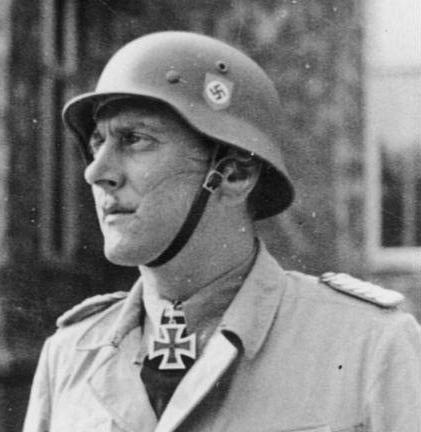
Germany
“Hey, Karl, do you know what this is all about?”
“No, Otto. You will have to wait until the
Obergruppenfuhrer9 speaks.”
Obersturmfuhrer10 Otto Skorzeny, divisional transport maintenance officer of the SS Panzer-Division ‘Reich’, grimaced with impatience: the order to recall all the men on leave and to have all the officers attend a snap divisional briefing had caught him in the middle of a technical inspection. He however sat on one of the folding chairs in the briefing room and waited patiently, a notepad and a pen ready. He did not have to wait for long, though. General Paul Hausser arrived a few minutes later, making the dozens of officers present in the room snap to attention.
“At ease, gentlemen! Take your seats: this is going to be short and to the point.” Hausser waited until everybody was seated and listening before walking to the big map of Europe hanging on the wall facing his audience. Using his command stick, he pointed at Norway on the map.
“Gentlemen, we and the SS-Panzer-Division ‘Wiking’ are to move to Norway as fast as possible while keeping the utmost secrecy about it. Intelligence reports state that the British are preparing to invade Norway. While these reports are not fully confirmed, the Führer is not willing to take any chances and has ordered Norway’s defenses to be reinforced. New intelligence has also shed some suspicions on the security of our Enigma encoding machines. All orders and directives about this operation are thus to go either via direct telephone line or by hand. That point is vital: anyone breaking this directive will be court-martialed.”
9 Obergruppenfuhrer: SS general
10 Obersturmfuhrer: SS first lieutenant
266
“But, General,” protested timidly the divisional transmissions officer, “this will slow down considerably our communications. The Enigma machines are impossible to decipher: it would take millions of attempted permutations to find the proper code groups.”
“In normal circumstances, I would agree, Obersturmbannführer11 Lang. However, a group of Luftwaffe helferinen held until recently in the Tower of London were extensively debriefed and revealed that the Canadian from the future, Nancy Laplante, had with her a small portable machine which could analyze data at a fantastic rate. By the way, those helferinen were brought back to Berlin by none other than Laplante.”
“Brigadier Laplante is working for us now?” asked the divisional intelligence officer, stunned. “I thought that she had been killed in the British bombing of Colditz Castle. Besides, even if she is alive, why would she help us after the tortures she went through at the hands of the Gestapo?”
Hausser was silent for a moment as a wave of whispers went through the room. Nancy Laplante had gone in the recent past year from a despised enemy to be killed at all cost to an adversary who was both feared and respected. Many who had first dismissed her as a female trying to play a man’s role had quickly come to grief at her hands. The amphibious attack she had led on Hamburg a few months ago, where she had been severely wounded and nearly captured by SS troops, had caused immense damage and cost terrible casualties to the SS regiment which had previously occupied the barracks now used by the division. Hausser then took on him to reveal some of the information he had just got in Berlin.
“Gentlemen, I will now pass on to you some information that must be kept strictly to yourselves. First off, Nancy Laplante survived the bombing of Colditz Castle. Even more, she helped save hundreds of German civilians and soldiers there with the help of a ship from the future, transporting them to a safe area near Colditz just before the bombing. Before leaving for the future, she broke our helferinen out of London and brought back some of them to Berlin. The remaining helferinen from London followed her to the future. Now, you must all wonder why Laplante would do all that. The first reason is that she was mad, and rightfully so, at the British: they tried to kill her in Colditz, not hesitating to sacrifice the hundreds of allied prisoners of war held with her. Furthermore, some of the allied prisoners in Colditz, apparently thinking that she was
11 Obersturmbannfuhrer: SS lieutenant-colonel
267
some kind of traitor or collaborator, attacked her and beat her up badly. The second reason has to do with Laplante’s nature. As you may know, she had no hatred of Germans per say and always fought cleanly. That side of her was, well, enhanced by a fantastic incident that happened in Colditz shortly before the British bombing. I myself had a lot of problems believing what I was told in Berlin but I spoke personally to the commandant of Colditz Castle, who confirmed everything to me. In short, a miracle happened to her there as she lay in an infirmary bed, crippled by Gestapo tortures: She was cured of all her wounds in an instant and also gained a number of supernatural powers via some kind of mysterious intervention. Those powers, which she
demonstrated repeatedly to the German staff there, included touch healing, levitation and superhuman strength.”
“Who did that to her, sir? People from the future?” asked the intelligence officer as the other officers present looked at each other in stunned disbelief. Hausser shook his head, his face grave.
“No! She said that a superior, immaterial being did it.”
The whispers changed to exclamations, forcing Hausser to ask for silence.
“Gentlemen, I know how hard this may be to believe, but you should accept it as a fact. Laplante is now gone to the future and is no longer a factor in this war. Let’s count ourselves lucky in that respect. Now, to come back to the main subject of this meeting. I want all combat vehicles to be fully fueled and loaded up with ammunition and supplies before the end of the day. As for those under repair, tanks and halftracks will have absolute priority. All soldiers are to be issued three days’ worth of combat rations and two full ammunition loads. This will all be done today, on the strength of my oral orders. I don’t want precious time wasted in filling detailed orders and paperwork: any quartermaster or supply officer who will delay the issue of needed stores for this deployment on the pretext of not having written authorizations will be relieved of his command by me. The Panzer-Grenadier Regiment Deutschland will start loading up in two days on two heavy ferries who are due to arrive in the port here tomorrow. Our tank regiment will follow two days later, then our other panzer-grenadier regiment, again two days later. Our artillery and engineer train will be next. Our destination will be Oslo, which we are tasked to defend along with its airfield at Fornebu. Gentlemen, you have your orders. I will not keep you longer.”
The excited SS officers, Otto Skorzeny included, waited for General Hausser to leave, then rushed out of the briefing room.
268
Skorzeny, after spending a frantic day and a nearly sleepless night preparing his men and equipment for the oncoming move, went the next day to the divisional orders group, only to learn that he was going to be part of the staff’s advanced party, due to depart for Norway by air that afternoon with the task of securing proper accommodations and facilities in advance of the division’s arrival there. Swearing under his breath at having to leave his men at such a time, Skorzeny returned to his maintenance shop to
brief his senior NCO, a crusty sturmscharführer12 who could find engine parts in the middle of a desert if need be. Having done that, he then packed his field kit and cleaned up and oiled his already spotless StG-41 7.92mm assault rifle before going to the officer’s mess for a quick lunch. At the assigned hour, he jumped in a military bus with his kit and weapons, along with the divisional commander and eight other officers, to go to the nearby military airfield.
Their aircraft turned out to be an old triple-engine Junkers 52. While slow, it was however dependable, which suited Skorzeny just fine. As they were boarding the plane, a staff car delivered a pair of Luftwaffe female auxiliaries who were seemingly in a big hurry. Skorzeny, who had a strong appetite for pretty women despite being married, smiled with delight as the two young women, out of breath and dragging bulging kit bags, presented themselves to the plane’s pilot, saluting him. The senior helferin, a tall and very beautiful blonde, showed the pilot a mission order as she spoke.
“Gruppenführerin Lisa Hartmann and Oberhelferin Barbara Holzberg, requesting permission to board your aircraft, Hauptman. We have been assigned to the Oslo-Fornebu Airfield and were told that you still had two seats available.”
“Well, I’m transporting a general and some of his staff officers to Oslo. Normally I would not take any extra passengers, but I will make an exception for you two. Get on board, ladies!”
“Thank you, Hauptman.”
The two women then approached the access ladder of the plane, still dragging their kit bags. Otto, still waiting his turn to climb onboard, smiled to them and bowed.
“May I help you load your luggage, Fraulein?”
12 Sturmscharfuhrer: SS warrant officer
269
Lisa Hartmann smiled back and quickly eyed the powerful, 194-centimeter-tall Austrian. Even with his long scar on his left cheek, Otto always had a lot of success with women.
“With pleasure, Obersturmführer. You are too kind.”
Once the other officers were inside the plane, Skorzeny effortlessly carried both his kit and the two women’s bags, storing them in the plane’s central baggage compartment. He then sat down opposite Hartmann’s seat, near the back of the plane, while Barbara Holzberg took the seat behind him. Otto next presented his hand to Lisa.
“By the way, my name is Otto Skorzeny.”
Both women then reacted to this in a way that stunned Otto and made the other SS officers snap their heads around in surprise.
“You’re the famous Otto Skorzeny?” exclaimed Lisa, while Barbara stared admiringly at him. “Nancy Laplante told us that she admired you as a soldier.”
“Uh, wait a second, Gruppenführerin. How could you have met Die Wolfin13 and why would she say that? I’m just a transport maintenance officer.”
“She brought both of us to Berlin with nine other helferinen from the Tower of London, where we were detained as prisoners of war for nearly four months before she made us escape. In London, she visited us regularly to help our morale and provide distractions such as films, futuristic music and books. We also had many conversations with her, during which she confided to us that, in her history, you were going to be the most famous German specialist in commando raids in this war. She admired both you and Hanna Reitsch, our famous civilian test pilot, since her teenage years.” As Otto sat with his mouth open from the surprise, General Hausser left his seat and went to Lisa, crouching in the aisle besides her seat.
“You said that you spoke often with Laplante, Fraulein? How well did you know her?”
“Fairly well, Herr General, but not as well as I should have.”
“What do you mean?”
Lisa Hartmann lowered her head, apparently embarrassed.
“I mean that I kept underestimating her and doubting her friendship, Herr General. Even though she planned the operations where we were captured, she always made sure that we were treated as humanely as possible. I believed at first that she was doing that in order to get military information from us, but I was wrong. She knew everything
13 Die Wolfin: The She-Wolf.
270
about our units and us anyway. She even recognized Flugkapitan Hanna Reitsch, who had been captured as well but was disguised as a simple oberhelferin. Laplante kept that to herself and never told the British about it. Then, she secretly adopted one of my captive helferinen, a fifteen years old girl who had lost all of her family in a bombing. She was a formidable soldier, but she also had a heart of gold.”
“What else do you know about her?”
“That she is now in the future, in the year 3384, with Hanna Reitsch and twelve of my helferinen. She left the British in disgust after they tried to kill her in Colditz by bombing the castle to rubble. I told all this and more to our military intelligence, Herr General. If you want, I could tell you about it during our trip.”
“I would appreciate that, Fraulein. Keep this to yourself but know that we are expecting the British to attack Norway soon. Anything that you could tell me about their new equipment would be very useful.”
“I will do my best, Herr General.”
“Then, come sit next to me in the forward section.”
That left Otto Skorzeny alone with Barbara Holzberg. While much smaller than Hartmann, she was a beautiful young woman in her own right. Otto gave her his best smile.
“So, Die Wolfin told you about me. You have me at a disadvantage now, since I know nothing about you.”
Barbara blushed and timidly lowered her eyes.
“There is little to say about me, frankly, sir. I was raised on a farm near Hamburg and received a very basic education, then helped run the family farm. I married a young farmer just before the war, only to find out on my return from captivity that he had been cheating me with my own sister.”
“Ouch! What did you do then?”
“I divorced the bastard and slapped my sister silly. Then I requested a posting outside of Germany. How ironic: Laplante helps capture me, then makes me escape. Now, I realize that I asked and got a posting that could get me captured again…or killed.”
Otto then patted her shoulder reassuringly.
“Do not worry, Oberhelferin. The SS-Panzer-Divisions ‘Reich’ and ‘Wiking’ will soon be in Norway to protect you.”
271
Barbara smiled then while eyeing Otto with appreciation: he was exactly as she had expected him to be according to Nancy Laplante’s flattering descriptions of him.
06:11 (Berlin Time)
Thursday, August 28, 1941 ‘B’
Message room, Luftflotte 5 headquarters
Oslo-Fornebu Airfield, Norway
Barbara Holzberg paled as she listened with alarm on her telephone headset at the message she was scribbling down frantically. Thanking quickly the helferin in Germany who had sent the message, she then shouted to Lisa Hartmann, who was in charge of the helferinen in the message room.
“Gruppenführerin! Urgent message from Berlin: 400 suspected British bombers have been detected approaching Hamburg from high altitude. All of our fighters are to attempt to intercept just Northwest of Hamburg. They can then land and refuel at our airfields there.”
“Four hundred bombers?” said Hartmann in alarm: her parents lived in Hamburg. Walking quickly to Barbara’s station, she took the note scribbled by her and scanned it. “The British never attacked with so many bombers at once before. This is major. I’m bringing this to the general. In the meantime, contact the Stade Luftgau and get an accurate position, speed and heading for these bombers.”
“Yes, Gruppenführerin!”
Working expertly her telephone exchange station, Barbara had the required information by the time Lisa came back.
“Gruppenführerin, the British bomber pack was 195 kilometers Northwest of Hamburg at 06:10 hours, flying at an altitude of 8,000 meters and a speed of 750 km/h. They accelerated to that speed after crossing the German coast.”
“Damn! At that speed they will be very hard to intercept. Good work, Barbara.” Lisa then went out of the room again to pass on that information. The engine noise of dozens of aircraft taking off from Oslo-Fornebu followed shortly afterwards.
The next forty minutes were long ones for the helferinen, who were awaiting anxiously for news on the interception of the British bombers. The growing noise of
272
approaching aircraft then made Lisa Hartmann go to one of the windows of the message room.
“This is too early to be our aircraft, unless they turned around for some reason.” As she was looking through the window, a burst of automatic fire was heard, followed quickly by more bursts.
“Mein Gott! The British are attacking the airfield.”
The incredulous helferinen rushed to the windows as one. They soon saw dozens of transport aircraft hoverfly the airfield unmolested, the anti-aircraft guns of the base being either busy defending themselves from hidden attackers already on the ground, or were destroyed by now. The sky soon filled with parachutes, making a young helferin shout in near panic.
“We must go to the air raid shelters.”
“No!” shouted back Lisa Hartmann firmly. “Everybody will take back its post. I want you to inform Berlin, the Stade Luftgau and the headquarters of our panzer divisions that we are under attack by British paratroopers. Now, get to it!” Rushing back to their stations, the fourteen helferinen under Hartmann’s command started sending messages out frantically as the firing intensified around the airfield. Many found however that their efforts were in vain.
“Gruppenführerin, the telephone lines are dead.”
“Damn! Barbara, get on the teletype, it uses an underground line. Pass the word directly to Berlin.”
“Right away!”
Barbara made sure to grab her large service purse before running to the teletype station in one corner of the room: she had a 9mm LÜGER pistol in it, a gift from Otto Skorzeny. The other helferinen were unarmed, as was the norm for female auxiliaries. She was halfway through her message when automatic fire was heard from inside the building. Clenching her teeth, Barbara ignored it and kept sending her message. Machinegun fire suddenly burst a number of windows, sweeping the message room with a deadly hail of bullets. Three helferinen crumpled to the floor, while the others threw themselves flat on their belly, except for Barbara. Amidst the screams of pain and terror, the door of the message room was kicked open and a grenade thrown inside. At first, everybody could only look at the smoking grenade, too frozen by fear to react. Lisa Hartmann then did something Barbara thought she would never have the courage to do: she threw herself on top of the grenade just before it blew. Even muffled by Lisa’s body, the explosion
273
was deafening and sprayed the horrified women in the room with blood and gore. Barbara was taking out her pistol when two British paratroopers jumped inside the room, spraying it with indiscriminate fire from their assault rifles and hitting a number of the helferinen. Being in a corner to their left, Barbara was at first unseen and untouched and used that chance to fire twice at the nearest paratrooper from a distance of three paces, hitting him squarely with both bullets. The second paratrooper reacted instantly and shifted his fire, cutting down Barbara. The British, pumped full of adrenaline and enraged by the death of an old comrade, then methodically shot the surviving women. Three helferinen who tried to flee by the rear door were shot in the back. The British then went to Barbara, lying in a pool of blood, and finished her off with a bullet in the head before leaving the message room.
06:52 (Berlin Time)
Oslo-Fornebu road
Otto Skorzeni was driving a VW Kubbelwagen14 towards the Fornebu airfield, where he was to meet a Luftwaffe staff officer to resolve a problem with air shipment of critical spare parts, when he heard the first gunfire. Being still a good kilometer away from the airfield, he immediately slowed down and got off the road, driving his car inside the forest bordering the road before stopping and shutting off the engine. Heavy exchanges of fire could now be heard from the direction of the airfield as Otto grabbed his StG-41 assault rifle and jumped out of his vehicle. The big SS man then started jogging cautiously towards the airfield, using the cover of trees and bushes along the way. He next slowed to a crouching walk as he approached the airfield’s perimeter. That proved a wise move, as he soon heard English words spoken to his left. Going down to a crawl, Otto peeped through a bush and saw a dozen British soldiers manning a roadside ambush position, complete with machineguns and portable anti-tank weapons. The British wore the green beret characteristic of commando troops. Backing away quietly, Otto then went around their position and continued towards the airfield. Once he could see the airfield through the trees, he turned right and followed the tree line to get close to the headquarters building, his objective. In the process, he saw a number of British paratroopers walking or running around the airfield. Most of the action
14 Kubbelwagen: military variant of the original VW Beatle
274
however seemed to be in the hangars area, where there was still some resistance. Closing in to less than forty meters from the headquarters building, Otto crouched behind a tree and observed the area for a good two minutes, spotting only two British soldiers kneeling behind a parked truck and looking away from him. Taking his chance, Otto sprinted quietly across the open ground and crouched besides the rear door of the message room. Cautiously looking inside through a window, he saw no movement and quickly pushed the door open. To his surprise, something partially blocked it. He soon knew why once he was inside: the body of a dead helferin was leaning against it. Scanning the carnage in the message room, Otto couldn’t help swear quietly in anger: this had been a massacre, pure and simple. Reviewing grimly each of the dead German women, he was able to recognize Lisa Hartmann’s body by her rank insignias, blond hair and height. Her body was otherwise mangled beyond recognition. Otto also could figure out how it had happened and mentally praised her courage before continuing his search for Barbara Holzberg. He found her in a far corner, near the body of a British paratrooper. Grief briefly overtook him as he looked down at the body of the woman he had been dating regularly since their arrival in Oslo. The fact that she had made the British pay a price for her death was little consolation to Skorzeny. Gently closing her dead eyes, he then scanned the room one last time.
“The British will pay for this, I swear.”
Spotting a teletype station nearby, he went to it and felt his heart jump when he found it still in operational state. The last message received on it dated back from less than twenty minutes ago and was a request from Berlin for a confirmation of an attack on Fornebu. Otto was reviewing the settings when he heard the noise of approaching aircraft. Going to a broken window and cautiously looking out, he saw at least a dozen British transport aircraft circling over the airfield, with two of them lining up for a landing. As soon as those two had landed, they slowed down and veered off the runway. Side doors were thrown open and dozens of soldiers jumped out, dispersing and taking hasty defensive positions as two more transports landed. Having seen enough, Otto went back to the teletype machine and started sending a message to Berlin.
TO HIGHER HEADQUARTERS IN BERLIN, FROM OSLO-FORNEBU. FORNEBU AIRFIELD TAKEN BY BRITISH PARATROOPERS AT ABOUT 0655 HOURS TODAY, LOCAL TIME. BRITISH REINFORCEMENTS NOW LANDING
DIRECTLY IN FORNEBU. EVALUATE BRITISH FORCE IN FORNEBU AT ONE
275
BATTALION OF PARATROOPERS, WITH APPROXIMATELY ONE BATTALION OF LIGHT INFANTRY IN THE PROCESS OF LANDING. MORE PROBABLY TO COME. NO ENEMY VEHICLES OR HEAVY WEAPONS SEEN YET AT FORNEBU. FIFTEEN UNARMED HELFERINEN MURDERED IN COLD BLOOD BY THE BRITISH IN THE AIRFIELD’S MESSAGE ROOM. SIGNED, OBERSTURMFUHRER OTTO SKORZENY, SS-PANZER-DIVISION ‘REICH’. HEIL HITLER.
Closing down the teletype machine, Otto left the message room after an ultimate kiss on Barbara Holzberg’s cold lips. The British never saw him as he made his way back to his car and drove off, speeding towards his division’s headquarters in Oslo.
08:17 (Berlin Time)
Headquarters of the SS Panzer-Division ‘Reich’
Oslo
Skorzeny stormed inside General Hausser’s office, ignoring the protests of the general’s Aide, and snapped to attention in front of his desk while giving the Nazi salute.
“Herr Obergruppenführer, the British have taken Fornebu Airfield. I just came back from there.”
Without letting time to his superior to cut him off, Otto then quickly recounted what he had seen and done. Hausser listened on patiently, frowning only at the mention of the killing of the helferinen.
“The bastards! They will pay for this. We may not have our full division in Norway yet, but we have enough to throw this British back into the sea. Obersturmführer, I understand that your maintenance section has not arrived yet from Hamburg and in fact will not leave for Oslo until tomorrow at the earliest. Die Wolfin seemingly had a high regard for you as a soldier, so why don’t you attach yourself to the Panzer-Grenadier Regiment ‘Deutschland’ in the meantime?”
“With pleasure, Obergruppenführer.”
The general’s telephone then rang, picked up at once by Hausser. Knowing better than leaving before being dismissed, Otto waited and listened as Hausser’s face reflected surprise, then horror.
“Nothing left? But…that’s impossible! … Yes… Yes… I understand, Reichführer. We will avenge them. Heil Hitler!”
276
Cold anger in his eyes, General Hausser put down his telephone receiver and looked up at Skorzeny.
“Obersturmführer, it seems that your maintenance section, along with most of our logistical train, will never arrive here: over 400 British bombers attacked Hamburg with those awful blast bombs imported from the future by Laplante. Reichführer Himmler is now on the outskirts of the city and tells me that there is nothing left of it. Casualties are feared to be in the hundreds of thousands. He has ordered us to crush the British here and not to take any prisoners. Join your new regiment and avenge our compatriots. Dismissed!”
15:28 (Berlin Time)
Saturday, August 30, 1941 ‘B’
Hamburg, Germany
The civil defense workers had to back away after opening the steel doors of the air raid shelter, so strong was the stench of charred flesh. Two men wearing breathing apparatus went down the stairs and lit up the powerful electric arc lamps they had brought along, revealing a nightmarish scene: close to sixty bodies, all burned beyond recognition, filled the small basement room. Numerous children’s bodies could be recognized by their small size. Themselves wearing breathing apparatus, Adolf Hitler, Heinrich Himmler and Air Field Marshal Milch went down into the shelter, looking around for a few seconds before climbing back out. While Milch and Himmler looked sick when they removed their masks, Adolf Hitler looked simply furious. Facing the party official in charge of Hamburg, he signaled him to approach.
“Gauleiter! What are the latest figures on the casualties from this British bombing raid?”
The Nazi official took out a sheet of paper before answering in a quivering voice.
“As best as we can tell, Mein Führer, at least 240,000 persons are either confirmed dead or missing. That count is still rising every hour, however. A surface area of over seven square kilometers was utterly flattened and incinerated as well. The local water is now undrinkable and there are risks of epidemics from all the corpses around, Mein Führer.”
Hitler nodded his head once, then looked severely at Air Field Marshal Milch.
“How many British bombers did the Luftwaffe destroy, Milch?”
277
Knowing what was coming, the old aviator nonetheless spoke with a grave but steady voice.
“Nineteen bombers were confirmed shot down, Mein Führer, plus many more damaged. Our…”
“NINETEEN? NINETEEN OUT OF 400? Is that the best the Luftwaffe can do, Milch? I was hoping that you would do better than your predecessor.”
“But, Mein Führer, the British bombers are faster than our fighters. I am still waiting for those jet fighters promised by the industry.”
“You will get them soon, Milch. As for those British, I have a nasty surprise ready for them. One last point, and this is for all of you, gentlemen: all captured British bomber crews are to be shot on the spot as war criminals. The same applies to British paratroopers, in view of what they did in Norway. I will not tolerate any objections to these orders. Is that clear?”
A concert of meek approvals answered Hitler.
15:35 (Berlin Time)
Hills West of Fornebu Airfield
Norway
George Townsend drearily looked at the long line of wounded soldiers lying on the ground, both British and Canadian, then down at Fornebu Airfield, only two kilometers away but out of reach for him and his men. The Germans, supported by heavy TIGER tanks and armored halftracks, had evicted the Anglo-Canadian forces from the airfield yesterday, following fighting of a rare ferocity. They were now in a standoff, with the Anglo-Canadians unable to retake the airfield and the Germans unable to use it as long as the Canadians’ mortars were within range of it. Right now, however, Townsend’s immediate concern was with the evacuation of his wounded men. One of the rare helicopters available had been promised from the successful invasion force in Stavanger, nearly 320 kilometers to the Southwest.
“Sir!” called up a signaler, looking up from his radio set. “I have our helicopter on the radio. It is now five minutes away.”
“Good! Give me your microphone and headset, Corporal.” The signaler obeyed dutifully and moved, giving space for Townsend to kneel besides the portable radio set.
278
“Seagull Six, Seagull Six, this is Mike Foxtrot Three, over.”
“This is Seagull Six. Send, over!” replied a very familiar voice, making Townsend smile.
“Doug, is that you? This is George.”
“Well, Mike Foxtrot Three, isn’t this a pleasant surprise. We will be able to pick up your wounded men soon. I have two Canadian Army nurses with me, including a certain Patricia.”
“No kidding? That is a real morale booster, Seagull Six. Do you need a smoke marker or a flare to mark our position, over?”
“To attract German fire? No, thank you, Mike Foxtrot Three. I am about to jump the last ridgeline before your position. You can guide me by radio from then on, over.”
“Understood, Seagull Six. We will be watching for you. Out!” Townsend didn’t have to look for very long, the small shape of an approaching helicopter appearing between two hill peaks after two minutes. It was only half a kilometer away when a soldier shouted in alarm.
“AIRCRAFT OVERHEAD!”
Townsend looked up and swore: those were German FW-190 fighters. He immediately grabbed his radio microphone and shouted in it.
“Seagull Six, go away now! You have German fighters overhead.” Doug Wilson did not respond, instead pulling his medium transport helicopter into a tight turn. The FW-190 were however very agile and had a huge speed advantage. Townsend could only look on helplessly as a German fighter dived on the frantically zigzagging British helicopter and fired a series of short cannon bursts at it. One burst hit the rear rotor of the Avro Vulture and shattered it, sending the helicopter down in an uncontrollable spin.
“THIS IS SEAGULL SIX: I’M HIT AND GOING DOWN.”
The helicopter crashed in a ball of flames three seconds after that transmission. The German fighters then dived on Townsend’s position, strafing it with cannon fire and not giving him any time to grieve Doug and Patricia. He and his valid men jumped in time in their trenches but the wounded, lined up in the open for evacuation, were not as lucky. Hideous screams came out as most of them were ripped apart by exploding cannon shells.
“BASTARDS! YOU BLOODY BASTARDS!” shouted Townsend at the receding German fighters. He then collapsed on his knees, overtaken by grief.
279
19:41 (Berlin Time)
Hunter-Killer Surface Effect Ship H.M.S. NARWHAL Forty kilometers off the coast of Kristiansand, Norway Skagerrak Strait
Peter Stilwell looked nervously for the third time in less than five minutes at the screen of his air surveillance radar. A sailor was monitoring the radar station sitting in a corner of the bridge, but the very real threat of a German air attack on his hovercraft division made him extra cautious. In less than half an hour, the nineteen transport hovercraft which he was protecting with six surface effect ships should be landing in Kristiansand a mechanized infantry battalion from the First Canadian Infantry Division. Only then could they all retreat back to Britain under the cover of the growing darkness, away from the murderous attacks by the Luftwaffe. The fact that he had predicted such air attacks did nothing to decrease Stilwell’s bitterness towards the Imperial General Staff’s early dismissal of the Luftwaffe’s threat. Only now was the high command starting to transfer squadrons of jet fighters to the captured airfield near Stavanger, realizing belatedly that fighters based in England did not have enough range to be able to provide adequate air cover to the British and Canadian troops now in Norway. As a result, the German fighters and bombers staging out of neighboring Denmark were having a field day. To add to his bitterness, the Home Fleet battleships and
battlecruisers cruising around the North Sea in anticipation of a German naval surface attack had lost the battleship H.M.S. REPULSE, torpedoed by a German submarine. As a result, the heavy units which could have given precious fire support to the troops landing in Norway had been pulled even further back. That left a collection of hovercraft, destroyers, light cruisers and logistic ships alone to bear the brunt of German air attacks. Already, 23 hovercraft, nine destroyers and four light cruisers had been either sunk or heavily damaged in this operation.
Pacing again around the bridge of his command surface effect ship, his eyes went for a moment on Ship’s Boy Tom Allen, standing beside his 20mm anti-aircraft cannon on the starboard open wing of the bridge. The boy was only sixteen years old but was reputed to be the best machine gunner in the division. To have to expose such young persons to possible death was probably the hardest part of naval leadership for
280
Stilwell. A warning from the air surveillance radar operator then took Peter out of his dark thoughts.
“Sir, I have multiple air blips entering the radar screen, coming from the South.”
“How many?” asked Stilwell while hurrying towards the radar station.
“I’m not sure yet, sir: more blips keep appearing continuously. I already count fifteen blips.”
“That’s already too much. Signals Officer! Alert the division that an incoming German air raid is approaching from the South. The MERMAID and SWORDFISH will stay with the LCACs while the others will follow me to meet the German aircraft. Also, advise Sola airfield and ask for air cover.”
“Aye, sir!”
“Chief Merrick, sound combat stations. German aircraft approaching.”
“Sir,” said nervously the radar operator near Stilwell, “I now have forty plus blips on my screen, heading directly towards us.”
“Hell! Helm, new heading: 180! Accelerate to eighty knots!” Stilwell thought furiously as his men carried out his orders. By his actions, he intended to deflect the main brunt of the German attack from the vulnerable transport hovercraft and their embarked troops. On the other hand, he was putting four of his surface effect ships into a near suicidal position. His hunter-killer ships were well armed for their size and extremely fast but they were mostly made of aluminum and used gasoline as fuel, thus burned easily if hit by a bomb. This was going to be a nerve-wracking battle indeed. The next announcement by the radar man did nothing to help.
“Captain, I can now make out two distinct groups of aircraft. One is flying at 12,000 feet and includes 32 aircraft. The other is made of fifty plus aircraft flying at 8,000 feet.”
“Fighters on top cover for bombers.” guessed Stilwell, somber. “Mister Ronash, were you able to contact Sola airfield?”
The young signals officer looked embarrassed as he answered.
“Uh, they just answered me, sir: they can’t spare anything right now.”
“What? Tell those R.A.F. airheads that I have over eighty German aircraft heading towards this amphibious force and that we have over 800 Canadian soldiers still to be unloaded. Thinking of it, delete that last part: no need to give free information to the enemy.”
“Uh, yes sir!”
281
Still fuming, Stilwell got out of the command bridge and went on the open bridge, taking first the precaution of storing his cap inside: when traveling at a speed of eighty knots, any hat worn on an open deck was as good as lost. He smiled at young Tom Allen, who was firmly holding on to the gunner’s harness of his Oerlikon 20mm cannon.
“You will soon have the chance to prove your skills, Mister Allen.” The teenager grinned in turn and tapped the breach of his cannon.
“Let the Germans come, sir. I just wish that I could have as much success with girls as with this.”
Stilwell laughed at the boy’s spunk. He knew that Allen was not bragging. He was a veteran of the mission against the battlecruisers SCHARNHORST and GNEISENAU and had been on the lead hunter-killer ship to enter Wilhelmshaven harbor during Operation BACKSTABBER. His sailor’s tunic displayed the ribbon of the Conspicuous Gallantry Medal with bar, plus the insignia of expert machine gunner. As for success with girls, Allen’s fit 175-centimeter frame and smooth face should help him, once he got rid of his shyness. Grabbing his binoculars, Stilwell scanned the southern sky, looking for the German aircraft. He spotted them ten minutes later, mere dots still. Grabbing the open bridge’s telephone, he called the bridge duty officer.
“Reduce speed to ten knots. Four-inch guns to engage only the bombers, on my order.”
“Aye, Captain!”
A few minutes later, as the mass of aircraft was nearly overhead, Stilwell gave more orders on the telephone.
“To all hunter-killer ships: four-inch guns to commence firing now on bombers. Reverse course to heading 350 and accelerate to eighty knots.” The three huge shrouded propellers of H.M.S. NARWHAL started spinning at maximum speed as the two twin medium gun turrets of the surface effect ship started firing, pumping a combined total of 48 shells per minute in the air. The twelve 20mm cannons and four twin heavy machineguns stayed silent for the moment, their effective range being way too short to engage the Germans now.
Matching course with the German air armada, Stilwell’s four surface effect ships accelerated to nearly half the cruising speed of the German bombers while firing close to 200 shells per minute at them. Equipped with proximity fuses, the exploding four-inch shells peppered continuously the bombers with thousands of steel fragments, apart from
282
shaking them around. The German bomber commander soon lost patience when one, then two of his Junkers 87 STUKA started trailing smoke and had to turn around. A third dive bomber received a direct hit and broke up in midair as twelve of the escorting Bf-109 fighters started diving on the British ships. Stilwell saw them coming and gave more orders on the telephone.
“Four-inch guns, stay on the bombers, whatever happens. The light guns will concentrate on the incoming fighters. Helm, start zigzag course.” The German Bf-109 fighters then split into pairs to target the British ships and opened fire at about the same time the British did. The latter however used armor piercing, discarding sabot rounds, or APDS in short, which the Germans didn’t have. Having a much higher muzzle velocity than normal shells, APDS rounds had flatter trajectories and shorter times of flight, which helped greatly the accuracy of the British gunners. That point was quickly drilled into a German Bf-109 by young Tom Allen, who sent it crashing in flames into the sea after firing only three short bursts. Peter Stilwell, who was by now little more than a spectator in this battle, nearly applauded at that: the teenager was truly a phenomenal gunner. As the second Bf-109 of the pair attacking the NARWHAL overflew the ship, Allen fired one long burst at it. The fighter turned on its back and dived into the sea, its pilot killed. As Allen’s loader quickly put in place a fresh drum of 20mm shells, Stilwell assessed visually the state of his flotilla. All four ships were still running at top speed and firing their four-inch guns in earnest at the German bombers. He could see a few 20mm shell impacts on his NARWHAL, but they appeared non-critical, while two gunners on the nearest ship had been hit and were down on the deck. A third fighter had been shot down, while a total of five bombers had up to now been knocked out of the sky or forced to turn back with heavy damage.
Stung by the murderous British anti-aircraft fire, the German fighter pilots performed wide turns before coming for a second strafing pass, trying to stay out of range for as long as possible. Tom Allen surprised even Stilwell by firing a series of short, carefully aimed bursts at extreme range, while the Germans were still turning. Stilwell couldn’t help scream in delight when one of the remaining Bf-109s caught fire and crashed into the sea. The German’s wingman, thoroughly intimidated by now, fired his cannons and heavy machine guns from further afar than the first run and broke off early, resulting in a less accurate and more dispersed fire. One more Bf-109 was shot down and another one damaged in the ensuing strafing pass. Stilwell’s grin faded
283
however when he saw one of his surface effect ships trail thick smoke from its engine compartment. That presented him with a cruel dilemma: if he ordered his other ships to stay with their damaged comrade, this would leave the bombers free to attack his landing force. On the other hand, if left alone, his damaged ship would attract the fire of all the remaining German fighters. The burning ship was already falling behind as Stilwell grabbed the telephone again.
“Signals Officer, pass the following: all ships except the NARWHAL will keep pursuing the German bombers. Helm, reduce speed and adopt a station 200 yards aft and to port of the BARRACUDA.”
As his own surface effect ship slowed down to stay with the BARRACUDA, Stilwell saw with mixed feelings about fifteen German Junkers 87 dive-bombers drop from the rest of the armada and dive towards him. That was going to alleviate the threat to his landing force but the next few minutes were going to be exciting, to say the least. With only two ships to deal with six fighters, things were already hectic. Stilwell then noticed with displeasure that the fire from the NARWHAL’s forward four-inch gun turret had slowed down considerably. He nearly shouted in his telephone when the gunnery officer answered him.
“Mister MacDonald, what is wrong with ‘A’ turret?”
“It has expended all the shells in its ready lockers, sir. They are now down to passing shells by hand from the ammunition room.”
“Then grab everybody available and form human chains between the ammo rooms and our four-inch guns.”
“Aye, Captain!”
Putting down the bridge telephone, Stilwell went to Tom Allen’s loader and patted his shoulder.
“Sailor, go to ‘A’ turret’s ammo room and help pass shells up. I will take over here as loader.”
“Uh, yes sir!” answered the surprised sailor before running away. Tom Allen, concentrated on his shooting, didn’t notice that until Stilwell came forward with a fresh drum when he shouted for more ammunition.
“Sir, what are you doing?”
“Loading you, boy. Just keep shooting: you’re doing splendidly.” Grinning at that, the teenager fired two bursts at a Bf-109 turning away after a pass, hitting the engine. Coughing black smoke, the fighter soon had to belly land in the sea.
284
The blood-curling shriek from a Junkers 87’s diving siren then made them look straight up.
“Get that STUKA, boy!”
“I can’t, sir! My gun can’t elevate that high.”
“Then shoot it down when it will pull out of its dive.”
“Aye, Captain!”
The trick was of course to avoid the STUKA’s bomb first. The helmsman of the NARWHAL saw to that, turning abruptly to port at the last moment and nearly projecting Stilwell off the gun deck. The STUKA’s 500-kilo bomb exploded in the water besides the NARWHAL, copiously spraying its decks with seawater but causing nothing more serious. Tom Allen pursued mercilessly the dive-bomber with 20mm shells as it pulled out of its dive and started climbing back. With five other gunners adding their fire to that of Allen, the Junkers 87 soon caught fire and crashed into the sea. Being much slower than their escort fighters, the dive-bombers proved to be easier targets for the British gunners. Six Junkers 87 were shot down in the minute that followed. Zigzagging and jerking around crazily to avoid the German bombs, the BARRACUDA still received a direct hit between two of its shrouded propellers. Its propulsion system gone and its fuel tanks on fire, the sinking surface effect ship was soon being abandoned by its crew. A second squadron of dive-bombers then joined the action, intent on finishing the NARWHAL as well.
Despite the prowess of its helmsman and of its gunners, the odds were too heavy against the NARWHAL. A bomb finally scored a direct hit, penetrating through the top of its aft four-inch gun turret and exploding in its ammunition room. The horrified survivors from the BARRACUDA, huddled into life rafts, could only watch as the NARWHAL blew up in a spectacular fireball. No survivors from the NARWHAL were found by the British destroyed which showed up on the scene ten hours later.
13:21 (GMT)
Sunday, August 31, 1941 ‘B’
Prime Minister’s office
Home Office building, London
285
Winston Churchill immediately noted Hasting Ismay’s long face as his military secretary entered his office, a classified file in his hands.
“What is it, General?”
“The latest situation reports on Operation VIKING RAIDER, sir.” said weakly Ismay before putting the file on Churchill’s desk. He stood silently at attention as the prime minister read through the file with increasing dismay.
“We still have not retaken Fornebu Airfield? And what is the R.A.F. waiting for to send more jet fighters to Sola?”
“We don’t have more jet fighters to commit, sir. We had in fact only a limited number of them in inventory at the start of this operation. We also had a number of accidents on landing in Sola: the airfield there is too small for them. Our field engineers are working hard to enlarge it, but it will take at least two weeks before it can be safely used by our jet fighters. As for Fornebu, our forces in the hills around it have taken heavy losses and are short of anti-tank weapons. Those two SS panzer divisions are very powerful units, sir.”
“Can’t we land an armored unit on the coast to link up with our paratroopers?”
“We tried that yesterday, sir. A Canadian mechanized infantry battalion was landed by hovercraft in Kristiansand but our flotilla came under heavy air attack and suffered heavily. The escort surface effect ships did a splendid job in blunting the German bomber force but at the cost of four out of six ships. The list of losses and casualties is at Annex D of the report, sir.”
Churchill flipped the pages of the report and read the said annex.
“Over 9,400 men killed and 12,500 others wounded since the start of the operation?”
“Men and women, sir. German bombs don’t discriminate between the sexes. Sir, I’m sad to announce to you that both Squadron Leader Wilson and Navy Captain Stilwell were killed in operation.”
“Good God! That will be a hard blow to the Athena Section. What about Major Townsend?”
“He’s with the force fighting near Fornebu, sir. His commandos are due to attack tonight a German position blocking a mountain pass between Kristiansand and Oslo. That position has been holding our mechanized columns for two days now and is nearly impossible to assault.”
286
“Then it will fall tonight: Major Townsend is among the best we have. Anything else, General?”
“Uh…two things, sir. I came upon two disturbing pieces of Ultra traffic this morning. Those two German messages unfortunately took nearly two days to be deciphered. The first one was an order to shoot on capture any British bomber crew taken prisoner. It cited a figure of 340,000 civilians killed in the bombing of Hamburg as the justification for such an order.”
“340,000? How could that be? It must be an exaggeration.”
“I don’t think so, sir. On inquiring with Air Marshal Harris, I learned that our bombers on the Hamburg raid were loaded exclusively with one-ton Fuel Air Explosives bombs. Those German civilians didn’t stand a chance.”
“The same applied to the civilians of Rotterdam and Warsaw, General. It didn’t stop the Germans from bombing them. Such killings are regrettable but hard to avoid.” Ismay lowered his head, feeling awful about this but too disciplined to argue with the Prime Minister. Nancy Laplante, if still around, would have most probably pounced verbally on Churchill for this, regardless of the consequences to herself.
“The second message is much less clear, sir. It came out of Hitler’s
headquarters and went to an unidentified unit in Germany that did not reply. The message was quote launch Operation ANGEL OF DEATH on August 31 unquote. That’s today. Nobody can figure out what it means, sir.”
“Hmm… Operation ANGEL OF DEATH… It certainly sounds sinister enough. Keep me informed if you learn anything more about this, General.”
“Yes sir. Do you…”
The noise of a terrifying explosion, followed by a strong shock wave which made the floor of the building shift, cut off Ismay.
“Bloody hell! What was that?” he exclaimed before rushing out of the Prime Minister’s office and going to the nearest window, where half a dozen civilian employees were already looking outside. Opening the window and craning his neck out, Ismay saw a huge cloud of black smoke rising in the distance, in the direction of the East End Docks. Looking for German aircraft in the sky or any other sign of a bombing raid, he saw nothing. He was wondering to himself what had happened when a second terrifying explosion from much nearer was heard.
287
13:28 (GMT)
Buckingham Palace
London
Young Princess Margaret Windsor, escorted by her dressing lady, finally joined her parents near the exit giving on the royal gardens as the latter were getting impatient.
“About time, young girl.” said the queen severely.
“Where is Elizabeth? Our garden reception guests will not wait all day.”
“Oh, I believe that she is still trying to find her white gloves, mother.” answered cheerily Margaret, who had actually hidden her sister’s gloves, knowing how thrown off her well-ordered sibling would be by that. A distant but loud explosion then made them all jump in surprise. The king got closer to his daughter as palace security men started running around.
“Maybe we should get closer to the air raid shelter. I wish that Lilibet could hurry and join us, though.”
“Was that a bomb, Father?”
“It sounded like one, and a powerful one at that.”
The king was about to order one of the nearby security men to go fetch his eldest daughter when a blast wave toppled them all and deafened them for a few seconds as the whole palace jerked on its foundations. Light fixtures and windows shattered and plaster and dust rained on the royal family, now lying on the floor. Security men and servants quickly helped them back on their feet as they coughed from the dust and smoke filling the air. The queen immediately started towards the wing containing the royal apartments but was politely stopped by a security man.
“Your Majesty, you must go to the air raid shelter now: more bombs could fall.”
“My daughter was still in her room. I must make sure that she is safe.”
“But, Your Majesty…”
Ignoring the man, the queen pushed him aside and ran towards the royal apartments. She however had to stop soon, her way blocked by a fallen wall. Through the gaping hole and the dust and smoke, the queen saw with horror that the whole wing housing the royal apartments was gone, a huge crater surrounded by mounds of rubble sitting in its place. The king caught up with her as she started crying and screaming hysterically.
288
03:41 (Berlin Time)
Monday, September 1, 1941 ‘B’
Positions of 2nd Company, SS Panzer-Grenadier Regiment ‘Deutschland’ Coastal mountain range northeast of Christiansand, Norway
Despite the early hour, Otto Skorzeny was fully awake and alert when one of his men silently walked to his small improvised command post. Having anticipated a British night attack, he had taken a few hours of sleep in the evening, along with most of his company. The grenadier he had posted to watch the cliff bordering the east side of his company’s mountaintop position whispered once near Otto.
“They’re coming up the cliff face, as you predicted, sir. I could hear at least a dozen men climbing up quietly.”
“Ach! British commandos, probably. They are good, but not good enough to
beat us. Advise Scharführer15 Eicke to move quietly his platoon to the edge of the east cliff.”
“Yes sir!”
Slinging his StG-41 assault rifle across his back, Otto took out his FN GP35 9mm pistol and silently made his way to the cliff’s edge. An accomplished mountain climber himself, he had examined carefully the rock face during daylight to judge where the enemy would try to climb it. A nearly vertical wall with its base washed by the waters of a wide fjord, it still could be climbed at certain spots, which Otto now knew. Going to the most likely spot and lying down on his belly near the edge, he listened carefully and smiled after a few seconds: someone was indeed climbing towards him and was in fact close to reaching the top. Looking left and right, Otto saw in the moonlight that Eicke’s men were now in position and ready. Going to a crouched position, Otto took out his flashlight and, keeping it off, waited. As soon as a hand appeared on the edge, searching for a grip, Otto put one boot on it and lit his flashlight, illuminating the grimacing face of a major of the British commandos. Otto then spoke to him in English.
“Nice try, Englander, but you’re still not good enough to beat me. Now, watch your men die.”
15 Scharfuhrer: SS sergeant
289
On an order from Skorzeny, Eicke and his men lit a number of flashlights, illuminating over twenty British commandos clinging helplessly to the rock face. The Germans then opened fire, mercilessly shooting the commandos off the cliff. With a scream of rage, the British major used his one free hand and, slapping away Skorzeny’s pistol, grabbed him by the belt before pushing himself off the rock face with his feet. Both men fell together towards the jagged rocks of the fjord’s shoreline, holding each other by the throat in an ultimate fight to the death. After a few seconds of freefall, a flash of white light enveloped them both. They then landed with a loud thump on a thick, soft foam mat. Skorzeny and Townsend, still holding each other’s throat, looked around them with utter surprise: they were now in what looked like a brightly lit ship’s cargo compartment. A sarcastic female voice speaking English then made their heads snap around.
“So, you two machos are not content on splashing yourselves on rocks: you have to strangle each other as well on the way down.”
“NANCY!”
“DIE WOLFIN!”
“Welcome to the realm of the dead, gentlemen.” said Nancy Laplante, pointing a weird-looking pistol at them. “Now, be sensible and throw away your weapons. That includes you, George.”
Townsend looked with incomprehension at her, noting the two big men standing beside her and also pointing pistols.
“But, Nancy, I’m on your side.” protested the British. Nancy, wearing a gray uniform and a set of body armor, shook her head slowly, not smiling.
“I’m on my own side now, George. I said, drop your weapons, both of you.” Skorzeny and Townsend did so reluctantly, stepping off the foam mat after putting down their rifles, pistols, grenades and knives.
“Good! Now, step towards that door, slowly.”
“Where are we anyway? How did we get here?” grumbled Skorzeny, using English, while walking slowly towards the metallic door pointed at by Laplante.
“On a time ship. You were picked up by spacetime transit probes. You are now officially dead and I am offering you a second life in a new world: the 34th Century.”
“BUT I’M NOT DEAD!” shouted Skorzeny angrily. Nancy looked at him calmly, dispassionately.
“You and Major Townsend would be, if I wouldn’t have caught you in midair. Your asses are now mine.”
290
“They should call you the She-Devil instead of the She-Wolf.” replied Otto bitterly.
“Just call me Nancy, Otto. If you will now just go through that door, I will present you to other dead people.”
“You don’t make much sense, Nancy.” said Townsend pointedly. “Why did you abandon us, anyway?”
She gave him a dark look as her face hardened.
“Because the British government grossly abused my trust and brutalized someone from the future who risked her life to save me in Berlin. To top that, it committed an atrocity I am not about to forgive.”
“So, you saw what the British did to Hamburg?” said Otto.
“Yes, I did and I feel like killing that Harris bastard.”
“What are you talking about?” asked Townsend, confused. Nancy glared at him, obviously angry and bitter.
“What I’m talking about? I’m talking about a third of a million civilians, old men, women and children, incinerated in less than an hour in Hamburg. The R.A.F. used F.A.E. bombs on them, bombs that I gave the design to you British on the express condition that they would never be used against cities. That’s what I’m talking about.”
“Then,” added Otto softly, “you must know also about the helferinen murdered by British paratroopers in Fornebu Airfield.”
The blank look he got told him that she didn’t know. Otto then spent a couple of minutes to describe what he had seen in the communications room of Fornebu airfield, giving Nancy precise dates and times. Townsend cut in at the end of it.
“That’s bullshit! No British soldier would…”
“SHUT UP, GEORGE! JUST…SHUT UP!” shouted Nancy, now deeply upset and with tears in her eyes. The fury in her voice did silence Townsend, who then went through the door of the compartment after Nancy’s two armed companions had stepped through backward, their pistols still pointed. He and Skorzeny, followed by Nancy, stepped inside a wide, comfortable lounge luxuriously furnished with big, padded seats along its walls and with low tables facing them, plus thick wall-to-wall carpeting. However, Townsend didn’t pay much attention to all that, as three persons he knew very well rose from their seats, joy on their faces. George himself ran to them, hugging and kissing the baby-faced blonde in the group, who returned his kisses.
291
“Patricia! I’m so happy to see you alive.” said George before looking at Doug Wilson and Peter Stilwell. “Hell, it feels better to be dead when you are joined with friends.”
He was shaking hands with his friends when the noise of someone sobbing made him look in a corner of the room. He then saw a crying teenage girl wearing a cocktail gown, sitting with a small, mature woman. His eyes bulged when he recognized the girl. Hurrying to her, he then knelt respectfully in front of her.
“Your Highness! How come you are here?”
Princess Elizabeth Windsor looked at him with eyes full of tears, but couldn’t speak. The woman trying to console her answered for the teenager.
“The Germans have started to bombard London with big rockets. One of them hit squarely the room we were in at Buckingham Palace and destroyed our whole wing. Miss Laplante saved us just before the explosion. However, she refuses to return us to the palace.”
George got on his feet in an instant and angrily faced Nancy, who had been looking on from the center of the room.
“What the hell is wrong with you, Nancy? Why won’t you return Princess Elizabeth to London?”
“Because, as far as history goes, she’s dead, like you and the others here. I was able to save her because I read about her disappearance and presumed death from a V-2 missile strike in a British newspaper dated from three days after the strike. I then backtracked in time to save her and her dressing lady. If I let them return to the palace, it will change history as it is already written and may even split the timelines again. Of course, I could have let her die, if that’s what you prefer.” Her last remark infuriated George, who stepped menacingly towards her.
“Nancy, you better bring back the Princess safely to London, or…” Her reaction was to raise her left arm and point him while looking calmly at him. To George’s astonishment, he found himself incapable of moving forward, as if an invisible opponent was pushing him back.
“George, I did all this because I couldn’t stand the idea of you, her and the others being killed. This was the only legal way for me to save you.”
292
Except for the two men backing Nancy, the others present looked on with stunned disbelief as George fruitlessly tried to advance. He finally gave up, glaring at her as she lowered her arm.
“How the hell did you do that? By some scientific trick?”
“No: by the power of my mind. Can’t you just accept your fate, George?” Skorzeny, who had watched all this carefully, stepped besides Townsend and faced Nancy.
“You said that this was the only legal way to save us. What did you mean by ‘legal way’?”
“Otto, I am the co-creator of an organization called the Time Patrol. The mandate of that organization is to protect history from tampering and to document it. I could not save you unless you disappeared from 1941 and were declared missing in action, as history has recorded.”
“And what are we to do now? Live like ghosts?”
“Actually, you will have a choice to make soon about how you will want to live. Once I take care of something, we will jump to the year 3385, where you will be able to clean up and eat before discussing your future with me. If you will now excuse me.” Nancy and the two armed men then left through a sliding steel door leading forward. The door closed behind them, leaving George and the other so-called dead people to look at each other. Sylvie Comeau, the other Canadian Army nurse who had accompanied Patricia Wilson on the doomed helicopter, wiped the cold sweat off her forehead with one hand.
“Damn! Can someone tell me how Brigadier Laplante did that piece of magic?”
“Oh, it’s really simple, actually.” replied laconically Peter Stilwell. “She gained some superpowers following a divine intervention.”
“WHAT?” Shouted many of the others in unison.
“That was also my first reaction to this. However, it seems that she is more angel than human now. According to many witnesses, she can heal by the touch of her hands, can fly, communicate telepathically and is incredibly strong. From having worked closely with her for nearly a year, I can tell you that she definitely didn’t possess these powers before.”
Elizabeth Windsor pondered that for a moment.
“A divine intervention… Then, God is really on our side.”
293
“Uh, I wouldn’t say that, Your Highness. Nancy has some very good reasons to be pissed at us and, in fact, gave back her British medals to Prime Minister Churchill before returning to the future.”
“But she was publicly mourned as a hero.” objected the princess. “It was all over the newspapers, with that awful picture of her, tortured to death by the Gestapo.” Peter lowered his head in shame and embarrassment.
“She was still alive, barely, when that picture was taken. You really don’t want to know what the Gestapo did to her after her capture, Your Highness. She however survived those tortures and was sent by the Germans to Colditz Castle as a high-risk prisoner of war. That was where a miracle of some sort happened: she was fully healed and gained her powers, all that supposedly in a matter of seconds. Then, to our collective national shame, a number of ministers and generals pressured Prime Minister Churchill into bombing Colditz Castle, to kill Nancy and prevent her from ever revealing British military secrets. She was however taken out of Colditz and transferred to Berlin just before the raid. The castle and town were razed to the ground by the bombing.” As Elizabeth Windsor was about to explode with indignation, Otto Skorzeny cut in, looking severely at Stilwell and standing with his arms crossed.
“Don’t forget the part about Nancy Laplante saving both the allied prisoners and hundreds of German civilians and soldiers from the bombardment of Colditz, Englander. Your government didn’t deserve such a woman. You may be claiming the high moral ground but you are as politically cynical and manipulative as anybody else.”
“Now listen, buster!” started to protest young Tom Allen, rising from his seat. Peter cut him off with a sign of the hand.
“As bitter as this may be, Mister Allen, that Nazi is right. What I am going to say was a closely guarded state secret but I guess that it is a moot point for us now. Two days before the bombing of Colditz, a woman from the future showed up near London. She, a claimed scientist, had tried alone to free Nancy from her Gestapo jail and had been caught and tortured with her. She escaped from Berlin by using a small, portable time machine, reappearing near London and then contacting us.”
“What happened then?” asked Patricia Wilson after the shock of that announcement was over. Peter bit his lips.
294
“We did about as dastardly a deed as the Gestapo: the M.I.516 detained her and roughed her up to make her reveal how her time machine worked. Nancy, who had escaped Germany by stealing an aircraft in Berlin, somehow learned about that and broke her free, knocking out five security agents and shooting the head of M.I.5 in the process. Those facts were withheld from public knowledge on orders from the Prime Minister.”
“The bastards!” exclaimed Patricia, now furious, expressing the thoughts of most around her. Otto, on his part, was thinking furiously about what had been said. He was not proud about the Gestapo’s deeds, the fighting man in him despising such cowardly and sadistic acts, but he had previously brushed over those as sometimes necessary for reasons of state security. It seemed now that the British had little to shout about in that matter as well. It also shed quite a new light on Nancy Laplante.
“Well, this is what I would call a weird situation.” said Peter Stilwell after a long silence. “We are officially dead but we have to decide how we want to live in a future world we know nothing about yet.”
As if his remark had triggered a response, the large video screens covering the upper walls of the room came to life, while a soundtrack came out of invisible speakers. They could now see the panorama of a magnificent, futuristic city on the shores of an immense lake, as seen apparently from an aircraft. They then heard a soft female voice speaking in English.
“Ladies and gentlemen, welcome to the society of the Global Council. Founded in the 29th century, the Global Council spans the whole of the Solar System, with colonies and stations as far as the moons of Neptune. The population of the Solar System stood in the year 3384 at a total of 3.16 billion people, of which 2.8 billion live on or around the Earth. The government of the Global Council is elected by direct suffrage every five years and is headed by the Chief Global Administrator, who in turn is assisted by a council of regional and specialist administrators. Questions of global public interest are routinely put to the public via system-wide referendums.” The view on the screens then changed to show the interior of a shopping mall, with a crowd of bald people milling around.
“The Global Council is devoted to providing a comfortable and secure life to all of its citizens through extensive social programs and the gratuity of all the basic necessities
16 M.I.5: British counter-intelligence services.
295
of life. Free of the scourge of war and of the burden of vast military expenditures, the citizens of the Global Council can concentrate on bettering themselves and on continuing to restore the environment of the Earth, which was devastated by a global nuclear war in the 21st century. Weapons were banned by the Global Council for the last 400 years and none thus existed until 3384.”
The view then changed again, this time to the interior of some advanced ship or aircraft. A number of bald people were visible, mixed with a man and two women with hair who were obviously much smaller than the bald persons.
“With the arrival in 3384 of Nancy Laplante, the first Ancestor to enter in contact with the Global Council, the global ban on weapons was reviewed and modified to accommodate the creation of the first armed government agency in centuries, the Time Patrol. The Time Patrol, which is still being formed, has the mandate to patrol time and to protect history from illegal travels and tampering. It also is tasked to document history, which was poorly understood until recently due to the massive destruction of worldwide archives and museums during the nuclear holocaust of 2052. While still not fully operational, the Time Patrol has been able, particularly with the work of Nancy Laplante, who is for the moment its sole fully qualified field agent, to provide precious historical documentation and even to bring from the past specimens of plant and animal life extinguished during the 21st century. Training of the agents of the Time Patrol is ongoing and those who are able and willing to face the dangers and challenges of such a career are welcome to present their candidacy to the Time Patrol.” The screens then went black, letting the four men, three women and one teenager ponder the presentation. Otto Skorzeni was the first to speak up.
“A good recruitment advertising if you ask me. Traveling through time should be interesting.”
“So that you could steal a time machine and bring it back to your Führer?” said George Townsend, attracting a cold stare from the big Austrian.
“I have only one word, Englander. If I decide to work with Brigadier Laplante and live in the future, then I am ready to swear my loyalty to her. As for you British, you have no lessons to give to me on that, considering the way you treated her.”
“I’m sorry to say this, George,” said Peter Stilwell, “but I have to agree with him on that.”
Peter then walked to Otto and extended his right hand.
296
“I believe that we have not been properly presented. Navy Captain Peter Stilwell, Royal Navy.”
Otto smiled, enhancing the long scar on his left cheek, and shook vigorously Peter’s hand.
“Obersturmführer Otto Skorzeny, Waffen SS. Pleased to know you. I suppose that this teenage boy was part of your crew.”
“That’s correct. This is Ship’s Boy Tom Allen, the best machine gunner I ever saw.”
After a slight hesitation, Tom Allen shook hands with Otto, who nodded in approval at the sight of the ribbon for the Conspicuous Gallantry Medal with Bar on his sailor’s tunic.
“Young but full of valor. I like that! What about your other comrades, Captain Stilwell?”
“Well, since Nancy told us about your fondness for women, let me present you to Nurses Patricia Wilson and Sylvie Comeau, of the Canadian Army Medical Corps.” Otto shook hands first with the two nurses, smiling warmly to the young women before looking questioningly at Peter.
“What did Brigadier Laplante actually tell you about me?”
“Quite a lot, actually, at least to me. You were supposed to become the best German expert on special operations and commando raids in the war. You are a complete athlete, a deadly marksman and a born leader. You also love the company of women, despite being married and having a daughter. You were due to survive the war and to retire eventually in Spain, where you would die at a respectable age.”
“But I didn’t survive the war. Her predictions can’t be that accurate.”
“That’s because her predictions apply to a history where she didn’t alter the course of the war by her presence. Remember that her arrival in 1940 was a totally involuntary one: someone from the future had transported her against her will and knowledge.”
“Hmphh… I see! Then you…”
The wall screens then came alive again while Nancy’s voice came out of the hidden speakers.
“Your attention, please! I will ask you to pay attention to the projection about to begin on the wall monitors. What you will see happened on the morning of August 28, in the communications room of Fornebu Airfield in Norway.”
297
“Lisa Hartmann!” exclaimed Peter as a tall blonde appeared on the screens, watching other Luftwaffe auxiliaries at work. Nobody spoke until the first helferinen were cut down by machinegun fire. Gasps greeted the scene of Hartmann’s sacrifice, when she jumped on top of a grenade. They then saw the merciless gunning down of the helferinen by a vengeful British paratrooper. Nancy Laplante appeared in the lounge and shouted as the video screens went blank.
“Everybody will stand at attention and uncover themselves for a minute of silence in honor of Gruppenführerin Lisa Hartmann, who sacrificed herself for her comrades.” Everyone stood, including Princess Elizabeth and her dressing lady. After a minute of silence, Nancy looked at the persons around her, her face solemn.
“We are now on our way to the base of the Time Patrol, situated in New Lake City, in the American Great Lakes area. We will arrive there on the morning of Saturday, January 23 of the year 3385, where you will be able to start new lives. Most of you may end up enrolling in the Time Patrol, but that will strictly be your own choice. In the 34th century, we are known as ‘Ancestors’, for obvious reasons. We are very much apart from the population of that time, both physically and socially. World War Two is now a thing of the past for us and I will expect all of you to show respect to everyone else. Be proud and honorable and good luck in your new lives.”