

Death Or Eurydice by Edward Drobinski - HTML preview
Download the book in PDF, ePub, Kindle for a complete version.

Death Or Eurydice
By
Edward Drobinski
Copyright © 2012
Edward M. Drobinski
All rights reserved
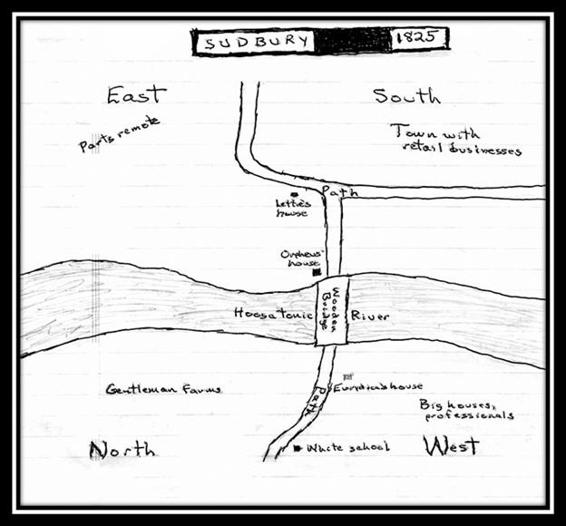

Table of Contents
Chapter 1- Rising From the Deep................................ 1
Chapter 2- Sweet Blindness.................................... 27
Chapter 3- Unsolicited “Wisdom”............................... 36
Chapter 4- Sunrise and Fantasy Realized....................... 59
Chapter 5- Life in Nod........................................ 73
Chapter 6- Futile Assuagement Offerings to the Lame and Flowers
Forbidden..................................................... 88
Chapter 7- Rumors of War and Passionate Conscription Avoidant
Behavior..................................................... 103
Chapter 8- A Place of Their Own and Covert War Preparation... 122
Chapter 9- Bucket Crabs and Disillusionment.................. 135
Chapter 10- War, His Odyssey and the Big Lie................. 150
Chapter 11- Adjustments...................................... 178
Chapter 12- The Devil’s Day.................................. 186
Chapter 13- Holy Visitation and Down to Business............. 201
Chapter 14- Something New, Pure Art.......................... 212
Chapter 15- Acts Abominable.................................. 219
Chapter 16- The Split........................................ 231
Chapter 17- Taking Care of Business.......................... 243
Chapter 18- An Uneasy Truce and Business Almost as Usual..... 254
Chapter 19- Western Nod...................................... 266
Chapter 20- Pleasant Days, Promotion and Her Test............ 289
Chapter 21- A New House...................................... 303
Chapter 22- Sunset........................................... 314
Chapter 1- Rising From the Deep Frigid northern night winds coldly kissed the summer gardens goodbye. Inch by inch, joy by joy, they howled an eternal song, while happily and viciously introducing time. He went inside the classically columned, one story stone building, hoping to find some warmth and illumination, willing to settle for either.
He briskly walked down the dark, unpopulated, stark hallway glimpsing the doors closed to him and had no interest in them.
At the end he encountered one of the oak variety stained a dark brown, with a black, rectangular sign, containing golden brass letters which said “S-U-P-R-E-SPACE-E-SPACE-C-O-U-R-T”. (SUPRE E
COURT) The tarnished “M” lay on the plushy light brown carpet, which covered a floor of indeterminate substance. The “M” was now companion to other debauched debris, rubbish, trash and junk. The inch deep undisturbed dust suggested long term abandonment. He picked up and pocketed a 1793 large cent, which was standing on its edge, half buried in the grime; ostensibly the coin’s source of support. It displayed a woman’s head with long flowing hair on the obverse and a wreath on the reverse. He thought it appropriate. He then tried the loose knob on the door and was surprised how easily it swung open. The room was lit with buzzing overhead tubular lights. The walls, ceilings
and floors were painted an irregular, but strangely equalized cream shade of white.
There were only two distractions from the two paintings hung on the wall straight ahead. One was a lavender blue marble fountain, which sprayed water two feet in the air, in which the light from the one and only small window near the ceiling gave the moisture laden bouquet a rainbow effect on occasion. The other was a stable black masonry composite bench, on which he sat and beheld the shadows of life.
The one on the left got his curiosity first, as he noticed that it wasn’t really a true painting at all, when he detected movement. The sky was a light purple covered in various shades of blue, darker at the top, lighter near the horizon. The bright yellow sun partially eclipsed its red companion and was setting on the right of the canvas. It further lightened the shades of blue in the proximity, while leaving the other blues unenhanced. Two red tanagers were flying furiously, suggesting that they desperately had to find something.
The earth was comprised of two masses of land with jagged and rounded edges. The left mass was deep green with black lines indicating some kind of topography, while its escort was a deep brown, speckled with orange dots and didn’t seem to indicate an irregular surface. The masses continually swayed, sometimes toward each other, sometimes away. When they moved
together they appeared to be, unsuccessfully trying to lock their disparate edges together. When in each other’s proximity, the colors moderated into six lighter shades of green on the left and six lighter shades of brown on the right. When the masses moved apart the space between alternated between black and white, as if controlled by a light switch. Propelled by an invisible wind, the dark billowing clouds often blocked the sun’s desire to highlight the light shades of green and brown.
When the sky was clear the rays gave the earthly masses a golden tint, deepest when both suns were at the center. An intermittent stream, like a hillside waterfall which appears during times of heavy storm, poured from one small part of the sky into the area between the jagged and rounded edges, disappearing into the wound, but not before providing enough nourishment to produce a few small purple flowers at the edges.
The canvas on the right displayed an alternate form of rhythm. It was substantially similar to its mate on the left, with only a few discriminating exterior details differing. The yellow and red suns sat almost motionless near the center of the sky. The two land masses were successful in interlocking, the lighter shades of green and brown given a deep golden tint by the two orbs at their zenith. No longer having a bottomless pit to fall through, the now continuous waterfall which poured from the sky formed a north-south river. The overabundant water
found its way east and west too, filling in straight soft spots of the earth. The voluminous beads of sweat formed a cross, the proximity of which was covered with flowers of every color and variety. Thirty red tanagers were on the ground, sitting among the flowers or drinking the water. Two were effortlessly exploring the sky.
He lost track of time as he contentedly and incandescently stared at the right picture.
Furiously, the door opened, producing a coarse, impudent and discordant thud when it slammed shut, breaking his pleasant reverie. He turned around to see a short, thin, severely balding and sallow complexioned man, who appeared to be about forty years of age, enter the room, nervously smoking a cigarette.
The man paid no attention to him and moved quickly to the painting at the right. He removed a can from his right jacket pocket, dipped his left hand into it and proceeded to paint the letters “F-A-N-T-A-S-Y” in dripping black across the canvas.
He stepped back a foot, to admire his work, then turned and left the room, smirking, not bothering to take note of anything else, satisfied that his work was done.
Orpheus Christopher woke with a start, quickly sitting up in bed. He thought he got a fleeting view of a black figure at the foot of it, just as the uninvited intruder disappeared. The
trespasser seemed to have a wingspan and made him think of a six foot raven. Coming from Boston, he wasn’t used to being around a lot of beasts, especially huge, somewhat ominous ones. But, it was gone and he could begin his usual day. The sun was not yet above the green hills, but its radiance was evident through his open windows. The glow in the cloudless sky made him feel as comfortable as one could be subsequent to a potential attack.
He got out of the trundle bed and went downstairs to the kitchen. Mom already had a cooking fire going, perilously raising the temperature and was hunched over, leaning into it, despite it being an already toasty July 4, 1825. The fireplace was brick and, next to it stood a few scary looking, iron kitchen utensils and various sized metal pots. This equipment came with the house and Orpheus and his family were just beginning to get used to the “rural” ways of Sudbury, Massachusetts.
“Good morning, Or,” she said, without looking up.
“Good morning, Ma.”
He sat at the table which was Mom’s pride and joy, being of the delicate and stylish Heppelwhite variety. It had six thin legs with golden metal encasements near the feet and two other unused gate-leg attachments for expansion in case of plentiful company. Made of mahogany, with reddish brown stain and gold leaf inlays, it was quite an impressive sight. As visitors
usually congregated in the kitchen, Mom wanted this to be the best room and it was. He gazed at his industrious mother, her five foot two slender frame ensconced in a sheer white, ruffled, floor length dress.
He said; “Do you know if Dad is going to need me help him make nails today?”
She straightened up and pushed the long blond hair back off her sweating, pale face. She looked at him and said as if the answer was obvious; “I’d suspect so. Why?”
“Oh, nothing. I guess I’m just trying to calculate out how much time I have for making pots today. I’ve got some new ideas I’m anxious to try out.” They heard a loud clop, clip, clop on the hardly packed dirt road outside. Orpheus went to a wood shuttered window and opened it. Joe McCready was sitting on his wagon, holding the reins to Pokey, his 35 year old, brown, agreeable stallion, which helped him deliver milk. Seeing his head out the window, Joe yelled out; “Orpheus, make sure you’re at the parade today.”
“Sure, Joe. I wouldn’t miss it.” He thought, “Oh, no, another impediment to pot making. This is the forty-ninth anniversary of the revolution. The fiftieth should be a bigger deal. I’d rather wait for that one.”
On the other side of town Eurydice Paul finished the breakfast prepared for her by the live-in maid, Betsy. Sitting in the kitchen, usually populated only by servants, she said;
“I’d better get moving before Dad finds me here.” Past experience had taught her that while her father would not openly chastise her for mingling with the hired help, he would do subtle things to discourage repeat performances, such as conjuring up chores that the two would have to immediately attend to.
She was always interested in hearing Betsy’s stories about her time in slavery in Alabama and her escape by pretense of having the flu. Since no one would dare catching it, she was able to slip out of the farm compound without much difficulty, eventually getting to Massachusetts with the help of many sympathetic wagoneers. Eurydice often wondered about the net results, but never said so. When Betsy described the parties down South, Eurydice thought she may well have been describing some things that were much more interesting than “free”
Massachusetts. She also knew that Betsy just might be confining herself to the best side of the story, not wanting to be someone to pity. Eurydice was also conscious of the fact that she had never experienced slavery and could never truly understand what that was like and didn’t want to find out. Still, it troubled her that the “free” life she had, living her entire nineteen
year life in “non-slave states” seemed pretty limited. More than one former associate called her a spoiled brat, of course, behind her back.
Her father, Reverend James Paul, was not one to tolerate much frivolity. A six foot tall, robust man with short black hair which showed some signs of departure on top, he saw the world as a place for suffering and praying, despite mouthing platitudes to loving Christ and his raising of the dead. At age fourteen Eurydice decided that her father was just another hypocrite, as she never observed him doing anything she would call the least bit painful. His verbally stated area of highest concern seemed dominated by greed rather than creed. Didn’t he know that his chosen theosophy said “God will provide,” “Consider the lilies of the field,” and all that other “Golden Calf” kind of shit? What was this fascination with the expected weekly donation, mortgages and household help remuneration? Despite vows of poverty taken by church priests, the family always lived in very fine, elegantly furnished dwellings, which legally were church property, but that was a mere subterfuge to her. She didn’t mind the pleasant surroundings in the least and didn’t want to live a life of sacrifice, but considered calling this life one of poverty was too ridiculous to warrant any serious comment, as “what it is” is “what it is” and that’s all there was to it. Her father’s closest encounters with suffering occurred
during his regular routine of telling parishioners what they should be doing “In the name of God, almighty,” and enduring the groans. She had recurrent dreams of an irrigated field with a dry, elevated, three foot wide wooden road through it. Her father briskly walked the high path in immaculate pale golden silk robes, denying access to anyone else. The lay people slogged through the mud and fell well behind him. He chastised them for being lazy, telling them that they must try harder, as they wallowed in the foot deep dark brown mud, doing their best to keep up.
Eurydice raised her five foot, eight inch, 150 pound, ample body from the simply planked, plain kitchen table and slowly said; “Hey, Betsy.”
Betsy turned her forty year old kerchiefed head, away from the fire in the floor to ceiling cooking oven. Her slightly overweight five foot five frame turned and her semi-toothless mouth replied; “Startin’ out early, aren’t you?”
“Betsy, I want you to think up another story to tell me tomorrow.”
“What kind of story do you want to hear?”
Eurydice dragged out; “Love,” as she exited the kitchen door and greeted a pretty, new day. A half hour after sunrise it was cool enough to take a comfortable fast walk over the green treed hills to the side of town where most of the parishioners lived.
Passing by her father’s unoccupied new church and school, she encountered an area covered with eight and nine room white clapboard houses, much like her own, each situated on about an acre. The strong light of the day revealed no imperfections.
She noted the few remaining farms, growing corn, on the wetlands bordering the Hoosatonic River. The area was very well maintained, but she wondered by who? On her half mile walk down slate pathways, she saw no one. She was disappointed as she was in a particularly good frame of mind and thought it was a perfect day to greet her new neighbors. Her light ebony black skin stood out from the sheer white summer dress she was wearing and glistened in the continually rising sun dead ahead. She crossed the covered wooden bridge over the river and the path became dirt.
With his father still sleeping, Orpheus got into the usual routine. The radiant sun, now unencumbered by the sloping topography, he carried his five foot, nine inch, 150 pound frame to the “still on its legs” wooden barn in the backyard, loaded ten of his pots onto a small wagon and pulled them to the roadside of his parent’s five room, side-halled half Cape Cod.
He immediately realized that he had forgotten something and when he retraced his steps, he noticed Molly prancing over to the edge of her corral and her high-pitched, snorting whinny made it
known, in no uncertain terms, that she was hungry. He went back to the barn to retrieve a bale of hay and threw it over the corral fence. Molly was now occupied and presumably content. He drained the water from her trough, primed the stone well and carried her buckets of fresh water. Molly surprised the busy water boy and gave him a push on the shoulder with her big dark brown head, causing his long light brown hair to fall on his face. He said; “Hey, girl,” as he spilled some of the water on his light blue dungarees. When he regained his balance he pushed the hair off his face with his left hand and rubbed her head with his right. He professed his apologies for being late, gave her a kiss on the snout, then returned to the barn and retrieved the wooden sign he had painted white, emblazoned with black lettering that said “POTS--10¢”. When he carried it to the front of the house he saw her smiling face, illuminated by the sun behind him and in front of her. He had his back to it and she had difficulty making out his features until they were about ten feet apart. He shyly said; “Hi,” as he placed the sign in front of the cart.
“Hi,” she said; “You know you are the first person I’ve seen outside this morning.”
“That’s strange. My name is Orpheus. What’s yours?”
“Eurydice.”
They both were silent for a few seconds, staring into each other’s eyes, no doubt wondering why that sounded portentous.
He finally said; “Where did you come from?”
She almost laughed and said; “What a way to phrase a question. I live on the other side of town now. I just crossed the bridge. The water looked very calm today.”
“I’ve never really noticed it much. We’ve only been here a few months. We’ve been busy getting settled and I’ve been using my spare time to make these pots. Want one?”
Eurydice was again surprised at his directness, but thought it cute. She wrinkled her brow, to effect a discerning look and said; “Maybe. Let me get a better look at them.” She picked one up, revolved it around in her hands, put it down and picked up another. “You put different designs on each one, don’t you?”
“Yes. I don’t think I could make a duplicate if I wanted to. I quickly scratch carve flowers on them before they turn solid and then paint them. I have to do it quickly and as a consequence I don’t get that overly studied effect.”
He smiled sheepishly, realizing that some people equate overly studied with perfection. She didn’t reveal her predilections and took a quick look at the ten items for sale.
She noticed that all pots were exactly the same shape and orange brown color, but each flower did, indeed, exhibit a different form and hue. She was attracted to a deep purple one, picked it
up, turned the scratch carving toward him and said; “What’s this?”
He laughed and replied; “It’s supposed to be a leafy iris.”
“Well, it’s certainly not studied. I like it.” She reached down to a pocket in her dress. As his eyes followed her hand and he saw her from a new interesting angle, a gentle breeze pushed her dress tightly against her luscious light black body. He thought of new artistic ideas to be tried with his palette in attendance. She pulled out a small black leather bag, retrieved a dime from it and offered it to him.”
Orpheus said; “Thank you,” but, put his hands behind his back and shook his head, indicating that he didn’t want the dime. He smiled at her and said; “For you, it’s free.”
She smiled back, looked at the rest of the batch and coyly said; “Then, maybe I’ll take another.”
He dropped to one knee, extended his arms and jokingly said; “Whatever my lady wishes,” intending to sound like a silly Knight. He took her left hand and kissed it.
Eurydice watched him surveying her legs and said; “Maybe next time.” His gaze elevated to her face and he was rewarded with a wry smile. She made a step toward continuing her journey, so in an attempt to detain her he said; “You’re new here?”
“No, I’ve been here a couple of months, but this is my first excursion into the ‘wild.’” She laughed, then added; “It takes a while to get settled. You obviously know that.”
“Will I see you again?”
She smiled, kept moving and said; “Sure, I guess so.”
“Exactly where do you live?”
She looked at him curiously and said; “I live about half a mile from the bridge, where they built the new church and school. Boy, you ask a lot of questions. Didn’t you ever see a girl before?”
Still in his knightly position he raised his eyebrows, shook his head, smiled and said; “Not like you.”
She didn’t know how to take that, so she sped up her gait and looked quizzically back at him.
He stood up and again said; “So, when will I see you again?”
“Soon. Very soon. Promise.” She continued straight on the path, thinking about Orpheus. She was surprised and curious.
She had many possible ideas about him, predominately good ones.
But, doesn’t he know that he’s white?
He watched her walk down the road, Eurydice now lackadaisically approaching the sun on a cloudless day. A gentle southern breeze brought in a very pleasant warm sensation. Her long black hair swayed, accompanied by her loose white dress.
His father’s voice interrupted his partial dream state. He was standing on the northeast side of the house, on a dirt path which led to the barn and called out; “Orpheus. Forget about those pots for a while and give me some help.”
Orpheus happily called back; “I sold one already today,”
conveniently not mentioning the price.
“Great, but come on over here and make some nails, too.”
Orpheus walked over to him and soon had a loving hand on his neck, squeezing a bit. Dad smiled right at him and said;
“Who ever heard of making a living from selling pots!”
“I don’t know, but there are a lot of them around and I figure that somebody must.” He walked to the house door and added; “I’ll be right with you. I just want to put something in my room.” He pulled a clean white handkerchief from his
“country” Queen Anne chest of drawers and rubbed his mouth with it, in an effort to preserve her sweet scent. He didn’t want to risk it dropping out of his pocket somewhere while working, so he put it in the small, ersatz Heppelwhite nightstand near his bed. He wanted to save this one, as he had a feeling it was something special. When he got to the barn his father already had the fire going and he was striking the piece of iron with a mallet.
At the split in the road Eurydice made a left, toward the east. Soon she was in another world; that of her father’s intended parishioners. Some of the houses were huddled together, perhaps patterned after “circling the wagons” when under Indian attack and others stood boldly alone and defiant. What many had in common was that they were made of unpainted, graying planked wood and gave off the incorrect appearance of a log cabin when viewed from a distance. Eurydice’s travels had not yet taken her to a place such as this and she was anxious to find out what it was all about.
Sheds and farm equipment were spread all over the place.
Barnyards contained horses, pigs, goats and chickens. Kids were a common sight, doing chores or running after each other yelling out things like; “I’m gonna get you, big head!” A woman of about 40 and 200 pounds, wearing a faded yellow housedress decorated with red roses, was hanging clothes on a line drawn between two trees in front of her small cabin. She had her back to the road and Eurydice called out; “Hi, good morning.”
The lady finished putting the clips on a pair of brown pants, turned toward Eurydice and said; “Hi. You’re new around here, ain’t you? I bet you’re the new preacher’s wife.”
“Half right, half wrong. I’m very new around here, but I’m Eurydice, the preacher’s daughter.”
“I should tell you right away that I got no use for religion.”
“Then we’re friends, because I don’t like organized religion either.”
The lady took another pair of pants out of the water, hung them and wondered what distinction her new acquaintance was making. “My name is Lettie. My religion is what you see around you; the wind, the sky, the fields and everything else.”
Hoping not to sound argumentative so soon, Eurydice’s truthful streak overwhelmed her and she said; “See, you do believe in religion. It’s just not of the organized variety in church.”
A mature hundred pound German shepherd came running toward her as Eurydice stepped onto the property. Lettie yelled;
“Mikey. Back off.” He practically stopped in his tracks and sat on his haunches, looking at Lettie sideways. She lowered her voice a bit and added “Good boy.” Directing her speech back to Eurydice, she said; “Come on over here. He won’t bother you now.”
When she passed near Mikey, Eurydice said; “Can I make friends with him?” She started to reach her right hand for the furry, black and brown head when Lettie said; “No, no, not yet.”
Eurydice walked around the stationary shepherd, each craning their neck to keep an eye on the other. “Is he part of your religion, too?”
“I told you everything is; Mikey, my husband Malcolm, my kids Lincoln, Alexander, Naomi, Dolly and Washington.” She paused a bit, then added; “Even you, Eurydice.”
“So is anything not religion?”
“Sure, words of hypocrites for one thing. The devil for another. Church. Moonshine....”
“I think we’ve got the same foundation. It took me a trip to Europe to finalize my conclusions.”
“What were you doing in Europe?”
“I spent the last year in a London college.”
“What did you learn there?”
“What privilege is.”
Lettie looked at her, wondering if Eurydice really knew that one, but it sounded to her as if her heart was in the right place.
Dolly, 10 and Washington, 8, came out of nowhere and ran past the two adults, Washington behind, yelling; “You better give it to me,” apparently more than a little interested in something she held in her left hand.
Lettie raised her voice; “You two better cut it right now.
I don’t need any more broken stuff.”
Washington said, “She’s got my book, again.”
Lettie said; “Dolly. Leave his book alone.” She walked over to her now still daughter, took the book out of her hand and gave her a slap on the butt. She gave the book back to Washington saying; “You better find a place for it that she doesn’t know about.”
Washington nodded yes, a bit disgusted with himself, since he had already been told that at least three times. He was also embarrassed that his big sister was again able to read what he had written in the diary, his last birthday present.
Dolly said; “I ought to tell everybody what you wrote in there.”
Washington chased her into the house saying; “You do and I’ll....” The planked door slammed behind them.
Lettie said to Eurydice; “I ain’t having any more. You know what I’m sayin’. You want children?”
“Sure. I think so. Doesn’t everyone?”
“How old are you?”
“Nineteen.”
“When I was your age, I already had two, Lincoln and Alexander”
Eurydice queried; “Are they still living here?”
“No, they’ve been gone for years now. I’m not sure that they’re living anywhere, especially that Lincoln. He wasn’t the
type to take any kind of shit and he’d fight with anyone who got in his face.”
“What do they do for a living?”
“Whatever they can, you know. I just hope it’s not something they can put you in jail for......Maybe I’ll never know for sure.”
Eurydice didn’t know what to say, as she knew nothing of that kind of life. Her early years were spent at Christian schools wherever her father happened to be assigned and up until very recently she thought she would be spending another three years in a London university, trying to establish some sort of career for herself, most likely teaching or something creative in literature. Her tender years and sequestered life precluded her from the knowledge that the odds of the latter happening for a black woman were overwhelmingly short, as her parents never wanted to instill her with ideas that contained any concept of limitation.
Besides becoming disenchanted with the effete snobbery and cautiously preferential treatment she thought she detected at the school scene, she had gotten unnerved the last few months in London. She sensed that she was being watched or followed by something she never could quite fully perceive. She got fleeting glimpses of a stern looking white woman, dressed in black, who popped up in crowds and reflected in windows. She got brief
visions in her room when she first roused many mornings. When she would look harder, the image would always vanish. Eurydice wasn’t at all superstitious or religious in the traditional sense, by her own admission, but the frequency of the short sightings resulted in the very real fear that she was soon going to be killed. Eurydice was happy that she had not yet seen the figure in America. She hoped that what had flashed before her was part of the “Old World,” and that she was now safely in the new one. She finally said; “I’m not against the school, mind you. A little education never hurt anyone.”
“Lettie answered; “Somehow I knew that was what you felt.
Let’s go inside and see what my two little angels are doing now.
Do you have a boyfriend?”
“No, not really. My father said that he was going to arrange a marriage for me someday.” She grimaced.
Lettie looked at the pot Eurydice placed on the kitchen table and said; “I see you’ve already come to meet Orpheus.”
Eurydice was not completely comfortable with what she thought could have been an inference she didn’t want to deal with. She said; “Yes, he was the first person I saw outside today. Even though the sun was behind him, he looked like a white boy to me.”
Lettie said; “It doesn’t matter. Everyone knows that Orpheus loves Eurydice. Everyone.” She grinned at Eurydice, who felt her face flush and hoped it wasn’t noticeable.
Orpheus said to his father; “So what do you want me to do?”
His father stopped his hammering and turned his five foot nine, 180 pound body toward his son and said; “Take a mallet and hammer down the nails on that table.” He wiped the sweat from his forehead, brushed back his short dark brown hair and pointed where he had placed many nails as soon as they cooled off, which still required some smoothing out. Orpheus quietly did as he was told. Since the job took little concentration, he thought about his new acquaintance and his pot endeavors. Eurydice’s light ebony black skin contradicted her long black straight hair. He had seen many black girls in Boston and it seemed a general rule that the darker the skin, the curlier the hair. It probably was difficult to maintain, so they generally wore it short. Maybe Eurydice isn’t entirely black. He got annoyed with himself for this line of thought. “Who cares?” He then pictured the Sudbury he knew and many of its people. “Everyone,” he thought.
“Everyone, except me, anyway.” He pictured her healthy appearance; he correctly thought that she was probably around five foot eight and weighed about 150 delectable pounds. He recalled watching her walk away taking special note of her long,
meaty black legs. Her loose white dress came down below the knee, but with the aid of a gentle, gusty southerly wind, he could regularly see a few inches higher. He had been more or less working for an hour when he said; “Dad, I’m going to take a little break and check on my pots.”
“You get all those done?”
“No, not yet. I promise I will.” Orpheus’ voice raised a tone and he added; “I’ll be back in ten minutes.”
His father watched him wipe off his hands with a rag and walk out the door into the full light. Providence was with him today as when he got to the front of the house he saw Eurydice walking back down the road with her head serendipitously to the ground. She didn’t look sad, but she was certainly pensive. He saw that her hands were empty and he yelled out; “Hey, where’s your pot?”
She looked up, not entirely surprised to see him again, but somewhat embarrassed and said; “Oh, I must have left it at Lettie’s.”
“Who’s Lettie?”
“Oh, I guess you don't know her. She lives just a little up the road from here. I think I made a friend. We were talking awhile.”
“You know you made another friend, too,” he said, cocking his head to the side and smiling. “Take another pot.”
She remembered what Lettie said and she started to think that something strange might be going on here. It was an improvement over the apparitions of London. At least this strangeness was pleasant; so far. She took a long look at his face, liked its kind playfulness and focused on his lips. They were the thickest ones she had ever seen on a white guy. Maybe he’s part black. She chastised herself for the thought. Who cares? Everybody. She was quiet so long and displayed such a sweet interested countenance, that he slowly approached. When he reached her contented face, he leaned over and kissed her on the cheek, taking her fingertips in his.
She broke away, looked up and down the road and with wide eyes said; “You’re not supposed to do that here.”
“Then where am I supposed to do it?”
She almost laughed, but was trying to make some serious point that escaped her at the moment, so she remained somewhat authoritarian and replied; “Don’t do that again.”
“In public you mean?”
She didn’t want to discourage him, so chose not to answer, this time letting the laugh go, as she started walking toward the bridge.
Orpheus said; “Hey, how about the pot?”
Eurydice glanced back and playfully said; “I don’t know if I want to be that beholden to you. At least not yet.”
Orpheus raised his voice a bit and said; “Are you going to be at the Fourth of July festivities tonight?”
She smiled, turning her head back toward him and said;
“Yes, unfortunately. My father always drags me to those kinds of things.”
For the first time in a long while Orpheus was looking forward to a parade. He was glad she was a kindred spirit, forgot about his pot making and called out; “I’ll see you there.”
As she continued her track home Eurydice didn’t notice the topography or the presence of people, again thinking about what a strange day it had been so far and that it wasn’t yet even half over. She thought about her two new friends, but corrected herself. Her instincts told her that these two were not what one traditionally calls a friend. What was the right word? For Lettie, she really couldn’t surmise. But for Orpheus the answer was a bit more obvious, with only two possibilities, lover or brother. Upon further reflection she couldn’t picture him a brother.
Orpheus returned to the barn and silently started hammering. His mind was completely on her. He liked everything he saw and heard. He thought; “I think she likes me, too.”
When Dad was near packing it in, he shut down the fire and said; “Or, you did a lot of nails today. Hope you’re not too tired to pay our respects at the parade.”
Rather than saying that he couldn’t wait to get there, Orpheus merely deadpanned; “I’ll get through it, just because I love you, dad.”