

The Hart of Faith Vol 1 by D.A. Sanford - HTML preview
Download the book in PDF, ePub, Kindle for a complete version.
We have ruined ourselves, and now we lie absolutely helpless at the disposal of a holy and just God. The pains of hell, by our ungrateful disobedience, we have lost our title to see that reason and interest can hold dear. By once breaking the law of God we have put it out of our power ever more perfectly to obey its precepts. We hear much said about our depravity and wretchedness, but did it ever affect our hearts!
No man can be saved who does not believe and feel, that he is a miserable and helpless wretch; and that unless saving grace raises him from the mire and dirt and justify him freely through the righteousness of Christ, he cannot be saved. For Jesus hath said “No man can come unto me except the Father which hath sent me draw him.”
Oh how humble and empty thus ought we to be. It ill becomes helpless and staving wretches to boast of what they can do, and of what they enjoy. The truth is we can do nothing acceptable in the sight of God and can enjoy nothing only as he gives it to us.
86
My Hearers, if Christ does not help us, we are all forever lost. By our own deeds, we cannot purchase heaven. We already owe ten 1000 talents and have nothing to pay. We never performed a duty, without also at the same time committing sin. And we insult God by hoping to obtain that by our polluted selves, which could have been gained only by perfect obedience to the divine law.
Every passage of the scripture which requires faith in Christ, is but a solemn declaration of our poverty and nakedness. Unless we are clothed upon by justifying righteousness of Jesus, we must surely perish. Nothing else can save us. His blood was not spilt on the supposition that an arm of flesh could rescue us from the misery of the fall. He was delivered for our offences, for those offences for which neither we nor the highest angel could atone; and he was raised again for our justification.
Had he not died and risen from the tomb, we could neither have been pardoned, nor justified. He is our only hope. Invest one individual of our sinful race with all the strength and flowers of a whole world of men; and unless Christ assists him he will not think a good thought, nor perform one holy action. We are nothing but the dry bones, - bones exceedingly dry, which cover the polluted valley, and there we must lie, until the breath of the Lord breathe upon us slain, that we may live.
2nd ly We ought to be grateful to Christ that he hath undertaken the work of redemption that work which we cannot perform, and without the performance of which we must eternally perish. Whose morality will stand the test in the solemn day of accounts.
What man is there here whose morality can stand irreproachable in the face of a broken law?
We must approach the judgment seat under the shelter of a perfect righteousness, or be cast into outer darkness. And blessed be God all that we need is provided for us. Destitute as we are, we may come and partake of the fullness of Christ. In our salvation he is all and in all. If he move a finger in our behalf, we live and shall resign with him in glory, but if that finger be not moved, we must die in our sins.
Yes there is righteousness which will answer the purpose of starving perishing sinners.
And Christ is that righteousness and it will be imparted to the destitute soul, in which there resides the least spark of evangelical faith. For Christ is the end of the law for righteousness to every one that believeth.
No sinner is too mean to share in the fullness of his love, nor too destitute to enjoy the benefits of his righteousness. No curses of a flaming law, are too heavy for him to remove; and no wretched mortal is too near the gates of hell, to be brought back, and carried in the arms of divine grace to the door; nay through the door of heaven. “Being justified by his blood we shall be saved from wrath through him.
The law worketh wrath, but being justified by faith, we have peace with God through our Lord Jesus Christ. Oh My Hearers, take the law for a rule of your conduct, but in the name of God I adjure you not to make your wretched and tattered obedience, a ground of acceptance with God.
Every step you take that vary law will condemn you. Why then will you look to a quarter for justification, whence God has told you, it cannot be obtained. Be entreated therefore with a grateful heart, to believe in Jesus. For by Jesus Christ all that believe are justified from all things from which they could not be justified by the law of Moses. Be thankful to God all your days that his strength is perfected in your weakness.
87
Oh be grateful that the Son of God stepped between you and a broken law, and bore its penalties in his own body on the tree. It is only by the obedience of that one blessed god that any shall be made righteous. In his sorrows read what must have been your eternal pangs had he not interposed. And in those sorrows also read that nothing can now prevent your ruins but faith in his name.
3rd ly let us bless God for the personal advantages which attend justification.
We have peace with God. Saith the apostles, therefore being justified by faith we have peace with God through our Lord Jesus Christ. While sinners are under the condemnation of the law, they are like the troubled sea which cannot rest. They are full of tossing to and fro. The remembrance of past crimes, the present state of their minds, and the awful prospects of a judgment to come, fill them with sorrow and disquietude. There is no peace saith my God to the wicked. But it is not so with the righteous. Their souls are tranquil.
The evils of this life cannot disturb their serenity. They do not fix their hopes here and consequently what ever affects their worldly interests, is too trivial to occasion much sorrowful emotion. A soul is not justified until i t is possessed of a heavenly temper, and this temper is the very essence of peace. It is this which constitutes enjoyment of the word.
But let the justified saint turn his eye where he will, no object ruffles his composure, His past sins are washed away in the stream of Christ’s blood.
The curses of the law are taken off. His present feelings are calm, for Jesus is his righteousness his songs and boast. He places all his confidence in him who has begun, and is faithful to accomplish his redemption. What can harm him? The shield of Jesus is before him, and no dart of Satan can pierce it. In all his guilt, his faith is counted to him for righteousness. Yes and with what confidence and nearness of access, can he approach the mercy seat.
He has boldness and access with confidence by the faith of Christ. When under the condemnation of the law, and destitute of an interest in the blood of a salvation the language and the posture of prayer was a weariness to his soul. But now prayer is his breath. He loves to converse with his best friend and only lover. Charms, ten 100 charms, draw his willing feet to the now welcome retirement.
Before the throne of grace he can exhaust all his strength and the more he is weakened by holy exertion, the more is he strengthened and made joyful in the inner man. Blessed is that justified soul which is steadfastly stayed on God and finally, eternal life is the sure reward of that faith which is counted to us for righteousness. “And whom he justified, them he also glorified,” what though the believer may not be afraid of his interest in Christ.
Yet his reward is certain. Faithful is he that hath promised. Although the humble believer may be unconscious of his good estate, he will look on this miserable world with a far different eye, and with different feelings, that those with which he used to regard it. And all the blessedness of the future world, although he hardly dareist hope for the lease portion of it, will assuredly burst upon his view when he closes his eyes in death; and fill him with wonder ecstasy and love.
Of all that God has given him, Christ will lose nothing. When the believer appears before the bar of god, the justifying mark which Jesus impressed on his heart will appear in all its loveliness and splendor, The whole universe shall see it. Millions of angles will repose to behold it, and will raise new hosanna’s to the Prince of Glory who hath multiplied the triumphs of the cross.
88
And now My Hearers, what remains for us but that we should feel our wretchedness and know where to place our dependence? We are polluted with sin; but there is a righteousness and all its blessedness may be ours by the exercise of true faith in Jesus.
End
89
Will you be waiting for voices from the dead?
Sermon 97
No matter how much evidence you can produce, some people still just will not believe what is said. They always seem to need more proof to be persuaded to the point that your are trying to prove.
Reverend Hart lays the biblical evidence on the table. Why would anyone doubt the truth in the bible, the writers of the gospel were under the threat of death if they were discovered in their writing. Just think for a second, would you risk death for a fabrication. I think not and these are the words of God, which makes him the ultimate author.
As far as information about heaven from the dead, the Reverend talks about the fact that everything that we need to know or can comprehend is already available to us. The bible is God’s word. He has placed at our fingertips, all that he knows that we need to know. He gives us the amount of information we need to know what we loose by not living the will of God.
He talks about the fact that there are more miracles being preformed today from the fact that we now have an easier existence, more information and better access to it. The Christian Bible is still the most published book in existence. You have more information at hand than any person alive in Jesus’ time. The miracles’ are the simple thing that we have at hand more information about religion and Jesus than the people of his time had.
They became followers with very limited information, mostly word of mouth at first. Is it not easier for us to believe with all the evidence we now have but there is no a greater crime to ignore this evidence.
Would you wait for more evidence when none is needed? As the reverend points out is that the balanced scale of good and evil will not change, even if you place ten thousand tons of evidence.
Daniel Sanford
90
Plymouth Feb 1811
Bristol 1820
Luke 16:31 “And he said unto him, If they hear not Moses and the prophets, neither will they be persuaded through one rose from the dead.”
We will, in this place, leave the question entirely out of view, whether there will be any verbal communication between the righteousness and the wicked in the further world. We can neither deny nor affirm that that will be the case. It can only be remarked here, that the thing is by no means proved by the conversation which took place between Abraham and the rich man, as represented in the parable; which was introduced by Christ with a principal view to describe the feeling and condition of saints and sinners in the future world.
We are therefore not warranted to infer from this allegorical representation, that there certainly will be any verbal intercourse between them. Nor does this parable teach us to believe that it was pure benevolence which endured the rich man in torment, to take any measure to warn his surviving brethren of their danger. There can no benevolence in hell; and the want of it constitutes no small part of its misery.
Perhaps it is allowable to believe that the animal affections of our nature, are not suffered to become totally extinct, in the regions of despair, if so, those might have occasioned his solicitudes for his brethren. However this may be, it is certain that mere selfishness might have been the grand cause of his anxiety, to prevent their coming to that place of torment.
All the inhabitants of the infernal world are doubtless, mutual tormentors. “When partners in sin come to be sharers in wo, as tares bound in bundles for the fire, they will a terror to one another.” The rich man now mingling in the society of devils, unquestionably had motive enough to wish the destruction of his brethren; but knowing that their company would enhance his own misery, he earnestly entreated Abraham to warn them of the anguish he endured, that they might escape it.
Abraham is represented as informing him that such intelligence would do them no good.
Still the hopeful sufferer is not convinced, he urges his request still further, and says, “Nay, father, Abraham: but if one went unto them from the dead they will repent.” Then for the last time Abraham replies, “If they hear not Moses and the prophets, neither will they be persuaded through one rose from the dead.” These words in their connection being kept in view, I may proceed.
I. To show that sinners in this world as well as the rich man in the other, are prone to think any method of conviction better than that which God has chosen and appointed.
II. Offer some reason why they would be as unlikely to believe and repent though one rose from the dead.
91
I. I am to show that sinners in this Nothing is more common than to hear a certain class of men dwelling on the peculiar advantages of the Jews, who beheld the Savior face to face, and witnessed his miracles.
They suppose the evidences of the truth of Christianity which that notion they had were superior to, and more convincing than any that have existed since that time. They do not feel satisfied with a mere account of transactions recorded many centuries ago, and by a hand which they never saw. They are for beholding the same transactions with their own eyes, before they will believe. But My Hearers, shall we disbelieve every fact which we ourselves have not witnessed?
Is all history spurious and forged which relates events that did not take place under our own immediate observation? Reason and experience teach us that God must have constructed the world and regulated the order of things, so as to believe the existence of events which took place before we were born, and to believe it too upon the mere authority of human testimony.
The world would soon go to ruin if all human testimony were henceforth to be laid aside as amounting to no proof in any case what ever. We have just as conclusive evidence to believe there is such a place as London, as if we had seen it with our own eyes. And yet the whole of this evidence is derived from the testimony of others. We acknowledge that the testimony of some men whose interest or passions would lead them to falsify the truth, but there are cases in which the very worst of men could have no temptation to relate and record a falsehood.
The saved penmen, could have no endearment to record the events mentioned in the Sacred Scriptures had not those events taken place, for they knew when writing their several histories, that they were exposing themselves to persecution and death. And they suffered martyrdom, not for recording falsehood, but for recording the truth. Men could not possibly exist together in society if they were not compelled, as it were by a law of their nature, and by particular circumstances which they cannot alter, to speak the truth.
A banditti, a lawless horde of robbers, must of necessity be instantly dissolved, that moment they accuse each other of fraud and falsehood in these affairs which relate to their confederacy. We certainly must believe the apostles of the holy Jesus had as much veracity and honesty as other historians, whose accounts of events we do not hesitate to believe.
But I return from this digression.
I trust there are no confirmed infidels here to reason with. And if there I would not insist solely, nor indeed principally, upon the veracity of the saved historians, in order to prove the genuineness and authenticity of the holy Sacred Scriptures. The internal character of divine revelation, and the effects which in every age it has produced on men, render it a moral impossibility that it should have been imposed on the Christian world by the hand of fraud.
The truth is, we have much greater evidence than the Jews had to believe the bible is a revelation of God. They saw the effects of Christian power in working miracles then they all, if we do but consider that the conversion of every sinner, is effected by the miraculous, or at any rate, the immediate interference of Almighty power.
We mean no more by a miracle than the counteraction or suspension of the laws of nature. And can we suppose it requires less divine efficiency to counteract or suspend those laws in the moral than in the natural world? When a man is converted, his nature is 92
changed; and is not the effort in deity as costly and as miraculous, in effecting this change, as it was in raising Lazarus from the tomb.
The miracles which Christ preformed in the natural world were few, compared to those which he is now continually performing in the moral. Nothing less than the interposition, and special interposition of God can alter the moral nature of man, so as to make him love what he just before hated with all his heart. Now it is to be remarked he does not produce this alteration in our views and feelings by altering the nature or the form of the objects which we before hated. Those objects remain immutably the same.
The change is wholly in the temper of the heart which by the agency of the Holy Jesus is brought into a conformity to them. Every reason, if there were any why we should not relish the truths of the gospel continues to exist at the very instant of our conversion and no new reason to the contrary is presented to the understanding. Every thing external remains just as it was before. Therefore the different views and feelings a man has after his conversion, can be accounted for on no other supposition, and (and the supposition is undeniable fact, that the alteration is wholly in his heart, and is produced by the miraculous power of God and My Hearers, if we are rationally persuaded that the Christian religion has an existence on earth, we must also believe that this moral change of the heart, is no uncommon thing in our day.
If we grant that three quarters of those who publicly profess Christianity, are down right hypocrites or even knaves, still the remainder, collected from all the churches with which we are acquainted, would far exceed all the miracles which Christ wrought while on earth: and the conversion of this remainder we may justly consider as so many miraculous effects of divine agency.
But we would hope, and we are warranted to believe that more than one quarter of those who name the name of Christ are his sincere followers. Considering then, that we are witness of the vast power, and the numerous effects of the gospel we have much more evidence than the ancient Jews had who witnesses the miracles of Christ, to believe in the truth of the Christian religion. But I have not stated to you one half of the excess of evidence which we possess above that which they possessed.
I have not time to do it, nor does the object of this discourse demand it. I know we all have a natural curiosity to behold with our own eyes, the wonderful events recorded in the sacred history. But in the name of reason I ask, should we be willing to exchange the evidence of the truth of Christianity we now have, for that only which we should have by being eye witnesses of the facts recorded in the Sacred Scriptures?
The truth is, ever since the ascension of Christ, the Sacred Scriptures have been shining with more and more splendor. We have seen the accomplishment of many prophecies which the Jews never saw, and understand many passages of scripture which to them were involved in darkness and in addition to this we have a faithful narrative of the most extraordinary events which they witnessed.
The true reason why any man would wish to exchange evidence with the Jews, is doubtless because he is dissatisfied whit what Providence has allotted him. Dissatisfied with their own advantages, often lead men to covet those of others. Perhaps such men would in fact desire no evidence at all in favor of the Sacred Scriptures but since they must have it they would prefer it in another form.
Men love to be their own choosers, even in cases where they cannot but know they would be losers by it. They are restless in every situation in which God places them and rather 93
than not have it altered, they would willingly run the hazard of it being altered for the worse. God has appointed means of grace; but many sinners are so grace hardened, as to neglect them entirely or wonder in the face of heaven, why some other means better adapted were not appointed in their stead.
Some are displeased that God requires them to worship in public every Lord’s day, when as it seems to them every necessary purpose might be answered as well by reading the bible and other good books at home. Others murmur that they are required to pray in their families when they can embrace every domestic concern and want, in their secret prayers.
And some lay so much stress on awakening as to think them selves almost excusable for delaying repentance until an awakening takes place: but should a revival of religion actually commence, these same persons would term it all enthusiasm, and bluster.
Un-renewed men, whose feelings are as little excited are seldom perfectly contented with the prescriptions and demands of Providence. If he devises a method of salvation and carries it into effect at the expense of his son’s blood, they feel as if some other method would have done as well, or still better. They practically claim the prerogative of sitting as arbitrary judges of the propriety of God’s conduct not only in the distributions of his grace, but in laying commands on them. They have Moses and the prophets, the gospel of Christ.
All its attendant privileges, yet before they will believe and repent, they have the audacity to demand more privileges and of some different kind.
They think they should certainly be convinced of the truth and necessity of religion if one might rise from the dead, assure them that the soul survives the dissolution of the body, and tell them what is passing in the invisible world. But My Kindred when once we begin to demand more of God there is no end to it. Our arrogance and presumption would increase in proportion as our unhallowed wishes were gratified.
One grand reason why men demand more proof in favor of the bible, and desire means of grace, of some other description is, to excuse themselves from the duty of immediate repentance. They vainly imagine they may stand idle and disobedient, so long as they can move and tongue complaint against the Almighty. But their hearts must be beyond conception treacherous and hard and their situation inexpressibly deplorable, who can deliberately defraud themselves of everlasting blessedness, by such delays, and delays too founded on a plea so spurious and false.
Even if God were unjust, if contrary to any right which he had, he gave us smaller religious privileges than he has given others it would avail nothing to find fault. Instead of availing any thing, it might provoke him to deprive us the advantage we did possess. But God is not an unjust being. His mercy towards us is infinite.
The means of grace which he has appointed for our use, are the vary means above all others which human invention can devise, we most needed. No mortal of the face of the globe are in point of privilege, nearer heaven than we. And not only so, we cannot possibly conceive of means better adapted than those with which we are favored. It is insolent to ask for more or better means then are found in the doctrine, precepts, narratives, and instructions contained and pointed out in the word of God.
II I am to offer some reasons why sinners would be as unlikely to believe and repent, through one that rose form the dead.
1st A messenger from the dead could say no more than what is said in the scriptures. The same God who dictated the scriptures would not suffer him to reveal more than the bible 94
contains. God intended it for a perfect book. Accordingly all that it is any importance for us to know; and it is manifest he would not suffer any unimportant communications to be made.
What greater or more momentous truths can be related by any tongue than are recorded in the Sacred Scriptures. An angels tongue could not express were these with more perspienity and force. Or if it could it would be of no service for us to listen, for in that case the angel must employ something more forcible than human languages, but mortals cannot understand the language of another world. If the revelation of more and different truths had been necessary, they would have been revealed to us as the Sacred Scriptures were by the pen of inspiration, for it would be preposterous to suppose that God would raise so many millions from the dead as on that hypothesis would be necessary to give intelligence from the other world to all the inhabitants of this in every age.
So far as the supposition is preposterous, so far we may confidently affirm, that even if one should rise from the dead he could relate nothing new, for he would not be suffered to relate anything unimportant and all that is of any importance to us, is already revealed in the Sacred Scriptures.
2nd ly Nor could a messenger from the dead speak with more authority than the written word of God nor indeed with so much. He would be but an individual. The saved penmen were many, and speaking as they were moved by the Holy Ghost. They could not utter a falsehood. But the testimony of 30 men comes with more authority than that of one man.
His language could not be more forcible and explicit than that used by the prophets and apostles. He could bring a commission from no being superior to God and it was that same God that commissioned the sacred writers to record what is related in the Sacred Scriptures. He would not invest a special messenger with more authority than he had those writings were appointed to remain to the end of time as a standing testimony to the truth of religion and a living warning to sinners to flee from the wrath to come. It would be inconsistent to suppose a being who was commissioned to address one individual, would be clothed with more authority than an inspired person who was commissioned to address a world.
3rd ly Should one rise from the dead, there would be much reason to believe his appearance a cheat as to believe the Sacred Scriptures are so. There would be as much ground for disbelieving our senses in one case, as for refusing to yield our assent to the conclusion of just reasoning in the other. It amounts to a moral demonstration that the bible is a revelation from God and this kind of demonstration is as conclusive as any evidence of the senses can be. So far than as a man is inclined to disbelieve the Sacred Scriptures.
The proof of whose genuineness amounts to a moral certainty, just as far if he would be consistent he ought to disbelieve the existence of what he sees with his own eyes, for the evidence he has of its existence cannot rise higher than a moral certainty. And doubtless, should one rise from the dead to address us on the subject of religion and eternity.
The infidel would term his appearance more than a specter, or the creature of a distorted brain. And he would have as much reason for terming it thus, as for rejecting revelation as a forgery, and in fact much more reason. Men have been deceived with respect to supposed supernatural appearances. They have sometimes affirmed in the strongest language that they seen and conversed with men who had long been dead, but afterwards were convinced 95
it was all a mistake, they could attribute their impressions to ill health, ignorance, or excessive credulity.
4th ly “ The same strength of conception that breaks through the convictions of the written word, would certainly triumph over those occasioned by a witness from the dead. It is true, the appearance of a messenger from the eternal world materially affect us. But he would affect us more by filling us with consternation and fear, than by increasing our conviction that the bible is true and that we ought to believe and obey its commands. But this fear and consternation would rather unfit, than prepare us to profit by the message.
It is impossible to frighten men into religion. You cannot frighten them into a conviction of any truth. There can be no solid and proper belief of the truth, without the full and sober exercise of reason. But you command the full exercise of reason, when the whole soul and body are agitated with fear. But even though one should rise from the dead, and not frighten us by his appearance, his testimony respecting the eternal world, would not of itself overcome the obstinacy of our unbelieving hearts.
The same disposition which induces men to desire more evidence than the bible contains, would endure them to demand the testimony of another and another, and even of all who have ever departed this life. If they hear not Moses and the prophets, neither would they be persuaded though one, or several thousand million rose from the dead. If a degree of evidence fully sufficient for the proof of a fact, will not gain our belief, a 100 degrees of the same evidence will not do it.
If in well adjusted scales, two pounds will not overbalance one, 40 tons will not overbalance it. If we go on the principle of rejecting evidence which goes to prove a fact that we wish to deny, we can reject, and shall we as likely to reject 10 or 100 degrees of it, as well as one.
God knows it is not best to gratify men in all their successive capricious demands. He will not raise their ancestors from the dead to prove that which is already proved and in another manner, and proved so plainly too, as to entail everlasting misery on every soul that disbelieves it. We are sure God is a just being, therefore we are equally sure he never would require us to believe Moses and the prophets, if their testimony were not sufficient to warrant and demand our belief.
And if through the obstinacy of our wills, we reject that testimony which the Almighty Judge deems sufficient for the establishment of certain facts, through the same obstinacy we should reject all possible testimony which God himself could lay before us. It is a trite saying that enough is enough. It will appear in the day of judgment, that there had been no need of summoning the dead from their graves, in order to multiply proof in favor of Christianity, for when the wicked are east into outer darkness, they will be conscious that their sentence is grounded on their having shut their eyes against the clear light, and resisted the force of the most convincing evidence.
My Hearers, do you know that you have in your hands Moses and the prophets and the gospel? And when reason and conviction pronounce these enough do you harbor your unbelief and call for a messenger from eternity to remove it? The rich man who had only Moses and the prophets to convince him is now in hell, but in addition to them you have the gospel. I preached gospel, the ordinance of the gospel and before your eyes some of the wonderful effects of the gospel and can you conscientiously ask for anything more to 96
convince you of its truth, of its power, and of the solemn obligations under which it lays you? Ye may ask, but shall not receive.
We ought to tremble here! How sure and awful will be our destruction, if we harbor unbelief in the face of proof which an angel from heaven or Lazarus from the grave could not increase? Ah! too little do we realize, as we read the word of God what it is which we hold in our hand. Considered as substantial proof of the truth of Christianity it is more than an equivalent to that which would result from the resurrection of 1000’ from the dead. But Most High none of us, I trust, are infidels in the large sense of the word.
We are all rationally convinced that the bible is the word of God. Probably there are none here who would wish a further confirmation of its truth. But even if our heads are free of it, are not our hearts are charged with infidelity. An some amounts indeed a speculative belief is better than none; but may we safely rest here?
No my friends, we must possess that faith which works by love and purifies the heart and without which it is impossible to please God. We have no more intelligence to receive from the eternal world; it remains then for us wisely to improve the information he has so fully and clearly given us in his word. And here let the question come with all its solemnity and weight, how have we improved it? Are we so regardless of its warnings, as that the devils through fear we shall at last become their tormentors, are desirous to warn us afresh from the invisible world? I have but little more to say.
But I cannot close without deploring our criminal unbelief. Are our hearts made of solid rock that they have so long resisted the force of the most affecting truths of the gospel?
The seal of heaven is stamped on them all and they carry their evidence on their very fare.
We lay aside our arguments, we are conscious that the Sacred Scriptures are true, are binding, and are as persuasive as the eloquence of an angle. And now do we delay repentance and must we parish only because we wish the almighty to draw aside the veil and suffer us to scan the world of spirits? My Hosts, if the bible is all the information we are here to receive from the eternal world, how faithfully ought we to improve it and if is enough, if it is all we can rationally ask for, how intense will be our everlasting anguish if we neglect to read it. To receive it into good and honest hearts, and to practice it in our lives.
END OF SERMON 97
97
You have to love one another to love me.
Sermon 65
The essence of sin is hatred to all good. What a profound statement Reverend Hart gives us in his opening. Christianity is a love based religion, Jesus without question was a man of peace. In all his teachings he preached love, love your neighbor, love your enemy and love God. If you say you love God but still have hate for others then you will be considered a liar. This is clearly stated in 1st John 4:20-21.
We are shown time and again that we are God’s children, so like a parent, all he wants to do is comfort and provide for us. Man is like a wayward children, that need tough love, so we can come to God only with total love for all. If we do not, God’s tough love will call us a liar. This sermon as with his others, point out the fact that we are on this earth for a short time. We have but that finite time to prove our love and obtain our salvation. It is only then do we become co-inheritors of our heavenly fathers kingdom.
What Reverend Hart shows us is that being a Christian is more than just a statement “I am a Christian.” It truly is a way of life base on love, forgiveness and compassion for all of God’s children.
A word play for you to think about:
Evil has always envied Good even though the both have the same number of letters.
When Good was not look Evil grabbed an O from Good but bent the side.
Evil, being proud of what he had done put his bent trophy out front of his name.
Good was only disappointed because, if asked, he would have freely given the O.
God and DEvil
God only wants to love and be loved.
Daniel Sanford
98
Plymouth 1810 Goshen 1810
do 1819
I John 4:20-21 “If a man says, I love God and hateth his brother; he is a liar; for he that loveth not his bother whom he hath seen, how can he love god whom he hath not seen?
And this commandment have we from him, that he who loveth God love his brother also.”
Love is the expense of relations, for it is all comprehended in this short sentence “Thou shalt love the Lord thy God with all thy heart, and with all thy soul, and with all thy heart, and with all thy mind and thy neighbor as thyself. On these two commandments may all the law and prophets.” And in another place love is called he fulfilling of the law. This is the leading faith in the character of a Christian and it is this grace which more than an other distinguished, or ought to distinguish him from the world.
It was perfect love which induced the blessed Jesus to lay down his life for his followers and as they profess to have his spirit, and imbibe his temper the same love must find a place in their hearts also. The only reason why we need to be born again is that Christian love man take the place of our former enmity.
The essence of sin is hatred to all good, therefore the change which men undergo in regeneration is the greatest possible change of which we can conceive. When a man is converted he is emphatically a new man, old things are passed away, and behold all things are become new. He loves what he before hated, and what he before relished, is now odious and disgusting. Black and white are no more different in their nature than are the tastes and disposition of men before and after conversion.
There is however a great difference in the natural dispositions of men. Almost every person has something peculiar to him, and that peculiarity will follow him through life.
Religion does not do away all these peculiarities. Some are naturally more amiable affordable and easy in their deportment than others.
In all their dealings, they are kind and tender, while all these traits are in some measure affected by relation. One laps of these traits will be increased and other diminished, Equal portions of grace, will not always procure exactly the same effects.
All the sincere followers of Christ will be seen to possess the grace of love, but in some it will be more conspicuous then in others, even though they should all possess it in equal degrees. This love will not make a man polite in the estimation of the world; nor indeed will it destroy his politeness.
If he is naturally abrupt and blunt in his conversation, these peculiarities will follow him to his grave, notwithstanding the force of relations may be constantly operating on his heart. Peter and Thomas and Paul were naturally precipitate, bold and rash, but John was more timid, reserved and modest, and yet notwithstanding this native difference in their characters, they were all distinguished for their piety.
Christians affection stands first among the graces of a saint. And it is a turning point with a man, if he possess not this love, he is no Christian. This love is to be exercised towards many objects, supremely towards God and subordinately towards man; it is to be exercised towards all man, but especially “towards the household of faith.” For, “If a man say I love God and hateth his brother; he is a liar; for he that loveth not his bother whom he hath 99
seen, how can he love god whom he hath not seen? And this commandment have we from him, that he who loveth God love his brother also.”
It shall be the object of this discourse to state,
I.
Some of the reasons why we should love the brethren; and II.
To show how this love must be made apparent.
I am to state some of the reasons why we should love the brethren 1st We ought to love them because they stand in so near and tender a relation to God. He has not only created them but adopted them into his family. They are sons of God the Father who “so loved the world that he gave his only begotten son, that whosoever believeth in him should not perish but have everlasting life.”
If possible our love to the brethren should be increased when we consider how tenderly they are related to Christ. They are not only heirs of God but joint-heirs with Christ. They are his members, his brethren and the costly purchase of his sufferings. My Kindred when we contemplate the love of our Savior towards us, how can we avoid loving not only him, but one-another?
What angel or Seraph ever can comprehend the depth of that benevolence which overflowed in the bosom of him who sat at the right hand of majesty, when he not only cast on us a pitying eye, but came down from his throne to purchase our redemption with his own life.
Say My dear Brethren, if that benevolence can be fathomed, and then say if we, on whom it was lavished, can cast our eyes on each other without wishing to embrace our fellow pilgrims with mutual affection! He laid down his life for his sheep and did we enter his consecrated fold with the malignant feelings, of envy and jealousy ranking in our breasts?
If while we were his enemies, his love to us was great, how can we, being reconciled to him through his blood, be un-reconciled to each other. Heaven would be filled with jargon and wo, however great might be the love between God and the individuals, were those individuals at variance among themselves,
These mutual broils are among the severest torments of the infernal world. The second greatest curse felt there is doubtless mutual enmity. Think how rich in mercy God is to his children and can they be thus related to him, and contend among themselves? No, this religion ends on the very spot where they begin habitually to strive with each other.
How infinitely did God stoop to snatch us from the confines of eternal discord, and place us under the everlasting smiles of his own self moved benevolence. Ah! Ye professed followers of the Lamb, can ye enjoy those smiles, while mutual frowns disfigure your own faces.
If you are indeed his children, never forget how tenderly he loves you; and let the perpetual remembrance of his love, bind you together in eternal friendship. Oh! let those who in this life are joined together by the bond of wedlock, spend their days in discord and strife: but let those who endure the eye of witnessing angles, are exposed to Christ, live forever in harmony and peace.
The relation which exists between which members, is considered by their relation to God. Shall not we love what our divine Master loves? How endearing is his language 100
towards them! He calls them his beloved, his dearly beloved, his jewels, the apple of his eye.
When they are in distress he comforts them, when they die he supports them on his arms, and when their eyes are sealed in death, he receives them amid the acclamations of all the holy host into mansions of everlasting rest and concord. And if they are so beloved of Christ, can they be so ungrateful as to return hatred for such love? And can the infinite God place his affections on any object, which does not also demand our friendship.
When we are angry with one of the members of his family, it would be well for us to remember that we are harboring a passion at our own cost. For he regards them with too tender an eye to suffer them without impunity to feel any ill-will towards each other.
2nd ly The holy temper which they all possess is another reason why we should regard them with brotherly affection. If we love Christ it will be impossible for us not to love his image where ever it is found.
If a member of our body offends us we cannot unless we are wolves in sheep’s clothing, suffer our resentment to rise so high as to prevent our loving him for the resemblance to Christ the grand object of our affections.
There never was a Christian, and there never will be unless he loves holiness wherever it exists. He will be as much delighted to discover it in the heart of the meanest beggar, as in the heart of the most independent king. Worldly distinctions are all lost when he looks round on his brethren and finds them carrying about with them the image of his salvation.
There is no sinner mark of hypocrisy in a professor than the want of love to the brethren.
In the great day of accounts, it will go sore with him. Ye Christians in this assembly do ye see any thing lovely in him in whose name ye were baptized, and are ye blind as to the discovery of any lovely qualities in each other. Dare you hope to enjoy the harmonious society of heaven if you do not enjoy Christian fellowship with your brethren here.
Dare you presumsutiously believe that you love God whom you have not seen, when you are conscious that you hate any brother whom you have seen. If your Salvation has any one quality which you admire, why do you not admire the same quality in his children, so far as they profess it? Ah! of this which I would hope better things, things which accompany salvation.
3rd ly We ought to love our brethren in the Lord because by their instrumentality They are serviceable in building up the kingdom of the redeemer. Do we wish well to the cause of Christ and can we help loving those who fervently pray for the peace of Jerusalem? Is there any mortal here who can himself pray fervently for the prosperity of Zion, and at the same time view another disciple bending at the fact of the throne in prayer, and not drop over him the tear of fraternal affection.
All the saints are not only the workmanship of God but are created in Christ Jesus unto good works. Much needs to be done in this wayward world. We want the luster of ten 1000
times ten 1000 pious examples, to shine on the fare of this ungodly generation. And those who afford such examples are worthy of our love.
We should esteem them for their works sake. If we love the cause we shall love those who lend their aid in promoting it. Be not deceived My Kindred if you are Christians you do certainly love each other for service rendered to your divine master.
101
If David could call on rocks, seas and mountains to praise God, can you be indifferent as to the success and welfare of such of your fellow mortals as celebrate his praises with loud voices, with active hands, and with pious hearts? You cannot reverence the law of God and not esteem those who honor it by holy lives.
When you contemplate and earnestly pray for the universal blessedness of millennial days, do you not feel as it were an involuntary affection glowing in your breasts for those whose faces you have never seen, but who, braving storms and the dangers of the deep, are gone to proclaim to the heathens the glad tidings of Salvation. I know you love the work and I must believe you love the resolute instruments by which it is now accomplishing.
4th ly We ought to love the brethren because they are companions in joy and sorrow. They are fellow travelers. They have similar difficulties to encounter: they are journeying towards the same country, and need the kind assistance of each other. My Kindred, we ought to enjoy the most intimate friendship, and the most perfect intercourse as we are traveling thru this disastrous and tempting world. To whom but one another shall we tell over our common sufferings.
When the road grows more steep, how do we need a brother at hand to divert us by his counsel, and to raise our drooping spirits by reciting to us the history of his successes in similar troubles. And why are we so reluctant to assist each other by the way? Let each professor in this house ask himself who is his most intimate spiritual companion, and ask also if he thinks he has been of any material service to him on the road.
I do not ask who of us has in his whole life conversed on religion; but who of us has been most active in beginning that conversation not merely to tell them how we feel, but to know also how they feel. Alas! We are all to blame, that we are so arrogant of each other.
Why do we call ourselves fellow travelers, if we might just as well journey alone. Every thing in our circumstances calls aloud for the exercise of the most pure reciprocal affection. We have all of us evil hearts, and why do we not assist each other to search and govern them. We are companions in labor and in tribulation, and this should lead us to unite our exertions to assist the tempted and relieve the distressed.
If we have got any relation frequent conversation on the subject would most probably enkindle it. All the value of companionship consists in its being improved and nothing but brotherly love will enable us to improve it. God intended we should be fellow helpers, or he might just as well have placed each one of us on a different planet. And the only reason why we do not assist each other more, is doubtless because we love one another so little.
5th ly Christians should love one another, because all their imperfections will soon be done away. It is but a short season, before they will shine as the stars of the firmament complete in righteousness. They will no more fall into sin, and need our rebukes.
But a few more suns will revolve before the work begun in their hearts will be finished in everlasting triumph. In this life while they are covered with defects, we see much in they who claim our esteem; but how must our love burst forth into a flame, when we consider that they will soon be purged from their dross, and be free from every strain.
Soon they will be exposed to no temptation, and be rendered incapable of giving us assistance. Even the last remains of depravity which in this life observes from our view the blessed image of their savior, will ere long be washed away. It is but a few more days before those of our brethren who may at any time wounded our feelings, will receive us to 102
their bosoms with unfeigned joy; and with penitence which will melt us as it were into tears of forgiveness, will an knowledge the injuries they have done us.
My Kindred, if we have good evidence of each other’s piety, me thinks we shall be constrained to cultivate reciprocal attachments, when we contemplate the glory which shall soon be revealed in us. How can we help loving those whom, as certain as we and they are Christians, we know we shall love forever in a better world?
In heaven the faith which they committed in this life will be no impediments to our most ardent affections. Their faults with ours will all be washed away by the all cleansing blood of Jesus. Let us then view each other with that mutual love as we cast our ravishing eyes forward to that welcome period when with unparalleled joy we shall overlook each others past offences, and find in our brethren nothing which can disturb our feelings and merit a rebuke.
On the spot let us banish all envy and discord, and with heaven born affection embrace our fellow pilgrims, not only for the good qualities which Christians has already implanted in them, but for those which they shall ere long possess in perfection. Let us love one another for what we already are, but more especially for what we shall be.
6th ly We ought to love one another because we are to spend a long eternity in each other’s society, where each will be an instrument of mutual happiness. We are now on the road to that blessed world where no animosity can rankle our beards and where perfect love will banish from our hearts every envious and malignant passion.
Think this ye, if there are any such present, whose bosoms are stained with ill will towards your brethren, and see if it will not sooth your resentments, and silence your reproaches. By harboring these God provoking passions, do you intend to mar the enjoyments of the heaven to which you are professedly going ands to make yourselves your own tormentors there?
My Hearers, I am plain with you, and I hope my God will never suffer me to be less plain. When I speak of heaven and of the qualifications which are necessary to prepare us for it, I do not wish to tickle your ears by playing with words, words which have a meaning, and which you can understand.
Then I ask you to look round on the church to which you belong, and select the individual with whose conduct towards you, you are most displeasured, and see if you now love him, and if his society in heaven would be delightful to you.
Do you deliberately fix your affections on him, at one who, in the world of glory, is to sit on the same seat with you? And does this thought not only disarm you of your resentment, but change that passion into positive love? Ah! If you are Christian it must do this and if you are prepared for heaven it will do it.
7th ly “This command have we from Him, that he who loveth God love his brother also.”
And this is reason enough, why we should love the brethren. This command is positive, and just as indispensable, as the injunction, thou shalt not kill. And if God has said no murderer can inherit eternal life, does he not also intend that no man shall inherit it who hateth his brother, when he declares that “He that loveth not his brother abideth in death?
Separate if you can, this hatred from the eternal death which it deserves.
II I am to show how Christian affection is to be made apparent.
103
1st It must be manifested by ministering to the necessities of the saints. Love is not a principle which lies slumbering in the heart. The love of God is active and that which Christians possess participates in the same activity. When we talk about our love to the brethren, we must have something to show. We must show the strength of our attachment by our assiduity in relieving their wants.
We must do good to all men as we have opportunity, but especially to the household of faith. Are we bound together by any tie of affection superior to that which unites the world of mankind, and shall we not out do them by answerable offices of kindness?
Whosoever hath this world’s good , and seeth his brother have need, and shutteth up his bowels of compassion from him how dwelletyh the love of God in him? Let those of us who have never been careful to discover who of our brethren suffers for the want of our assistance, answer this question.
2nd ly It must be manifested by a spirit of forgiveness. We are bound to forgive even our worst enemies; it is certainly then incompatible with a Christian temper not to forgive an offending brother. So long as we are incapable of overlooking offences, we are the broad road to destitution. And our forgiveness must be open.
The world must see the mildness of the relation we possess, by observing the readiness with which we can welcome our offending brother to our embraces. And we must show that we can repeat our pardons, as often as offences are repeated. The Lord has assured us that we shall be holden under the power of tormentors until we pay the uttermost farthing if from our hearts we forgive not everyone his brother his trespasses.
3rd ly It must be manifested by forbearance. The direction with all lowliness and meekness, with long suffering, forbearing one another in love; thus endeavoring to keep the unity of the Spirit in the bond of peace. Forbearing one another and forgiving one another, if any man have a grudge against any, even as Christ forgave you, so also do ye!
We ought to remember our own imperfections when we see one of our companions overtaken in fault. Does God bear long with us, and shall we vent our spleen, the first minute we are provoked? What means all this initiation in the breasts of those who are not only redeemed from the same death, but expect soon to sit together in heavenly places?
Can our resentments continue another moment, when we solemnly consider that we live from day to day on the forbearance of an offended God? In the book of God’s remembrance, the want of mutual forbearance will stand for rank hatred, and if any of us are guilty of that detestable passion, we must, without timely repentance, smart for it.
4th ly This love must be exhibited by a tender contemplation for the reputation of our brethren. If we have any accusation against any one of our number, we must not scatter our censures through every street. You remember what Christ says on the subject. “If thy brother shall trespass against thee, go and tell him; his fault between thee and him alone.”
Nor is the next step to blaze it through the world to his disgrace. “If he will not hear thee then take with thee one or two more, and if he neglect to hear them, then tell it church instead of the world. And how does our conduct square with this direction. Have we all been careful how and where we have dropped our remarks against our offending brother?
104
Can we conscientiously say that we have not been too free with our censures? If Christ carries his lambs in his arms, shall we openly, dare we openly slander their characters while they are on their passage towards heaven? What has become of that mans conscious who can give a brothers offences to the wings of the wind that they may be wafted to the ears of a gainsaying world.
We ought to be silent where we can say nothing in the praise of our fellow traveler. And what testimony do you suppose the world, if called upon, world now give in, respecting our treatment of each other? In short, are our hands clean? Are our mouths clean from any censures, openly offered against our brethren.
Nay I do not leave the subject thus, are we free from the charge of hinting, what our conscious would not allow us to express? We may as effectually asperse the characters of our brethren by these hints, as by the most positive expressions. And there is six times as much nobleness in doing this mischief at a stroke, as there is in doing it by the piecemeal and in the dark.
Ah! How poorly are such members fitted for communion at the table of Jesus. He who hesitates not to vent slander publicly against any member of the church may never expect to have even a glimpse of Christ at the ordinance of the supper. Oh! that Christians would more frequently leave their gift before the altar, and before they presume to offer it, be reconciled to their brethren.
Finally dear brethren, are you anxious to know whether you are children of God.
Doubtless you have long wished to know whether you are Christians. Pray then decide that momentous question today.
Our subject affords you a test a decisive test of Christian character. Settle this point in your breasts, that “he that loveth not his brother abideth in death. How many of us can say, We know that we has passed from death to life, because we love the brethrens, and hereby we know that we are of the truth, and shall assign our hearts before him.
Here is an ample criterion and it remains for us to profit by it. If a man say, I love God and hateth his brother, he is a liar. We love not to concede that we do not carry our resentment to the very highest pitch. Nor must we so far only divest ourselves of hatred, as to feel indifferent towards him.
We must go further. We must positively love him with an affection which annihilates all animosity, And until we can do this, I leave it for the word of God to say whether we are Christians. Oh! That we loved one another more glorious are the pillars which support the fabric of brotherly affection. Where are the gall and the wormwood which have so often embittered our hearts. God grant that their baneful influence may never more be witnessed or felt. See here My Hearers, see these spectators gazing at us. And what think you in their opinion of our piety. Have they never witnessed our mutual contentions .
Have they never seen any of us fall out by the way? They wait for our answer. With what a poor grace can a professor exhort others to live in peace, so long as he is at variance with his own brother. If Christians may disagree the world may fight: They may cover the fields with mangled of war, and deluge the earth in blood. ---
END OF SERMON 65
105
Peace declared with England, How about peace with God?
Sermon 347
This sermon is when the Plymouth residents had just heard that the war of 1812 with England is over. The nation is celebration the fact the three year war with England was over. We did not gain anything but we did not loose anything either.
Why shouldn’t we be happy when a bloody war is over, especially when we are the victor. But what have we really won? Peace on earth is such a fragile thing, that the pen that signs the peace can be enough to end the peace.
Reverend Hart talks about the greater need for the eternal peace offered by God to end your personal war with God. There is no need to negotiate, the terms and conditions are already spelled out. They are overwhelmingly in our favor but we never accept that which is offered.
God is offering a peace that he will never break. A peace that will last forever with nothing but exquisite joy guarantied to all who accept God’s peace treaty. Love God, do his will, accept his son and all this is yours.
The peace treaty is on the table, the pen is in your hand and God has already signed. Will you? Enjoy.
“Glory to God in the highest, and on earth peace, good will towards men.”
Daniel Sanford
106
Reverend Luther Hart Sermon 347
Plymouth Feb 1815 in reference to the Peace with England Luke 2:14 “Glory to God in the highest, and on earth peace, good will towards men.”
Peace is again restored to our borders. God has smiled upon the efforts of our commissioners in Europe. Just when the darkness was the greatest, light broke in through the disastrous clouds, and dispelled it. Just when our circumstances were the most discouraging and prospects the most forbidding.
The tidings of peace were wafted across the great deep. Though ever since the commencement of the war, the people have been divided in opinion as to the justness of it, yet seven eights of the nation, if not the whole nation, have long wished for its termination.
I have seen no man, and have heard of no man, that wished for its continuance if it could amicably and honorably closed. It has been a delightful spectacle to no man of patriotism and feeling, to see our nation impoverished, the tone of morals extensively sinking and the blood streaming from many thousands of our citizens who have fallen on the field of battle. All parties among us acknowledge that all these are dreadful evils, and that they have been brought upon us by War.
I trust no man believes the war was declared for the sake of evils that necessarily attended it. Neither our rulers nor any of the people delighted in it for its own sake. Though its advocates deemed it a necessary measure, they have been frank to own that it was in itself considered a dreadful calamity.
There has been no difference of opinion on this point. Our rulers have anxiously wished for its termination, or they would not have employed the means which have at length effected it. Whether we have gained anything by the contest is a question perhaps of small importance, compared to the blessing of the restoration of peace.
We have all suffered under the common calamity, and it becomes us all to rejoice and praise God in view of its removal. Compared to what Europe has suffered for more than 20
long years, the US have suffered almost nothing. Yet this war has been a sore calamity.
Upwards of 30,000 soldiers, of our own nation, have lost their lives, some by sickness in the camp, and the rest by the instruments of death in the field of blood. The nation with which we were at war probably lost as many. Sixty five or 70 thousand men have therefore on both sides, been hurried into the eternal world by this war.
What man of feeling, what real philanthropist, what lover of mankind, did not earnestly desire the lasting cessation of hostilities? In itself considered, it was desired by men of all parties. And the Lord has now granted us the thing desired.
The news of peace lighted up a smile on every face. It warmed every bosom. We are all glad. The whole nation is glad. No countenance is downcast; no heart is sorrowful; no murmur is heard. The same joyful emotions that animated the breasts of our fathers at the close of he revolutionary war, now animate the bosoms of their children.
Those of us that were not then born, know in some degree how they felt when from the anxieties, sacrifices, labors and battles of a long and hazardous contest, they passed over the threshold of liberty and peace to enjoy the repose of many years. Though our present achievements have not been so great as theirs, though we have not gained liberty, for liberty we have not lost, and though we have not gained the honor of an independent 107
nation, for that honor we possessed before, yet we have obtained a respite from war the greatest of all public judgments.
Our joy at the restoration of peace, makes us almost forget whether we have effectually humbled the pride of the British nation, as also whether our own resources have been increased or diminished. The subject of national gain or loss almost forsakes the mind, to make room for the entrance of that joy with which the return of national peace only can inspire us. The whole nation is joyful. Gladness is seen in the countenance of every man whatever be his political sentiments.
It thrilled through the heart and limbs of the public the moment the tidings of peace were reported. It is not now a sorrowful nation. Public demonstrations of joy are almost every where made. In cities and towns and villages there are public celebrations of peace.
Already have there been hundreds, if not thousands of vast assemblies collected for this purpose. And well may the nation rejoice and be glad, for the door of public prosperity is again flung open.
Thousands and millions of enterprises that have been laid aside for nearly three years, are now to be renewed, Professional men, mechanics, merchants and husbandmen, alike feel the impulse. Well may the people rejoice, for now the way is prepared for , new and profitable arrangements in business, new partnerships, new enterprises, new buildings public and private, on land and on water, new canals and bridges and aqueducts, new stores and harbors, wharves and vessels.
In view of these auspicious changes, who does not rejoice? Where is the man that wishes for the destruction of all these smiling prospects, by wishing for the prolongation of the war that is now closed? If there is any such mortal in our country he is a monster, and deserves to be banished from our shores.
Men of all parties must rejoice, they do rejoice. So great joy has never been witnessed nor felt in our land since the close of our revolutionary struggle. Every man, woman and child, is glad in his heart. The public conversation is in a great measure withdrawn from every other theme and turned upon the subject of peace.
In social parties this is the prevailing topic of discourse. Two men can hardly meet in the street without touching upon the delightful theme. The whole scene is changed, and the storm is over, the clouds are scattered, the sky is serene, and lo! The sun shines.
We feel the influence of his cheering beams, we are warmed with his rays and we all are glad. Our anxieties, sacrifices, distresses and tears, we all hope are at an end. Again are the best harbors of the earth opened for our entrance, and again shall the spices of the East, waft their fragrances to our land, once more a land of peace.
There is a reason for joy and this great republic is joyful. Among all the seven millions of our nation, there is not probably one dissenting heart, nor one dissenting voice. All feel the joy that most of our cities, and multitudes of our towns and villages have expressed by public celebrations.
In , making these public manifestations of general joy, no time, nor labor, not expense, has been spared. Since news of peace how many thousands of flags have as tokens of joy, have been hoisted on vessels, liberty poles and manufactories? How many festivals have been kept, bells rung, toasts drunk, guns fired, songs sung, balls attended, orations delivered, and marches played?
108
Nor are these manifestations of public joy at an end. Every day we hear of more and more places where the day is fixed on which to celebrate in due form the restoration of peace to our land. The whole nation is alive with joy.
Nor do I condemn all these public demonstrations of gladness. The most of them are doubtless proper. The sensibilities of everyman ought to be moved by so great a blessing.
The very savages would give signs of joy under circumstances like these. Even the Turks and Algerians would do it.
For peace is the greatest possible earthly blessing a nation can enjoy. Our whole nation rejoices in the view of proposals of peace with England. But how is it affected in view of the gospel proposals of peace with God?
In the nation delighted and enraptured with their songs of the angels, glory to God in the highest, and on earth peace good will towards men? Do these proposals of eternal peace signed by the hand of the Almighty God and sealed with the blood of the son of God fill the nation with as much joy as the proposals of temporal peace signed by a few frail commissioners? Why not?
The peace that God proposes, is as necessary, as lasting, as honorable, and as accommodating in its terms, as the one which for several days has occasioned such general joy throughout the union?
All this is acknowledged by every man in our land that believes the bible to be true. And the great body of the people do believe the bible to be true. According to their own principles then we have, to say no more, as much reason to look for public demonstrations of joy on account of the proposals of peace offered by God as we have on account of the proposals offered us by England.
If an angel, not knowing how the majority in every land treat the gospel of reconciliation, were now, for the first time to look down from heaven upon our nation, and see them feasting, toasting, singing, pronouncing orations, playing marches, attending balls, hoisting flags, ringing bells and firing muskets and cannon, and all this to show their joy at the restoration of peace, would he not expect to see them all exhibiting equal, not to say greater manifestations of joy in view of the way of everlasting reconciliation to God and by Jesus Christ.
He would see as much reason for the latter as for the former. He would see the bulk of the people as ready to admit the necessity of peace with God as with England. Nay more, he would see them affirming with one accord that peace with God is infinitely more important that peace with any nation or all nations on earth.
Would he not therefore reasonably expect to witness as extensive and signal manifestation of public joy on account of the proposal of peace made by God to guilty man? Nay more extensive and signal manifestations?
But alas! He would be disappointed. Where is there a city or town in the US the whole of whose inhabitants have ever assembled to express their joy that God have issued proposals for reconciling the world unto himself. There is no such place on this continent.
The whole nation rejoices that the war with Britain is at an end, but few comparatively of all these millions of inhabitants, feel any anxiety about their controversy with God or even wish for its termination.
Had we as a nation been as much pleased with the everlasting peace which the God of nations offers us, and with the terms on which it is proposed, as we are with our present 109
peace with England, we should have been a godly nation, and therefore beyond a doubt never have been involved in the calamities of a war.
We have been publicly chastised only because we have not nationally had the fear of God before our eyes. The Jews, the ancient people of God were nationally punished only for national sins. We have had our national sins, such as covetousness, Sabbath breaking, profane swearing, and intemperance.
These sins have abounded in every section of the US. In gratitude for the blessings of civil liberty and national independence, has been a sin which has, more or less polluted every heart. We have not been a godly nation. Like Jechuron, we waned fat and wicked.
And like every other ungodly nation we have been punished. As a people we have never been anxious to make peace with God and never have rejoiced in heart that there is on earth peace and good will towards men. Nor do we now.
The nation is reconciled to England, but not to God. In multitudes of places peace with that nation has stimulated the people to hold public festivals and days of rejoicing, but in no place do we find those that are still at war with God assembling in crowds to manifest their joy at his own most accommodating proffers of peace.
As a nation, we do in fact feel no such joy. As a nation we are not even glad that God has offered us peace on the terms of the gospel. If we were truly glad and joyful, we should comply with those terms, and be savingly reconciled to God.
No mortal in the Union supposes we are a nation of deviant Christians. A considerable portion of the nation are infidels, and openly despise the religion of the bible and the bulk of the people pay little or no attention to the means of grace. More is printed and read and spoken and thought on the subject of peace with Great Britain than on the subject of peace with God.
It needs no proof that the attention of the nation has ever been more absorbed in worldly , than in the spiritual concerns. And it all accords with the fact that while every possible manifestation of national joy is made in consequence of the termination of an almost three year war, there are no signs of general joy that peace form heaven is offered to a people, the majority of whom, have been enemies to God ever since they were born.
It is plain inference from what has been said that mankind are wholly depraved. It the whole nation can be so joyful at the offer of temporal peace and with the exception of here and there Christians neither feel nor display any joy that eternal peace is offered by God to a guilty world, it is manifest that all the impious delight that war with the Almighty and this is unmixed depravity.
But to bring this matter home, you My impious Kindred are part of the nation. The termination of the war with England fills you all with joy. But the terms of reconciliation to God have given you no joy. If they had you would have complied with them long since, and been at peace with your Master and Judge. But instead of this you have lived in your impertinence till this moment, and know not that impertinence is enmity against God.
There can be no goodness in hearts that have never been reconciled to God and have never felt joy in view of the humbling terms on which reconciliation is proposed in the gospel. Heart felt joy at the offer of peace, and cordial acceptance of the offer, are one and the same thing.
But you have not accepted it, therefore the offer gives you no joy. But what must be the depravity of hearts that will not accept of eternal peace when generously offered by God 110
himself through the blood of his only begotten son. Such depravity must be total, to the utter exclusion of all holiness from the heart. But
2. God not only offers you peace but urges you to accept it. He says, “Acquaint now thyself with him and be at peace and adds the incentive, and thereby good shall come unto thee.”
Again he says, Be ye reconciled to God. I could easily fill whole pages with such moving expostulations of God with you to accept of peace at his offer. But you have not accepted.
The most tender entreaties of the Almighty not moved you. Nor have his threats of eternal torment induced you to be reconciled to him.
The longer he invites and urges, the more obstinate you are in your rebellion. He has always been urging you to be reconciled to him, but you are no more at peace with him than you were yesterday or last year.
So Far as the temper of your heart is concerned you are now further from reconciliation than ever. For you like all other impious sinners wax worse and worse the longer you live in your sins. From all this it is plain that there is not a particle of goodness in your hearts.
The same thing is manifest.
3. From the fact that you are perishing for the want of the very peace that God urges you to accept. Nothing can carry any sinner to hell but a heart un-reconciled to God. This is a case of life and death. Perdition must be your everlasting portion if you do not make peace with him.
He will have no enemies with him in heaven. He must let you drop to the bottomless pit, if you die with the hearts you now possess. All this you acknowledge. You are daily drawing nearer to destruction understandingly. You are conscious of the process you are constantly making to the worm that never dies and the fire that shall not be extinguished.
And yet you do not accept of peace, nor rejoice at the offer of peace. There can therefore be no doubt of the total depravity of your hearts. Who can deny your entire destruction of holiness when you will accept of that for the want of which you perceive yourselves to be every hour drawing nearer and nearer to immortal wo?
4. The entire depravity of your hearts appears from the nature of the peace which you will not accept. It is honorable. You have no innocent comforts to sacrifice, no rights to give up, no privileges to relinquish. It is not like the peace which warring nations often gain at the expense of a great part of their territories or privileges. Thy often make peace on disgraceful terms. Sometimes nations can obtain peace only by consenting to become tributaries and slaves, little less than staves of wood or draws of water.
But in order to make your peace with God, you are not to lose any blessing, but to be furnished with many blessings in which you have no share, you are not to be robbed but enriched; not to be degrader but ennobled and not to be oppressed but relieved, and since you will not be thus honorably reconciled to God can you doubt the entire depravity of your hearts.
Again, the peace God offers you is eternal. To all his friends Christ says Peace I leave with you, my peace I give unto you, not as the world giveth, but the peace I give you is an everlasting peace. I give it not to answer or present purpose that is to be changed as new 111
circumstances arrive. I give it in virtue of the covenant of redemption, that is eternal, well adored in all things and sure.
The peace lately obtained by this nation, may not continue a single year. But the peace which Christ offers you My impious Hearers shall have no end if you will accept it. How great then must be the depravity of your hearts since you will not accept of a blessing as endless in its duration, as it is precious in its nature.
Once more. It is easily obtained. It requires no money, no derangement of business, no loss of blood. It is offered upon free cost, without money and without price. All you have to do is to be cordially willing to be reconciled to God. This done, and the peace is ratified, and you are instantly on terms of everlasting amity with the Lord. If then this peace can be obtained on terms so easy, what goodness can there be in your hearts, that have never been willing to be reconciled to God.
Oh My Hearers, though the war between this country and Great Britain had continued ever so long, it would not probably have chastened our mortal lives, but our native hostility to God must be speedily ended, or we shall parish for evermore.
END OF SERMON 347
112
Speak boldly when you preach the truth
Sermon 268
History repeats itself over and over. The ironic motto written on the plank in Jonestown Guiana was “Those who do not learn from history are bound to repeat it.” This sermon is just an example of this.
Reverend Hart wrote this sermon in 1813. He talks about the effort in his time to reject the gospel and try to force others into rejecting it. Today there are television specials, books and other media that tell us to forget Christianity, “they found the body.”
A preacher today must take the supreme truth that is contained in the bible and speak it boldly. The force of opposition to religion should produce an equal but opposite reaction of righteous fervor. We have the truth, it is God’s word. The whole Christian belief is based on the fact that the bible does not contain a lie.
In the scripture quoted in the sermon, the Reverend talks about the statement that the Apostles, when faced with opposition, did not give up when met with rejection, they came back with the force needed, with the boldness that comes with the truth.
This is a good sermon to end this first volume of Reverend Luther Hart’s sermons.
Always trust in the truth of the bible, make it your strength and your salvation. I will be putting together other volumes of the sermons. What I would like is feed back from the readers.
You can contact me at:
Daniel A Sanford
PO Box 284
Plymouth, CT 06782-0284
I look forward to hearing from you. It is my fervent hope to be able to face the Reverend in the next life and thank him for his words. If my bringing his sermons to light brings one lost sheep back to the flock then I will not be the only one thanking him. Luther Hart was an insightful man, eloquent and speaks even now very boldly.
Daniel Sanford
113
Plymouth Dec. 1813
Acts 14 2nd & 3rd “But the unbelieving Jews stirred up the Gentiles and made their minds evil affected against the brethren. Longtime therefore abode they speaking boldly in the Lord which gave testimony unto the word of his grace, and granted signs and wonders to be done by their hands.”
Religion has, in every age of the world, had its opposers. And sinners have not generally been satisfied with opposing it themselves, they have endeavored to enlist others in the same unrighteous controversy with god. Our text gives an account of the exertions made by the unbelieving Jews to prejudice the gentiles against the apostles, in order to prevent their embracing the Christian religion.
In later times unbelievers have, in various countries, formed themselves into societies, for the express purpose of countenancing one another in their rejection of the gospel and of stirring up the minds of others against it. And what is more strange here are at this day of light and knowledge whole denominations of pretended Christians, who are as bitter against the distinguishing doctrines of the bible, and the preachers of those doctrines as the infinite Jews ever were.
But what is the duty of the ambassadors of Christ against whom the enmity of the wicked is often directed, for no other reason than because they preach the truths of religion. Is it their duty to desist from this kind of preaching; because any or all of their hearers may be opposed to it?
Our text contains a satisfactory answer to these questions. The Jews made all the opposition to the disciples which they possibly could. And what cause did this treatment induce those despised servants of Christ to take? Why, “Long time therefore abode they speaking boldly in the Lord.’ They abode loner in the peace and spoke with more boldness, than they would have done, had they met with no opposition.
They continued at Iconium so long a time not to browbeat opposition as directed against themselves merely, but more especially to withstand it as it was thro’ them aimed at the truths which they preached. Was the conduct of the apostles in this case justifiably. Did they do right not to desist from their employment as preachers of the word, when encountered with the opposition of both Jews and gentiles?
Nay was it incumbent on them to tarry long at Iconium on account of that very opposition? Then it is right for the ministers of Christ in these days to dwell longer and more boldly upon the humbling truths of the bible, than they would do were it not that these truths are the objects of enmity of every un-renewed heart.
Our text evidently contains this doctrine, to wit, the opposition of sinners to the truth, ought to make the ministers of Christ more bold and faithful in preaching it. This doctrine involves duties in the clergy, with performance of which many of the impious will be highly displeased, for multitudes of them use all their influence with their ministries to dissuade or frighten them from the declaration of sentiments with which they are at enmity. But will any of my unbelieving hearers listen to the reasons on which the above doctrine is found?
114
I shall then in the first place proceed negatively.
1st the reason why ministers should insist upon the truth’s of God’s word in a degree propositioned to the measure of perceptible opposition to them is not because they wish to exasperate his opposer. I know that many are thus exasperated by the preaching of the most salutary doctrines, that the manner prove to them the utter disparity of their hearts, the more they disbelieve it, and passionately continue it.
There are men in this assembly who have generally been the more exasperated the more faithfully the truth has been exhibited to their views. The anger of some under such preaching has bordered on the madness of insanity: but the production of this exasperation, this fever of resentment is no part of the object of ministers in preaching the truth. They could gladly see all opposition to it vanish; and if they are faithful stewards of mysteries of Christ. There is nothing for which they more earnestly pray, than that their hearers may all be brought to receive the truth in the love of it, nor 2nd Do we dwell upon the humbling doctrines of the gospel. The man continually and boldly, the more sinners are opposed to them, for the purpose of gaining the victory to ourselves. We are after all our preaching to others to be cast-away, if nothing more holy and noble than a desire of gaining the advantage in argument, induces us to enter into an argumentative defense of the truths of the gospel.
It cannot be true to the grace of God be shed abroad in our hearts, that we are desirous of sharing ourselves, as if saving those who are committed to our charge, an whether I am a true disciple of Christ or not, I can solemnly affirm that I have a seldom been bore grieved at heart than when some of you have spoken well of my discourses, while you seemed not to be in the least affected by the truths which those self same sermons were prayerfully designed to enforce upon you.
I esteem my labor to be in vain, if I cannot win souls to Christ rather than applause to myself. And the reason why I so often call your attention to doctrinal subjects is not, if I know my heart, and if I feel my dreadful responsibility, to become victorious in argument, but to make you savingly acquainted with truths without a cordial belief of which you cannot be saved. – Nor
3rd Is the reason why we preach the more distinguishingly on these truths, the more they are opposed, because we wish to recommend ourselves, by this means, to the favor of men, rather than to the favor of God. No one present can be so weak as to suppose that ministers are ignorant of the feelings and relish of natural men.
They know by their own experience when they were in their sins, what kind of preaching would conciliate the esteem of the wicked. They know exactly in what latitude those smooth things can be found which are so pleasing to a considerable proportion of their hearers, And they know for the proof is every week placed before them afresh, that the way to gain the favor of a large class of mankind, is, not to preach the doctrine of the cross in all their pungency, but to pass them over in silence. - Nor 4th ly Is the reason why we preach these truths more perservingly and boldly, the more they are opposed, because we wish to give sinners pain. Although their uneasiness may be 115
promoted by pungent preaching yet this uneasiness in itself considered is not delightful to him who by his faithful ministrations may be the instrument of causing it.
Ministers are fully sensible that their doctrinal preaching discourses are calculated to give pain and really give pain to multitudes of their impious hearers, but the pain is not the object in which they delight. They find their eyes upon the hopeful issue of the sinners painful apposition to the truth. If they delighted in giving pain, merely for the sake of inflicting it, they would partake of the maliciousness of the devils, but what man is there on earth who can feel more tender towards his fellow creatures, than a godly minister, who while he watches for the souls of his hearers as one who must give account, must of course be under the influence of that same benevolence which shone so conspicuously in the character and conduct of God Christ?
We now proceed to mention some of the positive reasons why the ministers of the gospel ought more boldly to preserve in preaching the truth the more sinners manifest their opposition to it. - The
1st Reason is because the truth is on all occasions worthy of the most able defense. No matter what the truth is, whether it be a concern of doctrine or of precept, in as much as God has seen fit to reveal it whether sinner will receive or reject it, it is in the presence of any audience in heaven or on earth, worthy of being defended by the skill and the tongue of an angel. Than pleas in its favor which by the blessing of God usually constrain the generality of mankind to believe in it speculatively, are not such as to leave no room for further reasoning on the subject.
If a few discourses on any particular article of our religion will not induce our hearers to believe it, the soundness of that article of divine revelation obliges us to study it more intensely and lay the result of our study perhaps in scores of discourses, before those who instead of believing had only been incited to rigorous opposition. If the truth is worthy of our belief, it is worthy of being defended with the boldness and zeal the proportional to any opposition which can be raised against it.
2nd As a belief of the truth is the only consideration of salvation it is the duty of ministers to urge it n their hearers the more strenuously the more they disbelieve and oppose it. This is the practice of the men of the world. If they have any important object to gain by argument, they do not break off from their course of reasoning, the moment any opposition appears.
Cases in law are usually deemed of such vast importance that as to induce the advocate to study the subject with faithfulness, and to marshal his arguments with skill proportioned possible to the strength of the opposition which he is to encounter. Is this justifiable in the lawyer? Then it is still more important that the minister should plead the cause of Christ, with a boldness and perseverance answerable to the degree of enmity it may excite in the hearts of his impenitent hearers?
The cause to which he speaks are causes of infinite moment. They involve the eternal life or death of his hearers: and pray to what but more diligence and boldness in the defense of the truth does all the opposition to it which they can raise, paint him? Wo then to the dastardly man at the altar, who in his sermons touches only upon those subjects with which the hearts of the impious have no controversy; and who if he happens to give offence by 116
the exhibition of the truth as it is in God evermore keeps it out of sight, and thus sews pillows of carnal ease under men’s arm holes.
Not the ambassadors of Christ, but sinners are the preachers, if their opposition to the doctrines according to godliness is to silence on those subjects, those who are set for the defense of Zion. Faith and repentance are to be preached whether men will hear, or whether they will forbear. If they will hear, there is less necessity of multiplying discourse on those subjects. But if they will not hear, the trumpet of certain sound should be blown from Sabbath to Sabbath. And as faith in Christ implies a full belief of those doctrines which are calculated to humble the sinner at the feet of Christ. So opposition to those doctrines should have no other effect upon the minister than to make him more bold and persevering in stating and defending them.
3rd. We shall come to the same result if we consider that where there is much opposition to the truth, there is much sensibility. Three quarters of the impious are usually to stupid to care how much a minister dwells upon the doctrinal truths of the gospel. They have no feeling, and therefore no sensible opposition.
The best method to awaken even such is doubtless to preach every doctrine which pertains to the cross of Christ crucified. But there is much sensibility in every heart conscious of its enmity to those truths. And is that sensibility to be again deadened by preaching smooth things? Must nothing be administered but opiates? Or must we pursue the rebel against God with those very truths which now make him feel?
Are we to withdraw the pricks against which he is kicking; by hiding the objects of his enmity from his view; or must we place the pricks nearer his reach, by letting him know clearly what is with us which his is at war? It is a fact that the preaching of smooth things has no tendency to make sinners feel. I am sensible also that the feelings which preaching of an opposite tendency produces in the mind of the sinner is a feeling of opposition; and yet it is usually connected with more or less anxiety and alarm.
He that is opposed to the truth cannot be at perfect ease. Therefore so long as truth has or can have any influence upon the congregation so long it ought to be forcibly exhibited from the desk. And the greater the opposition to it is, the greater is the call for it.
4th. The example of the apostles, as recorded in the text, fully proves the same thing. It is very evident that they would have left the Iconium long before they did, had it not been for the opposition raised against them by the Jews and Gentiles. But that being raised “Long time therefore abode they speaking boldly in the Lord.”
They deemed the necessity of their further continuance in that place much greater than if the people had not been stirred up against them and the religion which they came thither to establish. They were also more bold to speak in the name of the Lord than they would otherwise have been. If therefore their conduct was justifiable, their example ought to be imitated by every minister of Christ.
Lastly. If we view the providence of God we shall be led to the same result. So far as my observation has extended there are no general revivals of religion where those truths are supposed in the desk, which awaken the opposition of the natural heart. Of all the meaning of grace, the preaching of those truths are best calculated to bristly sinners, to bring sinners to a knowledge for themselves and of Christ. And I may easily say that God has to this and 117
blessed these means beyond all others. In seasons of awakening, the doctrines of the cross have usually been insisted by evangelical clergy, with a boldness and zeal which increased with the increase of opposition and hundreds and 1000’ have subsequently acknowledged, that they were instrumentally brought into the kingdom of God by his blessings upon the preaching of truths to which when they were under concern of mind, they were bitterly opposed.
Examine for yourselves My Hearers and see if it be not a very general fact that there are no extensive revivals of religion where the total depravity of the heart, and sovereignty of God and justification by faith alone are not frequently preached, however great may be the opposition, or enmity it occasions. But how numerous are those revivals in multitudes of places where those cardinal doctrines are thus persevering insisted upon in the desk, and the more so, the more they are opposed?
The providence of God as it is seen in the effects of such preaching under such circumstances, fully proves that the opposition of sinners to the distinguishing doctrines of grace, is but a demand upon ministers for proportionate, boldness and zeal in defending them. If such faithful preaching of the apostles at the conium the Lord added his blessing, by giving in the conversions of multitudes, testimony unto the word of his grace, and granting signs and wonders to be done by their hands.
The ministers in these days work no miracles, yet if they are conscientious and practical advocates for the truth, God by their instrumentality, gives abundant testimony to the word of his grace: and thus they become mighty through God to the pulling down of the strong holds.
My Hearers, do I preach often upon these doctrinal subjects? And often what has been said can you be ignorant of the reason? I find that these subjects were often dwelt upon by the son of God and by his apostles. I find that both he and they delighted in them as well as preached them. I find that the most eminent Christians in all ages since have delighted in them after the inner man. I find more over that the most distinguished saints in these times love them in their greatest frequency.
But has God conformed their hearts to doctrines which are neither true nor profitable? Is it verily so that those are the best Christians who will not allow God to be a sovereign.
upon his own unequivocal testimony? Are those best able to appreciate the sort of a crucified Savior who as certainly as they deny the utter conception of their natures, have never truly felt their need of him? And are the ministers of Christ who are bound to declare the whole counsel of God to bow in silence to the opposition of sinners against a very considerable portion of the Sacred Scriptures? No, rather let the wicked cordially believe the whole bible, and they will cordially love it.
END OF SERMON 268
118
Photo Copy of Reverend Luther Hart Sermon 15
Reverend Hart wrote his sermons on paper that he bound into books himself. You will see, from this example, that he wasted no paper. He was a true New England Yankee.
When I first looked at this sermon, I thought that it was a shame that there were missing segments of the pages. As I was coping them “torn” pages, I realized that they were torn before he wrote the sermon so he wrote what he could on the torn page.
He wrote for himself and I believe that they were never intended to last longer than his life. The reverend used abbreviations that he made up. These are a combination of letters and symbols that represent words that he used over and over. As example “cch” is church, I have made a page with most of the abbreviations.
The only one that I still have some doubt is M.K. Sometimes he makes it look distinctively like a K, but some times it looks like H. I have assigned My Kindred as M.K.
but sometimes it stumbles off the tongue. I may, in the future find out what it is but for now I’ll leave it as that.
* March 2008 - I have found the only professionally printed copy of his Christmas Sermon.
He keeps on repeating My Hearers. M.H. must be this, so I have changed the sermons to reflect this. Daniel Sanford
I would ask that there be a respect for the originals. Right now the Congregational Church in Plymouth has decided to donate their originals to the Connecticut State Archive collection. If anyone reading this finds themselves in possession of any originals, please do not keep them from the public. Donate them to the archive so all can read them.
Some day I hope to have transcribed all of Reverend Hart’s sermons, God willing. I pledge that I will publish them in the same way, on a shoestring, with the only intent of bringing the reverends message to today‘s world.
The following is a copy of Reverend Luther Hart’s Sermon number 15. This is the first of the remaining known “hand written” sermons. I have included this to show his writing style. You will see that it is no easy task to read, this is why I chose to transcribe rather than just copy. The originals were photographed and can not be scanned by Archive rules.
119
Luther Hart Sermon 15 Dated 1810
Sermon 15 pg 1
120
Sermon 15 pg 2
121
Sermon 15 pg 3
122
Sermon 15 page 4
123
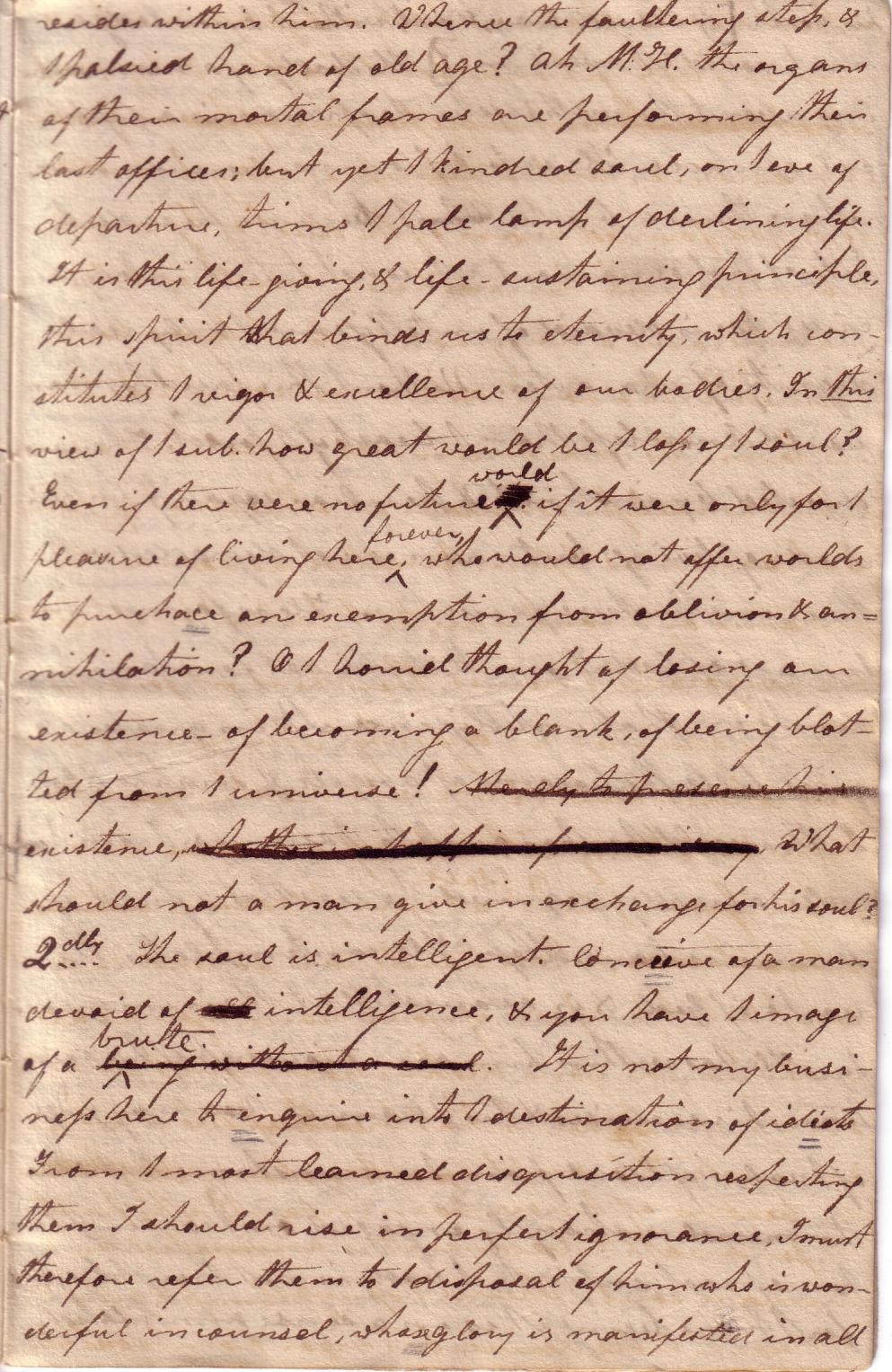
Sermon 15 page 5
124
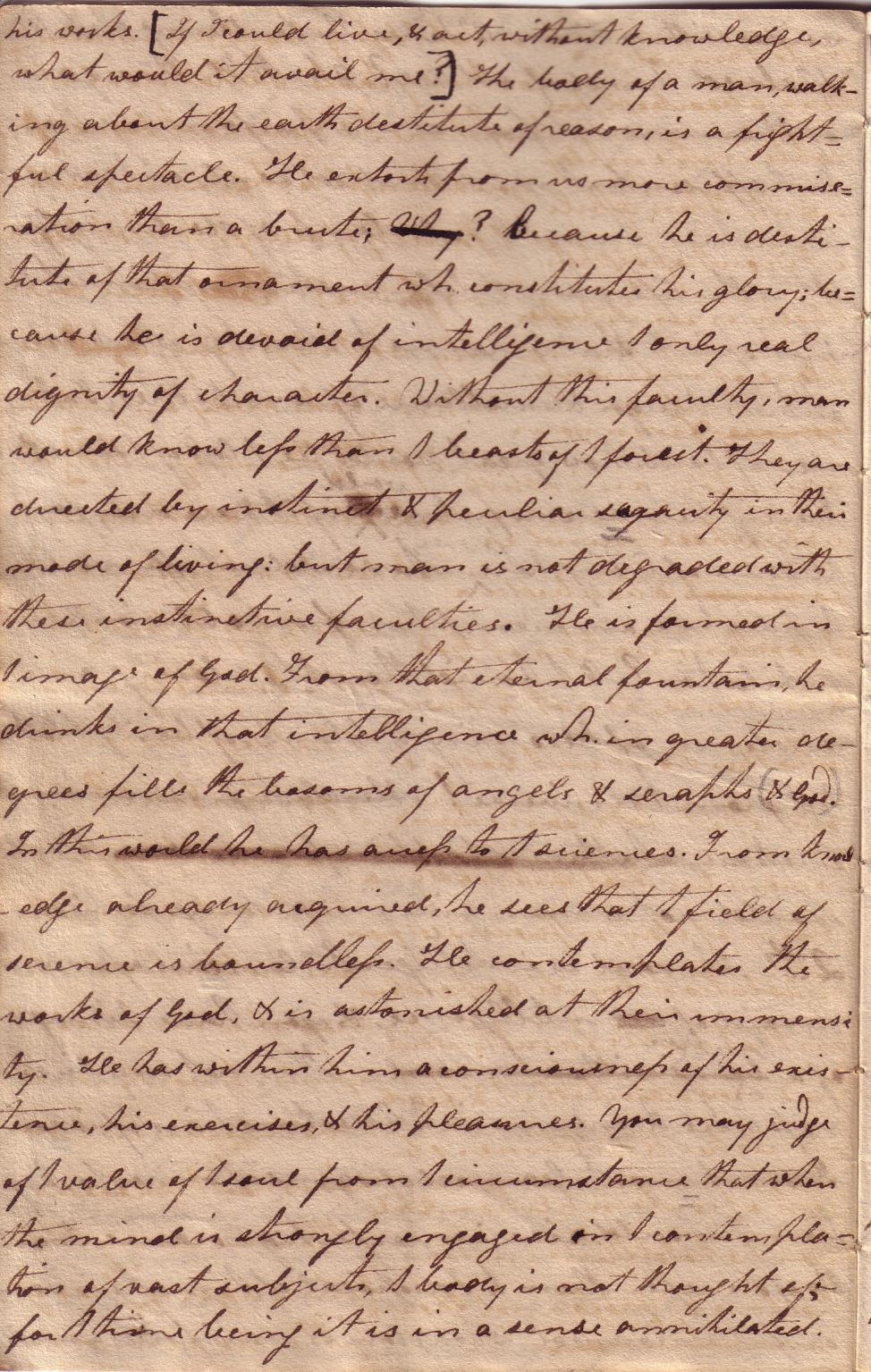
Sermon 15 page 6
125
Sermon 15 page 7 & Page 8
126
Sermon 15 page 9
127
Sermon 15 page 10
128
Sermon 15 Page 11
Page 12
129
Sermon 15 page 13
130
Sermon 15 page 14
131
Sermon 15 page 15
132
Sermon 15 page 16
133
Sermon 15 page 17
134
Sermon 15 page 18
135
Sermon 15 page 19
136
Sermon 15 page 20
137
Sermon 15 page 21
138
Sermon 15 page 22
139
Sermon 15 page 23
140
Sermon 15 page 24
141




















Commonly used abbreviations in Luther Hart’s sermons Subject death of Christ God Holy Spirit Repentance Savior In our salvation The end of the law Lord Jesus Christ My Brethren My Hearers church brought impious though through Christian
religion
Which and heaven
142
143
You may also like...
-

Who is Jesus? Religion by Caleb OlayiwolaWho is Jesus?
Reads:
9Pages:
20Published:
Aug 2025Jesus Christ has been gone for more than 2000 years, yet the world still keeps talking about him. Have we ever wondered why? The book, "Who is Jesus?", writte...
Formats: PDF, Epub, Kindle, TXT
-

Holly Bible - KJV with Concise Commentaries Religion by Z SelamHolly Bible - KJV with Concise Commentaries
Reads:
29Pages:
17590Published:
Aug 2025Expository commentaries, Exegetical commentaries, Devotional commentaries, Cultural commentaries
Formats: PDF, Epub, Kindle, TXT
-

Is This Islam? Beyond Rituals. Religion by AmdIs This Islam? Beyond Rituals.
Reads:
13Pages:
25Published:
Jun 2025This book does not focus on rituals or the pillars of Islam. Instead, it presents Islam as a way of life — grounded in divine guidance through the Qur’an and ...
Formats: PDF, Epub, Kindle, TXT
-

The ELICITE Religion by Philippe of the Spirit of TruthThe ELICITE
Reads:
19Pages:
62Published:
Feb 2025This manuscript is Christian, but its word transgresses beliefs because it liberates them, and it gives us a new hope about life, on what the destiny of manki...
Formats: PDF, Epub, Kindle, TXT