

Tales From a Distant Shore: THIRD EDITION by Tom Wallace - HTML preview
Download the book in PDF, ePub, Kindle for a complete version.
Introduction
This is a short collection of essays where I don’t speak entirely in my own voice!
In other writings I have attempted to find positive things that we can work on individually and collectively, to try to solve the many problems our world faces and to try to make the world a better place. But problems are complex and we might not see solutions any time soon.
So, I wonder, what if we were to take very different approaches to my usual positive spin?
That’s not to say a total reversal of proposals I’ve written about elsewhere. But perhaps I’d describe it as a more cautious, more cynical, more conservative approach. What if we follow what seem to be current trends through to their logical conclusion? What kind of world would we end up with? How might we respond as individuals if we took a more pessimistic view of life? What if we took the view that human nature is not likely to change any time soon, and as the world’s problems get worse then the less appealing aspects of humanity are likely to win out over the ‘better angels of our nature’?
All this is the ‘distant shore’ I’m trying to explore. It is not an entirely negative journey –
not a case of just taking my usual opinions and turning them on their head. There are always some positives in life that can be asserted as long as we think it’s worthwhile being alive at all! So I hope these investigations will be thought-provoking and still somehow inspiring, despite dealing with some difficult issues.
These stories first appeared on the websites 5
T A L E S F R O M A D I S T A N T S H O R E
Booksie.com and Storywrite.com.
In this third edition I have added a few new essays.
6
T A L E S F R O M A D I S T A N T S H O R E
Why Write?
Why do I write? Well, let me explain. You see, the artist loves the world, which is good. But the artist also has a problem with the world, which is not so good. Or so you may think, when at first you hear the idea.
We are the Cassandras and the Jeremiahs – the prophets who will never be heard. Yes, that’s right, the first thing you have to understand is that we are on the losing side. So, you may say, why, if you are losing, do you trouble yourself to speak? Why be angry with the world when you can simply go with the flow?
But going with the flow is the very reason we are angry! Because going with the flow, as you like to call it, means going to hell. So there is always a reason to be angry! And this is it. To save us from hell. But, you say, what about non-violent communication? Ha! Listen, I will take your non-violent communication and shove it back down your throat! You know why?
Because with your gentle words you make it seem like there is a choice. You do your thing and I’ll do mine and we can all get along! The nice, liberal, tolerant nonsense! That, my friend, is the road to hell!
And now you are telling me you do not want power-over. Power-over is the patriarchy; there should be power-with. But you do not realise that people are deeply in love with power.
When you ask them to relinquish their power, you ask them to kill their souls. It is only us angry prophets, who know they are on the losing side, who can tolerate this lack of power.
7
T A L E S F R O M A D I S T A N T S H O R E
We are, you might say, power-under, who challenge the status quo, power to power.
And now you are asking me about equality!
Think of the tango! And what is the tango about? Sex and death! That is what it is about.
And that is what life is about – only those two things that control all of what we do. So there is always a hierarchy my friend, the winners and the losers in this game. To ask then for things to be equal is to ask for the impossible. But of course, we long for fairness! So how do we resolve this conundrum? Acceptance, you suggest? A broken and contrite heart? No, I tell you! Remember we are power-under, not worm under or doormat under. So we will take up the broken things of this world and shove them in the faces of those who have the power to change them!
And what of freedom? The powerful will always offer you little dreams of freedom because they know that is what you want. But what they mean by freedom is the freedom to go with the flow. And we know that is the road that leads to hell. Real freedom is to challenge power and that is something the powerful will never accept.
So do I have hope? No, of course not! There is no hope! Didn’t I tell you that we are on the losing side! The only hope I have is that there will always be other losers with the courage to take a stand – for art, for soul, for true freedom!
What’s that I hear you say? What about the sacred? What is it that I have been trying to tell you all this time? This is the sacred! Think back to what I said right at the start! We love the world. But we have a problem with the world. We are angry with the world. That, my 8
T A L E S F R O M A D I S T A N T S H O R E
friend, is the sacred - the grace that is given and the grace that is ours to give.
9
T A L E S F R O M A D I S T A N T S H O R E
10
T A L E S F R O M A D I S T A N T S H O R E
Give Me Privacy! Give Me
Autonomy!
We often hear the loss of community cited as a symptom of the decay of society under the onslaught of consumer-capitalism. We hear of plans to build towns and cities that try to promote a return to community, with walkable neighbourhoods and local shops. Part of me thinks this is worth a try. One reason is that the support and friendship of neighbours can be a good and healthy thing – especially for those who live alone and for the elderly or infirm.
Another reason why compact neighbourhoods can be good is that they can help reduce infrastructure costs and foster a reduction in car use.
Right now though, things are heading in the opposite direction. Suburbs are spreading out further and further. Shops and entertainment venues prefer sites where they can capture passing road traffic. City centres are often large transport hubs with corporate headquarters the only folk who can afford the land and rents. The fact that so much stuff can now be delivered to our doors, rather than us having to go out and shop for it likewise has a big impact on our towns and cities. And finally, working from home, especially subsequent to the Covid global pandemic, has changed the face of work.
Many of these changes have added to that loss of community and to the sense of us being isolated. But part of me is thinking, well, actually, I like the anonymity that all this brings.
I like the privacy! I like the autonomy!
11
T A L E S F R O M A D I S T A N T S H O R E
So instead of fighting all these changes, let’s instead imagine what it might be like if we pushed all this still further and became more independent, autonomous, isolated, private and safe from the onslaught of community!
The first thing that springs to mind is a cabin in the woods or by a beach. No other cabins are in sight. It’s just my place in amongst nature. But then we have to think about whether or not everyone could have such a cabin. Depending on where we live in the world, the answer may be no. Too many people, not enough land. And also, we have to think about infrastructure, in terms of getting services to the cabin, or us getting out to other places when we definitely need to travel (or just want to go on holiday).
All of this adds to the difficulty of providing for a population that chooses to live in such settings –
it is like the suburbs taken to its absolute extreme.
But thankfully most people couldn’t cope with a cabin in the woods as a permanent residence.
Too isolated. A bit spooky at times. Nothing to see but trees! (They don’t think of this as heaven!) And the cabin by the beach is good only for summer. They could not hack the winter months.
So that’s my ideal. A cabin – off-grid, to avoid the infrastructure issues – but at the same time close enough to civilisation that I can walk to a shop, a health centre, a dentist, or take a bus somewhere if I need to. There’s no road right up to the cabin, but there’s a post box on the nearest road and I can get everything but food 12
T A L E S F R O M A D I S T A N T S H O R E
delivered to there. Perfect!
Given that most people don’t want to live in a cabin all year round, what would towns and cities be like if we pushed current trends further?
Firstly, a lot of people are just obsessed with going places just for the sake of going! (This is another reason why the cabin in the woods doesn’t suit a lot of people – too static!) So we should just acknowledge the fact that so many of us would never give up the autonomy and freedom of the private car. Shopping malls are becoming destinations, and this has nothing to do with their proximity or otherwise to where people live. And given that there is less shopping, the mall has to become a place of restaurants, cafés and entertainment. This then provides people with all the excuse they need to travel! Disneyland and Las Vegas therefore are the models for future development!
A few of us might relish the idea of living in a theme park. But for most of us, housing would be elsewhere and very different. It’s that split –
the split between where people choose to visit and where people choose to live – which is the trend we’re witnessing in the modern city.
So if we pushed trends in contemporary house design to their limits, what would we get? Most people, it seems, would prefer to live in a suburb rather than the centre of a city. The city centre just becomes a place inhabited by day-workers who go to lunch or for coffee, plus tourists who visit art galleries and museums. It has become another type of theme park. So the 13
T A L E S F R O M A D I S T A N T S H O R E
housing is now in suburbs and perhaps increasingly guarded and without any kind of local amenities, since these are the things that force community and community is what we’re trying to avoid! The suburb is clustered together for a particular kind of safety – a kind of assurance that in some extreme emergency there are others near by, but at the same time an assurance that for the most part other people will leave us alone! This is the ethos of the gated community – which are of course,
‘communities’ in name only.
The house itself has two aspects. For one thing, people have an intense curiosity about what other people are doing! So even with our increased drive towards privacy, autonomy and independence, I don’t think this desire to see who is coming and going is ever going to leave us. (And this is yet another reason why most folk don’t like the cabin in the woods – can’t see who’s coming because of all the damn trees!) We’re especially interested in arrivals and departures – which will generally be by car. So these will always be a place in the home where we can see the street and the neighbouring property entrances, if at all possible. (This is part of the reason why condos, apartments, flats and the like are less popular. We loose control by not being able to see who’s coming in and out of our building.)
The other aspect of the house though is it’s private side. The garden becomes a private world, and if at all possible, the rooms of the house will mostly relate to this private space.
So every house design will try to achieve this sense of secure and enclosed privacy. Again, 14
T A L E S F R O M A D I S T A N T S H O R E
personally, I have to say I really like this! If I cannot have the cabin in the woods then the house that looks into its own private garden is the next best thing!
What if the world were to become more bleak than it already is? What if, for instance, there was a collapse of world trade, a global recession, and perhaps these things were brought about by a severe disruption to climate, or through loss of bio-diversity, pollution or war?
The best answer to these things – by far the best – is for strong, resilient community. And it is exactly that which we have been trying to avoid! Instead, the ideas we have been exploring are more suggestive of the ethos of the survivalist. The cabin in the woods is rather like the ‘bug-out’ solution. Provided there is enough food hidden away somewhere, or it’s possible to forage or to hunt, then the isolation of the cabin might prove to be its strength.
Provided you can protect yourself. Provided you don’t get ill.
Meanwhile the more regular house is suggestive of the survivalist’s ‘bug-in’ solution. Could it be a refuge in a time of crisis? Could we have a basement or a panic room to shelter in whilst we wait for the crisis to pass? As times get tougher, and violence increases, our houses will become increasingly like fortresses against all the hazards of a dangerous and unpredictable world. Perhaps those isolated and gated communities would be able to respond, because as I’ve said, in extreme circumstances, people will band together to help each other.
There is a chance that a major disaster will act 15
T A L E S F R O M A D I S T A N T S H O R E
as a wake-up call and be such a shock that we will all – individually and collectively – re-assess our attitudes to life and recognise the importance of community. But people don’t change their ways easily, so that’s why I’ve tried to think about where things might be going if current trends continue. Maybe you’re thinking that what I’ve described (barring the disasters) is not such a bad world (and after all, just having somewhere to live is a privilege). Or maybe you’d prefer the genuine community – a kind of small village community, even if that’s just within the neighbourhood of a city. Either way, I hope this has been food for thought.
There’s a saying – perhaps it is peculiar to the UK – but I’ll share it anyway. It says: take a bunch of hippies to the woods and they’ll all fall out with each other. It’s an odd saying, in as much as we often (at least nowadays) see hippies very much involved in community spirit, through such things as communes and eco-village projects. And yet, the hippy is also a free and independent thinker. The two aspects don’t really sit well with each other. Free thought tends to work better for the recluse.
Community maybe sits better with people who are less independently-minded. This is perhaps a sad fact about human nature, but one that we would do well to recognise.
16
T A L E S F R O M A D I S T A N T S H O R E
Enchantment is a Minority Pursuit!
Enchantment is a word I’ve chosen to use in other pieces of writing to mean something very specific. I don’t mean it in the sense of fantasy
– as some kind of magic spell that might occur in a fantasy novel, film or game. I mean enchantment as a particular way of looking at and seeing the everyday world around us and as an ability to see the beauty in our everyday world. I also mean it as a particular kind of pleasure – the ability to find pleasure in our lives just as they are right now, without having to
seek
too
far
outside
of
ourselves.
Enchantment, in this sense, is to know ourselves and know our pleasures. Fantasy is to escape the world, enchantment is to embrace the world.
But I’m writing this because I recognise that all of the above is problematic. For one thing, perhaps the explanation I’ve given is just difficult for people to follow. (Perhaps you, dear reader, have found it puzzling.) Why not just say beauty or pleasure? The reason I offer is that I’m talking about a particular approach to beauty and pleasure, rather than just beauty and pleasure for their own sake. As such, it’s difficult to give examples of enchantment in the sense that I’m meaning. It is as much about the attitude of the person than the particular thing they
are
looking
at
or
experiencing.
Unfortunately, even very great beauty can pass people
by,
whilst
other
folk
will
find
enchantment
in
the
most
mundane
of
circumstances.
Attitude!
Why does this matter anyway, you may be 17
T A L E S F R O M A D I S T A N T S H O R E
asking. Well, if we are to see big changes in the world, like ending torture, war, famine and solving climate change then unfortunately it is people that need to change. We can only get so far tackling any of the above by way of better government or better laws or new technology.
And perhaps rather strangely, the way I think we could best bring about change in other people is not through making people more moral or more compassionate or kind or generous –
although all of that would be good – but by recognising our true pleasures.
Why, you may ask, does that make a difference?
The reason is that most people – if asked what their lives are about – will answer that they are seeking happiness for themselves and their families.
So
happiness,
pleasure,
joy,
enchantment – these things cut to the heart of what people are about and what motivates us.
If people wanted different things, if people found pleasure in different ways from the way happiness and pleasure are currently sought, then this is the most direct route to changing people and changing the world.
But I’m sure you see the difficulty with this at once. Enchantment – whilst not exactly saying what pleasures we should seek – is certainly suggesting we should seek pleasure in our immediate surroundings – our houses, gardens and
workplaces,
everyday
meals,
local
communities,
family,
friends.
Meanwhile
pleasure for many is almost the reverse of this –
a change from our everyday circumstances, getting away from home and the neighbourhood on a dream vacation, with fancy meals and 18
T A L E S F R O M A D I S T A N T S H O R E
exciting entertainment. Buying new stuff.
Improving our lot in life. It’s easy to see that enchantment, by my definition, could easily look frugal and miserly by comparison!
And – despite suggesting that it’s the quality of engagement with what we do, rather than the thing itself, that’s important – it’s still difficult to get away from the idea that there’s a grading of pleasure going on here, and that some pleasures are thereby suspect, low-brow, cheap or otherwise questionable. Enchantment could then be construed as an elitist and patronising concept!
So what to do?
Different people see the world in different ways, so why would we ever try to grade pleasures?
What about just accepting the way people currently are and see where the pursuit of happiness in these terms would lead.
There are more and more people seeking more and better stuff, more thrilling experiences and better lifestyles. So economies need to keep growing in order to keep pace. And hence, more and more of the natural world must be gobbled up to keep up with this growth. Technology, new materials (including from space) and efficiencies might keep up. People who believe this are called Cornucopians. For them there is no problem that cannot be fixed and we will, before long, be living on a terraformed Mars and looking
perhaps
at
solving
the
runway
greenhouse effect on Venus to give us another planet for another few billion people and so on and on. We can restore what we have destroyed 19
T A L E S F R O M A D I S T A N T S H O R E
in the process of development, and in the long run, humanity will be responsible for seeding life on other planets, so we will have given nature back more than we’ve ever taken out of her.
But what if we just cannot keep pace? What then? Well it looks like the difference between the haves and the have-nots will just accelerate.
Eventually there would be high-tech bubbles of life (both here and on other worlds) surrounded by an almost uninhabitable wilderness. It might be that the have-nots eventually just die out and the small remnants of privileged humanity are all that’s left of us. That might not be so terrible were it not for the enormous suffering, both for humans and for nature, that would be endured in the process.
And what would those small bubbles of privilege be like? Would they be filled with people who enjoy mindless entertainment, fast food, cheap thrills and the latest gadgets? Is that going to be the most successful species of future humanity? Well, you can see the elitism creeping in again! But there would need to be at least some very serious minds and high intelligence to manage a human civilisation living in such precarious circumstances. If there were not then likely these remaining bubbles of human life would quickly pop.
Is it an all or nothing choice between the two scenarios I’ve sketched out above? Probably not. Probably a mixture of the two. But I am certain that how we approach and think about pleasure is the key to all of this. And I still hold out a hope for enchantment – perhaps in the very long term, if we survive, we will see all 20
T A L E S F R O M A D I S T A N T S H O R E
these things differently.
21
T A L E S F R O M A D I S T A N T S H O R E
22
T A L E S F R O M A D I S T A N T S H O R E
Boys Will Be Boys
It’s a familiar phrase: Boys will be boys. But a horrible phrase, when you stop to think about it.
An excuse for acting like an imbecile. An assumption of privilege. An invitation to break the rules. A suggestion that some particular boys are ‘proper’ boys, not girly boys, not soft, gentle, peaceful, still boys, or, God forbid, boys attracted to other boys!
So when little boys hear their parents saying this phrase with an indulgent smile – boys will be boys – they know it’s okay to be a bully, a thug, a vandal, a cheat. That, after all, is what their parents are endorsing. And what better recommendation to bad behaviour can you get!
Forget gentleness, sensitivity, caring, art, fashion, reading, writing – mother and father have already given the signal that such nonsense is beneath them, that these things are only of interest to girls. And girls are inferior beings.
Well, you may say, things are changing – at least in a few countries of the world. Boys who like boys, girly boys, Tomboys, boys who change into girls and girls who change into boys – these are all accepted now. Or so we’re told. I hope very much that this is true. But I must caution that I see the same old prejudice around me. I see it in the eyes of teenage boys and young men almost every day. I even see it in the eyes of primary school kids. It’s no good to step out of line, those eyes are saying. You’re a freak.
You’re not a proper man. How dare you be gentle, sensitive, quiet, dressed in your flowery shirts, your bright-coloured trousers, your 23
T A L E S F R O M A D I S T A N T S H O R E
patterned waistcoats and fancy shoes! This is not what it is to be a man. Boys will be boys!
You’re letting the side down! We despise you!
In fact, we’re actually afraid that your sort are taking over!
All this and I’m not even gay! Perhaps though, paranoid? But I really do fear that if times become tougher – through economic meltdown, climate chaos or war – then the thin veneer of
‘tolerance’ (and isn’t that such a compromised word!) will be shown to be just so much hot air.
We will be back to the old macho nonsense that we can only protect ourselves through violence and the threat of violence.
So let me take a moment to try to put some of the truth into the twisted brains of the ‘boys will be boys’ sort of boy. That boy is really a different gender – a failed gender! The gender that has gone seriously astray. The gender that has raped, tortured and murdered millions of women over the last 10,000 years. The gender that has polluted, defiled and destroyed nature.
The gender that stockpiles nuclear weapons.
The gender that could spell the end of humanity.
Boys will be boys. And I guess the destruction of the planet is such a boy thing to do. Your mum and dad would be proud. Thank goodness you’re not one of those girly ‘save the planet’,
‘ban the bomb’ freaks that we’re so sick of!
All I can say, as an alternative to all this, is thank you to all those men who are not like this.
And thank you to all those women who appreciate the alternative – the real male gender. We must stick together. We must remember it is the ‘boys will be boys’ who 24
T A L E S F R O M A D I S T A N T S H O R E
currently run the world. We must try to undermine their power. We have a chance now, after 10,000 years of macho, misogynistic idiocy. Because ultimately those boys are the true freaks, an accident of nature, a horrible diversion in the ascent of humanity. 10,000
years wasted because of those knuckle-dragging losers.
So I take up all those things that those ‘boys will be boys’ hate so much and celebrate them with all my might. I will take up those things that are ‘girly’ and ‘effeminate’ and celebrate those.
And one day parents will be glad if their baby boy turns out not to be like other boys! One day parents will rejoice to have a sensitive son – a true man, a man as men were meant to be.
25
T A L E S F R O M A D I S T A N T S H O R E
26
T A L E S F R O M A D I S T A N T S H O R E
Jumping from the Table
There’s a story – perhaps it’s a myth – of something that happens to children of a certain age in the Highlands of Scotland. Perhaps the story is told to explain the rather gloomy disposition of the average highlander – a disposition that might, more reasonably, be put down to the terrible weather! But I will tell the story anyway, and I hope, earnestly, that it really isn’t true!
Well, a child, reaching perhaps three, four or five years of age, is placed on a table. All the adults of the family gather around and encourage the child to jump from the table –
assuring the child that whichever direction they jump an adult will be there to catch them.
Eventually the child is persuaded to make a jump and at this point all the grown-ups step back. The child crashes to the floor. The physical pain from the fall is more than surpassed by the emotional horror of the deception. The lesson is surely learnt that no-one can be trusted – even those who you have counted on as friends and family – even those whose affection and good faith you had previously considered to be infallible.
Even if such an initiation was ever practised in the past, one has to hope that it would not be permitted today! Parents would no doubt find themselves reported to local social services, and there would be consequences. But even so, I suspect that there remain cynical parents, who consciously or unconsciously, indoctrinate their children into a similar bitter and twisted attitude towards their fellow humans. Such cynics of 27
T A L E S F R O M A D I S T A N T S H O R E
human nature often extend their cynicism to say that humanity is a plague on the Earth, that we are no better than parasites, and that, by implication, there is no point in us existing at all. Somehow, of course, they manage to exclude
themselves
from
this
damning
judgement of their fellow humans. Perhaps they see themselves as one of a tiny elite among humanity who recognise the ‘real truth’ about the way the world works. Nonetheless, they’ve perhaps still considered it appropriate to find a partner and even to bring children into the world
– actions, which by their own impeccable logic, must surely carry considerable risk!
We could go further and think about the
‘Absolute Cynic’. Here is one who takes up the extreme sceptic position in matters existential.
Nothing can ever be known, not even our own minds, they profess. We are all deluded, and those who seek truth or preach morality or faith or hope in progress are the most deluded of all.
Hence, scientists, academic professors and many others are marked out for special derision by our absolute cynic – and most especially, anyone who might profess an optimism in humanity’s ability towards improvement.
All those involved in politics – and I include here activists and campaign groups – are involved, presumably, because they believe that some change for the better is possible. The cynic effectively regards all such endeavours as a fool’s game, whilst at the same time is free-riding on all the improvements that do occur and which might occur in the future.
It gets worse! The sun will turn nova – our 28
T A L E S F R O M A D I S T A N T S H O R E
cynic informs us – and the Earth will be burnt to a cinder (if indeed we have not already destroyed it ourselves). And even if we’ve departed to other solar systems then they will suffer a similar fate. And then the universe will collapse in on itself or entropy will go on increasing and the universe will suffer an equally damning eternity of cold lifeless darkness. There is no escape from the second law of thermodynamics. Therefore, human life is pointless.
Yeah, thanks for that.
Even if some way were found of living forever, in perfect comfort and security, with perfect happiness, the cynic would still not be happy!
Put a cynic in heaven and they will claim it is all a delusion. They’d go on seeking a ‘realistic’
view of existence or say there’s still no point (by which, of course, they imply that there could be a greater point).
Of course our cynic disregards all of the careful and hard-won truth-seeking that went into allowing them to reach their conclusions in the first place. Disregards the benefits of a stable and liberal society that tolerates free speech.
Disregards that, if all humanity is deluded, then the cynic may also be deluded. Thus our absolute cynic carefully saws through the branch on which they sit – damned by their own logic.
If there is no truth then there must be some
‘higher truth’ that allows our cynic to make such confident pronouncements. If there is no hope, no goodness in the human animal, no progress possible in human society, then why does our cynic continue to participate in life at all? Why 29
T A L E S F R O M A D I S T A N T S H O R E
not follow the cynical pronouncements to their logical conclusions? But no, these questions the cynic can never examine, because otherwise the cynic will be damned by their own arguments.
The contradictions in their cynicism will be shown up and then the lies will be revealed.
The cynic believes that the sum of human suffering
outweighs
the
sum
of
human
happiness. Therefore, they might argue, it would be better if humanity did not exist. But why do they presume to tell us that happiness is the basis of whether a human life is worthwhile?
Maybe I have suffered more in life than I have gained in happiness, but I may still feel that life has been worthwhile – in fact life might be full of purpose. And why does the cynic bother to tell us anything anyway – if everything is so hopeless? If the cynic were ever to succeed in convincing all of humanity that it would be better for the human race to end (not necessarily by suicide, but just by not having children) then they would have dispelled one of their primary contentions – that human beings can change! So if if such a massive change towards extinction were possible could not a collective move towards world peace and the end of poverty not be equally possible – not to say a good deal more appealing?
What to make of all this?
Well, firstly, to extend a certain generosity to the cynic – which the cynic does not afford to us regular folk, us parasites – questioning is always good! The voice of dissent is always worth hearing.
30
T A L E S F R O M A D I S T A N T S H O R E
And secondly, I find myself thinking, if only the cynic could be quietly cynical! Why, we have to ask, does our cynic feel the need to inform others of their cynical views? If the rest of us are irredeemably delusional then surely this is a waste of time. If, on the other hand, there is hope of some of us being converted to the cynic’s own gloriously enlightened position then isn’t this admitting that there is some hope for humanity after all? We can all become cynics!
Yeah, take that one to its logical conclusion!
Imagine a world completely lacking in good will, trust, friendship, kindness, compassion and love. A worthy aim! Thank you for your wise council! Tell that to the young lovers. Tell it to the young couples bringing new life into the world. But then they – we – are just foolish, ignorant, deluded, common folk. You alone, our cynic, hold the wisdom.
Faced with someone of a positive frame of mind, someone who, dare I say, still dreams of utopia, human flourishing, enchantment and love, our cynic will likely take up with ridicule or abuse.
Rainbows and unicorns, they will jibe. Likewise, the sincere truth-seeker and the level-headed, calm and reasonable workers who simply want to see society kept on track – they will be denounced as arrogant narcissists.
On the other hand, perhaps there are indeed quiet, humble cynics! Perhaps there are cynics who look into their own hearts very carefully and recognise the ambiguities in their cynical position. But nonetheless, as far as they are able to say of themselves, they just cannot find any reason for optimism or hope. So they settle 31
T A L E S F R O M A D I S T A N T S H O R E
for silence. I don’t know how many cynics there are out there who fall into this category. If there are any at all then all I can say is that I admire their honesty and the integrity of such a stance.
But let’s go to the other extreme.
What if our cynic not only wanted to announce to the world their cynical views, but did so with just the kind of arrogance and narcissism that they accuse their opponents of having? Here, dear reader, I must confess a certain personal anxiety.
Our cynic, you see, does not merely confine themselves to carefully argued reasons for their lack of hope and their distrust of human nature.
The cynic with that narcissistic personality will be especially wary of any criticism – even any innocent comment that could in any way be construed as a criticism – and will react with considerable anger if such criticism is perceived.
Given the precarity of the cynical position, this is likely to happen quite often. Not only this, but they are likely to ‘manufacture’ such situations for themselves, whereby they re-affirm the general stupidity of ‘the masses’. So, some poor unsuspecting person such as a nurse, a shop-assistant, a pupil or student will find themselves the target of an angry rant by our narcissist cynic. The cynic, to be fair, is probably unaware of what’s really going on here. They see only an upstart who dares to ask an innocent question or inadvertently offers a positive, hopeful point of view. They see only ‘stupid’ humanity, not an individual whose feelings they are hurting. And hence my anxiety, because I have often enough 32
T A L E S F R O M A D I S T A N T S H O R E
found myself the target of a character such as the narcissist cynic I’ve been describing.
Note to self – just run away!
But, well, like I say, perhaps there are quiet cynics. Perhaps the arrogant, outspoken cynics are in the extreme minority. We can only hope.
The cynic, of course, may counter all this with criticism of – let’s call us – the optimists. Only a position of privilege, they might argue, allows for the optimist’s cosy world of progress and compassion. Only a wilful blindness to the corrupt, power-hungry and violent nature of humanity could account for these foolish dreams of utopia. A state of war or another such emergency would soon disavow the optimist of their stupid ideas! Well, we could turn that argument easily back on the cynic and say that it is the same comfortable state of privilege that affords the cynic the luxury of cynicism –
because it really is a luxury. And, we have to wonder, if extreme conditions might not bring out the best in humanity as well as the worst.
Who knows, our cynic might find themselves clinging to hope rather than smiling grimly and saying, ‘I told you so’. In fact, one suspects, in times of crisis the luxury of cynicism may no longer be extended to the cynic. Instead, we ordinary mortals might be telling them to stop their stupid whining and do something useful!
The cynic’s way is a cop-out really – a lazy, irresponsible cop-out. By claiming
that
everything is useless – that humans are delusional and stupid and a plague on the Earth
– the cynic abdicates themselves from any sense of responsibility to try to improve things.
33
T A L E S F R O M A D I S T A N T S H O R E
A very convenient philosophy of the lazy. The disenchantment of the cynic is always a pose.
In order to live at all we must live as if we are not disenchanted.
What to do then, about the cynic? Cynicism is, I’d suggest, at root an emotional position rather than a rational one. (The cynic, in turn, may make a similar claim about the optimist and the utopian.) So rational argument is unlikely to win the day, and sarcasm and ridicule are likely to provoke rather than heal the differences.
So I think it’s best to go back to something I said earlier. We should treat the cynic’s arguments with as much respect as possible.
But there are no easy answers to the determined cynic and sometimes there’s nothing that can be said in reply to them. So, on a personal level, best settle for silence. But on the level of culture – literature, art, music – I think we should be countering cynicism at every opportunity. Don’t ever trust the cynical pronouncements that humanity cannot change.
If they ask you to jump from the table, don’t jump!
34
T A L E S F R O M A D I S T A N T S H O R E
The ‘Post-Power’ Society
How did it happen, these changes that now seem so obvious in retrospect? Looking back from the 24th century – three centuries into the Symbiocene – it’s difficult to say. But I will try to explain.
So, to begin, everyone suddenly decided that their nation should not arm for war any longer.
Soldiers, sailors and the air force – they all resigned, and no-one would sign up for the armed forces – not for any amount of money –
not even with the threats of imprisonment from increasingly isolated governments. This was the first sign of the end of the hierarchies of power, the end of filthy empire, with all its abuse and hypocrisy and machismo nonsense.
All this had come on the back of other changes.
There was just a dissolving away of racism, sexism, homophobia, transphobia. People had become much more honest about their identity –
honest both with themselves and with others.
Meanwhile, almost the entire working population had become self-employed. Maybe it was this that provided a taste of freedom. Whatever it was, the structures afforded by government and big business no longer seemed to satisfy.
People wanted freedom, and a new kind of freedom from anything that had gone before.
Of course, some countries resisted the changes at first. Prisons were full of men who had refused to be drafted into the armed forces. But this
led
to
strikes
and
protests,
until
governments had to back down.
35
T A L E S F R O M A D I S T A N T S H O R E
Anyone trying to patronise of dominate or intimidate others were seen for what they truly are – idiots.
There was no ‘revolution’ though – at least not in the traditional sense of the word. Because revolutions can often just mean swapping one idiotic hierarchy of power for another.
Like I’ve said, people just started being honest –
we just started to understand where our true pleasures lay and to acknowledge our personal failings without being too hung up on them. A bit of self-knowledge just let’s you square up to all the old prejudice and deceit that has counted as the status quo in society for way too long. So we said to government – you’re killing the planet for the sake of economic growth – you’re killing the poor and needy of the world for the sake of profit. We are not accepting this any longer. Just stop! Give us back our forests, meadows, rivers, lakes and beaches. Let’s live sensibly on the Earth. Give us towns and cities built for people, not for money.
Everything once seemed normal. Everything seems normal now. But what counts for normal has changed beyond all recognition.
What can I tell you about life now compared to life before? Perhaps it’s best captured by telling you what we want for our children. Here’s some things:
To celebrate their bodies as the primary means of being on the world and to never be ashamed of who they are or how they look.
36
T A L E S F R O M A D I S T A N T S H O R E
To understand their unique gifts and pleasures.
To understand their failings and shortcomings without feeling overly burdened by them.
To recognise Nature as sacred and to treat her with care, respect and honour.
To find a vocation that serves the common good.
To love life, love others and love the universe –
all of them have given us our gifts.
To be truthful and respect all persons and all life.
To live humbly within their means and within the means of the planet.
There is a strange link between some of these things I’ve mentioned – between bodies, gender and sexuality and our responses to power. It is not in any way an obvious link, but it’s there nonetheless. So, with the person of long ago, who sought to gain and often to abuse power, it could have been their bodies that caused this, or alternatively their bodies that stopped them from seeking power. All politics is the politics of the body. You may say that the abuses of power were by those in what was known as the
‘dark triad’ – Machiavellianism (the end justifies the means), psychopathy and narcissism. But I say, in turn, that these character traits are themselves deeply embodied. It was the changed relationship to our bodies that initiated the falling away of power. It was the dissolving of power that led to true freedom.
37
T A L E S F R O M A D I S T A N T S H O R E
And odd to think that the link back to the body was hardly even noticed back then. It’s not such a simple link though. It’s not that those who
abused
power
were
somehow
less
comfortable with their bodies, nor was it the reverse of this. No, nothing so simple. So, how to explain? Well, every abuse of power – every instance of bullying, patronising or coercive behaviour – does violence against somebody.
Against somebody’s body – directly or indirectly.
This much is obvious. Not so obvious perhaps is that every abuse of power also does violence to the perpetrator’s body. The abusive person becomes
alienated
from
their
body
and
alienated therefore from their true selves. Mind, body and our way of being in the world – these can have the kind of dignity and merit the kind of honour that we see in the wider world of nature. But for us humans these things are easily corrupted.
Back in the 21st century this link between power and body was only dimly understood, and this by only a few. Now, three centuries on, I can only say that we have learnt to live this truth. It would not have occurred to the power-hungry tyrant of earlier centuries that they were losing anything in this. But gradually the loss became apparent. To abuse power is to somehow lose ourselves – to lose all the connections that allow us to truly thrive. Perhaps this is just a different way of looking at the world – no more or no less true than any other. But it has worked. All the abuses of power are behind us. We know ourselves more fully – we have learnt to be free.
38
T A L E S F R O M A D I S T A N T S H O R E
Prophets of Doom (And How to
Calm Them)
Those of us who want to ‘save the planet’ have a tough time. For one thing, someone’s sure to point out that the phrase, ‘save the planet’ is just human hubris. The planet got on just fine without us and it will get on just fine once we’re gone – so, strictly speaking, there’s no ‘saving’
needing done. Sure, the oceans will boil away –
oh, and the atmosphere will be full of poisonous gas – oh, and, did I mention, all life will have gone extinct. But apart from all that, same dear old Mother Earth.
So no saving to be done. Those folk who point this out are right of course.
But the folk who are really irked by the saving-the-planet thing are the folk who ARE NOT
trying to save the planet. Because, of course, pointing out to them that YOU are trying to save the planet and THEY are not – well, that just makes them really mad. They will see us as scaremongers. They will see us as fanatics.
And, of course, they are also at least partly right.
We planet-savers are often a motley bunch of cranks, weirdos, hippies and utopians – and I count myself a proud member in their ranks.
But in this essay it’s not actually the planet-saving bit that I want to speak about (although God knows it needs saving). It’s the weirdo bit.
…and one type of weirdo in particular…
39
T A L E S F R O M A D I S T A N T S H O R E
…THE PROPHET OF DOOM!
He (and it’s almost always a he) is deathly stern. He speaks only in hyperbole. He suffers no rebuke for his opinions – which are, for him, inalienable truths. And, scariest of all, he relishes the calamities that he thinks will befall the Earth. Like a fundamentalist preacher of old, he announces Hell, but now it is a hell on Earth. I used some of his rhetoric at the start of this essay – boilings, poisonings, extinctions!
Yup, scary stuff!
What to say about the prophet of doom? Or indeed, what to do about him?
Well, dear reader, you may just conclude that running away would be the best policy.
And I’d be minded to agree…
…except that, except that…
…for one thing, the theatricality of it all is strangely beguiling. For what gave him this strange mix of naivety and cynicism –
something in his past? Who hurt you, prophet of doom?? It’s an intriguing question.
…and then there’s the silly notion that I might even be able to get him to see that he needs a bit more balance in his message.
But – don’t even ask a question of the doom-monger – not even an innocent question, such as, how many billions did you say will die?
40
T A L E S F R O M A D I S T A N T S H O R E
In fact, don’t even try agreeing with him, because then he will try to take you up as some kind of disciple and sooner or later the level of patronising he will inflict on you will drive you insane!
And don’t, DON’T EVER, NO NOT EVER, try cracking a joke. I’m meaning a joke like, well, if the oceans boil at least we’ll get some steamed fish for a few days before Armageddon fully arrives. NO! JUST DON’T!
Wouldn’t it be good though, I’m thinking, wouldn’t it be good if you could just get him sat down with a beer or two, on a sunny day, and convince him that things aren’t really so bad?
Everything’s fine after a few beers. Humanity will muddle through somehow and let’s just get on and fix stuff but not take it all too seriously.
Tickle their tummies and they roll over.
Of course, I don’t mean that literally.
NEVER, NEVER tickle the tummy of a PROPHET
OF DOOM!
But, well, going back to the beer and relaxing thing – do you think that would work, dear reader?
NO, of course not!
Instead, let me tell you the real value of the doom-monger. It’s a completely selfish thing on my part.
You see, I could be him – I may even tip into 41
T A L E S F R O M A D I S T A N T S H O R E
being him from time to time. There, but by the grace of God, and all that.
But I’ve not quite tipped over the edge yet.
(Okay, you may disagree! But hear me out.) I can turn all my strategies onto myself.
…can I cope with a question and try my hardest to give an honest answer?
…can I avoid patronising?
…can I take a joke and laugh at myself?
…can I sit down in the sunshine with a few beers sometimes and think that maybe humanity ain’t so bad? We can pull through, with a bit of effort.
…can I let my tummy… Okay, still best you take that one metaphorically.
Well, of course, I may be doubly deluded. With the prophet of doom at least you get pure unadulterated disaster, delivered with absolute sincerity.
With me? Ah well, you’ve sussed out the strategy now, haven’t you? Compare myself to a prophet of doom and I might be hoping to appear reasonable by comparison!
…so maybe you’ll come around to my way of thinking…
…so maybe you’ll think this planet-saving business ain’t so bad…
42
T A L E S F R O M A D I S T A N T S H O R E
Well…hmmm…it may have been worth a try…
…BUT…
So many tummies, SO little time!
Let me instead tell you what I REALLY think of the whole business.
WE ARE GOING TO LOSE!
Yes, that’s right, us tree-hugging, saving the planet folk – we are on the losing side!
I don’t mean that the doom-mongers are right.
I DO think we will muddle through. Just not in the way that us folk would like. It will be a severely compromised world – just hanging on –
just scraping by. And it will take a very long time to get back to anything like the kind of world we had not so long ago.
I’d be happy to be proved wrong.
But obviously now you’ll be asking – if you think THAT then why do you even try?
Well, step back a bit. Here’s the thing. People like us planet-savers often say we want people to WAKE UP! (and of course it’s a favourite refrain of the doom-mongers.) But personally, I hate that. People, for the most part, are already wide awake – and it’s pretty insulting to tell them otherwise.
But, problem is, people are awake to a progress view of life – very much not the ‘stay-at-home-43
T A L E S F R O M A D I S T A N T S H O R E
and-tend-your-garden’ lifestyle that we’d prefer everyone to adopt. The progress model sees climate change as a nuisance at the moment, for sure, but one that will be solved with a variety of techno-fixes, right up to the time when the crisis turns into an opportunity – a business opportunity. And so, folks are wide awake to all this happening. Only trouble is –
and the reason I do what I do – I don’t think it’s going to work out. What’s more, the longer we press on with this business-as-usual-without-the-carbon techno-fix model, the worse the crash will be when it comes. I’m not saying it’s Armageddon, but it will certainly be a rough ride.
So the reason I say I’m on the losing side is because most folk are signed up to the endless progress, techno-fix model. To not try to warn people though – even though I think my efforts will be in vein – to not try to warn people would be a moral failure – a crime against humanity.
Well now, maybe I’m sounding like a prophet of doom.
But it just comes down to this. Simplicity as an alternative lifestyle – sustainable, peaceful, low energy, high on community, abundant nature, fresh food. Even if we planet-savers are completely wrong, that’s not such a bad message to preach.
The prophets of doom – they give themselves away, don’t they? They relish the idea of disaster because somehow they don’t really like people that much. They don’t think we really deserve to survive. So all I can say is – best 44
T A L E S F R O M A D I S T A N T S H O R E
watch out which planet-saving types you listen to. Are they doom-mongers, or are they folk who think we could still turn things around, even whilst suspecting that the cause is already lost for a simple lifestyle as a solution.
Not much of a choice, you’re probably thinking at this stage, dear reader. The prophet of doom, we now understand, is actually a hate-filled prophet. And the hopeful hippies who know their cause is hopeless! And of course, the easy way out is to take your chances with progress, techno-fixes and human ingenuity.
But yes, these are, I fear, the choices that face us right now.
Once again, I can only wish to be completely wrong! Maybe there are easy answers, and maybe they’ve been staring us in the face all along and one day soon we will see them and everything will get sorted.
Until that time – well, I think it’s worth taking heed of the lessons from the prophets of doom.
Honesty, not looking down on people, laughing at my own stupidity, sitting down and hearing others over a few beers. That, I think is a way of engaging with the world that’s worthwhile for it’s own sake, if nothing else. I fail, a lot of the time. But I’m giving it a go.
45
T A L E S F R O M A D I S T A N T S H O R E
46
T A L E S F R O M A D I S T A N T S H O R E
Serious Bonfire People
In Invisible Cities, Italo Calvino says:
‘Cities, like dreams, are made of desires and fears, even if the thread of their discourse is secret, their rules are absurd, their perspectives deceitful and everything conceals something else.’
…
A young woman I knew slightly had invited me to a barbecue. Potentially, I’d know some of the other people who’d be there. It was late summer and the weather was mild, although it would be getting dark fairly early.
Well before time I arrive at the venue – a local park. This place is of interest to me as there is a suspicion that it is officially ‘common good land’, which means that, under Scots law, it should hold a special status within the city.
What strikes me first are the cherry trees that line the walkways criss-crossing the park.
They’re loaded with fruit, and clearly no-one seems to be interested in eating it. I cautiously try a cherry, thinking it might be bitter or otherwise unpleasant. But no – soft and sweet!
I collect cherries for a while.
The host of the barbecue arrives and we get to talking a bit about common land in Scotland.
Then
the
subject
moves
on
to
rental
accommodation and private landlords. Others arrive. The food is good. Darkness falls. Most folk head off home, but a few of us stay, gathered around the dim light of the mobile barbecue.
47
T A L E S F R O M A D I S T A N T S H O R E
A change comes over the place as soon as it’s dark. This is Friday night and people are now arriving from every direction. They carry logs and tree branches, plus bags of food and drink.
Serious bonfire people!
Before long, substantial fires have been lit in several locations across the park. The people are quiet – waiting for fires to burn down enough so that food can be placed for cooking amongst the hot embers.
I walk around, watching these new arrivals from a distance. I’m probably only accepted in that I have a ‘home base’ in the form of the barbecue.
Thus, I’m one of the participants, not just a bystander.
Has the city become a commons tonight?
When we think of commons, land is what usually comes to mind – and with that the idea of enclosure. There’s a temptation to think –
commons, good, enclosure, bad. But that’s a simplification. Sometimes, for sure, we would be better served if land were back in common hands – whatever that might mean in a modern society. But sometimes enclosure is actually beneficial.
The whole idea of a commons though takes on a wider remit today. There’s the barbecue host and all the injustices facing a tenant of a private landlord. There are the people at the bonfires who no doubt spend the week working for companies that pay them a meagre wage and keep
profits
for
themselves
and
their
48
T A L E S F R O M A D I S T A N T S H O R E
shareholders. How do you even begin to think of a commons in these terms – in terms of property, resources, labour, wages and finance?
There’s a tendency to tackle these questions at a very local level. And the appeal of this is obvious. Small groups of people can meet face-to-face. Decision-making is easier. With a bit of empowerment, neighbourhoods could do a lot by themselves. Looking around at the serious bonfire people, there seems to be a latent power here, just waiting to be tapped. It’s something in their attitude. If anyone could make a neighbourhood work, it would be these folk.
But – if we were to take up this idea of local governance – it has to be said that for every successful neighbourhood there would be failed ones, or ones that were just not interested either way.
So, the inevitable conclusion – people would need to change before we would be able to successfully take up that kind of small-scale local democracy.
But change HOW? That starts to get a very awkward question, as it inevitably sounds patronising.
Another point comes to mind though – if the CITY were a commons? The CITY! The city’s not just a collection of neighbourhoods, it’s something different. City-thinking is a different way of thinking. Could city-living be a different way to live?
Think global, act local – so the saying goes. But 49
T A L E S F R O M A D I S T A N T S H O R E
maybe we skim over the ‘think global’ a bit too quickly and focus in on the local. And maybe it’s cities, especially, that are in touch with the global.
There’s a lot that’s truly global in today’s world.
We might therefore identify a further type of commons, beyond the land, property, capital, labour, finance sort – where we’re failing – and into the field of information and entertainment.
All this has seen a ‘disruption’ in recent years –
the old ways of exchanging information, sharing music, art and literature, have been turned upside-down. And a lot of this, so far, is a commons.
But look out! Enclosures are a-coming!
This time though, the would-be enclosers of the digital commons face a global audience.
Perhaps we need to think a lot more about the
‘communities of interest’ that span continents, rather than just focusing in on the local.
Perhaps this is where the true power lies. And perhaps that whole mindset – a global mindset
– is changing us. Someone has said – it’s the parody of our time that whilst we seek individuality, we must do it in the company of others. So we are not community in the old sense – some have called this individualistic togetherness ‘the multitude’.
So it’s the multitude rather than the community or the commons that should interest us. The multitude is a collection of individuals who think independently
and
maintain
only
those
50
T A L E S F R O M A D I S T A N T S H O R E
communities of interest that I’ve alluded to, and not communities of place. Identity is the start of the multitude beginning to realise itself and its potential – and especially identity around gender, race, ethnicity and sex.
Put all that together and we could ask – is the change we’d need to make in order to have a fairer world actually taking place right in front of us? Are we actually being changed by the
‘global commons’ of shared information and entertainment?
Two other things factor into this and give me some hope.
First of all, nature’s commons are global commons. I’m thinking about the atmosphere, the oceans, the biosphere. Concerns over climate change, pollution and loss of bio-diversity already have us thinking globally. And cities are a major part of the possible solutions.
And the second big change and sign of hope?
I’d describe it perhaps as ‘embracing diversity’.
Not ‘tolerating’, or even ‘accepting’, but positively embracing. Likewise, we seem better able to embrace ambiguities of all types – not insisting any more on one definition of truth.
Granted, there’s still a lot more to do, but my point is that this is very much a global phenomenon. News is part of the global commons and when we hear news of prejudice against people anywhere in the world now, we feel solidarity with them. Physical distance no longer matters.
So a city is much more than being a physical 51
T A L E S F R O M A D I S T A N T S H O R E
place – it’s about being plugged into all of these global changes that are happening around us.
Back at the bonfires, I’m thinking: what would I say to these people, if I sat down beside one of the fires and we got into conversation? Perhaps I’d say: fight any move to close off that new commons – the digital commons. Of course, like the land, there are times when ‘enclosures’ of some sort are beneficial. But suffice to say, the digital commons is where change is happening.
And that change is going to feed back to the local levels – it will transform place, work, possessions, interests, friendships and families, as well as transform our attitudes. Most of all, it will transform the cities. We don’t know what the future will look like, but don’t let it be stolen from us. We have a new commons now, and it’s ours.
Would they be up for that, the bonfire people?
I don’t know, but I think this way lies hope.
52
T A L E S F R O M A D I S T A N T S H O R E
Freedom is Power
He was a big man – peering from beneath his hat with an unfaltering gaze. There was no arguing with the big man – it was, do what he says, or get out.
But the group had another big man, and one day the two of them clashed. Like so many arguments, it was over something trivial. The roof of the building had a water collection system. The water had turned cloudy. Was it the roof or was it the filtration? The two big guys screamed at each other. Everyone else kept an embarrassed silence. This went on for half an hour or more.
Then a small weedy guy spoke up. Surely the water in the storage tank would decide the matter one way or another. If the water was cloudy then the fault must be with the roof. If the water was clear then the fault must lie further into the system, that is, with the filtration unit.
There was a few moments of silence as the inexorable logic of the weedy man’s words sunk in. Then everyone bundled up onto the flat roof and the hatch to the water tank. A glass was lowered down. A glass full of crystal clear water was lifted out. One big man had been right, the other one wrong. There was no possibility of doubt. The losing man could not face the group.
He remained alone, up on the roof, until the meeting was over.
I recount this incident because it illustrates some peculiar aspects of both power and 53
T A L E S F R O M A D I S T A N T S H O R E
freedom. One of the main ways we discuss freedom is to make a distinction between
‘freedom-from’ and ‘freedom-to’. These terms relate closely to the idea of power. So, to be
‘free from’ means to be free from the abuse of power inflicted on us by others – to be free from
‘power-over’. Meanwhile, at first strike, it might seem that ‘freedom-to’ would be the province of the powerful.
But our story questions those assumptions.
Think first of the losing side of the two big guys.
We could hardly say that he was free in the situation I’ve described. In fact, it was his power that trapped him into misery and shame as a result of getting things wrong. Power can have that effect – trapping those who wield it into evermore ridiculous posturing in order to avoid the humiliation and shame of being brought down by some failure or misdemeanour on their part.
And – perhaps more pertinent to the theme of this essay – there is the little guy – the guy who offered the suggestion of testing the water to see where the problem might lie. Such a person might be regarded as lacking in power. Too quiet, too small, not sufficiently assertive, or whatever. It was only in this instance where he could point out the unassailable logic of the situation that he was able to win through. So, we can ask, is he free?
On a superficial level we could say he gained a bit of freedom in this instance. He pointed out something that the big guys hadn’t thought of –
and it didn’t matter what the correct solution 54
T A L E S F R O M A D I S T A N T S H O R E
was, it was just the idea of how to figure things out. We might say he humiliated the powerful, to an extent. This brings us to different ideas of that rather difficult term – ‘power-under’.
It’s an odd thing that power-under is so much more complicated than power-over. Power-over’s meaning just seems clear. The powerful are powerful. They wield power with ruthless cruelty or with wisdom and compassion – but there’s not much ambiguity over the fact that it’s them who hold the power.
But power-under is, by contrast, a much trickier term. Here’s three meanings.
Firstly, there’s power-under in the sado-masochistic sense. I don’t mean in the sexual sense – but the sexual gives us an indication of what’s going on here. Part of us likes someone else to take control – to wield power. It absolves us of responsibility. It becomes a comfortable routine. At the same time though, we resent those that hold power over us. In a milder form, we might despise our leaders but be unwilling to challenge their leadership.
They’re all corrupt and in it for the money, we might think. But at the same time we’re hoping for someone else to shoulder the responsibilities
– and the blame.
The second meaning of power-under is a bit more pro-active. It is to challenge power –
often by way of being cleverer or more subtle than the powerful. This was what the quiet guy in our story was doing. The power lay with him for a little while at least, and he gained a little freedom as a result. It’s a technique sometimes 55
T A L E S F R O M A D I S T A N T S H O R E
used by artists and poets. They will produce work that has a different take on the world, but one that resonates with people – often on an emotional, even visceral, level. Thus, those in power are challenged, but often not in any obvious
or
direct
way.
Authoritarian
governments of all stripes are, by their nature, paranoid. Authoritarian governments have a particular fear of artists and poets. The artist and the poet may well be on the losing side of this dynamic, but they hold a great deal of freedom. They understand the world in a much deeper and more profound way than their power-hungry leaders. This knowledge might not give them power, but it certainly gives them freedom. Their leaders know this and hate them for it.
The third meaning of power-under I want to offer is, if anything, even more subtle. Our previous meanings were, we might say, just playing with the power dynamic. Someone has the power and someone else wants to drag them down – one way or another – and grab the power for themselves. Or otherwise – as with the first meaning – we just accept the status quo and resent it. What, though, if we were to step outside the hierarchies of power altogether?
That’s our third option. We’re on the brink of it already with the artist and the poet. The art of comedy gets us closer. The clown challenges those in power, not by deeper insight so much as by silliness. One thing the powerful usually find very difficult to do is to laugh at themselves
– to suffer humiliation. Humour steps outside power altogether, treating everything as a potential moment of hilarity.
56
T A L E S F R O M A D I S T A N T S H O R E
But clearly we could not all live as clowns! So the key question that our third power-under scenario presents us with is whether we could ever live a meaningful, happy, fulfilling life, entirely fee from all the trappings of power. And here I include power within families and amongst friends as well as in education, the workplace, institutions and government.
Could I just live my life, do my own thing and ignore everything else that’s happening in terms of the power relations, authority, conventions and opinions all around me?
In many ways it’s an attractive prospect. It taps into such terms as authenticity. It is the free-thinker, the entrepreneur, the artisan, the craftsman. It’s the hippy and hipster lifestyle.
It’s freedom-from and it’s freedom-to. It’s not only freedom-to-do it’s freedom-to-be!
So, is this possible?
If someone lived in a hut in the woods and grew all their own food, they might just make it.
Or if someone lived alone, made and sold things themselves in order to make a living and otherwise kept entirely to themselves, then again they might make it.
There’s a pattern there, of course. As soon as we have to involve other people in any significant way, then the insidious wheels of power start to turn once again. Don’t be fooled by groups that practice some kind of ‘power-with’ – where everyone is supposed to have a say. They are usually even more trapped by 57
T A L E S F R O M A D I S T A N T S H O R E
power than the rest of us!
No, if this third version of power-under were to work, then it means changing the narrative of human societies, if not changing human nature itself!
The first thing might be to call out and shame all abuses of power, wherever and however they might occur.
And if that were not difficult enough, it means somehow thinking differently about what life is even for!
Because, yes, worldly success, being right, leaving a legacy, gaining knowledge, gaining skill – even practising compassion – all of these may simply be further ways back into hierarchies of power – further ways in which we
‘get one over’ on the powerful.
There is no easy answer to this – as I suspect is obvious by now. Perhaps one way forward is simply to watch how almost every conversation is an exchange of power. And in watching for this, perhaps we can learn to resist. Resist the temptation to do what power would normally choose to do – getting some subtle, or not-so-subtle, advantage in the power game.
Why not, instead, give up the need to be right?
Why not give up the need to be heard?
Why not keep our opinions to ourselves?
Why not build others up instead of ourselves?
Why not hide our talents instead of flaunting them?
Why not ignore fashion, opinion, convention, 58
T A L E S F R O M A D I S T A N T S H O R E
etiquette?
But perhaps you see the difficulty, even with these strategies. Would we not, in fact, be playing an even more subtle power game? I hope, instead, we could do all this for real, as it were. I hope we could be the genuine thing, the truly authentic.
The implication – from society, culture, politics, even the arts – the implication is that power brings freedom. But we’ve seen that the powerful can instead be trapped by their power.
The real lesson – the lesson of true power-under
– is that freedom is power. But the freedom is of a special type – not the kind of packaged holiday, city breaks version offered to us by consumer society. So what will set us free?
That, it seems to me, is a question worth asking ourselves. What, dear reader, will set YOU free?
59
T A L E S F R O M A D I S T A N T S H O R E
60
T A L E S F R O M A D I S T A N T S H O R E
The Third Alternative
Surely, by now, everyone has heard of climate change. Everyone has some kind of ‘climate story’ — ways we understand and reconcile our lives to the predicament in which we find ourselves. So as part of that love for people (which is surely the first requirement of any activist), let’s hear people’s stories. And yes, I include the climate sceptics and the doom-mongers in this too. In fact, especially the deniers — their stories need to be heard above anyone.
It’s a climate story of my own I’d like to describe in this essay. It’s not one I usually tell, because it seems so far out. But I’m going to share it and you can judge for yourself.
What is climate change about really? Is it an economic question, is it an aesthetic question, is it even a theological question? Yes, it’s all of these! It just depends on how you frame the question.
One way of thinking about climate change it to ask ourselves how far back in time we would be willing to live in order to have a sustainable planet. The Earth slipped into ‘overshoot’
around 1967, for instance, so this is a potential year to go back to. Or how about 1955, or 1885? But of course it would not be just a case of getting rid of all the stuff that’s been invented since whichever date we choose. There’s also the matter of the greatly increased population.
The fact is, we probably could not have all the extra people if we did not also have the technology. To some extent we rely on it, and 61
T A L E S F R O M A D I S T A N T S H O R E
our reliance grows year by year.
So maybe if there was more technology rather than less, then we could sort things. This I tend to call the techno-fix solution. The techno-fix may be such that all of our three main issues —
climate change, loss of bio-diversity and pollution — are solved and the world can henceforth continue to live within its means but able to provide economic growth and improving material prosperity for everyone, within the natural limits of the Earth. Or it may be that those
issues
are
‘solved’
by
means
of
adaptation, that is, we accept a certain level of climate change, we compensate for loss of bio-diversity (this includes having enough oxygen in the atmosphere, and not having crops pollinated by insects) all by artificial means, and we try to clean up pollution where we absolutely must.
There’s probably some recycling and re-use of materials to keep supplies going, but that’s it.
The great thing about this is that we don’t have to ask people to change – we don’t need to change human nature, we don’t even have to change human culture – technology does all the work. But the more we ask of our technology the more our reliance on it grows. And the danger is that the techno-fix will just not keep up. Then the collapse that might arrive will be all the more catastrophic.
So then, let’s think about an alternative scenario
— voluntary simplicity.
Books on simplicity often don’t want to talk about simplicity in terms of a lack of material things – they are often more accurately 62
T A L E S F R O M A D I S T A N T S H O R E
described as better time-management and a better work-life balance. But I mean simplicity in its more basic and obvious sense – simple homes, less stuff, less travel, less energy consumption,
local
foods,
local
culture.
Sometimes I call this ‘stay at home and tend your garden’. It might be that we still have a tiny window of opportunity – that if we all lived at a simple enough level then we could stop climate change and have a stable, sustainable world. The only problem with this is the issue of changing human nature! So whilst, in one sense, the voluntary simplicity model is easily in reach, the difficulty of asking people to change is so great that I’d put our chances of success as extremely slim indeed!
I’m forced into the inevitable conclusion that we will follow the techno-fix route, as it is, essentially, the path we’re currently on. This is more or less business-as-usual, fixing the problems as they come along by way of more technology.
Well now, let me tell you about my third scenario – my way out climate story. This third alternative is aesthetic and theological – the most obscure of our alternatives!
It starts with a rather difficult subject – the idea of the sacred. In fact, an easier place to start is from the opposite of this – the idea of the profane.
Is it an accident that some of our worst profanities relate to sexual organs? Indeed, that part of a woman from which we all emerged is held to be the most profane of all. So our own 63
T A L E S F R O M A D I S T A N T S H O R E
bodies – our most direct connection to nature –
are the things that we find least sacred! Does this not strike you, dear reader, as extremely bizarre? Why is it that life, the sources of life and the act of making life should be considered somehow vile? Things are carried forward into violent
behaviour
towards
nature
herself.
Perhaps the reason we resort to this odd behaviour is because nature’s gifts are fickle and we cannot control her. It’s difficult to know for sure. Why are murder, torture and rape not the profanities?
I get the feeling that it’s not always been this way. I get the feeling that there have been races of folk who have honoured the body rather than despised her. Who have seen nature as sacred.
Sacred is a tricky word though, as I’ve said.
What makes one thing sacred and another thing profane, or neutral? If it is God’s world, then shouldn’t everything be sacred? It’s only by some very twisted theology that it could be otherwise. But if there is no God then isn’t it just up to us to decide on what is sacred?
And so, what if nature were to be considered sacred?
Would we not then treat her with the respect she deserves?
Would we not then leave space for her on the Earth, so that she can flourish once more?
Would we not then honour and celebrate her?
There’s just a chance that a restored nature 64
T A L E S F R O M A D I S T A N T S H O R E
could rescue the planet, if we gave her the space she needs. There’s just a chance that we might find our chief enchantment in nature rather than in the artifice of humans. We need to get a lesson from the Jains, who will take no means of transportation but only ever walk bare-footed, and sweeping the ground in front of them, for fear of treading on an insect.
But, I know, I know. It’s an even bigger ask than simplicity – staying at home and tending our gardens. It’s an even bigger change in human culture. But is there not something to be said for breathing clean air and hearing bird song, as compared to breathing car exhaust fumes and hearing the constant drone of aircraft and road traffic?
I leave it with you.
65
T A L E S F R O M A D I S T A N T S H O R E
66
T A L E S F R O M A D I S T A N T S H O R E
So Do You Believe or Not?
Religious people sometimes tell us that it’s best not to pick and choose things from their faith in which to believe. It is more of an all or nothing affair, they will say. Either you believe it or you don’t. This is certainly true of the Christian faith
– which is my focus in this essay. Fair to say that there’s been quite a bit of picking and choosing, down the centuries. For instance, we no longer seem perturbed by people moving an ancient boundary stone, we no longer seem to care about celebrating years when debts are cancelled, or jubilee years, and, for the most part, we no longer practice stoning as a means of public execution. Indeed, there are several capital offences listed in the Bible that don’t carry the death penalty in most of today’s nations.
Well, dear reader, you may point out that all the items I’ve listed are moral precepts that were perhaps suitable for their time. But now we must
use
our
judgement
(and/or
God’s
guidance) to discern what moral rules are appropriate or modern societies.
And fair enough – I won’t quibble with that.
And you may claim that the New Testament offers us a new covenant, or dispensation, with God, such that much of what is contained in the Old Testament no longer applies. I’d simply point out that Jesus seemed intent on upholding the law – and indeed, fulfilling it – not overthrowing it.
Of course you might say that what counts is the 67
T A L E S F R O M A D I S T A N T S H O R E
theology – the knowledge of God that the Bible gives us. We should not mess with this. Well –
and although there’s been a lot of quibbling over exactly what the theology offered to us actually means – I kind of go along with this too.
So, I’m not writing this to argue about theology.
Nor, indeed, to debate any particular moral stance that Christianity has to offer – although I will tackle one particular moral issue that is especially relevant to the discussion. Instead, what I’d like to do in this essay is to pick out two particular aspects of Jesus’ life and teaching that I think are especially relevant and to examine these. The religious might find what I have to say not sufficiently religious! But I hope there’s something that can be taken from the discussion – no matter our faith, or lack of faith.
So here goes.
The first thing to point out about Jesus is that he seemed to spend a great deal of time encouraging people to focus on the Kingdom of Heaven. We may puzzle a bit over whether this meant contemplating the universe, or the way things work in the universe – the theology – or the nature of God. I think all of these could be included in that title – the Kingdom of Heaven.
Jesus even encouraged people to focus on the Kingdom over and above family, friends, money and the activities of the state. It was, he urged, a total absorption in the things of God.
Well, where I live I sometimes hear people in churches use a phrase that goes something like
– so Heavenly-minded that you’re no Earthly 68
T A L E S F R O M A D I S T A N T S H O R E
use! I wonder, when I hear it, whether these people would use this phrase of Jesus. I doubt it. Contemplation of the things of God – the Kingdom of Heaven – seems to be the number one activity for Christians – nothing more, nothing less.
The second thing I want to tell you about is a little more ambiguous. It’s the matter of peace.
The reason I say ambiguous is that there seemed to be times when Jesus himself seemed a bit uncertain about the message of peace. At one point he told his disciples that he was not bringing peace but a sword. Perhaps he was thinking of the impact his teachings might have on future generations – and thinking it might not go so well! His disciples however seemed to jump to the conclusion that they should now be taking up arms – perhaps against the Romans.
One can imagine a certain frustration, on the Lord’s part, at this juncture!
Jesus’ own attitude to the Romans is especially problematic when we’re thinking about peace.
Let’s face it, after three years as an itinerant teacher, things had been going pretty well.
Jesus might have kept up that life for another 20 or 30 years, sticking with smaller towns and keeping clear of Roman authority. And it might be argued that he may have reached a lot more folk had he followed such a course.
But no. Instead he heads for Jerusalem, where he must have known there would be trouble.
What’s more, he does not shy away from trouble, or attempt to escape or to plead his innocence. Instead he seems almost to welcome his arrest and execution.
69
T A L E S F R O M A D I S T A N T S H O R E
Christians, of course, would claim that it had to be this way, in order to fulfil Old Testament prophesies. And I don’t wish to quibble with this. But there is something oddly disturbing about it. Blessed are the peace-makers, was the message of Jesus’ life. But it seems that he will one day return and take vengeance on those who have wronged him. It seems that the final message
is
about
revenge
rather
than
forgiveness and compassion. Christians, of course, might say that I am misunderstanding the theology, or misunderstanding God’s sense of justice. Well, if you believe it, you believe it, and there’s not much more I can say. But it still seems problematic.
I’d only suggest looking at the execution of Jesus in another way – and perhaps this is still possible, even if you think his death was the fulfilment of prophesy. What if Jesus had in mind an example for us to follow? With the Kingdom of Heaven and peace on Earth as our absolute priorities, we were to accept even wrongful imprisonment, torture and execution, rather than fighting or pleading our case? Was that a message Jesus would want us to take?
The ultimate pacifist stance, the ultimate capitulation?
Well, whether you agree with that or not, I think we’d all agree that the message of peace is not one that the churches have embraced with enthusiasm. Only the Quakers come to mind, if we were to ask of any denominations who have consistently maintained a pacifist stance.
In my own country of the United Kingdom we actually saw the Church of England BLESSING
70
T A L E S F R O M A D I S T A N T S H O R E
our stockpile of strategic nuclear weapons –
weapons that, if launched, could take out a fair proportion of humanity and a lot of the natural environment in the process. This ‘celebration’
was attended by royalty and Members of Parliament. I have not failed to write to my own Member of Parliament, and successive Defence Secretaries, to point out how shameful that event was.
Perhaps though, you are a Christian of the fire and brimstone variety and see no reason why, in the name of God, a ‘righteous’ nation should not blow up half the world, if that seemed like a good idea. You’ll say Jesus overturned the tables of the money-changers. I will remind you that you can be angry yet still work for peace.
So, yes, perhaps you think that God likes this idea of threatening to destroy the world if someone attacks your country. Perhaps the fact that it is much more likely to happen by accident than by design is strangely comforting to you. It keeps us vigilant, and perhaps you think God approves.
Well, I ask you, is that really the kind of peace God has in mind?
Is it really the kind of peace you want?
Is it not actually the greatest sacrilege perpetrated against the sacredness of the Earth and its people?
So, believer or otherwise, I hope you’ll give some thought to the two ideas I’ve presented here. I hope you will seek peace in your own 71
T A L E S F R O M A D I S T A N T S H O R E
mind and heart, and amongst family and friends and amongst the wider community and the world. I hope that you’ll find time to contemplate the mysteries of the universe, the mysteries of life, the nature of God and the Kingdom of Heaven.
72
T A L E S F R O M A D I S T A N T S H O R E
The Bookshop’s Darkest Recess There’s a certain ordering to bookshops’ shelves that tells us something of the owners’
expectations of their customers. Popular Science is often followed by Psychology, for instance, which is followed by Religion, which is followed by Self-Help. The ordering, it seems to me, follows the pattern of an increasingly desperate search for truth – especially perhaps, the truth about oneself. That awkward endpoint
– the Self-Help section – is often in the bookshop’s darkest recess, tucked away out of sight of other bookshop customers. Here, you might claim to be looking for a book for a friend, or had simply stumbled in there by accident.
I have to confess, at this point, that on occasion I have visited the self-help dark recess. I’ve returned, mostly unscathed, and with a few nuggets of wisdom that might be worth sharing.
The first two are easy to state. Let go and let be. Watch and wait. The third takes a bit more unpacking, but let’s just call it ‘striving’ for now and unpack it later.
So let me give you some thoughts on these.
The first – let go and let be – is the easiest to explain. The only complication is that there are just so many things to let go of! The self-help books will tell you all of them in excruciating detail. In fact, they’ll tell you things to let go of that you didn’t even know you’d got. But I’d like to focus in on one thing in particular – let go of the need to be right. It’s easy to state but it cuts deep! There are so many versions of the truth. There are so many claims to knowledge.
73
T A L E S F R O M A D I S T A N T S H O R E
There are so many values, meanings, purposes and ethics. So there’s an overwhelming chance that one’s own version of truth, knowledge, value and all the rest will not be the same as almost anyone else’s. It’s a painful realisation!
Horribly painful. And indeed, some folk don’t ever realise it. They go on inflicting their opinions on others all their lives. They never learn just to accept that others don’t share their views. What to do when we have to deal with all those folk who have different views from our own? Well, we are building towards answering that question with our next two topics.
So, watch and wait.
I don’t know where I first heard this one, but it’s been kicking around in my head for a while.
The tricky thing about it is obviously – watch for what? Wait for what? To be honest, I’d rather it was ‘listen and wait’. Because I think the first part is mainly about listening. All those folk with the different opinions – that’s who we should be watching and listening to. Because, and I hate to break it to you, these folk might actually know something! These folk – dare I say – may actually no more than you. Well –
and this is just my opinion of course – we learn a lot from people who have different opinions from our own, even if we might still conclude that they’re wrong.
So, wait.
The waiting is so that we do not respond straight away. The waiting is so that we find the ‘correct’ response – a response that will build people up, not tear them down. (Well, 74
T A L E S F R O M A D I S T A N T S H O R E
why, you might say. And I’d respond by saying that people are so much more than their truth, their knowledge, their opinions and so forth. In fact, often very much BETTER than these things.
If we can engage the real person behind the opinions then , to my mind, we have struck gold.)
This is where things get a bit more complicated.
For how do we find the right words for such a task – answering to people who we may violently disagree with? It’s just an incredibly difficult thing.
So, striving. And that takes a bit of unpacking.
We could divide self-help books into two categories. One type attempts to lift us out of problems and back into some kind of ‘normal’
life. The problems might be grief, depression, despair, fear, anxiety, and more besides. Such problems are BAD – no doubt about it. So the authors of such books, I think, are justified in encouraging some striving to get folk out of their difficulties.
But there’s a second type of self-help book.
These ones start with us in our ‘normal’ state and aim to lift us to a state of higher achievement of some type or other – work, relationships – even spirituality. I’d suggest that striving is not a good method for such things. Indeed, Buddhist traditions would tell us that striving is actually the problems rather than the cure. Hence the waiting – from our previous mantra – watch and wait. Don’t strive, instead wait, and the thing that you’re trying to achieve will find its way to you, or not (and either way, 75
T A L E S F R O M A D I S T A N T S H O R E
it should not matter).
In terms of answering those folk who hold different opinions to our own – we want a certain kind of cool. A coolness that will let us give the right responses at just the right time –
and, as I’ve said, raise others up rather than put them down. But rather than strive for coolness, we await the gift of cool.
Well, as I’ve said, getting it right is a difficult task, and giving what we might consider a ‘cool’
answer to folk might actually turn out to be anything but! That person with the different opinion is far from impressed. In fact, that person would rather have had an argument with you and your opinions than be smugly put down with your superior ‘cool’!
I Have to confess, at this point, to not being blessed with the gift of cool myself. (Maybe you could already tell!) So I guess we may be best to have an argument whilst I wait for the gift of cool to descend.
But, you maybe saying, surely, author person, most conversations aren’t like this anyway.
Most conversations are about what we’re having for dinner and where we’re going on holiday.
And you have a point, dear reader. But may I argue with you here and say that truth, values and opinions are still lurking in the background of all relationships amongst family and friends.
Now, you may be someone who always keeps things superficial. And you may be ‘blessed’ (or cursed) with some combination of looks, mannerisms and general demeanour that suggests to others that you’re actually a very 76
T A L E S F R O M A D I S T A N T S H O R E
grounded and sensible person. But, sooner or later, one day some crisis will hit – as it always eventually does. And then the lack of depth will be revealed. If only you had looked stupid and inept in the first place – you might have gotten away with it! But no, now you’re shown up as a useless chump, making silly banter whilst others are trying to cope with overwhelming emotions that you’re too stupid even to be aware of.
Well, there you go. I could have said it better, of only I’d been cool already.
So yes, those self-help books are not entirely off track. Watch and wait, let go and let be. Find a bit of patience, a bit of wisdom. Listen closely, and if we cannot find a cool answer then perhaps the best thing to do is to stay quiet until the gift of cool arrives.
I’ll follow my own advice now and shut up.
77
T A L E S F R O M A D I S T A N T S H O R E
78
T A L E S F R O M A D I S T A N T S H O R E
A Little Cheerer-Upper About
Annihilation
He’d been a strong man in his time. I remember him from way back. Tall and strong.
Even well into his 90’s – he still stood upright and
took
on
some
gardening
work
to
supplement his pension. But the Reaper will have his way, and shortly before his 100th birthday the man breathed his last.
It was what came next that disturbed me the most though. I had not realised that the man had even been married, let alone that he had children. But after his death the relatives duly arrived to go through his things. A skip was planted at the front of the house. And it looked like everything went in there – furniture, clothes, books, cd’s, dvd’s – everything.
It just seemed desperately sad, seeing all that stuff sitting out there. Not even a yard sale.
Not even a charity shop. Just everything junked. I looked around at my own possessions of books, drawings, paintings and writing. I wondered what my relatives will do with all that, when the time comes.
But, some might say, it’s just stuff. And there’s more to life than stuff, right? So why be concerned?
I agree, of course. Perhaps a person has found some purpose in their life. Perhaps they’ve managed to achieve that purpose – or at least, partially achieved it. So hasn’t life been worthwhile? No need for stuff – that’s just 79
T A L E S F R O M A D I S T A N T S H O R E
scenery, just technical support.
But, some might say, purpose very much relies on context. In a small-scale, local context, the purpose means something. In the context of the whole universe – well, of course, it’s nothing.
But, some might say, what about God? God surely makes sense of a human life. Doesn’t God have a special and unique purpose for everyone, if only we would recognise it?
Well, okay, I won’t quibble with that, if you want to believe it. But, I’d hazard to say, the problem with bringing God into a discussion is that He has the habit of complicating things! So, we could ask, why does God think that a particular purpose is a good idea? And to this there really is no answer – except to say that God’s ways are inscrutable and human minds are unable to comprehend what He’s about. So then, no further forward.
As an alternative, how about looking at things in the light of eternity – looking at things in the widest of wide contexts? That way, the question holds for believers and unbelievers alike. We’ve said already though that in this context a human purpose is meaningless. But what if purpose is somehow built into the universe from the get-go? What if the universe is a moral universe?
What if the universe is all about choice, quality and agency? Would that not mean that everything we do takes on a kind of significance?
Every
conversation
the
opportunity to make the world better or worse.
Every choice laden with consequences that 80
T A L E S F R O M A D I S T A N T S H O R E
means something in the big picture. Who you are might matter. In fact, who you are might be part of what defines the universe!
The trouble with this ‘view from eternity’ idea is that it kind of assumes too much. It assumes we could somehow see something of the universe from the outside, as it were, rather than being stuck within it. I think it’s a paradox worth pondering, but not one that’s ever going to be solved. And when it comes to the universe as a whole having purpose – well, how could anyone know what kind of influence they have unless they know just what the universe is up to? It’s back to the same problem we had with God!
Let me tell you how it feels personally to be stuck in this dilemma. Everyone has their own version of the truth. Everyone has their opinion.
Everyone has their joys and hopes and their fears and pains. Whatever a person believes of purpose then will often assume that they can change the way the rest of us think about things
– change the narrative – even change human nature. So no matter how sincere you’ve been, trying to fulfil some worthwhile goal in your life, there’s always someone – in fact, a great many people – who are going to think that you’ve squandered your time on Earth. Your treasured meanings and purposes and your legacy –
they’re sat outside in a skip. What are you going to do about that? Try to prove that everyone else is wrong and you are right? That, I can’t help thinking, would be a hollow victory.
Try to convert people to your way of thinking?
That’s a fool’s game.
81
T A L E S F R O M A D I S T A N T S H O R E
In fact, a hazard of all this is that – rather than winning people around to your way of thinking –
you drive them away. So now you’ve made the world worse. Better to have stayed quiet. And anyway, isn’t it usually loud, pushy, arrogant people who get their way in the end? And who wants to be that way – just to force their opinions onto others.
So why not throw in the towel and just live for pleasure? Eat, drink and be merry, for tomorrow we die. At least that way we won’t be messing with other people’s thoughts. At least you won’t scare people with your highfalutin ideas about fulfilling a purpose.
That living for pleasure. It does not deliver somehow. Joy is a sort of spontaneous thing –
appearing often for no reason and disappearing just as quickly. Maybe there are reasons somewhere – diet, exercise, or some such. But it just seems kind of random. Those brief moments in the sun – those un-looked-for moments. And those random meetings with strangers with whom we just somehow connect.
Meanwhile, there are, after all, causes that deserve our attention, even if we do not construe them as personal meanings or purposes. We might describe them as common purposes for humanity. We will not be too concerned over their ‘ultimate’ meaning, or the desire to see them fulfilled may come from. We will just roll up our sleeves, knowing there is work to be done. Peace, equity, freedom, stable government, reliable institutions, honest and reliable business practices – and many more.
We may quibble over the details, but few, I think, would quibble over the aims.
82
T A L E S F R O M A D I S T A N T S H O R E
These are still big issues – these big-picture causes I’ve listed. I suppose the difference is that they are pragmatic issues. We know they need fixed. We know something needs to be done.
So there’s a cut-off point. Our differing ideas on truth, our opinions on how to live, our preferences
–
all
these
hypothetical,
philosophical things seem to lead us into unresolved bickering. But when it comes to the pragmatics there’s at least a glimmer of hope that we can agree.
They are worth it. I think we need those pragmatic aims before the other stuff follows along. I think, even, that we still need to contemplating those big questions for which we have no answers – because somehow that keeps us humble – recognising how much we don’t know.
With all that, I’m not saying we’ve cracked it.
Annihilation is a scary thing – anyone who tells you otherwise, well, I for one am not going to believe them. Annihilation is part of the paradox. But we do what we can in the face of the unknown. Such is the human condition.
The essential precarity of our existence and a little moment in the sun and the serendipity of meeting someone with whom we connect and a sublime moment of connection with nature or the universe. This is all we’re ever going to get!
And it is enough!
***
83T A L E S F R O M A D I S T A N T S H O R E
I take a sip of wine. The light in the garden seems very warm and mellow. I feel suddenly dizzy. There are spots in front of my eyes…
***
Neighbours see the man in his garden, not moving, a glass of wine in his hand. They check to see if he is okay. Realisation dawns on them.Then everything plays out like a drama that’s been repeated a million times. Within a few days, all the man’s possessions are sat outside his house in a skip.
84
T A L E S F R O M A D I S T A N T S H O R E
Postscript – The Losing Side
So I’m still on the losing side.
And why do I say this, you may wonder?
Should I not be offering a message of hope?
Should I not be setting aside doubt and despondency and putting up a brave face to the problems of the world?
Perhaps you are right. Perhaps I should. But I don’t feel I can. It would be dishonest of me, for one thing. And perhaps it would not serve anyone to pretend to be optimistic. Perhaps any dishonesty would show through.
The things that concern me the most? It’s those two big existential threats – climate change and war.
Here’s how I see these – really see them.
I go to a meeting about climate change. People are ‘present’ here. By that I mean they are really in the room, they are really engaged. But they are present and grieving. Grieving for themselves and their children.
But now think of an ‘eco’ house. It has all the latest energy-saving kit. It runs on about a tenth of the energy of a standard house of equivalent size.
The trouble is, no-one seems to want it.
If anyone does bite the bullet, then, rather strangely, their energy use initially dips but then gradually climbs back up to its previous levels.
In the meantime, money saved on energy goes instead to cars, gadgets and holidays.
Only a few people – those of us on the losing side – have a genuine eco-house. It’s not about the
energy-saving
heating
and
hot-water
devices. It’s about lifestyle.
So, yes, if we are sincere about climate then we would be living in very different ways. We 85
T A L E S F R O M A D I S T A N T S H O R E
would not, for example, spend our time suspended in a metal tube, high in the sky, travelling across continents. We would not spend hours at a time sat in metal boxes, surrounded by other people likewise imprisoned.
Instead we would recognise the lunacy of air travel, freeways and traffic jams. Instead we would be tending our gardens, walking in the nearby woods or at the beach, and we’d have gotten there on foot.
Soon enough though, what we’ve unleashed will at last become apparent. People will turn on politicians. ‘Why didn’t you warn us? Why didn’t you do something?’ But politicians are powerless without the backing of their citizens.
Some of us are grieving – and that’s a start.
But whilst the planet bakes and the few grieve, the many are fashioning rockets.
Mutually Assured Destruction. It keeps us safe, they tell us.
What they mean is – should anyone launch even one missile in our direction then they are willing to blow up the whole world. And it might just happen by accident and not by design. That’s the ‘safety’ that’s offered to us. Thanks guys!
You might say that it’s only a few people who fashion rockets, but let me point out that, in droves, people vote for political parties that continue and support their nation’s nuclear arsenals. The many vote in those who would destroy the world on our behalf.
A child grows up and soon enough learns what the adults have come up with to ‘keep the peace’. The adults tell the child: ‘You must be good. You must be kind and care about other people.’ But the real message – the message the child gets without any words being spoken –
is this. If someone pisses you off then you don’t 86
T A L E S F R O M A D I S T A N T S H O R E
just throw your toys out of the pram. You blow up the whole toy shop and smash the pram into a billion pieces. Mutually Assured Destruction.
Nice work guys.
So I’m on the losing side.
And, you may ask, so why try? Why try to do the right thing? Why try to be good? Many folk don’t just not appreciate the effort, they don’t even appreciate the NEED for the effort. They think us losers are exactly that – losers – and we’d be better off staying out of the way of people who really know what life’s about and really know how to fix things and defend ourselves.
Trying to do the right thing therefore often gets off to a very poor start!
We could ask, at this juncture, just why we might even want to do good.
‘I just enjoy doing good’, some people claim.
And perhaps they genuinely mean it. Charities sometimes even encourage people to volunteer, because, they argue, the voluntary worker will get more out of their efforts than they put in.
And who am I to doubt them. Perhaps there really is the kind of doing-good that offers such rewards.
But I have to say, I’m not such a person. Maybe I just pick the wrong sort of causes! We’ve already seen that there will be a great many folk who will think that people who campaign for action on climate or on preventing war are just misguided in their efforts, or patronising, or didactic, or naïve or just a nuisance or simply wrong. Then there will be those who say our intentions are good but our efforts are wrong or stupid or we’re actually making things worse rather than better. Then there will be those who think that we should be worrying about other 87
T A L E S F R O M A D I S T A N T S H O R E
things – where there’s more hope of a solution –
not existential threats that we can’t do anything about.
You might try to do the right thing because of your conscience. Or you might try out of a sense of duty, or a sense of responsibility, or because of a religious conviction. Or it might be because you have abilities that it just seems right you should share, or because the universe has gifted you your life so you feel you must give something back. You may even try to do the right thing out of guilt, or because, as a species, we have evolved with an innate sense of altruism. You might try to do good because there is a social contract with the state that has laws – although these are mainly to try to stop us from doing bad. But then there’s a more informal social contract, such that we mostly think society would be better if everyone were kind and helpful to each other. So you try to play your part in this, because it seems like the right thing to do. Or you would just feel guilty if you didn’t make some efforts along these lines.
Or you recognise that most people will like and respect you more if you put a bit of effort in.
(And then there will be folk who say, because you have a conscience, because you put a bit of effort in – well, that just makes you a loser already! But let’s not pay too much attention to them.)
But, whatever the reasons we might try to do good, soon enough there will be the dawning awareness that all acts of kindness and generosity
–
not
to
mention
activism,
campaigning and protest – are moral and emotional quagmires.
And in all this, we are losers.
So then, the correct response? Those who 88
T A L E S F R O M A D I S T A N T S H O R E
grieve over the state of the world right now –
they have the correct response. Grief, despair and fear – these are the correct responses – the only appropriate responses to what we have done to this world.
Kids stay home and play video games, or watch porn or watch sport. Or perhaps they think about their online image. Only a tiny fraction make it through. What I mean by ‘making it through’ is that they start to realise that there’s an elephant in the room. They realise that the adults are defending a strange kind of status quo where there is mindless consumerism and vacuous entertainment with this lifestyle backed up with lethal force. Whatever they may do online, they are often just picking different aspects of this same bizarre world.
So it’s a strange and precarious world the adults have created and some see through the lies they’ve been spun, but most don’t. It’s not that folks are stuck in behaviours that can cause them real harm – although that’s true. It’s that so few see through the lies. That’s the real tragedy of our time.
So – for those who see through the lies – there’s grieving, despair and fear – the correct responses.
But then there’s anger. I don’t mean the kind of anger that would destroy the whole world – that is just blind rage and stupidity. I mean the kind of anger that can be turned into action. I mean the kind of anger that can start working for change – the kind of anger that is determined to do the right thing, despite the moral quagmires discussed above.
Soon then, it will be time to put away grieving, despair and fear and turn to anger – the anger that builds up – the anger that brings people 89
T A L E S F R O M A D I S T A N T S H O R E
together to work for change and for peace.
Then, only then, might I dare to hope.
Well, I know what you’re thinking. Tell people that there needs to be anger before there can be progress and they’ll simply use this as licence for their own mindless rage! I recognise the danger. All I can say is that, in amongst the mindless rage (which is often an expression of fear and despair) there is at least a little anger that can be constructive.
So all I can say is that change – if and when it comes – will be ambiguous and messy. We might not recognise it until well after it is accomplished.
In the meantime, when we put our opinions out into the world, we risk misunderstanding. No matter how well-intentioned, perhaps our irony will be treated literally, or our sarcasm missed, or there will be just some random comment that we’ve made that turns out to be surprisingly offensive to people.
And all the while, do any of us know what would really solve things for us?
I think we just have to keep risking it. Us, on the losing side, must keep taking the risk.
90
You may also like...
-
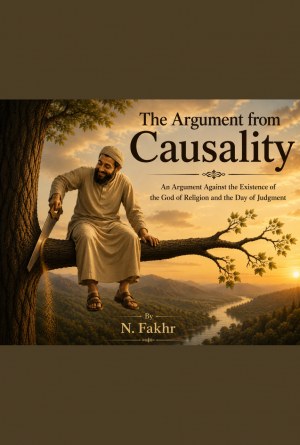
The Argument from Causality Philosophy by N. FakhrThe Argument from Causality
Reads:
1Pages:
136Published:
Sep 2026Does the argument from causality really lead to the God of religion? Through a series of accessible dialogues between two old friends—one a believer and the o...
Formats: PDF, Epub
-
The Dying God: The Philosophy of the Demiurge Philosophy by Denys SpirinThe Dying God: The Philosophy of the Demiurge
Reads:
3Pages:
163Published:
Sep 2026This book pursues one thesis in the philosophy of religion: God is a will fallen into its own law. The confessions of theology — simplicity, immutability, the...
Formats: PDF, Epub, Kindle
-
Not/One: Philosophy of Freedom Philosophy by Denys SpirinNot/One: Philosophy of Freedom
Reads:
8Pages:
177Published:
Aug 2026The book does not prove freedom and does not set out to. It demarcates the free act, states the primitive that authorship requires, separates its position fro...
Formats: PDF, Epub
-
The Philosophy of the Sitra Achra Philosophy by Denys SpirinThe Philosophy of the Sitra Achra
Reads:
1Pages:
175Published:
Jul 2026The Philosophy of the Sitra Achra reinterprets the Tree of Life as a sealed and diminished form of will. The Tree freezes the first acausal act into Kether, e...
Formats: PDF, Epub