

The Definitive Guide to Protecting Kids Online by Jack Hughes - HTML preview
Download the book in PDF, ePub, Kindle for a complete version.
The Definitive Guide to Protecting
Kids Online
Simple, Effective Parental Controls and strategies to Keep Kids Safe
from Inappropriate Content and Online Dangers
By: Jack Hughes
Introduction: The Online Frontier – A
Parent’s Guide to Safeguarding the Digital
Generation
The digital age has revolutionized every facet of modern life. From communication to education, entertainment to social connection, technology has opened doors that previous generations never imagined. While this evolution has brought incredible opportunities, it has also introduced unique and serious challenges—especially for parents raising children in an always-online world.
The truth is, today’s children are growing up in an environment dramatically different from what their parents experienced. Just a decade ago, playtime revolved around outdoor adventures, board games, and face-to-face friendships. Now, the "playground" is often digital, hosted on platforms like TikTok, Roblox, and Snapchat. This rapid shift, while inevitable, comes with risks that most parents feel unprepared to handle. Many find themselves asking: How do I protect my children from the pitfalls of this vast, unregulated online world?
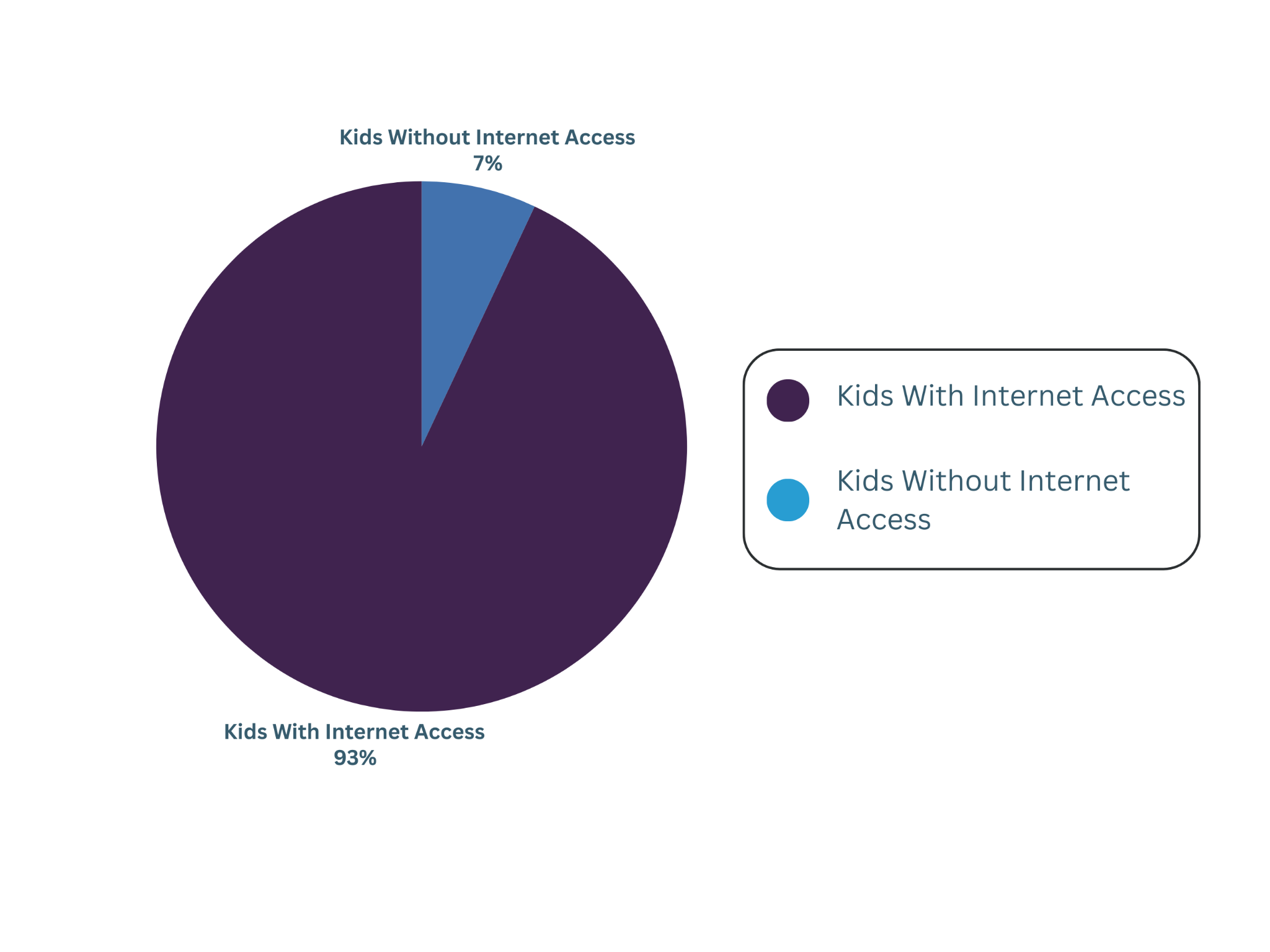
The stakes couldn’t be higher. Recent studies have revealed that 93% of children aged 8-18 have access to the internet.
And the average child spends
over seven hours a day on
screens. But with this access
comes exposure—to harmful
content, cyberbullying, predatory
behaviors, and the
often-overwhelming pressures of
social media. It’s not a matter of if
a child will encounter these
challenges, but when.
This book is designed to provide
parents with the knowledge, tools,
and strategies they need to
navigate this digital frontier with
confidence. It doesn’t promise to eliminate every danger (no tool is perfect), but it does aim to equip you with a multi-layered approach to internet safety, helping you to minimize risks and foster a healthy relationship between your child and technology.
Understanding the Evolving Digital Landscape
It’s important to start with perspective. For most parents, the internet is something they adopted in adulthood, learning its nuances alongside their other life responsibilities. For today’s kids, however, the internet is a birthright. By the time a child turns ten, they’ve likely already interacted with tablets, smartphones, and voice-activated assistants like Alexa. COVID-19 only accelerated this trend, making devices central to schooling, social interaction, and recreation.
While there’s nothing inherently wrong with this shift, it has created new vulnerabilities. Children are often left unsupervised with powerful tools capable of exposing them to explicit content, misinformation, and exploitative individuals. These tools are also designed—intentionally—to be addictive, exploiting psychological principles to keep users scrolling, tapping, and consuming. For kids, whose brains are still developing, the effects can be particularly profound.
But parents aren’t powerless. Far from it. By embracing a proactive and informed approach, you can safeguard your child’s digital experience without completely cutting them off from the benefits of technology.
The Consequences of Inaction
For many families, conversations around online safety only arise after a crisis—when a child is cyberbullied, encounters inappropriate content, or forms an unsafe connection with a stranger. These moments are avoidable with proper precautions, but it requires a shift in mindset: Parents must move from being reactive to being proactive. Waiting for a problem to surface is no longer an option.
Some might argue that these dangers are exaggerated or that children are resilient enough to handle the challenges of the internet. But the data tells a different story:
● Early exposure to harmful content: Studies show that the average age of exposure to
online pornography is just 11 years old, and it’s often accidental—occurring through
pop-ups, misclicks, or deliberately misleading ads.
● Cyberbullying: A Pew Research study revealed that 59% of teenagers have
experienced some form of cyberbullying. For many, this leads to anxiety, depression,
and even self-harm.
● Predatory behaviors: With an estimated 500,000 online predators active daily,
platforms like social media and gaming servers have become their hunting grounds.
Grooming, manipulation, and exploitation often occur in spaces parents mistakenly view
as "safe."
Understanding these realities underscores the importance of this book. The internet isn’t inherently evil, but it does require vigilant navigation—especially for children who lack the critical thinking skills to discern danger.
Why This Book?
I created this guide not just as an expert in online safety but as someone who understands the stakes on a deeply personal level. Growing up in the digital age, I’ve experienced both the benefits and the darker side of the internet. As a child, I knew how to bypass parental controls, hide my online activity, and access content I shouldn’t have. I’ve since dedicated my career to helping parents learn from my experiences, ensuring their children are better protected than I was.
This book offers more than just technical advice—it’s a holistic approach to digital parenting. From setting up robust parental controls on devices to fostering open communication and teaching critical thinking skills, each chapter is crafted with actionable strategies. Whether you’re a tech-savvy parent or someone intimidated by the latest gadgets, this guide is designed to meet you where you are.
What You’ll Learn
● The Risks: Chapter 1 dives into the dangers of unsupervised internet access, including
harmful content, addiction mechanics, and real-world stories of children impacted by online threats.
● Solutions: In Chapters 2 through 4, we explore practical tools like Apple’s Screen Time,
third-party parental control apps, and router-level protections. These tools are broken down step-by-step, ensuring even the least tech-savvy parent can implement them.
● Community & Connection: Chapter 5 highlights the importance of shared experiences,
featuring real-life stories from parents who’ve succeeded (and struggled) in protecting their kids online.
● A Digital Family Culture: Finally, Chapter 6 provides a roadmap for building a
sustainable, tech-healthy household. From setting boundaries to fostering trust, this chapter ensures your efforts have lasting impact.
How I Can Help
Many parents feel overwhelmed by the sheer scale of these challenges. But you’re not alone. As Kevin Kuczynski, a high school guidance counselor with 25 years of experience, reminded me:
“You obviously can relate and connect with parents in a different way than I can... There’s a great value in what you have to say, given your age, your knowledge, your experience, your understanding with technology to help those in need.”
As a parent, navigating the complexities of online safety can feel overwhelming. Between social media, gaming platforms, and ever-evolving risks, it’s hard to keep up. That’s exactly why I created a personalized service designed to help parents take control of their child’s digital experience.
With a simple, hands-on approach, I walk parents through setting up parental controls ensuring their children are protected from harmful content, screen addiction, and online predators. Instead of spending hours trying to figure it all out on your own, I provide expert guidance tailored to your family’s needs.
From the initial setup to ongoing support, I help parents feel confident about the steps they’re taking. You don’t have to do this alone—let me help you make your home a safer digital space.