The Art by Dr Ved Prakash Bhardwaj - HTML preview
Download the book in PDF, ePub, Kindle for a complete version.
The Art
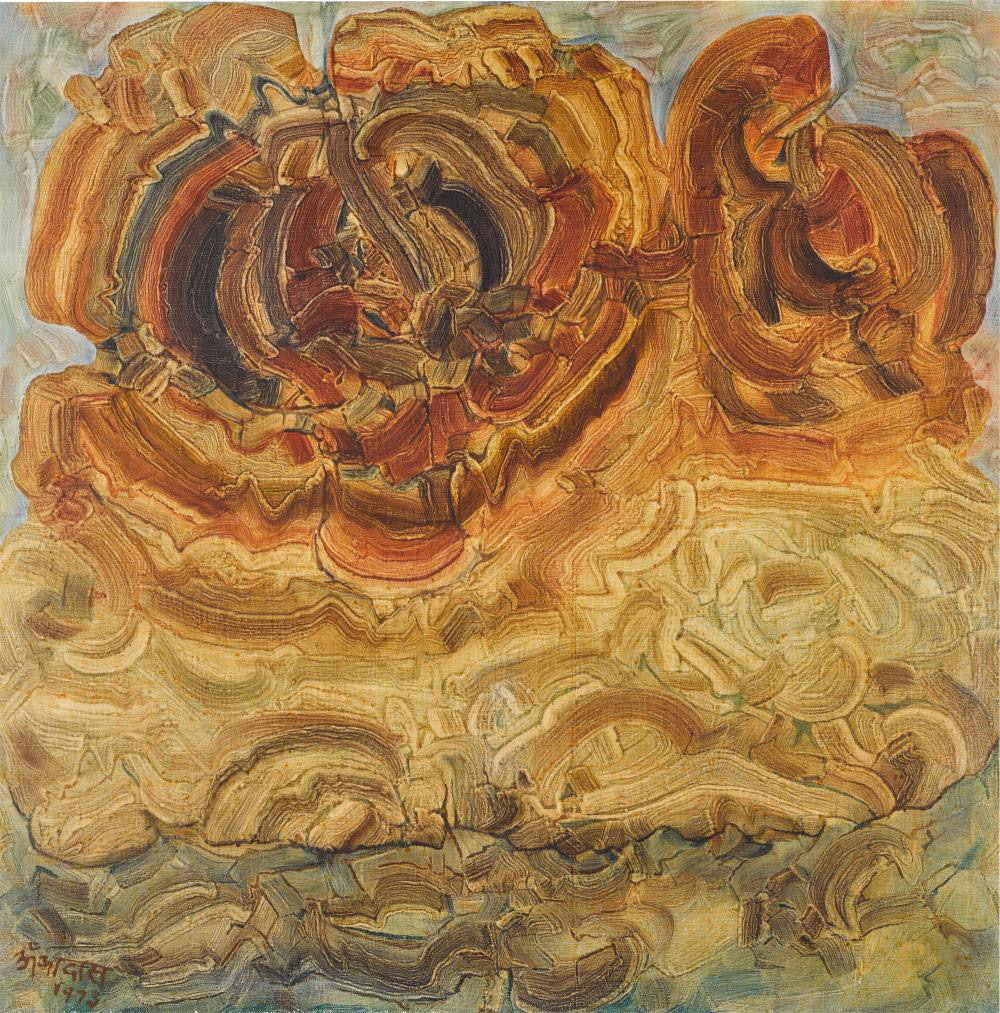
Ambadas would pour or spread paint on canvas or
for him a continuous source of discovery and wonder.
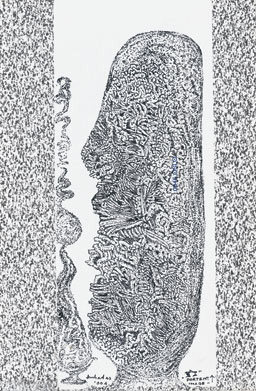
paper and then respond to the unexpected forms This search was a daily practice. There was hardly a that emerged. His art was therefore both an act of day in his life when he did not draw something. His creation and an act of discovery. Bringing together pen moved rhythmically across the surface, sometimes accidental forms became an artistic practice, a kind pressing heavily, sometimes lightly, creating forms that of play through which he perceived life in new and at first glance appear organic. Looking at his drawings nearly complete ways. For him, nothing was empty. He and oil paintings, one often feels that fragmented often said that everything is full, and it was this sense human figures are drifting weightlessly through an of fullness that made art a source of ecstasy. Creating infinite space, detached from gravity and direction.
representational or descriptive paintings was rarely his In both his drawings and paintings, linear
objective.
movement within undefined yet subtly perceptible His early works reveal a richer use of colour
forms is transformed into creative energy. The
and a stronger emphasis on the formation of abstract dynamism and weightlessness of these forms suggest structures. From the beginning, he worked primarily a joyous experience of liberation. It is as if a group of in oil. Later, after developing an allergy to linseed and people are dancing together within the boundaries of turpentine oil, he began using kerosene. As a result, the canvas or paper. Each figure is distinct, yet all are the density of colour in his paintings decreased, and united within a shared emotional universe.
the abstract forms began to appear lighter, almost Chance plays a vital role in his work, filling it weightless.
with the colour and vitality of life. There is no doubt that Even in his early paintings, the picture surface he avoided descriptive narration in his compositions.
is often divided into two or three sections. This division Yet he never rejected the presence of rudimentary creates the impression that the forms occupying the human forms. He often remarked that art cannot be upper areas are floating. As his work evolved, these separated from life; it is an integral part of life in all its abstract forms became increasingly free and fluid.
manifestations. For him, art was a means of creating Ambadas was also associated with the group of non-ecstasy and revealing the essence of the living world representational artists formed in 1951. Art remained rather than its literal appearance.
6