The Art by Dr Ved Prakash Bhardwaj - HTML preview
Download the book in PDF, ePub, Kindle for a complete version.
The Art
and pictorial traditions. However, his mature experiment freely with form. His treatment work moves beyond revivalist nationalism and of the human figure gradually moved from
develops an individual modernist language. His
descriptive representation toward distortion
art remains connected to Bengali cultural identity and psychological condensation. Instead of
while also engaging with international modernism reproducing the visible world, he created an
and twentieth-century figurative art. The result is alternative visual reality in which the tensions of neither purely regional nor simply cosmopolitan, contemporary existence became visible. His work but a form of modernism grounded in local history therefore encourages viewers to look beyond
and experience.
the surface of an image and consider the social
Chowdhury’s art is strongly responsive
structures of inequality, violence, injustice, and to the social conditions of his time, although it vulnerability underlying it.
does not usually adopt the direct language of
The symbolic complexity of Chowdhury’s
political propaganda. His early association with imagery becomes particularly evident when
the Communist Party is relevant to his social
seemingly simple scenes are examined closely.
consciousness, but his artistic practice cannot
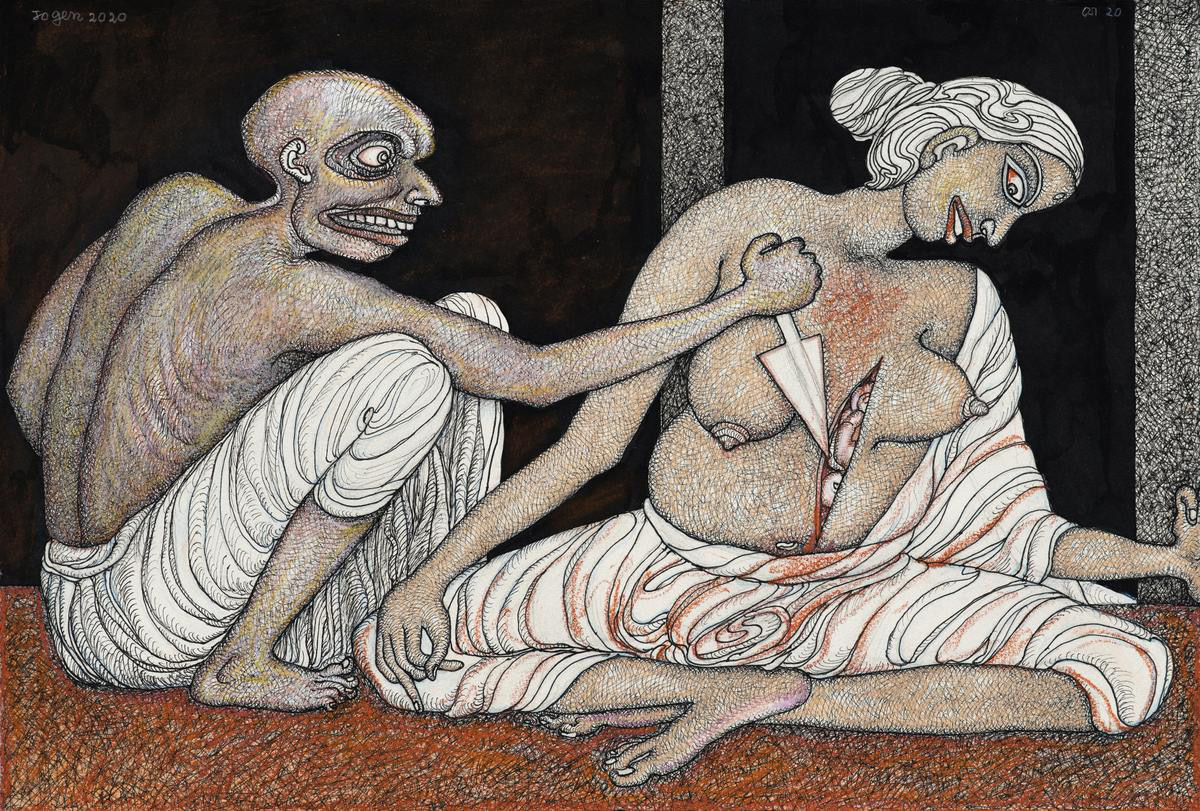
For example, an image of a man cutting a woman’s be reduced to political ideology. His concern with chest and abdomen with a knife may initially ordinary people and social inequality is expressed appear to represent gendered violence. The
primarily through perception and representation.
presence of a fetus within the woman’s womb,
Social reality influences the mood, structure, and however, expands the image’s possible meanings
conceptual direction of his images rather than
to include female foeticide, patriarchal violence, becoming a straightforward political message.
destruction of future generations, and even
This separation between political ideology
humanity’s destructive relationship with nature.
and artistic practice allowed Chowdhury to Such imagery demonstrates how Chowdhury’s 54