The Art by Dr Ved Prakash Bhardwaj - HTML preview
Download the book in PDF, ePub, Kindle for a complete version.
The Art
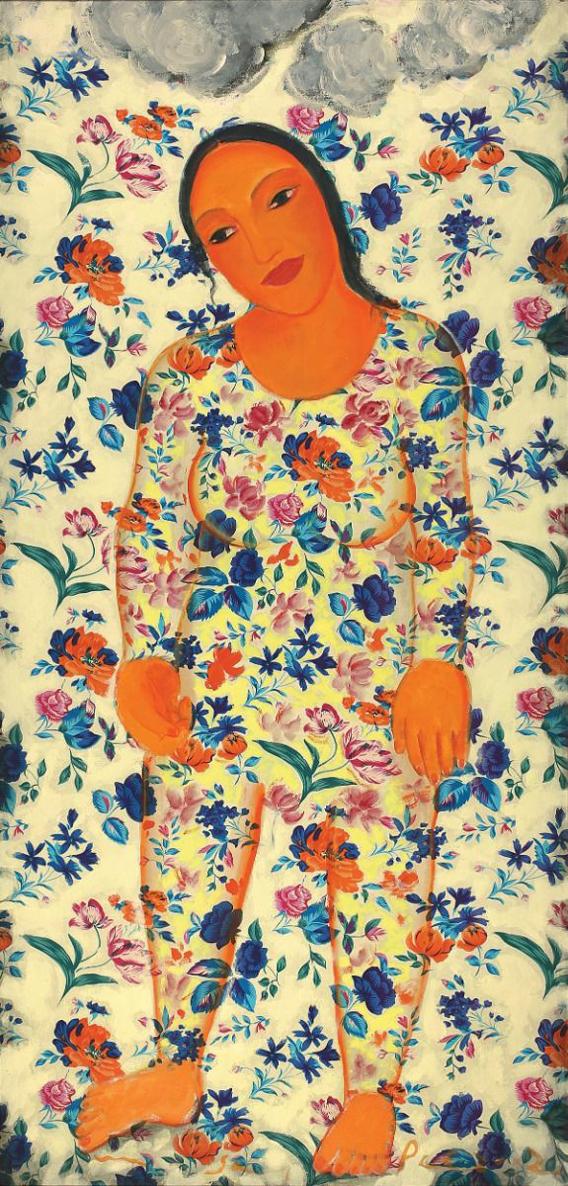
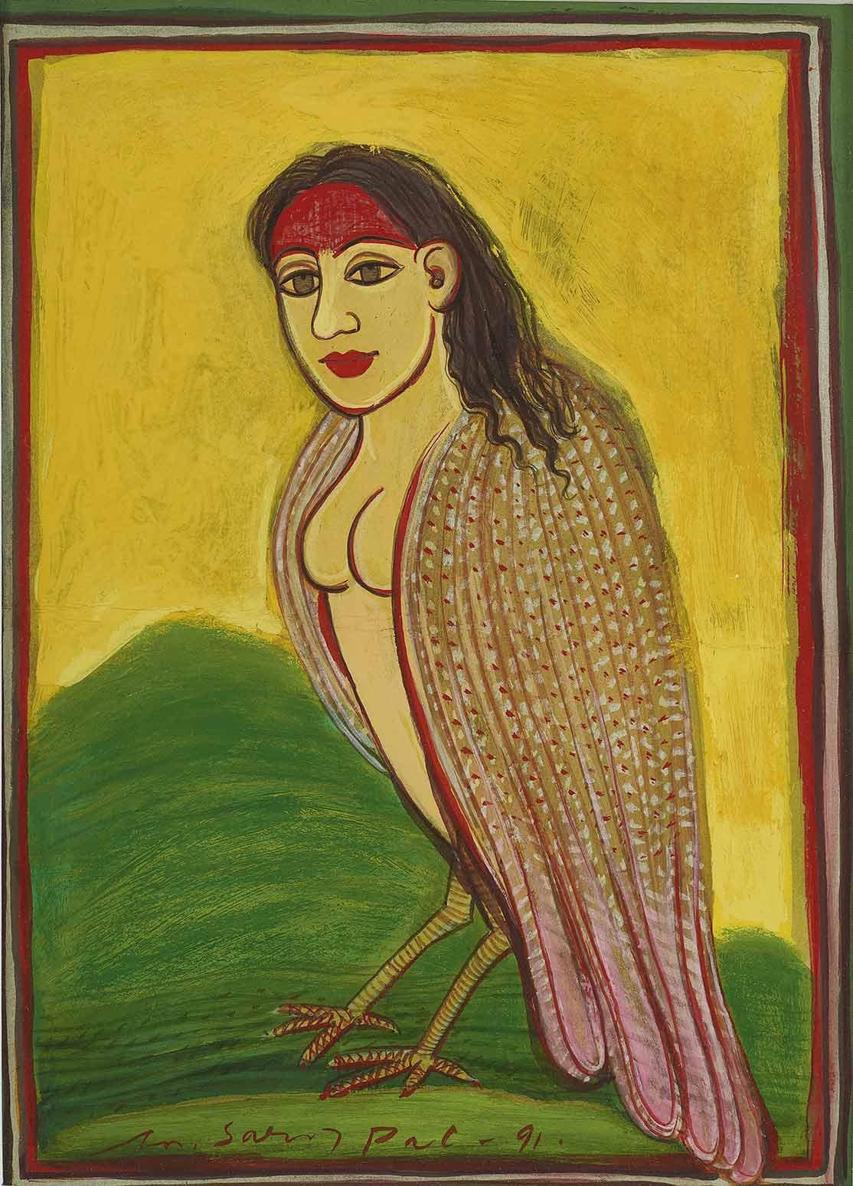
Works such as Kamadhenu, with its fusion of woman and rebellious. She resisted the unquestioned imitation and cow; Kinnari, which brings together woman of Western artistic norms and styles, while also engaging and bird; and Dancing Horse, in which the figure is critically with Indian traditions. Her relationship with conceived as half woman and half mare, reveal the miniature painting was therefore not simply one of imaginative breadth of her symbolic language. In these influence, but also one of dialogue, reinterpretation, works, animals, birds, and mythological forms are not and resistance.
merely decorative devices. They become metaphors Unlike the idealised and ornamental heroines
for female strength, freedom, desire, transformation, of traditional miniature painting, Pal created female and the relationship between woman and nature. By figures who, even when nude or semi-nude, cannot combining elements of Indian miniature painting with easily be understood as decorative objects created for folk traditions and mythology, Pal developed new the pleasure of the male gaze. Their bodies become visual concepts in which familiar cultural symbols statements in themselves. Their presence suggests an acquire contemporary significance.
assertion of female authority rather than an attempt The miniature tradition was a particularly to complete or serve masculine power. In this way, important source of inspiration for Pal. Its influence Pal moved the female body beyond the conventional can be seen in the structure and composition of realm of beauty and transformed it into a language of her paintings, in the treatment of figures, the use of agency, resistance, self-determination, and existence.
relatively flat colour areas, and the organisation of Her treatment of ornamentation is equally significant.
pictorial space. She was especially influenced by the Whereas traditional miniatures often give considerable Pahari miniature tradition. Yet she did not accept this importance to elaborate clothing, jewellery, and richly inheritance passively or reproduce it literally. From the decorated settings, Pal frequently chose simpler beginning, her artistic temperament was independent clothing, restrained environments, and a deliberate 34