

Basic of Geriatrics and Internal Medicine for Physiotherapist by Rasheedy D - HTML preview
Download the book in PDF, ePub, Kindle for a complete version.
Dementia is a syndrome of acquired (not learning difficulties), chronic (lasts months to years), global (not just memory or just language problems), progressive impairment of higher brain function, in an alert patient (not drowsy), which interferes with social and functional abilities.
What are the higher brain functions?
- Learning and Memory (e.g. free recall, cued recall)
- Aphasia (e.g. word-finding difficulty)
- Apraxia (inability to perform motor tasks, such as cutting a loaf of bread, despite intact motor function)
- Agnosia (inability to recognize objects despite intact sensory function)
- Impaired executive function (poor abstraction, mental flexibility, planning, and judgment).
Different causes of dementia
|
Reversible causes of dementia |
Irreversible causes of dementia |
|
Degenerative disorders:
Vascular dementia Mixed dementia Infections:
Toxins:
|
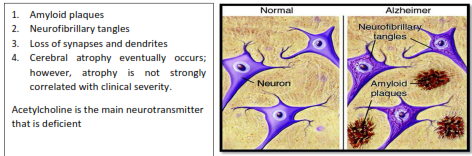
Pathology of Alzheimer disease
Differential Diagnosis
Delirium
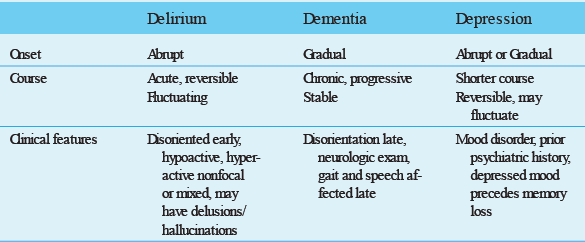
Depression
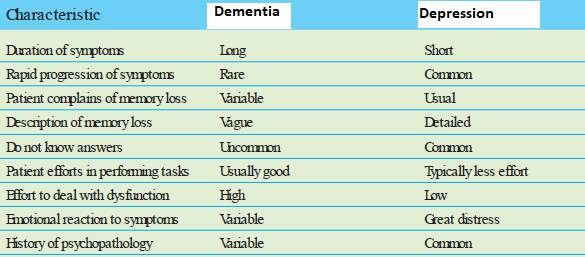
Age related memory loss:
- Much milder symptoms
- Not substantially progressive
- Does not impair function
Mild cognitive impairment
- May represent a transitional state between normalcy and dementia but some cases may not progress to Dementia
- Either amnestic or non-amnestic MCI
- No functional impairment
Alarming signs:
- People with dementia often forget things and never remember them.
- Asking the same question over and over
- Difficulty in performing familiar tasks.
- Problems with language.
- Time and place disorientation.
- Misplacing things.
- Poor judgment
Consequences of dementia
Malnutrition, safety issues, fall risk, functional decline, incontinence, Delirium, depression, sleep disorders, aspiration, immobility, Caregiver stress.
Means of Confirmation or Diagnosis
Definitive diagnosis is made upon autopsy.
Exclude reversible causes
Laboratory Tests
Cerebrospinal fluid (CSF) for protein analysis
Neuropsychological testing
Mini mental state examination
Imaging
Computed tomography (CT) of the brain
Magnetic resonance imaging (MRI) of the brain
Single-photon emission computed tomography (SPECT) for hypoperfusion in the parietal and temporal regions
Positron emission tomography (PET) scan for abnormal brain proteins
Treatment
Memory issues: not curative may delay progression
Cholinesterase inhibitors: donepezil
Memantine: Namenda
Behavioural and psychological symptoms BPSD:
- Behavioural symptoms that may occur in dementia include wandering, aggression and agitation. Psychological symptoms include anxiety, depression and hallucinations. The mainstay of treatment for BPSD is non-pharmacological and approaches include orientation, reassurance, and complementary therapies.
- Antipsychotic drugs may have a role but should only be prescribed by specialists.
- Acetylcholinesterase inhibitors are increasingly used for their effect on BPSD.