

Core Concepts of Marketing by John Burnett - HTML preview
Download the book in PDF, ePub, Kindle for a complete version.
CHAPTER 9
PRICING THE PRODUCT
wiser not to engage in price competition for other reasons. Price may simply not offer
business a competitive advantage (employing the val ue equ ation).
Competitive Pricing
Once a business decides to use price as a primary competitive strategy, there are many weJ] -
established tools and techniques that can be employed. The pricing process normally begins
with a decision about the company 's pricing approach to the market.
Approaches to the Market
Price is a very important decision criteria that customers use to compare alternatives. It also
contributes to the company's positi on. In general, a business can price itself to match its
competition, price higher, or price lower. Each has its pros and cons .
Pricing to Meet Competition
Many organizations attempt to establish prices that,
on average, are the same as those set by their more important competitors. Automobiles of
the same size and having equivalent equipment tend to have similar prices. T his strategy
means that the organization uses pri ce as an indicator or baseline. Quality in production,
better service, creativity in advertising, or some other element of the marketi ng mix are used
to attract customers who are interested in products in a particular price category,
The keys to implementi ng a strategy of meeti ng competitive prices are an accurate
definition of competition and a knowledge of competitor's prices. A maker of hand-crafted
leather shoes is not in competition with mass producers. If he/she attempts to compete with
mass producers on price, higher production costs will make the business unprofi table. A
more reali stic defi nition of competition fo r this purpose would be other makers of hand-
crafted leather shoes. Such a definition along with a knowledge of their prices would allow
a manager to put the strategy into effect. Banks shop competitive banks every day to check
their prices.
Pricing Above Competitors
Pricing above competitors can be rewarding to organ-
izations, provided that the objectives of the policy are clearly understood and that the mar-
keting mix is used to develop a strategy to enable management to implement the policy
successfu lly.
Pri cing above competition generally requires a clear advantage on some nonprice ele-
ment of the marketi ng mi x. In some cases, it is possible due to a high price- quality asso-
ciation on the part of potential buyers. But such an assumption is increasingly dangerous
in today's information-rich environment. Consumer Reports and other similar publications make objective product comparisons much simpler for the consumer. There are also hundreds of dot.com companies that provide objective price comparisons. The key is to prove
to customers that your product justifies a premium pri ce .
Pricing Below Competitors
While some fi rms are positioned to price above com-
petition, others wish to carve out a market niche by pricing below competitors. The goal
of such a policy is to realize a large sales volu me through a lower price anci profit margins.
By controlling costs and reducing services, these firms are able to earn an acceptable profit,
even though profit per unit is usually less .
Such a strategy can be effective if a significant segment of the market is price-sensitive
and/or the organi zation's cost structure is lower than competitors. Costs can be reduced by
increased efficiency, economics of scale, or by reducing or eliminating such things as credit,
delivery, and advertising. For example, if a fi rm could replace its fi eld sales force with tele-














NEW PRODUCT PRICING
235
marketing or online
this function might be performed at lower cost. Such reduc-
tions often involve some loss in effectiveness, so the tradeoff must be considered carefully.
Historically, one of the worst outcomes that can result from pricing lower than a com-
petitor is a "price war." Price wars usually occur when a business believes that price-cutting
increased market share, but does not have a true cost advantage. Price wars
are often caused by companies
or misunderstanding competitors. Typically, price
wars are overreactions to threats that either aren' t there at all or are not as big as they seem.
Another possible drawback when
below competition is the company's inabil-
ity to raise price or image. A retailer such as K-mart, known as a discount chain, found it
impossible to reposition itself as a provider of designer women's clothiers. Can you image
Swatch selling a $3 ,000 watch?
How can companies cope with the pressure created by reduced prices? Some are
redesigning products for ease and speed of
or reducing costly features that
their customers do not value. Other companies are reducing rebates and discounts in favor
of stable, everyday low prices (ELP). In all cases, these companies are seeking shelter from
pricing pressures that come from the discount
that has been common in the U.S. for
the last two decades.
NEW PRODUCT PRICING
A
different pric ing situation relates to new product pricing. With a totally new
product, competition does not exist or is
What price level should be set in such
cases ? Two general strategies are most comn:on-penetration and skimming. Penetration
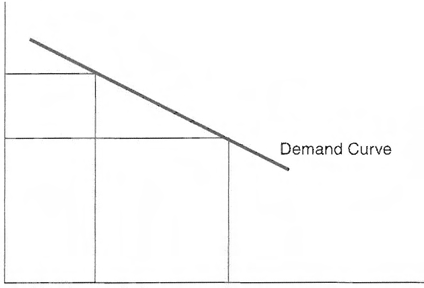
pricing in the introductory stage of a new proQucl's lifecyc1e means accepting a lower profit Jl1argin and to price relatively low. Such a strategy should generate greater sales and estab-the new product in the market more quickly. Price skimming involves the top part of
demand curve. Price is set relatively high to
a high profit margin and sales are
limited to those buyers willing to pay a
to get the new product (see Figure 9.3).
NEWSLINE: THE RISK OF FREE PC'S
There's no such thing as a free PC . But judging from the current flood
of offers for free or deeply d iscounted computers , you might think
that the laws of econ omics and common sense have been repealed. In
fact, all of those deals come with significant strings attached and
reqUir e close examination. Some are SImply losers. Others can pro-
vide substantial saVin gs, b u t only
the right customers.
The offers come in two categories. In
type, consumers get a
free computer along with free Internet access, but have to accept a
cons tant stream of advertising on the
In the other category,
the customer gets a
or deeply discounted PC in exchange for a
long-term contract for paid Internet services.
Most of these are attractive deals, but the up-front commitment to
$700 or more worth of Internet service means they are not for every-
one . One
will find little value in the arrangement is college
students, since nearly all schools provide free and often high-speed
access. Others who could well end up losing from these deals are
the lightest and heaviest users of the Internet. People who want
Inter net a ccess only to r ead
and do a little light Web browsing








236