

Engineering Mindset for Early-Career Developers by Moyinoluwalogo O. Mayowa - HTML preview
Download the book in PDF, ePub, Kindle for a complete version.
INTRODUCTION
Software engineering is rarely a solitary activity.
Although programming often involves focused individual work, most software systems are built by teams of engineers working together toward a common goal.
Successful engineering teams depend on strong communication and collaboration.
Developers must communicate ideas clearly, coordinate tasks, and share knowledge effectively.
Technical ability alone is not enough.
Engineers who communicate well help teams solve problems faster, reduce misunderstandings, and build better systems.
This chapter explores the importance of communication and collaboration in engineering environments.
WHY COMMUNICATION MATTERS
Poor communication can lead to many problems in software projects, including:
• misunderstood requirements
• duplicated work
• inconsistent system designs
• unresolved bugs
Clear communication helps teams align their efforts and avoid unnecessary mistakes.
Engineers communicate in many different ways, including:
• technical discussions
• written documentation
• code reviews
• project planning meetings
Developers who communicate clearly improve both team productivity and system quality.
EXPLAINING TECHNICAL IDEAS CLEARLY
Software systems can be complex.
Engineers often need to explain technical ideas to teammates who may have different backgrounds.
For example:
• designers may focus on user experience
• product managers may focus on business goals
• operations teams may focus on infrastructure
Developers must adapt their explanations depending on the audience.
The goal is to communicate ideas clearly without unnecessary complexity.
Simple explanations help everyone understand the problem and contribute to the solution.
Asking Good Questions
Asking questions is an important part of effective collaboration.
Developers sometimes hesitate to ask questions because they fear appearing inexperienced.
However, asking thoughtful questions helps clarify requirements and avoid mistakes.
Good questions might include:
• What are the main goals of this feature?
• Are there edge cases we should consider?
• How will this change affect other systems?
Questions demonstrate curiosity and engagement.
They also help teams reach better decisions.
CODE REVIEWS
Code reviews are a common collaboration practice in software engineering teams.
During a code review, developers examine each other’s code before it becomes part of the main codebase.
Code reviews help identify:
• bugs
• unclear logic
• security risks
• performance issues
They also provide opportunities for learning.
Junior developers can learn new techniques from experienced engineers, while senior developers gain insight into different approaches.
Constructive feedback during code reviews strengthens the entire team.
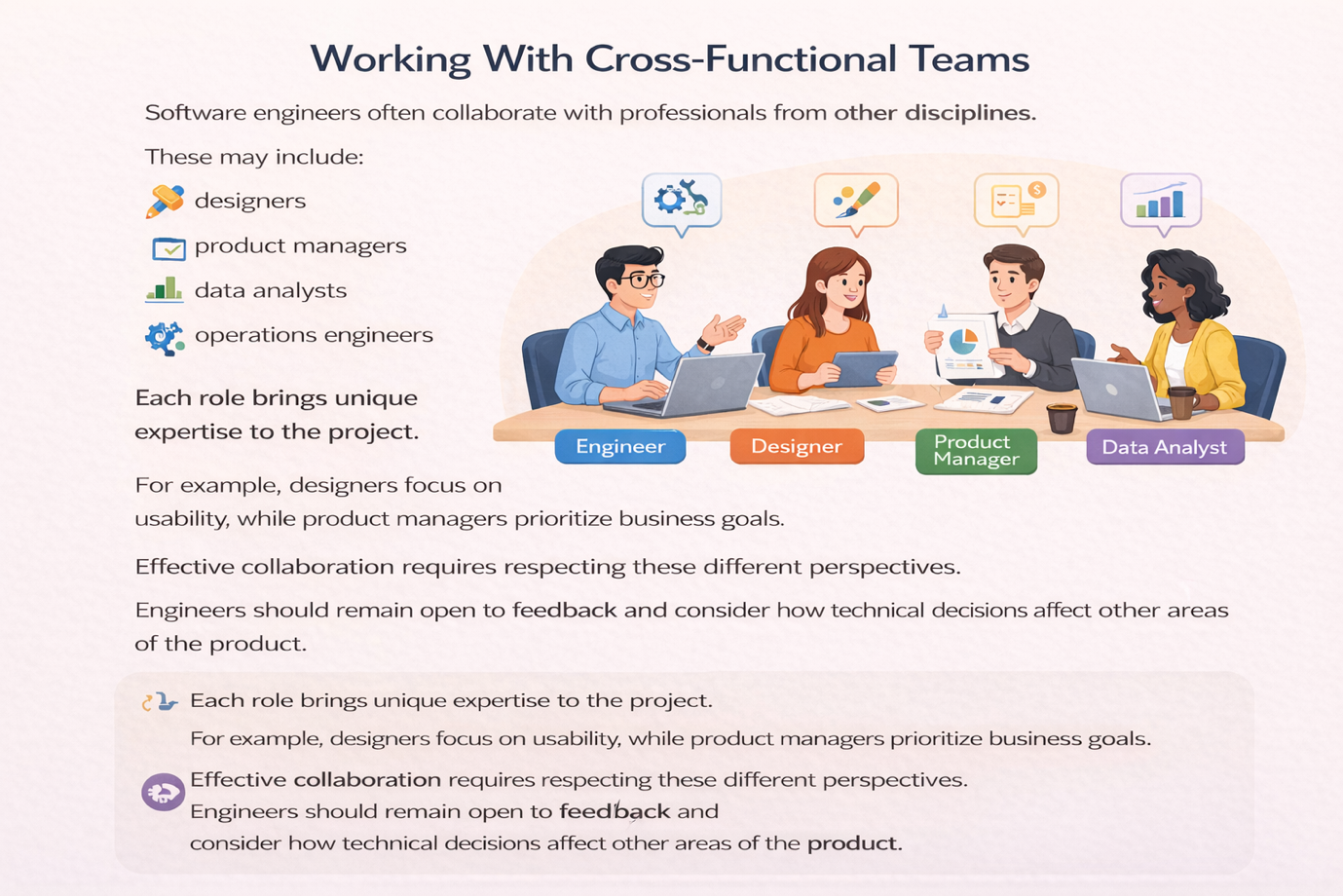
WORKING WITH CROSS-FUNCTIONAL TEAMS
Software engineers often collaborate with professionals from other disciplines.
These may include:
• designers
• product managers
• data analysts
• operations engineers
Each role brings unique expertise to the project.
For example, designers focus on usability, while product managers prioritize business goals.
Effective collaboration requires respecting these different perspectives.
Engineers should remain open to feedback and consider how technical decisions affect other areas of the product.
RESOLVING CONFLICTS
Disagreements sometimes occur in engineering teams.
Different developers may have different opinions about system design or implementation strategies.
Healthy technical discussions can lead to better solutions.
However, disagreements should remain respectful and focused on solving the problem rather than criticizing individuals.
Teams should evaluate ideas based on technical merit rather than personal preferences.
Professional communication helps maintain positive working relationships.
SHARING KNOWLEDGE WITHIN THE TEAM
Strong engineering teams actively share knowledge.
Knowledge sharing may occur through:
• technical presentations
• internal documentation
• mentorship programs
• collaborative debugging sessions
When knowledge is shared openly, the entire team becomes stronger.
This also reduces the risk of important knowledge being lost when team members change roles.
BUILDING TRUST IN ENGINEERING TEAMS
Trust is essential for effective collaboration.
Developers build trust by:
• communicating honestly
• respecting others’ contributions
• delivering reliable work
• helping teammates when needed
When team members trust each other, collaboration becomes smoother and more productive.