

Engineering Mindset for Early-Career Developers by Moyinoluwalogo O. Mayowa - HTML preview
Download the book in PDF, ePub, Kindle for a complete version.
CHAPTER 3 — SYSTEMS THINKING IN SOFTWARE
DEVELOPMENT
INTRODUCTION
Modern software development is rarely about building a single isolated program. Most applications today are part of complex systems that include many interconnected components. These components may involve user interfaces, databases, APIs, cloud infrastructure, third-party services, and networking layers.
Because of this complexity, developers must learn to think beyond individual pieces of code. They must understand how different parts of a system interact with one another. This broader perspective is known as systems thinking.
Systems thinking allows engineers to see the bigger picture. Instead of focusing only on the code they are writing, they consider how their work affects the entire system.
Early-career developers often focus primarily on individual tasks or small sections of code. However, as software grows in scale and complexity, understanding the relationships between components becomes essential.
Developers who develop systems thinking skills are able to design more reliable, scalable, and efficient software solutions.
This chapter explores the importance of systems thinking in software development and explains how developers can cultivate this mindset.
WHAT IS SYSTEMS THINKING?
Systems thinking is the ability to understand how different components of a system interact and influence each other.
A system can be defined as a collection of interconnected elements that work together to achieve a common goal.
In software development, systems often include many parts such as:
• user interfaces
• backend services
• databases
• APIs
• caching systems
• message queues
• monitoring tools
• cloud infrastructure
Each component plays a specific role, but they must all work together smoothly for the system to function properly.
Systems thinking encourages developers to ask questions such as:
• How does this component interact with others?
• What happens if this part fails?
• How does data move through the system?
• What dependencies exist?
By considering these questions, engineers can design software that performs reliably under real-world conditions.
WHY SYSTEMS THINKING MATTERS
Understanding the system as a whole is critical for several reasons.
PREVENTING UNEXPECTED FAILURES
When developers focus only on their own component, they may overlook how their changes affect other parts of the system.
For example, a developer might modify a database schema without realizing that several services depend on the existing structure.
This could cause unexpected failures across the system.
Systems thinking helps engineers anticipate these issues before they occur.
IMPROVING PERFORMANCE
Performance problems often arise from interactions between system components.
For instance, a slow database query may cause delays in backend services, which then affect the user interface.
By analyzing the entire system, engineers can identify performance bottlenecks more effectively.
SUPPORTING SCALABILITY
As applications grow, they must handle increasing numbers of users and requests.
Systems thinking helps engineers design architectures that can scale effectively.
This might involve techniques such as:
• load balancing
• caching
• distributed systems
• horizontal scaling
Understanding how these elements interact allows developers to build systems capable of handling growth.
ENHANCING RELIABILITY
Reliable systems continue functioning even when individual components fail.
Systems thinking encourages engineers to design fail-safe mechanisms such as:
• redundancy
• retries
• fallback systems
• monitoring alerts
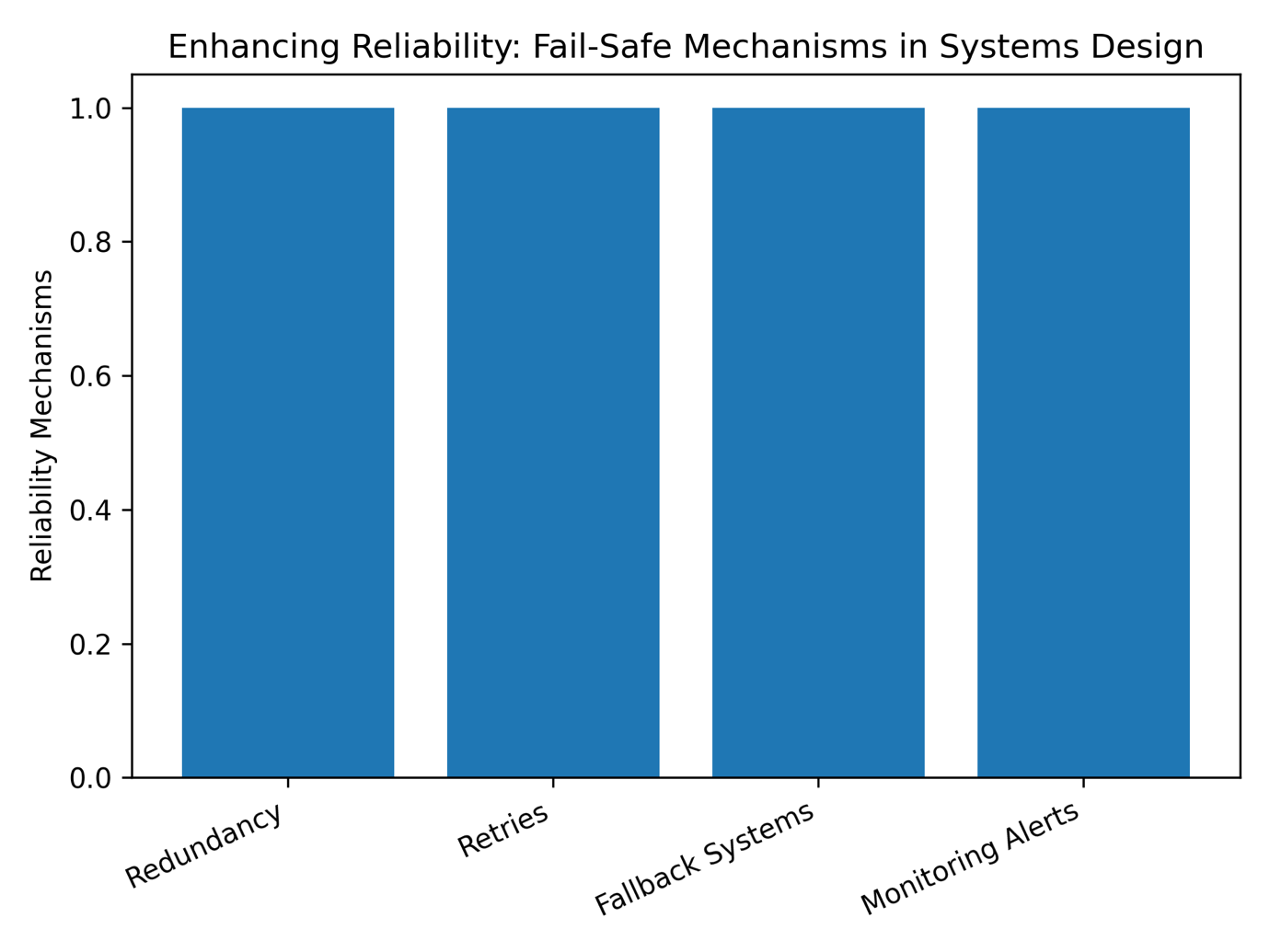
These strategies reduce the risk of system-wide failures.
COMPONENTS OF A TYPICAL SOFTWARE SYSTEM
To understand systems thinking, it is helpful to explore the common components found in modern software systems.