

Ponitka's Pierogi by Edward Drobinski - HTML preview
Download the book in PDF, ePub, Kindle for a complete version.
10– A Personal Aside III – A Pierogi Fueled Interlude
The closest local reprise theater to Pulawski Township is in Albion. It is one of those half revived cultural institutions that survives on a mix of nostalgia, volunteer labor, and a grant from a foundation whose board hasn’t met in years. The marquee letters don’t match. The lobby smells faintly of radiator heat and old upholstery.
They are playing “The Golden Coach” (1952), by Jean Renoir.
Wlady insisted they go because the flyer said “New 35mm print.” Ada agreed because she wanted to see whether Renoir’s theatrical color would look different on a real movie screen instead of the “big screen TV” in their living room.
They arrive early, because Wlady always arrives early. He claims it’s to “get good seats,” but the theater is never more than one third full. Ada buys a small popcorn and immediately regrets it. Wlady refuses concessions on principle, muttering something about “margins.”
They sit in the middle row, slightly off center; the position Wlady calls “the structural seat.”
The lights dim. The curtain opens with a mechanical groan that feels perfectly in tune with Renoir’s own cheerful indifference to Polish.
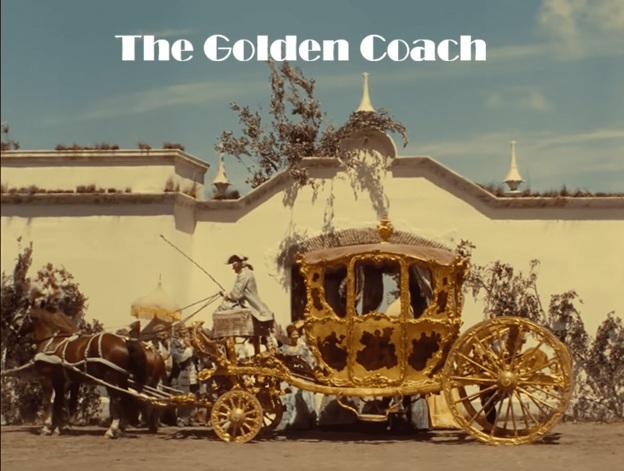
The Viceroy of a remote 18th century Peruvian town has ordered a magnificent golden coach from Europe, intending to pay for it with public funds. There is speculation that he is going to give it to his mistress, the Marquise, but he says he plans to use it to overawe the populace and flatter the local nobility, who enthusiastically look forward to taking turns parading in it. By coincidence, the coach arrives on the same ship that carries an Italian commedia dell'arte troupe composed of men, women, and children who perform as singers, actors, and acrobats. The troupe is led by Don Antonio, who also portrays the stock character of Pantalone on stage, and features Camilla, who plays the stock role of Columbina.
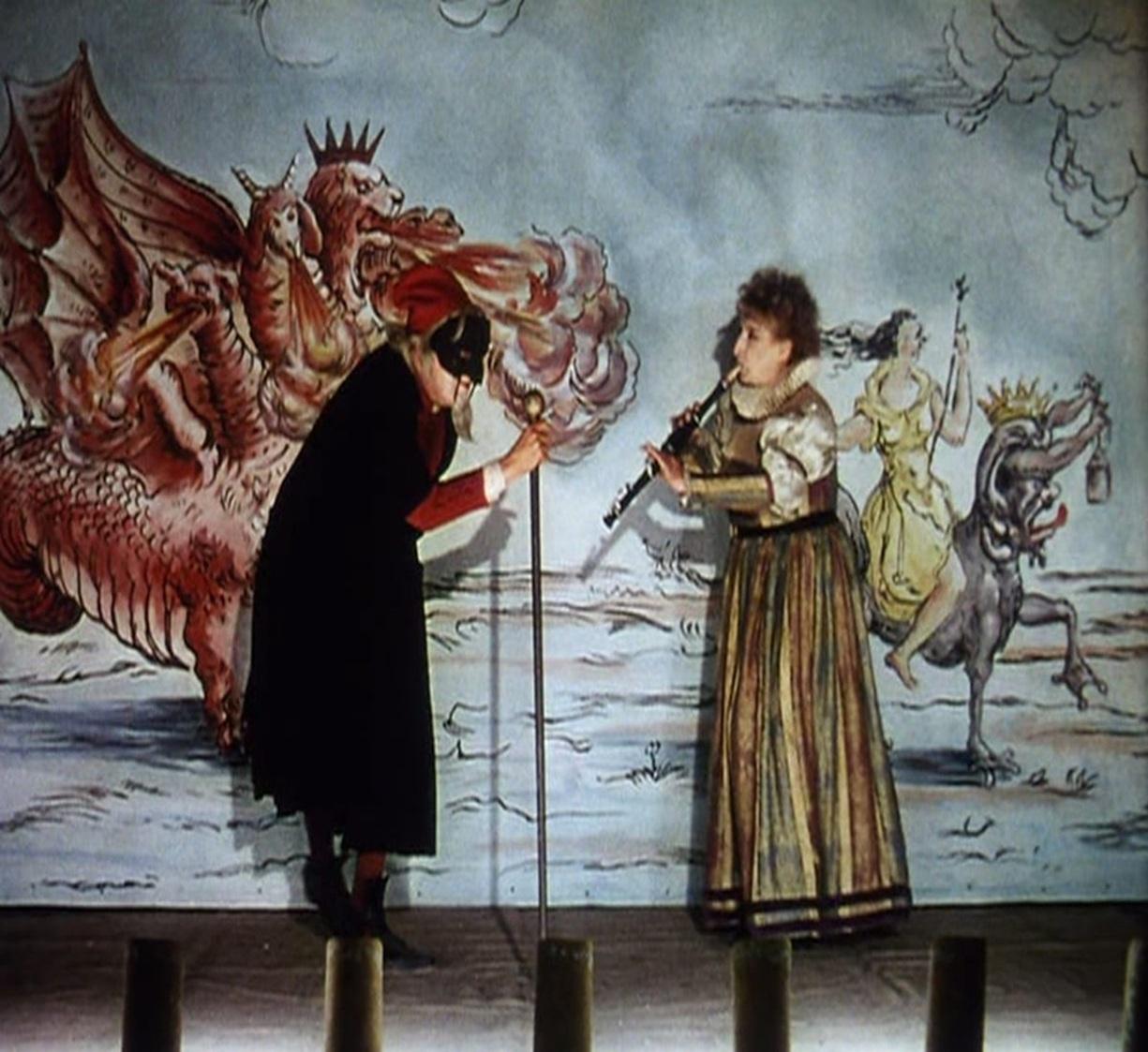
Once the members of the troupe refurbish the town's dilapidated theater,
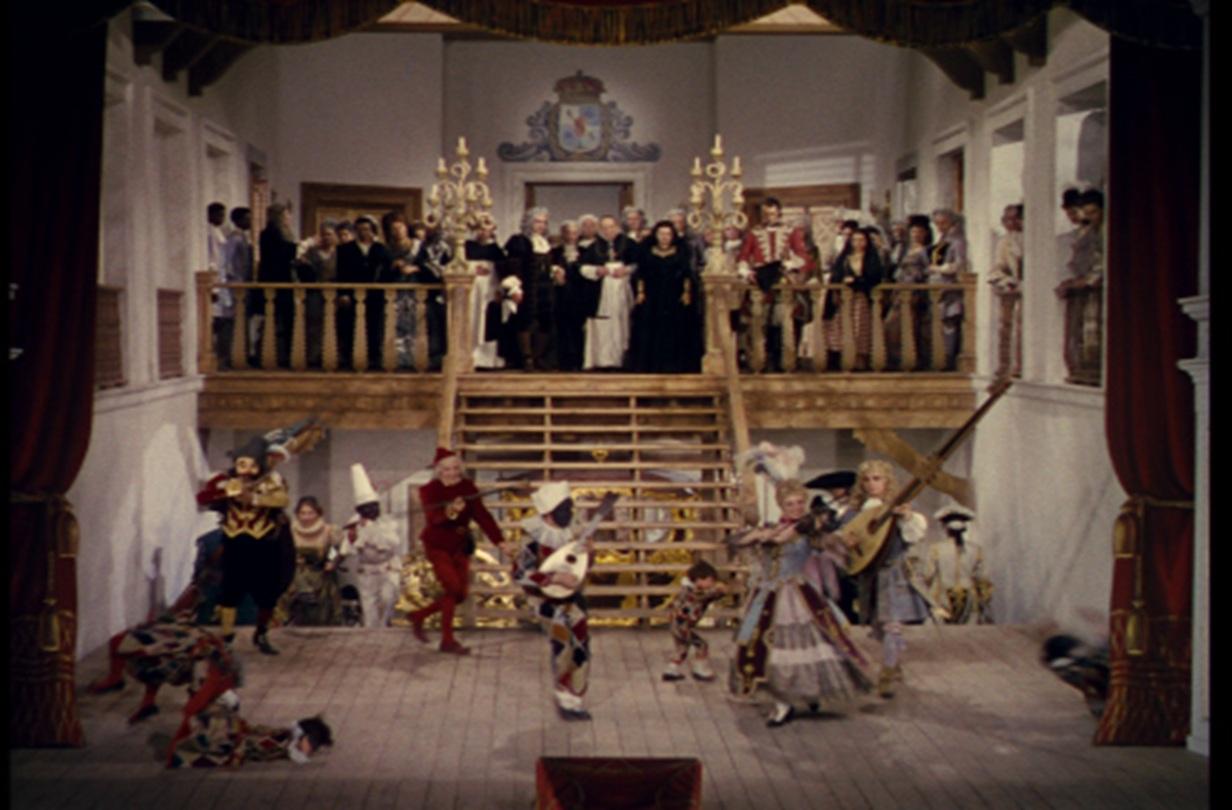
their performances meet with success only after local hero Ramón, a bullfighter, becomes smitten with Camilla and starts leading the applause. Similarly, after a command performance at the Viceroy's palace, the gentry withhold their favor until the Viceroy signals his approval and asks to meet the women of the company.
He, too, is taken with Camilla, who makes him feel comfortable and lighthearted.
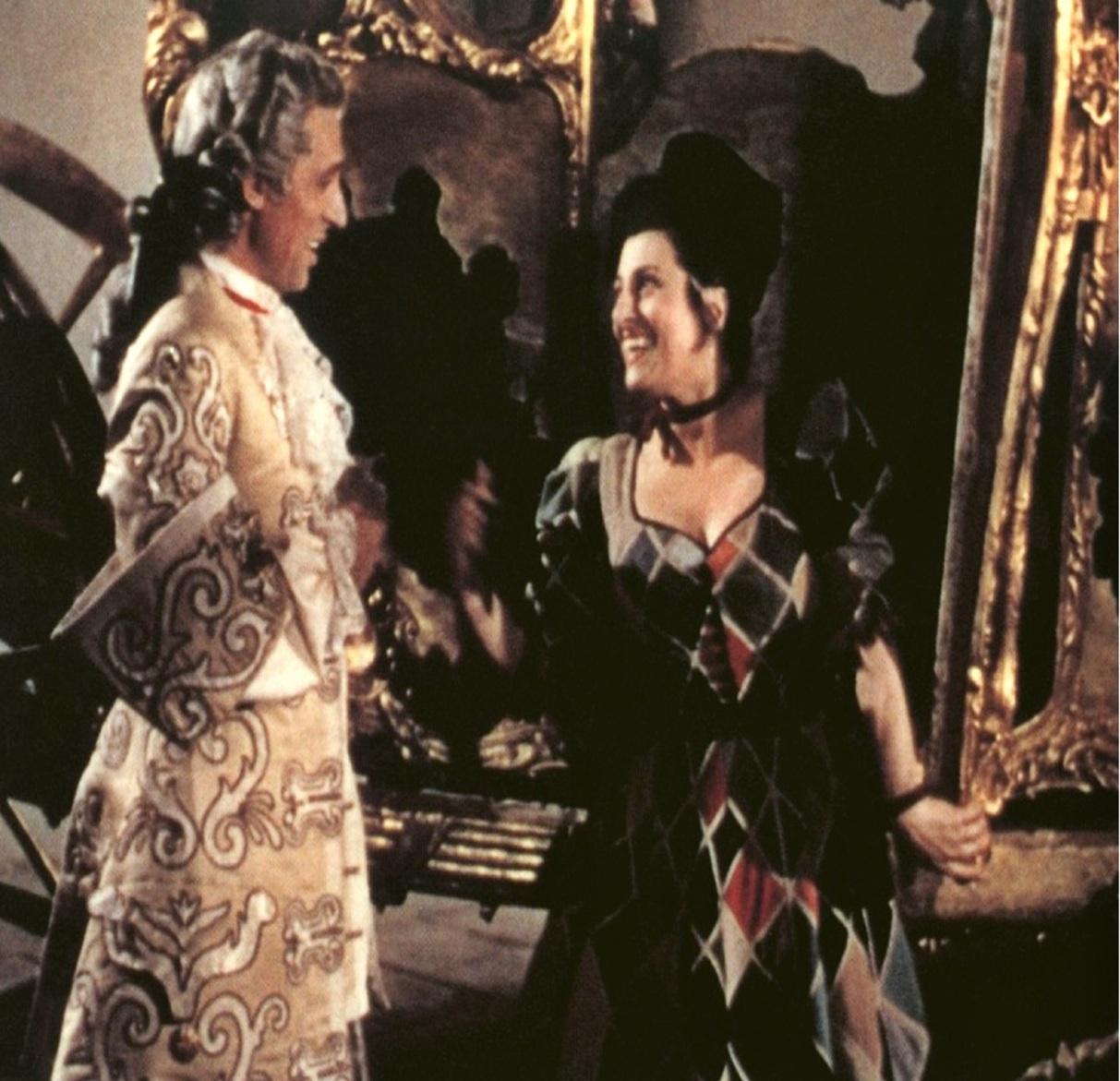
When the Viceroy sends Camilla a splendid necklace, Felipe, her jealous suitor who has been accompanying the troupe on their travels, becomes enraged and tries to take it from her, causing a riotous backstage brawl, after which he runs off to join the army.
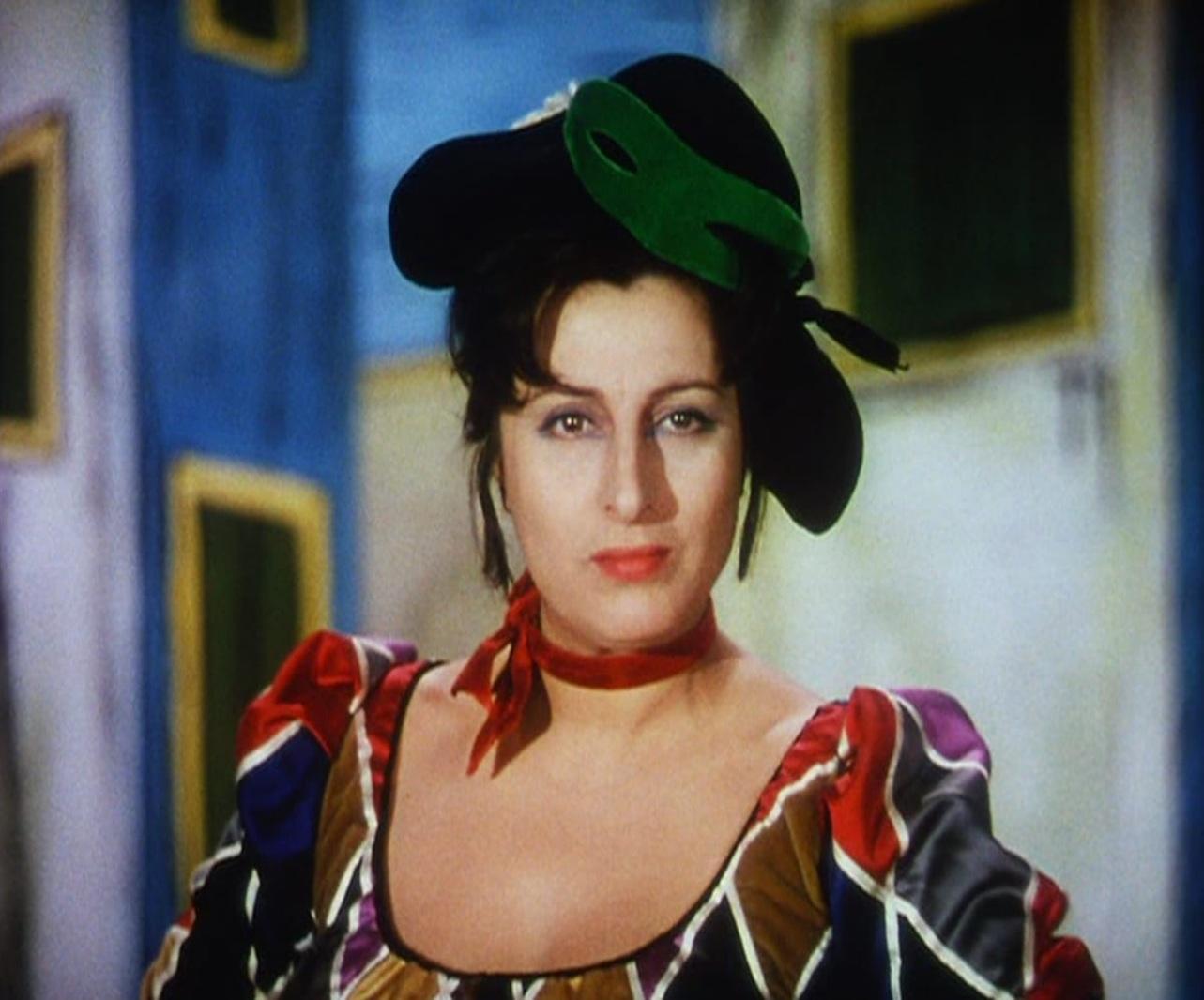
The Viceroy announces that he has decided to pay for the coach with his own money and give it to Camilla. This outrages the Marquise, along with the rest of the nobility, who are already smarting over the Viceroy's demands for money to finance a military campaign against an insurgency. Led by the Duke, the nobles threaten to strip the Viceroy of his post, unless he transfers the coach over to the government and only lets it be used for official purposes.
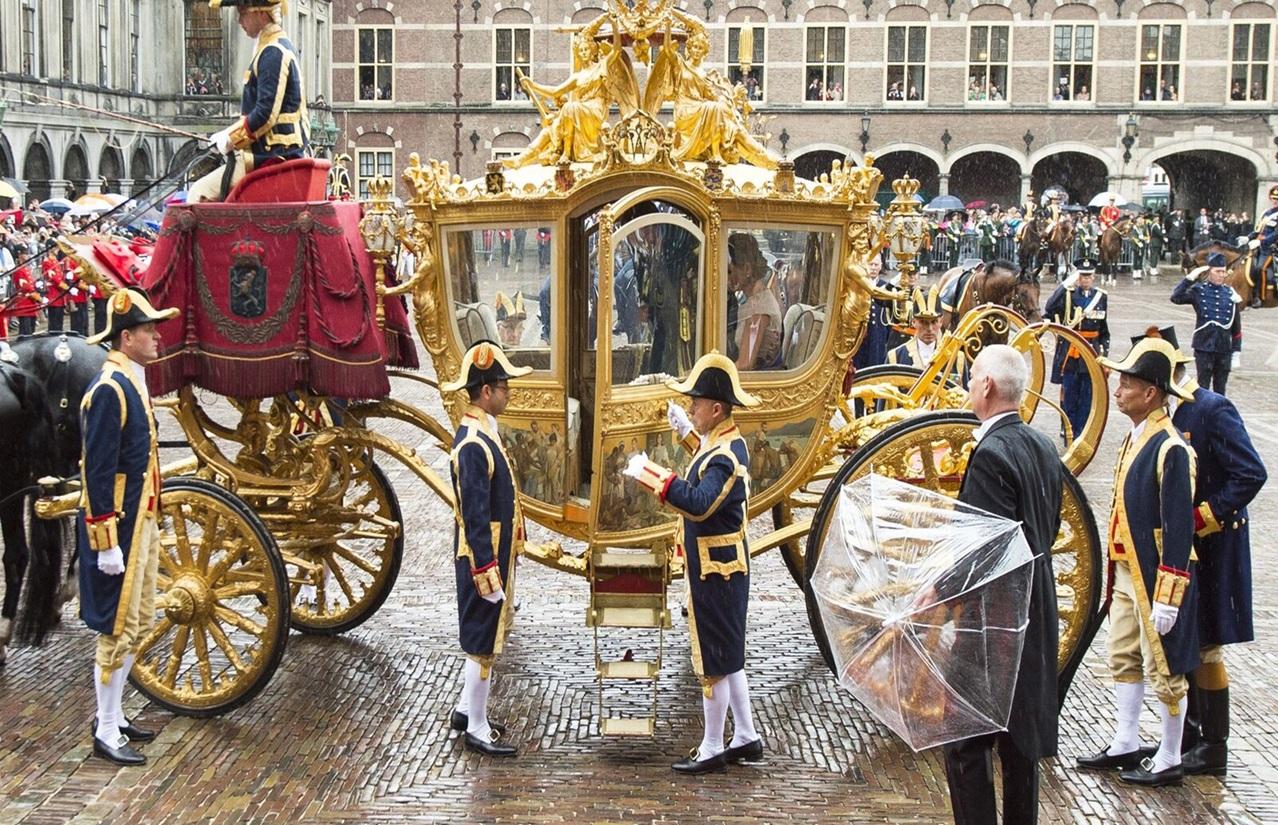
When he is about to agree, Camilla, who has been eavesdropping, enters and calls the Viceroy a little man, before quickly leaving with the coach.
After watching a triumphant performance by Ramón in the bullring, Camilla tosses him her necklace, which emboldens him to visit her house that night and propose that they become a celebrity couple in order to enhance their earning power as performers. She is considering this, even though he insists she return the coach, when they are interrupted by word that there is a visitor. Camilla gets the jealous Ramón to let her go tell the Viceroy, who she is expecting, that she belongs to Ramón now, but, instead, she is met by Felipe.
He tells her that he has come to take her to live a simple life among the natives, whom he came to admire while being held as their captive, and she agrees, even though she will not be able to bring the coach.
The Viceroy arrives, and Camilla leaves Felipe to tell him that she is leaving. When she learns the Viscount defied the nobles and expects the Bishop to approve their move to depose him, she feels guilty for playing a part in his downfall. Meanwhile, Felipe and Ramón find each other, and a sword fight ensues. They accidentally burst in on Camilla and the Viceroy, and, with everything now out in the open, Camilla tells all three men to go away. The Viceroy leaves, and Felipe and Ramón resume their duel outside, where they are arrested.
The next morning, the Bishop comes to the palace and announces that Camilla has given the coach to the Church, and he plans to use it to transport the last sacraments to the dying. The Viceroy keeps his position, and the Bishop calls for peace and reconciliation among the disputing parties.
The curtain falls, and, breaking the fourth wall, Don Antonio reminds Camilla that, as an actress, she is only able to realize her true self and find happiness when she is performing onstage. She inquires if Felipe, Ramón, and the Viceroy exist anymore, and Don Antonio says they do not. He asks if she misses them, to which she replies, "A little."
As they drove back home, Ada is the first to speak, because she always is when a film ends with a curtain call.
She says Camilla’s final gesture; giving the coach to the Church, stepping back into the role, is the cleanest thing in the film. Not noble, not tragic. Just accurate. A person recognizing the only space where she doesn’t have to pretend.
She says the three men were never real choices anyway. “Three temperaments, not three futures,” she says. Wlady nods, because he knows she’s right.
Ada adds that the nobles threatening the Viceroy felt like every city council meeting she’s ever attended; people offended not by the act itself, but by the breach of expected choreography.
Wlady talks about the coach itself; not symbolically; mechanically. He says the coach is the only honest object in the film. Everyone projects onto it, but the coach itself never lies. It’s heavy, impractical, expensive, and structurally useless. It’s exactly what it is.
He says that’s why Camilla can give it away without sentiment. “It was never hers,” he says. “It was everyone’s delusion.”
Ada laughs and says that’s exactly how she previously felt about the pierogi franchise.
Wlady pretends not to hear.
They both agree on one thing; Renoir doesn’t care whether the audience approves of any of this.
Ada says, “He’s not courting us.” Wlady replies, “He’s not even looking at us.”
They find this refreshing.
As they reach their curved gravel, Pulawski Township driveway, Ada says she liked Don Antonio’s final reminder; that the characters vanish when the curtain falls.
Wlady says, “If only that worked on customers.”
Ada unlocks the door. Wlady turns on the wall sconces downstairs. The house goes quiet. They don’t say anything else, because the mechanism of the evening has already resolved itself.
11– Ponitka Finally Figured It All Out,
Or So He Thought
A now comfortable Wladyslaw Ponitka, his home safe, his bank account bulging, and his wife again being like the girl he met when they were both 15 years old, can now afford to distractedly reflect upon his favorite recurring, near elite, libby family’s nights out at “Ponitka's Pierogi.”
They arrive in the early dinner window; the hour when earnest families like to "beat the rush" and also "support local businesses." The father holds the door with the ceremonial flourish of a man who believes he is entering a space of cultural enrichment. The mother steps in with the delighted, anthropological smile of someone who has already drafted the opening sentence of the story she will tell friends.
In their first contact with the atmosphere, the kids uncomfortably freeze, as in Tarkovsky’s “Solaris,” taking in the décor; a papier mâché stork suspended from fishing line, a mural of a Polish village painted by someone who has only seen Poland through stock photography, and a row of "Polish carnival games" that look like they were designed by a committee of well-meaning adults who have never met a child The parents beam. This is exactly the kind of "authentic quirk" they hoped for.
The young female server in stroje ludowe, hands them gilt scroll decorated menus with a wine list, laminated to withstand both children and ideology.
The father, eager to demonstrate respect, says; "We'd love to try whatever is most traditional." He says traditional the way some people say heritage.
The mother, scanning the menu like it's a UNESCO document, adds; "And the cabbage rolls; I've heard they're very ..... rooted."
The kids order brightly colored drinks with names like "Baltic Breeze" and "Warsaw Whirl," because neon beverages transcend culture.
When the parents stop focusing on how well they are making their own impressions, they hear the sound system; the accordion, the clarinet, and a catchy song they couldn’t remember previously hearing. They exchange a look that says; “We are absolutely doing this.” They stand, clasp hands, and begin a polka that is; slightly off tempo, earnest to the point of bravery, and performed with the unshakable confidence of people who believe participation is the highest form of respect.
The kids join in, hopping in circles, occasionally bumping into the wooden goat on springs. A table of non Polish locals applauds. A table of Polish background locals watches with the resigned expression of people witnessing their culture being repurposed as a family friendly theme night.
The food arrives; the pierogi flight comes out on a wooden board shaped like Poland, though the borders are ..... interpretive. Each pieróg is labeled; "Classic," "Heritage," "Village Style," or "Chef's Vision."
The parents taste each one with the solemnity of a wine seminar.
The mother whispers; "There's something so honest about this."
The father nods, chewing thoughtfully; "You can really feel the history."
The kids are too busy playing "Pierogi Treasure Hunt," a game that involves a map, a wooden spoon, and a prize token that looks like it came from a lawnmower repair kit.
When they leave, the father shakes Ponitka's hand with the enthusiasm of a man who believes he has discovered a cultural gem, saying; "This place is incredible. We'll be back."
Ponitka, who has already realized that non Poles love the restaurant precisely because it is a distorted reflection, nods like a man receiving confirmation from the universe.
The libby family walks out glowing; full, happy, and convinced they have participated in something condescendingly meaningful, the C-word not obvious. The Polish background locals silently hope the fire marshal finds something.
Ponitka discovered that the most profitable product in America wasn't pierogi; it was selling people their own dismissive jokes back to them. Not the groups. Not the stereotypes. The economy built around them.
He wasn't trafficking in the hatred itself. He was trafficking in the warm, smug glow of feeling superior; a universal human weakness with infinite demand.
And once he realized that the near elites, the most pretentious class because of their proximity to power without access, would pay triple for artisanal pierogi wrapped around their favorite jokes about "non elite Whites," the business took off.
He wasn't selling food or décor. He was selling self-satisfaction; the most scalable product in America. The mechanism was the accidental commodification of contempt, not the contempt itself. Ponitka had become a dark entrepreneur of cultural neurosis.
It was the same structural gimmick as “Network” or “American Psycho.” Feed people the thing they already want, even if it corrodes them.
And it fit him perfectly. A washed up NBA player who finally found his true calling; not in basketball, not in food, but in monetizing America's favorite pastime; feeling superior to someone else.
In the end, none of it mattered as much as Ada’s smile; that quiet, radiant certainty that needed no justification; that small, untheatrical thing that had nothing to do with pierogi, or contempt, or the near elite’s appetite for feeling superior. It reminded him of the one thing America couldn’t commodify; a happiness that didn’t apologize for existing. It was simply the look she gave him when the lights were off and the last customer had gone home. A private happiness, unmarketable and unashamed. After months of selling people their own contempt back to them, he found himself in a moment that felt almost Nabokovian in its final defiance; a small, illicit joy that refused to bow to anyone’s rules. Ada was happy again, and for the first time in years, Ponitka let himself celebrate something without guilt, without irony, without the joke. That was more than enough.
It was high time to start a family.
TO BE CONTINUED,
WHETHER YOU LIKE PIEROGI OR NOT
You may also like...
-

Smokin Weed With Jesus Humor by Clifford BeckSmokin Weed With Jesus
Reads:
7Pages:
123Published:
Mar 2026It all begins when Richard, a bankruptcy attorney, finds himself in circumstances beyond his control, and lying at the edge of death, experiences the revelati...
Formats: PDF, Epub, Kindle, TXT
-
PUN FUN Humor by Christopher M RobinsonPUN FUN
Reads:
83Pages:
37Published:
Sep 2025During nearly thirty years working as a Junior School teacher, and subsequent work with adults with a wicked sense of humour, I collected hundreds of jokes. T...
Formats: PDF, Epub, Kindle, TXT
-
Its Socks Humor by Edward DrobinskiIts Socks
Reads:
19Pages:
106Published:
Aug 2025Sentient sock stories situated semi-sarcastically.
Formats: PDF, Epub, Kindle, TXT
-

2046 A Satire Humor by Christopher M Robinson2046 A Satire
Reads:
36Pages:
21Published:
Aug 2025This is a tongue-in-cheek look at a parade to commemorate the 100th birthday of the self-styled "Divine Emperor of the Known Universe" in 2046.
Formats: PDF, Epub, Kindle, TXT