

Ponitka's Pierogi by Edward Drobinski - HTML preview
Download the book in PDF, ePub, Kindle for a complete version.
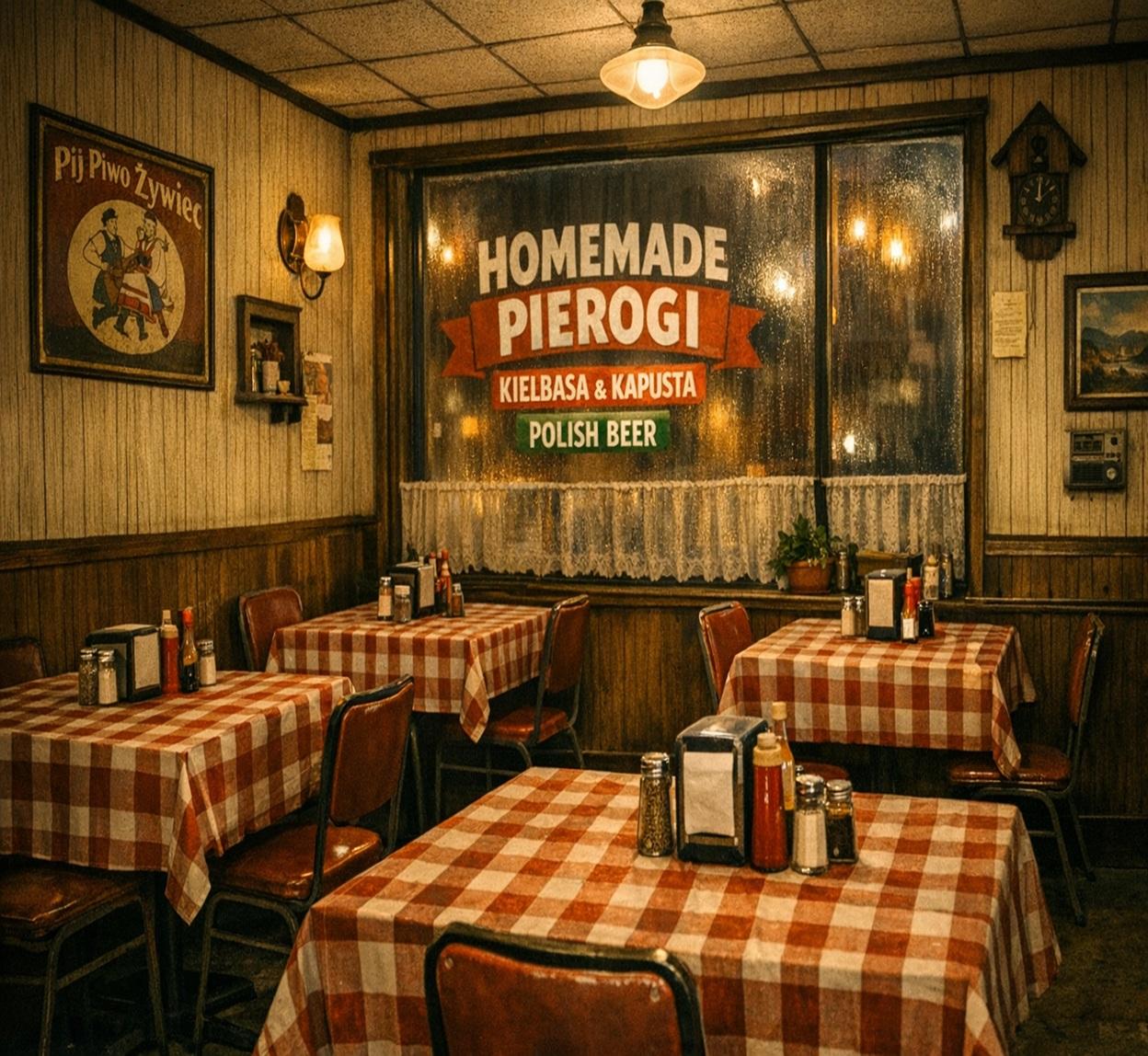
Now picture the empty inside. Opening day wasn’t exactly a smash. Here’s the rest of the interior; the quiet corner tables, the empty seats, the window fogging over as the evening settles, the vintage signs. The noise has retreated to the kitchen. It’s a place that feels both warm and a little worn out.
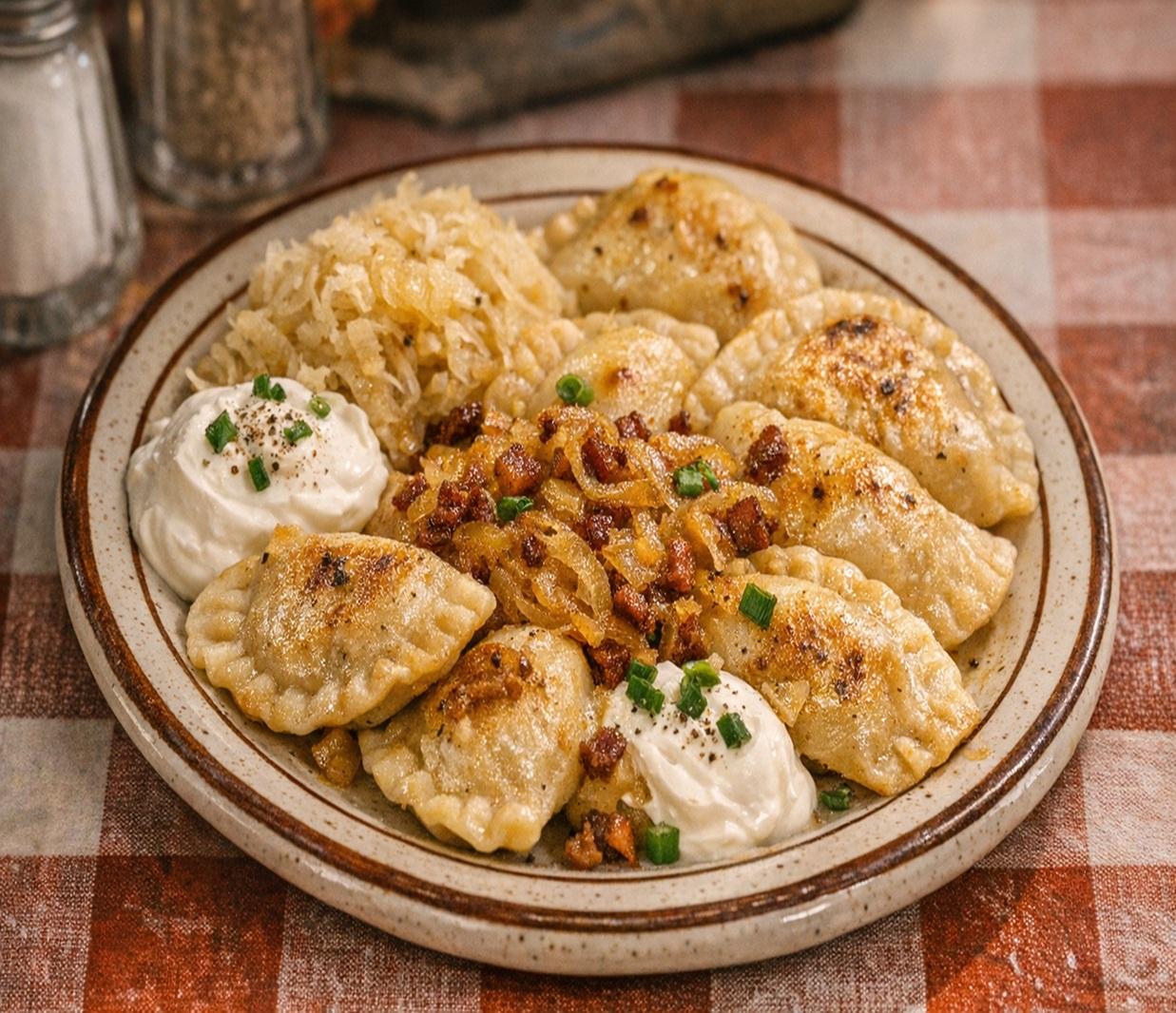
The entire first week, business was slow. Irene cooked and worked the counter, nibbling on the sauerkraut when not overtly eating meat pierogi. Customers trickled in; a few curious retirees, a couple of plant workers on lunch break, and a church lady who bought a dozen potato and cheese and said she'd pray for Irene's success, which Irene suspected was code for "this won't last." This was confirmed by Poni Pwokta when she came in for her daily four pierogi takeout, saying; “Pyeruni byiem.” Once again she adjusted and re-tied her polka dotted babushka while waiting for her order to be filled.
But Albion is a small town where news travels faster than hope.
By the third week, the line included old Polish families, drawn by nostalgia and the smell of butter; Polics immigrant bathroom re-modelers; black families from the west side, curious and amused by the idea of "Polish soul food"; plant workers, grateful for something; anything, that wasn't a burger, and college kids from Albion College, who treated pierogi like exotic cuisine. What they all had in common was the feeling that the low price was right.
The shop became a kind of neutral ground. A place where the town's fractured history; immigrant, industrial, black, White, declining, surviving, could sit at the same table and eat something warm and cheap.
One afternoon, a man named D’Twanney Washington, who worked third shift at the plant, told Irene; "You know, dis place feel lahk Albion use to feel."
She didn't know exactly what he meant, but she understood the tone. Albion had been a place where people arrived with nothing and built something anyway. A place where the factories roared, the neighborhoods bustled, and the future felt like it had room for everyone.
Now the factories were quieter, the houses emptier, the future smaller.
But the pierogi shop; small, stubborn, improbable, felt like a reminder that decline wasn't the only story a town could tell. By week three and one-half, Irene had added a sign in the window:
PIEROGI MADE FRESH DAILY - LIKE BABCIA USED TO MAKE
And beneath it, in smaller letters:
NO, WE DON'T DELIVER. WALKING IS GOOD FOR YOU.
People laughed. People came in. People stayed.
Albion didn't transform overnight. It didn't suddenly grow or prosper or return to its industrial peak. But on Eaton Street, in a building that had been empty for two decades, there was light, warmth, and the smell of onions frying in butter.
And for a town that had been losing pieces of itself for fifty years, that was enough to feel like the beginning of something; not big, not miraculous, but real.
Something that could last.
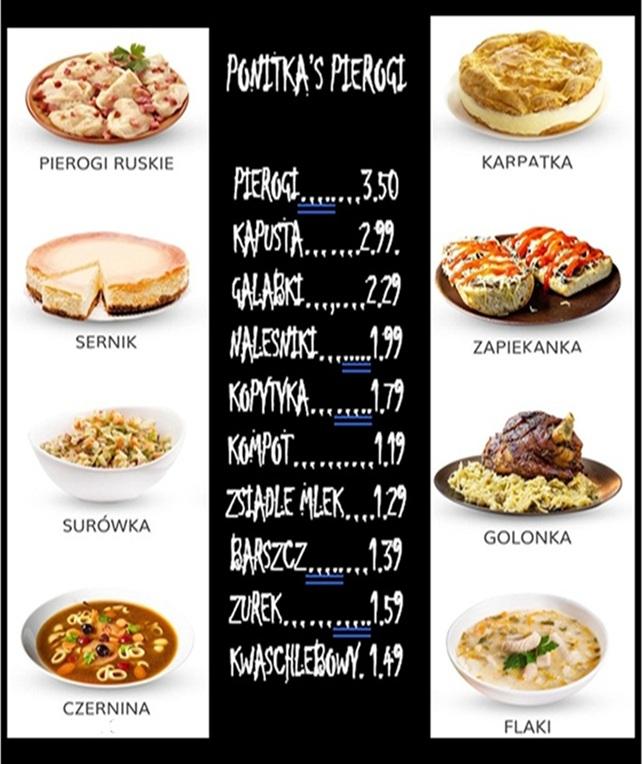
The menu is cheap, rustic, and aggressively Polish.
The décor is garlic, lace curtains, and a giant wooden spoon.
The place is inhabited by a community of immigrants who know exactly what things cost because they work with their hands.
Despite the increased traffic, the “affordably” priced menu, didn’t produce much net profit, maybe a small loss. But Norm reassured everyone, saying; “You lose a little on each transaction, but make it up in volume. Scale like Bezos.”
Wlady shrugged, and Suavimir quit, saying; “I’m going back to re-modeling bathrooms before I lose my entire backlog.” He was good with tools, not with supply chains, payroll, or customer service. He had tried to make the place "properly Polish," which only made it more alien to native born Americans and less appealing to actual Poles, though both groups quietly sacrificed principles at the right price.
Wlady thought; "Uh oh. The kid sees something maybe I didn't."
Suavimir returned to remodeling with a slightly expanded sense of the world. He still liked Poland’s cultural identity, stability, and lack of diversity. He still believed in its cultural cohesion. He still thought that Poles abroad want Polish things. But now he knew that a filled need doesn't automatically translate into business success in the US. But, he had learned something without being broken by it. It was his shot at the big time, and it was structured as risk free for him. The problem was Wlady’s.
"Uh oh. The kid sees something maybe I didn't." captured the quiet, late career humility Wlady had been more or less avoiding. It's not resentment, not envy, not shame. It's the dawning recognition that someone with far less status has a clearer read on the situation than he does. Wlady spent his whole adult life in a system where the answer to every problem was "push harder." Bad shooting night? Keep shooting. Injury? Play through it. Contract year? Grind. Decline? Deny it.
So when the restaurant started to wobble, his instinct is to fight the wobble, not step back and reassess. Ponitka decided to be aggressive and add some value. Polish kids' games outside, the kid game aspect just like Chuck E Cheese. He adds a "Traditional Polish Ring Toss"; which is just ring toss, but with a sign explaining it's Polish; a wooden goat on springs. No one knows why it's Polish, but Norm considers it to be "authentic."; a giant painted cutout of a 19th century cavalryman with a hole for kids to put their faces through.; a "Polish hopscotch" board with numbers that don't correspond to any known rules; a tiny, sad merry go round that plays a tinny accordion loop; and for the piece de resistance another scene with cutouts, this one purportedly containing the bodies of the founder and his mother.