

Hunger Hacks by Donald Lewis - HTML preview
Download the book in PDF, ePub, Kindle for a complete version.
These statements have not been evaluated by the Food and Drug Administration (FDA). The products mentioned on this site are not intended to diagnose, treat, cure or prevent any disease. Note that the contents here are not presented by a medical practitioner, and that any and all health care planning should be made under the guidance of your own medical and health practitioners. The content within only presents an overview based upon research for educational purposes and does not replace medical advice from a practicing physician. Further, the information in this manual is provided "as is" and without warranties of any kind either expressed or implied. Under no circumstances, including, but not limited to, negligence, shall the seller/distributor of this information be liable for any special or consequential damages that result from the use of, or the inability to use, the information presented here. Do not follow if you are pregnant or nursing.
Brought to you by
Chapter One: Why Gaining Control Over Your Desire To Eat Matters...5
Why Do We Experience Hunger?.................................................8
Why Control Hunger?.................................................................9
Curbing Hunger.......................................................................11
Eat More Protein..................................................................12
Don’t Wait Until You’re Starving To Eat...................................12
� C
� hapter 1 Key Points:........................................................13
Chapter Two: Hunger Triggers.....................................................14
Hormones..............................................................................15
Sugars (Carbohydrates)...........................................................16
Lack of Sleep..........................................................................17
Gut Health..............................................................................18
Stress and Anxiety..................................................................18
Dehydration............................................................................19
Boredom................................................................................20
Not Being Active......................................................................20
� C
� hapter 2 Key Points:........................................................21
Chapter Three: Hunger Hormones................................................22
Your Hormones.......................................................................23
Ghrelin................................................................................23
Leptin.................................................................................24
Cortisol...............................................................................24
Why and How to Control Your Hormones....................................24
� C
� hapter 3 Key Points:........................................................27
Chapter Four: Sleeping and Reducing Stress..................................27
How Does Sleep Affect Hunger?................................................29
How Can I Sleep Better?..........................................................31
Stress: Why and How to Reduce It............................................33
Chapter Five: Dehydration and Gut Health.....................................39
The Power of Gut Bacteria........................................................40
How To Have Healthy Gut Bacteria Levels...................................42
Whole grains....................................................................42
Fruits and vegetables.........................................................43
Nuts and seeds.................................................................43
Fermented foods...............................................................43
If nothing else works and you notice that your gut bacteria may be out of whack consider buying some probiotics...................44
Foods that are bad for good bacteria....................................44
Drink More Water!...................................................................45
� C
� hapter 5 Key Points:........................................................47
Chapter Six: Boredom and Not Being Active...................................47
Do You Eat Out of Boredom?.....................................................49
Notice when you eat out of boredom. ..................................49
Address the problem and make a plan to avoid the triggers. . .50
Find something to distract you on a regular basis. ................50
Learn to be bored! ............................................................51
Break the automatic behavior.............................................51
You Have to Move!..................................................................52
What Should You Do?..............................................................53
� C
� hapter 6 Key Points:........................................................56
Final Thoughts...........................................................................57
References:...............................................................................58
Chapter One: Why
Gaining Control Over Your
Desire To Eat Matters
Everyone knows you have to eat less to lose weight.
The mistake most people make is thinking that has to involve suffering.
Forcing yourself not to eat might work for a few days or even a few weeks. But eventually, you get sick of suffering and give in to the cravings.
This book helps you conquer the root cause of why most diets let us down - hunger.
You’re going to discover how to silence hunger so that your body isn’t constantly nagging you for food.
● Do you ever crave food shortly after you’ve eaten?
● Do you finish the food on your plate even when you know you’ve had enough to eat?
● Do you ever get out of bed in the middle of the night to eat?
● When you crave certain foods, does it seize control of your mind and dominate your thoughts?
● Would you like to break this addiction and the feeling of helplessness you have with food forever?
If you answered “yes” to any of these, Hunger Hacks can help you.
When we decide to lose weight, we often wake up one morning thinking this is it; this is the time I will finally reach my fitness goals.
But a few weeks later, once that motivation subsides, it leaves space for doubt and, quite frankly, laziness.
What happens to us next?
Without the initial motivation we had when we first started making a change, we lose our desire to track what we eat, how often we eat, and how much we eat.
In other words, we give in to hunger.
If you ever felt extremely hungry and unwilling to stick to your diet after a few weeks of adopting a new healthy lifestyle, you’ve probably experienced this.
It sucks, and it’s demoralizing.
And more often than not, it takes us a VERY long time to build up the motivation to take another crack at getting in shape.
What if there was a way to trick yourself into avoiding repeating the same mistakes over and over again when you begin your next diet or lifestyle change?
Great news: You can do just that!
We’ll be exploring ways you can gain control of your appetite, so you no longer feel like eating dominates your life.
It’s pretty simple: any weight loss plan, whether it is the Atkins diet, the Ketogenic diet, or even becoming vegan, will only help you in your weight loss in the long term if you learn how to understand and control your hunger.
You eventually run out of willpower and will give in to the desire to eat.
Do not get me wrong; you need to eat well-balanced and nutritional meals for proper weight loss (I will never advocate starving yourself or eating dramatically fewer calories than you should).
However, you want to learn how to differentiate between feelings of hunger and cravings that arise even when you are not hungry, but rather bored or lacking self-control.
Why Do We Experience Hunger?
Before we go in-depth and explore ways to control hunger, you must understand why you feel hungry.
In other words, how do you know when you are hungry versus when you have a craving, and what do those cravings mean?
Living creatures survive through the consumption (or production, such as plants do) of fuel. Human beings use energy consumed through food to undertake all functions of life; breathing, thinking, walking, and just about anything.
Our hunger cues tell us just this: in order to continue surviving, you need to consume more energy.
When we consume too much of this energy, which we measure in terms of calories, our body deals with the extra energy the only way it can: it stores it.
This occurs in the form of fat where our body takes the extra fuel and converts it to glycogen.
When you have access to too little fuel, such as when you have depleted your glucose stores, your body is forced to get fuel from the stored energy.
Remember in school when you learned about bears and hibernation?
Bears need to eat to put on high amounts of fat for winter to stay alive; the way their fat is stored is the same for humans.
As you know, we do not hibernate so we don’t need to have as much extra fat.
Why do we keep on eating more than we should?
Shouldn’t we have a mechanism that tells us to stop eating when it is enough to stop gaining more weight than necessary?
We do; it’s a hormone called leptin.
This hormone is stored in your fat cells, and your body becomes less responsive to it as you gain more fat and ultimately approach obesity.
Many overweight individuals have difficulty reducing their food intake if they eat according to their hunger cues, as these can often be deceiving.
This is why learning how to understand and control your hunger is key when trying to lose weight. Simply put, only eating as much as you need to not be full may not work for weight loss due to this leptin resistance.
You should focus on getting the right nutrition in the right amount by controlling your food intake.
You can do that by calculating your macronutrients (proteins, fats, and carbohydrates) and your caloric intake.
You may think that hunger is a survival cue we have developed over the past thousands of years to stay alive and should not be messed with.
However, the previously discussed concept of leptin resistance should be enough to prove to you otherwise.
Although thousands of years ago, this cycle functioned perfectly to tell us when to eat and when to stop eating, the way we eat food as human beings has gravely changed over the past few decades.
Let’s face it, most of us buy our food from grocery stores.
It’s rare that we hunt or grow our own food.
The food we eat nowadays tends to be much more processed than what we used to eat in prehistoric times. What implications does this have?
Well, the way we eat and the foods we eat are completely different and have a different effect on our body and our hunger cues.
Our ancestors would hunt for hours or even days to eat, and they were used to fasting for long periods as food was sometimes scarce.
Now we have access to food whenever we need it (or want it!).
When we feel like having a croissant, we can head to the nearest Starbucks. Or, for a quick pick-me-up, we can hit McDonald’s and have food without leaving our car seat.
The impact of this is severe: we have forgotten what it feels like to be hungry!
Think about it, when was the last time you felt your stomach grumble?
How long were you able to ignore it before you had to reach for food?
Most likely not very long, which is typical of most people in developed nations.
We have become accustomed to fulfilling our feelings of hunger the second they appear.
On top of this, we now have a tough time understanding whether we are truly hungry, are simply bored, or are craving something sweet or salty.
Learning how to control hunger is at the root of all long-term
weight loss.
The truth is that hunger, or a lack of understanding of what hunger really feels like, is at the root of a lot of weight gain (1).
If you do not know what hunger really feels like, how are you supposed to know when or what to eat?
In fact, many studies show that hunger is the most significant predictor of weight change.
There is no way to lose weight and keep it off if you always feel hungry.
If you have to force yourself to eat less to lose weight, you eventually run out of willpower and gain back all the weight you lose.
You want to avoid that.
We will look at exact hunger triggers in much more depth in the upcoming chapter, but for now, let’s focus on a few quick and easy things you can start doing right now to keep hunger in check.
Eat More Protein
Eating more protein will bring a higher amount of satiety which has been proven to reduce overeating.
The more protein you eat, the fuller you feel, and the less likely you are to overeat (2).
Don’t Wait Until You’re Starving To Eat
It’s pretty simple; if you’re hungry, you are much more likely to give in to the temptation of foods that give you quick energy.
Think about it, do you crave a salad when your stomach grumbles?
Most likely not.
I’d bet that when you are extremely hungry, you crave food that is absolutely horrendous for you.
I’m talking about fast food, junk food, soda… you know what I mean.
Do you know why we do that?
When you're REALLY hungry, your body wants something that will give you energy fast and easily.
That usually means empty carbs that are easy to break down and digest.
Making sure you do not reach this point of hunger (where you put aside everything you know about healthy eating and simply go for the quickest energy source possible) is the key to avoiding junk food binges.
To really understand how to control hunger, you need to first understand hunger cues and triggers.
We’ll talk more about that in the following chapter.
� �Chapter 1 Key Points:
● Our hunger cues tell us just this: in order to continue surviving, you need to consume more energy.
● Learning to control hunger is at the root of all long-term weight loss.
● The more protein you eat, the fuller you feel, and the less likely you are to overeat.
● If you’re hungry, you are much more likely to give in to the temptation of buying a snack that gives quick energy.
● Making sure you do not reach a state of hunger where you put aside all dieting tips and simply go for the quickest energy source possible is the key to avoiding junk food binges.
Chapter Two: Hunger
Triggers
There are different hunger cues and triggers that make you want to eat and/or overeat.
Throughout this chapter, we will be looking at hunger triggers that you can work on to better control your hunger and, ultimately, your weight loss.
There are eight hunger triggers we’re going to focus on: 1. Hormones
2. Sugars (or carbohydrates)
3. Lack of sleep
4. Gut health
5. Stress and Anxiety
6. Dehydration
7. Boredom
8. Inactivity
This chapter is merely an introductory chapter to each of the triggers.
We will be looking at a quick overview, but will not address the solutions. Instead, we will discuss each hunger trigger in more depth in separate chapters.
Hormones
It is widely known that hormones can wreak
havoc on your body. They can put you in a
bad mood, drain your energy, and make
you gain weight.
This one is especially true for women as
their menstrual cycles also impact the
amount of water they retain, how much
they deal with bloating, and much more.
Hormones found in the birth control pill can
also trigger serious weight gain, which our female readers should keep in mind.
Our bodies produce two hunger hormones, one of which we have already discussed; leptin, and the other, which is ghrelin. Whereas leptin decreases your appetite, ghrelin increases it.
We have already discussed leptin resistance; however, ghrelin is just as important. It is released in your stomach and signals that you are hungry and gives you the cue that you need to eat.
There is less ghrelin in obese people and more in those who are underweight. However, this is only one factor that impacts your hunger levels; there are many more.
Sugars (Carbohydrates)
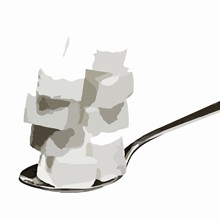
Sugars and how they are processed in your
body are closely linked to hormones.
How sugar is metabolized involves the
hormone insulin, which also plays a major
role in your hunger levels, fat storage, and
your body’s fat-burning capacity.
This is not the worst part of sugar and its
impact on hunger levels...
Unlike other foods and macronutrients, sugars also evoke a feeling of happiness (eating sugar releases endorphins, the same hormone released when using highly addictive pain medication, for example).
That feeling of happiness makes sugar a very diabolical substance.
Eating sugar fuels weight gain and makes you want to eat more even when you are not hungry at all, making you feel great while doing so.
That makes sugar extremely addicting.
Sugar is also something added to many foods. Even foods you wouldn’t expect to contain sugar, such as tomato sauce, quickly become unhealthy when you buy a brand full of sugar and empty calories (calories with very little to no nutritional content).
That’s why you always need to keep an eye on food labels when you shop for groceries. Food corporations LOVE sneaking sugar into everything.
Lack of Sleep
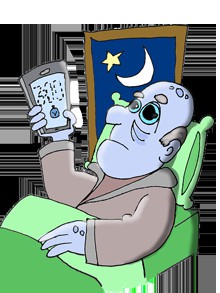
Sleep is good for you. You already know
that, but a surprising amount of people
don’t give proper sleep the attention it
deserves.
It’s something you must focus on when
you're trying to get in shape.
Many studies show that sleeping too little
may negatively impact your weight loss; in
other words, people trying to lose weight
who sleep more are also more likely to lose
weight (or to lose more weight) than those
who sleep less than six hours every night
(3).
Other studies also document that poor sleep has been linked to a higher BMI and more weight gain among other things (4); shorter sleep has been linked to an increased likelihood of obesity of as much as 55% for adults who sleep less than six hours (5)!
Poor sleep affects your appetite too as your body makes up for the missing energy via food.
Additionally, poor sleep sabotages your weight loss efforts due to its impact on ghrelin, leptin, and cortisol (the stress hormone), which is also linked to an increased appetite.
Sleeping enough is something you can’t overlook.
Gut Health
Gut health is another factor that can trigger
hunger.
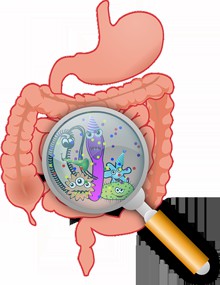
The bacteria in your gut are involved in your
metabolism (how your body uses fuel),
hunger, and digestion.
An imbalance in your gut bacteria can lead
to inflammation, and higher blood sugar
levels as your gut extracts fewer nutrients
and less energy from the food you
consume.
Inflammation and high blood sugar are
linked to higher chances of becoming obese.
Making sure your gut bacteria is well-balanced and healthy is key for long-term weight loss. Your gut health also impacts your appetite (6), so it’s important to keep it balanced to ensure that you can exert as much control over your hunger as you physically and mentally can.
Stress and Anxiety
Think about this: when you’re stressed
about something, do you usually feel like
grabbing a celery stick to make those awful
feelings disappear?
Or, do you feel like eating your body
weight’s worth of chips?
9 out of 10 times, we’re ripping into a bag
of chips.
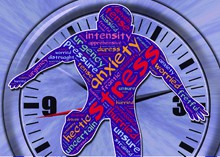
When we feel a lot of stress or anxiety, our natural response is to look for a solution.
We go for sweet or salty foods that trigger a dopamine (happy hormone) response. These foods tend to be fattening as they are packed with calories, albeit empty ones.
Stress also triggers cortisol, a hormone that has been linked to weight gain (7) and many other problems, such as high blood pressure, type 2 diabetes, osteoporosis, tiredness, impaired brain function, and infections among others.
Anxiety is also likely to lead you to seek out comfort foods which are usually unhealthy and more likely to cause weight gain than other kinds of food.
Dehydration
Dehydration is another hunger trigger.
When you’re thirsty, your body can sound
the alarm that it wants more water.
The problem is this hydration signal
can feel a lot like hunger.
Next time you feel hungry right after a
meal, try sipping on some water for a few
seconds and see how you feel.
If you don’t feel hungry anymore, then you know it was just slight dehydration.

Boredom
We discussed why we eat unhealthy comfort
food when we are stressed.
The same is true for when we are
bored: we seek a hit of dopamine.
Think about the last time you were just
laying around the house bored out of your
mind.
Did you reach for a snack? This may be
because your body wanted to light up the pleasure centers of your brain with some of that happy hormone.
Not Being Active
Your hunger can also be triggered when you
are not active.
If you hit the gym multiple times a week
you may have noticed that your rest days
are usually the ones where you feel super
hungry.
There are a few reasons for this:
Laying around can make you eat more
because you’re bored, making you turn to
food as a form of entertainment.
Additionally, when you are inactive, you may not be as conscious of how much food you are consuming, leading to overeating. This is especially true if you’re constantly snacking throughout the day.
Hormones also come into play…
When you’re sedentary, your body produces less leptin, which regulates your appetite and tells your body when it has had enough to eat. At the same time, your body produces more of the hormone ghrelin, which increases your appetite and makes you feel hungrier.
When you’re active, your body produces more leptin and less ghrelin, so you feel full faster and eat less.
This should have given you a good overview of the eight most common hunger triggers.
These are much more complex and we’ll get into more details for all of these to make sure that you’re equipped with the right tools to start
controlling your hunger and cravings.
Let’s get into it!
� �Chapter 2 Key Points:
● There are eight areas that trigger hunger:
1. Hormones
2. Sugars (or carbohydrates)
3. Lack of sleep
4. Gut health
5. Stress and Anxiety
6. Dehydration
7. Boredom
8. Inactivity
● We don't always eat because we're hungry - something we eat to get a hit of dopamine
Chapter Three: Hunger
Hormones
In the previous chapters, you were introduced to the very important roles played by various hormones in your body.
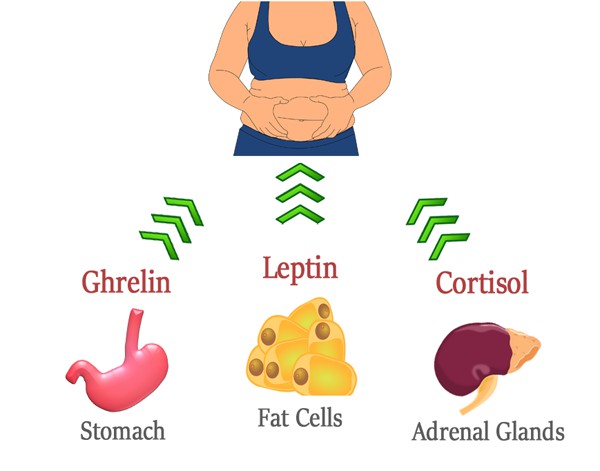
From ghrelin and leptin, which are directly involved with hunger and satiety, to cortisol, which influences your cravings, each hormone plays a different role and is very important to understand and keep balanced to lose weight efficiently and to keep it off.
Throughout this chapter, we will take a closer look at how hormones work to make you crave certain foods.
We’ll also cover how to keep these hormones in check and well-balanced.
Your Hormones
Ghrelin
Ghrelin is produced in your stomach and increases your appetite.
Ghrelin also stimulates your body to release growth hormones, closely linked to obesity. In fact, obese adults are consistently seen to have lower growth hormone levels than healthy-weight adults.
Growth hormone breaks down fat and stimulates muscle growth.
Ghrelin promotes fat storage and has been proven to have some effect on the amygdala, the area in the brain involved in reward processing, among others. (8)
When you diet, your ghrelin levels increase. This is why many find it difficult to lose weight and to keep it off when they do so using diets only and no physical activity.
Leptin
Leptin is produced by your fat cells, and as we discussed previously, leptin is the hormone that is secreted when you are full or when your body has received enough calories not to feel hungry anymore.
As we have discussed this hormone in much more detail in the previous chapters, we will not go over it again here.
Cortisol is created by the adrenal glands attached to your kidneys and is the hormone that is secreted when you are stressed.
It is a steroid hormone that controls your blood sugar levels; therefore, it regulates your metabolism via several processes. As this hormone is closely linked (in other words, responsible for) the regulation of your metabolism, a disbalance in its levels can cause weight gain.
Why and How to Control Your
Hormones
There are a few ways to ensure that your hormones are well-balanced.
A low-carb diet is an excellent way to keep hunger hormones in check.
Studies mention that getting enough sleep is crucial, something we’ll explore more a little later, as not getting enough sleep influences the levels of hormones in the blood and, therefore, one’s level of hunger.
But that’s not the only way.
To improve leptin sensitivity, you can modify your diet. For example, avoiding inflammatory foods should be a priority.
Foods that cause inflammation, such as sugar-filled sodas and trans fats, are more likely to make you less receptive to leptin.
You can boost your leptin sensitivity by eating more anti-inflammatory foods like salmon or fatty fish.
Exercise will also help you regulate your leptin response as you stop feeling hungry while training and boost your body’s receptiveness to the hormone.
Getting enough sleep is also essential because sleeping too little increases your appetite.
Another hormone also comes into play when we discuss hunger: insulin.
We briefly touched on insulin in a previous chapter but now let’s take a closer look at it.
Insulin is the hormone in charge of regulating your blood sugar.
The problems in this cycle occur at different stages.
1. When insulin is in the blood, your body struggles to burn fat. This is why many trainers and doctors will encourage you to train in a fasting state to burn more fat.
2. Many foods we consume are now packed with sugar, even when it is unnecessary. We do not notice how often this insulin cycle is on; therefore, we become less and less responsive to the hormone. In this case, diabetes can occur (the second type).
3. As the cycle is continuously ongoing and insulin spikes hunger, you always feel hungry, which hinders you from reaching your weight loss goals.
You can control your insulin levels by controlling what you eat.
By limiting the amount of sugar you consume and reducing your sugar intake (although, ultimately, you should be trying to cut out all sugar from your daily food consumption.)
You can also control the number of times you have an insulin response and how often you feel hungry again.
If you always feel hungry because of this insulin spike, you are much more likely to overeat, as hunger cues are difficult to differentiate from random cravings.
You can reduce hunger spikes when you are not actually in need of more calories by keeping your hormones in check.
Eating the right foods and avoiding inflammatory ones can tame your leptin levels.
By reducing your processed carbohydrate intake and cutting out added sugar, you can control insulin spikes that keep you hungry and stop you from burning fat while you work out.
Balancing your hormones is not the only way to have control over your hunger.
There are many other factors to consider, which will be discussed in the upcoming chapters.
● Hormones are directly involved with hunger and satiety and influence your cravings.
● Ghrelin promotes fat storage and has been proven to have some effect on the amygdala, the area in the brain involved in reward processing, among others.
● You can boost your leptin sensitivity by eating more anti-inflammatory foods, such as salmon or fatty fish.
● Exercise will also help you regulate your leptin response as you stop feeling hungry while training and boost your body’s receptiveness to the hormone.
● You can control your insulin levels by controlling what you eat.

Chapter Four: Sleeping
and Reducing Stress
It’s widely known that sleeping helps you reduce stress.
That’s a big deal if you want to avoid putting on extra weight.
Reducing stress controls random feelings of hunger even when you do not need more food according to your daily caloric needs.
Understanding the importance of getting enough sleep and how to improve your sleep cycle is vital to lose weight effectively and keep it off in the long term.
Staying well-rested also helps you control cortisol levels.
Making sure you keep your cortisol and stress levels as low as possible is vital if your goal is to regain control over your hunger and stop giving in to cravings whenever they arise.
How can you improve your sleep, and why is it important to sleep more than six hours daily? And, how can you keep your cortisol levels low?
That’s what we’ll be talking about in this chapter...
How Does Sleep Affect Hunger?
The amount of sleep you get ultimately impacts how much food you want to eat and what kind of food you want to consume.
More specifically, we found this study to explain these phenomena:
“...sleep deprivation significantly decreases activity in appetitive evaluation regions within the human frontal cortex and insula cortex during food desirability choices, combined with a converse amplification of activity within the amygdala. Moreover, this bi-directional change in the profile of brain activity is further associated with a significant increase in the desire for weight-gain promoting high-calorie foods following sleep deprivation, the extent of which is predicted by the subjective severity of sleep loss across participants” (Greer et al., 2013, Abstract).
When you are sleep-deprived, your brain doesn’t respond to ghrelin and leptin as efficiently as when you sleep enough.
You can feel hungry, although you have consumed enough calories to function correctly.
That’s not speculation. Researchers found that sleeping too little positively correlates with a higher risk of obesity.
You must sleep enough to control your hunger and help your weight loss.
Individuals who sleep less than six hours every night also tend to have high glucose and insulin levels.
On certain occasions, these levels can be similar to those of diabetics, even when they are healthy individuals.
When that happens, your fat cells become unable to use insulin correctly, and your body becomes resistant to the hormone. Then your body produces more insulin in response, which ultimately builds fat up.
This can even lead to diabetes.
Since we are talking about energy, let’s look at the impact of sleeping too little on your daily routine.
When you wake up after a long night of sleep fully refreshed, do you notice that you're more productive?
That you can get more done and work more efficiently?
Most likely, yes.
The opposite is also true.
Think about it: your energy is low if you sleep too little. You don’t feel like moving. You’re not in the mood to do much of anything besides sit around and eat.
Finally, sleeping too little is associated with higher cortisol levels and stress. This causes you to overeat and eat comfort foods that are usually high in fats and sugars.
So let’s talk about ways to increase your sleep quality and the hours you get.
How Can I Sleep Better?
Sleeping longer does not mean you’re sleeping better.
Even if you are laying in bed at ten in the evening, ready to sleep, if you take three hours to fall asleep, it is counterproductive and, quite frankly, a waste of time!
One of the first changes to make to your routine is to start sticking to a sleep routine that works best for you.
If you try sleeping at the same time every night and waking up every morning at the same time, you will soon find that your body gets used to it and functions best when you keep this routine.
Try waking up at the same time for seven days in a row. You will most likely wake up without an alarm at the same time on the eighth day!
Another change you can make is to use calming drinks such as chamomile tea before you sleep.
These can be great at making you tired enough to fall asleep.
A warm bath or shower before bed can also help.
For extra relaxation, add Epsom salts to your bath. It will help release tension in your muscles.
If you struggle to fall asleep most nights, ask yourself why that is the case. For example, are you staying awake because you took a nap in the afternoon?
Did you drink a cup of coffee after lunch?
Maybe you are stressed about something happening in your personal life?
Find out what's hurting your sleep and correct it.
Also, pay attention to your sleeping environment:
● Is it too warm or too cold?
● Are your mattress and pillow comfortable?
● What about excessive noise?
Aim to sleep at least seven hours every night. Of course, you may not be able to if you have a family or a very early start for your job but try your best.
This will without a doubt help your weight loss efforts! With this in mind, it’s also important that we touch on stress and how powerful it is.
Stress: Why and How to Reduce It
A lot of different situations can trigger stress.
It can come from work, personal relationships, money problems, or health problems.
You can even stress yourself out by dwelling on things from the past that no longer affect you!
It’s important to reduce the stress you feel and put your body through if you want to achieve sustainable and successful weight loss.
Why should you do that? And how?
When you’re stressed out you eat more and experience food cravings that are even more rabid than usual.
Here’s how it works:
When you're stressed out your body wants to make you feel better.
The simplest way it does that is with “comfort eating.”
Rarely is the food your body craves a salad or a protein bar.
You almost always reach for fatty and sugary foods that give you quick energy and a quick endorphin rush.
If you want to lose weight, you need to ensure that your stress levels are not too high and do not affect your hunger levels.
Reducing stress can be done in several ways: One of the best ways to reduce it is to prevent stress from occurring.
For example, when you see that you have big deadlines coming up for work, making sure to do it on time and avoiding procrastination is a great way of reducing the stress that you will otherwise feel later on when you sit on your couch and realize that you must get all the work done overnight.
Another way to reduce stress which may be unpopular to many of you, is to reduce the quantities of caffeine and alcohol that you consume.
Caffeine is a stimulant, making you more awake and alert. After all, that is why many of us use coffee in the morning!
Alcohol is a depressant when consumed in large quantities but a stimulant when consumed in small amounts.
Alcohol makes us tired when we drink too much and increases our stress levels when we only drink a glass or two of wine.
Drinking a glass of wine to relax at the end of the day may not be the best idea as it may stress you out even more!
Consuming alcohol also has negative effects on weight loss for many reasons:
● It is full of empty calories.
● It is technically a poison and, therefore, can hurt your health, especially your liver, when taken in too high amounts.
● Having too much can lead to alcoholism.
You should also avoid consuming nicotine.
Nicotine is also a stimulant and contributes to higher levels of stress.
Reaching out for that cigarette may feel calming at first, but the stress following the cigarette is likely to be even greater.
A fantastic way to REDUCE stress is to do more exercise.
Moving and getting your heart pumping releases endorphins and makes you feel happier. It also helps you eliminate the extra cortisol roaming around your body (8).
An easy way to make exercise part of your daily routine is to find an activity you enjoy that enriches other areas of your life.
● If you want to get better at calming your mind - do yoga
● If you want to get good at fighting - do boxing or Brazilian Jiu-Jitsu.
● If you want to connect with nature - start hiking or mountain biking
Let’s be honest; running on a treadmill daily is a total bore.
Weight lifting is exactly fun either.
Activities that help you stay in shape, develop new skills, keep you engaged, and give you a feeling of accomplishment make working out fun.
You can also use exercise to socialize and meet new people.
Find a local sport to participate in.
Did I mention that exercising also helps you sleep better?
Doing sports can help you have a more fulfilling night of sleep. As we discussed, sleeping is vital for weight loss.
It’s also vital to reduce stress both mentally and physically. By sleeping more, you allow your body to rest up and heal any part that may need healing and give your brain the rest time it needs.
However, stress may also impede sleep, or you may not be able to sleep because you feel that you have other things to do.
It becomes a vicious cycle.
If that’s something you deal with, you must clear your to-do list to have the mental clarity and mental peace needed to sleep properly.
A ‘back to the basics’ way of dealing with stress is simply managing your time well.
Sometimes life puts us in situations that make it hard not to stress out.
If you notice that the stress you are feeling is mostly due to poor time management, sitting down with your planner and planning out every hour of the week to get all tasks and responsibilities done may just be the right way for you to stop feeling stressed.
For example, I like to use a calendar to note down things I need to get done over the week, the meetings and appointments I have, and the deadlines I need to meet.
I plan my training sessions and keep a few evenings free to meet friends. This way, I get to live a balanced and relatively stress-free life.
You should also remember that accumulated stress may leave you feeling ill and even burned out.
That’s why it’s important to respect yourself, and your limits as doing otherwise can hold you back!
We have now reached the end of this chapter. You should now understand how important sleep is and how to reduce your stress levels.
You should be seeing the links between all of the hunger triggers we have been discussing:
● Do you understand how hormones, sleep, and stress are all interconnected and impact your hunger levels?
● Do you understand how you can control this to reach your sustainable weight loss goals?
Next, we’ll move on to the next part of understanding hunger triggers: dehydration and gut health.
Insider-training.fitness� �Chapter 4 Key Points:
● Reducing stress controls random feelings of hunger even when you do not need more food according to your daily caloric needs.
● Making sure that you keep your cortisol and stress levels as low as possible is important if your goal is to regain control over your hunger and stop giving in to cravings whenever they arise.
● The amount of sleep you get ultimately impacts how much food you want to eat and what kind of food you want to consume.
● Individuals who sleep less than six hours every night also tend to have high glucose and insulin levels. On certain occasions, these levels can be similar to those of diabetics, even when they are healthy individuals.
● Sleeping longer does not mean you’re sleeping better.
● If you try sleeping at the same time every night and waking up every morning at the same time, you will soon find that your body gets used to it and functions best when you keep this routine.
● Use calming drinks such as chamomile tea before you sleep.
● For extra relaxation, add Epsom salts to your bath. It will help release tension in your muscles.
● Find out what's hurting your sleep and correct it.
● It’s important to reduce the stress you feel and put your body through if you want to achieve sustainable and successful weight loss.
● Cutting back on caffeine, nicotine, and alcohol will reduce your stress levels.
● An amazing way to REDUCE stress is to do more exercise.
● Activities that help you stay in shape and develop new skills keep you engaged and give you a feeling of accomplishment, make working out enjoyable.
Chapter Five:
Dehydration and Gut Health
In the previous chapter, you were introduced to the power of your gut bacteria when it comes to hunger levels and, ultimately, weight loss.
We talked about how being slightly dehydrated can confuse your brain into thinking that you are hungry when, in reality, you simply need to increase your water intake.
We’ll take a closer look at dehydration.
We will also examine how gut bacteria can influence your weight loss through different pathways.
The Power of Gut Bacteria
Before we go into depth about how powerful your gut bacteria are, let’s talk about what they are.
Although we usually associate bacteria with something bad or something we need to wash away, bacteria is sometimes good to have.
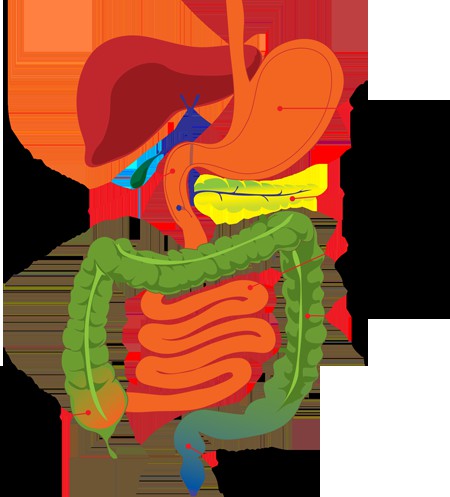
Your intestines are lined with good bacteria which is needed to produce certain vitamins and to protect your body from becoming sick (9).
Although certain bacteria will make your body sick, the ones found in your gut and produced by your body are vital for your health.
These bacteria also affect how the food you eat is digested.
The gut bacteria found in individuals who are obese tend to be different from those who are at a healthy weight.
Studies have shown that when the gut bacteria found in obese people are put into the gut of mice, the mice get fat. (10,11).
Crazy, right?
Studies have also shown that some gut bacteria can digest certain foods while others cannot.
The gut bacteria you have may also influence how fats are absorbed and may impact how fat is stored in the body.
This research shows that gut bacteria are much more involved in weight management than we think.
Gut bacteria is in charge of digestion and how your body takes in nutrients and stores them. That’s why it’s so crucial that your gut bacteria levels be well balanced.
Your gut bacteria significantly impact your hunger levels as well.
When you are sick and cannot digest properly, you may feel less hungry, depending on the bacterial infection you have.
Your gut bacteria can also cause inflammation. Inflammation can contribute to weight gain. (12)
That’s not all...
Your gut bacteria can even influence the hunger hormones we discussed earlier: leptin and ghrelin.
Your gut bacteria can influence the number of hormones being produced and secreted. That impacts how hungry you feel or how full you are after you eat (13).
Now that we know that gut bacteria play a serious role in hunger levels, what can you do about it?
Bacteria Levels
Gut bacteria are in charge of digesting food, so it makes sense that the best way to have good bacteria levels is to control what you eat and in what quantity.
Certain foods are going to be well-received by your bacteria.
Others are more likely to leave you with an upset stomach and an imbalance that can significantly confuse your hunger hormone system.
Let’s look at the foods you should be indulging in.
Whole grains
These are grains that have not been modified or refined; therefore they are eaten in their (almost) purest form.
These are usually high in fiber, which you should aim for as gut bacteria love fiber and thrive on it!
You can find whole grains in a few different items, from whole-wheat bread and pasta to whole-grain rice.
Although the taste is remarkably different, it is an easy change that most get used to quite quickly. Instead of eating white pasta with pesto, simply switch it up for whole grain; most people barely notice any difference after they switch to whole-grain alternatives (14)!
These are the Earth’s gifts to us! We all know that we need to consume fruits and vegetables to have the right vitamins and minerals, yet many don’t eat enough of them. They are packed with fiber and are great for gut bacteria (14).
Nuts and seeds
Nuts and seeds are great but be careful about the amount you eat.
You should weigh them to make sure that you do not overeat them.
Nuts are very high in protein and are a great healthy snack. However, they are also very high in fat and are easy to overeat.
For seeds, try sprinkling a few seeds over your salad or on your oatmeal. They add a nice crunch and are full of vital nutrients that can be hard to consume otherwise (15).
Fermented foods
Try to eat more “living” foods and drinks like yogurt and kombucha throughout the day.
These are great sources of probiotics and beneficial bacteria that help reduce inflammation and the growth of harmful bacteria in your intestines (17).
Other fermented foods include kefir, kimchi, and sauerkraut.
If nothing else works and you notice that your gut bacteria may be out of whack consider buying some probiotics A healthy and balanced diet is usually enough to get your gut bacteria to thrive.
But sometimes you may need extra help.
For example, if you were recently sick and had to take antibiotics, you may have killed off some of your good internal bacteria.
Buying probiotics may be a great way to boost your body’s production of healthy bacteria.
Foods that are bad for good bacteria
There are also foods you should avoid consuming.
Eating sugary foods can trigger the growth of unhealthy bacteria.
Bacteria thrive on sugar, and by eating too much of it, you are feeding the harmful bacteria that can overrun the good bacteria (18).
As we have already mentioned, sugar is generally something you should attempt to entirely cut out of your diet as it brings little to nothing good to you nutrition-wise and feeds weight gain.
Artificial sweeteners found in products like diet soda and sugar-free syrups or sweets can also kill the good bacteria in your gut (19).
Artificial sweeteners are bad for a variety of reasons, and I suggest you use natural sweeteners instead, such as maple syrup, agave nectar, or honey if you need to use some kind of sweetener.
These are healthier for you and have more to offer than artificially made chemicals, but even with natural sweeteners, you should aim for moderation.
Finally, avoid foods containing unhealthy fats (saturated fats).
You should feel free to consume healthy fats in moderate amounts (such as omega-3s and other healthy fats found in salmon, nuts, and other fatty fish), but try limiting the unhealthy fats.
These contribute to the production of more disease-causing bacteria, and the bacteria we do not want in our guts!
On that note, you should now be an expert on gut bacteria and its impact on hunger and weight loss.
Next, let’s touch on one last topic before we close the chapter: dehydration and hunger.
Drink More Water!
We hear it all the time coming from different people: drink more water!
YouTubers tell us to drink more to have clearer skin, whereas nutritionists tell us to quit juice and drink water to detox.
Well, both are right!
However, water is not only good for clear skin and detoxing. We need it to survive.
There is no way to live without water, as we need it for just about every single process occurring in our body.
Drinking water can help you reduce feelings of hunger.
When your body is thirsty, it tends to send feelings of hunger.
So the next time you feel hungry even though you know you have eaten enough, try drinking a glass of water.
It’s good for you and keeps you thin!
A study showed that over the course of a year, drinking half a liter of water a day can help you lose as much as 2 kilograms of fat (20), and this does not include any sport or dieting. Impressive, right?
The bottom line is that water is calorie-free, accessible in most places, and can help you lose weight without putting in any more effort.
Water helps your body’s general health, which helps you sleep better, feel less stressed, and much more!
Water is needed to keep your gut bacteria healthy as well.
Reaching out for an extra glass of water.
In the upcoming chapter, we will touch on boredom-eating and the impact of not training enough on hunger levels...
● Being slightly dehydrated can confuse your brain into thinking that you are hungry when, in reality, you simply need to increase your water intake.
● The gut bacteria found in individuals who are obese tend to be different from those at a healthy weight.
● Gut bacteria influence how fats are absorbed and may impact how fat is stored in the body.
● Your gut bacteria can influence the hunger hormones leptin and ghrelin.
● Certain foods are going to be well-received by your bacteria.
Others are more likely to leave you with an upset stomach and an imbalance that can significantly confuse your hunger hormone system.

Chapter Six: Boredom
and Not Being Active
Have you ever sat at home watching TV and out of habit reached out for a bag of chips?
And instead of picking out a bowl and serving yourself a reasonable amount of chips did you eat the whole bag?
If this sounds like you I get it, I have been there!
This is common for those of us who struggle with controlling our appetite.
One of the ways we gain weight is through misunderstanding hunger cues. A common fake hunger trigger is boredom.
When you have nothing to do or when you are supposed to be doing something else (in other words, when you are procrastinating), you may feel hungry even if you have already eaten enough.
Knowing when your desire to eat is caused by boredom is an important skill to have!
Do You Eat Out of Boredom?
Think about whether this is a problem you struggle with. Do you often eat out of boredom?
For example, do you often find yourself staring at the fridge when you should be doing something better with your time?
Or do you mindlessly snack at your desk while your mind wanders at work?
Many of us will eat when we are bored or to avoid something.
If you find yourself being ‘hungry’ even when you know you just had a meal and don’t need the extra calories, think about why you’re doing it.
Eating to occupy your mind can be a nasty habit to pick up.
It can result in you consuming hundreds or even thousands of extra calories a day.
Is eating when you’re bored something you do?
If so, there are things you can do to avoid boredom eating: Notice when you eat out of boredom.
Does it happen when you have to work and do not feel like it?
Do you start wanting to eat when you are avoiding certain emotions or certain responsibilities?
Whatever your trigger is, recognize it and realize that this is a behavior you want to change.
Recognizing it is the first step. The next is to make a plan to combat it.
Address the problem and make a plan to avoid the triggers.
If your boredom eating usually begins in the evening after you have had dinner, your plan can be to go to sleep an hour earlier.
If you find yourself bored eating at work, bringing your own healthy snacks that are low in calories can be an option. For example, bring celery sticks and cucumbers. You can snack on this all day if you are worried about missing the feeling of snacking on something while working.
Whatever your triggers are, ensure that once you recognize them, you actively decide to override them with something else, such as taking a walk or making tea instead.
Find something to distract you on a regular basis.
Sometimes we boredom eat simply because there is nothing else to do!
So the solution is to make yourself busy.
Try out a new sport or book club, or find something to do when you usually eat out of boredom.
The key is to find something that you can easily do anywhere so that you can simply take it up when you are about to boredom-eat.
For example, get a game app on your phone.
Or, learn how to knit.
If you find yourself bored eating at work, try to find a routine in which you do not succumb to your cravings.
Learn to be bored!
In a fast-paced world, we tend to want to be productive and always be doing something.
This is not necessary.
You can have days where you just do nothing. Days where you rest and days where you do nothing but daydream.
The important thing to remember is to not give in to the cravings and replace them with something else.
Be mindful of the cravings and acknowledge them but don’t give in to them.
Remember: boredom eating is just another form of emotional eating.
You can also fight off the emotions and stick to the rational side of things. The goal is to find something that will give you the same dopamine rush you seek from eating.
Break the automatic behavior
Eating when you’re bored can turn into automatic behavior.
That’s when it becomes dangerous because you’re not fully in control of your eating.
It becomes a habit that you have to break.
Every time you are about to reach out to your favorite boredom eating food, do something to break that pattern
Go brush your teeth.
Do jumping jacks.
Clap your hands.
Yell.
This small thing can distract you enough to make you realize that you were not really hungry after all.
And as we discussed in the previous chapter, drink some water to make sure you are not simply thirsty.
Let’s move on to our last hunger trigger for this book that’s closely related to boredom: not moving enough.
Not taking part in enough physical activity can trigger your hunger even when you are not really in need of extra calories!
You Have to Move!
If you exercise, you will notice that you are unlikely to be hungry for a while after you train.
So what does this tell us about hunger triggers?
Being active keeps your hunger in check.
Do not get me wrong, I am not saying that you should exercise like crazy to stop being hungry. That can backfire on you and make you want to eat MORE to help your body recover.
Be mindful of your exercise schedule and your hunger levels throughout the week.
Keep in mind that strength training may make you hungrier as it increases your metabolic rate for quite a while, even after you train.
You should also know that you may feel hungrier on rest days for emotional reasons.
When you have an amazing workout, you most likely feel much more inspired to eat something healthy than something unhealthy, as you do not want to ruin the efforts you put into working out.
When you take days off from working out you may be less inclined to stick to your healthy diet and call it a “cheat day.”
What Should You Do?
You need to be more aware of your hunger cues on days when you are resting. When you train, you are more likely to stick to your diet plan and less likely to give in to the temptation of eating snacks.
When you do not train, hunger can be even more intense.
Do not misunderstand me; I am not saying you shouldn’t eat, but rather to make sure to stay on track with your diet in terms of the kinds of foods that you are choosing to eat.
Instead of going for that bacon and cheddar cheeseburger, opt for a healthier option that will not throw you off your diet.
Make sure to schedule your rest days accordingly.
For example, if you know you will be busy on Tuesday because you have deadlines to meet or social events to attend, why not make it your rest day?
It can be a great way to keep yourself distracted.
Of course, this all supposes that you move enough.
If you are hungry all the time, ask yourself why.
In many cases, it is because you do not move enough. If you’re trying to lose weight (and keep it off afterward!), you will need to incorporate some kind of exercise into your lifestyle.
Your diet is indeed 80% responsible for weight loss, but the remaining 20% will come with exercise.
And exercise has loads of benefits for your body, so why would you not do it?
By exercise, I do not mean that you need to be hitting the gym all day every day, but you should try to move at least thirty minutes daily.
You for little tricks that sneak exercise into your daily routine.
● If you have an office job, park your car fifteen minutes away from your house
● Keep a dumbbell next to your couch and do a few curls during commercials
● If you want to go somewhere that’s less than a mile away you can walk instead of drive
Finally, make sure to take progress pictures of your weight loss. This can be really motivating. It can also help you get tons of likes and shares on social media!
I recommend taking a progress picture once a month.
This way you can see the changes physically but do not become obsessed. You will see results as you work towards your goal, I promise.
This brings us to the end of this chapter. By this point, you should know how boredom eating contributes to weight loss and how it is one of the greatest hunger triggers that make us eat even when we are not hungry.
You should be well acquainted with the power of exercise and how it influences your hunger levels.
Simply put, you need to be mindful of your hunger cues!
When you’re lying around not doing anything and hunger bubbles up, question where the hunger is coming from.
Did you not eat enough on the previous day?
Perhaps you need to increase your food intake by a few hundred calories on training days.
Or, maybe you boredom eat because you are avoiding dealing with responsibilities.
Think about it, become aware, and make a plan to change those habits.
You can do it!
� �Chapter 6 Key Points:
● One of the ways we gain weight is through misunderstanding hunger cues. A common fake hunger trigger is boredom.
● Eating to occupy your mind can be a nasty habit to pick up. It can result in you consuming hundreds or even thousands of extra
● Eating when you’re bored can turn into automatic behavior.
That’s when it becomes dangerous because you’re not fully in control of your eating.
● When you have a fantastic workout you most likely feel much more inspired to eat something healthy than something unhealthy, as you do not want to ruin the efforts you put into working out.
● When you take days off from working out you may be less inclined to stick to your healthy diet and call it a “cheat day.”
● Take progress pictures of your weight loss. This can be really motivating. It can also help you get tons of likes and shares on social media!
Final Thoughts
Hacking hunger will usually require a combination of the things we talked about here.
For example, you may need to improve your sleep quality, break the habit of eating out of boredom, and adjust your diet.
These are all simple things, so you shouldn’t dread taking on this challenge.
Change can be fun!
And gaining control over your appetite is empowering.
Believe it or not, it’s a skill that will make people envious of you.
Many people can’t eat just half a sandwich for lunch and save the other half for later, or be content with having just a piece of fruit for breakfast.
They literally can’t stop eating until their stomachs are packed full of food.
With Hunger Hacks you can be a “light eater” without suffering and always thinking about food.
You’ll find it’s a lovely way to live.
Resources:
Discover one of the most important things
you can do to support your weight loss and
maximize training, specifically for
beginners! ]]]===> Instant Download
This is Your Chance to Finally Get the Bulletproof Mindset of a Fearless
Warrior!
Download” MegaMindset”
If you enjoy carbs or regularly consume alcohol, this could be the fat loss “secret” you’ve been searching for...
get---Fat Loss Frame Work--- today and enjoy your “NEW” weight loss life
References:
1. https://www.ncbi.nlm.nih.gov/pubmed/23684901
2. https://www.ncbi.nlm.nih.gov/pubmed/17045700
3. https://www.nhs.uk/news/obesity/sleep-affects-weight-loss/
4. https://www.ncbi.nlm.nih.gov/pmc/articles/PMC3632337/
5. https://www.ncbi.nlm.nih.gov/pmc/articles/PMC2398753/
6. https://onlinelibrary.wiley.com/doi/epdf/10.1002/bies.20140007
7. https://www.ncbi.nlm.nih.gov/pubmed/10732263
8. https://www.ncbi.nlm.nih.gov/pmc/articles/PMC3388148/
9. www.heart.org/HEARTORG/HealthyLiving/StressManagement/Fig
Habits_UCM_307992_Article.jsp#.VtTAVhh1bYK
10.
https://www.ncbi.nlm.nih.gov/pmc/articles/PMC3418802/
11.
https://www.ncbi.nlm.nih.gov/pubmed/24009397
12.
https://www.ncbi.nlm.nih.gov/pmc/articles/PMC3829625/
13.
https://www.ncbi.nlm.nih.gov/pubmed/27259147
14.
https://www.ncbi.nlm.nih.gov/pubmed/27616451/
15.
https://www.ncbi.nlm.nih.gov/pubmed/22983848
16.
https://www.ncbi.nlm.nih.gov/pmc/articles/PMC4837298/
17.
https://www.ncbi.nlm.nih.gov/pubmed/23849454
18.
https://www.ncbi.nlm.nih.gov/pubmed/27998788
19.
https://www.ncbi.nlm.nih.gov/pubmed/28199845
20.
https://www.ncbi.nlm.nih.gov/pubmed/25231862
21.
https://www.ncbi.nlm.nih.gov/pubmed/18787524
22.