

Flash! Fiction 2 by Peter McMillan - HTML preview
Download the book in PDF, ePub, Kindle for a complete version.
Sixth day
Monday morning—worst day of the week, worst time of the day—
and again we're serenaded past to the tune of Disney drones. Not really thoughtful to hit us with that first thing. There’s no place for self-deprecating humour on Mondays—not a chance. No money for you today, my friend!
Twenty-seventh day
Monday mornings are starting to look a little better since Panhandler Pete came along. The "Hi ho, hi ho" thing doesn't seem as provocative as it once did. And he's taken to surprising us. Last week, he did magic tricks. At first we didn't stop to see his magic 49
show. But when we had to wait for the light to change, we would look on and gradually move closer to see better. As the week wore on, we just stopped in front of Pete to watch his show, letting light after light change as we stood there—entertained. I was late for work twice last week, although my official explanation was—er—
train delays.
Today, Pete has a new set of tricks. He's making stock picks. He runs through 10 stocks and gives his buy, sell, and hold opinions.
It's almost laughable, except that as he speaks, deftly turning the jargon of the Street into a melody that inspires boldness, I recognize this voice, this artistry with the language of commerce, this compelling and musical pitch. Pete, Panhandler Pete, is my former stockbroker, the guy who landed me in my current jam, holding worthless IPO stocks, hedge funds, and mortgage securities. Yeah, thanks to Pete, I have to work two jobs. I'd like to go over to him and give him what for, but it just wouldn't look right and might cause a commotion. Maybe I'll just stop by and whisper something to him—something like “It’s good to see you again.”
Thirty-seventh day
It's been brutally cold this week. Don't know how these guys do it, but there he is day in and day out. I haven't forgotten about our history, and when I drop a coin in his cup, I always greet him by name.
He was taken aback the first couple of times I called him by name, but he's come to accept that his identity is not completely hidden.
He's not doing the stock picks anymore. The magic tricks are out, too. Now, he's just shrunk into a ball as tight as can be to give the wind less to cut into. You don't see any flesh. It's all tucked away into this snow-encrusted human ball. As I come closer to drop my coins into the cup, which is almost hidden in the white snow, I see a yellowish stain in the snow. My god! At that moment I forget everything about why I hate this man. I reach down and ask whether I can take him someplace warm. He raises his head slowly and 50
chokes out words to the effect that I should smile, because it isn't as bad as it looks.
Forty-first day
All weekend I couldn't get the image of Panhandler Pete out of my head. I brought a throw, or blanket, or whatever it's called. I can't give it to him. There's one of the kids who saw his magic show. I'll ask her to give it to him. As she takes it over to him, he turns his head towards her, and I am speechless. It's not Pete. I shuffle over through the snow, and ask what happened to Pete. The old man tells me that Pete was just filling in for him. So, I ask where Pete has gone, and the old man replies that Pete has returned to his office in the building two blocks over. Now, I'm dumbstruck. He tells me about the wager that Pete made with a colleague that he (Pete) could not only live the life of a homeless person for 40 days and 40
nights but also could earn more money than all the panhandlers in a five-block radius. At this point, I'm filled with disgust, but curiosity makes me ask whether he won the bet. He did. My god! That’s the third time. Oh, didn’t I mention that Pete now lives with my wife and kids and the dog.
First published in Linguistic Erosion, December 31, 2012.
51
Lou was agitated in the beginning but he gradually settled down.
He drank like a fish and that always improved his outlook. He had been a little worried about his poor sick wife, but now he was looking forward to swinging by little Alice's on the way home.
Papa G dozed, off and on, through most of the game, and since he wasn't allowed to smoke at the table anymore, he wore an unlit sto-gie stump in the corner of his mouth. The others were all to glad to help him out where they could, though. After each deal, Papa G's cards came to him nicely ordered from low to high or high to low depending which friend, Lou or Ozzie, had lent a hand.
For no apparent reason, Mr. Chance frequently leapt up in the middle of the game and paced about, then just as suddenly stopped and ran back to check his cards. No one could hail him, because Mr. Chance was deaf as a post. Unlike Papa G, he was too unpre-dictable for his neighbors to assist him. And when it came to tricking Mr. Chance, Ozzie, on his left, was a little jumpy, and Roscoe, on his right, was just too well-mannered.
Ozzie barked whenever Mr. Chance went on tour and he even barked at Papa G to wake him up, but every time Lou's great big furry mitt reached around behind the forward-slumping Papa G and grabbed Ozzie by the scruff of the neck until Ozzie submitted.
Roscoe was the new guy, and he played the waiting game. He simply wanted to watch, enjoy his scotch and cigarillos, have a good time blowing smoke rings into the green lamp shade ... and, of course, leave with his shirt.
52
Frankie was the other loudmouth, and between him and Ozzie, there was enough racket to wake the baby next door several times, each triggering a howling contest. Frankie was well-connected so nobody said or did anything to him lest he get his nose out of joint.
Although he had a keen nose for business, at cards he was hope-less, so he kept a low profile at the table, paging through the girly magazine in his lap.
Lemuel was the oldest and he didn't play. After he finished his steak tartar and a six pack of Becks, he was snoring and making sundry other noises on the couch the rest of the night. Later, Frankie, who knew Lemuel from way back, slipped Lemuel a few of his winnings and told him that he did pretty well for an old guy. Next day, Lemuel had a spring in his step.
Despite the neighbors' complaints, the super didn't bust up the game. It wasn't necessary. Everyone, even Lou, was sound asleep by 10:00.
First published in The Story Shack, March 22, 2013.
53
I had to stop looking at my watch. Time had never gone by so fast just standing in line. I had my whole lunch hour, but it looked like it was going to be a lot longer.
Although I couldn’t see the beginning or end of the line, I figured I must be somewhere in the middle. It had taken me 45 minutes to get this far, so it shouldn’t be much more than another 45 minutes before I’d be back in the office, well before my two o’clock meeting.
The room was overheated and I’d been carrying my overcoat since I arrived. Most everyone else had done the same. The air circula-tion was poor, and a couple of times somebody fouled the air.
Could have been the old guy behind me or the baby in the stroller in front of me. Whoever it was and whatever it was, it stayed for a good long while. A handkerchief helped, but my eyes still watered heavily.
The walls of this very large waiting room were beige and empty, and the ceilings were uncomfortably low. There were no reference points—no pictures, no furniture, no square floor tiles. I marked progress by counting my steps. There was little else to do. The conversations around me might have been interesting, but they were whispered and concealed. I’m sure I would have relaxed my rule against eavesdropping if it hadn’t been so much work. I’d forgotten my iPhone—big mistake.
The smell from the last one hadn’t dissipated and in fact moved with us. I had counted 25 steps, which I thought was good until I checked my watch—30 minutes gone. I still couldn’t see past the line of people ahead of me. It wasn’t a proper heel-toe, heel-toe 54
queue. Groups of people up and down the line clustered together like the knots on a climbing rope.
All of sudden we moved … another 7 steps—must have been a large party—and then suddenly, from somewhere ahead and off to the right, a thin young man in a saffron-coloured shirt, striped trousers, and thick sandals, came running at us chased by two blue-uniformed guards. I couldn’t tell where exactly they’d come from. I didn’t see any doors in that direction, but there had to be doors. All those people who had been served went somewhere, and it wasn’t through the doors behind us. We’d have seen them.
The young man was tackled about 15 feet in front me, so I got an unpleasant close-up as the guards smashed his face into the floor, jerked him up, and hustled him away. Well, that sent all the youngsters around into a sympathetic crying panic. For once I didn’t object to the sound. It seemed appropriate.
There were a few shouts of outrage, but they were put down quickly when the guards were seen putting their free hands on their hol-stered weapons. Obviously, these were not ordinary guards. After the young man was dragged out of view, the waiting room became quieter—young and old alike seemed to be seized by a collective fear.
I checked my watch. That had only taken 5 minutes. Incredible.
But what was really incredible was that something like this could happen here and in a line-up for … what was it? What in the hell was this?
I turned to the old man behind me, not thinking that he might not understand me. “Why are you here?,“ I asked.
55
“I’m not sure anymore why I’m here,” I said.
He just shrugged his shoulders and freshened the air again. So, it was the old man, after all.
“I have to leave,” I said.
“You can’t. Doors only open from outside,” he answered.
“How … how do you know?,” I asked.
“That skinny fellow. See what they did to him,” he answered.
I turned around and sought protection inside my handkerchief.
Up ahead an extended family—maybe 20 to 25 people—got out of line and started walking to the doors behind us. I tried to warn them, but they didn’t understand. Others tried. Out of nowhere a dozen helmeted guards, batons raised high, surrounded the entou-rage, and escorted the bewildered family away.
We moved 27 steps on that one, but I was growing very concerned about what I’d find at the front of the line. This couldn’t be a line for voting or driver’s licenses or concert tickets or the flu shot or some other normal business. I asked the old man behind me if he wanted to change places, to move up a little, and he looked at me like I was a fool.
When I turned back around, the young mother in front of me asked me the same question. “He’s just a baby—not even one year old 56
yet,” she added. I didn’t know what to say so I said “Yes.” God knows why. This happened several more times, most often with gestures not words, and each time I was too cowardly to say “No.”
It was 3:40, and by then I didn’t care anymore. I decided to end the suspense, so I negotiated my way to the front of the line. It was amazing how easy it was. Within 15 minutes, I moved more than 100 steps.
At the front there were no service reps, no agents. There was no counter. There was just a kiosk with a thumbprint sign-on screen and behind it a portal. I’d seen its doors glide open and shut soundlessly as people walked through. Once when several people entered together, I glimpsed the words “Keep to the BLUE line” on an electronic billboard.
My first two attempts to sign on failed, and everybody knew it. The warning buzzer let everyone know—both times. It couldn’t be that complicated. Must have been nerves. I couldn’t keep my hand from shaking. Fear of the blue guards made me try again, the third time I carefully placed my thumb in the outline on the screen and held my hand steady with the other hand. This time it worked, and the computer instructed me to “Keep to the BLUE line.” Relieved, I walked over towards the portal, pressed my thumb on the sensor, and entered.
I don’t have any memory of what happened beyond that. I don’t even recall why I was in the line in the first place. All I know is what I’ve already said. I feel fine now—perfectly normal, better than normal, really, though I do have a strong aversion to queues and crowds and lining up.
57
But here in my new room, I don’t have to worry about that anymore.
Everything I need comes to me—breakfast, lunch, and dinner—and everything around me is within easy reach. This was worth waiting for. If I could say one thing to you out there, it would be, “Relax.
Don’t resist. Things aren’t always what they seem. You’ll be more content than you ever imagined.”
First published in Danse Macabre du Jour March 22, 2013.
58
blank
text
Commentaries by (X) and (Y) on "Reason Confounded"
(X)
This text is the ultimate postmodern text no author, simply a text that exists but only with the reader's participation. Most importantly, the text represents a refusal to enter into a language-game with Reason, a tactic that confounds Reason, since the rules of engagement for Reason are valid only within the medium of discourse. This is a serious challenge to the supremacy of Reason, a threat that Reason cannot defend itself against for its challenger appears one moment and vanishes the next. The text appears long enough to pose itself as the negation of Reason, and then it disappears into nothingness before Reason can rally its defences.
Reason cannot find its adversary. All of the weapons in Reason's 59
arsenal are ineffective in this fight against an enemy that exists and then ceases to exist, or worse, that at the same time both exists and does not exist. The very idea of existence and nothingness commingled, the violation of the sacred principle of non-contradiction, confounds Reason. Circling in search of its enemy, Reason finds that the enemy is within. The principle of non-contradiction, the principle that posits that something cannot both exist and not exist at the same moment, is the enemy, for this principle which serves as the ground for all others is itself ungrounded and incapable of being grounded.
(Y)
The author, for there is one (although the author is understandably ashamed to reveal his/her identity) presents the reader with an unintended caricature of postmodern thought. S/he probably thinks that emptiness expresses the postmodern condition better than anything, and against this I have no argument. The non-existence of the alleged text illustrates the non-existence of postmodernism. The absence of any text demonstrates the lethargy that characterizes postmodern thought, in which any kind of nonsense can be legitimated by the dogma that truths are ùseful fictions' and absolutely anything goes in a world without ground rules.
First published in theNewerYork, April 8, 2013.
60
I dreamt us again last night—Otto and me. It didn’t seem out of the ordinary that we were sitting at the back of a crowded airplane. The pilot had just announced that we would be landing in a few minutes.
I heard myself calling, Where’s Otto? ‘RisOtto, here boy, to get him to come and lie down. Otto was enjoying the attentions of a chubby young boy and his anemic older sister a couple of rows in front. He never passed up a chance to be noticed and appreciated, and that’s why he wasn’t listening to me.
As I reached out to grab him by the collar in order to pull him over to me, the collar slipped over his head, and he was sucked out the door at the back of the plane. Strange. It didn’t even occur to me at the time to wonder why the door was wide open. I watched myself hesitate, then jump out the door, and then improbably land right beside him.
Gathered up in my arms, he didn’t feel so heavy anymore. He lay motionless, until he began gurgling and coughing―not blood but water. In no time, I saw us limping across the runway past the cargo handlers and maintenance workers who mostly cheered; though some wagged their fingers or shouted mean things. Inside the terminal, we quickly became invisible in the waves of arrivals and departures.
Long, diagonal corridors, bounded on both sides by small, colourful shops selling newspapers and magazines, laptops and plasma TVs, souvenir shirts, fashion gowns, books, and sofas connected the terminal’s multilayered sections. None of this appeared odd ―
just incidental. As I watched us moving through the busyness, it seemed that everything around us had been staged.
61
Once outside in a nearby wooded park, a dozen or more happy, playful dogs greeted Otto and me. He was back in his world―back where he was meant to be―and I looked so very happy that he was happy, again. He ran fast and hard, wearing his big, goofy dog smile as he led the pack round and round the park. He ran so fast, I couldn’t even tell that he was running on only three legs.
Then, darkness came quickly and caught me by surprise. Otto had disappeared down a square spiral of concrete steps, which led to a deep tunnel under the freeway. I heard ‘ Risotto! being called down into the tunnel. I heard ‘ Risotto! ‘Risotto! echoing back from the emptiness below, and again, I would relive not finding Otto.
First published in Apocrypha and Abstractions, Issue 21, Volume II, January 28, 2013.
62
Last night it had looked like good cover. Now, first thing in the morning, people, lots of them, were crunching past, not more than a couple of feet from where he'd slept. Luckily, no one seemed to take any notice. Even so, like a shot, he jumped to his feet, grabbed the backpack, and scooted out of the bushes falling in with the first current that swept him along.
The night before, after being dropped at the campground, he'd searched the pitch blackness in vain with a AAA flashlight, unable to locate a vacant camping site. On both sides of the road for some distance into the woods it seemed, there were tents and campers and sleeping bags. And the signs were abundant warning of the consequences of not having a permit, but it was long past office hours at the ranger station, which was way back at the park entrance.
Too tired to be picky, he had found a spot under a clump of bushes.
It appeared private. That was important, because the fine for no permit was more than he had and there would be complications.
He'd been lucky his first night in. A new place and all that. Things had seemed to work out, mostly.
Now he just needed the washrooms ... badly. The bushes were off limits. The woods were mostly pine and cedar, not a lot of under-growth, so you could see and be seen pretty far in. He figured there had to be facilities nearby regardless of which direction was taken, because all these people ... they had to be accommodated.
He was carried along in a sea of bright colors and cheerful talking and laughing, and the narrow swath of sky was clearing, fast-moving white clouds making way for a clear blue sky.
63
It was already feeling warmer. He hadn't been cold overnight thanks to an extra layer, but now it was getting warm. Partly, it was the heat from all the bodies. They were so close and there were so many and they were all in motion. He wished he could slip out of the overlarge flannel shirt, but there was just no place to stop.
There was only room ahead if he kept walking.
In a clearing with a heavy, lowlying mist — from the Merced, he heard someone say — he got his first view of the vertical walls of granite that bounded the narrow, wooded valley where he and hundreds marched along the park trails. It would have been his first photo op, but the camera was in the pack and even if he could get to it he wasn't sure he'd know how to use it. It wasn't his.
Eventually, he saw the sign to the facilities, and he got out, and so did many others. After an hour and 15 minutes, it was his turn.
He had to break out ... to get away from all these people. He found a map that showed him trails he could follow to get to the top of the valley walls. There was no climbing gear in the pack, but he was all set for hiking, however far and high might be required.
Early on, the cortege of hikers was thick and stayed that way until past the first waterfall. The waterfall was the turnaround point for many. Lots of souvenir photos were taken there. He continued on, still in line but a skinny one now, no one to the left and no one to the right.
Hiking the narrow path was fairly safe even on the switchbacks.
However, every now and then, some guy — it was always a guy or guys — tried to squeeze by, never failing to take the inside track. It was bumper to bumper except when the shutterbugs stopped traffic while they scanned and focused on the perfect vista. Tempers were for the most part held in check, even though everyone's vacation 64
was slipping past. A Canadian's speedometer consistently gave readings of less than kilometer an hour.
That was the beautiful trail to the top where it was no less crowded than below. He was just in time to squeeze onto the last bus back to the lodge.
He hoped dusk would give him enough light to hitch a ride out of the park. Nature was more elusive than he'd imagined and people
— they must all be crazy and so many of them. Besides, if he came back on his own and after only one night, maybe they'd be lenient.
He could hope, but it didn't matter, because he couldn't stay out ...
not without meds.
First published in Foliate Oak Literary Magazine, February 2013.
65
Professor Beta (short for Bhattacharya) is a brilliant but peculiar college physics professor known to three generations of us Mac-Scott’s.
Every year we get together for the holidays to drink and reminisce or gossip or mourn, depending on who has the floor. This time, it was cousin Mickey’s turn.
Mickey, in his first year of college, captured our attention when he mentioned Professor Beta. We’d all heard stories about the professor and always looked forward to new ones.
#
Last semester Professor Beta made a wager with our freshman Physics class. We were all about to fail, so Professor Beta offered us a bet. If we won, he’d give us all passing grades.
To win, we’d have to catch him in a breach of the scientific approach—not so easy since Professor Beta is the incarnation of the scientific method.
In his world, nothing is accidental or random. Everything that happens can be explained and understood scientifically. Doesn’t matter whether it’s subatomic particles with funny names or the point spread in a Saturday afternoon football game, he always comes back to Einstein: “God does not play dice.”
His logic and discipline are intimidating whether he’s in the lecture hall or at a cocktail party, in the lab or in a grocery store. He’s famous on and off-campus for his eccentric conversations.
66
Even a simple passing remark like “Nice day, eh Professor” can get you into big trouble. By the time you fully regain consciousness, you’d swear that you’d heard something about leptons and hadrons and black holes and somebody’s nebula but couldn’t remember what had started it all. It was best to just nod and walk on.
None of his students dared ask him a question more than once.
The rest of the faculty and the administration always approached him in groups and from behind. And the mossy small business owners yielded immediately when he came into their shops and expressed a concern.
His formidable intellect and eccentric character are disguised by his diminutive build, his middle-aged pudginess, his balding head and his oversized and ancient black suit, which he wears every day.
There’s one other thing that Professor Beta is known for—his calm manner. He never gets angry. At least, no one has ever seen him angry. A calm demeanour is as much a part of his scientific image as his bald head and tired black suit. Since the wager had to be verifiable, it was agreed that a breach of scientific method would be demonstrated if he was observed reacting in anger to any situation that might arise.
Max and I were to accompany Professor Beta for an entire day—
from the time he got up in the morning until the time he went to bed at night. We were supposed to observe him every minute, so that if he did lose control, even for a split-second, we’d have him.
The morning was unremarkable. Coffee and Cheerios. Read the morning mail. Made a few phone calls. Scrolled through the email.
Then off to his two-hour mid-morning graduate seminar in quantum mechanics.
67
At lunchtime, Reuben on dark rye at his usual deli across the street from the Physics labs. Stopped by the corner bank and used the ATM before returning to campus for office hours. Picked up his mail, including the current edition of Physicists in Motion in which his latest paper had been published.
No one showed up for his 3 o’clock class—our class. Unfazed, Professor Beta settled into one of the desks on the front row and set about grading papers. Fifty minutes later, he bundled together his papers and headed off towards the library where he checked the current Physics journals and then scoured the stacks for books on quantum theory.
With armloads of thick and heavy textbooks, we kept back at an embarrassed more than respectful distance as Professor Beta went into the deli where he had his regular dinner—usually a soup in the fall. Afterwards, he led us back to his office where he added more books to our already overfull arms. Next stop was Parker Hall where he spent the rest of the evening going from one experiment to another in three different labs. And, of course, we had to carry the books around from one lab to the other in case he needed to look something up.
Around midnight Professor Beta finally went to bed, and we collapsed exhausted on his living room floor.
The next day in class, our classmates were eager to hear from us.
We told them how Professor Beta somehow managed to eat the sandwich that had a cockroach in it and how he had gone to his ATM and found that his account was empty and how he had seen his latest published article attributed to a rival. But—we noted with bitter disappointment—not once did he lose his temper.
68
The class was amazed, probably because it hadn’t quite sunk in that they would all fail the course now. Max understood, and with nothing more to lose, he stood up and asked Professor Beta directly “How couldn’t you get mad when you ate a roach or lost all your money or got cheated out of a year’s work? That’s just not normal.”
Professor Beta paused to find Max in the audience and responded that he had suspected that we had been up to something. He then told us how Stella, at the deli counter, had seen the bug and had switched the sandwiches; how George, the bank manager, had immediately corrected his account and then called the FBI; and how the counterfeit Physics journal was easily recognized because it had the wrong volume number on the cover.
In his matter-of-fact voice, he added “I never said God didn’t play with loaded dice, you know.”
Max, up again, asked “So what are you going to do now? You know you can’t fail us all.”
Professor Beta rose slowly, then walked to the edge of the front row seats. Lost for words, he paced from one side to the other, and then he stopped abruptly, bearing down on Max and shouted that
“But I can and will fail you, you pimple-faced, snooping cretin.”
And that’s how I passed freshman Physics.
“But the FBI? “ asked Uncle Ollie.
“Max’s old man took care of that. Seems Professor Beta’s been un-derreporting his income for years now.”
First published in Alfie Dog Fiction, March 10, 2013.
69
On a park bench on the Mall, a friend and I are catching up. We met at Georgetown. She went to State and I went to DoD.
As the conversation comes around to the war memorials across the way, she predicts that one day we’ll run out of room, adding that her nephew is nearing the end of his final tour in Afghanistan.
For some reason instead of responding to her anti-war gambit, I tell her that I’m reminded of an old Peace Corps’ commercial, from the
‘70s. A cartoon character volunteers with the line "I'll take Tahiti,"
only to be brought back into line by a thunderous voice from the wings: "You'll take Afghanistan.”
“It’s Manhattan” she says. “It’s ‘I’ll take Manhattan.’”
She continues—accepting this new thread—telling me the story of a Peace Corps worker she met many years earlier before she moved to the States.
“He was your typical liberal arts grad—no particular direction, only a romantic dream, but wanting to do good work in a nice place.
“I met him one day while he was preparing a fishing net to take out.
He didn't have a clue what he was doing, but he seemed deter-mined. We talked for a few minutes, but I had to be somewhere, so we agreed to meet again.
“A few days later, we met at the local hotel bar, had a drink, and then took a walk along the beach. Noticing how quiet and solemn I was, he asked why, and I told him about my grandmother who was terminally ill. She was the last surviving member of my family on the 70
island, and she had no one else but me to look after her. I told him that we had lost our evening sitter who had just given birth to twins.
“I described my grandmother's illness and the prognosis, and after a couple of minutes, he suddenly blurted out that he would do it—
that he would take over the evening sitting.
“Although I didn't know him that well, I had a good feeling about him. Besides, on our island, word gets around, so it isn't easy to run away and hide.
“Over the next few months, I remember how disillusioned he became. He complained bitterly how the Peace Corps was a pawn and the islanders had been corrupted by American imports, like canned tuna and food stamps.
“Every evening he sat with my grandmother, often into the early hours of the morning. I don’t know how he did it. He always looked physically exhausted—the flesh on his face sagging and his skin pale and waxy-looking. But he really seemed to enjoy sitting with my grandmother, and she, though she never said it, enjoyed his company.
“Once he told me how much he appreciated hearing her tell the story of the two kingdoms. Although he was far from fluent in our language, and she equally limited in English, somehow they managed. Of course I knew the story of the two kingdoms. Every kid on the island knew the story, but not from school—from parents and grandparents. He had never heard the story before, and it fascinated him.
“It goes something like this. There were two kingdoms—one to the east and one to the west. The Kingdom of the West was violent and brutal, and its soldiers occupied the island and enslaved the peo-71
ple. Years later, the Kingdom of the East came and liberated the islands. They were also stern and coercive, but they weren’t brutal.
They took pleasure in giving assistance to the islanders, but their giving was not free.
“I often wondered how he passed the time when my grandmother was sleeping, because it seemed he never slept while she slept a lot. One morning, I found a rebound copy of the second volume of O. Henry's collected stories. It was dog-eared from many readings and looked like an overstuffed suitcase that could spring open, sending its contents flying. I never got to ask him about the book.
My grandmother passed away soon afterwards.
“After her funeral, I never saw him again. A few months later though, I did hear that he took a job with an American company on the island—doing what I don’t know. Even on an island, it’s easier than you'd think to lose yourself."
Reaching down into my satchel, I pull out the first volume of the O.
Henry collection. I tell her I have a brother I haven’t seen since college. Opening the cover to the inscription page, I explain that on the Christmas before their accident, our parents gave us a first edition set, inscribed with the words “to be exchanged at a later date.”
First published in The Journal of Microliterature, June 30, 2013.
72
What I did on my summer vacation.
#
It was just a weekend trip—just the four of us, my parents, my brother, and me. We almost missed our flight. My stupid brother set off the security alarms—he didn’t empty his pockets—and was taken aside, patted down, and questioned. Mom cried. Dad stood out of the way with his hands in his pockets. Turns out they were just training a new guy.
When we dropped below the clouds, there it was, built on a cliff, overlooking a river. Mom read about it in the airline magazine they keep next to the barf bags. She described a lower and upper town, watched over by a towering fort. The skyline of the city was dominated by spires and steeples and bell towers—no glass, steel or anything modern. This place was centuries old.
She also told us—she alone loved history—that after the wars, the inhabitants came to feel the upper town had become like a prison, so they lowered the walls—from 10 feet to two feet. Behind the walls, the history, architecture, food, music, and crafts of 400 years had been preserved.
The churches were mostly empty now, she had read. Even so, they dominated the city as we saw up close on our dizzying cab ride through the narrow cobblestone streets that rose and fell with my stomach.
We’re not real adventurous, especially Dad, so when it came to hotels, we stayed with one of the big American chains. At the front desk, they spoke perfect English. Of course, the food was best 73
when it looked and sounded like something we had eaten before.
Pizza and steak were safe. No translation needed. Coke was uni-versal, too.
It rained Saturday and Sunday—that time of year, they said—so we all stayed indoors. We girls went shopping. We stayed in the upper town using the church towers to navigate. The boys watched college football in the room.
We got back late Sunday night, but because Dad forgot the pass-key, we had to wait past midnight for the security guard to let us in the gate.
Finally home, my brother lugged his stuff into his room and slammed the door underscoring the “KEEP OUT” warning on his door.
I rolled my suitcase into my room, locked the door—CARBON LIFE
EXPERIMENT to the outside world—and pulled out my iPhone.
That’s when I stopped taking notes.
“So, Ellen, what did you say was the name of the city? Maybe others would like to visit.”
“Uh, it’s not really real. I sort of made it up.”
“Ellen, you know you were supposed to speak, not read, about a REAL vacation in a REAL place. I’ll excuse it this once, because I did say this is not a graded assignment. Class, did you notice how Ellen’s story personalized the ‘walled city’ theme? That was clever, Ellen, and I’m sure you came up with it on your own. Who’s next?
Kevin, I think you are.”
First published in Apocrypha and Abstractions, Issue 14, June 7, 2012.
74
75
Emil liked our vampire movies, particularly the black and whites.
They were different from movies back home, and their vampires weren't supernatural. He liked our vampire movies, he said, because in Hollywood endings, the good, in some form or other, always won. Of course, he got to learn that couldn't be said for all our movies. Snuff films for sure, discovered accidentally in his late night, early morning wanderings. They traumatized him but drew him in like a moth to a flame.
Emil struggled with English as a fourth language, but when he talked about the past at home or what he'd seen in our under-ground movie parlors, his face expressed it all. Horror came from his eyes, his breathing, his intonation, and his exsanguinated face.
Although his words were too monochromatic and his phrasing too convoluted to accurately depict what he saw in his mind's eye, non-verbally he transmitted his terror all too well, and it gave me the shivers.
After a few weeks, I broke my cardinal rule and Emil and I started spending time together once or twice a week. He was a chess player and a good one. No secret. He carried his own hand-carved pieces around with him, always game. When it wasn't raining, we'd sit at an outdoor chess table and play for a couple of hours. I also introduced him to some of our comedies, from the Marx Brothers to Robin Williams, and gradually he seemed to lose his macabre interest in the vampire genre.
One early spring afternoon, we were walking along the row of con-sulates and embassies, when a black Mercedes limo came to a sudden stop in the middle of traffic. A heavyset, silver-haired main in a double-breasted black mink coat burst out of the back of the car and waved his arms dismissively at the cars that were honking 76
at him. He looked our way — longer than I felt comfortable with —
and spat out something that I gathered wasn't well meant.
Emil had shrunk behind me and was muttering a prayer, a chant, anyway something repetitive and committed to memory. The large, expressive, and well-dressed passenger shoved his way through the pedestrians, scattering men, women, and children as if they were chickens. Before the limo drove off, I caught the plates. Dip-lomatic. Emil shivered and chattered away. Looking into his fear-stricken eyes, I asked him to talk to me, to tell me what was wrong.
He said one word in English, "Vampire," then he returned to his lit-any.
First published in Free Flash Fiction, February 27, 2013.
77
In the late 21st century, beheading is an extreme hazing ritual of interstellar business. Earth has been transformed into a production facility for an enormous commercial enterprise in a distant galaxy.
On Earth, there is no unemployment. Everyone has work, but all Earth jobs are mean, mundane, or miserable.
The ritual has been popularized and exported widely as entertain-ment. Once a month, in an intergalactic-televised event, a competition is staged to promote one of Earth's more promising epsilons. The winner is appointed to the Earth Council, headquartered on a cloaked space station in high orbit.
The event takes place on the Earth's moon in a virtual room created for the series. There are three contestants. This week, they are: epsilon zeta (EZ), an IT consultant; epsilon delta (ED), an account-ant; and epsilon tau (ET), a marine sergeant.
EZ, ED, and ET face one another in an empty room with a chair, a blindfold, and a poleaxe. Each gets one of the three articles.
The instructions are simple. The successful contestant must behead the other two. But the poleaxe can only be used by someone who is wearing the blindfold while standing on the chair. No com-munication is allowed. Beheading is the only acceptable means of killing. Violation of the rules is severely punished.
As soon as we're back from commercials, ET hoists the poleaxe, EZ stands behind the back of the chair, and ED thoughtlessly attaches the blindfold straightaway. The division of articles is now prearranged. One of the early episodes ended prematurely when all three contestants went for the poleaxe and ended up in a bloody pileup.
78
At the start signal, ET kicks the chair in ED's direction then hooks ED's blindfold with the poleaxe. Jumping on the chair, ET hauls ED
in stumbling, head down, and arms waving uselessly by his side.
EZ runs off into the farthest corner of the room. ET raises the poleaxe high overhead to bring down on ED's bare neck, but before he can deliver the blow, an intense electric charge surges through his body sending him into a collapsed heap.
EZ seizes the opportunity and rushes over to remove ED's blindfold and stun him by punching him in the face. With ED and ET on the floor, EZ picks up the poleaxe, steps onto the chair, puts on the blindfold, and then swings the poleaxe in the direction of ET's neck.
He connects but not with ET's neck. ET has moved just in time to avoid the fatal blow, but he does get it in the leg, which starts bleeding heavily. EZ, realizing he only has one more swing, pulls the blade out and swings it in a roundhouse, this time catching ED, who has just regained his feet, in the chest with the point of the blade. ED tries to remove the blade but slices both hands in the process and only manages to create a larger wound. ED falls face down in the pool of his own rapidly discharging blood.
Meanwhile, ET crawls over to where EZ is still standing on the chair with his blindfold on, tugging at the poleaxe to free it from under ED's inert body. ET grabs both of EZ's legs and pulls them out from under him. EZ comes down hard, hitting his head on the edge of the chair. Seeing that the fallen EZ still has a pulse, ET rips off the blindfold with his left hand and opens it to conceal the quick stran-gling motion of his right hand. But camera 14 catches this and immediately a second and much stronger current rocks ET and instantly vaporizes all nerve activity from his brain to his fingers and toes.
All three epsilons lay still on the floor as the cameras pan across room. The cutaway to commercial is slow—deliberately slow. Back 79
from commercials, the room is clean and empty. Next month's fea-ture is announced—a building contractor, a Cardinal, and an Eng-English teacher—and a musical tribute to the Earth Council follows.
The end.
#
So, Mr. epsilon beta, you say this is a recurring dream you have?
Yeah, doc. What do you think?
These dreams you're having—they sound remarkably like—
Invitation to a Beheading, the TV show. Yeah, I know.
Well, in my opinion—remember, in our first session, I advised that if you really must read Stephen King you shouldn't skip your meds?
Well, it's the same kind of thing here, I think. You should avoid this TV program. It's poisoning your dreams. You're still taking your medication regularly, aren't you, Mr. epsilon beta?
Yeah, I am. But I can't help it. I'm drawn to this show. It's like I can see my fate, and I have to watch.
And these dreams have been going on how long did you say?
About four months. It started not long after I last saw you. Around the same time, I got a registered letter from the show's producers congratulating me on having been 'selected' for next season's contestant lottery.
First published in Weirdyear, August 24, 2012.
80
Fred was urinating over the side of the boat again. Not that it mattered to him — though it did to Dick — but they were alone in the middle of Coleman Lake. Dark gray clouds hung heavy and low and the wind was driving a steady rain and stirring up waves twice as high as their small aluminum fishing boat. Only a couple of intoxi-cated 15-year-olds would have been out in the water in this kind of weather ... and without life jackets.
A giant heave followed by a sudden collapse into a deep trough was enough to send Fred catapulting overboard into the choppy black water, still unzipped and unfinished. The next crest brought him back in view, his wide-open mouth swallowing more water than he could spew out, his eyes bugged out and mostly white, and his face as red as a freckled-face could get.
Dick, still in the boat and seated astern next to the small Evinrude, could hear Fred blubbering what sounded like "Help me, dick head!" over and over, and he was suddenly back in 6th grade tormented by the boys in his class, with Fred in the lead. Dick heard himself yell out, "Can't Fred. Not anymore."
#
Three years before Dick's family had moved to this small town in peanut farming country, and his misery began when he was placed in the 6th grade 'remedial' A2 class, just temporarily, they said, until he could be tested. For the first time in his young life, Dick was an outsider, someone who didn't belong, and the teasing and taunting using his name in sexually explicit ways, intensified his loneliness and low self-esteem. Making matters worse, his body's newfound interest in girls was frustrated by the public tormenting.
81
Wanting to belong more than anything, Dick had tried to win over Fred and the other boys. When the school told him his test scores were excellent and asked if he wanted to move up to the A1 level, Dick said "No." Nevertheless, Fred and the boys remained a little mistrustful, until it sank in that they now could brag about having the smartest kid in the 6th grade.
Dick even went so far as to participate in the ritual whipping contest. Fred and Robert were the leaders by far. They were whipped, spanked, or beaten every day of the week they weren't sick at home or playing hooky. In time Dick got to where he provoked as many lickings as any of the other boys, and he won great respect for that.
In 7th grade, Robert's parents pulled him out of public school to attend the all-white private school. Their experiment with integration was over. With Robert gone, Fred was incomplete. So, he turned to Dick, and from that point on, Fred stopped harassing Dick and even stuck up for him on occasion.
Dick never let on that he still bore a grudge for the humiliation he'd had to endure. He had sacrificed the advanced A1 class and three years later, he had been kicked off the football team for smoking dope — just one drag on a joint he'd had at a party at Fred's — and he'd been embarrassed in front of every girl he liked. Fred hadn't given up anything. He was headed for the same paper mill job that had killed his old man.
#
"Swallow this you bully bastard," screamed Dick, shoving the handle of the boat oar towards Fred's open mouth. Biting into the handle, blood filling his mouth, Fred grabbed the oar in the middle 82
with both hands and yanked hard pulling Dick into the lake. Dick splashed into the water and was immediately swamped by a wave.
He went under and when he came up, Fred smashed him on top of his head with the flat end of the oar. Dick went under again, but this time when he came up he wrapped his arms around Fred's legs and pulled him under where they struggled until they couldn't breathe any longer and had to go up for air.
Back on the surface, gasping for air, they rode the waves, scanning about for the boat. A hard rain had begun while they were under.
There was no sign of the boat. It might have been only 100 yards away, but it could have been 100 yards in any direction. The shore was nowhere in sight. Exhausted from fighting and too much alcohol, they bobbed less and less with each passing wave, swallowing more lake water than they could cough up. At spitting distance, the boys might as well have been miles apart.
First published in Left Hand of the Father, Issue 2, 2013.
83
He lived on the second floor of an old run-down rooming house in a small farming town. The landlady had the first floor on account of not being able to climb the stairs anymore. The Baptist Church had rented out the upper rooms for migrant families and, during the win-ter, vagrants.
No one begrudged him the huge second floor overlooking the town square, for it was in these rooms that a family had been savagely murdered by a relative whom the father had had committed some years before.
The old lady told the story proudly whenever she found a fresh pair of ears to listen. She'd been a little girl back then and had awak-ened to the screaming. She wasn't afraid of the rooms. On the contrary, after her parents passed, she'd lived there herself until her hip started acting up. And the folks on the third floor likely as not had seen and heard worse and wanted to keep a distance.
So, he had the rooms to himself, undisturbed. Not even a repair-man was let in, not that the old lady ever called one. The windows were closed — probably painted shut — and the red velvet drapes in the front room were always drawn. It was reported that he carried in lots of stuff, usually in bags or boxes. But nothing came out. Nobody recalled seeing him take out the garbage, which was peculiar but not unique. There had been old Miss Livey, too — her and her cats.
One day, little Maria escaped from her mama up in the tiny attic and was playing on the first landing. The front door crashed open and in came the man from the second floor with a cardboard box half his size.
84
He knocked on the landlady's door and the bespectacled face that emerged from behind the door was gray and wrinkled and came to an end in a pointed little nose thrust out over a patch of untweezed whiskers. The little girl was mesmerized as she watched between the balusters. One at a time, the man reached into the box and pulled out one shiny object after another and handed them over to the old lady, whose long yellowish nails scraped across the smooth surfaces as she tried to get hold.
After the inspection, the man took the box up to his rooms. Twice he carried the box up. Little Maria, hiding behind a tall empty vase, thought she heard a voice coming from the second box. Later, her mama and her papa told her it was just her imaginings, but they never let her out of their sight again, and they left town two days later, after payday.
First published in MicroHorror, December 4, 2012.
85
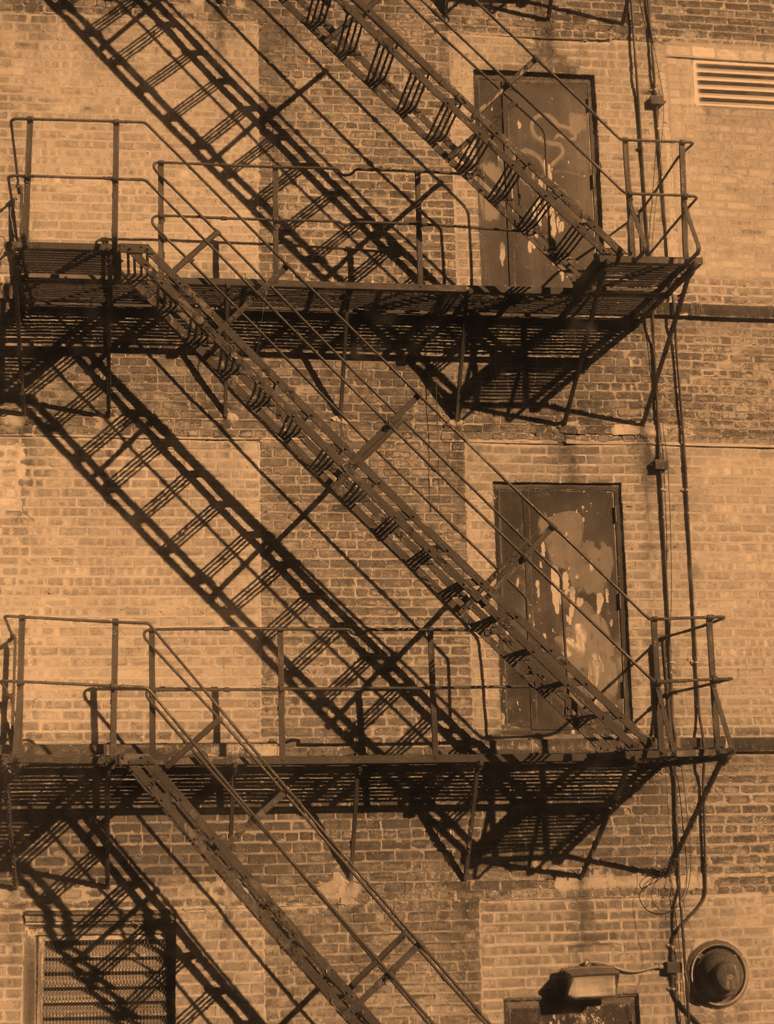

An anthology of 31 flash fiction pieces reprinted from various online markets: Alfie
Dog Fiction, Apocrypha and Abstractions,
Clever Magazine, Danse Macabre du Jour,
Dew on the Kudzu, Drunk Monkeys, Fic-
tion365, Foliate Oak, Free Flash Fiction,
Journal of Microliterature, Larks Fiction
Magazine, Left Hand of the Father, Lowestoft
Chronicle, Liquid Imagination, MicroHorror,
theNewerYork, One Million Stories, Postcard
Shorts, The Rusty Nail, The Story Shack,
Short Humour, thickjam, and weirdyear.
Peter McMillan lives with his wife and two flat-coated retrievers on the northwest shore of Lake Ontario, and in addition to writing he teaches English. Adam Mac lives in a library carrel.
Silversmith (view from), Chicago, (photograph by author, 2009)
86
You may also like...
-

The Past Comes Round: Stories and Essays Flash Fiction by Peter McMillanThe Past Comes Round: Stories and Essays
Reads:
6Pages:
134Published:
May 2026There are two parts to this book: one of 13 short-short stories and one of 12 book commentaries. The stories are quick reads and leave some room for the reade...
Formats: PDF, Epub, Kindle, TXT
-
Flash! Fiction: Around the Block Flash Fiction by Peter McMillanFlash! Fiction: Around the Block
Reads:
3Pages:
111Published:
May 2026Contained in this short ebook is a collection of 34 flash fiction pieces written from mid-July to Labour Day drawing from random writing prompts used to overc...
Formats: PDF, Epub, Kindle, TXT
-
Flash! Fiction 5 Flash Fiction by Peter McMillanFlash! Fiction 5
Reads:
2Pages:
44Published:
May 2026An anthology of 15 flash fiction pieces reprinted from various online markets: Danse Macabre, Farther Stars Than These, Scarlet Leaf Review, Down in the Dirt,...
Formats: PDF, Epub, Kindle, TXT
-

Flash! Fiction 4 Flash Fiction by Peter McMillanFlash! Fiction 4
Reads:
2Published:
May 202627 flash fictions reprinted from Apocrypha and Abstractions, Beyond Imagination Digital Literary Magazine, Beyond Science Fiction Literary Magazine, Dew on t...
Formats: PDF, Epub, Kindle, TXT