

Where Acacia Meets the Algorithm by Godfrey Onyango - HTML preview
Download the book in PDF, ePub, Kindle for a complete version.
C H A P T E R T H R E E
The Matatu Prophet
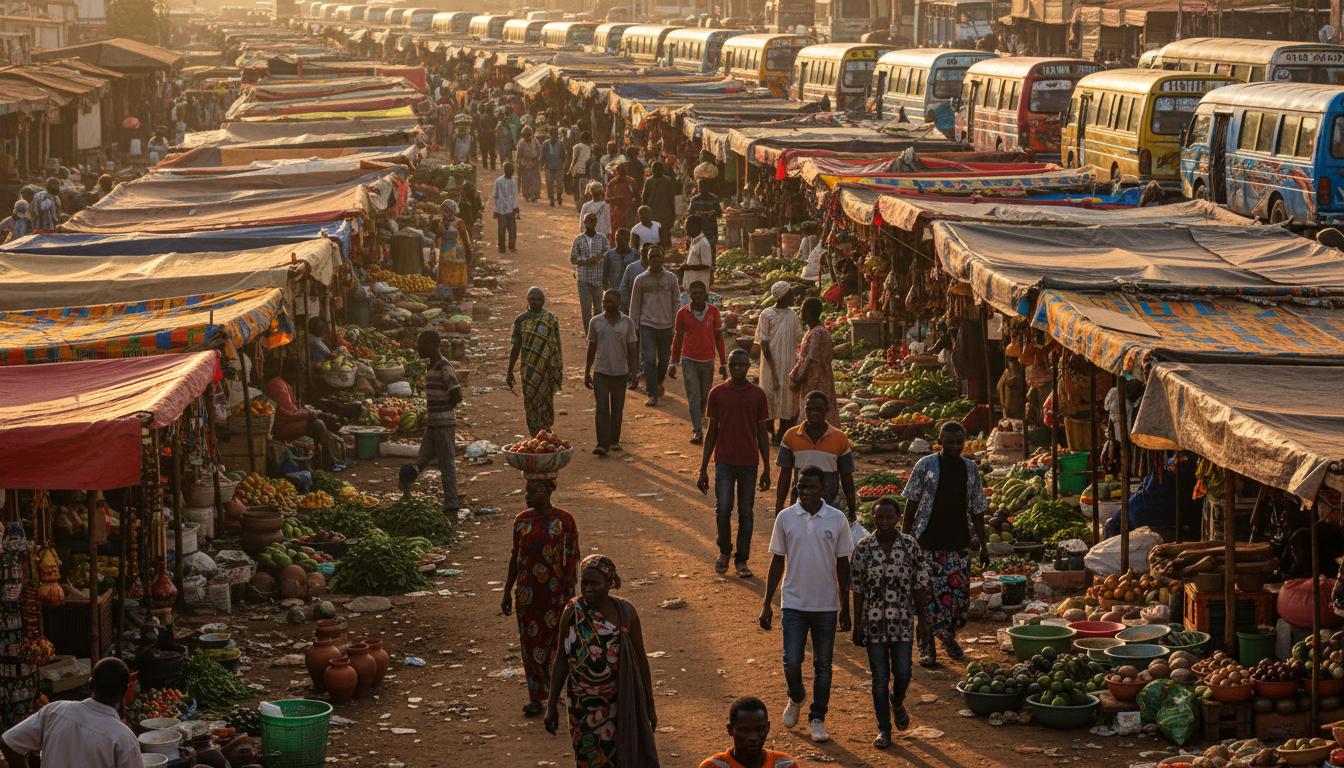
T he man who called himself Prophet Elijah boarded the matatu at the corner of Moi Avenue and Kenyatta Street, carrying a Bible bound in cracked leather and a voice that seemed to have been forged in some ancient furnace of conviction. He was perhaps sixty, though poverty had carved lines into his face that made age difficult to determine. His clothes were clean but worn, the uniform of someone who had learned to maintain dignity without resources.
"My brothers and sisters," he began, before the vehicle had even started moving. "The Lord has given me a message for this city."
Kofi, who had taken to riding different matatu routes in an attempt to understand the city beyond the bubble of the technology park, found himself unable to look away. There was something about the prophet's presence that commanded attention—not charisma, exactly, but a kind of desperate authenticity that made the polished presentations of his colleagues seem hollow by comparison.
"You build towers of glass," the prophet continued, his voice rising above the engine's rattle. "You build them higher and higher, reaching toward heaven. But do you know what the Lord says about towers?"
He opened his Bible, though Kofi suspected he wasn't actually reading. The pages were too worn, too familiar.
This was a performance that had been refined through countless repetitions.
"'Come, let us build ourselves a city, with a tower that reaches to the heavens.' That's what they said at Babel.
And do you know what happened? Confusion. Division. The Lord scattered them across the earth because they thought they could become like gods."
A woman in the front seat, wearing the uniform of a bank teller, rolled her eyes. But others were listening—
the vegetable vendor from the morning market, a student in a faded university sweatshirt, a construction worker whose hands still bore the dust of the day's labor.
"I see your phones," the prophet said, his voice dropping to a conspiratorial whisper. "I see you looking at them, these little windows into another world. You think they connect you, but they divide you. You have a thousand friends you never touch. You know everything about strangers and nothing about your neighbors."
Kofi felt an uncomfortable tightening in his chest. He thought of his own phone, currently displaying notifications from three different messaging apps, two social media platforms, and the algorithm that was 12
learning to predict the behavior of farmers he would never meet.
"But that's not the message the Lord sent me to deliver," the prophet continued. "The message is this: the land remembers."
Kofi started. The same phrase his grandmother had used.
"The land remembers who tended it. The land remembers who spilled blood upon it. The land remembers the songs that were sung to make the crops grow. And when you forget—when you think your technology makes you independent of the earth—then the land will remind you. Through drought. Through flood. Through the silence of birds that no longer come."
The matatu stopped to let off passengers, and the prophet used the interruption to pass around a plastic bowl for donations. Most passengers looked away, but Kofi found himself reaching into his pocket, pulling out a hundred-shilling note that he pressed into the prophet's weathered hand.
"The Lord bless you, my son," the prophet said, his eyes meeting Kofi's with an intensity that felt like recognition. "But money isn't what you need to give."
"What do I need to give?"
The prophet leaned close, his breath smelling of the ginger tea that was the cheapest stimulant available. "Your attention. Your presence. The ancestors don't want your money—they want you to remember who you are."
Before Kofi could respond, the prophet had moved on, his message already shifting to warnings about the end times and the importance of accepting Jesus as personal savior. But those final words echoed in Kofi's mind long after he disembarked at his stop.
Remember who you are.
He walked the remaining distance to his apartment, a studio in a building that had been constructed during the optimistic years of independence and had been slowly decaying ever since. The elevator was broken again, so he climbed the six flights of stairs, passing neighbors whose names he didn't know, whose languages he couldn't speak.
His apartment was a study in minimalist necessity. A bed that folded into the wall. A desk that served as both workspace and dining table. A single window that looked out onto an air shaft where pigeons conducted their eternal negotiations.
13
He opened his laptop and stared at the code he had been writing, the algorithm that was learning to predict the future of people it would never understand. And for the first time since he had started this journey—from village school to university to startup success—he wondered if he was building something that should exist.
His phone buzzed. A message from his mother: Your uncle is sick. The doctors say it's diabetes. He needs medicine we cannot afford.
Kofi transferred the money immediately, another M-Pesa transaction that represented both connection and distance. He could send currency across the country in seconds, but he couldn't sit beside his uncle's bed. He could build algorithms that predicted crop yields across the continent, but he couldn't remember the last time he had planted anything in actual soil.
He opened his window and let the city sounds wash over him—the distant music from a nightclub, the honking of horns, the occasional call to prayer from the mosque three blocks away. Somewhere in that cacophony, he thought he could hear the prophet's voice, still preaching from the back of a moving matatu.
The land remembers.
But did he?
14

Night Market