

Where Acacia Meets the Algorithm by Godfrey Onyango - HTML preview
Download the book in PDF, ePub, Kindle for a complete version.
C H A P T E R O N E
The Morning Commute
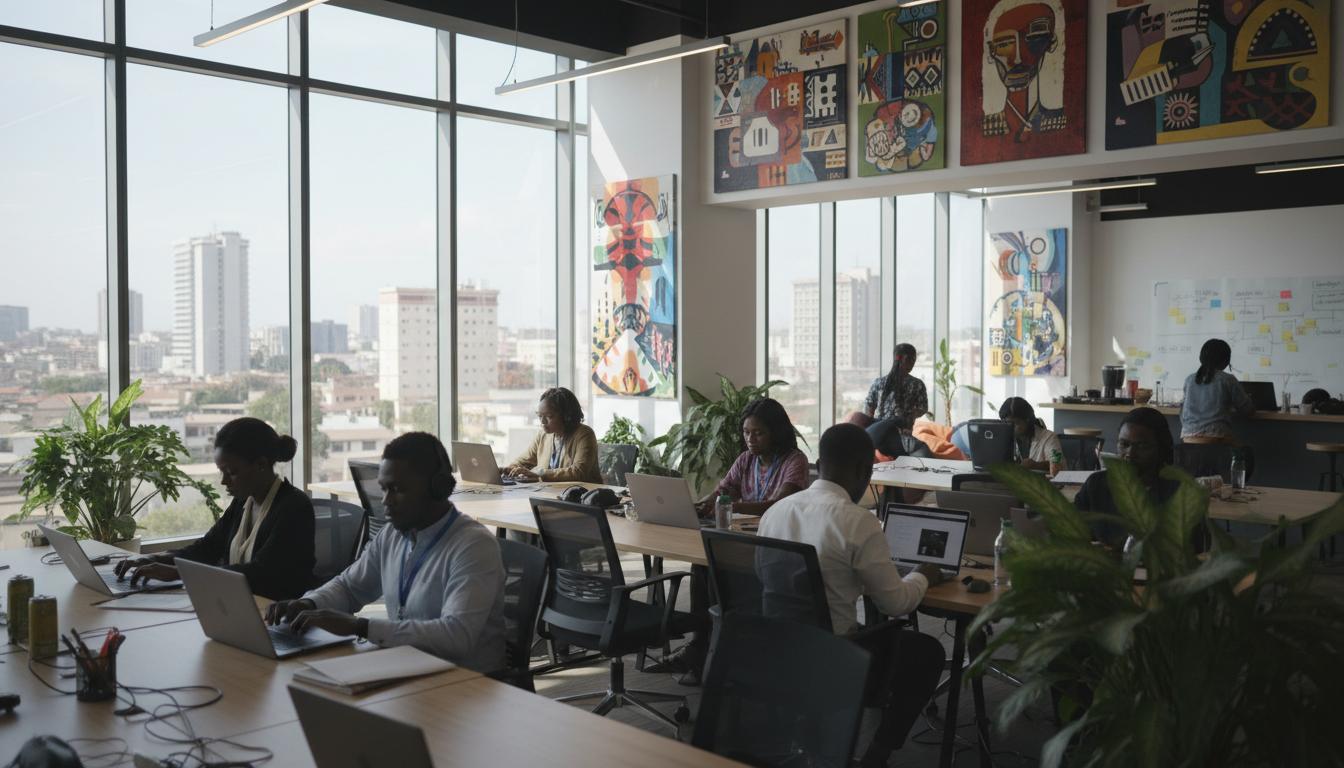
The city where tradition and tomorrow share the same horizon T he sun rose over the equator with the indifference of a deity that had witnessed too many human ambitions. From the fourteenth floor of the glass tower that housed AfriTech Solutions, Kofi Mwangi watched the morning light bleed across the cityscape—illuminating first the informal settlements that clung to the hillsides like barnacles, then creeping toward the financial district where towers of steel and glass pierced the African sky.
He checked his watch. 6:47 AM. The traffic below had already congealed into its daily paralysis, a river of matatus—those garishly painted minibuses that served as the city's arterial system—interspersed with the luxury SUVs of the emerging elite. From this height, the honking horns were muted, transformed into a distant symphony of urban frustration.
Kofi was thirty-two, an age that felt simultaneously young and ancient in a city that transformed itself faster than the seasons. He wore the uniform of the new professional class: slim-fit chinos, a button-down shirt with the sleeves rolled to his elbows, and loafers that had cost more than his father's monthly pension. His laptop bag, slung 5
or a paltry fraction of his quarterly bonus, depending on which lens one chose to view it through.
The elevator deposited him in the lobby, where the security guard—a man named Joseph who had fought in some war Kofi was too young to remember—saluted him with a mixture of respect and something else. Envy?
Resignation? Kofi could never quite read the older generation's eyes.
"Baraka za asubuhi, mzee," Kofi greeted him in the old language, the one his grandmother had spoken but which he had mostly forgotten.
"Good morning, sir," Joseph replied in English, the language of commerce, of progress, of leaving things behind.
The walk to the matatu stage took twelve minutes, navigating sidewalks that alternated between polished marble in front of international hotels and broken concrete where vendors had established their morning markets. Kofi bought his breakfast from a woman who had occupied the same corner for as long as he could remember—two mandazi, still warm from the fryer, wrapped in yesterday's newspaper.
"Leo unakwenda wapi?" she asked, though she knew the answer. Where are you going today?
"Kazini," he replied. To work. As if that word contained any real meaning.
The matatu that would carry him to the technology park was painted in the colors of a famous football club, its sides adorned with portraits of musicians and religious figures in a visual cacophony that somehow made perfect sense. The conductor, a young man with dreadlocks and a perpetually hoarse voice, collected fares while the vehicle was still moving, a ballet of balance and trust performed at thirty kilometers per hour.
Kofi squeezed into a seat meant for someone smaller, his knees pressing against the metal frame of the seat in front of him. The woman beside him—middle-aged, carrying a plastic bag of vegetables—smelled of wood smoke and the cheap perfume sold in the markets. She was reading something on her smartphone, her lips moving silently as she processed the words.
Through the window, the city scrolled past like a documentary film on fast-forward. Here, a new shopping mall rising from what had been a public park. There, a herd of goats being guided through traffic by a boy who couldn't have been older than ten. A billboard advertising the latest smartphone model, positioned directly above a family sleeping on cardboard boxes.
Kofi pulled out his own phone and opened the app his team had spent eighteen months building.
AgriConnect, they called it. A platform that used satellite imagery and machine learning to predict crop yields, 6
detect disease outbreaks, and connect smallholder farmers directly to buyers, bypassing the middlemen who had exploited them for generations.
It was, by any objective measure, a good thing. It had won awards. It had secured funding from venture capitalists in London and San Francisco. It had been featured in magazines with names like TechCrunch and Wired.
So why did he feel this persistent hollowness, this sense that he was building something on foundations he didn't fully understand?
The matatu lurched to a stop, and Kofi disembarked into the technology park—a sanitized bubble of manicured lawns and buildings that looked like they had been airlifted from Silicon Valley. The contrast with the world outside its gates was so stark it felt intentional, a statement of separation.
His phone buzzed. A message from his sister, Wanjiku: Mama is asking when you're coming home. The elders want to discuss the land.
Kofi stared at the screen for a long moment before typing his reply: Soon. Tell them soon.
But soon was a word that meant everything and nothing in a life measured by sprint cycles and quarterly targets.
7

The Startup