

The Malthus Pandemic by Terry Morgan - HTML preview
Download the book in PDF, ePub, Kindle for a complete version.
CHAPTER 71
So, what happened next?
Let’s start with Virex and Biox.
Charles Brady of Virex resigned very quickly, but Josh Ornstein was still there at Biox. So was Walt Daniel. It was Walt who called me to tell me about Brady.
“Thought you’d like to know,” he said. “Brady’s been summoned to answer questions from a senate committee. He’s like a nervous rabbit and under attack from all sides. You ain’t out here, but Jeez, you should see the growing debate on “gain of function” research and virus engineering and lack of controls on research since Larry Brown raised it with Senator Mary Collis. Charles Brady clearly saw it coming, which is why he resigned. Virex has had a lot of stick over poor management and lack of controls. But it ain’t just the biotech industry, Mark. The discussion is now spreading to agriculture.
Congress has discussed it.”
“So will we see any legislation, Walt?” I asked.
He laughed. “No way. And lose our competitive edge against the Chinese? Not a snowball in hell’s chance, Mark. Stand by for another problem, another pandemic, or a mass crop failure leading to food shortages. I can see it now. Rice or maize or wheat crops get hit because some plant virus gets out. Or, of course, it’ll be used as a biological weapon. You heard it here first, Mark. Keep watching.”
***
Nagi called me from Cairo with news that never found its way into the media. Such is the world we live in that unless news is likely to interest a mass audience, why would anyone report it? Why, for instance, would the Egyptian press or anyone else be remotely interested in the closure of a private family planning clinic called Shah Medical Centre in Cairo?But, after Maria and I broke in and found documents that led us to the Beni Suef operation, Nagi made sure the police moved in. They
detained Dr Fatima El Badry, and that was enough to flush out El Badry himself. A few days later, he was arrested at Cairo Airport, trying to travel on a Nigerian passport in the name of Dr Mansour Mustafa and carrying other papers saying he was Dr Ramses El Khoury.
That tidied up the question of three people in one. Kevin and Tunji’s Dr El Badry was the same man as Larry’s Dr Mustafa and the same doctor whose name appeared on the plaque outside the Shah Medical Centre.
The Egyptian police then detained the Dutchman Jan de Jonge, Guy Williams, and Philippe Fournier and closed the Beni Suef laboratory as it wasn’t properly registered.
***
The Kenyan police also moved.They were already investigating the murder of Jimmy Banda and several unknown Pakistani men whose bodies, half eaten by marabou storks, had been found on a rubbish tip outside Nairobi.
For the Kenyan police, things then started to link up. They had been passed intelligence about criminal activity involving a local company called Shah Medicals and a holding company called Al Zafar. Then came the Interpol notice for someone called Greg O’Brian, linking him with both those companies and Livingstone Pharmaceuticals.
A raid on the closed Shah Medicals factory provided another link -
this time with a Tunisian called Dominique Lunneau, a pharmaceutical plant engineer who already had a criminal record in Syria and Lebanon. After a tip off by an ex-employee of Shah Medicals, someone called Jomo, Lunneau was arrested at the Flamingo Club in Nairobi.
***
Things still bothered me.
We all agreed we’d done as much as we could, and that it was now up to the various agencies to take over. In particular, what Larry had done in the USA to highlight uncontrolled research and technology falling into the hands of unscrupulous extremists and terrorists was exactly what I had hoped would happen.
Lenient onlookers might have said that David Solomon was not a criminal but just a misguided extremist and needed to be understood.
But Solomon was working with a group of businesses that had a history of fraud and corruption and with one man in particular, a known criminal, Greg O’Brian. And O’Brian himself hid amongst a network of businesses who few, even within the pharmaceutical industry, knew or understood.
We’d lost track of Solomon. Solomon had left Thailand for Malaysia and then flown to Cairo. Where was he now? We’d also lost track of Greg O’Brian, but at least O’Brian had an Interpol red notice hanging over his head. And there was someone else we’d lost track of: Mohamed Abdul Rahman Kader.
I’d seen Kader in the hotel in Bangkok. Anna had also seen him enough to give a good description that fitted photos. I’d thought at one time that Kader might also be El Badry and the Dr Mustafa from Kano but I no longer believed that. Kader was still out there.
***
I spent a few days in the office with Colin, Ching, and Else, doing background work on two new clients - an innocent Nigerian caught up in a money laundering scam and a Kuwaiti jeweller with a counterfeit problem and I fully expected to have to go to Lagos and Kuwait any moment. What we now called the Malthus A case was still on my mind but it wasn’t the only thing I lay awake thinking about.Anna was, to put it bluntly, unfinished business, but she no longer answered my phone calls. All I could do was comfort myself by thinking that perhaps she, too, was dealing with priorities.
With that I decided to fly to Kuwait to meet the new jeweller client, brief my Kuwaiti man Hamad Ali and, if I had time, dig some more into Mohamed Kader and Al Zafar.
I phoned Hamad to tell him I was on my way. “By the way, what do you know about Al Zafar Agencies?”
The world is awash with information but when a case drops off our priority list, we miss things. If I was a regular reader of the Gulf Times or watched Al Jazeera TV, perhaps I, too, should have read something more into the sudden closure of Shah Medicals in Nairobi or asked Nagi to look into Al Zafar’s operation in Cairo or asked Kay Choon in Hong Kong more about the baby food scandal involving Mohamed Kader’s Sun Foods Company. But do you see why there are so few private companies like Asher & Asher who have the resources to investigate the many hundreds of low-profile frauds that go unnoticed but end up making a few individuals so rich?
Al Zafar, Hamad told me, had recently ceased trading. It had, I discovered, disappeared like the morning mist.
Staff and salespeople employed by local Al Zafar companies - people like David Chua in Singapore and Luther Jasman and Jomo in Nairobi, were laid off and, because Al Zafar owned nothing and rented everything, it just walked away, abandoning any normal responsibilities.
Mohamed Abdul Rahman Kader, Hamad told me, had also vanished like the morning mist. So had Greg O’Brian.
I called Walt at Biox in Boston. “Yeh,” he said. “Livingstone Pharmaceuticals just filed for bankruptcy.”
David Solomon had also vanished, and in the end, all we had achieved was the arrest of El Badry and his wife and the ticking-off of
three innocent fools - Jan de Jonge, Guy Williams, and Philippe Fournier.
In retrospect, perhaps our main achievement was to draw attention to the perils of unregulated “gain of function” research on viruses. But, as Larry said to me recently, “Action seems very unlikely, Mark.
International agreements like that never stick. It’s commercial pressure and politics.”
“So, what more can we do?” I asked.
“Pray,” he said. “Pray that Solomon fails to find another financial backer and pray that a genetically altered but lethal human virus doesn’t escape from a virology laboratory by accident.”
Just before I left for Kuwait, Kevin called me because Tunji had returned from Nigeria and phoned him at 2 am. “I’m worried again,”
Kevin said. When I asked why I got the full dialogue.
“I feel tired, Kev,” Tunji said. “My head it hurts and my bones they ache. I think I’m sickening for something.”
“You should have more sense, Tunji. Who on earth takes a holiday in Nigeria? Most people would avoid it like the plague.”
“Please don’t mention the plague, Kev. There’s a type of influenza going around Lagos. Even my eyes hurt.”
“Wear sunglasses, Tunji. The sun in Barnet is too strong and bright for a man of your complexion.”
“I’ve warned you about your racist comments, Kev. If you don’t stop it, I’ll tell you a joke about a white doctor and his obsession.”
“You told me it before - a joke about a white doctor and his unsavoury relationship with a black dog.”
“That’s the old version, Kev. The new joke is about another white doctor with a different obsession.”
“Get it off your chest, Tunji. It’ll make you feel better.”
“Doctor David Solomon’s obsessions, Kev. Have you checked the Malthus site today?”
“It’s only 2:00 a.m. Give me a chance.”
“Then call me back when you’ve looked and tell me if you also feel a bit sick.”
Kevin had grabbed his laptop and logged on. And there it was, a posting by a new member with the screen name Solo Man.
“They found the laboratory, but they are always too late. We move on. Malthus A was good, but Malthus B is better.”
***

311
Other books by Terry Morgan
*Indicates a novel in the ‘Asher & Asher’ series.
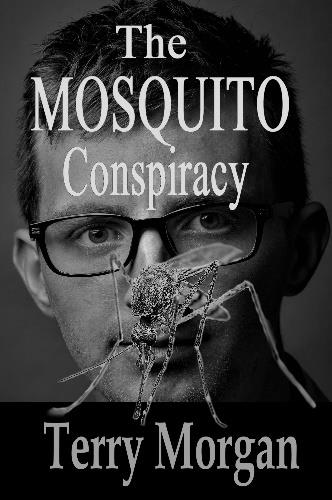
The Mosquito Conspiracy *
Unlike conventional weapons, detecting a biological weapon is almost impossible until it has already been used. Detecting them and then reporting what he'd found to the government had been Doctor Daniel Wilkinson's job until he was suddenly told to take on a new ID and retire into obscurity for his own safety.
“As always, Terry Morgan’s biology-based fiction has all the merits of being perfectly feasible. Very well done.”
Park Road *
312
An inspirational, contemporary novel about five fatherless, mixed-race teenage boys from a poor inner-city area who were going their separate ways when one of them was abducted and forced into joining ISIL in Turkey and Syria.
“The plot is compelling.”
“A sensitive and thoroughly entertaining contemporary novel.”
“Making the storyteller a nineteen-year-old is a masterpiece!”
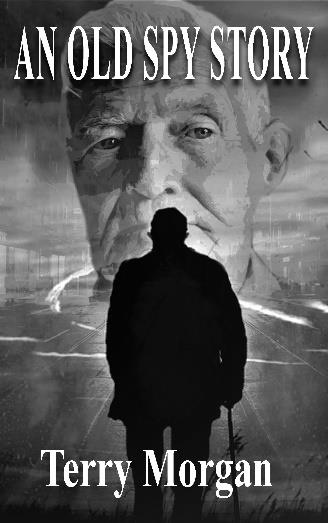
An Old Spy Story
The old spy in An Old Spy Story is octagenerian Oliver “Ollie” Thomas. During a long career spent trying to earn an honest living with his own export business, Ollie was also, reluctantly, carrying out parallel assignments in Africa and the Middle East only loosely connected to British Intelligence. But, by using threats and blackmail, his controller Major Alex Donaldson was forcing Ollie to help run his own secret money-making schemes that included arms shipments to the IRA through Gadaffi and Libya, money laundering in Africa, and assassination.
Now aged eighty-six, recently widowed, and alone, Ollie still struggles with guilt and anger over his past and decides to make one last attempt to track down and deal with Donaldson.
“A masterful tale by someone who knows exactly what he is writing about.”
“A wonderful and moving love story from an elderly man’s perspective is beautifully woven into it, and the ending is masterful.”
“I enjoyed it - exciting, endlessly beguiling, and fun.”
“Thoroughly enjoyable from start to finish. A remarkable book from a writer who has clearly been there and done it. Easy reading.”
313
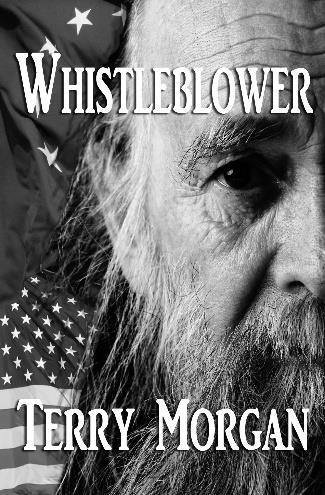
Whistleblower
Vast amounts of international aid money are being stolen by those at the heart of the political establishment. Ex-politician Jim Smith, threatened and harassed into fleeing abroad for his accusations of the fraud, secretly returns to renew his campaign. A realistic thriller covering events in the USA, Europe, Africa, the Middle East, and Asia and a sensitive study of a stubborn and talented man who steadfastly refuses to fit into the stereotype of a successful businessman and a modern politician.
“Highly convincing. This could all be happening right now. Another realistic and highly entertaining story.”
“This book has the sort of political intrigue that captivates viewers of shows like House of Cards, but the main man is actually a decent person in Whistleblower.
As someone who prefers protagonists on the correct moral side of the spectrum, it made the book that much more enjoyable (AMAZON).
“Morgan, a world traveller who now resides in Thailand, knows his locations well. Cities in Italy and Africa come alive, and Jim Smith’s home in off-the-beaten-path Thailand is wonderfully described, allowing readers to feel like they’re there. This is no easy thing to do, and the authenticity of the various settings is a real strength of the book.”
“Another strength includes the protagonist. Smith is not a typical hero. He’s older and lacks the suaveness and action-hero credentials of a James Bond or Jason Bourne, but he more than makes up for it with his intelligence and depth.
A big pleasure in the book is being invited into this man’s life as he tries to pick up the pieces after an underhanded campaign aimed at ruining him.”
“The plot moves along briskly, and the technology, players (politicians, intelligence agencies, criminals), and small details about the finance industry all add up to a novel that’s rich in credibility and intrigue. Anyone interested in seeing the world from the comfort of a good armchair should read Morgan’s book” (AMAZON).
314
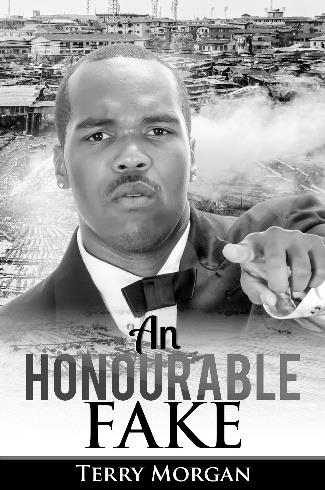
An Honourable Fake *
At age fourteen, Femi Akindele, an orphaned street boy from the Makoko slum in Lagos, Nigeria, decided to call himself Pastor Gabriel Joshua. Unqualified and self-taught and now in his mid-forties, Gabriel has become a flamboyant, popular, and highly acclaimed international speaker on African affairs, economics, terrorism, corruption, and the widespread poverty and economic migration that results.
Gabriel wants changes, but in his way lie big corporations, international politics, and a group of wealthy but corrupt Nigerians financing a terrorist organisation, the COK, with one purpose in mind—the overthrow of the democratically elected Nigerian president and the establishment of a vast new West African state.
On Gabriel’s side, though, are his loyal boyhood friend Solomon, a private investigator of international corporate fraud, and the newly appointed head of the Nigerian State Security Service Colonel Martin Abisola.
“A rare sort of political thriller - a black African hero.”
“Accomplished and knowledgeable - a class follow up to Whistleblower .”

315
Vendetta *
An eccentric, untidy Oxford University professor of biology Eddie Higgins has become the scientific adviser to a local cosmetics company run by its new and vivacious chief executive Isobel Johnson. It doesn’t begin well. “Yours is an industry dogged by exaggerated claims, impossible claims, and false claims,” he tells her. With locations moving between the UK, Thailand, and Malaysia, this is the third book in the Asher & Asher series with a new recruit to the team, Ritchie Nolan, a black dreadlocked dropout from a North London drama school whose job is to infiltrate Russian and Chinese gangs involved in counterfeiting, money laundering, and drug smuggling.
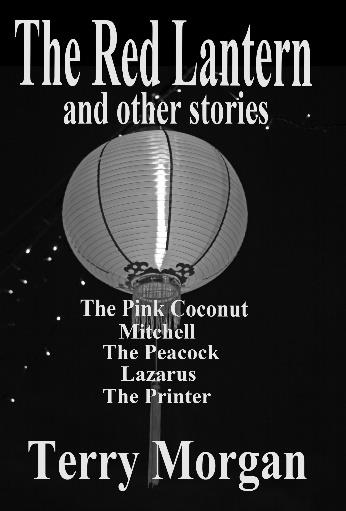
The Red Lantern *
The Red Lantern is a selection of six short stories about international crime, corruption, and terrorism taken from five of the author’s full-length novels - An Old Spy Story, Whistleblower, Vendetta, An Honourable Fake, and Park Road.
316
Don’t Mention the O Word
A short book that followed a request to the author to write a chapter for a book on bioethics and planetary health.
Learning from Volvox
The tragic and widespread ignorance of biology and its effect on western culture and society.
You may also like...
-

I don't work on bombs Fiction by D.A.SanfordI don't work on bombs
Reads:
6Pages:
36Published:
Sep 2026Raymond Burton is on his personal jet when military jets are now pacing his jet. His pilots are telling him that they must follow them otherwise they would be...
Formats: PDF
-

A bonded board Fiction by D.A.SanfordA bonded board
Reads:
27Pages:
30Published:
Sep 2026Ever had a thought of what your life would have been like if there were different circumstances, different events that happened in your life? How would you re...
Formats: PDF
-

The 24 Elders - The Second World (Series 5) Fiction by Holyone Tombari DodohThe 24 Elders - The Second World (Series 5)
Reads:
8Pages:
170Published:
May 2026After the fragile reset of The First World, time itself is bent once more—but not without consequence. As the 24 Elders rewind creation to humanity’s earliest...
Formats: PDF
-
The Ghost Named Charlie Fiction by K. E. WardThe Ghost Named Charlie
Reads:
14Pages:
25Published:
May 2026When a patient with schizophrenia was alone in her room with her thoughts, she began to see an actual ghost. Attempting to describe a social problem with enou...
Formats: PDF