INGRID DOWS - AN ALTERNATE STORY PART 3 - THE SPACE AGE by Michel Poulin - HTML preview
Download the book in PDF, ePub, Kindle for a complete version.
CHAPTER 1 – DANGEROUS TIMES
09:20 (Washington Time)
Saturday, March 25, 1950 ‘C’
Entrance to the Situation Room
West Wing Basement, The White House
Washington, D.C., U.S.A.
The two Secret Service agents guarding the entrance to the Situation Room nodded politely to Ingrid Dows when she arrived there, wearing her United States Air Force uniform of a lieutenant-general and presenting to the agents her White House accreditation security pass. She was a frequent visitor to the White House, thanks to her pivotal role as both a senior Air Force commander and as a most prominent aircraft designer and she was well known to the Secret Service agents of the Presidential Detail, so was given access to the Situation Room at once. As the door closed behind her, one of the two Secret Service agents lowered his voice to a near whisper and winked to his colleague.
‘’Damn, she’s so hot!’’
‘’And impossibly young too for a general officer. She is a lieutenant-general, yet she is said to be only 27 years old.’’
‘’But she doesn’t even look that old, Fred! If I saw her on the street, in civilian clothes, I would give her maybe eighteen or nineteen, at the most. My wife actually is wondering what she is using as a makeup to look so young. She is really jealous of her looks.’’
‘’Many also seriously question how she could climb the military rank ladder so quickly, Jim. Normally, you are in your fifties before you get to her present rank, yet she was a brigadier-general before World War Two even ended, five years ago.’’ The said Jim eyed Fred with a bit of sarcasm then.
‘’Being our top air ace of all times and being a tactical and strategic military genius is not enough for you, Fred? Hell, she planned and led both decapitation bombing raids against the Japanese and German leadership, killing in the process Adolph Hitler and the majority of his goose-stepping stooges. Just yesterday, she got her third Medal of Honor for bombing the Kremlin to rubble and killing Stalin and most of the Soviet top leadership. She may be awfully young for her rank but I am sure that all of our pilots would be ready to follow her in combat.’’
‘’Or in bed?’’ added Fred in a sneaky tone, making Jim grin.
‘’That too! Oops, here comes the Secretary of Defense and the Chairman of the Joint Chiefs.’’
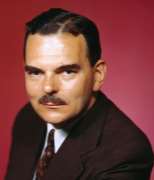
The two Secret Service agents returned to a guard stance and let in Dwight Eisenhower and Admiral Arthur Radford, with more service secretaries, senior officers and White House staffers then quickly following. The last one to arrive and enter the Situation Room was President Thomas Dewey, accompanied by his secretary and by his four close escort Secret Service agents.
Inside the Situation Room, everybody got up from their seats at the President’s entrance, with Thomas Dewey waving for them to sit back.
‘’At ease, lady and gentlemen! Let’s start this meeting at once: we have a lot of urgent things to discuss, starting with what we could expect from the Soviets as reactions to our bombing of the Kremlin and to the death of Joseph Stalin.’’ He then looked at his Secretary of State, Henry Cabot Lodge.
‘’Henry, has the death of Stalin been confirmed and do we know who is now in power in Moscow?’’
‘’Stalin is definitely dead, Mister President: the date of his funeral has been announced publicly in the Soviet medias. As for who now holds power in the Kremlin, it would be the only member of the Praesidium to have survived the bombing of the Kremlin, Nikita Khrushchev, who was the Communist Party boss for Moscow. He survived the bombing by General Dows for the simple reason that he was late for the meeting called by Stalin, all thanks to a punctured tire. In turn, the death of Stalin and of so many Party leaders, allied with the destruction of the Soviet secret police headquarters, also bombed by General Dows, has created a rather interesting situation inside the Soviet Union. Basically, with only one senior political leader left alive but with the Red Army untouched, that political leader, Khrushchev, basically made a pact with Red Army leaders in order to purge the MGB, the Soviet secret police, across the country in order to erase its influence and reign of terror over Soviet citizens. The latest reports we got from multiple observers all say the same thing: Red Army units, under the overall command of Marshal Zhukov, are presently busy closing all the offices of the MGB across the Soviet Union and are either arresting or simply executing on the spot all the secret police members they can find. Soviet citizens in general are also said to be helping the Red Army conducting this purge by denouncing MGB members or signaling their hideouts to Soviet soldiers. As well, all the political commissars within the Red Army, Navy and Air Force have been arrested and, in many cases, promptly executed. We are now looking at a brand-new Soviet Union in terms of political control, with this Nikita Khrushchev in power thanks to the support of the Red Army. As a personal note, I do believe that Marshal Zhukov now has as much effective power as Khrushchev in Moscow.’’
‘’And that Khrushchev, what kind of man is he? Could we hope that he will be more moderate and less aggressive than Stalin towards us?’’
‘’We assess that this Khrushchev will definitely be easier to deal with than with Stalin. During World War Two, he served as senior political commissar with the Red Army units fighting to defend Stalingrad, so he has seen what horrors and destructions wars produce, contrary to Stalin, who mostly stayed in Moscow and never visited the frontlines. He can be described as relatively moderate in political terms and is not a keen supporter of Soviet power expansion and territorial control, although he believes tooth and nail in defending Soviet territory at all cost. My department is presently preparing briefing files on him and on Marshal Zhukov. Those files should be ready in two days at the most, Mister President.’’
‘’Excellent!’’ said Dewey before looking at the chairman of the joint chiefs of staff, Admiral Arthur Radford. ‘’What about the Red Army divisions which Stalin had massed against the borders of Western Europe, Admiral?’’
‘’Those divisions have started to pull back and are now returning to their barracks, Mister President. However, while the immediate threat of a Soviet invasion of Western Europe has been averted, those divisions still could be fully reactivated quite quickly if this Khrushchev decides so. If he does so, then we and our European allies would have a hard time stopping the Red Army, Mister President: we are simply too heavily outnumbered on the ground in Europe. Right now, the only thing that could brake or stop a Soviet invasion of Europe is our air force.’’ That made Dewey look next at the chief of staff of the Air Force, General Hoyt Vandenberg.
‘’How is our Air Force looking like in Europe, General Vandenberg?’’
‘’Not as strong as I wish it to be, Mister President. We still don’t have any jet-propelled bombers in theater and our fighter squadrons are still equipped in the large majority with F-80 SHOOTING STARs, which are somewhat inferior to the Soviet Mig-15. However, our F-80s in Europe, along with the few F-86 SABREs stationed there, are being actively equipped with the new Hughes AIM-1 BOLT air-to-air missile, which has brilliantly proved itself in the Pacific, when our planes from the Philippines stopped cold that Soviet attempt at invading Okinawa. Those missiles may prove crucial in Europe if the Soviets ever launch an attack there.’’
‘’What about our new jet fighters and bombers, General? When can we hope to have some F-9s and B-12s in Europe?’’ Vandenberg made a grimace at that question.
‘’That will unfortunately take a couple more months, Mister President. The pilots and ground crews for our first squadrons of F-9 fighters and B-12 bombers are still being trained on these new aircraft, while only a handful of these planes have been produced to date. Hughes Aircraft is doing everything it can to produce those aircraft as fast as it can but its existing production lines for those models only opened in January, while the production lines at Lockheed, Northrop, McDonnell-Douglas and Convair which are due to produce under license those Hughes models are still in the process of being retooled. Right now, we are able to produce only eight F-9 supersonic fighters and two B-12 supersonic bombers per month out of the Hughes production lines in Culver City, in California.’’
It was the turn of Dewey to make a grimace on hearing that.
‘’Eight fighters and two bombers per month... That’s not a lot! General Dows, as the designer and producer of the Hughes F-9 and B-12, could you possibly accelerate further their production?’’
‘’Not at Hughes, Mister President. Forming more aircraft technicians and machinists in order to operate three production shifts takes time and you certainly don’t want to botch their training and thus end up with defective planes, Mister President. I am doing the utmost to train as quickly as possible a night production shift for my planes but that will still require at least another month, at a minimum. Anything faster would cause the quality of our aircraft to go down significantly. Remember our experience of World War Two: it took us months to pick up the slack in American war production after we entered the fight, Mister President.’’
Dewey sighed audibly then, visibly discouraged.
‘’Damn this idiot of Truman and his military budget cuts! Now, we are playing catch up while the Red Army is at the doorstep of Western Europe. General Collins, in what state are our Army units in Europe?’’
‘’Our three divisions stationed in Europe are still mostly equipped with World War Two era equipment, while the level of training of our soldiers is not as high as I wished. When in power, President Truman didn’t only cut into our procurement and maintenance budgets: he also severely limited our training budgets. Frankly, compared to the kind of soldiers we had in 1944, our present army soldiers could be characterized as mostly being soft and poorly trained.’’
‘’Dammit!’’ exploded Dewey, ‘’has our military sunk so low after the end of the war? Do we have any experience d and competent units left today?’’ The Secretary of Defense, Dwight Eisenhower, took on him to answer that bitter question.
‘’For what it’s worth, Mister President, what is left of our Navy after all those equipment cuts does have mostly well-trained and experienced crews. As for our Air Force, the only major combat unit not disbanded or cut by Truman is our 99th Air Wing, in the Philippines. Truman did cut it down to an air group but we since then have returned it to wing size. The 99th Air Wing was the one which stopped cold the attempt by the Soviets to invade Okinawa earlier this month. Those female aircrews did honor to their World War Two reputations, Mister President.’’
‘’What about our European allies, lady and gentlemen? After all, it is their continent which is under Soviet threat.’’
‘’Their military situation overall is even worse than our own situation, Mister President.’’ answered Admiral Radford. ‘’Most of their resources have been expended since 1945 into repairing the horrendous damage caused to their countries and economies during the war. Even Great Britain, which launched those two nuclear missiles on Japan in 1944, is in rather poor economical shape, despite all their huffing and puffing about their ‘Empire’.’’
‘’And... the Germans?’’
‘’The Germans also suffered a lot in World War Two, Mister President. While we didn’t invade Germany proper, we did force them to abandon all their heavy equipment and weapons as a condition for their withdrawal back to German territory under the terms of the armistice which is still in effect. We believe that the Germans are still strong enough militarily to adequately defend their eastern borders but not much more than that, Mister President.’’
‘’So, we can only hope and pray that the Soviets don’t decide to invade Europe and give us time to rebuild our military machine, is that it, gentlemen?’’
‘’Basically, yes, Mister President.’’ answered Dwight Eisenhower. ‘’The next couple of years will be crucial...and tense. We will also have to drastically increase our military budgets in order to play catch-up. Hopefully, both the Congress and the American people will understand the need for such large budgets.’’
‘’Hopefully!’’ said Dewey, really discouraged by now, before looking at Ingrid. ‘’General Dows, would you have any suggestions for us at this time on how to deal with all this?’’
‘’Not at this time, Mister President. Only time, money and resolve will eventually pull us out of the military hole we presently are in.’’
‘’I thought so! Well, keep up with your present efforts, lady and gentlemen. General Dows, you may now return to your civilian job at Hughes Aircraft. Consider yourself returned to reserve standby status as of tonight. On my side, I will do my best to convince the Congress and the American public that we need to do more sacrifices in order to rebuild our military. I thus declare this meeting over. Thank you for coming this morning.’’
Dewey then got up and walked out of the Situation Room, prompting the other people present to get up at attention until he was out. Ingrid filed out of the room with the other officers and cabinet members and went to the East Wing access point, where she recuperated her two pistols from the Secret Service agents manning the reception entrance. Instead of calling up a taxi to return to the nearby Hay-Adams Hotel, where she had taken a room, she decided to walk the few hundred meters separating it from the White House: the cold air would do herself good to allow her to think things over before she would fly back to California and to little Hien, the seven-year-old Vietnamese orphan she had recently adopted. In a way, young Tran Ti Hien was much more than just an orphaned girl she had adopted after encountering her in Paris. Most importantly, she was a descendant of Ingrid’s past incarnation as Tran Qui Khiem, a Vietnamese peasant who had lived during the 18th Century in the Mekong Delta region. Little Hien had done a lot already to change Ingrid’s life, adding motherhood to her passion for flying and to her work at aircraft designing.