

Myths and Truths About Erectile Dysfunction: The Complete Guide for Men’s Sexual Health by William Lion - HTML preview
Download the book in PDF, ePub, Kindle for a complete version.
How the Doctor Investigates
Seeking medical help for erectile problems does not mean receiving a "negative label." On the contrary, it's a way to take care of both sexual and overall health, as Erectile Dysfunction (ED) can be an early sign of other important conditions. The evaluation usually follows a logical step-by-step process, helping to identify the cause and choose the most appropriate treatment.
1. Medical History 3 Detailed 2. Physical Examination
Conversation ð The goal is to identify signs of vascular, The doctor starts by asking about: hormonal, or neurological issues, which may
include:
Frequency and duration of erectile
difficulties. Blood pressure and heart rate Lifestyle habits (diet, sleep, physical measurement. activity, alcohol, tobacco, or drug use). Evaluation of weight, waist circumference,
Medical and surgical history. and body mass index (BMI). Current medications. Genital exam to check sensitivity, presence
of plaques, or anatomical changes.
Associated symptoms (fatigue, libido
changes, pain, urinary changes). Reflex and sensitivity checks in the lower
limbs.
ä Tip: Bringing a habits diary and notes about episodes makes this conversation more ' Evidence-Based: A thorough physical exam
objective. can detect cardiovascular and metabolic risk
factors associated with ED.
3. Laboratory Tests i 4. Additional Tests (if needed)
May include: Penile Doppler Ultrasound 3 evaluates
blood flow in the penis.
Hormonal profile (total and free
testosterone, prolactin, TSH). Polysomnography 3 if sleep apnea is
suspected.
prediabetes). Electrocardiogram or stress test 3 to assess Blood glucose and HbA1c (for diabetes or
heart health.
Lipid profile (total cholesterol, LDL, HDL,
triglycerides).
Kidney and liver function tests.
' Evidence-Based: Changes in these tests are often linked to erectile function and
cardiovascular health.
5. Discussion of Diagnosis and Action Plan
The doctor compiles all information to:
Confirm or rule out the diagnosis of ED.
Identify primary and secondary causes.
Present treatment options (lifestyle changes, psychological therapy, medications, devices).
ô Important: Treatment often involves more than one approach. For example, a man with
hypertension and chronic stress may need medication adjustments, improved habits, and psychological follow-up.
Quick Summary: Consulting a doctor to investigate ED is a step toward overall health.
The evaluation is systematic and non-judgmental.
The more information the patient provides, the faster the cause and solution can be identified.
Solutions Map
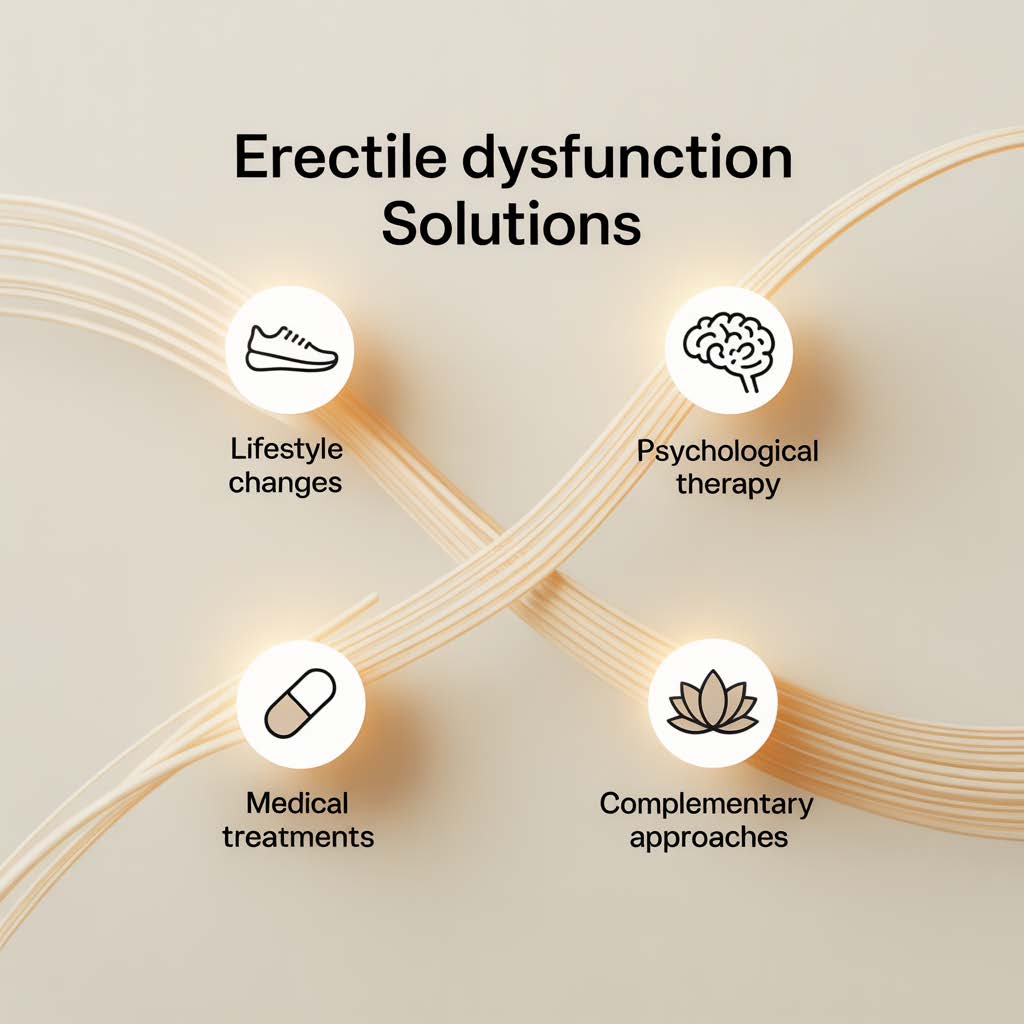
The good news is that, in most cases, Erectile Dysfunction (ED) can improve significantly 4 and even be reversed 4 with the right combination of strategies. The key is to address the root causes while strengthening overall health.

Lifestyle Changes Psychological Therapy

Regular physical activity, healthy nutrition, Individual or couples therapy, relaxation
quality sleep, and avoiding toxins techniques, and mindfulness

Medical Treatments Complementary Approaches

Oral medications, hormone therapy, vacuum Herbal supplements, acupuncture, and pelvic
devices, or other clinical interventions physiotherapy
1. Lifestyle Changes K ¯ 2. Psychological Therapy _ ô
Regular Physical Activity Helpful when performance anxiety, stress,
or relationship conflicts are triggers.
Aerobic exercises (walking, running,
cycling, swimming) 435 times per week. Individual psychotherapy or couples
therapy can help restore confidence and
Strength training to increase muscle mass
emotional connection.
and improve metabolism.
Pelvic floor exercises (male Kegels) to and mindfulness reduce tension and Relaxation techniques, breathing exercises,
enhance erectile function.
improve sexual response.
Healthy Nutrition 3. Medical Treatments Ã
lean proteins, and healthy fats (olive oil, Oral medications (such as PDE5 inhibitors, Focus on fruits, vegetables, whole grains,
e.g., Aizen Power).
Reduce sugar and ultra-processed foods. Hormone therapy (when low testosterone is confirmed). nuts, fish).
Quality Sleep Vacuum devices 4 mechanically help
Sleep 738 hours per night. achieve and maintain an erection.
Avoid screens and caffeine before bedtime. Penile injections or urethral suppositories
4 used in specific cases.
Avoid Toxins
ä Always use under medical supervision 4
Quit smoking. self-medication can be dangerous.
Limit alcohol to moderate consumption 4. Complementary Approaches
(max 132 drinks/day).
' Some herbal supplements show promising Evidence-Based 3 Lifestyle changes can preliminary results, but safety and efficacy improve or normalize erectile function in up to vary. 40% of men with mild to moderate ED. Acupuncture and pelvic physiotherapy may
help in selected cases.
30-Day Action Plan Checklist
Week 1: Schedule a medical appointment and record symptom history. Start light walking 20 min/day.
Reduce alcohol and quit smoking.
Week 2: Improve diet (include fruits, vegetables, and lean proteins daily). Begin pelvic floor exercises.
Practice breathing techniques before sleep.
Week 3: Increase physical activity to 30340 min/day. Adjust routine to sleep 738 hours/night.
Discuss progress with your partner.
Week 4: Review progress with your doctor (assess tests and adjustments). Maintain healthy habits and therapy if indicated.
Set goals for the next 3 months.
Quick Summary: Improving erectile function involves both body and mind.
Results are faster with consistency and professional guidance.
Small daily adjustments can bring significant changes over time.
Prevention and Maintenance
After addressing or reducing episodes of Erectile Dysfunction (ED), it is essential to maintain healthy habits to prevent relapses and ensure overall sexual and general health. Prevention combines physical, mental, and relational self-care, helping to sustain healthy sexual performance throughout life.

Physical Activity Balanced Diet

150+ minutes aerobic Rich in fruits and
exercise weekly vegetables
Strength training 2-3 Whole grains and lean
times weekly proteins
Pelvic floor exercises 3-5 Limit sugar and
times weekly processed foods

Monitor stress levels Mental Health Quality Sleep 7-8 hours nightly Practice relaxation Consistent sleep schedule techniques Avoid electronics before Open communication bed with partner

1. Ongoing Healthy Lifestyle K ¯ ç 2. Mental and Emotional Health _ ô
Regular physical activity: Monitor stress and anxiety levels.
At least 150 minutes of aerobic exercise per Practice relaxation techniques week. (mindfulness, deep breathing, meditation).
Strength training 233 times per week. Psychological therapy if needed4even
Pelvic floor exercises 335 times per week. control. when physical symptoms are under
Balanced diet: Open communication with a partner
strengthens intimacy and reduces
Rich in fruits, vegetables, whole grains, lean
performance anxiety.
proteins, and healthy fats.
Limit sugar, salt, and ultra-processed foods. 3. Regular Medical Check-Ups
Quality sleep: Annual blood tests: hormones, glucose,
cholesterol, kidney and liver function.
738 hours per night.
Avoid bright lights and electronics before ECG, stress test if indicated. Cardiovascular evaluation: blood pressure, bedtime.
Review of current medications.
Avoid toxins:
Early detection of changes helps prevent ED
No tobacco; alcohol consumption within secondary to chronic diseases. safe limits.
' Evidence-Based: Men who maintain these habits have a lower risk of recurrent ED and
better cardiovascular health.
Warning Sign Meaning
Chest pain during sexual activity Possible cardiovascular issue
Sudden fainting or dizziness Urgent medical evaluation needed
Severe pelvic pain or penile deformity See a urologist immediately
Sudden loss of libido or erections May indicate hormonal or neurological
problem
Frequent ED episodes worsening rapidly Requires clinical follow-up
' Evidence-Based: Recognizing these signs can prevent serious complications.