

A YOUNG SUCCUBUS NAMED DELICIA by Michel Poulin - HTML preview
Download the book in PDF, ePub, Kindle for a complete version.
CHAPTER 11 – SS DEBACLE
08:14 (Paris Time)
Tuesday, October 14, 1941
Denfert-Rochereau subway station
14th Arrondissement, Paris
Occupied France
Sturmbannführer32 Klaus Steinbeck was not a happy man as he got the men of his battalion from the SS Division Wiking ready to enter the tunnel which would lead them inside the famous Paris Catacombs. A veteran of both the Campaign of France and of the Russian Front, he was a competent tactician and intensely disliked having to use his men in a place where he could not deploy them properly and could only communicate by voice or by telephone, all this in a pitch-black environment which he and his men didn’t know. However, orders were orders, so his battalion was now about to storm inside the Catacombs simultaneously from both of its known access tunnels. Other SS units from the Wiking, Totenkopf and Polizei Divisions were also about to enter many of the various underground complexes of caves, tunnels and crypts to be found around Paris, with the goal of finally finding and eradicating those damn British commandos who had been such a curse on the German occupying units in and around Paris.
At precisely 08:15 on his watch, he dropped down his raised left hand, giving the signal to his 370 troopers to enter the approximately 120-meter-long tunnel leading from the subway station to the Catacombs proper.
‘’FORWARD, MEN!’’
Leading by example, Steinbeck followed right behind the two scouts forming the point of his unit’s column and entered a long tunnel dug in the stone which was illuminated solely by the flashlights and kerosene lamps carried by his men. It was high enough to allow men to walk upright, but was barely wide enough to let two persons stand side-by-side. Advancing in that dark and claustrophobic environment, the SS officer glanced at the
32 Sturmbannführer: SS rank equivalent to Major.
165
black line painted overhead on the ceiling of the tunnel: that line was meant to guide visitors to the Catacombs who could otherwise risk getting lost in its maze of tunnels and underground chambers. Right now, the remaining infantry company of his battalion, totaling 142 men, was supposed to have entered the tunnel under the Rémy Dumoncel Street, which normally served as the exit for the visitors to the Catacombs. In all, 513 SS troopers were now underground, with another 184 men of Steinbeck’s battalion staying on the surface and watching all the possible exits from the Catacombs. If those damned British commandos were hiding in or near the Catacombs, then his men were going to flush them out and kill them.
After about a hundred feet, the German column arrived at a Y-shaped intersection. Consulting his map, one of the few detailed maps of the Paris Underground which existed and which had been produced by the Paris Office of Quarries Inspection, Steinbeck made his scouts take the right-side tunnel, which led directly to the Catacombs. After another 250 feet, they arrived at another intersection, this time an X-type.
‘’This must be the intersection with the consolidation tunnel under the d’Arcueil Aqueduct. First Platoon, you go into that tunnel to our front right and sweep the complex of tunnels under the Rochefoucauld Hospice! Second Platoon, you take the tunnel behind and to my left and check out the tunnels under the surface rail yard. Once you have cleared them, return to this intersection and secure it until we return. The rest, follow me!’’
With Steinbeck and his two scouts still in the lead and with two sub-units totaling 71 men splitting up from the column, 300 troopers followed their officer down the dark, narrow tunnel. Apart from the noise of booted footsteps echoing down the tunnel and a few rare whispers between troopers, who were alert and tense, they could not hear anything for the moment. From being straight, the main tunnel then started to include a few curves and elbows. After another 150 feet, the Germans arrived at a more complex set of tunnel connections. Consulting again his map with the help of his flashlight, the SS officer pointed at the two tunnel entrances visible ahead and to his left.
‘’These are the tunnels leading to the Port-Mahon Quarry and its water well. Third Platoon, split up and sweep those tunnels, then come back and guard the intersections. A section will also go right and inspect the small underground workshop near the d’Arcueil Aqueduct.’’
166
The column split again, leaving about 260 men to follow Steinbeck down the main tunnel. With nothing having apparently happened up to now, he and his men were starting to relax a bit when they arrived at the entrance to the Catacombs’ ossuary. There, masonry consolidations dating from the start of the century greeted them, along with a stone lintel bearing a chilling message engraved in French, which Steinbeck translated and read out loud.
‘’Stop! Here is the empire of death! Wow! Those Frenchmen really did everything to impress tourists.’’
Bending down a bit in order to pass under the low lintel, Steinbeck and his first troopers then entered a much starker environment: between stone pillars and rock faces, piles of human bones and skulls went up to the ceiling, making a few SS troopers more superstitious than others sign themselves. With only the limited light from flashlights and a few kerosene lamps, the SS commander slowly walked down the main tunnel of the ossuary, passing by a number of piles of bones and skulls, then stopped when he arrived at the first intersection inside the ossuary and gave more orders, to disperse his men inside the various tunnels and crypts around him. He was still giving orders when a distant but powerful explosion, accompanied by a long rumble and strong vibrations, made him snap his head towards the tunnel he had used to get to the ossuary.
‘’What the…’’
Mere seconds later, another distant explosion, this time from the opposite direction, added to his alarm and confusion.
‘’That came from the direction of the exit tunnel! I…’’
An explosion immediately followed by a burst of automatic fire, but from much nearer this time, then made Steinbeck snap his head around again.
‘’THAT CAME FROM INSIDE THE OSSUARY! THOSE BRITISH BASTARDS
WERE INDEED HIDING INSIDE THE CATACOMBS AFTER ALL! SCHARFÜHRER33 MENGELS, FOLLOW ME WITH YOUR SQUAD!’’
The noise of an intense firefight using many different types of weapons continued as Steinbeck rushed with a squad of infantrymen towards the nearby crypt of the Sacellum, leaving behind a group of confused and uncertain soldiers who had only a handful of flashlights and one kerosene lamp to illuminate the space around them. Screams of pain and the sight of dead or wounded SS men greeted Steinbeck as he entered the
33 Scharführer: SS rank equivalent to Sergeant.
167
tunnel leading to the crypt of the Sacellum, which was one of the largest crypts of the ossuary and where a stone altar was located. The surviving SS men in that tunnel were busy firing towards the crypt, the muzzle flashes of their weapons creating a surreal visual effect of dancing lights in the darkness of the ossuary. Steinbeck saw in turn other muzzle flashes, this time from inside the crypt, just before a murderous burst of machine gun fire swept down the tunnel, cutting down more SS men. The SS officer barely had time to throw himself down on the ground to avoid the rain of bullets ricocheting on the stone walls or shattering dried human bones and skulls. Scharführer Mengels was less lucky and fell dead on the ground, a bullet through the neck.
‘’HIMMEL! LET’S FINISH THOSE DAMN BRITISHERS WITH GRENADES!’’ The surviving troopers near him obeyed him and once and threw a volley of stick grenades deep inside the crypt. A few seconds later, seven grenades exploded nearly simultaneously, nearly deafening the Germans. A heavy silence followed, making Steinbeck hope that those pesky British commandos were finally dead. His hopes were however shattered when the first SS trooper to rush inside the crypt, his own submachine gun blazing, was cut down by a rifle shot. More shots came from around the altar at one end of the crypt, downing more Germans and forcing the SS men to withdraw a few paces deeper back in the access tunnel. Steinbeck clenched his teeth together when he understood that, at this rhythm, his battalion was going to incur heavy losses inside such unfavorable tactical grounds. The British probably had time over the past months to dig, enlarge or reopen a number of tunnels and exits, thus giving themselves ways to move around any German force chasing them. A remark from a trooper about ten paces behind him then made him look questioningly at that man.
‘’What did you just say, Schutze34?’’
‘’That I am smelling gasoline, Herr Sturmbannführer.’’
Steinbeck was about to reply to him that he must have smelled one of their kerosene lamps but suddenly held his tongue: he now could smell something…and it was not kerosene. The realization of what was possibly happening came slowly to him, with the noise and concussions from the firefight around him making it hard for him to concentrate. A much stronger whiff of gasoline then made him open his eyes in utter horror.
34 Schutze: SS rank equivalent to Private.
168
‘’Mein Gott! They are going to try to burn us alive inside the ossuary. EVERYBODY, RETREAT OUT OF THE OSSUARY, NOW! CARRY OUR WOUNDED OUT!’’
Dragging their wounded away from the crypt and then picking them up before starting to walk out of the ossuary took some time, time that the SS men didn’t have. As Steinbeck urged his men through the entrance of the ossuary, a rapidly approaching rumble made him look down the entrance tunnel. He then froze in abject terror when he saw the huge fireball rolling down that tunnel and coming directly at him. Snapping his head 180 degrees, he saw a similar fireball about to fill the inside of the ossuary, coming from the direction of the exit tunnel.
‘’Scheisse35!’’
That was the last word from Steinbeck before he was enveloped by flames, dying in mere seconds from asphyxiation rather than from burning.
On the surface, on the balcony of a third-floor apartment along the Rémy Dumoncel Street overlooking the exit hut of the Catacombs, an old Frenchman had been watching with curiosity as hundreds of SS troopers had filed through the hut and inside the exit tunnel of the Catacombs, leaving a good forty men to guard the hut and a few nearby sewer access points. He was about to go back inside his apartment when a powerful underground rumble and an earthquake-like tremor shook his building, making him stay on his balcony. The old man then saw some smoke come out from the exit hut for a few seconds, making him shout to his wife inside.
‘’HEY, MARTHE, YOU BETTER COME HERE ON THE BALCONY: SOMETHING IS HAPPENING WITH ALL THESE GERMAN SOLDIERS THAT WENT DOWN IN THE CATACOMBS.’’
‘’I DON’T CARE! THEY COULD ALL DROP DEAD IN THERE AS FAR AS I AM CONCERNED!’’
‘’WELL, THAT MAY JUST BE HAPPENING NOW, MARTHE!’’ Those last words finally made his wife come out of their small kitchen and out on the balcony, where she looked down at the exit hut, where the German soldiers posted around it looked quite agitated.
‘’So, what is happening down there, Lucien?’’
35 Scheisse: Shit in German.
169
‘’I am not sure yet, but I heard and felt what was possibly a strong underground explosion…and it was no simple grenade, that I can tell you.’’ Now intrigued, Marthe watched as the SS troopers down on the sidewalk facing their building from across the street started shouting and running around.
‘’These pigs sure look agitated now. I wonder…’’
A strong underground rumble cut her off, followed a few seconds later by thick clouds of black smoke which started pouring out of the exit hut and from the nearby sewer grates. Lucien, a veteran of the First World War, quickly understood what had happened and shouted with joy.
‘’YEAH! THE GERMANS JUST GO ROASTED LIKE CHICKENS!’’
‘’Lucien, are you mad? Those Germans will shoot you if you keep screaming and celebrating like this.’’ replied Marthe while trying to drag him back inside. Her words proved prophetic, as one SS trooper, looking pissed, aimed his rifle at Lucien. Luckily, Marthe succeeded in moving her husband enough to make the bullet miss him.
‘’GET INSIDE NOW, YOU IDIOT! YOU WILL HAVE BOTH OF US KILLED!’’ As Lucien was finally understanding the good sense in his wife’s words and was walking back inside his apartment, the noise of a burst of machine gun fire made him go flat on his belly, while also forcing Marthe down. However, no further bullets shattered the walls or ceiling of their apartment. Instead, he saw through the guardrails of his balcony the SS man who had shot at him crumple to the ground, along with two other Germans. A second burst downed more Germans as the SS hurriedly sought some cover from the murderous machine gun fire. More shots and bursts followed, but from a variety of different directions, confusing the Germans about where their enemies were. The SS men tried to reply to that fire but seemingly couldn’t locate exactly the shooters and fired wildly. The firefight turned into a one-way shooting gallery, with SS men falling one after another while being unable to shoot any of their dispersed opponents. Lucien, watching the firefight while still lying down on his belly on his balcony, heard the noise of approaching steel tracks after a minute or so and looked towards the nearby intersection of Rémy Dumoncel and d’Alembert Streets. He swore to himself when he saw a German armored half-track full of soldiers appear at the corner of the next building, followed closely by a tank.
‘’Merde36! This is going to become ugly!’’
36 Merde: Shit, in French.
170
The newcomers didn’t have time to intervene in the fight, however. As it was turning on Rémy Dumoncel, the half-track was suddenly engulfed in a big fireball which burst with a strangely subdued detonation. The SS men inside the open-top halftrack were instantly incinerated, while the fuel and ammunition aboard ignited, turning the vehicle into a flaming wreck. The crew of the tank following the halftrack then decided to go around the burning armored personnel carrier and started rounding it from its right side. Lucien, watching with dread the main gun of the tank traverse as it searched for targets, suddenly saw a khaki-clad soldier wearing the characteristic helmet of the British Army rise from a crouched position on the rear engine deck of the tank, then shoot the unsuspecting German tank commander from point blank range with a handgun as he stood inside his opened hatch. As the dead tank commander fell inside his turret, the British soldier then threw a primed grenade down the hatch before jumping off the tank. However, Lucien didn’t see him again afterwards, as if he had simply vanished. His attention was returned to the tank when an internal explosion blew open all of its hatches. The tank ground slowly to a start, with no crewmember jumping out as flames started coming out of the hatches. The tank then blew up, projecting its turret high in the air before it crashed inverted on a sidewalk. Completely discouraged by now, the surviving SS troopers who were visible to Lucien decided to cut and run, withdrawing down Rémy Dumoncel towards the intersection with the Tombe-Issoire Street. Rifle fire however chased them relentlessly, downing four more Germans before they could disappear from sight. Slowly and cautiously getting up on his balcony, Lucien contemplated with glee the dead German soldiers and burning armored vehicles littering the street.
‘’British soldiers are really here in Paris, after all. And I thought that those German posters were hogwash.’’
09:27 (Paris Time)
Headquarters of the Gross Paris Kommandatur
Hotel Meurice, Rue de Rivoli
1st Arrondissement, Paris
General Otto Von Stulpnagel was nearly as stunned and shocked as Walter Schellenberg, as both men listened to the various reports coming from the SS units presently engaged in their sweep operation of the Paris underground. While the SS men were actually suffering the casualties in this operation, the degree and ferocity of the
171
British response to the sweep was also a severe indictment on Stulpnagel’s control, or lack of it, on the Greater Paris Region. The Führer was liable to become furious, and quite justly, once he learned of what was no less than a bloody debacle.
One of the staff officers working the telephones of the operations center then came to the large table supporting a big map of Paris and its suburbs, handing a note to Walter Schellenberg while speaking to him in a subdued tone.
‘’Herr Obersturmbannführer, the Wiking Division command post just reported that multiple simultaneous underground explosions have caved in the old quarries under the Val-de-Grace Gardens, where two infantry companies were conducting a sweep. The surface of the gardens themselves has collapsed by a few meters. They are afraid that none of their men underground survived.’’
‘’How many men are we talking about, Hauptmann?’’ asked with difficulty Schellenberg.
‘’About 260 men, Herr Obersturmbannführer.’’
Schellenberg had to sit down after hearing that, completely demoralized and also furious.
‘’Those damn British commandos! They must have prepared their underground hideouts for demolition for months now, placing in advance explosive charges and reserves of gasoline, ready to be ignited on command.’’
‘’You are right, I believe, Herr Schellenberg.’’ said Otto Von Stulpnagel. ‘’If that was the case, then your men stood little chance under there. In view of this, I would counsel you to stop your underground sweeps, recall your troops to the surface and then seal all the access points to these caves and tunnels.’’
‘’I believe that you are right, Herr General. STANDARTENFÜHRER37
SCHEMPKE, HAVE THE SWEEP OPERATIONS STOPPED AT ONCE AND RECALL ALL OUR TROOPS UNDERGROUND TO THE SURFACE! OUR MEN WILL THEN GUARD ALL THE ACCESS POINTS UNTIL THOSE COULD BE SEALED.’’ As the SS command staff which had come with him to the Hotel Meurice was passing out his orders, Schellenberg had a bitter look at the board tallying the known casualties for this operation. While the enemy casualty count was still at ‘zero’, the SS casualties now totaled over 1,600 dead, wounded and missing: a stinging defeat indeed.
‘’How the Hell am I going to tell this to the Führer?’’
37 Standartenführer: SS rank of Colonel.
172
23:41 (Paris Time)
Balcony of luxury suite, Hotel Meurice
Rue de Rivoli, 1st Arrondissement, Paris
Walter Schellenberg was deeply depressed and, unable to find sleep, had gone out on the balcony of his suite to look at Paris at night. As he had expected, the Führer had badly reacted to the news of the SS underground debacle and had screamed into his telephone receiver, red with rage. Schellenberg now fully expected to be demoted and sidelined once back in Berlin, something that he found profoundly unjust and unfair. If anything, General Von Stulpnagel should be bearing the brunt of the responsibility in this, as it was on his watch that those damn British commandos had established themselves around Paris. Now, his surviving SS troopers, tired, dirty and demoralized, had returned to their barracks for some badly needed sleep, while small groups of army soldiers had taken over the surveillance of the known access points to the Paris Underground. The emphasis here was on ‘known’ access points, as even the experts of the French Quarries Inspection Service themselves didn’t know precisely the full extent of the vast underground complex of tunnels, caves, aqueducts, old quarries and crypts to be found under Paris. On top of over 187 miles of old quarries and tunnels known to the Quarries Inspection Service, one had to add the extensive and widely interconnecting complexes of dedicated tunnels used to lodge the various electrical wires, water pipes, steam pipes and pneumatic conduits of the capital, plus hundreds of partially mapped medieval caves and crypts and even smuggling tunnels used in the past by criminals. And this didn’t even include the network of tunnels of the extensive Paris subway system. To search all these tunnels and caves would take more German troops than there was right now in Paris, while sealing the known access points was going to take months of work and tens of thousands of workers. Right now, Germany had higher priorities than to sink massive resources into securing the Paris underground.
Schellenberg was still contemplating the lights of Paris when a brief flash of light from the Southwest made his head snap towards the French École Militaire, about a mile away on the Left Bank of the Seine. Seconds later, he both felt a strong vibration and heard a deep, powerful rumble. His blood froze at once as he understood what that announced: another powerful underground explosion in Paris. A second flash of light
173
made his head snap around again, this time towards the East and the Forest of Vincennes. Three separate flashes came in quick succession from that direction, then followed by a fifth flash from the West. With dread in his mind, Schellenberg ran inside his suite as a sixth flash lit up the night sky, with rumbles and vibrations now being felt nearly continuously. Quickly dressing back in his uniform and buckling his pistol belt around his waist, he ran out of his suite three minutes later and went down to the large operations center of the Kommandantur, where he grabbed the duty officer, a major.
‘’What is going on around Paris? What are these big underground explosions that are shaking the city?’’
‘’Uh, we were just starting to get reports about them, Herr Obersturmbannführer. The Totenkopf Division just reported that four wings of the French Military Academy used to lodge its troopers were blown up and collapsed by powerful explosions under them. Those wings are now reduced to piles of rubbles inside large craters and the division commander is afraid that the troopers who had been sleeping inside are all dead now. He is estimating his losses at a minimum of 1,400 men.’’ Schellenberg was left with his jaw open from shock by this and needed a few seconds before he could speak. A staff officer then shouted information from his duty desk.
‘’SIR, THE POLIZEI DIVISION REPORTS THAT FIVE OF ITS BARRACK BLOCKS AT THE FORT OF VINCENNES HAVE BEEN BLOWN UP FROM UNDER AND HAVE COLLAPSED.’’
‘’Mein Gott!’’ exclaimed the major, stunned. He couldn’t say more before another duty staff announced more bad news.
‘’HERR MAJOR, THE WIKING DIVISION SIGNALS THAT A TOTAL OF FOUR BARRACK BLOCKS IN THE FORTS OF IVRY AND BICËTRE WERE JUST BLOWN UP!’’
Schellenberg finally exploded, unable to take more of this.
‘’GOTT UND HIMMEL! WHERE COULD THE BRITISH HAVE FOUND
ENOUGH EXPLOSIVES TO BLOW UP SO MANY BUILDINGS? WHO REPRESENTS THE FIELD ENGINEERS HERE?’’
A captain in his late twenties got up from his duty desk and marched to Schellenberg, stopping in front of him and saluting him.
‘’I am, Obersturmbannführer! Hauptmann Erik Stoltz, at your service!’’ Schellenberg eyed the junior officer for a moment and decided that he looked competent enough.
174
‘’Very well, Hauptmann Stoltz! You must be familiar with the various barrack blocks our troops use in and around Paris, so I suppose that you could give me an estimate of the amount of high explosives needed to blow up a typical barrack block from under and collapse it?’’
‘’I would say that, if well placed deep in the basements of a typical casern, one would need at least a half ton of TNT or dynamite to destroy most of it, or closer to a ton spread in multiple charges to completely collapse it. I would need first to see the degree of damage caused to each casern before I could give a more exact estimate, Herr Obersturmbannführer.’’
‘’Your present estimate is already quite helpful, Hauptmann Stoltz.’’ said Schellenberg before looking at the senior duty officer.
‘’And how many barrack buildings have been blown up in the last few minutes, Major?’’
‘’Uh, the count is now at fifteen barrack buildings, all housing SS troops, Herr Obersturmbannführer.’’
That last detail caught in Schellenberg’s throat and he looked crossly at the major.
‘’Only SS barracks have been targeted to date?’’
‘’Yes, Herr Obersturmbannführer!’’
Schellenberg swore mentally to himself, then made a quick calculation in his head.
‘’So, to destroy all these buildings, those damn British would have needed a minimum of about eight tons of pure high explosives and possibly as much as fifteen tons. Where could they have found so much explosives? Not through parachute drops?! So, what does that leave us with as possible answers?’’
Knowing that what he was going to say was probably not going to make him popular, the young field engineer officer facing Schellenberg cleared his throat and spoke as calmly as he could.
‘’Herr Obersturmbannführer, I see only two possible places where someone could find this much raw explosives around or near Paris: in the main supply depot of the field engineers of Army Group B, at the Fort de l’Est, north of Paris, and in the explosives depot managed by the Todt Organization near La Roche Guyon, west of Paris. As you probably know, the Todt Organization is presently busy building a multitude of coastal defense fortifications and obstacles facing England, a job that requires a lot of explosives.’’
175
‘’Finally, someone who can think clearly. Thank you, Hauptmann Stoltz! Major, I would strongly suggest to you that you have those two explosives’ depots checked at once, to find out if any sizeable quantity of explosives is missing from them. On second thought, belay that! I am going to check by myself, so I will be sure that someone won’t be lying to me on the phone to cover his incompetent ass. Do you mind if I borrow the good Hauptmann Stoltz for a day?’’
Realizing too well that Schellenberg’s politely delivered request was in reality an order not open to discussion, the major nodded his head.
‘’I will be happy to loan you the services of Hauptmann Stoltz for as long as you will need him, Herr Obersturmbannführer.’’
‘’Thank you! Hauptmann, grab your service cap and overcoat and come with me!’’
‘’Yes, Obersturmbannführer!’’
Less than ten minutes later, Schellenberg was leaving the courtyard of the Hotel Meurice in his big Mercedes Kfz 15 field staff car, the young field engineer officer sitting with him in the back and with two of his SS bodyguards in the front. On his orders, the driver went first to the French Military Academy, so that he could inspect the damage there and give a chance to Stoltz to evaluate more precisely how much explosives had been used there. What they saw after passing through the main gate of the École Militaire was even worse than what Walter Schellenberg had imagined. Past the Cour d’Honneur, they found the buildings flanking on both sides the central Cour Morland reduced to huge piles of stone debris. The ground on which they had stood had actually collapsed down by a good ten feet and the pavement of the central court was cracked and uneven. Making his driver stop and park near the entrance of the court,
Schellenberg got out of his staff car with Stoltz and one of his SS bodyguards to go inspect on foot the destruction. The hundreds of SS soldiers frantically searching the rubble for survivors, using flashlight and portable projectors, came to attention at once at Schellenberg’s approach, prompting a light chiding from him.
‘’Don’t pay attention to me, men! Return to your rescue work!’’ He then approached the lip of the nearest crater, which actually approximately espoused the shape of the building that had once stood there.
‘’Hauptmann Stoltz, take a few minutes to examine the damage around us, then tell me what you think of this demolition work.’’
176
‘’Yes, Herr Obersturmbannführer!’’
The young field engineer officer went around for maybe fifteen minutes before reporting back to Schellenberg.
‘’Herr Obersturmbannführer, I must say that, as complete and effective as the destruction was here, it was a bit of an amateur job. While the charges were reasonably well placed and spaced inside the basement levels of those buildings, the amount of explosives used was quite excessive and uneconomical. Either the ones who did this were not qualified demolition experts, or they wanted to make sure that no one would come out alive. If the same waste proves similar at the other barracks that were blown up, then I must revise my estimate of explosives used upwards, up to a total of 25 tons of TNT or equivalent.’’
Schellenberg stared gravely at Stoltz for a few seconds, then nodded his head.
‘’That will actually help me a lot, Hauptmann. However, we won’t visit another destroyed barrack, at least tonight. We are now going to go visit your army field engineer depot at the Fort de l’Est. Let’s go back to my car!’’ Returning to the big Mercedes staff car, the two officers and one bodyguard sat back in the vehicle, with Schellenberg then ordering his driver to go north towards the Fort de l’Est, near the suburb of St-Denis.
The trip through the dark streets of Paris and then along a nearly deserted road once out of the city was nerve-wracking for Walter Schellenberg, who was on the alert for any sign of those pesky British commandos. They however arrived without incident at the Fort de l’Est, a 19th Century stone fort which was part of the old fortifications of Paris built under
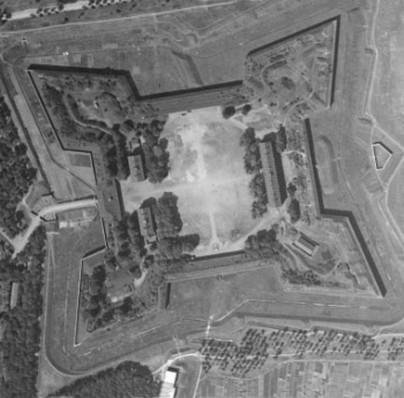
Prime Minister Thiers. The fort itself formed a square with four corner bastions and with relatively
low stone walls with firing embrasures set at intervals
in them, with the fort being a bit over 300-meter-long
per side. Three German Army soldiers stopped the
staff car at the main gate of the fort, a high stone
arch set in a thick bastion. The sentries however
came to attention and saluted at once when they saw Schellenberg’s rank insignias.
‘’What can we do for you, Herr Obersturmbannführer?’’
177
‘’I need to speak urgently with the commandant of this fort and with his logistics officer. Wake them up if they are asleep. I will be waiting for them at the entrance to your explosives depot. Can one of you please guide me to that depot?’’
‘’Certainly, Herr Obersturmbannführer!’’ replied the senior sentry, who then pointed at one of his comrades. ‘’Hans, go guide this officer to the entrance of our explosives depot while I call the Commandant!’’
‘’Yes, Gefreiter!’’
With one soldier climbing on the footrest on the driver’s side of the staff car and holding on while giving indications to the SS driver, the Mercedes rolled inside the fort, then turned right to follow the perimeter road running along the inner walls of the fort’s casemates. The sentry made the driver stop his car in front of the first of a series of large double garage doors and spoke to Schellenberg after stepping off the footrest.
‘’These doors are the access doors to our explosives magazines, Herr Obersturmbannführer. Those magazines were originally used as stables but, being set inside the casemates of the fort, are very resistant to aerial bombs and artillery shells.’’
‘’Thank you, Schutze! You may go! I will wait here for your Commandant.’’ The soldier gave Schellenberg a Nazi salute before leaving at a run to return to the main gate. Stoltz then noticed that Schellenberg seemed rather unhappy.
‘’Is something wrong, Herr Obersturmbannführer?’’
‘’Quite a few things, actually, Hauptmann. First, those sentries at the main gate did not ask for our identity papers, taking our German uniforms at face value. Second, tell me how many armed guards you see in front of the doors of this explosives depot.’’ Stoltz paled a bit when he understood what Schellenberg was alluding to.
‘’Uh, none, Herr Obersturmbannführer.’’
‘’Exactly! We have a German ammunition depot full of high explosives and with zero guards watching its magazines. If this is the normal standard of security of this place, then I would be less than surprised if someone managed to steal explosives from here. The commandant of this fort better have some damn good explanations for all this. Let’s take a look at those magazines while waiting for him, shall we?’’ Expecting some verbal fireworks soon, Stoltz followed Schellenberg and his bodyguard to the first set of double barn doors and took out his flashlight to illuminate its locks. What they saw was a simple steel chain of rather small gauge loosely keeping the two doors together and closed by a padlock. Schellenberg frowned on seeing that the doors could be partially opened despite the chain linking them. Being a small, thin man, he
178
pulled on one of the doors, then managed to slip inside through the opening with little difficulty. Now inside the first magazine and looking quite pissed, he extended his right hand out through the gap between the double doors.
‘’Pass me your flashlight, Hauptmann Stoltz: I am going to do some exploring inside this magazine. Stay near the door with my bodyguard and wait for the fort commandant.’’
‘’Here you are, Herr Obersturmbannführer.’’
Armed with Stoltz’s flashlight, Walter Schellenberg pointed it around him in the obscure magazine and saw that it was nearly full of wooden crates piled high and deep on each side of a central circulation space left empty. Seeing a light switch on a wall near the doors, he went to it and threw it on, switching on a set of ceiling lamps and fully illuminating the magazine. Switching off his flashlight, Schellenberg approached one of the piles of crates and read the inscriptions on one of the small crates, which each measured about sixty centimeters per side.
‘’Hum, Hexogen high explosives, 32 one-kilo blocks. STOLTZ, WHAT IS HEXOGEN? IS IT ANOTHER NAME FOR TNT?’’
‘’THEY HAVE HEXOGEN HERE? MEIN GOTT! HEXOGEN IS SIXTY PERCENT MORE POWERFUL PER WEIGHT THAN TNT AND IS QUITE INSENSITIVE TO SHOCK. IT IS USED COMMONLY AS A SHELL AND BOMB FILLER AND IS ALSO OFTEN MIXED WITH TNT TO MAKE A CHEAPER EXPLOSIVE COMPOUND.’’
‘’SIXTY PERCENT MORE POWERFUL THAN TNT, YOU SAY?’’ asked Schellenberg, feeling alarm rising in him.
‘’YES, HERR OBERSTURMBANNFÜHRER!’’
He then quickly counted the number of rows of stacked crates apparently contained inside the magazine and made a quick calculation, arriving at a total of a bit over 82 tons of hexogen, a scary number indeed: that represented an awful amount of destructive power if it would fall into the wrong hands. With doubts suddenly resurfacing in his mind, Schellenberg walked down the alley between the two giant piles of crates, going all the way to the stone wall at the end. He swore to himself when he saw that there was an old steel door in that back wall which was hidden by one of the piles. Furthermore, there was a gap between the end of the pile and the wall, a gap wide enough to easily let someone circulate around the pile. Walking behind the pile and going to the steel door, he swore again when he was able to open it with a noise of rusted metal: it was not
179
locked! Passing through the open door while switching on his flashlight, he walked down a dark tunnel for maybe ten feet before arriving at a T-shaped junction with a long, obscure corridor extending to his left and right. One look through a nearby firing slit made him understand that he was now in a tunnel of the fort’s casemates used to link the various firing positions together. Returning inside the magazine, he went to check if he could walk all the way around the piles by following the side walls. He hesitated when he saw that the two rearmost stacks of crates at the back end were missing. Slowly walking through the gap between the rear-most stacks and the side wall, Schellenberg had to stop nearly at once, paralyzed by shock: a number of the stacks closest to the side wall were missing, with the gap in the piles hidden by the stacks facing the central alley. Just on this left-side pile, he could count that a total of 380 crates of hexogen were missing, representing over twelve tons of high explosives. Feeling anger rising in him, Schellenberg nearly ran to the right-side pile of crates and examined its back face. There was an even bigger hidden gap in the crates stacked there, to the tune of fourteen tons of missing hexogen! That the missing crates had been located nearest to the side walls, instead of on the side of the central alley, where a forklift or work party of soldiers would normally pick up first the number of crates needed, clearly meant to him that those who had carried away those crates were not German soldiers. Schellenberg then returned to the double doors and squeezed through between them before speaking to Stoltz.
‘’I may be wrong, but over 26 tons of hexogen appears to be missing from the piles, and this just in this one magazine.’’
Stoltz’ eyes widened with horror on hearing that.
‘’Twenty-six tons of hexogen? But that could mean that the British still could have about ten tons of hexogen in their hands, even after destroying all these barrack blocks!’’
‘’Exactly! You can imagine what those British commandoes could further do with that quantity of explosives still in their hands, Stoltz?’’
‘’Uh, I unfortunately could imagine that too well, Herr Obersturmbannführer’’
‘’So, where is the fort commandant? Is he finally about to show up here or will he need a direct invitation from the Führer himself?’’
As if someone else had heard him, the sound of running feet approaching came from the direction of the barracks of the fort. A hauptmann in his forties and wearing the insignias
180
of a reservist supply officer soon appeared in the night, stopping in front of Schellenberg and saluting him. He was a bit out of breath as he presented himself.
‘’Hauptmann Friedrich Borgart, Logistics Officer for the Fort de l’Est, Herr Obersturmbannführer. I am sorry for the wait, but I came as quickly as I could.’’
‘’At least you are here, Hauptmann Borgart, which is more than I can say about the commander of this fort. Who commands this fort, by the way?’’
‘’Oberst-Leutnant Johan Müller, Herr Obersturmbannführer. May I ask what is happening?’’
‘’You may, Hauptmann!’’ replied Schellenberg, his tone frosty. ‘’Tonight, British commandos blew up a dozen of our barracks around Paris, using tons of high explosives placed under those barracks. Thousands of our troops are now dead or missing and I came here to find if those British commandos could have got their explosives from this fort.’’
‘’From this fort, Herr Obersturmbannführer? But nobody came here to load up explosives in the last two weeks, while our last delivery of explosives came in about a month ago. The only trucks which entered this fort during the last two weeks only carried foodstuff and German personnel.’’
‘’Then, how do you explain that there are big gaps in your piles of hexogen crates inside that first magazine behind me, Hauptmann Borgart? By my count, you may be missing about 26 tons of hexogen.’’
Borgart’s eyes widened with horror on hearing those last words.
‘’But how could that be? Nobody has entered that magazine for a month now, when the last delivery of hexogen was received.’’
‘’Wrong! I just entered it and I didn’t even have to cut the chain on the doors. In truth, the security around these explosives is a farce, Hauptmann! Do you have more hexogen in your other magazines?’’
‘’Actually, I do, Herr Obersturmbannführer: the second magazine contains large special demolition charges in the form of barrels, each one containing eighty kilos of pure hexogen. The rest of the magazines contain TNT in various forms.’’ It was the turn of Schellenberg to open his eyes wide with horror.
‘’Demolition charges, each with eighty kilos of hexogen? Go get your manifests of explosives stored in this fort, along with the keys to those magazines, and come back here as quickly as you can. And get that damn fort commander to hurry up and get here before I put him under arrest!’’
181
‘’Uh, yes, Herr Obersturmbannführer!’’ replied the supply officer before leaving at a run. Schellenberg then exchanged a worried look with Stoltz.
‘’Eighty-kilo charges of hexogen! They would have been perfect for those damn British commandos. Somehow, I suspect that we will find that at least a few will be missing.’’
To Schellenberg’s frustration and anger, the commandant of the fort was still a no show by the time the supply officer came back. Spending his rage on a pebble and kicking it away, he then faced his senior bodyguard.
‘’Karl, take the car and Wilhelm with you and go put the fort commandant under arrest, then bring him here.’’
‘’Yes, Herr Obersturmbannführer!’’ nearly shouted the big SS trooper before running to the staff car. Schellenberg then looked severely at the supply officer.
‘’Now, let’s open up and inspect your magazines, Hauptmann, starting with the first one behind me. You may find that someone has carried away quite a lot of your precious explosives.’’
Cold sweat appeared on Borgart’s forehead as he prepared his keys and supplies manifests, then opened the lock on the first magazine. Schellenberg clenched his teeth with anger when Borgart confirmed that over 26 tons of hexogen blocks were missing from that magazine. His anger turned into rage when they found out that no less than 56 demolition charge barrels, each packing eighty kilos of hexogen explosives, were missing. That was also when his two bodyguards came back with a rather unstable fort commandant whose breath strongly smelled of alcohol. Schellenberg stared at the lieutenant-colonel with a look that could have killed.
‘’YOU DAMN INCOMPETENT DRUNK! THOUSANDS OF MY MEN ARE DEAD TONIGHT BECAUSE YOU COULDN’T PROVIDE ADEQUATE SECURITY FOR THE EXPLOSIVES STORED IN YOUR FORT! IN THE NAME OF GRUPPENFÜHRER HEIDRICH, HEAD OF REICH SECURITY, I PUT YOU UNDER ARREST FOR DERELICTION OF DUTY AND DRUNKENNESS! KARL, PUT THAT PIECE OF SHIT IN MANACLES AND STUFF HIM INSIDE THE CAR!’’
As his senior bodyguard was putting a pair of manacles on the wrists of the fort commandant, who was not fully understanding what was happening to him, Schellenberg turned to face the supply officer, pointing an index at him.
182
‘’Hauptmann Borgart, I want you to do a complete and thorough inspection of your stores of explosives. I want to know exactly how much of what is missing from these magazines. Once your inspection will be completed, send the results at the Kommandantur of the Gross Paris, for my attention. I am Obersturmbannführer Walter Schellenberg, Special Envoy of Reichführer Himmler and Assistant of Gruppenführer Reinhard Heidrich.’’
Borgart came to rigid attention and saluted, his blood freezing in his veins: Himmler and Heidrich were the two highest police and security leaders in the Reich, with the powers to arrest anyone except the Führer himself.
‘’It will be done, Herr Obersturmbannführer!’’
‘’Good! Let’s go back to Paris, Hauptmann Stoltz!’’
Going back to his field staff car with the young field engineer officer and sitting on the back bench seat, Schellenberg looked around him for a second before asking a question to his senior bodyguard.
‘’Where is the fort commandant, Karl?’’
‘’I stuffed him in the trunk, Herr Obersturmbannführer.’’ answered matter-of-factly the SS bodyguard, his face impassive. Schellenberg smiled and nodded at that.
‘’A perfect place for him!’’
His smile then faded and he shook his head in discouragement.
‘’So, those damn British could still have over fourteen tons of hexogen explosives at their disposal, even after blowing up our barracks. I don’t want to think about what they could do with that. Start the car, Wilhelm: we are going back to Paris and the Kommandantur.’’
The SS driver started his ninety horsepower Mercedes-Benz six-cylinder engine and engaged gears, turning around the perimeter road of the fort and exiting through the main gate. The staff car was maybe a mile away from the Fort de l’Est, heading south towards Paris, when a cataclysmic explosion light up the night and made the ground shake like an earthquake. Snapping his head backward, Schellenberg saw that half of the Fort de l’Est had just been utterly destroyed by a series of huge explosions, projecting hundreds of tons of stones, earth and other debris high in the air.
‘’Mein Gott! The British had booby-trapped at least one of the explosives magazines. If we had stayed there for the inspection, we would be dead now.’’ As he finished saying that, debris started falling back down, forcing his driver into performing a slalom to avoid the stones falling on the road. Thankfully, the man was an
183
expert driver and managed to avoid the various obstacles while gunning his engine to maximum power, taking the staff car out of the danger zone. Stoltz blew air out in relief once it was evident that they were safe.
‘’Himmel! Those British commandos must be real demons!’’