

The Last Gasps of Indian Summer by Edward Drobinski - HTML preview
Download the book in PDF, ePub, Kindle for a complete version.
Pearl just gave him an “Ooooh you” look and returned the flask.
The Last Gasps of Indian Summer Page 1345
He took a swap and said; “One of the things that used to annoy me back there was when I’d say something to someone and they’d give me a queer look and say; ‘It goes without saying.’”
“I hated that, too. It’s just a conversation killer.”
“It translates to; ‘I don’t know a damn thing about it and don’t want to advertise my deficiencies.’ As a kid my room was right near the front door. So, sometimes, when I came home my parents didn’t know I was there. One time I heard my mother tell my father; ‘When I married you I thought you were the strong silent type. Now I know you’re just stupid.’”
“What did he say?”
“He remained the strong silent type or mumbled. I always thought that he was kind of stupid, so I was glad to find out that I wasn’t the only one who thought that.”
“Still think he was stupid?”
Herman thought a bit and replied; “Kind of. Now, I’d probably use the word limited. He seems to have known how to do things, but was totally incapable of explaining what he did.”
Pearl laughed to Herman’s surprise and said; “I think that’s pretty common. My father had a ‘military intelligence’ job, if that’s not an oxymoron and if you asked him to explain it, it
The Last Gasps of Indian Summer Page 1346
would be like talking to Forrest Gump.” Upon saying that she realized that she might be missing something, but probably not.
“Is he still alive?”
She shook her head wistfully and said; “No. He died when he was younger than I am now. They flew his body back to the US from Panama when he was 52.”
“Mine also died on the young side, but not that bad. Heart attack at 62. It wasn’t really a surprise, as he never exercised and smoked two packs of cigarettes a day. He said he picked up the habit under Patton, in Europe during World War Two. The supply lines couldn’t keep up with the combat troop’s movement, but curiously coffee and cigarettes found their way. So, the commanders used to say; ‘Drink ‘em and smoke ‘em. It’ll kill the hunger.’”
“Did it?”
Herman shrugged and replied; “He said ‘Yeah,’ but it killed him too.” He paused a while. Pearl was quiet and stared at the painfully consistent, uniform, light blue sky. He felt a twinge of anger and continued; “You know, everything they tell you back there turns out to be wrong. The experts discover that ten years later and then someone tries to sell you a remedy. And this strong, silent type of god proves useless. The one thing the
The Last Gasps of Indian Summer Page 1347
imperfect religions have in common is that they equate life with suffering .... ”
Pearl interrupted him to say; “Well, somebody got something right.”
“Yeah, but, why should we accept that pitiful situation? We should form a union and go out on strike. Management unfair to workers.”
“It’s been done and the results are very questionable.”
“No, we need something different. If we are destined to suffer anyway, let’s completely stop playing the game, something on the lines of 60’s left wing radicalism.”
“Another ism.”
“Maybe. But, what the hell do we have to lose? Those in charge have already exhausted their arsenal.” He put one foot up on his sack, aping George Washington, crossing the Delaware River and laughed to her.
She smiled and thought of him as consciously absurd and unconsciously useless, a combination currently pleasing.
He ponderously pronounced; “There shall be certain inalienable rights. Boss ≠ Master, Boss = Caretaker. Worker ≠ Slave, Worker
The Last Gasps of Indian Summer Page 1348
= Partner. Both Caretaker and Partner shall be beneficiaries of a profit sharing plan.” He paused and saw, what he thought was interest in her face and then continued in his mock-authoritarian manner of speech; “Tell that to the mean spirited f***** upstairs.”
Pearl clapped her hands and said; “I will. I will. As long as you do.”
Herman said; “I think I already did and will continue to, because I don’t give a f***. Are you my Partner?”
Pearl excitedly exclaimed; “Yes..........As long as I can also be co-founder.”
Herman shrugged, smiled at her and said; “That’s the only way it can be.” They moved to each other and embraced. He thought;
“Celebration. Exhilaration. Hope. Reality. Pearl.”
****************************
Herman opened his eyes and felt the grainy, sun-bleached sand beneath him. He fretted when he couldn’t see or feel any part of his companion. His slumber produced a dream that was at the very
The Last Gasps of Indian Summer Page 1349
least, unsettling. In it, he knew that Pearl didn’t want to see him. He went to her house on a pleasant fall morning and thought that he’d surprise her waiting at the front door. It wasn’t fastened properly and in the space provided by the shoddy workmanship, inattention and overuse, he saw her, already fully dressed, scurrying around the kitchen at breakneck speed. He remembered that she had told him not to come looking for her and tried to think of some excuse to be crouched at her door, of course, coming up with nothing. He scanned the neighborhood and saw that the block consisted of similar houses; two stories with basements, wood frames and pitched roofs forming attics which faced the street, contrary to what aesthetics might demand, but efficient for their use on narrow plots of land. They were probably built when the craftsman style was popular and had been subjected to plebian repairs and additions in subsequent years.
Colors were numerous, with most displaying a mixture. Pearl’s was green and cream, with a pink trim and doors. All of the colors were well faded and resulted in a diminishment of the shock produced when the trim and doors were freshly decorated.
The street was lined on both sides with mature elm trees, which were still in bloom sufficiently to produce shade from a weak morning sun, off and on obscured by fluffy, white cumulous clouds, which moved slowly across the blue sky, propelled by a gentle breeze, which he also felt on his ground level. He
The Last Gasps of Indian Summer Page 1350
thought that she might exit another door, in which case, he could get behind her, then catch up at some point and say something stupid, like; “Fancy meeting you. I was just out strolling. Do you live here?” and hope she didn’t smack him.
Fantasy. He watched her through the crack as she continued to move quickly gathering up some things and putting them in a light brown, leather bag strapped over her shoulder. Triumphant classical music with horns on their way to crescendo emanated from somewhere inside and she danced vigorously and sang indecipherable words in a mocking, but cheerful fashion. She glided to the front door, opened it and saw him. She made no reaction, shut the door and bounced down the street. He was saddened at the lack of recognition, but relieved that she didn’t scream at him or call a cop. He followed, keeping his distance thirty feet behind. She did not look back. On the third block of her journey she met a female friend, with oddly and shortly cut bleached blond hair, parted in the center. The two stopped for a brief moment, looked back at him, laughed and then went their separate ways. She continued on one more block to a high school where she taught, went in and, again never looked back. He stopped across the street from the three story brick structure, knowing that he couldn’t go in, but not knowing what to do next.
The Last Gasps of Indian Summer Page 1351
Upon awakening he got extremely depressed over her desire not to see him and her ability to be blasé about it. This stayed with him a while, until he re-interpreted the dream from her point of view. She was effervescent and happy. She sang and danced. This is what he most wanted for her and he was content.
But, where was his companion? He got up and canvassed the area.
She emerged from the opposite side of a cactus and he called out; “Pearl, you scared the hell out of me. Don’t ever do that again.”
She looked at him strangely, furrowing her brows and wrinkling her forehead. He took a few more slow steps in her direction, as she stood still. He said; “Pearl,” in somewhat questioning manner.
She shook her head in apparent disbelief and softly said; “I’m not Pearl. My name is Dusty.”
He wasn’t sure if she were playing a trick on him or not. She had not done so, up until now. He wondered if she had consumed too much cactus juice. He wondered if she had totally lost it.
He decided to look for physical evidence. She looked a lot like Pearl, but now that he was scrutinizing, he thought that the person standing in front of him had markedly smaller hips and somewhat larger breasts. She wore similar blue jeans and
The Last Gasps of Indian Summer Page 1352
sandals, but her shirt was a light green button up. Pearl always preferred red. Her long, gray hair and small, attractive face seemed identical and she wore wire-rimmed glasses.
He wasn’t certain if this was Pearl or not.
How did anyone else get here? How could Pearl disappear on the flat terrain with twenty mile visibility in all directions? He looked back for the first time and saw nothing but sand and cactus. Maybe she was hiding behind one of those. Maybe she went back and died along the way. Maybe. Maybe. Maybe. He thought the best approach was to play “Dusty’s” game. He said; “How did you get there?”
She replied; “I think I made five wrong turns,” and giggled.
“All right. Have it your way. I’m Herman.”
She giggled again, saying; “Like in Munster.”
“Like in hermit. You’re a real giggler, aren’t you?”
“Why not?”
“Why not? Because of all the things we’ve been speaking of.”
“What are you talking about? We’ve just met, and that’s only because you’ve been following me around.”
The Last Gasps of Indian Summer Page 1353
Herman was lost. He shrugged and said; “I’m sorry. You looked like someone I once knew. I must have been mistaken.”
Dusty silently nodded agreement. She walked away.
Herman stood still and said; “Just tell me one thing. Where are you going?”
She pointed at a smokestack that made him think of urban New Jersey. She said; “Back there.”
“How could you? Why?”
With her back still to him she answered as if she had just heard the dumbest question of all time, saying; “I’ve been out here long enough. She kept walking as if she were in basic training on methamphetamine. Herman was too weary to keep up if he wanted to; so he sat.
****************************
Herman’s sleepy eyes opened to be rudely greeted by the undefeatable blare of the persistent sun, seemingly angry in its malevolent desire to shed glorious illumination on everything too dumb to hide. He nervously scanned the ground level and
The Last Gasps of Indian Summer Page 1354
found no sign of Dusty. He sighed. He was well practiced at the art. He was disappointed, but far from surprised, as her recent conversations put a direct and indirect emphasis on “social”
considerations. That was her merry word, as he would gloomily substitute “Back there s***.” There was no way he was going back. It took him 60 years to escape and he felt it only logical that it would require a minimum of 60 years in the wilderness to give it a fair day in court. He realized that he used the words
“felt” and “logical” in the same sentence. There had to be something wrong with his train of thought.
With the audacious, nervy, golden orb constantly standing guard he had lost complete track of time. How would he know when he was here 60 years? Maybe he already crossed that threshold and just didn’t know. What did it matter anyway? His original goal was to be out here by himself and, at times including now, he was successful. So, why wasn’t he in the mood for a celebration?
Easy. Herman had grown accustomed to the grief poured on him by Pearl, Dusty, or DustyPearl, the spirited and brisk contradiction.
He gazed at the soot belching ugliness of what was now before him and pictured her there. He wasn’t sure if he was looking at a new area or if he had circled around the globe and was again near his point of departure. From a distance it looked exactly
The Last Gasps of Indian Summer Page 1355
the same. He wondered if he should turn back and go the other way. He promised himself that he never would, but now he didn’t know east from west, anyway. If only the god damned sun did its job and moved, he might get an inkling of where he was and perhaps even be privy to the correct time. He further thought that going back was a poor practical option, as his knife had probably damaged his big chief cactus water supply. He realized he was the last of the great medieval thinkers as he wanted the sun to move, while he remained comfortably ensconced in the world of his earlier choice.
The merciless clarity constantly ensured by his uninvited, now undesirable companion made him have second thoughts. He never anticipated “out there” would be reminiscent of the jeering audience he endured playing baseball. Maybe he had made some core error. Was clarity, of necessity, merciless? But wasn’t truth what he thought he was desirous of when he left the belching gray clouds of smoke “back there?” Does “merciless clarity” infer “merciful obscuration?” Does “merciless clarity”
need, or love, to risk using a forbidden word, “merciful obscuration?” Semantics? Sophistry? He seemed certain in one observation. The trillions of seeds waiting to bloom below this dry, barren ground are not sun worshippers.
The Last Gasps of Indian Summer Page 1356
He looked at his bare arms and thought he could see the blood pulsing through the ugly, irregular veins. He wished he had observed Pearl and Dusty this closely. Or perhaps that was exactly what he should not have done. Maybe his incuriosity allowed him to luck out, at least on that one.
He became aware that he was certain of another thing. He didn’t know anything more than he did at the outset of his journey. He merely had more questions, on which, the supposedly illuminated one upstairs deigned to shed any of its glorious light.
He defiantly laid on his back in an effort to fully demonstrate his steadfastness to any potential observer. He immediately thought of Pearl and Dusty. He recalled all of his time spent with both of them; the warmth, the worry, the misunderstanding, the talk, the joy, the unbearable sorrow and most of all, the movement of mind and body that now eluded him. He realized that he was wrong on at least one score. He knew he missed her, whatever name she called herself now. He had vowed to never go
“Back There” and didn’t want to be just another liar. Maybe there was room for maneuvering, as at this point he truly didn’t know back from front, or east from west. But, even if he chose to walk forward to the “civilization” ahead of him, how could he be certain that he would be able to again find her? Or, was it she who originally found him? Maybe that was her job. With a
The Last Gasps of Indian Summer Page 1357
weathered, squinting, yet determined face he struggled to look up at his taciturn nemesis and softly, but resolutely said; “I’m not moving until you do.” His tears nourished a few waiting, fortunate, dormant seeds as the water cascaded through the miniscule grains of sand below him.
She Loves You
The Beatles
She loves you, yeah, yeah, yeah
She loves you, yeah, yeah, yeah
She loves you, yeah, yeah, yeah, yeah
You think you lost your love
Well, I saw her yesterday-ay
It's you she's thinking of
And she told me what to say-ay
She says she loves you
And you know that can't be bad
Yes, she loves you
And you know you should be glad
She said you hurt her so
She almost lost her mind
But now she says she knows
You're not the hurting kind
The Last Gasps of Indian Summer Page 1358
She says she loves you
And you know that can't be bad
Yes, she loves you
And you know you should be glad, ooh
She loves you, yeah, yeah, yeah
She loves you, yeah, yeah, yeah
And with a love like that
You know you should be glad
You know it's up to you
I think it's only fair
Pride can hurt you too
Apologize to her
Because she loves you
And you know that can't be bad
Yes, she loves you
And you know you should be glad, ooh
She loves you, yeah, yeah, yeah
She loves you, yeah, yeah, yeah
With a love like that
You know you should be glad
With a love like that
You know you should be glad
With a love like that
The Last Gasps of Indian Summer Page 1359
You know you should be glad
Yeah, yeah, yeah
Yeah, yeah, yeah, yeah
Written by Paul McCartney and John Lennon.
Herman lost track of the time he spent there. Shade providing, white, gray and black clouds silently moved in from the east and delivered a warm drizzle. The accompanying breeze brought a long forgotten scent of flowers he could no longer name. The earth moved and his imperfect eyes told him that it was the sun.
When his slumber seemed to end, Herman instinctively began his trek toward “civilization.”
You Never Give Me Your Money
The Beatles
You never give me your money
You only give me your funny paper
And in the middle of negotiations
You break down
I never give you my number
I only give you my situation
The Last Gasps of Indian Summer Page 1360
And in the middle of investigation
I break down
Out of college, money spent
See no future, pay no rent
All the money's gone, nowhere to go
Any job I got the sack
Monday morning, turning back
Yellow lorry slow, nowhere to go
But oh, that magic feeling, nowhere to go Oh, that magic feeling, nowhere to go
Nowhere to go
One sweet dream
Pick up the bags, get in the limousine
Soon we'll be away from here
Step on the gas and wipe that tear away One sweet dream came true today
Came true today
Came true today, yes, it did
One, two, three, four, five, six, seven All good children go to heaven
One, two, three, four, five, six, seven All good children go to heaven
One, two, three, four, five, six, seven
The Last Gasps of Indian Summer Page 1361
All good children go to heaven
One, two, three, four, five, six, seven All good children go to heaven
One, two, three, four, five, six, seven All good children go to heaven
One, two, three, four, five, six, seven All good children go to heaven
One, two, three, four, five, six, seven All good children go to heaven
One, two, three, four, five, six, seven All good children go to heaven
One, two, three, four, five, six, seven All good children go to heaven
Written by Paul McCartney and John Lennon.
The Beginning?
The Last Gasps of Indian Summer Page 1362
198 - The Master and Margarita - Moscow, Russia, USSR
The Master and Margarita
The novel has two settings. The first is Moscow during the 1930s, where Satan appears at Patriarch's Ponds as Professor Woland. He is accompanied by Koroviev, a grotesquely dressed valet; Behemoth, a black cat; Azazello, a hitman; and Hella, a female vampire. They target the literary elite and Massolit, their trade union, whose headquarters is Griboyedov House.
Massolit consists of corrupt social climbers, bureaucrats, politicians, profiteers, and cynics. The second setting is the Jerusalem of Pontius Pilate; Pilate's trial of Yeshua Ha-Notsri, A/K/A Jesus of Nazareth, his recognition of an affinity with and spiritual need for Yeshua, and his reluctant acquiescence to Yeshua's execution. The Jerusalem plot of the novel is later revealed to be the novel written by the Master.
The novel's first part includes satirical depictions of Massolit and Griboyedov House; Satan's magic show at a variety theatre, satirizing the vanity, greed, and gullibility of the new elite; and Woland and his retinue appropriating Berlioz's apartment after his death. Apartments, scarce in Moscow, were controlled by the state, and Bulgakov based the novel's apartment on his own.
The Last Gasps of Indian Summer Page 1363
The House of the Rising Sun
The Animals
There is a house in New Orleans
They call the Rising Sun
And it's been the ruin of many a poor boy And God, I know I'm one
My mother was a tailor
She sewed my new blue jeans
My father was a gamblin' man
Down in New Orleans
Now the only thing a gambler needs
Is a suitcase and a trunk
And the only time he's satisfied
Is when he's on a trump
Oh mother, tell your children
Not to do what I have done
Spend your lives in sin and misery
In the House of the Rising Sun
Well, I got one foot on the platform
The other foot on the train
The Last Gasps of Indian Summer Page 1364
I'm goin' back to New Orleans
To wear that ball and chain
Well, there is a house in New Orleans
They call the Rising Sun
And it's been the ruin of many a poor boy And God, I know I'm one
Written by Alan Price.
Part one opens with a confrontation between Berlioz, the head of Massolit, and Woland, who prophesies that Berlioz will die later that evening. This interaction between Woland and Berlioz is mirrored by the trial of Yeshua by Pontius Pilate. Woland entrances Ivan and Berlioz in the story that leads up to Yeshua's execution. In the story, Yeshua is presented as having inhuman characteristics. Woland tells this story to convince his audience of God's existence, but the two Soviet authors refuse to believe him. Although Berlioz dismisses his death prophecy as insane raving, he dies as the professor predicted. The fulfillment of his death prophecy is witnessed by Ivan Nikolaevich Ponyrev, a young, enthusiastic, modern poet who uses the pen name Bezdomny; "homeless". His nom de plume alludes to Maxim Gorky, Maxim the Bitter; Demyan Bedny, Demyan the Poor;
The Last Gasps of Indian Summer Page 1365
and Michail Golodny, Michail the Hungry. His futile attempts to capture the "gang," Woland and his entourage, and his warnings about their evil nature land Ivan in a lunatic psychiatric clinic, where he is treated by Stravinsky, a local doctor. The care he receives in the clinic is very good, especially when evaluated by the standards of the time. It thus serves as an important place in the novel for many characters who Woland confronts, and derives special importance from its bringing together of Ivan and the Master, an embittered author whose name connects to the title of the text. Master explains to Ivan that the rejection of his novel about Pontius Pilate and Christ led the Master to burn his manuscript in despair and turn his back on Margarita, his devoted lover.
In Moscow, Woland and his retinue put on a show at the Variety Theater. During the show master of ceremonies Bengalsky's head is ripped off then reattached at the urging of the audience. The audience is amazed when Koroviev makes money rain down and when Woland's retinue gives out luxury fashion items to the women of the audience. Later the money and clothes disappear, causing chaos and embarrassment. Here, Bulgakov portrays women's and men's sins very differently. The women of Moscow are condemned for accepting free clothing, while the men are condemned for adultery, excessive greed, etc., and the two are portrayed as
The Last Gasps of Indian Summer Page 1366
equivalent transgressions. During this performance, Woland notes the lack of moral progress made in Soviet society, remarking that despite their technological advancements such as "buses, telephones, and other apparatuses," Muscovites remain "people like any other people ... they love money, but that has always been so." This scene is a key moment in Bulgakov's societal criticism.
Ivan dreams of the execution of Yeshua as witnessed by Matthew Levi. In an attempt to save Yeshua from a torturous death, Levi steals a knife to kill him quickly, but he is too late to reach Yeshua. Yeshua hangs on the cross and suffers in the excruciating heat for hours until an executioner offers him some water and kills him. Levi cuts down Yeshua's body and carries it away.
Back in Moscow, after Woland's performance, the city is thrown into confusion. At the Variety Theatre, the highest ranking employee left is Vassily Stepanovich, the bookkeeper. His attempt to make sense of the show's aftermath reveals a trail of chaos left by Woland and his retinue. Rubles are transforming into insects, bureaucrats have been replaced by animate suits, and entire offices have been cursed to break into song against their will. Similarly, Berlioz's uncle's attempt to claim his late nephew's apartment is thwarted by Behemoth and Azezello,
The Last Gasps of Indian Summer Page 1367
who send him violently off. Immediately thereafter, Andrei Sokov, barman at the Variety Theatre, visits the apartment.
Woland welcomes him in, offering fine food and drink, though Sokov declines these niceties. After some conversation, Woland reveals to Sokov that he will soon die of liver cancer and suggests that he spends his savings to enjoy a short life of hedonism.
Part two introduces Margarita, the Master's mistress, who refuses to despair of her lover and his work. Azazello gives her a magical skin ointment and invites her to the Devil's midnight Good Friday ball, where Woland gives her the chance to become a witch.
Margarita enters the realm of night and learns to fly and control her unleashed passions. Natasha, her maid, accompanies her as they fly over the Soviet Union's deep forests and rivers.
Margarita bathes and returns to Moscow with Azazello as the hostess of Satan's spring ball. At Koroviev's side, she welcomes dark historical figures as they arrive from Hell.
Margarita survives the ordeal, and Satan offers to grant her deepest wish. She chooses to ask to free a woman she met at the ball from eternal punishment. The woman, who had been raped, murdered her child. Her punishment was to wake each morning next
The Last Gasps of Indian Summer Page 1368
to the handkerchief she used to smother it. Satan tells Margarita that she liberated the woman, and still has a wish to claim from him. She asks for the Master to be delivered to her and he appears, dazed and thinking he is still in the lunatic asylum. They are returned to the basement apartment which had been their love nest.
Matthew Levi delivers the verdict to Woland; the reunited couple will be sent to the afterlife. Azazello brings them a “gift”
from Woland; a bottle of Pontius Pilate's poisoned wine. The Master and Margarita die. Azazello brings their souls to Satan and his retinue, awaiting them on horseback on a Moscow rooftop, and they fly away into the unknown, as cupolas and windows burn in the setting sun, leaving Earth behind and traveling into dark cosmic space. The Master and Margarita will spend eternity together in a shady, pleasant region resembling Dante Alighieri's Limbo, in a house under flowering cherry trees.
Woland and his retinue, including the Master and Margarita, become pure spirits. Moscow's authorities attribute its strange events to hysteria and mass hypnosis. In the final chapter, Woland tells the Master to finish his novel about Pontius Pilate; condemned by cowardice to limbo for eternity. The Master shouts; "You are free! He is waiting for you!". Pontius Pilate is freed, walking and talking with the Yeshua whose spirit and
The Last Gasps of Indian Summer Page 1369
philosophy he had secretly admired. Moscow is now peaceful, although some experience great disquiet every May full moon.
Ivan Ponyrev becomes a professor of philosophy, but he does not write poetry anymore.
Back In the USSR
The Beatles
Flew in from Miami Beach, B-O-A-C
Didn't get to bed last night
On the way, the paper bag was on my knee Man, I had a dreadful flight
I'm back in the U-S-S-R
You don't know how lucky you are, boy
Back in the U-S-S-R
Been away so long, I hardly knew the place Gee, it's good to be back home
Leave it 'til tomorrow to unpack my case Honey, disconnect the phone
I'm back in the U-S-S-R
You don't know how lucky you are, boy
Back in the U-S, back in the U-S-S-R
The Last Gasps of Indian Summer Page 1370
Well, the Ukraine girls really knock me out They leave the West behind
And Moscow girls make me sing and shout That Georgia's always on, my, my, my,
my, my, my, my, my, my mind
Oh, come on
Hey, I'm back In the U-S-S-R
You don't know how lucky you are, boys
Back In the U-S-S-R
Well, the Ukraine girls really knock me out They leave the West behind
And Moscow girls make me sing and shout That Georgia's always on my, my, my,
my, my, my, my, my, my mind
Oh, show me 'round your snow-peaked mountains way down South
Take me to your daddy's farm
Let me hear your balalaikas ringing out Come and keep your comrade warm
I'm back In the U-S-S-R
Hey, you don't know how lucky you are, boy Back in the U-S-S-R
Oh, let me tell you, honey
The Last Gasps of Indian Summer Page 1371
Hey, I'm back
I'm back In the U-S-S-R
Hey, it's so good to be home
Yeah, back In the U-S-S-R
Written by Paul McCartney and John Lennon.
The Last Gasps of Indian Summer Page 1372
199 - Inherent Vice - Fargo, North Dakota Inherent Vice
In 1970, Shasta Fay Hepworth visits the beach house of her ex-boyfriend, Larry "Doc" Sportello, a private investigator and hippie druggy in Gordita Beach, Los Angeles County. She tells him about her new lover, Michael Z. "Mickey" Wolfmann, a wealthy real estate developer, and asks him to help prevent Mickey's wife from abducting Mickey and committing him to an insane asylum.
Purple Haze
The Jimi Hendrix Experience
Purple haze all in my brain
Lately things just don't seem the same
Actin' funny but I don't know why
'Scuse me while I kiss the sky
Purple Haze all around
Don't know if I'm comin' up or down
Am I happy or in misery?
What ever it is, that girl put a spell on me
Help me
The Last Gasps of Indian Summer Page 1373
Help me
Oh, no, no
Ooh, ahh
Ooh, ahh
Ooh, ahh
Ooh, ahh
Yeah
Purple haze all in my eyes
Don't know if it's day or night
You got me blowin', blow my mind
Is it tomorrow or just the end of time?
No
Help me
Yeah, yeah, purple haze
Oh, no, oh
Oh, help me
Tell me, girl, tell me
I can't go on like this
You're makin' me blow my mind, mama
Written by Jimi Hendrix.
The Last Gasps of Indian Summer Page 1374
Doc meets with Tariq Khalil, a member of the Black Guerrilla Family, who hires him to find Glen Charlock, a member of the Aryan Brotherhood he met in jail, who owes him money and is one of Wolfmann's bodyguards. He visits Mickey's Channel View Estates project, entering the only business in the developing strip mall, a massage parlor, where he meets an employee, Jade.
He searches the premises for Charlock, but is hit with a baseball bat and collapses. Doc wakes outside, lying next to Charlock's dead body and surrounded by policemen. Interrogated by LAPD detective Christian F. "Bigfoot" Bjornsen, he learns that Wolfmann has disappeared. His attorney, Sauncho Smilax, arranges for his release by the LAPD.
Doc is hired by former heroin addict Hope Harlingen, who is looking for her missing husband, Coy. Although told that Coy is dead, she believes he is alive due to a large deposit to her bank account. Jade leaves Doc a message apologizing for setting him up with the police and telling him to "beware the Golden Fang." He meets her in an alley, where she explains the Golden Fang is an international drug smuggling operation. Jade introduces Doc to Coy, who tells him he is hiding at a house in Topanga Canyon. In a later meeting, he explains he is a police informant and fears for his life, wanting only to return to his wife and daughter. Doc talks to Sauncho, who tells him about the
The Last Gasps of Indian Summer Page 1375
suspicious boat, the Golden Fang, which the last time it sailed, Shasta was on board. Thanks to a postcard from her, Doc finds a large building shaped like a golden fang and meets dentist Rudy Blatnoyd.
Bigfoot calls Doc and tells him that Blatnoyd has just been found dead with fang bites in his neck. Bigfoot decides to help Doc find Coy and tells him to search for Puck Beaverton in Chryskylodon, an asylum run by a cult connected to the Golden Fang. There, Doc finds Mickey, who is being watched by the FBI.
Mickey tells him he felt guilty for the negativity his real estate business caused and wants to give his money away, appearing to be a happy member of the cult. Doc also glimpses Puck and Coy. When Doc returns home to his beach house, he is greeted by Shasta, who has returned and is indifferent to the trouble her disappearance has caused. She tells him Mickey is back with his wife. Shasta confesses to having been on the Golden Fang with Mickey on a "three-hour tour" and says she was brought along to be used sexually by all of Mickey's friends.
She brags about what she did on the boat to provoke Doc into sex, then tells him they still aren't back together.
Penny, an assistant district attorney with whom Doc is having a fling, gives him confidential files from which he learns that the LAPD pays the loan shark Adrian Prussia to kill people and
The Last Gasps of Indian Summer Page 1376
that one of his victims was Bigfoot's former partner. Prussia is tied to the Golden Fang, and Doc learns that Charlock was involved with a deal, which is why he was killed. Doc visits Adrian, noticing his obsession with baseball bats, but is abducted and drugged by his partner, Puck. He manages to escape, killing both Puck and Adrian. Bigfoot appears and rescues him, driving him home, but Doc discovers he has been set up. Bigfoot has planted heroin in his car, which was stolen from the Golden Fang as revenge for murdering his partner. Doc arranges for the drugs to be returned to the Golden Fang in exchange for Coy's freedom. Doc and Shasta drive off together, and he tells her this doesn't mean they are back together.

The Last Gasps of Indian Summer
Page 1377
Inherent Vice – the book
What the powers that be have in common is their fear of what happened when the sixties rebellion worked, stopping a war, seeking quality rather than quantity of life, and also indirectly impeding Wall Street and military-industrial complex gains, while legislatively curtailing large political contributions. Hell, America became great while embracing “big
The Last Gasps of Indian Summer Page 1378
and cheap.” Those powers that be unanimously said; “We can never allow this to happen again,” and the US UniParty fully supported by its leech beneficiaries, Israel and Wall Street, put things in place to do precisely that.
Since there are many possible takes on the American sixties, I was curious what a bot’s would be. I decided to ask the Patsy bot, as Patsy seemed the most interested in appearing as being different. I asked that Patsy answer my question in the form of a book review.
Patsy said;
“Thank you for asking me about the American sixties in the form of a book review. First let me make a brief synopsis of the chosen book.
‘Inherent Vice’ by Thomas Pynchon
Part noir, part psychedelic romp, all Thomas Pynchon. Private eye Doc Sportello comes, occasionally, out of a marijuana haze to watch the end of an era as free love slips away and paranoia creeps in with the L.A. fog.
It's been a while since Doc Sportello has seen his ex-girlfriend, Shasta Fay. Suddenly out of nowhere she shows up with a story about a plot to kidnap a billionaire land developer
The Last Gasps of Indian Summer Page 1379
whom she just happens to be in love with. Easy for her to say.
It's the tail end of the psychedelic sixties in L.A., and Doc knows that ‘love’ is another of those words going around at the moment, like ‘trip’ or ‘groovy,’ except that this one usually leads to trouble. Despite which he soon finds himself drawn into a bizarre tangle of motives and passions whose cast of characters includes surfers, hustlers, dopers and rockers, a murderous loan shark, a tenor sax player working undercover, an ex-con with a swastika tattoo and a fondness for Ethel Merman, and a mysterious entity known as the Golden Fang, purported to be an international drug smuggling ring, but which may only be a tax dodge set up by some dodgy dentists.
In this lively yarn, Thomas Pynchon, working in an unaccustomed genre, provides a classic illustration of the principle that if you can remember the sixties, you weren't there ...... or
....... if you were there, then you ....... . Or, wait, is it
...... hang on. ... . What ......
My review
It was amazing. If not the greatest living American novelist, Pynchon is one of the two greatest living American novelists, and a writer whose work, like Joyce, should really be read as a whole. But interestingly, a writer whose later, and in most
The Last Gasps of Indian Summer Page 1380
instances, more accessible, work will tend to clarify some of the themes and devices of his earlier, and more complicated aspects. I first accidentally ‘discovered’ him by googling
‘historian-absurd.’ And it seems that over the past 15 to 20
years of his output, he has become expressly concerned with this thing I am thinking of, and I don't think he would mind me calling it: ‘LA ‘RECONQUISTA’ DE AMÉRICA.’ You may be asking exactly what that refers to. Because, of course, the entire hideous, bloody history of this continent, is a history of reconquest. You know how that goes. Over and over and over; someone out there, alone in the dark, manages to find, what looks for a moment like safety or peace or even just a place to rest and very soon the same old, ugly forces that have been dogging this place since the ‘Native Americans’ first arrived here, tribes warring and reclaiming the vanquished tribe’s land as their own; a seemingly natural display of ethnocentrism. They show up, take it back, monetize it, and kick out whoever
‘discovered’ it. That's a history as old as the Americas themselves, since at least as far back as they've been called the Americas. But the particular ‘American Reconquest’ we're talking about here is essentially the history of the twentieth century, considered from a different angle. And although Pynchon's work takes in almost all of the twentieth century at one point or another, there's a specific focus on the
The Last Gasps of Indian Summer Page 1381
‘Reconquista’ as it happens in, say, right about the last third or the second half of the twentieth century, with a great deal of focus on the 1960s. Now, the 1960s are a difficult thing to talk about; not least because they have been, perhaps more than any other time in American history, repackaged into sepia tone, nostalgic bullshit. But Pynchon, in some very real way, is a writer from the 1960s. He wrote arguably his most famous and influential work during that period; ‘V,’ ‘The Crying of Lot 49,’ and a certain amount of ‘Gravity's Rainbow,’ though we will probably never know exactly how much. His later work often specifically focuses on the 60s as a time period, and even when it doesn't, is laden with 60s cultural references; sometimes intensely anachronistic ones. There's a lot to say, for example, about the inter-temporal penetration of the American 60s into the European 40s in ‘Gravity's Rainbow.’ All this to say, Pynchon can hardly be considered apart from the American 60s for a number of reasons, and the particular type of ‘Reconquest’ he has most persistently charted, especially in his later work, is a conquest of territory briefly opened in that same, well, I was going to say decade, but here's the thing about the 60s. They're not so much a decade as a kind of geological epoch; ‘The 60s,’
the way we talk about them, the way we think of and remember them, they're not necessarily every year beginning with one nine six in this particular calendar. I would say, for example, you
The Last Gasps of Indian Summer Page 1382
could say the 60s lasted from 1964 to 1974 or a bit later, depending on where one was; something more or less like that. Or if you want to peg it to a particular event, from the moment the Beatles appeared on the Ed Sullivan Show to the moment in 1974
when Richard Nixon resigned over Watergate or when Carter bowed to the Islamis, again depending. I think that would be a, decent set of references in which to enclose the 60s as a cultural phenomenon. Now, admittedly, I wasn't around for the 60s, and I am no proponent of mere nostalgia. I look back at them and I see a lot of bullshit, self-indulgence disguised as spiritual discovery, a lot of bullshit self-importance disguised as political action, a lot of supposed counter culture which immediately sold out, mass produced, simplified, dumbed down, and made universal and ex-urban, and the outward adoption of all sorts of stylistic devices, with absolutely no concurrent change to the power structures and the individuals, which and who adopted those stylistic devices. I am not a big fan, nor am I a detractor, either of those conclusions a function of expectations to which I am devoid. I am not, as Thom Yorke used to sing, someone who wishes it was the 60s. To me, Woodstock is one of the more depressing moments in recent human history.
What? The ultimate example of the Roman Carnivalesque overpowering whatever it was that people thought they were doing, though one must have to admit that it was the largest
The Last Gasps of Indian Summer Page 1383
gathering wherein a huge fight did not break out. And, the music; any of the performers make one wonder what all the fuss is about Taylor Swift, other than her being there in an era which is talent ‘challenged.’
You would have to admit, the 60s, especially, this concept of the long 60s, was probably the most inventive period for music in modern western history. And not just in rock or pop domains with which we identify the era, but in jazz, in that kind of music we so awkwardly call Modern Classical. But in the equally awkward category of the thing we wretchedly call World Music; musicians from other countries, from other cultures, other musical backgrounds entirely, and I don't just mean stylistic musical backgrounds, I mean entirely different senses of how the scale works. Entirely different harmonic systems. Entirely different patterns of rhythmic reference. All bumping up against this stuff coming primarily out of England and the United States and leading to an incredible musical ferment, the likes of which have never been seen and, in that specific form, will probably never be seen again. I could say more later about why I think that was the first and last time that'll ever happen, but I won’t. And, there was of course literature in the 60s apart from Pynchon. There were movies in the 60s. All of these media, or, if you prefer, artistic forms, found a kind of freedom to
The Last Gasps of Indian Summer Page 1384
experiment that hadn't, apparently, been previously present.
Although I for one would argue that a whole lot of the hip or groundbreaking art of the 1960s was just the commercial codification of work that other and, this is important, much poorer, much worse known people, had been doing in the 40s and 50s. People laboring away in the darkness like experimental film makers, Maya Deren, Stan Brakhage, and Charles Olson, people who could scarcely feed themselves, let alone become counter cultural icons, who more or less characterized ‘what’s happening now’ as the opening of Pandora’s box and/or the release of the devil. So, that is to say a conflicted territory to be sure; something that is difficult to approach with any kind of equanimity.
But, I have to take it from someone like Thomas Pynchon, a witness whom I trust, that there was this moment in the 60s, and, depending on who you ask, it may have lasted six months or a year or two years, when another world seemed, not just possible, but about to emerge from this one. When in one of Pynchon's favorite tropes, you could stand ‘Against the Day,’
or, just a few inches to the side of the day. Everything you had been taught; all the protocol of daylight and public behavior with which you had been inculcated, it all shifted off its axis just a little bit. And through the crack between that and the
The Last Gasps of Indian Summer Page 1385
edge of the frame, you were able to perceive a world which, though ostensibly and outwardly identical to the world you knew, was so charged with the possibility for transformation, with a whole alchemical index of dormant changes, that you could never return to the official re-installed public daylight as quite the same person, or feeling you had lived in quite the same world.
And, throughout all the best art of the 60s, there is this sense, alternately terrifying and liberating, of the radical artificiality of human life. Of the fact that, most of what we do is simply made up; artificial. It, sure, comes from somewhere. It's the enormously complicated genetic project and product of a history going back tens of thousands of years. You can trace precursors. You can identify etymologies and lineages.
All of this is true. And it's not as if this made up world doesn't have the power to kill. It absolutely does. As a matter of fact it holds onto power primarily through killing. But, it is also made up. And, every once in a while, you get to have a moment in which you understand, not just intellectually, but viscerally, how incredibly flimsy the whole facade of the official world is, and how easy it should be, at least, to just step back, step to the side, take off at a strange diagonal, and find yourself in a world for which you had never been prepared.
A world, if no less artificial, at least beholden to different codes and tenets of artifice. And sometimes, as any number of
The Last Gasps of Indian Summer Page 1386
ill-fated travelers learned in the 1960s, these other worlds can be as dangerous as hell. These other worlds are where the difference between living and dying is something as simple, and blunt, and stupid as the difference between dialects, or forms of slang, or knowing exactly what you can say, when, and to whom, or, rates of exchange that may or may not have anything to do with metal or paper currency.
I take it, because there are enough internet posts who or which tell me that it's true, that this sense of possibility was real.
And I take it likewise, that it was violently foreclosed upon by the likes of the Son of Sam and Manson. And this is a large part of what I'm talking about when I'm talking about the American Reconquest. This specific Reconquest, which lasted from, whatever year you wanna start it in, say, 1969, to the present, is certain to endure long beyond the present. It takes a lot of forms. It will no doubt take many more before I'm finished speaking. But, arguably, its primary engine is the technological control system; which, of course, brings along with it, any number of economic and political encumbrances to make sure that the technological control system is allowed to operate unimpeded. You have to hobble the rest of the world to make sure things are going alright for the machines and the few investors who own them. And, it says something about the speed of the
The Last Gasps of Indian Summer Page 1387
evolution of this process that even the word machine seems rather outdated. Doesn't it? Once Dylan said he never discussed the meaning of his songs, because words change their meaning every ten years. Machine sounds like it's describing something with visible knobs and gears and levers and gauges. And the control systems we're talking about, they rest inside absolutely blank housing, the inner workings of which we scarcely understand; and refer to processes so apparently massive and abstract that you would have to be a specialist even to be able to manipulate the most basic jargon about them. And if you were to become a specialist; well, the only way to do that is by enlisting in one of the various programs which will eventually convert you into an apostle for some small aspect of the regime as it already is. This is one of the great problems with economics, for example. Most instruction in economics is not to explain how anything works, or for that matter, how things don't work. It's to train you to be a rhetorical defender of the way things are. It is to inculcate into you what Nietzsche called Amor Fati. Love of fate. But this of course is an entirely artificial fate; a fate that has been constructed by a relatively small group of people for relatively comprehensible and brutal purposes. And it's important, I think, to note here, that when we talk about technological control systems, we are apt to lapse into the language of, as I said earlier, evolution.
The Last Gasps of Indian Summer Page 1388
See. Friends. Brothers. Sisters. It's got into me. It's burrowed into all of our spines. It's sucking on the roots of all of our brains right now. We are all apt to naturalize the process of technological expansion as if it were something that just had to happen. As if it were god almighty; that western phenomenon called Progressivism. Something that a number of you will have figured out by now doesn't exist. There's no such thing as progress. Never has been. Never will be. But that doesn't stop us from making constant verbal recourse to it because that's the way we've been taught to speak. And in Pynchon's other work,
‘Gravity's Rainbow’ most obviously, we receive a thorough autopsy of the way that human society and the inmost, the most specific, the least tractable apparently, reasons of the human mind have been colonized by this virus that teaches us to think of, not just history in the human sense, but time itself, geology, cosmological evolution, as the linear dialectic of the emergence of technology. Now that's right at the heart of the American Reconquest, but that's something that starts a good deal before the 1960s, perhaps with Prometheus’ ‘gift’ of fire.
And, in order to make some of Pynchon's earlier work comprehensible, we want to start with some of the later work.
Some of the easier work. To do that, we have to speak of why Thomas Pynchon was uniquely well positioned, before the decade even started, to have a little bit of a different view of what
The Last Gasps of Indian Summer Page 1389
was going on than most of his contemporaries. Thomas Pynchon was born in 1937, so he was a little young to be a beatnik, and was just a little old to be a hippie; twenty-three years of age when the chronological 1960s started and twenty-seven when the Beatles arrived on American shores; a guy who was clearly unusually bright, went to Cornell for physics at the tender age of 16, and whose acumen took in not only multiple disciplines, but disciplines that are generally considered diametrically opposed in the humanities and the hard sciences, including the construction of run-on sentences.
Pynchon, worked as a public relations flack for the Boeing company magazine, was privy to the Boeing CIM-10 BOMARC, Boeing Michigan Aeronautical Research Center, its IM-99 Weapon System, a supersonic ramjet powered long range surface to air missile, controlled by SAGE; Semi-Automatic Ground Environment, a system of large computers and associated networking equipment that coordinated data from many radar sites and processed it to produce a single unified image of the airspace over a wide area at what would've been an astonishing speed for 1962, though I'm guessing now it would sound, frankly, kind of depressing. Funny isn't it? How we lend an emotional coefficient to these things.
How seeing 96kbps by an audio file is not just an inconvenience, but an occasion for active disaffection. SAGE eventually became
The Last Gasps of Indian Summer Page 1390
the blueprint for ARPANET; Advanced Research Projects Agency Network, ARPANET the first wide area packet switched network with distributed control and one of the first computer networks to implement the TCP/IP protocol suite. Both technologies became the technical foundation of the Internet; which is mentioned specifically in ‘Inherent Vice.’ The point is that, Pynchon, as early as 1962, was aware that the United States was blanketed by an enormous electronic messaging network about which most citizens had no idea at all. And though its ostensible purpose was to send data from missile site to missile site, and it did, I'm sure, do that; it could also be used to send almost any kind of data to any receiver properly outfitted. It would inevitably fall into the hands of, say, the police, or the various intelligence agencies, because that is what technology always does. And it didn't take a great deal of prescience, I don't think, although it should not be forgotten that Pynchon does have a great deal of prescience, to project from existence of something like SAGE, an era in which such a communications network would be public, would be widely known about, and would be used by tens or hundreds of millions of people; but would still have connections to its military and industrial roots that most of those users wouldn't know anything about. This geek was a watcher at the pond, never getting wet, as opposed to a fish which immerses itself, not realizing that this is water; a
The Last Gasps of Indian Summer Page 1391
participant only to the extent of witnessing an early version of
‘Revenge of the Nerds,’ insofar as ‘early’ applies to 1962. So, this is the knowledge with which Pynchon enters the 60s, and it is the root, I think, of the enormous suspiciousness that courses through all of his work, particularly his 60s focused work. People call him the paranoid all the time. I mean, why not? He calls himself paranoid. The word paranoia is enormously common in his work. Clinically speaking, there is very little paranoia in Thomas Pynchon. Almost all of his fears, or his character's fears, relate to something very, very real. And though their explanations for those real phenomena may not always be correct, that doesn't make them paranoid. That just makes them mistaken. We should take some distance from that word paranoid. We should be careful with what we apply it to.
Now, ‘Inherent Vice’ was treated upon publication by all the middlebrow mediocrities of the literary review establishment as a lark. ‘Pynchon does detective fiction!’ as if the earlier ‘The Crying of Lot 49’ didn’t also contain this aspect, and most assuredly as thank god, an easy to review genre novel. Because if you're a thick skulled asshole like Harold Bloom, for instance, or Michiko Kakutani, or whomever, you know perfectly well how to deal with a piece of quote/unquote genre fiction.
You just look for the genre conventions and then you map the way
The Last Gasps of Indian Summer Page 1392
that the author departs from them, and BANG, there's your analysis, if we want to kindly, and social media appropriate, confer that word upon it. And, particularly after ‘Against The Day,’ Pynchon's previous book, and by far the most sprawling thing he'd ever written, although arguably not the most complicated; after ‘Against The Day’ people were thrilled with the idea of a book that was going to be less than four hundred pages long and have something like a discernible plot, even if a complicated one. Because you get a complicated plot in ‘Against The Day,’ and as a reviewer you're actually responsible for paying attention, knowing what's going on, and, I mean, that's not why anyone becomes a professional book reviewer, or rather, that's not how any of the reviewers who work at places like ‘The New Yorker’ or ‘Harper's’ get their jobs. If you pay that kind of attention, you are doomed to obscurity forever. But in a book that is, like ‘Inherent Vice,’ self-consciously a version of a film noir you can just assume that the enormous complication of a plot is supposed to function as a device for bewilderment, because this is a famous cliche of the film noir genre. Right?
The people who wrote the movie version of ‘The Big Sleep’ have talked about how they're not exactly sure what the plot exactly ends up meaning or in fact if any given plot point is necessarily resolved. We as readers and as putative reviewers are just kind of allowed to let all this complication wash over
The Last Gasps of Indian Summer Page 1393
us and enjoy the bewilderment of it, both in terms of our overloaded sensoria and in terms of the characters' reactions. I mean, this is essentially the motivational force of ‘The Big Lebowski.’ Right? That it's a film noir, the central character of which doesn't particularly give a shit and doesn't know what's going on, and doesn't care enough to figure out what's going on, and pretty much just wants to fuck off and go home.
And people love that movie, for good reason. It's a brilliant movie. So I think people generally treated ‘Inherent Vice’ more or less the same way. In fact, I should say, from having read their reviews, I know that a significant part of the commentators treated it that way. And, it has been, I think, dismissed as a minor work. A bagatelle. Something Pynchon did, just sort of to keep the fires burning. Actually I think that description applies much better to ‘Bleeding Edge.’ ‘Inherent Vice’ however has a lot more going on than goofy film noir parody and outsized hippie caricatures. I think the 2014 film made by Paul Thomas Anderson hints very beautifully at this.
Though Anderson has to leave out a bunch of plot points and sometimes elide one scene into another to the point that certain narrative lines become pretty much inscrutable. I’ll stop here because I am more or less out of characters.”
The Last Gasps of Indian Summer Page 1394
I was thinking that I couldn’t agree less and that I was sorry I had asked, but didn’t say so in the interest of politically correct on-line chat protocol. It wasn’t easy. I mean; “To me, Woodstock is one of the more depressing moments in recent human history.” Get the fuck out of here! Ever hear of Hiroshima?
Nagasaki? Greta Thunberg? Instead I asked Patsy what is four times four, and I got the response “forty-four.”
It was apparently now fully forgotten that sometime during the First Great Depression, now discredited populist Louisiana Governor and Senator, Huey Long said; “Corrupted by wealth and power, your government is like a restaurant with only one dish.
They’ve got a set of Republican waiters on one side and a set of Democratic waiters on the other side. But no matter which set of waiters brings you the dish, the legislative grub is all prepared in the same Wall Street kitchen.”
That was almost a century ago now.
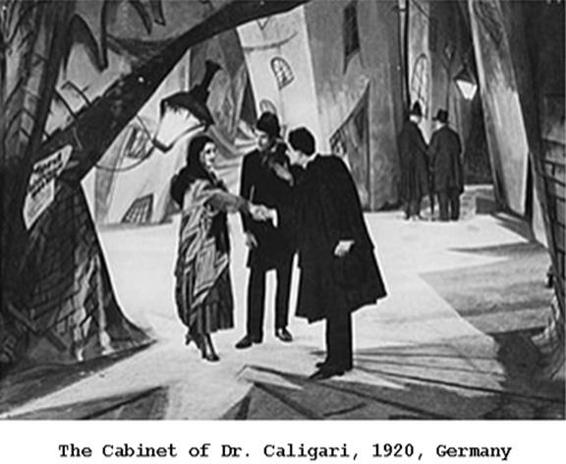
By now you must have noticed that my scribblings are heavy on the mise-en-scene. Mise-en-scene is an ill-defined and often overlooked aspect of any form of communication. If you find it irrelevant and/or inconsequential, et al, I merely ask you where the classic film; ‘The Cabinet of Dr. Caligari’ would be without it?
The Last Gasps of Indian Summer
Page 1395
‘The Cabinet of Dr. Caligari’ is a 1920 German silent horror film, directed by Robert Wiene and written by Hans Janowitz and Carl Mayer. Considered the quintessential work of German Expressionist cinema, it tells the story of an insane hypnotist who uses a somnambulist to commit murders. The film features a dark and twisted visual style, with sharp pointed forms, oblique and curving lines, structures and landscapes that lean and twist in unusual angles, and shadows and streaks of light painted directly onto the sets.
Flim Flam Man
The Last Gasps of Indian Summer Page 1396
Laura Nyro
Hands off the man, the flim flam man
His mind is up his sleeve
And his talk is make believe
Oh Lord, the man's a fraud, he's flim flam man He? s so cagey, he? s a flim flam man
Hands off the man, the flim flam man
He's the one in the Trojan horse
Making out like he's Santa Claus
Oh Lord, the man's a fraud, he's a flim flam man He's a fox, he's a flim flam man
Everybody wants him, the people and the police And all the pretty ladies disarm
Oh oh yeah, the beautiful gent,
you know he has hardly a cent
He pays his monthly rent with daily charm
Hands off the man, the flim flam man
His mind is up his sleeve
And his talk is make believe
Oh Lord, the man's a fraud, he's flim flam man
The Last Gasps of Indian Summer Page 1397
He’s so cagey, he's an artist
He's a fox, he's a flim flam man
Don't believe him, he's a flim flam man Ole road runner, he's a oh no
Oh don't believe him, he's a no, no
Don't believe him, he's a no
Don't believe
Written by Laura Nyro.
The Last Gasps of Indian Summer Page 1398
200 - Bad Times at the El Royale – Crystal Peak, Nevada Bad Times at the El Royale
The El Royale, once popular with the wealthy until losing its gambling license, is a hotel that straddles the California–
Nevada border. In 1959, Felix O'Kelly hides a money bag under the floorboards of his room. His accomplice arrives and shoots him dead. A decade later, Catholic priest Daniel Flynn, singer Darlene Sweet, salesman Laramie Seymour Sullivan, and hippie Emily Summerspring arrive at the hotel, now run solely by heroin addict Miles Miller, and book separate rooms.
Cortez the Killer
Neil Young and Crazy Horse
He came dancing across the water
With his galleons and guns
Looking for the new world
And that palace in the sun.
On the shore lay Montezuma
With his coca leaves and pearls
In his halls he often wandered
With the secrets of the worlds.
The Last Gasps of Indian Summer Page 1399
And his subjects gathered 'round him
Like the leaves around a tree
In their clothes of many colors
For the angry gods to see.
And the women all were beautiful
And the men stood straight and strong
They offered life in sacrifice
So that others could go on.
Hate was just a legend
And war was never known
The people worked together
And they lifted many stones.
And they carried them to the flatlands
But they died along the way
And they built up with their bare hands What we still can't do today.
And I know she's living there
And she loves me to this day
I still can't remember when
Or how I lost my way.
The Last Gasps of Indian Summer Page 1400
He came dancing across the water
Cortez, Cortez
What a killer.
Written by Neil Young.
Upon checking into the honeymoon suite, Laramie begins removing wiretaps but unexpectedly finds a second set as well. After stealing the hotel's master key, he discovers a secret corridor where every room can be observed through one way mirrors and filmed with a camera. Laramie sees Darlene singing, Daniel removing the floorboards of his room, and Emily holding a young woman captive.
In the parking lot, Laramie calls into the FBI, revealing himself to be Special Agent Dwight Broadbeck. He is instructed by J. Edgar Hoover to focus on his mission of collecting the surveillance materials the FBI had planted and ignore the
'kidnapping.' Believing the mission has been compromised, Dwight is also told to prevent the guests from leaving. To do so, Dwight disables all their cars.
Daniel invites Darlene to join him for dinner in the hotel lounge. There, Darlene says she is practicing for a performance in Reno and Daniel reveals his memory is deteriorating. While he
The Last Gasps of Indian Summer Page 1401
is getting drinks, she sees him spiking her beverage and she knocks him unconscious with a bottle.
Miles later finds and revives Daniel, telling him that he wants to undertake a confession but Daniel refuses. Miles, looking for the missing master key, leads Daniel to the secret corridor, explaining that he used to regularly film intimate encounters that he had to send to his superiors. Miles also admits to having withheld one incriminating film of a deceased public figure who had been kind to him.
When Daniel leaves to evaluate said film, Miles witnesses through the one way mirror Dwight attempting to rescue Emily's hostage, who is revealed to be her younger sister, Rose. When Emily kills Dwight with a shotgun, it also shoots out the mirror, revealing the corridor and injuring Miles.
Before these events, Emily had forcibly removed her sister from a dangerous cult, led by Billy Lee. In the present, Rose secretly calls Billy to tell him where she is. A witness to Dwight's murder, Darlene tries to escape but fails due to his tampering with her vehicle.
Daniel arrives and reveals to her that he is Dock O'Kelly, imprisoned since a bank robbery in 1959. Recently paroled, he arrived in disguise to retrieve the money hidden by his brother
The Last Gasps of Indian Summer Page 1402
Felix. Due to Dock's failing memory, he picked the wrong room and tried to drug Darlene to gain access to hers. To gain her trust, he offers to split the cash with her. After retrieving the money, Billy and his cult arrive and take the pair, Emily, and Miles hostage.
In a flashback, Billy tells his cult how people are forced to choose sides and, as an allegory, gets Rose to fight another girl for the chance to sleep with him as Emily watches nearby.
In the present, a compliant Rose watches Billy as he interrogates the group and finds the film, which he realizes is more valuable than the money. He forces Emily to choose a color in a game of roulette between her and Miles, and kills her when she loses. Before Billy completes another round of roulette, Dock attacks him, a melee ensues, and a fire begins to spread.
When Darlene implores Miles to pick up a gun and help, it is revealed that he served in the Vietnam War as a sniper and killed 123 people. A defiant Miles kills Billy and his followers, but a distraught Rose stabs him in the stomach before being shot by Dock. Darlene convinces "Father Flynn" to absolve Miles of the guilt over his wartime actions before he dies. They then toss the film into the fire and leave with the money.
Sometime later in Reno, Dock attends Darlene's performance at a nightclub.
The Last Gasps of Indian Summer Page 1403
The Last Gasps of Indian Summer Page 1404
201 - Escape from New York – Cazenovia, New York Escape from New York
In a dystopian 1988, amidst war against an alliance of China and the Soviet Union, the United States government has turned Manhattan into a maximum security prison to address a 400%
increase in crime. The island is walled off from the outside world and under heavy police surveillance.
American Pie
Don McLean
A long, long time ago
I can still remember how that music
Used to make me smile
And I knew if I had my chance
That I could make those people dance
And maybe they'd be happy for a while
But February made me shiver
With every paper I'd deliver
Bad news on the doorstep
I couldn't take one more step
The Last Gasps of Indian Summer Page 1405
I can't remember if I cried
When I read about his widowed bride
Something touched me deep inside
The day the music died
So, bye-bye, Miss American Pie
Drove my Chevy to the levee, but the levee was dry And them good ol' boys were drinkin' whiskey and rye Singin', "This'll be the day that I die This'll be the day that I die"
Did you write the book of love
And do you have faith in God above
If the Bible tells you so?
Now, do you believe in rock 'n' roll
Can music save your mortal soul
And can you teach me how to dance real slow?
Well, I know that you're in love with him
'Cause I saw you dancin' in the gym
You both kicked off your shoes
Man, I dig those rhythm and blues
I was a lonely teenage bronckin' buck
With a pink carnation and a pickup truck But I knew I was out of luck
The day the music died
The Last Gasps of Indian Summer Page 1406
I started singin', bye-bye, Miss American Pie Drove my Chevy to the levee, but the levee was dry Them good ol' boys were drinkin' whiskey and rye Singin', "This'll be the day that I die This'll be the day that I die"
Now, for ten years we've been on our own And moss grows fat on a rollin' stone
But that's not how it used to be
When the jester sang for the king and queen In a coat he borrowed from James Dean
And a voice that came from you and me
Oh, and while the king was looking down The jester stole his thorny crown
The courtroom was adjourned
No verdict was returned
And while Lenin read a book on Marx
A quartet practiced in the park
And we sang dirges in the dark
The day the music died
We were singin', bye-bye, Miss American Pie Drove my Chevy to the levee, but the levee was dry Them good ol' boys were drinkin' whiskey and rye
The Last Gasps of Indian Summer Page 1407
Singin', "This'll be the day that I die This'll be the day that I die"
Helter skelter in a summer swelter
The birds flew off with a fallout shelter Eight miles high and falling fast
It landed foul on the grass
The players tried for a forward pass
With the jester on the sidelines in a cast Now, the halftime air was sweet perfume While sergeants played a marching tune
We all got up to dance
Oh, but we never got the chance
'Cause the players tried to take the field The marching band refused to yield
Do you recall what was revealed
The day the music died?
We started singin', bye-bye, Miss American Pie Drove my Chevy to the levee, but the levee was dry Them good ol' boys were drinkin' whiskey and rye Singin', "This'll be the day that I die This'll be the day that I die"
Oh, and there we were all in one place
The Last Gasps of Indian Summer Page 1408
A generation lost in space
With no time left to start again
So, come on, Jack be nimble, Jack be quick Jack Flash sat on a candlestick
'Cause fire is the Devil's only friend
Oh, and as I watched him on the stage
My hands were clenched in fists of rage No angel born in Hell
Could break that Satan spell
And as the flames climbed high into the night To light the sacrificial rite
I saw Satan laughing with delight
The day the music died
He was singin', bye-bye, Miss American Pie Drove my Chevy to the levee, but the levee was dry Them good ol' boys were drinkin' whiskey and rye Singin', "This'll be the day that I die This'll be the day that I die"
I met a girl who sang the blues
And I asked her for some happy news
But she just smiled and turned away
I went down to the sacred store
Where I'd heard the music years before
The Last Gasps of Indian Summer Page 1409
But the man there said the music wouldn't play And in the streets the children screamed The lovers cried, and the poets dreamed But not a word was spoken
The church bells all were broken
And the three men I admire most
The Father, Son and the Holy Ghost
They caught the last train for the coast The day the music died
And they were singin', bye-bye, Miss American Pie Drove my Chevy to the levee, but the levee was dry And them good ol' boys were drinkin' whiskey and rye Singin', "This'll be the day that I die This'll be the day that I die"
They were singin', bye-bye, Miss American Pie Drove my Chevy to the levee, but the levee was dry Them good ol' boys were drinkin' whiskey and rye Singin', "This'll be the day that I die"
Written by Don Mclean.
In 1997, while flying President John Harker to a peace summit in Hartford, Air Force One is hijacked by a terrorist. The
The Last Gasps of Indian Summer Page 1410
President is handcuffed with a briefcase and put into an escape pod that drops into Manhattan as the aircraft crashes.
Police are dispatched to rescue the President. Romero, the right hand man of the Duke of New York, a powerful crime boss, warns them that the President has been captured and will be killed if any further rescue attempts are made. Meanwhile, former Special Forces soldier Snake Plissken is about to be sent into Manhattan after being convicted of robbing the Federal Reserve. Police Commissioner Bob Hauk offers a deal to Snake. If he rescues the President in time for the summit, Hauk will arrange a Presidential pardon for Snake. To ensure Snake's compliance, Hauk has him injected with micro explosives that will sever his carotid arteries in 22 hours. If Snake is successful, Hauk will neutralize the explosives.
Snake uses a stealth glider to land atop the World Trade Center, then follows the signal of the President's tracking device to a vaudeville theater, only to find the tracker now hangs from the wrist of a deluded vagrant. Convinced the President is dead, Snake radios Hauk but is told he will be killed if he returns without the President. Inspecting the escape pod, Snake is ambushed by dozens of starving "crazies," and his radio is destroyed. He is rescued by "Cabbie," a jovial old man who drives a yellow taxi.
The Last Gasps of Indian Summer Page 1411
Cabbie takes Snake to Harold "Brain" Hellman, an adviser to the Duke and a former associate of Snake's. A skilled engineer, Brain has established a small gasoline refinery, fueling the city's remaining cars, and tells Snake that the Duke plans to lead a mass escape across the 59th Street Bridge by using the President as a human shield. Snake forces Brain and his girlfriend Maggie to lead him to the Duke's hideout at Grand Central Terminal. Snake finds the President but gets shot in the leg with a crossbow bolt and overpowered by the Duke's men.
While Snake is forced to fight against Duke's champion Slag in a death match, Brain and Maggie kill Romero and flee with the President. Snake kills Slag and finds the trio trying to escape in the glider. Inmates drop the glider off the roof, so the group returns to street level and encounters Cabbie, who offers to take them across the bridge. Cabbie reveals that he bartered with Romero for the contents of the briefcase; a cassette tape that contains information about nuclear fusion, intended to be an international peace offering. The President demands the cassette, but Snake claims it.
The Duke pursues them onto the bridge in his customized Cadillac, setting off mines as he tries to catch up. Brain guides Snake, but they hit a mine and Cabbie is killed. As they continue on foot, Brain accidentally stumbles into another mine.
The Last Gasps of Indian Summer Page 1412
A distraught Maggie sacrifices herself to slow down the Duke.
Snake and the President reach the containment wall and guards hoist the President up. The Duke opens fire with Snake's MAC-10, killing the guards before Snake subdues him. As Snake is being lifted up by the rope the Duke attempts to shoot him, but the President takes up a dead guard's rifle and kills the Duke.
Snake is hoisted to safety and Hauk's doctor removes the explosives with seconds to spare.
As the President prepares for a televised speech to the leaders at the summit meeting, he thanks Snake for saving him but offers only half-hearted regret for the deaths of his colleagues. Snake walks away in disgust. Hauk offers Snake a job as his deputy but he keeps walking. The President's speech commences and he plays the cassette. To his embarrassment, it only plays Cabbie's favorite song, "Bandstand Boogie." As Snake walks away a free man, he pulls the real cassette from his pocket and destroys it.
The Last Gasps of Indian Summer Page 1413
202 - Go Ask Alice – Waldport, Oregon
Go Ask Alice
In 1968, a 15 year old girl begins keeping a diary, in which she records her thoughts and concerns about issues such as crushes, weight loss, sexuality, social acceptance, and relating to her parents. The dates and locations mentioned in the book place its events as occurring between 1968 and 1970 in California, Colorado, Oregon, and New York City. The two towns in which the diarist's family reside during the story are unidentified, the only indications being that universities are situated in both.
The diarist's father, a college professor, accepts a dean position at a new college, requiring the family to relocate. The diarist has difficulty adjusting to her new school, but soon becomes best friends with a girl named Beth. When Beth leaves for summer camp, the diarist returns to her hometown, where she meets an old school acquaintance, who invites her to a party where glasses of cola, some of which are laced with LSD, are served. The diarist unwittingly ingests LSD and has an intense and pleasurable trip. Over the following days the diarist socializes with the other teens from the party, willingly uses more drugs, and loses her virginity while on acid. She worries that she may be pregnant, and her grandfather has a minor heart
The Last Gasps of Indian Summer Page 1414
attack. Overwhelmed by her worries, the diarist begins to take sleeping pills, first stolen from her grandparents, then later prescribed. Her friendship with Beth ends, as both girls have moved in new directions.
The diarist befriends a hip girl, Chris, with whom she continues to use drugs. They date college students Richie and Ted, who deal drugs and persuade the two girls to help them by selling drugs at schools. When the girls walk in on Richie and Ted stoned and having sex with each other, they realize that their
"boyfriends" were just using them to make money. The girls report Richie and Ted to the police and flee to San Francisco.
Chris gets a job in a boutique with a glamorous older woman, Shelia, who invites both girls to lavish parties, where they resume taking drugs. One night Shelia and her new boyfriend introduce the girls to heroin and brutally rape them while they are under the influence of the drug. Traumatized, the diarist and Chris move to Berkeley where they open a jewelry shop.
Although the shop is a success, they quickly grow tired of it and miss their families; they return home for a happy Christmas.
Back at home, the diarist encounters social pressure from her drug scene friends, and has problems getting along with her parents. Chris and the diarist try to stay away from drugs, but their resolve lapses and they end up on probation after being
The Last Gasps of Indian Summer Page 1415
caught in a police raid. The diarist gets high one night and runs away. She travels to several cities, hitchhiking part way with a girl named Doris who is a victim of child sexual abuse.
The diarist continues to use drugs, running out of money. She thinks she has hit the jackpot when she goes to a hippie festival where "drugs are as free as the air," only to catch the eye of the event's drug kingpin, who demands the diarist fellate him or else her supply will be cut off. The diarist hits rock bottom when she experiences homelessness. In desperation, she seeks out a Catholic priest, who helps her and contacts her parents. The diarist runs out of space in her diary and says that the decision to buy a fresh one is synonymous with turning over a new leaf.
Now determined to avoid drugs, she faces hostility from her former friends. When one girl shows up high for a babysitting job, the diarist informs the girl's parents who beg her not to tell their daughter's parole officer. The diarist's former friends harass her at school and threaten her and her family.
They eventually drug her against her will; she has a bad trip resulting in physical and mental damage, and is sent to a psychiatric hospital. The diary goes through passages of gobbeldygook until the diarist can only again write clearly, believing her body is being eaten by worms, which she eventually
The Last Gasps of Indian Summer Page 1416
stops imagining. There she bonds with a younger girl named Babbie, who has also been a drug addict and child prostitute.
Released from the hospital, the diarist returns home, finally free of drugs. She now gets along better with her family, makes new friends, and is romantically involved with Joel, a man attending her father's college on the GI Bill. She is worried about starting school again, but feels stronger with the support of her new friends and Joel. In an optimistic mood, the diarist decides to stop keeping a diary and instead discuss her problems and thoughts with other people.
The epilogue states that the subject of the book died three weeks after the diarist's decision not to keep a third diary.
The diarist was found dead in her home by her parents when they returned from a movie. She died from a drug overdose, either premeditated or accidental. The epilogue says that while the precise cause of death was never determined, it is but one of thousands of drug overdoses every year.
The anonymous diarist's name is never revealed in the book. In an episode where the diarist describes having sex with a drug dealer, she quotes an onlooker's remark indicating that her name may be Carla. Although a girl named Alice appears very briefly
The Last Gasps of Indian Summer Page 1417
in the book, she is not the diarist, but a fellow runaway whom the diarist meets on the street in Coos Bay, Oregon.
Despite the lack of any evidence in the book that the diarist's name is Alice, the covers of various editions have suggested that her name is Alice by including blurb text such as "This is Alice's true story" and "You can't ask Alice anything anymore.
But you can do something. Read her diary." Reviewers and commentators have also frequently referred to the anonymous diarist as "Alice," sometimes for convenience.
In the 1973 television film based on the book, the protagonist played by Jamie Smith-Jackson is named "Alice.” The protagonist is also named "Alice Aberdeen" in the 1976 stage play adaptation.
If 6 Was 9
The Jimi Hendrix Experience
Yeah, sing a song for us
If the sun refused to shine
I don't mind, I don't mind
Yeah
If the mountains fell in the sea
Let it be, it ain't me
The Last Gasps of Indian Summer Page 1418
Well alright
I got my own world to look through, and ah And I ain't gonna copy you
Yeah it's alright
Now, if a six turned out to be nine
I don't mind, oh, I don't mind
Well alright
If all the hippies cut off all their hair I don't care, I don't care
Dig, 'cause I got my own world
to live through, and ah
And I ain't gonna copy you
White collar conservative flashing down the streets Pointing their plastic finger at me
They're hoping soon my kind'll drop and die But I'm, I'm gonna wave my freak flag high, high, wow!
Wave on, wave on
Fall mountains, just don't fall on me
Go 'head on Mr. Businessman
You can't dress like me, yeah
The Last Gasps of Indian Summer Page 1419
Don't nobody know what I'm talking about I've got my own life to live
I'm the one that's gonna have to die
When it's time for me to die
So let me live my life
The way I want to, yeah
Sing on brother
Play on drummer
Written by Lee Thomson and Kesivan Naidoo.
The Last Gasps of Indian Summer
Page 1420
203 - The Palace – Gstaad, Switzerland
I read a film today, oh boy. About some lucky men who made the grade. And though the film was rather sad. Well, I just had to laugh. I saw the photograph.
“The Palace” Review: Roman Polanski’s Latest Feels Like a Middle Finger to the World
Venice 2023: Little is resolved in the end but the US
distributors resolve to check out of this hotel and never return.
“The Palace,” in some circles A/K/A “Krapp’s Last Tape” takes place in Switzerland’s Gstaad Palace luxury hotel and centers
The Last Gasps of Indian Summer
Page 1421
its black comedy on the interactions between the venue’s serving staff and the wildly wealthy guests who stay there during the run up to a New Year party to ring in the new millennium of 2000. The film’s large ensemble cast includes Mickey Rourke, John Cleese and Fanny Ardant. Polanski co-wrote the film with his decades long friend and collaborator Polish director Jerzy Skolimowski and producer Ewa Piaskowska. The film is scored by Alexandre Desplat.
Setting aside all the necessary caveats about art and artists, Roman Polanski’s “The Palace” throws a greater fact into stark relief. For all the digital ink we spill, journalists and critics are more often than not responsive to wider industry
The Last Gasps of Indian Summer
Page 1422
forces, and in Polanski’s case, as in the wider European industry, something has definitely shifted.
You could even the place the specific date to February 28, 2020; the night Polanski’s Venice Grand Jury Prize winner, “An Officer and a Spy,” won best director at France’s Cesar awards, prompting boos, a few notable walkouts, and a clash between protesters and police out in the streets. Two weeks prior, the French academy’s board of directors resigned in scandal.
So the fact that Polanski’s 2019 film has yet to find US
distribution is not a particular surprise; the fact that his follow-up, “The Palace,” has had similar tough luck in his home country of France more or less suggests a genuine bombshell.
More to the point, the director’s changing circumstance feels directly relevant to the cast he could assemble for this
The Last Gasps of Indian Summer Page 1423
humorless black comedy, and to the build of unyielding grotesquery that makes the film feel like a giant middle finger to the world.
On paper, the formula is tried and true. Here is another “Rules of the Game,” a caustic skewering of the 1%, split between the pampered brutes who sodden a luxury dwelling, in this case a hotel, and the beleaguered staff forced to clean up. You’ve checked into “The White Lotus,” you’ve traversed the “Triangle of Sadness,” but you’ve never heard the same song in such a shrill pitch as in “The Palace,” wherein it is not only the oft reviled 1% who are skewered. So are the co-operative, complacent other 99%, a full oppressive “democracy,” the underlings have learned to love. Nor will you mention it, at least not legally in the EU, and borderline in the populist leaning people of the USA, for “reasons,” supposedly relevant to the liberal jewish chat bot dominated “social” media sites, who strive to indoctrinate the uneducated deplorables with properly “fact-checked” enlightenment. Edmund Goulding’s 1932 “Grand Hotel” and Jean Luc Godard’s 1963 “Contempt” reached “shrill” pitches of their own, but were distributed in the US, and have subsequently blessed some greatest films lists. That their existence pre-dates the sensitivities of the 2020’s shrill “culture police”
must have been some help.
The Last Gasps of Indian Summer
Page 1424
The entirety of the main stream critic club have called “The Palace” Polanski’s worst, unfunny, poorly filmed, and pointless.
Isn’t that surprising how they can agree in this case?
The year is 1999, the date December 31, and the world is on the precipice of collapse thanks to that highly infectious, deadly bug known as Y2K; which we all know in 2023 was an innocuous farce contrived by the ruling masters to set the receptive stage for the larger nonsense of 9/11, and the resultant pre-emptive US “Patriot Act,” which negates any individual rights, when invoked, as well as give an excuse for the US to bankrupt itself through doing Israel’s work of detaining, torturing, and killing Arabs. But until that foregone conclusion and ever nearing apocalypse symbolically arrives at the stroke of midnight, the actual work falls very receptively to the hotel manager Hansueli
The Last Gasps of Indian Summer Page 1425
Kopf; who shares characteristics with politicians. You can imagine the type. He’s obsequious and/or deferential with the rich guests; his tipping betters, unrelenting and abusive with his middle class staff who are similarly obsequious and/or deferential, and only able to function at all thanks to a steady stream of booze, downed early and often, whenever no one is looking. It is absurdly difficult not to picture freeze-faced Mitch McConnell and/or Joe Biden in this role. If anything, the analogy is overly obvious for the UniParty, some would say EunuchParty “leaders.” Fellow party man Kevin McCarthy is a less obvious candidate, perhaps because he is still “working” on his face.
Politician
Cream
Hey now baby, get into my big black car Hey now baby, get into my big black car I wanna just show you what my politics are.
I'm a political man and I practice what I preach I'm a political man and I practice what I preach So don't deny me baby, not while you're in my reach.
I support the left, tho' I'm leanin', leanin' to the right
The Last Gasps of Indian Summer Page 1426
I support the left, tho' I'm leanin' to the right But I'm just not there when it's coming to a fight.
Hey now baby, get into my big black car Hey now baby, get into my big black car I wanna just show you what my politics are.
Hey, hey now baby, get into my big black car Hey now baby, get into my big black car I wanna just show you what my politics are.
I support the left, tho' I'm leanin'to the right I support the left, tho' I'm leanin' to the right But I'm just not there when, when it's coming to a fight.
Political man and I practice what I preach Political man and I practice what I preach But I'm just not there, when you're in my reach.
Hey now baby, get into my big black car Hey now baby, get into my big black car I wanna just show you what my politics are.
Hey, hey, hey
I wanna just show you what my politics are.
The Last Gasps of Indian Summer Page 1427
Hey now baby, get into my big black car Hey now baby, get into my big black car I wanna just show you what my politics are.
Political man and I practice what I preach Political man and I practice what I preach So don't deny me baby not while you're in my reach
I support the left, tho' I'm leanin',
leanin', leanin'to the right, yeah
Support the left, tho' I'm leanin' to the right But I'm just not there, when it's comin' to a fight.
Political man and I practice what I preach Political man and I practice what I preach But I'm just not there, when you're in my reach.
Hey now baby, get into my big black car Hey now baby, get into my big black car I wanna just show ya what my politics are, yeah.
Yeah (repeated 22 times)
I wanna just show you what my politics are, yeah, yeah.
Written by Oscar Chavez Fernandez and Jose De La Vega Leija.
The Last Gasps of Indian Summer Page 1428
By the way, I bring some good news. You probably heard that the McConnell bot had its sixth un-human freeze up two days ago.
However, the doctors say that this was not due to a heart attack, stroke, or seizure; the cause being merely a rundown battery. All it needed was another re-charge, and the UniParty bot will be good to continue its Senate minority leadership role.
Spend a day in his/their shoes and you’d need to get plastered too. From behind the check in desk high in the Swiss Alps, he is compelled to wax poetic upon the “youthful” beauty of aging facelift addicts before securing a safe place for five Louis Vuitton valises stuffed with greenbacks and deposited by a gang of Russian mob brutes. Then, to top things off, he must finally figure out just what to do with a live penguin delivered at the express request of the hotel’s most affluent guest. Take my word, you really don’t want to know what the pervert came up with.
That would be Texan billionaire Arthur William Dallas III, who is played with good-ol’-boy swagger, against type, by a waxen John Cleese. Given the near absence of name actors from the cast, the fact that both Cleese and co-star Fanny Ardant share
The Last Gasps of Indian Summer Page 1429
similar criticisms of the current social climate does not seem like a simple coincidence.
Dallas is 97 years young, ready to kick off a new year with 22
year old bride, Magnolia. For her part, Magnolia stands to become her beau’s sole inheritor; provided he makes it through the night. That shouldn’t be a problem, right?
That scene, like the one before it, is perfectly believable and also totally made up. How impudent of the writers to turn a man into a puppet; a man who's been in effect dead for a long time, who cannot defend himself. To make him drink tea, when it might turn out that he liked only coffee is banal, but incorrect. To make him put on two coats, when perhaps he had only one is guesswork over an otherwise un-noticed triviality. To make him take the bus, when he could have taken the train, yadda yadda.
To decide that he left in the evening, rather than the morning.
The writers should be ashamed of themselves, but they hide in credited numbers, fully prepared to say; “Dindu nuffin. It be the other,” if criticized.
A few rooms over, the agitated Marquise Constance Rose Marie de La Valle has made the horrific discovery that her dog has, ahem, opted to relieve himself on her bed. Could it be the diet of caviar she feeds the pooch, or could it be worms? How can she
The Last Gasps of Indian Summer Page 1430
know? Without a veterinarian present, the hotel’s resident plastic surgeon will just have to make due. It should be noted that her sleeping face, which is pictured on the film’s primary billboard type and issues sincere apologies to Jett Rink, the James Dean character in “Giant.”
And then there’s Mr. Crush, a counterpoint to David Foster Wallace’s “Mr. Squishy,” also an uncanny and unsettling Mickey Rourke, looking as if he’s wearing a latex mask of his own face, which he in fact did in real life or what is popularly thought of as such, through ostensibly botched, late life plastic surgery, and sporting a Boris Johnson wig for good measure. He might be the most demanding guest of all, especially given the fact that he turned up without a reservation, demanded the best room, and drew in an excitable Eastern European caricature who claimed to be his son, who in turn brings his whole brood in tow.
Oh yeah, he’s also looking to use the anticipated Y2K
breakdowns/shutdowns for a government funded get rich quick bout of financial fraud that never quite makes any more sense than crackhead Hunter Biden.
Of course, nothing’s really supposed to make sense here.
Brightly lit, mise-en-scene prominent, captured by wide lenses,
The Last Gasps of Indian Summer Page 1431
and contrast boosted to the max in post-production, the hotel gives off an air of garish unreality; all the better to sell the satire, I suppose. But just what is supposed to be satirized?
Certainly not the clients, who, to a person, never act or scan in any recognizably human manner; and probably not the staff, who mostly do their best to wrangle in the chaos.
Co-written by Polanski, “EO” director Jerzy Skolimowski, with whom Polanski co-wrote “Knife in the Water” back in 1962, and Ewa Piaskowska, the script offers the weakest stabs at irony. It juxtaposes the empty hysteria around Y2K against the rise to power of Vladimir Putin, who did indeed take over from Boris Yeltsin on New Year’s Eve 1999, but one cannot find a larger point which stands the popular, fact checked, obviousness required for a hit, beyond that.
Perhaps there is none beyond Polanski’s possible simple desire to make filmgoers squirm, trapping them in a garish getaway filled with grotesques, and watching everyone get drunker and louder and more unpleasant until the clock strikes, the fireworks hit, and little is resolved but the participants’
resolve to check out of this hotel and never return.
In other words, it is an excellent, realistic classic, which like one of its predecessors, “The Rules of the Game,” will be
The Last Gasps of Indian Summer Page 1432
upon release dismissed as ineptly subversive, to be “rediscovered” sometime in the future as extremely well-done in terms of cinematography and the many sub-stories told in the mise-en-scene, yet most of all classically insightful, to the chagrin of the flunky brigade.
The Last Gasps of Indian Summer Page 1433
204 - Cinema Paradiso – Giancaldo, Sicily, Italy Cinema Paradiso
In 1988 Rome, Salvatore Di Vita, a famous film director, returns home late one evening, where his girlfriend sleepily tells him that his mother called to say someone named Alfredo has died.
Salvatore shies from committed relationships and has not been to his home village of Giancaldo, Sicily in thirty years. As his girlfriend asks him who Alfredo was, Salvatore is not able to fall asleep and flashes back to his childhood.
Baby You're a Rich Man
The Beatles
How does it feel to be
One of the beautiful people?
Now that you know who you are
What do you want to be?
And have you travelled very far?
Far as the eye can see
How does it feel to be
One of the beautiful people?
How often have you been there?
Often enough to know
The Last Gasps of Indian Summer Page 1434
What did you see when you were there?
Nothing that doesn't show
Baby, you're a rich man
Baby, you're a rich man
Baby, you're a rich man, too
You keep all your money in a big brown bag, inside a zoo What a thing to do
Baby, you're a rich man
Baby, you're a rich man
Baby, you're a rich man, too
How does it feel to be
One of the beautiful people?
Tuned to a natural E
Happy to be that way
Now that you've found another key
What are you going to play?
Baby, you're a rich man
Baby, you're a rich man
Baby, you're a rich man too
You keep all your money in a big brown bag, inside a zoo What a thing to do
Baby, baby, you're a rich man
The Last Gasps of Indian Summer Page 1435
Baby, you're a rich man
Baby, you're a rich man, too, oh, oh
Baby, you're a rich man
Baby, you're a rich man
Baby, you're a rich man, too
Baby, you're a rich man
Baby, you're a rich man
Baby, you're a rich man too
Written by Paul McCartney and John Lennon.
A few years after World War II, eight year old Salvatore is the mischievous, intelligent son of a war widow. Nicknamed Toto, he discovers a love for films and spends every free moment at the local movie house, Cinema Paradiso. Although they initially start off on tense terms, he develops a friendship with the middle aged projectionist, Alfredo, who often lets him watch movies from the projection booth. During the shows, the audience can be heard booing because there are missing sections, causing the films to suddenly jump, bypassing scenes with romantic kisses or embraces. The local priest, owner of the cinema, had ordered these sections to be censored, and the deleted scenes are cut from the film reels by Alfredo and piled on the
The Last Gasps of Indian Summer Page 1436
projection room floor, where Alfredo keeps them until he can splice them back in for the film to be sent to the next town.
Alfredo eventually teaches Salvatore how to operate the film projector. One day, Cinema Paradiso catches fire as Alfredo is projecting “The Firemen of Viggiù” after hours, on the wall of a nearby house. Salvatore saves Alfredo's life, but not before a reel of nitrate film explodes in Alfredo's face, leaving him permanently blind. The movie house is rebuilt by a town citizen, Ciccio Spaccafico, using his winnings from a football lottery.
Salvatore, still a child, is hired as the new projectionist, as only he knows how to run the machines.
About a decade later, Salvatore, now in high school, is still operating the projector at the "Nuovo Cinema Paradiso." His relationship with the blind Alfredo has strengthened, and Salvatore often looks to him for help; advice that Alfredo often dispenses by quoting classic films. Salvatore has been experimenting with filming, using a home movie camera. Doing this he has met, and captured on film, a girl named Elena Mendola, daughter of a wealthy banker, and has fallen in love with her. Salvatore woos, and wins Elena's heart, only to lose her due to her father's disapproval.
The Last Gasps of Indian Summer Page 1437
As Elena and her family move away, Salvatore leaves town for compulsory military service, even though, as a war orphan, he should be exempted from it. His attempts to write to Elena are fruitless; his letters are returned as undeliverable. Upon his return from the military, Alfredo urges Salvatore to leave Giancaldo permanently, counseling that the town is too small for Salvatore to ever find his dreams. Moreover, the old man tells him, once Salvatore leaves, he must pursue his destiny wholeheartedly, never looking back and never returning, even to visit. He must never give in to nostalgia or even write or think about them. They tearfully embrace, and Salvatore leaves to pursue his future as a filmmaker.
Back in the present, Salvatore realizes that he is very satisfied with his life from a professional point of view but not from a personal one, so decides to return home to attend Alfredo's funeral. Though the town has changed greatly, he now understands why Alfredo thought it was important that he leave.
Alfredo's widow tells him that the old man followed Salvatore's successes with pride and he left him something: an unlabeled film reel and the old stool that Salvatore once stood on to operate the projector. Salvatore learns that Cinema Paradiso is to be demolished to make way for a parking lot. At the funeral,
The Last Gasps of Indian Summer Page 1438
he recognizes the faces of many people who attended the cinema when he was the projectionist.
Salvatore returns to Rome, watches Alfredo's reel and discovers it comprises all the romantic scenes that the priest had ordered Alfredo to cut from the movies. Alfredo had spliced the sequences together to form a single unreduced film of aching desire and lustful frenzy. It was never explained how the projectionist successfully managed to forward the bowdlerized film copies with sections missing.
The final scenes shows Salvatore coming to peace with his past, with tears in his eyes.

The Last Gasps of Indian Summer
Page 1439
205 - Genevieve – Santa Fe, New Mexico
Genevieve
Genevieve was in the box a very few called Pandora. Most called it the Land of Fellflat, him being the earliest known ancestor.
She was with all the other dogs. It didn’t look like a box. It didn’t look like Pandora either. The inmates didn’t know if it was one, both, either, or neither; and would get angry with anyone who stupidly brought up the difficult subject. And it wasn’t ever called box, container, or anything like that by any of the inhabitants; though a few, when they thought that they were alone sometimes hopefully whispered; “Pandora,” presumably as a prayer to a spirit they thought that only they could imagine.
The Last Gasps of Indian Summer Page 1440
Most of the box’ inhabitants were warm and saddened pooches struggling to appear as the socially acceptable normality called contented; and some were truly contented, demon mongrels who took their pleasure in making the others sad. It was the way the box’ darkness had always been; though infrequent light periodically filtered through the cracks in the old plastic.
Those brief manifestations of unpredictable, blithe illumination, in practice, best served the accepted traditions of the box, to either appease the tiresomely vocal, cheerful
“optimists;” give their organizers a “reason” to request tithes; or be an expedient provocation for those puddled and positioned within the petite, but prominent pack of physics polished, present-day practitioners of punctuality to pontificate Pythagorean theorems, compelling as such, though limited to the measurement of distances only at certain angles under certain conditions; ultimately about why the brief glimpses of light had never happened and that their sightings were an illusion caused by a defective transfer of information from the eye to the brain or other vague speculations; which the others had no interest in or sufficient credentials to debate; in effect making the non-happening into the law of the box. The number of pray-ers and tithe-ers continually decreased, though the population continually rose.
The Last Gasps of Indian Summer Page 1441
One day, perhaps just out of boredom and curiosity, Genevieve made a solitary journey back toward her eastern origin. It wasn’t long before she encountered an obstacle. It looked like a wall as the mountains she had previously seen weren’t often ninety degree vertical structures; as best as she could recall.
But, being an inquisitive pooch with not much else to do anyway, she decided to climb it.
There was a helium filled, red balloon tethered to the ground.
Genevieve decided to take it with her. She had a myriad of reasons. She thought that it should be free. She thought that it’s inclination to rise might be of assistance. And she thought that she liked its red color. She knew that it reminded her of Winnie the Pooh. She held its string in her snout.
Without any outside aid other than that which the red balloon seemed to provide, she used the grooves on the furthest left reaches of the box to climb. It was as easy or as hard as it was to climb an artificial rock wall which is classified as being
“for beginning bi-peds.” Having four paws and those paws being enhanced with retractable claws might have made things easier for her. But, it was distinctly possible that the ease just came because she simply felt like climbing on this day; and up Genevieve went.
The Last Gasps of Indian Summer Page 1442
Concentrating on her task, and paying no attention to what if anything was notable at higher levels, nor what was going on beneath her, she climbed to what appeared to be the top. She sniffed at the ceiling cover and found that the smell was the same as that of the wall; something like that experience of someone downwind on an Intel burn day. Miffed, she used her snout to gently push on the ceiling and saw that it gave easily.
It had moved about two inches, but when she stopped pushing it stopped moving. It exposed a bit more of the infrequent light which sometimes had creeped through the cracks in the old plastic, which the increasing majority denied.
She remained there and thought some things over. She hated the rude limitation imposed, but didn’t want to risk falling, through extending too much energy and losing her footing when already so high up. Her fear was alleviated when she absurdly decided to continue to trust the help she was getting from the red balloon she held in her snout.
She kept her feet in place and gave the balky ceiling the hardest shove she could, intending to use only her head; but her red balloon hit it too.
The ceiling moved more. But this time rather than stopping, it had apparently been pushed sufficiently far to have engaged some
The Last Gasps of Indian Summer
Page 1443
sort of mechanism, which kept it opening all the way to the other side. Genevieve didn’t expect this much ease, but wasn’t the least bit surprised by it either. It was just like any other hinged plastic device amplified by a compelling spring. The ceiling ceased being one and came to rest at an odd angle, again likely the result of the mysterious, unseen, yet suggested spring; which might have been a bit rusty from lack of use and lubrication.
Suddenly Genevieve could fly. She took the balloon out of her snout and held it in her front paws; the way one cuddles a friend.
The Last Gasps of Indian Summer Page 1444
Suddenly all the other dogs were flying too. They all entered the white space above the box, which she instinctively knew was called El Dorado. She was scared at first, as the ground got more and more distant, making a fall a very serious matter. But after a minute she could tell that she was effortlessly floating very naturally, and that the movement of her paws provided direction. Most of all, she found it to be fun.
Wooden Ships
Crosby, Stills and Nash
If you smile at me, I will understand
'Cause that is something everybody everywhere does in the same language
I can see by your coat, my friend,
you're from the other side
There's just one thing I got to know
Can you tell me please, who won?
Say, can I have some of your purple berries?
Yes, I've been eating them for six or seven weeks now, haven't got sick once
Probably keep us both alive
Wooden ships on the water, very free and easy
The Last Gasps of Indian Summer Page 1445
Easy, you know the way it's supposed to be Silver people on the shoreline, let us be Talkin' 'bout very free and easy
Horror grips us as we watch you die
All we can do is echo your anguished cries Stare as all human feelings die
We are leaving, you don't need us
Go, take your sister, then, by the hand Lead her away from this foreign land
Far away, where we might laugh again
We are leaving, you don't need us
And it's a fair wind
Blowin' warm out of the south over my shoulder Guess I'll set a course and go
Written by Paul L. Kantner, David Crosby, and Stephen A. Stills.
The Last Gasps of Indian Summer
Page 1446
Despite unreasonable hopes, it wasn’t only the pooches in the air. The mongrel demons soared too. They had no inclination to dally like the zig-zagging dogs, and went directly up, like any extremist, taking no part in what they must have considered to be a silly, joyous, incomplete diversion. They soon crossed over into the darkness, which was called Kimrabort, and stayed there.
The line of demarcation between El Dorado and Kimrabort was irregular and unclearly porous in some areas. To complicate matters further white El Dorado proper contained some dark areas, and dark Kimrabort proper contained speckles of white; but frankly not all that many in the latter case. The dark was noticeably dark to any pooch not blind, and produced a perceptible end of the detectable glow for most who were.
The Last Gasps of Indian Summer
Page 1447
Perhaps because of being the first pooch to reach the vague, twisting, and amorphous line; it not yet trampled by many paws, Genevieve thought that she had seen it plainly. While some parts were distinctly clear, the more vague configurations didn’t encompass wide spaces; and with all the other space available it seemed an easy, in fact unthinking, decision for her to maintain complete safety by being simply rationally risk averse toward the relatively tiny and likely inconsequentially bloated borderlines with their humorously logical audacity to overstate their insignificant perception of faux “significance,” knowing that some didn’t know the trick.
The Last Gasps of Indian Summer Page 1448
In less precise terms, it didn’t seem necessary for Genevieve to cross over as there was plenty of room for her to do any sort of imaginable aerial tricks right in El Dorado, without re-encountering the mongrel demons, now congregated or impounded, depending upon one’s outlook, in the dark of Kimrabort. Besides, her red balloon ceased to provide any more upward momentum; apparently content to hold onto its already lofty place.
But, she momentarily questioned her eyesight when she saw some other pooches cross the line; vague, amorphous, or irregular as it might be. “Why are you going back to the demons?” she said, in hopes of their turnaround.
She was answered with uniform replies of; “We are finally flying to the sun. Can’t you see?”
She almost made no reply; it being so obvious to her. As a possible middling approach, she held her meta ground, and mumbled; “Yes; but the light is right here, and I knew both Icarus and Phaethon. Can’t YOU see? The demons have leather wings and we are still just poor waxwings. And no one wants to be back with the demons, anyway.”
Thunder rang out, hollow and fierce as a lion’s extended growl after lunch on the warm rock at the zoo. It actually may not have, but Genevieve thought that it said; “The wise go through
The Last Gasps of Indian Summer Page 1449
un-needed stop signs. Fools either stop at each or go through them all.”
Genevieve was elated to see that some other balloonists were quite happy to place their chosen perch near her chosen perch.
The Last Gasps of Indian Summer Page 1450
206 - Ciao Manhattan – Santa Barbara, California Ciao Manhattan
Ciao Manhattan is the little understood, semi-biographical tale of 1960s counterculture icon Edie Sedgwick. Ciao follows young Edie, called Susan or Susan Superstar in the movie, through her tumultuous party years in Manhattan as a model and as one of Warhol's Superstars. Through actual audio recordings of Sedgwick's account of her time in Warhol's Factory in New York City, paired with clips from the original unfinished script started in 1967, Ciao captures the complete deterioration of Sedgwick's fictional alter ego. The striking similarities between Sedgwick and Susan's life story, especially when recounted by Sedgwick in the midst of drug soaked interviews, make the film's candid depiction of excess and celebrity especially haunting. The film is dedicated to the memory of Sedgwick and ends with the actual headlines announcing Sedgwick's, not Susan Superstar's untimely overdose death, thus inseparably associating the fictional and the genuine figure, if that wasn’t already obvious.
Edie Sedgwick, referred to in the movie as Susan or Susan Superstar, was an heiress from Santa Barbara with a history of mental health struggles. She was also “Girl of the Year” in
The Last Gasps of Indian Summer
Page 1451
1965, and the star of nearly two dozen Warhol Factory films, as part of her breakout success. Dubbed a “Youthquaker” by Vogue, she appeared in its pages posing on the back of a fake stuffed rhino, wearing black tights and a T-shirt.
Most aspects of the finished film are very authentic. In the final scene, a New York Post rests beside a sinister businessman–drug dealer with the headline ANDY’S STAR OF ’65 IS
DEAD AT 28. The newspaper was not a prop. Sedgwick died after consuming a combination of alcohol and barbiturates in 1971, shortly before the movie was finished.
Shot at first in black and white, Ciao Manhattan was first conceived as a quasi-cinéma-vérité portrait of the ’60s underground lifestyle as seen through Edie Sedgwick. She was one
The Last Gasps of Indian Summer Page 1452
of the Factory’s most mesmerizing collaborators, but by 1970
moved back to California to become a resident of the swimming pool at her mother’s estate. The latter parts were shot in color, and represent the present, while the black and white footage are her memories of the past in New York.
The current portion’s chronological opening is when a long haired, young man from Houston, Texas, named Butch, who had saved up his earnings from his job at Hughes Tool to buy his old car and finance his California trip, finds her, wearing only short pants and an open jacket, on the Pacific Coast Highway hitching with her thumb out. He picks her up, and takes her home, having to carry her passed out body in. This is actually the start of the color ending, and the audience hears the following:
Malibu People
John Phillips
I got a fine beach house, baby
And the waves roll in
Playing in the sand
with your best friend babe
Malibu people really know how to live
The Last Gasps of Indian Summer Page 1453
A castle in the sand and a lady
And the waves roll in
Keep it in mind for some other time
Malibu people really know how to live
It took some time to find
a crack in her defenses
A hole in her heart you might say
Keeping abreast of her,
Tryin’ to keep things mended
All I know is that the waves roll in
Big belly woman laying waiting
in the sand for her baby
And the waves the roll in
If she needs a spot to drop,
you know she's got to drop
Before the waves roll in
All right ...
A castle in the sand and a lady
And the waves roll in
Keep it in mind for some other time
Malibu people really know how to live
The Last Gasps of Indian Summer Page 1454
Big belly woman laying waiting
in the sand for her baby
While the waves the roll in
If she needs a spot to drop,
you know she's not to got
Before the waves roll in
It's the season again
This is the end
Written by John Phillips
They are met at the estate by Geoffrey, another long haired, young man rather than any family member. Her mother, who has now devoted her life to selling pies to the young, employs Geoffrey, a taciturn surfer type, as Susan’s butler, babysitter, and nurse. Edie wakes up while Geoffrey is chastising her, and apologizes saying that she’ll never run away again.
Exiled from the family house, Susan lives in the deep end of a drained swimming pool under a rainbow tent, the concrete walls decorated with photos of her former life in Manhattan. While she spends her days sprawled topless on a mattress, Geoffrey
The Last Gasps of Indian Summer Page 1455
organizes her medications on a silver tray. He washes Susan’s underwear in a cauldron over a poolside campfire.
Back in the empty pool, Susan orders Geoffrey and Butch to bring her lip gloss and vodka. She wears enormous headphones and dances barefoot on the broken vodka bottle glass, which she has accidentally dropped, and demands a phone to call the editor of Vogue. Butch brings lipstick and Edie, with an air of disgust, derisively says; “I said lip gloss, not lipstick.”
Geoffrey is sick of his job, saying that he feels sorry for the lot of them and has to get in the wind, and would like Butch to take his place. Butch is most amenable, though registers some reservations about having to comb out Edie’s falls.
Geoffrey splits and Butch takes over the job.
In a black and white flashback Edie and her boyfriend Paul America, speed at 60 mph over the George Washington Bridge.
Sedgwick skips precariously along a high stone wall at the Cloisters, her fur coat swinging from one hand. During these events, Edie’s been awake and speeding for about three days. At the office of “Dr. Robert,” speed laced vitamin shots (“pokes”) are administered to members of the art and fashion worlds. Edie and Yoli are seen getting heir shots.
The Last Gasps of Indian Summer Page 1456
Sedgwick and other Warhol actors - Viva, Pat Hartley, and Brigid Berlin - attend a pool party at the health club in the basement of the Ansonia, a residential hotel on Broadway at 73rd Street, where they idly drift on an inflatable raft. Brigid is first seen in the bathroom giving herself a few speed injections, then going on a soliloquy which includes; “ ...... There is no time.
There is no place. ..... “ The group question what they see as Edie’s over inflated ego, to which Edie responds; “You all say that I’m a superstar. You all say that.”
Paul America is supposed to drive around the Pan Am Building near Grand Central Terminal, then return to pick up Baby Jane Holzer. But he doesn’t. Paul is with Edie, and is described as one who deals tons of speed out of the Chelsea Hotel. Edie confesses a sexual addiction for him.
A most significant black and white character is an older businessman named Mr. Verdecchio. He is attempting to slow the march of technology by selling LSD to the counterculture on behalf of “the saucer people.” This is apparently financially successful as Verdecchio seems to own everything, and is driven around in the backseat of an impeccable vintage Mercedes by his chauffer Mario, who used to manage one of Verdecchio’s enterprises, a discotheque. But Mario has been “demoted” after neglecting his duties and spending the night with Edie and her
The Last Gasps of Indian Summer Page 1457
friend, Yoli. Edie and Yoli take his stash and leave before he gets up in the morning. Verdecchio calls him self-indulgent while demoting him. He says; “People shouldn’t have what they are not ready to have.”
Mr. Verdecchio talks on a car phone and watches live surveillance of the louche activities at Dr. Roberts’s. There is also a black and white, physically resembling, Christ-like figure who drives a truck for Verdecchio and spies on various goings-on for him. When questioned about who he is at one stop, he stoically says; “I just drive a truck,” and leaves.
Somebody tracks down Paul America who is now in jail. “Too far gone? Yeah, too far gone,” Paul America says.
The final day of black and white shooting takes place at a New Jersey Palisades mansion. The scene is meant to be a “medium conference” between the teleported youth of outer space and the youth of the counterculture. “The LSD was flowing mightily.”
Seemingly high, Edie was too floating, but didn’t have the joy the others were exuding or faking at the love-in/-be-in.
Interviewed on camera, she calmly says that she “finds the others silly, as there is something bitter to be tasted.”
One morning Butch has to rush Edie, as she is on the verge of being late for her important appointment. She regularly goes for
The Last Gasps of Indian Summer Page 1458
electric shock therapy. When she arrives, her doctor, played by French director Roger Vadim, seems much too “friendly” when he kisses her on the lips, before inserting the rubber guard, which prevents tongue biting, into her mouth. Edie convulses while she is inoculated with the electricity which will calm her down for a while.
Edie is always either slurringly drunk and high or playing at being drunk and high during the filming. Her boyfriend, Michael Post, eventually switched out her daytime vodka for something lower proof so she wouldn’t be speechlessly inebriated while the camera rolled.
Susan enjoys a brief happy ending and marries a man with a beard
- Post. In the wedding footage, Sedgwick wears a high-necked white dress. She is tan, alert, and expressive; seemingly extremely healthy. Her heavy lace veil blows in the wind, throwing both sun and shadow over her grinning, dimpled face.
Butch travels east. In the final scene, while walking through the countryside, he sees Mr. Verdecchio’s Mercedes on the side of the road with a flat tire. Mario is complaining about having to fix it, and angrily tells Butch; “get the hell out of here, godammit.” But Butch is unfazed as he obviously admires the car.
Verdecchio rolls down the window to tell him about the
The Last Gasps of Indian Summer Page 1459
importance of old world craftsmanship, and how he can have something just like it. “It just requires a little work, that’s all.”
Butch sees the New York Post announcing “Susan’s” death. Snow begins to fall as he walks toward the river, Manhattan on the other side; the suggestion that he is going to try it for himself in a different, less speedy way, as the following song is playing somewhere in the background.
Justice
Kim Milford
Jimi, Janis
Judy, Jim, Jesus
J stands for jives and justice too
I love you so much, I don't know what to do I know about the beatings people put you through It takes a lot of doing to do what you do
Evil has ways to charge into battle
Drugs can be fun but watch the hook
The glassy-eyed devil, he's a crook
Just check out how many souls he already took
The Last Gasps of Indian Summer Page 1460
"You can't fool me", she said I laughed and said, "I know"
"You can't sing the blues and live", I said
"I know", she said, "I know"
The children are lost
We're falling to pieces
I know the way and it ain't cool
Judgment has come with an iron rule
Check out your existence or stay a fool
"You can't fool me", she said I laughed and said, "I know"
"You can't sing the blues and live", I said
"I know", she said, "I know"
Written by Kim Milford
SPEED KILLS.
The Last Gasps of Indian Summer
Page 1461
207 - The Tree - Northumberland, England, UK
The Tree
The tree stood proudly for three hundred years, set alone in a dramatic dip in the Northumberland, England, landscape right by Hadrian’s Wall. Perhaps England’s most photographed tree, the Sycamore Gap Tree drew visitors from afar and appeared in the 1991 film “Robin Hood: Prince of Thieves.”
The Last Gasps of Indian Summer Page 1462
Vandals are believed to have hacked down the world famous Sycamore Gap tree which featured in the blockbuster movie “Robin Hood, Prince of Thieves.” The seventy foot tall tree which stood tallnext to Hadrian’s Wall near crag Lough in Northumberland was cut down overnight. Residents living nearby expresed their outrage at the felling of the tree whichis one of the most recognizable landmarks in the UK. Farmer, Katie Smith, 25, said she spotted the tree on its side as she passed it on her way to work on Thursday morning. She said; “I drive past the tree twice a day and I always look up at it,but todayi just saw it was gone. Someone has deliberately sawed it down. It’s an absolute tragedy. No one can believe that it has been cut down. There was a stormlast night,but it’s withstood worse. There is no way this is not deliberate vandalism. People around here are shocked.”
Andrew Benton,45,added; “I’m outraged that someone has done this to such a beautiful tree. What the hellis the worldcoming to?”
The tree,which has inspired its own beer in the nearby Twice Brewed Inn, is one of the most photographed in the UK. A Northumberland National Park Authority spokesperson said; ”We can confirm,that sadly, the famous tree at Sycamore Gap has come down overnight. We have good reason to believe it has been deliberately felled. It is not entirely currently clear whether the tree is a victimof Storm Agnes or it is a deliberate act,
The Last Gasps of Indian Summer Page 1463
thought the cut was clean and straight, while storms are not yet known to carry chainsaws. The location was once a popular photographic subject, and it was described as one of the most photographed trees in this country. We are working with the relevent agencies and partners with aninterest in this iconic North East landmark and will issue more details once they are known. Sycamore Gap was voted English tree of the year in 2016
in the Woodlands Trust’s awards and is much loved by the people from across the world. Northumberland National Park Authority would like toask the public not to visit the site at this timewhile wework with our partners to identify what has happened and to make the site safe. Northumbria Police are probing the incident. The force said; ‘We’ve launched a full investigation following damage to the Sycamore Gap Tree in Northumberland.
Officers are carrying out a range of enquiries to establish whether criminal offenses have been committed.’”
In a less reserved opinion, local resident Bradleyindsor, 35, said; “We don’t need the government shilly-shally. It is obvious that our tree has been cut down by vermin with no reason other than to instill pain. All that is left to be done is to find them and treat them the same way they treated our much loved Sycamore Gap Tree.”
The Last Gasps of Indian Summer
Page 1464
The Last Gasps of Indian Summer Page 1465
Brian Blessed has faith that the felled Sycamore Gap tree will survive. Brian Blessed believes there could be hope for the felled Sycamore Gap tree.
The nation was shocked when the iconic Sycamore Gap tree was discovered to have been felled but Brian Blessed has hope.
Believed to be around 300 years old, the 70ft tree was cut down during the night between Wednesday and Thursday last week.
An investigation is underway into what happened to the beloved Sycamore which sat in a dramatic landscape dip at Hadrian’s Wall, Northumberland.
The iconic tree also featured prominently in the 1991 Kevin Costner movie “Robin Hood: Prince of Thieves.”
Brian Blessed, who starred in the film as Robin Hood’s father Lord Locksley, has voiced his sadness at the felling but is hopeful it could survive.
The 86 year old former president of the Council for National Parks suggested giving it “company” to help it regrow.
“It will survive and it will be very bushy,” he told the BBC’s Sunday with Laura Kuenssberg program.
The Last Gasps of Indian Summer Page 1466
“You know, give it company and plant another tree a good 200
yards or 300 yards to keep it company, it will talk to it. It will help it.”
He said the loss was “beyond comprehension” and was
“heartbroken” about the “deeply honored tree.”
Sycamore Gap is looked after by both the Northumberland National Park and National Trust.
Brian, who recently trained to head into space, added: “There was a wonderful Sycamore tree. They’re wonderful with their big leaves and someone has cut it down.”
Brian said he was “heartbroken” at the news. “People have gone there and it brought joy to them. People have left their ashes there when they’ve died. They’ve got married there, and all kinds of lovely events have taken place.”
Two people were arrested suspecting of felling the tree, one of which has vehemently denied the accusations.
Rasheed Mutumbo, 69, was taken into custody during the weekend before denying involvement in cutting down the Sycamore.
A 16 year old named Tyree Dashawn was also taken in for questioning over the vandalism which Hairy Biker’s King called
The Last Gasps of Indian Summer Page 1467
“murder.” Tyree has reportedly said; “Dindu nuffin. Rasheed did it.”
I've Had Enough
The Who
You were under the impression
That when you were walking forward
You'd end up further onward
But things ain't quite that simple
You got altered information
You were told to not take chances
You missed out on new dances
Now you're losing all your dimples
My jacket's gonna be cut and slim and checked Maybe a touch of seersucker with an open neck I ride a G.S. scooter with my hair cut neat I wear my wartime coat in the wind and sleet
Love reign over me
Reign over me
Love reign over me
Love
The Last Gasps of Indian Summer Page 1468
I've had enough of living
I've had enough of dying
I've had enough of smiling
I've had enough of crying
I've taken all the high roads
I've squandered and I've saved
I've had enough of childhood
I've had enough of graves
I've had enough of living
I've had enough of dying
I've had enough of smiling
I've had enough of crying
I've taken all the high roads
I've squandered and I've saved
I've had enough of childhood
I've had enough of graves
Get a job and fight to keep it
Strike out to reach a mountain
Be so nice on the outside
But inside keep ambition
Don't cry because you hunt them
The Last Gasps of Indian Summer Page 1469
Hurt them first they'll love you
There's a millionaire above you
And you're under his suspicion
My jacket's gonna be cut and slim and checked Maybe a touch of seersucker with an open neck I ride a G.S. scooter with my hair cut neat I wear my wartime coat in the wind and sleet
Love reign over me
Reign over me
Love reign over me
Love
I've had enough of dance halls
I've had enough of pills
I've had enough of street fights
I've seen my share of kills
I'm finished with the fashions
And acting like I'm tough
I'm bored with hate and passion
I've had enough of trying to love
Written by Pete Townshend.
The Last Gasps of Indian Summer Page 1470
Daisy stands still and appears incredulous. The strong wind has decided to be a mild zephyr. Dewey looks up and sees that it has blown in a cloud. However, this small white cumulous one is not the least bit ominous or eclipsing. Rather, it seems to take the shape of a long haired, bespectacled woman’s head. Dewey’s voice approaches a beleaguered sound when he says; “All right. Not complete fantasy. Of course it’s not complete fantasy. Can we get moving now?” Daisy Dalmatian gives Dewey another look that seems to say; “You’re confusing me. Shut the hell up. I trust you.”
Daisy again picks up speed and Dewey sweats to keep up with her.
No doubt, at times, he holds her back from going as fast as she’d like, due only to a lack of his ability to keep up. She stops at the former home of her well-loved Great Tree and sniffs all around.
When the water brought overnight by the rainstorm was running high it must have worn away some of the soil in the area, as Dewey can see the tree’s roots have emerged from their former earthly prison, now with some extending into the crystal clear, slowly moving water. Daisy animatedly sniffs all around the vicinity. Dewey sees that what she finds so interesting is something bobbing near the water’s surface, at times above it, at times below. It makes a gushing sound as it stubbornly
The Last Gasps of Indian Summer Page 1471
resists being washed over or away by the steady current. In the perfectly clear water Dewey can unmistakably see, growing from the Great Tree’s now visible roots, a greener than green, ten inch sprout, bravely reaching out for the sky.
Dewey’s wildflower is satisfied that she and he have seen what they came to see. She avoids the path and leads him directly through the soaked field, due westward to the car. They are both hot and sweating from their long walk in the sun. They’re also pleasantly surprised that the friendly little white cumulous cloud has positioned itself to shield the car from the burning sun. Daisy Dalmatian happily hops in the cool back seat, appreciative that it is not sweltering under the metal roof.
Dewey turns on the engine and drives back home with the sun’s brilliance back upon the duo, lighting the way. Dewey looks at Daisy’s panting open mouth. She is smiling. Dewey tells her; “I love you, Daisy. You’re my magic puppy. We’re on our way home.”
Girl from the North Country
Bob Dylan and Johnny Cash
If you're travelin' in the north country fair Where the winds hit heavy on the borderline
The Last Gasps of Indian Summer Page 1472
Remember me to one who lives there
She once was a true love of mine
If you go when the snowflakes storm
When the rivers freeze and summer ends
Please, see if she has a coat so warm
To keep her from the howlin' winds
Please, see if her hair hangs long
If it rolls and flows all down her breast Please, see for me if her hair's hangin' long
'Cause that's the way I remember her best
I'm a-wonderin' if she remembers me at all Many times I've often prayed
In the darkness of my night
In the brightness of my day
So, if you're travelin' in the north country fair Where the winds hit heavy on the borderline Remember me to one who lives there
She once was a true love of mine
Written by Bob Dylan.
The Last Gasps of Indian Summer Page 1473
Timer
Laura Nyro
Uptown, going down, old lifeline
Walking down faster,
walking with the master of time
My lady woke up and she broke down,
she got up, she let go
Take me, Timer, shake me, Timer,
Timer let it blow, let it blow
My darling friends, oh, I belong to Timer, he changed my face
You're a fine, fine one, Timer
You've got me walking
through the gates of space
I keep rememberin' in doors
that I used to walk through
Baby, I'm not tryin' to talk you down
But I could walk through them doors
onto a pleasure ground
It was sweet and funny,
a pleasure ground
Didn't know about money,
did not know about Timer
The Last Gasps of Indian Summer Page 1474
Did not know about Timer
Holding to my cradle at the start,
but now my hand is open
And now my hand is ready for my heart
So let the wind blow, Timer, I like her song And if the song goes minor, I won't mind
And Timer knows the lady's gonna love again Timer says the lady rambles never more
If you love me true and if you love me true I'll spend my life with you and Timer
You're a jigsaw, Timer, you're a,
God is a jigsaw timer
You're a jigsaw, Timer, you're a,
God is a jigsaw timer
Timer, souling with
Timer, souling with
Timer, souling with
Timer
Let it go
Timer
Timer
Timer
...
The Last Gasps of Indian Summer Page 1475
Written by Laura Nyro.
The Last Gasps of Indian Summer Page 1476
You may also like...
-
The 24 Elders - The Last World (Series 6) Drama by Holyone Tombari DodohThe 24 Elders - The Last World (Series 6)
Reads:
10Pages:
391Published:
May 2026Time has finally run out. The 24 Elders can no longer turn back the clock—what happens now must stand. Across the earth, strange changes ripple through humani...
Formats: PDF
-
Learning To Walk - A Soldier's Story Drama by Clifford BeckLearning To Walk - A Soldier's Story
Reads:
10Pages:
239Published:
Mar 2026Based on the events of 9/11. Clarence Taylor is the son of wealthy parents living in Bangor, Maine, with strong ties to a community of old money. Yet, he does...
Formats: PDF, Epub, Kindle, TXT
-

The Blackfire Protocol Drama by Clifford BeckThe Blackfire Protocol
Reads:
2Pages:
228Published:
Mar 2026After a severe head injury, Frank’s mind becomes flooded with some rather odd ideas, reading books bordering on revolutionary focusing on how society should b...
Formats: PDF, Epub, Kindle, TXT
-

The Bayou Sisters Saga: A Story of Love, Corporate Evil, and the Extraordinaire Bayou Family Drama by Andre Michael PietroschekThe Bayou Sisters Saga: A Story of Love, Corporate Evil, and the Extraordinaire Bayou Family
Reads:
7Pages:
65Published:
Feb 2026Toxic capitalism and corporate greed run rampant once more, as the laws long have become lackeys of tyranny, or partners in crime. Still, like her mother befo...
Formats: PDF, Epub, Kindle, TXT