

The Death of Death by K. N. Parker - HTML preview
Download the book in PDF, ePub, Kindle for a complete version.
4
A Story of Her Own
One gloomy morning, the figure in black appeared once again in the small yet spacious bedroom of one, Miss Tabitha Wilkinson. Sunlight forced its way through the stubbornly thick clouds and shone through the window illuminating everything that she wasn’t able to see on her previous visit. The walls of the room were a faint shade of pink and covered with the amateurish, yet quite adept, drawings of a child, and on the left side of the window sat a great big white wardrobe dresser that looked older than the room it now sat in. On the left side of the room sat a set of beds: one that was properly made that looked as if it hadn’t been touched for quite some time, and the other had a small hump in the middle of it surrounded by machines that beeped and hissed. Protruding from the small hump in the bed was a bald and frail head, a head the figure recognized as the one belonging to Miss Wilkinson.
She cleared her throat as she had done the time before, and quietly called out, “Miss Wilkinson, Tabitha Wilkinson.”
The bald and sallow head slightly rose, and as her sunken eyes had met with the familiar black sockets of the figure in black, she pepped up as much as one in her condition could.
“Guide, you’re…you’re back,” said Miss Wilkinson in a weak and tiny voice as she coughed and wheezed and coughed some more. “Has it been two days already?”
“I believe it has been, at least here it has. There is no concept of time where I am from,” said the figure in black.
“Then...” Tabitha coughed again. “…Then how do you know when it’s time to come?” she asked innocently.
“We just know,” answered the figure in black, very vaguely. “Have you been well?”
Tabitha sat up in her bed, and as she did so the expression on her face looked as if she were being stabbed in the back by many sharp knives. Several wires connected to the several machines were stuck to her arms and face in every which way. It looked, the figure in black thought, extremely uncomfortable.
“I’ve been trying to be, I really have been. But I’ve been unsuccessful,” she said. “The doctors said that I’ve gotten much worse unexpectedly. But I expected it of course.” A combination of a laugh and a cough left her mouth. “My mum and dad say that if I don’t get better by today, I’ll have to go to back to the hospital. But since you’re here now, I guess I won’t be.”
“I hope you’ve made the proper good byes,” said the guide. “Are you ready?”
“Is this it? You just come and we just leave?” asked Tabitha, genuinely surprised at this revelation. More coughs followed.
“Yes. This is the general procedure.”
“Oh guide, I would very much like to have one last conversation. Besides, you owe me a story,” and Tabitha patted the spot next to her on the bed with her weak and skinny hand, and the figure in black looked at Miss Wilkinson’s bedroom door with apprehension before slowly taking a seat at her side.
“And did you find out your name and why you are a guide and how you died?” asked Tabitha, visibly weak yet visibly excited to hear the answers. But the figure in black could not help but disappoint her.
“I did not find out what I was called and I did not find out the cause of my death, but I did find out why I am what I am,”
“And why is that?”
“I died tragically, and those who die tragically are duty-bound to perform this task,” said the figure.
“Tragedy,” Tabitha whispered as she wheezed and coughed and wheezed some more. “Well, I did a bit of research on your kind since the last time you were here, guide,”
“Oh, did you now?” the figure in black asked with genuine interest.
“Yes I did,” Tabitha said as she successfully fought back a cough. “And do you know what you are known as here?” asked Tabitha and the figure shook her head no.
“You are known as a ‘Psychopomp.’ And since you do not yet know your name, I wanted to give you one. And my question to you is which do you prefer? Psycho or Pomp?” said Tabitha, and she sweetly laughed, then not quite so sweetly wheezed. A curl formed in the guide’s mouth; a curl that resembled a smile.
“That was my attempt at humor. I’m sorry if it wasn’t amusing.”
“It was, Miss Wilkinson. And for the record, I prefer neither.”
“Then we’ll have to think up another for you.”––A cough and a wheeze––“If you’ll excuse me, I think I want to lie down again,” said Tabitha as she coughed a little cough and made her way beneath her blankets once more.
“And did you have anything else you wanted to talk about, Miss Wilkinson?” the figure in black cautiously asked, anxious to get a move on.
“Yes. Do you mind if I tell you a story?”
The figure again looked at the bedroom door, then back to Miss Wilkinson then back to the door once more. She didn’t want to risk being seen by anyone, especially anyone alive, but she also did not want to refuse what could have been a last request, and so she answered, quite simply, “Yes” and Tabitha continued with her story.
“I’ve never told anyone this. Not even my parents.” She paused before she spoke again. “I once had a sister you know,” said Tabitha.
“Oh?”
“Yes, I had a twin sister and loved her so. We were inseparable. We did everything together. We played together, we ate together, we studied together, and we read together. We did it all but bathe together because that’s just weird,”––A laugh and a cough––“And she was ever so much smarter than I, and much more artistic. While I played with silly dolls, she would draw pictures, hundreds of lovely pictures. She was always with colored markers or pencils in hand.”
The coughs and wheezes were becoming more violent and more frequent and now sounded faintly of chainsaws and dying cats. But she continued on.
“And then one day, while watching television we saw a show about festivals from around the world from places like America and Brazil and China. And in some of these places all of these fabulous men and women were dancing and wearing the most vibrant and colorful costumes and decorated masks. My sister was drawn to the masks in particular. And then one day our mum and dad surprised us with random presents: more dolls for me, of course, and a new paint set for her. And for canvases for her to paint on, they bought her dozens…” ––a strong cough followed by a very painful sounding wheeze–– “…dozens of, of plain white masks. And she painted on these masks and tried her best to copy what she had seen on television.”
Her breathing had become much more labored and it seemed that every single word that she spoke caused her much pain. The figure in black suddenly had a strange urge to comfort the small, frail girl that lay before her, but she did not know how to accomplish this, and so she only said, “No need to continue.” But Tabitha put up a hand to signal that she could and that she would.
“One day, my sister sat right on that windowsill thinking of what to draw on her next mask while I twirled in place trying to make myself dizzy for no other reason than I am a stupid girl. She then placed the mask on her face and asked me what I thought she should paint. So I stopped twirling to answer her, but I was much too dizzy and could not stand straight and I toppled right into my sister who was sitting at the windowsill with the window wide open, and I accidentally pushed her out of it, and that was the last time I saw my sister alive,” said Tabitha.
She then grabbed the guide’s hand and in an instant, memories suddenly and rapidly filled the figure’s head: memories of markers and pencils, and of masks and paint; memories of pillow fights and tickle fights and nice warm baths; memories of books with words and drawings, and of plates with cakes; memories of laughs and tears and of hugs and kisses; memories of a mum and a dad and most vividly, of a sister; a sister that she loved with all of her heart; then lastly, a memory of falling, a memory of hitting pavement, and then nothing. Her hand then wandered to the mysterious crack in her forehead, no longer mysterious of course, and as she touched it the tears that she once wished she had were now suddenly overflowing uncontrollably from her black eye sockets as she realized the truth: she was the very sister Miss Tabitha Wilkinson spoke of.
“My poor parents believed it to be an accident, but I could not tell them the truth. I just couldn’t. I believed they would have hated me for it,” said Tabitha. Her coughs and wheezes were now mixed with sobs and tears.
“You know, now that I see you in a much better light guide, you look very familiar. In fact, your face resembles…” Tabitha trailed off, and then she said, “Please guide, please look in that wardrobe,” and the guide wiped her face and complied.
She stood up and opened the wardrobe doors, and as she did she was greeted with rows and rows of colorful masks lining the backsides of the wardrobe doors: some blue, some red, some with drawings of cats and birds, others with drawings of stars and moons, all with strings dangling from them, all filled to their edges with color. The guide’s face was flooded with tears once more as the vivid memories of painting the masks flooded her mind.
“Lovely aren’t they? Your face reminds me of them. What an odd coincidence,” said Tabitha, and the guide nodded.
Tabitha, now barely able to talk, managed a few more words.
“Guide…” ––her breath was all but gone–– “…Guide, do you think my sister forgives me?” she asked hopefully with the most strength she had left. The guide turned and approached Tabitha, and stroked her bald little head and said, “She most certainly does,” and Tabitha managed to smile for a final time.
“Guide, please lie with me. I feel cold,” and the guide once again did as she was told.
“Guide?”
“Yes Tabitha?” she said, as she lay next to her. She could feel Tabitha’s small body becoming colder with every passing second.
“My sister’s name was Agatha. So I think I’ll give that name to you. Do you like it?” And a final memory had entered the figure’s mind. The memory of her real name that began and ended with the letter A: Agatha.
“Yes I do, very much indeed,” answered the guide, now identified as Agatha.
With her last dying breath, Tabitha mustered one last question.
“Will I ever see you again, guide?”
The guide knowing the answer but not wanting to say said nothing, and simply wrapped her arms around her sister and snuggled in closer embracing her for a final time. With that, Tabitha and Agatha Wilkinson both closed their eyes and said nothing more.
And the guide was happy that she now finally had, tragic as it might be, a story of her very own.
THE END
Thank you for taking the time to read The Death of Death. If you enjoyed it, please consider telling your friends and family, and/or posting a short (or long and loving)
review on your preferred book rating site of choice. Word of mouth is a writer’s best
friend and would be much appreciated.
Also, please be kind enough to join my mailing list. It is here where you will get
**FREE EXCLUSIVE GOODIES** like short stories and FREE chapters to the new
books I am writing, including THE DECEASED MISS BLACKWELL AND HER NOT-
SO=IMAGINARY FRIENDS, that I’m sure fans of The Death of Death will love. I will
also keep you updated on my writing and special deals on my books.
My pets and I will thank you for it. Link below!
K. N. Parker’s Old Timey Mailing List:
http://eepurl.com/b9UV3L
QR Code for Mailing List:

Thanks again! Happy reading!
* AVAILABLE 8-14-2017 *
From the Strange Confines of the Mind of K. N. Parker,
A Children’s Halloween Tale for the Young and Macabre at Heart!
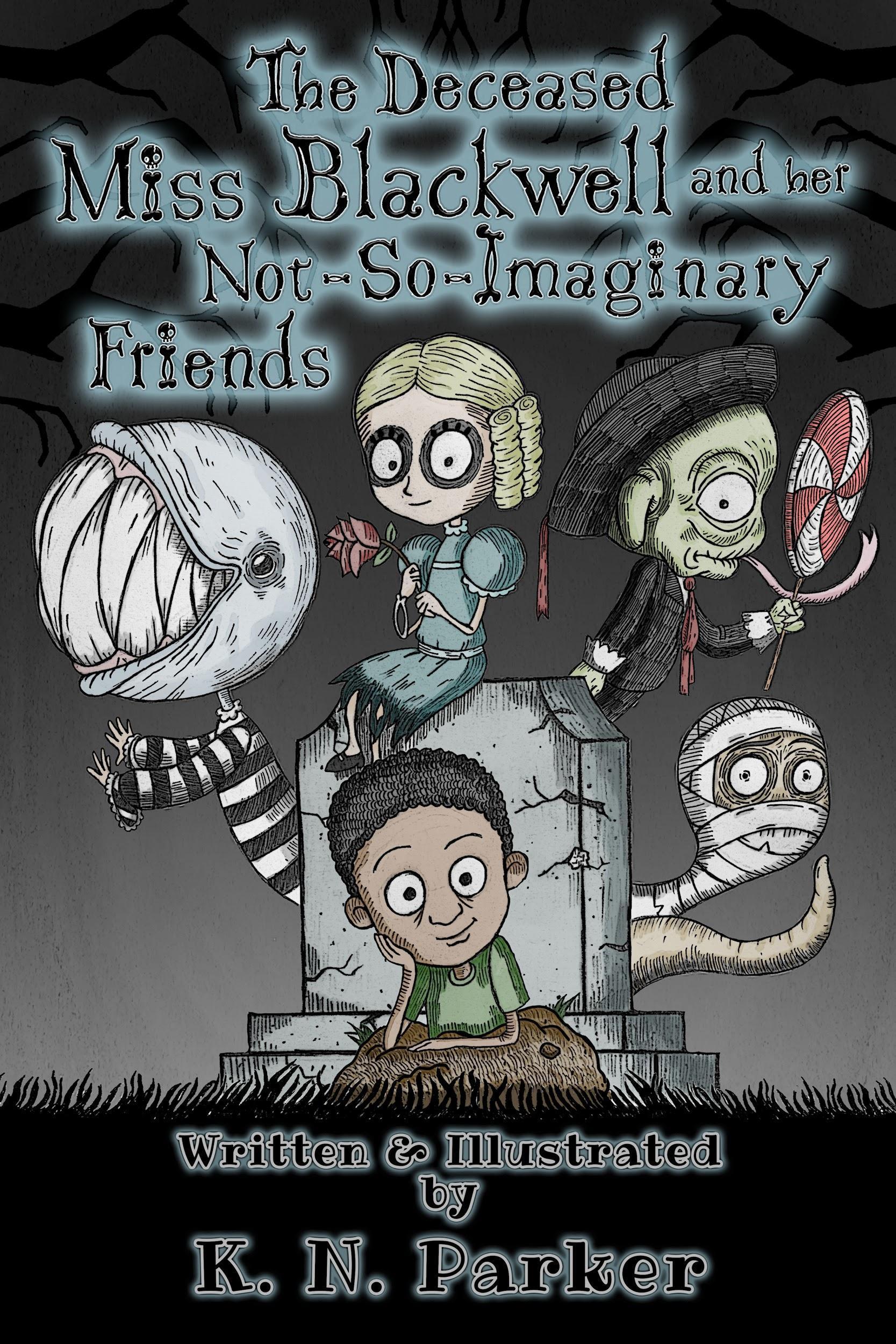
The Deceased Miss Blackwell and her Not-So-Imaginary Friends!
Available August 14th, 2017 in digital and paperback.
The Death of Death and Autonomously Yours are available as AUDIO BOOKS on
Amazon, Audible.com and iTunes!
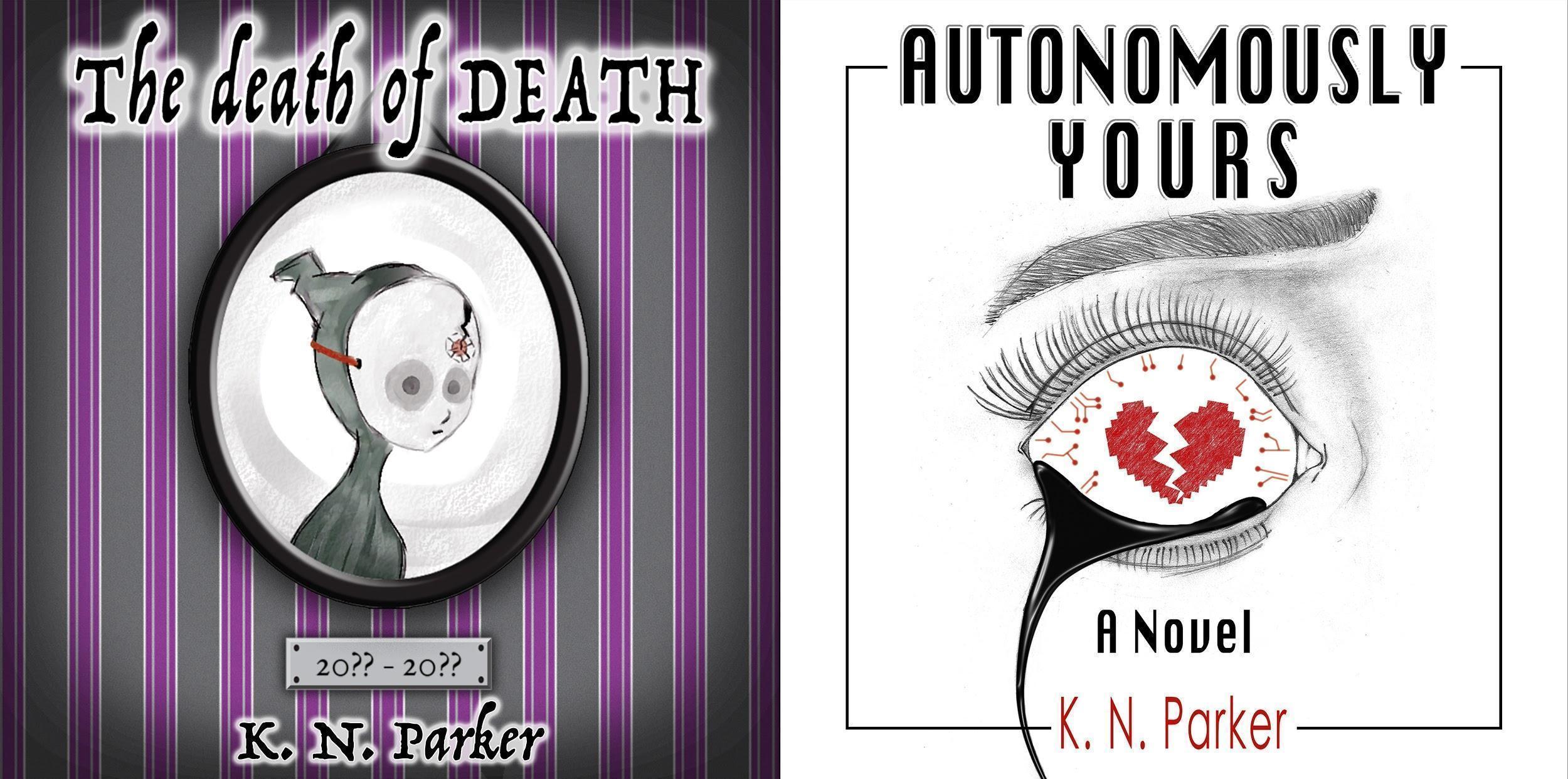
The Death of Death Audiobook UK Edition
Please check out another great work from K. N. Parker, AUTONOMOUSLY
***INDIE READER 4 1/2 STAR REVIEW***
"AUTONOMOUSLY YOURS is an enjoyable read that does not attempt to answer
questions it poses, but engages into deeper understandings of how people treat one
another and what it means to be human."
-- IndieReader
"The novel is certainly provocative and raises some fascinating philosophical
questions about what constitutes life, while also shining a light on modern man's
misogynistic tendencies... Parker also brings to life quite beautifully Okamura's
relationship with Cran, his more traditional, robotic manservant..."
-- Kirkus Review
“This is a great book and I couldn't put it down. Truly thought provoking with
regard to A.I., sentience and our interaction with them. Also, a very poignant story.”
“I loved this book… Well written and disturbing at times, but in a good way.”
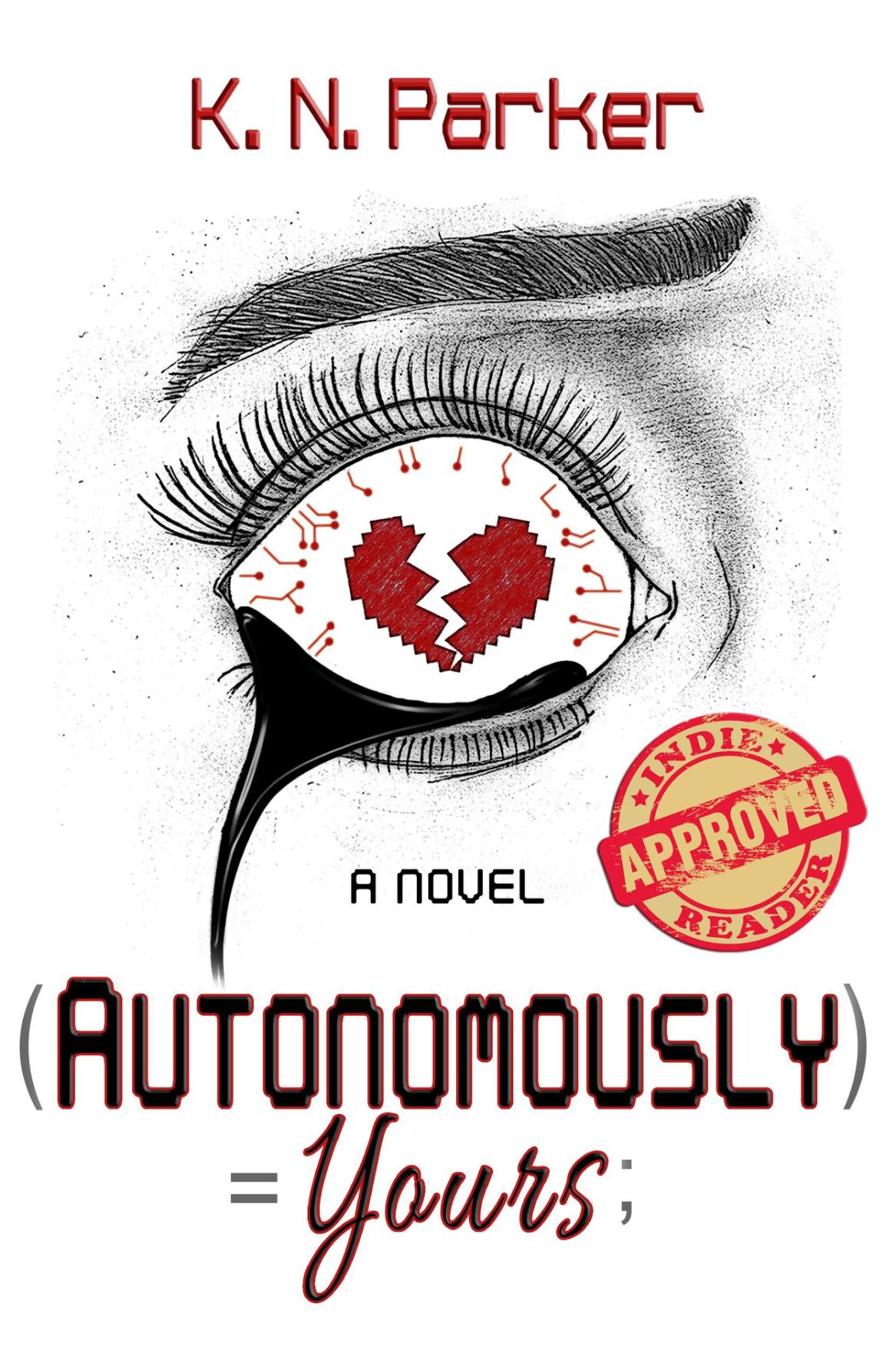
Autonomously Yours: The Life of a Compandroid
UK Edition: Autonomously Yours
Autonomously Yours is an allegorical science fiction story of relationships, emotions
and tragedy.
Watch the story unfold literally through the eyes of the world’s first compandroid.
About the Author:
K. N. Parker is a simple man in his thirties, and was born and raised in Los
Angeles, California. He is currently working on a full-length novel and two more
short stories. He shares heritages with two countries: America and Japan, and he
spends his time between the two whenever possible. When in his late teens he
thought it proper to teach himself Japanese, and so he did, and now can
communicate with you in two ways, if applicable. When not writing or creating
trouble in various coffee shops throughout the world, he enjoys graphic design,
television, film, and absurdist, subtle, and very sarcastic comedy.
He also likes dogs.