

The Successful Freelancer: How To Become A Freelancer by Istvan Meszaros - HTML preview
Download the book in PDF, ePub, Kindle for a complete version.
Chapter 5 Organizing Your Business
5.1. Project Management
Breaking Down Your Project
When taking on each new project, you should break it down into smaller tasks. This approach makes your projects more manageable and means you can track your progress and meet the deadlines.
Here's a step-by-step breakdown strategy:
1. Divide the project into smaller tasks: List all the tasks
necessary to complete the project. These should be specific, actionable steps that contribute to the overall goal. For example, if you're writing an article, the individual tasks can be divided up as follows: researching for information, writing the structure of the article, writing the first draft, editing the article, checking for plagiarism, proofreading, and making final adjustments.
2. Define key milestones: Once you've listed your tasks,
group them into key milestones. Milestones are significant checkpoints that indicate the completion of major phases of the project. Assign each task to a corresponding milestone in order to create a clear structure.
3. Estimate each task accurately: Take the time to estimate
how long each task will take. Consider every aspect of the task and account for potential unforeseen issues. A good practice is to multiply your initial estimate by a factor to build in some buffer time. For instance, if you often encounter
minor delays, you might start with a factor of 1.2. If your projects are more complex or prone to significant changes, you might choose a higher factor, like 1.5. Adjust this factor based on each project and your past experiences until you find the correct multiplier that works for you. This approach ensures you have a realistic view of the time required.
4. Set deadlines for milestones: Based on your task
estimates, set deadlines for each milestone. These deadlines will serve as mini-goals throughout the project, helping you maintain momentum and stay on track.
5. Determine the project delivery time: By totaling up the time
estimates of all the individual tasks and milestones, you can calculate an accurate delivery time for the entire project. This comprehensive timeline will guide your workflow and result in timely completion.
Developing Your Project Roadmap
With your tasks and estimates in place, the next step is to build a detailed project plan, often referred to as the project roadmap. This roadmap describes the timelines, milestones, and deliverables. It serves as your guide throughout the project lifecycle.
● Utilize project management tools: Tools such as Trello,
Asana, or Monday.com are invaluable for organizing your tasks, setting deadlines, and monitoring progress. These platforms offer visual representations of your project, such as boards, lists, and calendars, which help you stay organized and focused.
● Outline timelines and deliverables: Create a timeline in
your project management tool that includes all your milestones and the associated tasks you defined in steps 4
and 5 above. Specify the deliverables for each milestone to ensure clarity and accountability.
● Monitor progress: Regularly update your project
management tool with the progress of each task. This allows you to see at a glance what you completed and what still needs attention. It also helps you identify any potential delays early on so you can adjust your plan accordingly.
● Communicate with the client: If you encounter any issues
that may affect the project's timeline or deliverables, promptly notify the client. Keeping the client informed about any changes ensures transparency and manages expectations.
Breaking down the project into actionable tasks, creating a detailed project roadmap, and utilizing management tools keeps you organized and provides a clear path to project completion.
Managing Multiple Projects
Balancing multiple projects simultaneously can be challenging, but with the right strategies, you can manage your workload efficiently and meet all your deadlines. Below are some practical tips to help you stay organized and productive when juggling multiple projects.
Maintain a Master Calendar
One of the most effective ways to keep track of all your deadlines is by using a master calendar. This central calendar should include all the significant dates and deadlines for every project you're working on. By visualizing your schedule in one place, you can easily see where deadlines overlap and plan your workload accordingly. Tools such as Google Calendar or Outlook can be helpful for this purpose.
Allocate Time Blocks
Designate specific times of the day or week for different projects. For example, you might allocate mornings to Project A and afternoons to Project B. This avoids constant context-switching and lets you dive deeper into each project, leading to more productive and focused work sessions.
Plan Ahead
Anticipate periods when deadlines overlap and plan your tasks accordingly. If you know several projects have deliverables due around the same time, start early on tasks you can complete ahead of schedule. This proactive approach can prevent last-minute rushes and ensure you have ample time to address any unexpected issues.
5.2. Time Management and Productivity
Effective time management is essential, especially for freelancers who juggle multiple projects and clients. This section delves into various techniques to boost your productivity, allowing you to make the most out of your working hours. You will learn prioritization techniques, how to effectively batch and theme your tasks, and an in-depth look at the Pomodoro Technique and the SWDH (Someday, Weekly, Daily, Hourly) productivity system.
Prioritization Techniques
Mastering prioritization greatly improves your effectiveness because you will be focusing on the most important tasks first. Here are three powerful techniques:
● ABC Method: Categorize your tasks into A, B, and C groups.
A tasks are high priority and must be done immediately, B tasks are important but less urgent, and C tasks are nice-to-do items that can wait. This simple classification helps you focus on what truly matters.
● Eisenhower Matrix: It is a more complex version of the ABC
Method. Divide your tasks into four quadrants based on urgency and importance. Focus on tasks that are both urgent and important (Quadrant I), plan for important but not urgent tasks (Quadrant II), delegate urgent but not important tasks (Quadrant III), and eliminate tasks that are neither urgent nor important (Quadrant IV).
● Eat That Frog: Inspired by Mark Twain's quote and
introduced by the motivational speaker Bryan Tracy, this method encourages you to tackle your most challenging task first thing in the morning. By "eating the frog," you get the most challenging part of your day out of the way, making the rest of your day more manageable.
Batching and Theming
Batching and theming can significantly reduce the time you spend switching between tasks, thereby increasing productivity.
● Batching: Group similar tasks together and complete them
in one go. For instance, respond to all your emails during a specific hour rather than checking them sporadically
throughout the day. This method minimizes distractions and interruptions.
● Theming: Dedicate specific days to particular types of work.
For example, you could have Mondays for content creation, Tuesdays for client meetings, and Wednesdays for administrative tasks. Theming allows you to immerse yourself fully in a particular activity, reducing the mental load of switching contexts.
The Pomodoro Technique
The Pomodoro Technique is a time management framework designed to boost productivity by breaking work into intervals called "Pomodoros," typically lasting 25 minutes and followed by a short five-minute break. The method emphasizes focused work periods and frequent breaks, which helps maintain mental agility and prevent burnout. After completing four Pomodoros, you take a longer break, usually around 15 to 30 minutes.
To implement the Pomodoro Technique, follow these steps:
1. Choose a task you want to work on. 2. Set a timer for 25 minutes and dedicate yourself to working
on the task without interruptions.
3. Work until the timer rings, marking the end of one
Pomodoro.
4. Take a five-minute break to relax and rejuvenate. 5. Repeat the process for four Pomodoros. Afterward, take a
more extended break of 15 to 30 minutes.
The SWDH Method
The SWDH productivity system is a comprehensive time management and task scheduling approach designed to enhance productivity.
Each weekend, list all the tasks you wish to complete in the coming week (Weekly). You can choose tasks from three sources:
1. Uncompleted tasks: Tasks you didn't complete the previous
week.
2. New tasks: Tasks that emerged last week but haven't been
addressed yet.
3. Someday tasks: Your list of tasks that need to be done in
the near future.
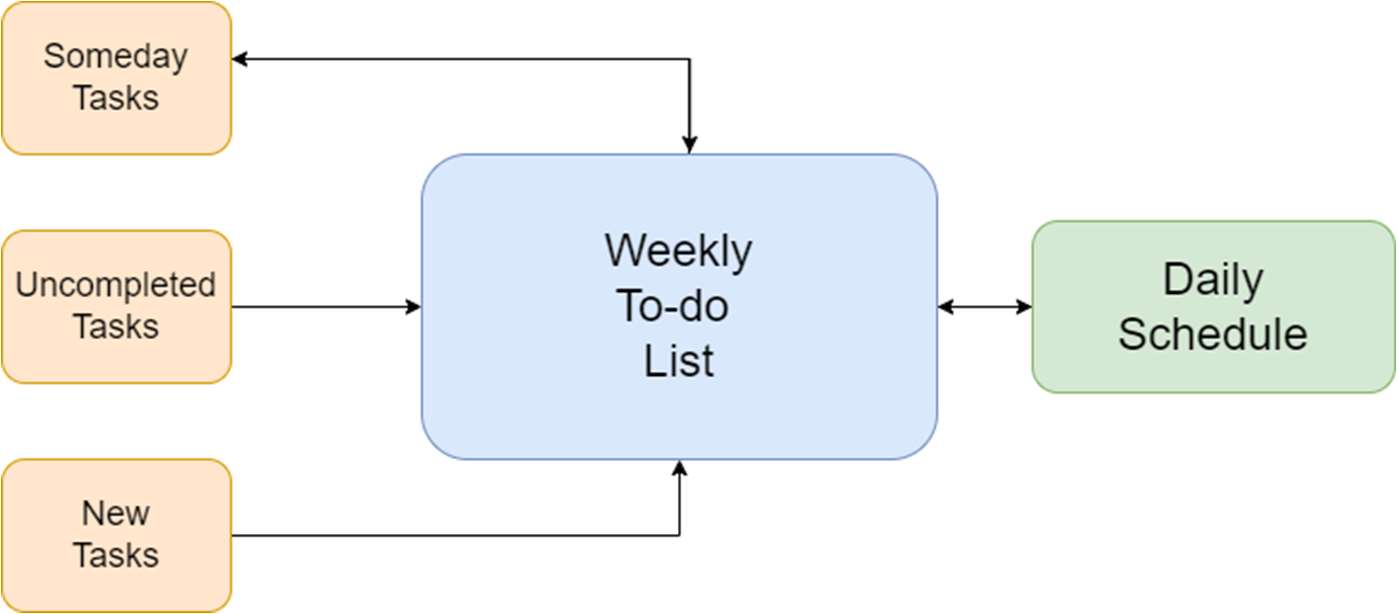
Then, every evening, choose those from this list you want to do the next day (Daily) and assign specific time blocks for each task (Hourly). If there are New Tasks you need to do soon but not necessarily in the upcoming week, place them on your Someday list. The ones you need to address as soon as possible, put them in Your Weekly To-do list if you have time left for them, or in the Next Week’s To-do list. You can read a more detailed description of this method in the following article: The SWDH productivity system, which explains how to implement the system precisely, manage unfinished tasks, and handle new tasks that arise unexpectedly.
Mastering time management is an ongoing process involving consistent application of various strategies and techniques. You can significantly enhance your productivity by incorporating methods such as batching, theming, the SWDH approach, and prioritization frameworks and leveraging the power of modern tools, such as PlanArty, Toggl, or Clockify. Remember, the goal is not just to get more done but to make the best use of your time in a way that supports your long-term goals and well-being.
5.3. Managing Client Relationships
Building and maintaining positive client relationships is essential for a successful freelancing career. Strong client relationships can lead to repeat business and a professional network that can generate referrals and new opportunities. Some vital elements of positive client relationships are set out below.
Clear Communication
Clear and consistent communication is the foundation of any strong client relationship. From the initial project discussion to the final deliverable, keep your clients informed about your progress, any challenges you encounter, and the timeline. Use clear, professional language and avoid jargon that might confuse your clients. Effective communication is as much about listening as it is about conveying your message. Ensure you understand each client's individual needs and expectations by asking clarifying questions and confirming details.
Creating a communication schedule for each project with repeated communication tasks can be helpful. For example, "Inform the client about progress every Tuesday." Mark these tasks on your calendar to aid consistency and reliability in your communication.
Setting Realistic Expectations
Setting realistic expectations from the start will prevent misunderstandings and dissatisfaction. Clearly outline what you can deliver and the project's scope, timeline, and cost. Additionally, specify what you need from the client to be able to deliver the work effectively. Be honest about your capabilities and availability to avoid overpromising and underdelivering. Make sure your client understands the limitations and possibilities of the project. By managing expectations early, you create a transparent and trusting relationship.
Handling Scope Creep
Scope creep occurs when project requirements extend beyond the original agreement without corresponding adjustments in time, cost, or resources. To manage scope creep, establish a detailed contract at the beginning of the project and refer to it when new requests arise. Politely but firmly explain that additional work will require a revised agreement and potentially extra fees. Keeping a record of any requested changes ensures you and your client clearly understand the project's parameters.
The following articles provide comprehensive details and examples regarding the concept of project scope: The Importance of Accurate Project Scope and Deliverables in Freelancing and How to Prepare a Clear Project Scope and Deliverables.
Building Long-Term Relationships
Long-term client relationships are built on trust, reliability, and consistent quality. Deliver high-quality work on time and be responsive to feedback. After completing a project, follow up with clients to express your gratitude and remind them of the value you can continue to provide. Offer occasional check-ins or updates on relevant industry developments that might benefit their business. By showing you care about their success, you become a valued partner rather than just a service provider.
Dealing with Difficult Clients
At some point, you may encounter a difficult client. Whether it's due to the client making constant changes and unrealistic demands, or their poor communication skills, your role is to handle these situations with professionalism. Stay calm and try to understand their perspective. Set firm but polite boundaries and refer back to your initial contract and communications to find a resolution. If a client becomes too challenging and jeopardizes your well-being or the quality of your work, it may be necessary to part ways amicably and professionally.
The following articles provide detailed strategies for handling demanding clients: How to Deal with Micromanaging Clients as a Freelancer and Strategies for Freelancers to Handle Unresponsive Clients.
By implementing these strategies, you can cultivate positive, long-lasting client relationships, which will form the backbone of your freelance business.
5.4. Financial Management
Effective financial management is critical to sustaining a successful freelance career. You should plan carefully to achieve a steady cash flow and avoid financial pitfalls.
Budgeting
One of the most crucial aspects of your freelance career is budgeting. It's not only about tracking your income and expenses but also about setting aside money for taxes, savings, and business expenses. Regularly reviewing and updating your budget is vital to staying on top of your financial situation. This knowledge about your finances will empower you to make informed decisions. As discussed in Section 3.4. Setting Your Rates, to ensure your business has a good chance of being profitable, your rates must at least cover all your expenses.
Invoicing
Develop a systematic approach to invoicing to encourage prompt payment. Clearly outline your payment terms and due dates on each invoice, and send them out as soon as you complete the work. Consider using automated invoicing software to streamline this process. When choosing the right invoicing system, look for features that automate the invoicing process as much as possible and facilitate easy payment. You can test numerous apps and select the one that best fits your style and needs. Harvest, Invoicera, Invoice Ninja, Maxie, Juuli are the most well-known apps.
PlanArty, a product developed by my company, offers time management and invoicing designed explicitly for freelancers. It allows you to automatically invoice all billable hours and place a clickable payment link directly on the invoice so the client can pay as soon as they open the email containing your invoice. For complete transparency, you can also attach a detailed rundown of the time spent on the project, easing the client's mind and further facilitating swift payment. If you'd like to try PlanArty, email me at istvan@planarty.com for a fully functional free six-month account.
You should also use a payment gateway to enable smooth transactions. To help you select the best fit for your needs, read the comprehensive article Best Payment Solutions for Freelancers, which describes several such gateways and presents the pros and cons of each.
Cash Flow Prediction
Preparing a cash flow prediction for at least six months, one year in advance, can provide valuable insight into your financial future and help you anticipate higher and lower income periods. Start by listing all expected income from signed contracts and regular clients. Next, account for fixed business expenses such as software subscriptions, office supplies, and marketing costs. Factor in variable expenses such as travel, equipment maintenance, or occasional outsourcing. Additionally, add a buffer for unexpected costs or emergencies to avoid any financial shocks. By identifying patterns in your cash flow, you can make necessary preparations in advance, so you have sufficient funds during lean periods and can capitalize on more lucrative times. This forward planning will reduce the risk of finding yourself without money when you need it the most.
By diligently managing your finances, you can focus more on delivering high-quality work and nurturing client relationships. This proactive approach will stabilize your freelance business and give you the confidence to navigate financial uncertainties.
5.5 Balancing Work and Personal Life
In freelancing, balancing work and personal life can be challenging, but it's crucial for maintaining a healthy, fulfilling lifestyle. Let's delve into practical strategies for establishing and preserving this balance, enabling you to thrive both professionally and personally.
Set Clear Boundaries
Establishing clear boundaries is another cornerstone of a balanced freelancer life. Define what tasks fall under your professional domain and what activities you reserve for your personal life. Consider setting rules such as not checking work emails after a specific time or dedicating weekends solely to personal pursuits. By drawing a clear line between work and personal time, you give yourself the opportunity to fully disengage from professional duties and rejuvenate.
Effectively communicating your boundaries is essential to gaining respect for your work-life balance. Clearly outline your availability and set firm limits to help others understand your personal and professional needs. This will ultimately lead to a healthier and more productive environment for everyone involved.
How to Communicate Your Boundaries
To clients: Clearly articulate your availability and preferred
communication methods to clients from the beginning. Outline your work hours in your contract, and if a client contacts you outside those times, gently remind them of your agreed boundaries.
To family and friends: Explain to family and friends the
importance of respecting your work hours. Encourage them to view your work time like they would if you were in a traditional office setting. This will reduce interruptions and maintain the sanctity of your dedicated work time.
Define Work Hours
To avoid the pitfall of overworking, you need to define your work hours. Create a schedule that mirrors a traditional workday, outlining specific times for starting and stopping work. Adhering to these hours can help build a routine, making it easier to switch off from work mode. If your personal commitments require flexibility, build this into your schedule but maintain regularity as much as you can to support work-life harmony.
Dedicated Workspace
Another vital element is designating a dedicated workspace. This could be a home office or a specific corner of your living space. Having a physical separation between your workspace and personal areas means you can mentally signal when you're at work and off duty. It can improve focus during work hours and relaxation during personal time.
Maintain a Healthy Work-Life Balance
Regularly reviewing and adjusting your work-life balance is pivotal. Schedule periodic reviews to assess how well you're maintaining these boundaries. Recognize when shifts in your professional or personal life necessitate changes in your schedule or boundaries. Staying attuned to your needs prevents burnout and fosters long-term productivity.
Don't overlook self-care. Allocate time in your schedule for activities that promote your health and well-being, such as exercise, hobbies, or relaxation techniques. Prioritizing self-care helps you stay energetic and focused.
Finally, ensure you take vacation time. Plan breaks throughout the year to recharge fully. Inform clients of your absence well in advance, and adhere to this time off to rejuvenate. Taking regular vacations prevents burnout and sustains your passion for your freelancing career.
By implementing these strategies, you create a sustainable, healthy balance between your professional responsibilities and personal fulfilment. This balanced approach will enhance your quality of life and enable you to consistently deliver exceptional work.
5.6. Dealing with Burnout
Burnout is one of the most dangerous consequences of an unbalanced lifestyle. Burnout is more than just fatigue or stress; it is a state of emotional, physical, and mental exhaustion caused by prolonged and excessive stress.
Recognizing Burnout
Early signs of burnout are often subtle but critical to identify. Recognizing these symptoms can mitigate further stress and prevent long-term health issues. Here are some key indicators:
● Chronic fatigue: Feeling constantly tired despite getting
adequate rest. This fatigue can make it difficult to get through daily tasks and may feel overwhelming.
● Insomnia: Difficulty falling or staying asleep, even when
you're mentally and physically exhausted. This can lead to a vicious cycle of fatigue and stress.
● Decreased productivity: A noticeable drop in efficiency and
ability to concentrate. Tasks you used to find easy may become challenging, and deadlines may slip.
● Cynicism: Developing a hostile or apathetic attitude toward
work. This can manifest as a lack of enthusiasm, irritability, or a feeling that your work doesn't matter.
● Detachment: Feeling disconnected from both your personal
and professional life. You may find it hard to engage with friends, family, or colleagues, leading to isolation.
● Physical symptoms: Frequent headaches, digestive issues,
or other stress-related ailments. These physical symptoms can indicate your body is struggling to cope with ongoing stress.
By implementing the strategies discussed in Section 5.5. Balancing Work and Personal Life, you can prevent burnout.
If burnout has already set in, taking immediate steps toward recovery is crucial.
How to Recover from Burnout
Recognizing the onset of burnout is the first step toward recovery. Here are your next steps, describing strategies to help you regain your equilibrium:
1. Take a break: Permit yourself to step away from work. Short
breaks throughout the day and more extended vacations can provide necessary relief.
2. Set realistic goals: Manage your expectations and break
down larger tasks into manageable chunks.
3. Seek support: Communicate with friends, family, or fellow
freelancers. Sharing your experiences can lighten your emotional load.
4. Practice mindfulness: Engage in meditation, yoga, or deep-
breathing exercises to reduce stress.
5. Prioritize sleep: Follow a regular sleep schedule to give
your body and mind the space and time to recover.
6. Exercise regularly: Physical activity boosts mood, reduces
stress, and increases overall well-being.
7. Consult a professional: If burnout symptoms persist,
seeking treatment or support from a therapist or counselor can provide tailored strategies for recovery.
By recognizing the signs of burnout and taking steps to address them, freelancers can maintain a sustainable and fulfilling career. Remember, your well-being is paramount to long-term success and happiness.