

The Career Switch Playbook into Product Management by Nkeonye Akumah - HTML preview
Download the book in PDF, ePub, Kindle for a complete version.
Data Privacy
Data is at the heart of many modern products. With great access to user information comes great responsibility. Product professionals must:
• Collect only necessary data – avoid gathering personal information that isn’t essential for the product’s function.
• Secure user data – protect information against breaches, leaks, or misuse.
• Be transparent about data usage – inform users what data is collected, why, and how it will be stored.
• Allow user control – provide options to access, edit, or delete personal data easily.
Privacy regulations, like GDPR in Europe or CCPA in California, set legal standards for handling data. Beyond compliance, ethical data handling builds trust and strengthens user relationships.
Tip: Treat user data like a responsibility, not just a resource. Misuse can cause harm and irreparable reputational damage.
Bias in Technology
Even the most sophisticated products can unintentionally perpetuate bias. Algorithms, AI models, or even design choices may favor certain groups over others. Examples include facial recognition that struggles with darker skin tones or hiring tools that inadvertently prefer candidates from certain backgrounds.
To minimize bias:
• Audit algorithms regularly – check for disparities in outcomes across different user groups.
• Use diverse data sets – ensure training data reflects the diversity of your audience.
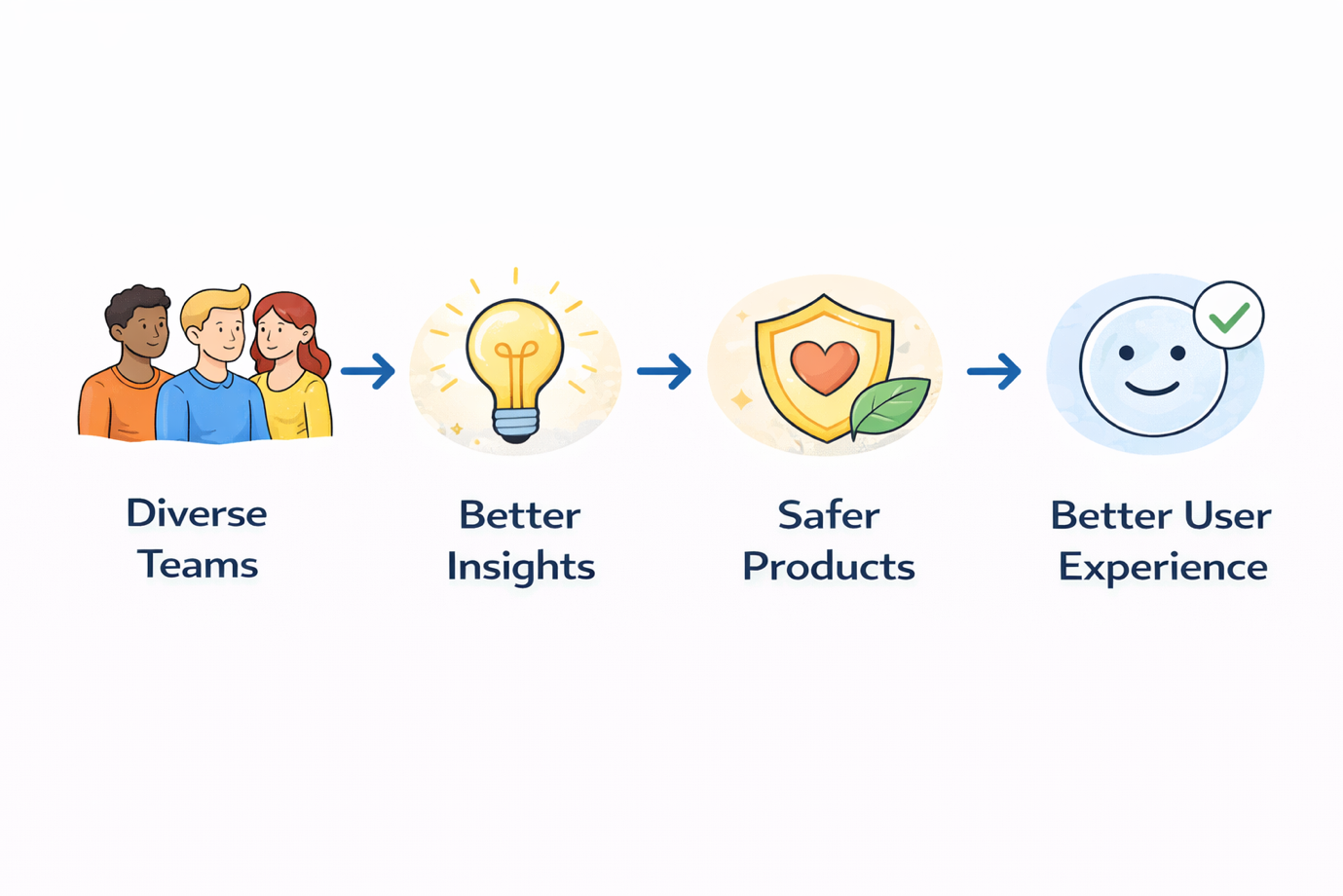
• Involve diverse teams in development – different perspectives help spot blind spots early.
• Continuously test and iterate – monitor product performance and adjust to reduce bias over time.
Tip: Bias isn’t always obvious—it can be hidden in assumptions, data, or workflows. Encourage open discussion and challenge decisions with fairness in mind.
Long-Term Impact on Society
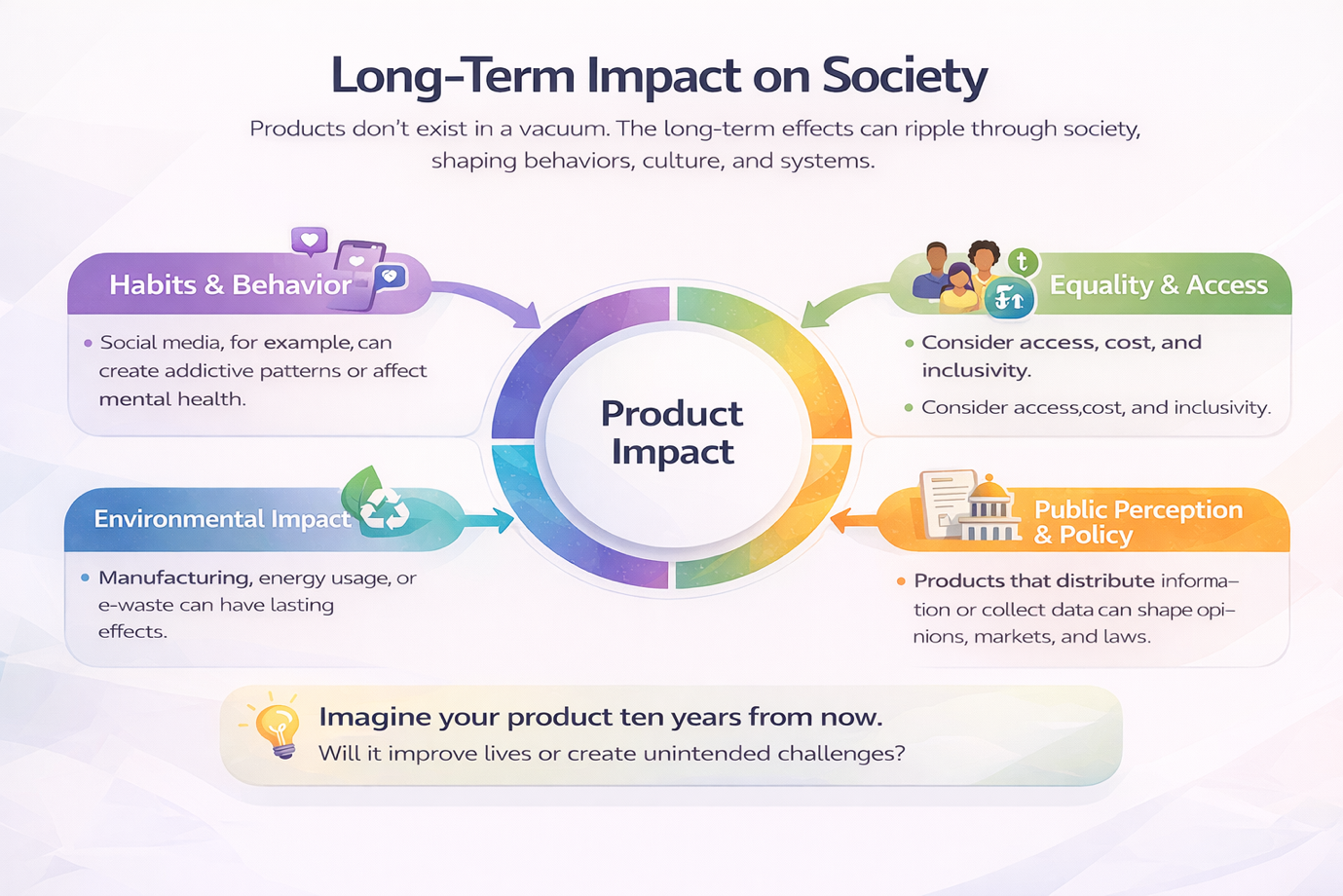
Products don’t exist in a vacuum. The long-term effects can ripple through society, shaping behaviors, culture, and systems. Product professionals should ask:
• What habits does this product encourage? – Social media, for example, can create addictive patterns or affect mental health.
• Does it widen or reduce inequality? – Consider access, cost, and inclusivity.
• What are environmental consequences? – Manufacturing, energy usage, or e-waste can have lasting effects.
• Could it influence public perception or policy? – Products that distribute information or collect data can shape opinions, markets, and laws.
Thinking about societal impact requires looking beyond immediate KPIs and short-term success. It involves a mindset that balances growth with responsibility.
Tip: Imagine your product ten years from now. How will people remember it? Will it improve lives or create unintended challenges?
Conclusion
Ethics, responsibility, and impact aren’t optional—they are central to effective product management. Building responsible products, protecting user data, reducing bias, and considering long-term societal effects ensure that your work benefits users and society, not just your company’s bottom line.
By incorporating ethical thinking into your daily decisions, you create products that users trust, teams respect, and society values. Every feature you build, every data point you collect, and every algorithm you design carries a responsibility. Embrace that responsibility—it’s what separates a good product professional from a truly great one.