

Enhancing the Benefits of Nauli with a Key Exercise for Abdominal Muscle Strength: Second Edition by Artem Orel - HTML preview
Download the book in PDF, ePub, Kindle for a complete version.
INTRODUCTION
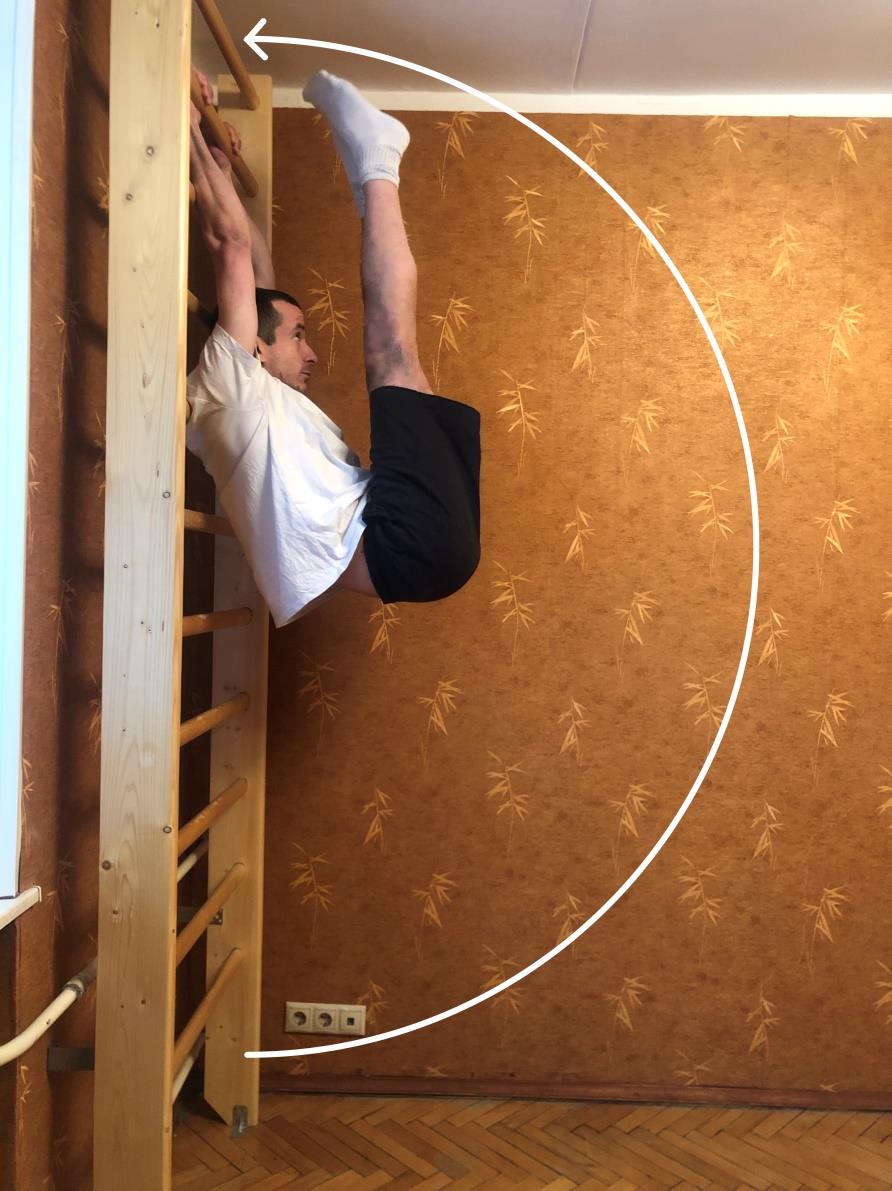
Dynamic “leg raises on wall bars” (alternatively referred to as “leg raises” hereafter) with straight legs touching the crossbar above the head is a key strength exercise for abdominal muscles. Considered one of the most challenging bodyweight exercises for this muscle group, it is also one of the most effective. By performing this exercise alone, a practitioner becomes capable of performing dozens of other strength exercises for these muscles, rendering them unnecessary. The exercise engages the same abdominal muscles as nauli, primarily the rectus abdominis.
Video of the exercise:
https://www.youtube.com/watch?v=udHk7l7mHdU
While nauli fully reveals the hidden potential of the rectus abdominis muscles for spatial movement, leg raises fully engage their strength. By manipulating the same muscles in different ways, leg raises and nauli complement each other perfectly. Nauli is known for its ability to enhance blood circulation in the abdominal organs by causing negative pressure. In turn, leg lifts achieve the same effect, but in the opposite way—by increasing pressure.
Regularly practicing leg lifts drastically enhances the benefits of nauli, particularly its therapeutic effect, which is enabled by its physical and physiological influence. This occurs due to the proximity of the abdominal muscles to these organs, separated only by a layer of fat and fascia. All exercises that are therapeutically effective for internal organs have a powerful systemic effect, since those internal organs ensure the vital activity of the entire body. They contribute to the elimination of dosha imbalances. By combining nauli with leg raises, one can achieve a powerful therapeutic effect on the vital internal organs in the abdominal cavity (including those of the digestive, urinary, and lymphatic systems) that is not possible with either exercise alone.
For the deepest physical and thus therapeutic impact, it is necessary to apply maximum strength throughout the full range of motion. Maximum strength of the rectus abdominis muscles is attained when they lift the greatest weight of your body vertically upwards, resisting the force of gravity in the direction opposite to the movement.
Leg lifts on wooden wall bars (also known as a gymnastic ladder, stall bars, or Swedish wall) are considered the gold standard in core strength training in gymnastics worldwide. Performing this exercise is the primary purpose of the stall bars equipment (the most supplied apparatus in any gymnastics facility) in this sport. There is even a specialized modification of the bars designed solely for this exercise in gymnastics; details of this modification are described in a later chapter.
Wall bars transform regular hanging leg raises into an exercise in which the strength of the core muscles is trained separately. An athlete does not need to expend additional effort to keep their body straight, which would otherwise decrease the number of leg raise repetitions they could perform.
The bars behind the back prevent the use of swing and momentum instead of strength, which is inevitable when performing the exercise on a horizontal bar (thereby critically reducing the power and effectiveness of the exercise). Shoulders serve as a foothold, stabilizing the body and simultaneously preventing the upper back from moving backward, which would reduce the range of motion and make the task easier. For maximum effectiveness, the exercise should be performed using strength alone throughout the entire range of motion.
Muscles are utilized to execute any movement and maintain static positions. There are only two actions muscles can perform: passive extension and active contraction. When complemented by dedicated core and upper body training, the most challenging asanas and vinyasas are performed with substantially greater ease and proficiency.
The repetitive movements transform leg raises into a kind of strength yantra, capable of accumulating and balancing prana in the body, filling the dan tian, and energizing the body’s channels. It is highly likely that leg lifts help to reverse apana and keep semen in the body, preventing accidental leakage.
Body Weight Exercises Are as Natural as Asanas
Utilizing your own weight is a natural approach designed by nature, and leveraging this option has minimal risk of trauma. Our legs and arms are built to move our body’s weight in various directions, including upward movements such as pull-ups. When performed mindfully without pushing through pain, these exercises are safe and effective, similar to the approach taken with asanas in yoga.
Two fundamental bodyweight exercises—leg raises on wall bars and pull-ups/chin-ups—are sufficient to serve as the necessary strength foundation and a catalyst for many body practices. Pull-ups and chin-ups not only target the arms but also engage the upper back and the entire upper body, making them the primary strength exercises. Leg raises, on the other hand, train the core and unite the upper and lower parts of the body.
By incorporating leg raises on wall bars with pull-ups or chin-ups, you can take your asana practice to a new level, making the postures more perfect and easier to perform. Strength also plays a crucial role in mastering challenging vinyasas.
Embracing these bodyweight exercises as a complement to your yoga practice can lead to significant improvements in your overall control and ease of movement within asanas. As you continue to develop your strength through these exercises, you’ll find yourself capable of exploring more advanced postures and vinyasas with confidence and grace.
Far-Reaching Therapeutic Benefits of Nauli and Leg Raises
Regular practice of leg lifts and nauli contributes to improved digestion. More efficient gastrointestinal tract function ensures a high quality and quantity of nutrients entering the body from the food consumed. In turn, this leads to an improvement in the composition and formula of the blood, which distributes nutrients throughout the body. As a result, the therapeutic possibilities of the proposed exercises extend beyond the abdominal cavity. Gut health is also connected to one’s mental state.
These ideas align with ayurveda’s belief in the crucial role of digestion in maintaining overall health. Ayurveda views digestion as responsible for nourishing the body’s tissues, maintaining a strong immune system, and supporting mental and emotional well-being.
Nauli is known for creating a strong blood flow to the organs of the abdominal cavity, causing negative pressure that can have therapeutic effects. In contrast, leg raises achieve the same result of enhancing blood circulation through a different approach: they increase pressure instead.
During these exercises, an activation and stimulation of the internal organs and tissues occurs, along with deep massage and abundant blood supply. With regular practice, this leads to a permanent improvement in the functionality of the organs. As the Chinese proverb states, “Where there is blood, there is qi.”
Enabling and Controlling Abdominal Breathing
Controlling the abdominal muscles is essential for pranayama practitioners and anyone practicing breathing exercises, whether yogic or otherwise. To achieve the sensation of “breathing with the stomach,” where air reaches the bottom of the lungs, one must master control over the abs by building their strength throughout the complete range of their motion. A strong abdominal wall allows for effortless engagement of abdominal breathing, resulting in deeper and more efficient respiration.
Abdominal breathing provides additional lung engagement, which translates to more oxygen being inhaled and transported by the blood, as well as better waste removal upon exhalation.