

Top Models by Samuel Claesson - HTML preview
Download the book in PDF, ePub, Kindle for a complete version.
Suzanne Alexander
92
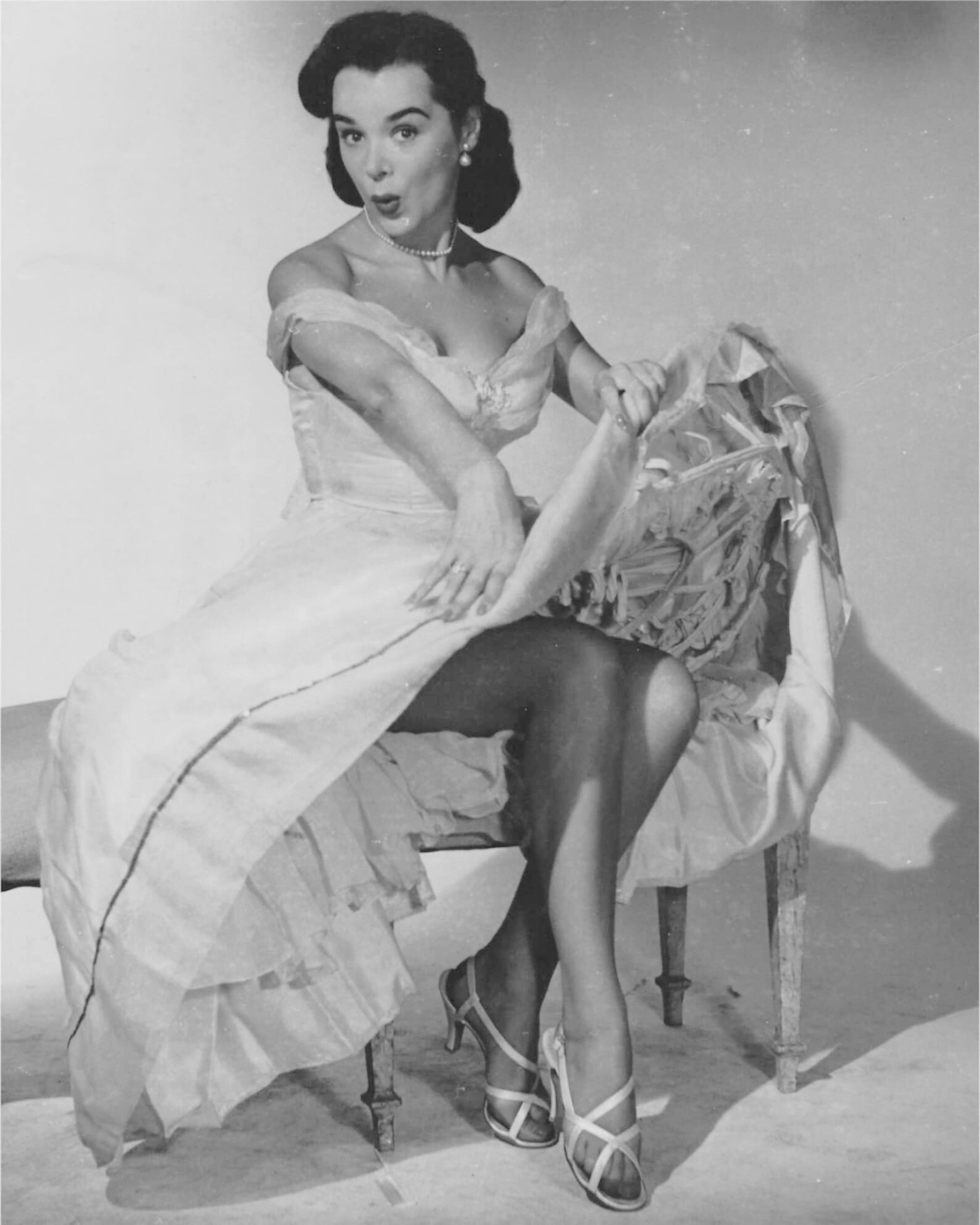
Suzanne Alexander was one of the most talented, gorgeous, and likeable women in Hollywood. She was also one of the most underrated. Her dark hair, distinct voice, and flawless complexion was popular with audiences on television, as she was seen daily on Queen for a Day and weekly on Juke Box Jury. She was one of the go-to models for agencies who needed an attractive, yet classy woman to showcase everything including fashion, swimwear, appliances, and cosmetics.
Gwendolynne “Suzanne” Alice Ann White was born on September 8, 1931 in Toronto, Canada to William White and Gwendolyn Haynes. Her father was a renowned concert entertainer, while her mother was -an unofficial- Miss Canada of 1918.
Unfortunately, her mother didn’t achieve the success that she yearned for, so she tried to achieve it through her daughter Suzanne. A controlling and authoritative mother would create enormous difficulties for Suzanne throughout her childhood.
93
94
Suzanne began performing as a teenager when her mother enrolled her and her brother Will J. White in
figure skating. Although they weren’t among the best athletes, they were recognized for their abilities to perform in the presence of an audience. Seeing their potential, their instructor recommended that they study acting. They were gifted, particularly Suzanne with her glamourous image and natural abilities to portray in-depth characters. Their family moved to Pennsylvania and later New York after Will was accepted to the renowned American Academy of Dramatic Arts. Suzanne lived with her aunt until she got accepted into the institution. Suzanne had ambitions to be a dramatic actress and vocalist, while
Will focused on being a “character” actor. She officially immigrated to the United States of America on March 25, 1947.
95
Suzanne graduated from the American Academy of Dramatic Arts in 1948 -with actress Grace Kelly-where her brother had graduated from years prior. She moved with her family to Los Angeles, California to pursue a career in Hollywood, where she was
fortunate enough to be hired as Dinah Shore’s secretary; it was a position that she held for three years, and it gave her the opportunity to rub shoulders with actors, producers, and directors.
She began building her resume by competing in pageants, in which she was successful. She was crowned Miss Studio City of 1949, Miss San Fernando Valley of 1949, Queen of the Fiesta of 1950, Miss Vegetable Plate of 1953, and was a finalist in Queen of
the Home Show in 1952. She received the “key to the city” by Studio City’s Chamber of Commerce after being crowned Miss San Fernando Valley. The last surviving contestant of that pageant, Teri Reid (her stage name), described Suzanne as being unusually withdrawn, shy, and reserved.
96
After being crowned Miss San Fernando Valley on May 7, 1949 by Frank Galpin, she competed for the title of Miss California in Santa Cruz, California. The competition began on June 9th and concluded on June 12th with 21 contestants. This all-expenses-paid trip was one of the most memorable parts of her career. She stayed at the Rio Del Mar Hotel and dined at the Cocanut Grove. She was truly given the 5-star treatment.
The festivities were hosted by Bill Baldwin with music provided by the Santa Cruz Beach Symphonic Band. She placed an impressive fourth after performing a monologue that was telecasted on KPIX, which critics described as breathtaking. She accepted honors onstage -bestowed by Lieutenant Governor Goodwin Knight- in a white swimsuit in front of roughly 25,000 spectators. Her prizes included a radio and a handbag. Joan Pederson of Santa Rosa, California would be crowned Miss California of that year, and would compete for the title of Miss America
shortly thereafter. 97 On April 28, 1950, Suzanne finally got her first televised role on the series Club Time opposite Bob McLaughlin where she portrayed a secretary. She retired from contests afterwards and focused on her career as an actress, while continuing to live with her recently-divorced mother on Moorpark Street in Studio City, California. A brief engagement to music mogul Jerry Lester followed, but ended partly
because of Suzanne ’s fear of leaving her mother
Her relationship with her mother was unusual and codependent. Even after reaching adulthood, Suzanne and her mother had an evening ritual where they would soak their hair in water for several minutes, drink a glass of red wine, and hold hands as they fell asleep in separate beds that were perpendicular with each other. Although Suzanne discussed this
ritual with friends as though it was normal, it could’ve been a reason for her fear of marriage as she would have to leave her mother.
98
After intense training, she joined the Gateway Stock Company. She began acting onstage in the production of Time and the Conways on June 28, 1948 in Morristown, Tennessee. It was afterwards that she got her first reviews, and they were outstanding. The
New York Critics’ Circle labeled her as " one of the most outstanding young actresses in America " while Malcolm Millerof of The Knoxville Journal said "Gwendolynne White was well cast for the role of psychic Kay Conway. She presented a beautiful picture as she sat by the window in the moonlight, trying to fathom the future of the confused Conways."
Dear Ruth was her next onstage success. She played the title character alongside Thomas Legate. The Morristown Gazette Mail called her " extremely talented and beautiful". She left the company to star in the off-Broadway production of The Enchanted Cottage at the John Drew Theater alongside Susan Peters, but it was cancelled soon afterwards.
99
Her most prolific onstage role was in Detective Story at the Ivar Theater on June 4, 1951 -starring Allen Jenkins- while appearing on television in series like Schlitz Playhouse and China Smith, the latter of which she portrayed a Latina helping detectives locate stolen drugs. The reviews of the production were positive, with columnist Mozelle Dinehart saying that
“Her [Suzanne’s] career is zooming.” A romance ensued between her and the production’s star, Frank Emanuel Fiumara. Her parents were not fond of her dating an Italian, so she often met with him in secret. Although they were together for years, they never married as Suzanne promised her father on his
deathbed that she wouldn’t marry him.
Unfortunately, Detective Story concluded that year. Suzanne kept herself occupied though, as she was
modeling for Thrifty ’s Drug Stores and the American Association of Advertising Agencies. Her acting career progressed with roles on Ladies Matinee with Jack Rourke and Photography is Fun in a risqué segment titled “How to Pose Nude.” Unfortunately, 100 these were forgettable roles where she portrayed models. She was hoping for the opportunity to leave modeling and become a serious actress; quoting every
model ever, “Modeling is the most boring job in the world.” Suzanne’s hopes would soon come to fruition.
Suzanne’s first prominent televised appearance was on the series Racket Squad, appearing in two back-to-back episodes as Lillian Lester. The story consisted of a widower who must support herself while raising her daughter, then losing custody of her daughter for false allegations of neglect. Mimi Gibson, who played her daughter, remembers Suzanne as being sweet and uncorrupted by Hollywood. They took a lot of photographs together, which Mimi has among her possessions. It was that year that she used the name
“Suzanne Alexander” rather than her actual name “Gwen”. It was an idea of her mother’s that was meant to copy one of the characters, the aspiring performer Susan Alexander, in Citizen Kane (1941).
101
Raiders of the Seven Seas (1953) was Suzanne’s first appearance in a movie, and it would be one of several
colorful “Arabian night” themed movies that she would appear in. Although it was an uncredited role as a handmaiden, she was honored to perform alongside Donna Reed in a pivotal scene where she alerts the guards that Barbarossa entered the Suzanne Alexander and Mimi Gibson on Racket Squad - 1952 palace. Latin Lovers (1953) was her second role in a movie, and it would be one of several in which she would portray ethnic characters that were contributed to her dark hair and flawless complexion. It was another uncredited role where she played an unnamed Brazilian, but she shared the screen with star Lana Turner; it was another fond experience in her life, but a realization that blondes were more desirable onscreen than brunettes. Blondes got starring roles while brunettes played supporting or ethnic characters.
Suzanne Alexander in Princess of the Nile (1954) ->
102
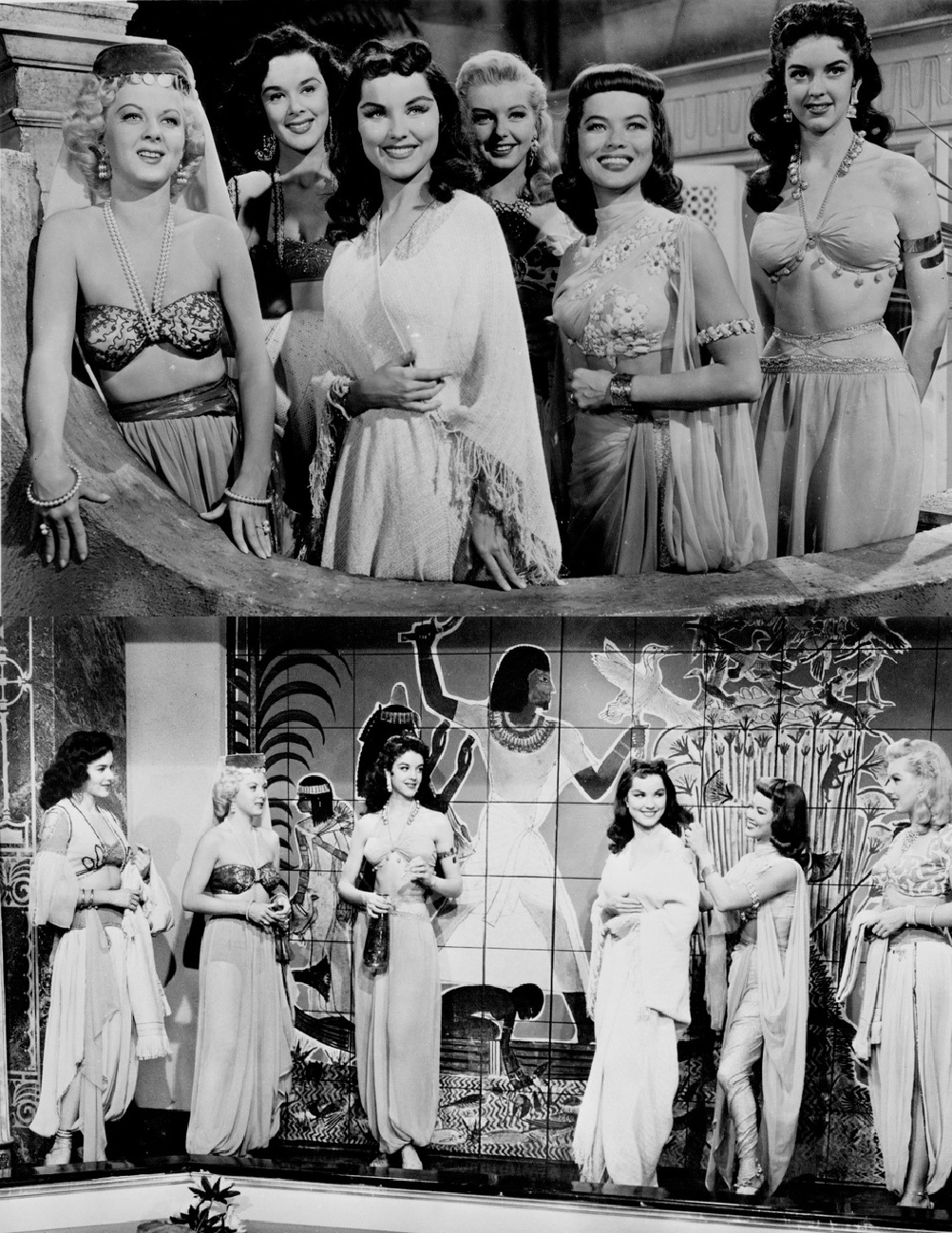
Her third movie was The Affairs of Dobie Gillis (1953) starring Debbie Reynolds, where she was one of five unnamed co-eds at the fictional Grainbelt University. Her fourth movie was Flight Nurse (1953) where she played Madonna, a former girlfriend of one of the wounded soldiers who appears -with no dialogue-during a drug-induced hallucination. Although it was a slower-than-expected progression to stardom, she was thankful to have four big-budget movies and several television series on her resume.
In 1953, Suzanne was discovered by Howard Hughes on a beach in Santa Monica, California. Howard had managed RKO Pictures for years, and he had developed a hobby of signing unknown -but beautiful nonetheless- models with the hopes of transforming them into stars. Although a romance never happened, he admired her beauty, class, and respectability. He signed her to a contract with RKO Pictures, which followed with a role in The French Line (1954) where
she is seen descending the stairs in the “Any Gal
104
From Texas ” scene with actresses Kim Novak and Pat Sheehan. A role in Son of Sinbad (1955) followed, which was iconic for its cast that included 106 actresses. Both of these movies were filmed in 3-D.
Her role in the Son of Sinbad (1955) -as a Harem Girl-was more substantial, as she is seen winking at Sinbad (portrayed by Dale Robertson) as he is awaiting sentencing. Unfortunately, Suzanne was among hundreds of actresses whom Howard Hughes had signed for RKO Pictures. There was a lot of
competition, and roles were scarce. Suzanne ’s mother was annoyed that her daughter wasn’t getting enough attention, and she asked Howard Hughes to release her from her contract.
Suzanne was now free to audition for larger roles. Cat-Women of the Moon (1953). It was her first major role
onscreen; she portrayed Beta, a villainous alien – alongside the villain Alpha portrayed by Carol
Brewster- who murders two of the story’s heroes
105
(one with a knife after luring him to a cave of gold, and the other with a rock to thwart her escape) before being killed herself. It was her first and only role as an antagonist, but she did fantastically well in that role while proving that she had more range as an actress than she had been given credit for.
She gave perhaps the most infamous and important
line of the movie, “We have no use for men”, which helped foreshadow the following events in the storyline. Although it was a low-budget sci-fi movie, it is credited by historians as having paved the way for the sci-fi genre. It would continue to see success in double-features at drive-in theaters, often being paired with movies directed by Roger Corman. It was also praised for its soundtrack, which was composed by Elmer Bernstein.
106
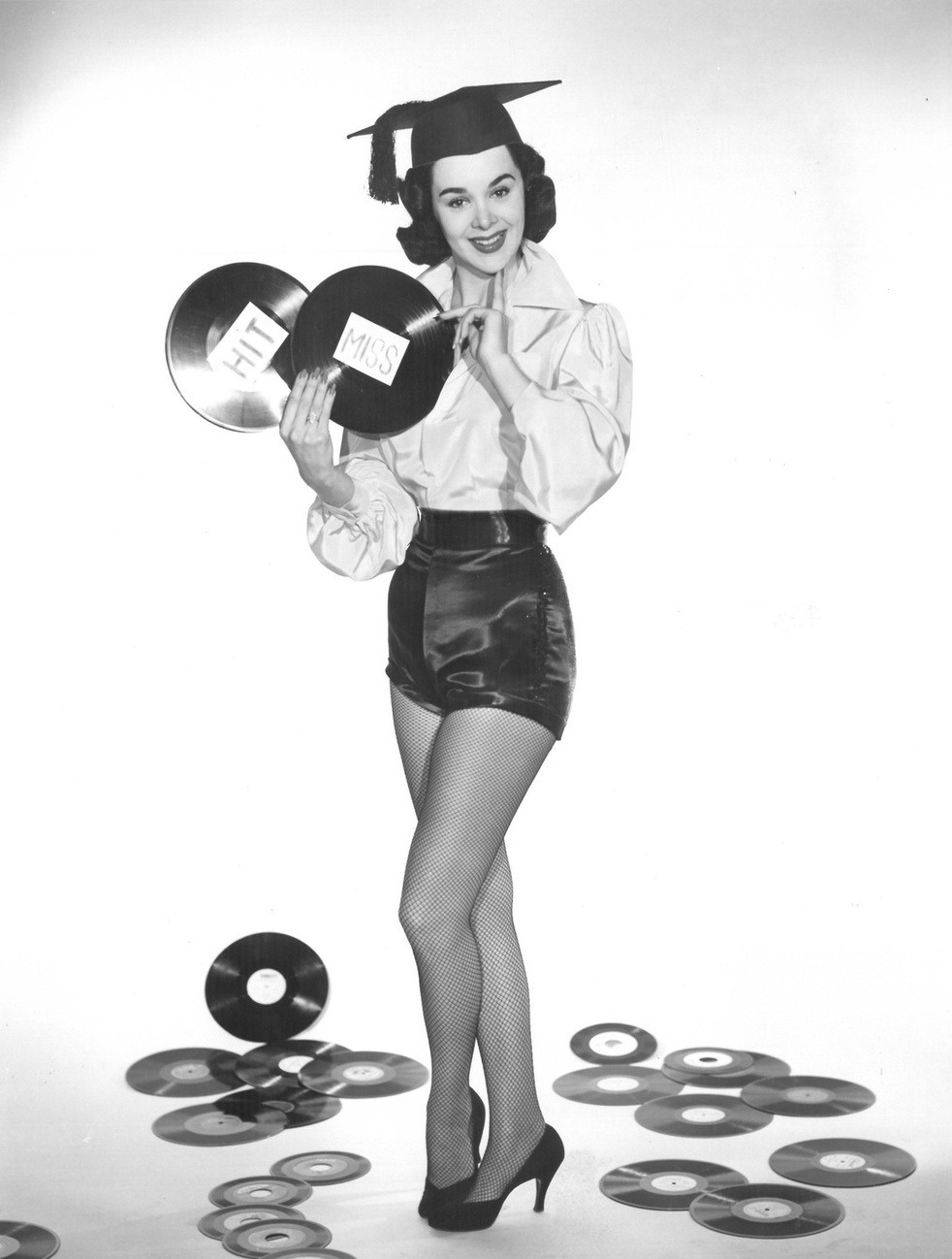
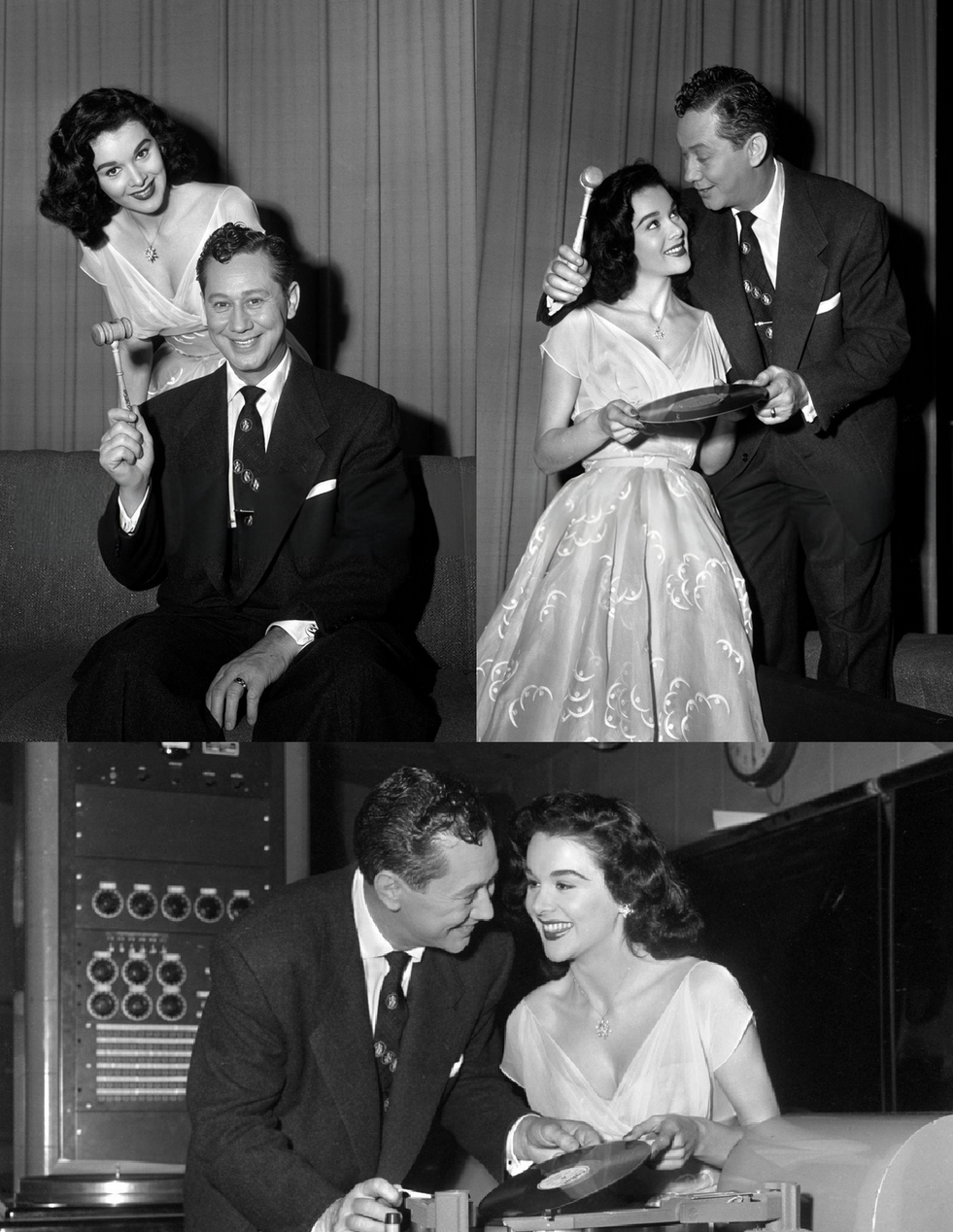
Suzanne Alexander on the Juke Box Jury ->
Suzanne’s outstanding performance caught the attention of Louis Shurr, who was one of Hollywood’s most successful agents having represented stars
like Bob Hope, Ginger Rogers, and Dolores Gray. Louis’ methods as an agent included transforming starlets into stars by rejecting lowbudget movies. He agreed to represent Suzanne on the condition that she not do another low-budget movie, nor that she do another unsympathetic role.
His fear was that she would be typecast -a fate that actresses June Kenney and Yvonne Lime suffered-and that it could limit her career. He also persuaded
her to use the name “Suzann Alexander” rather than “Suzanne Alexander in the credits of Cat Women of the Moon and reject any publicity (interviews, pictorials, etc) associated the production. Although
Suzanne could’ve had a great career in that genre, she, Louis, and -of course- her mother saw Suzanne as being destined for greater things.
109
Suzanne Alexander on Queen for a Day ->
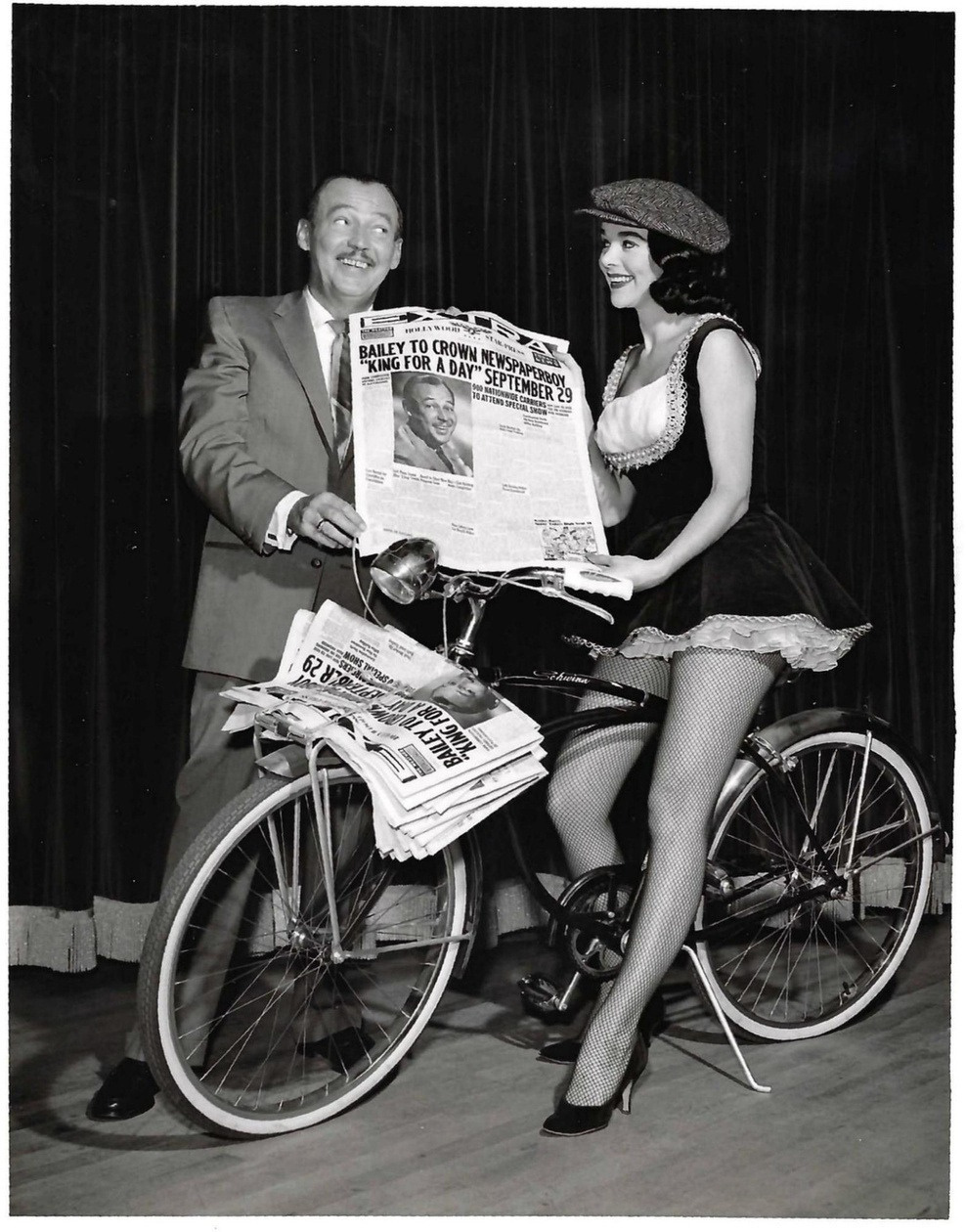
Things seemed promising under Louis’ guidance. He got Suzanne her first supporting role onscreen in Down Three Dark Streets (1954), which starred Broderick Crawford and Ruth Roman. In this drama, Suzanne played Brenda Ralles. She gave another outstanding performance by demonstrating her ability to cry on demand while opting for a shorter hairstyle to fit the script. Her character is murdered and tossed in a dumpster. Although reviews of the movie were lukewarm, it was a defining performance in her career. Critics agreed that Suzanne was underused in the production however,
with Glenn Erickson saying “Getting short shrift below the three top-billed actresses is the cute, dark-eyed Suzanne Alexander, who is given only a couple
of on-camera moments to shine. ”
111
Hollywood had been good to her until March 1954 when her paycheck was stolen by Robert Bacigalupo, a window washer. In what was a slow week in the
news, Suzanne’s pictorials were splattered in the Daily News and the Los Angeles Times. Thankfully, police officers arrested the thief a day later and
Suzanne’s paycheck was returned to her.
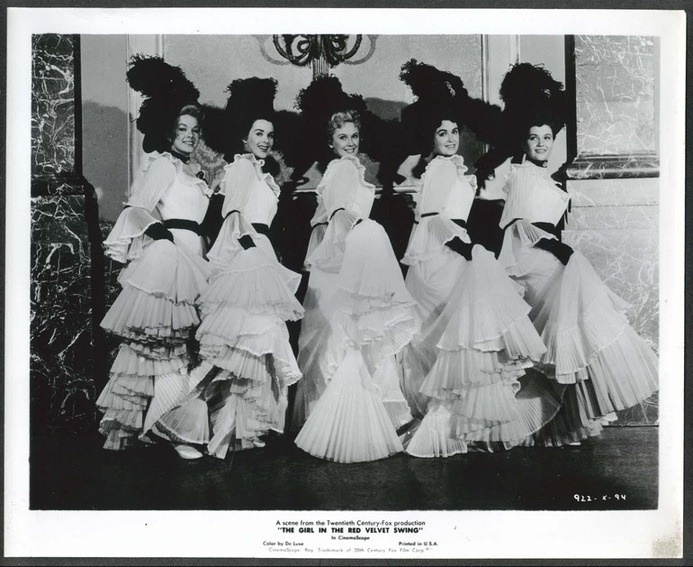
Suzanne Alexander in Girl in the Red-Velvet Swing (1955)
112
Between appearances onscreen, Suzanne competed for the title of Miss Rheingold in 1954. A popular
pageant in the 1950 ’s that was sponsored by Rheingold Brewery, Suzanne was a finalist who competed alongside Barbara Wilson, Jean Moorhead, Stephanie Griffin, Grace Brown, Nancy Woodruff, Rosemarie
Bowe (Robert Stack’s soon-to-be wife), and Suzanne Ames. She also shook hands with baseball player Willie Mays while touring to promote the pageant. They would compete in New York for the crown, but Suzanne ultimately did not win. She would -with finalist Rosemarie Bowe- act as a judge the pageant a year later. She soon began modeling leather jackets
at Wilson’s House of Suede.
“I ran into Suzanne at the Farmer’s Market shortly
after her father passed away. He made her promise
on his deathbed that she wouldn’t marry Frank
[Fiumara]. She was devastated, but she loved her
father and respected his wishes.” – Barbara Wilson
on March 11, 2022
113
Barbara Wilson was one of the six finalists for Miss Rheingold that year, as well as a credible actress.
She recalled that Suzanne ’s mother escorted her to the pageants, which supported the belief that she was overbearing. She also remembered that Suzanne was smitten with an Italian man named Frank Fiumara, the aforementioned actor whom her
parents strongly opposed. She felt that Suzanne ’s eventual suicide was the result of years of grieving that she never married the man she loved.
Suzanne began modeling on Jack Bailey’s Queen for a Day in 1953 on a part-time basis while pursuing other opportunities. Queen for a Day had reached the height of its popularity on daytime television, with notable models like Maxine Reeves, Pat Sheehan, Carol Silversparre (she named her daughter after Suzanne), and Gloria Moore being on staff. Suzanne mainly presented housewares and attire to audiences while occasionally presenting awards to the winner. It was after her first appearance on the series that Suzanne would find fortune.
114
After her first appearance concluded, Suzanne walked to her car to meet with the other models for coffee at the Hollywood Plaza Hotel when she was seen by Peter Potter. Peter had been a successful disc jockey and host, and he was searching for a co- host for his series Juke Box Jury where celebrities would identify songs for prizes. He approached her and - captivated by her charm and class- offered her the role. Even though it
was another “model” role that required no talent, it was a steady paycheck that merely demanded an hour a day on her schedule. She also realized that it would give her more exposure on primetime television, hence more opportunities for legitimate acting.
Suzanne was now a regular on two successful series, and became a familiar face on television. She would do rehearsals on Queen for a Day from 11am until 12:15pm, later doing Juke Box Jury in the evening on the same lot. It was the ideal schedule for an actress, as she had enough time to audition for other roles. She landed walk-on roles in Princess of the Nile (1954) starring
115
Debra Paget and The Girl in the Red- Velvet Swing (1955) -hand-picked by producer Charles Brackett-starring Joan Collins while appearing on three episodes of The Bob Cummings Show. In March of that year, she graced the cover of the magazine Pageant
and appearing in the issue’s article “The Very Model.” She would model for the magazine again in January 1956. She had a role in Daddy Long Legs (1955)
weeks later in the “International Playboy” scene where she is seen draped in fur and reaching towards Fred Astaire as he descends the stairs. Joi Lansing and Barrie Chase are in the sequence as well.
On April 7, 1955, Suzanne starred on an episode of
Public Defender titled “The Sapphire Mink” in what was seen as a caricature of her career. The story consisted of a model who moves to Hollywood to pursue a career as an actress only to find herself
modeling coats because she is deemed “too classy”
116
to be a star. It was arguably her greatest performance of her career, prompting photographer Elmer Holloway to do a photoshoot with her in the attire that she wore during filming. Her fans were captivated by a scene in which she wore no makeup, which was rare for any starlet of that era.
“We modeled on Juke Box Jury together for years. Peter [Potter] was my brother-in-law, which is how I
got the job. Suzanne was a very troubled girl. She was
quiet, shy, and introverted. I’m not surprised that she
committed suicide. She was a great model though. I
was particularly suspicious of her brother. He looked
nothing like her… he was a fair-skinned blonde while
she was an olive-skinned brunette. One of them
must’ve been adopted or something.” – Lisa Davis on
March 4, 2022
117
Suzanne Alexander on Texaco Star Theater ->
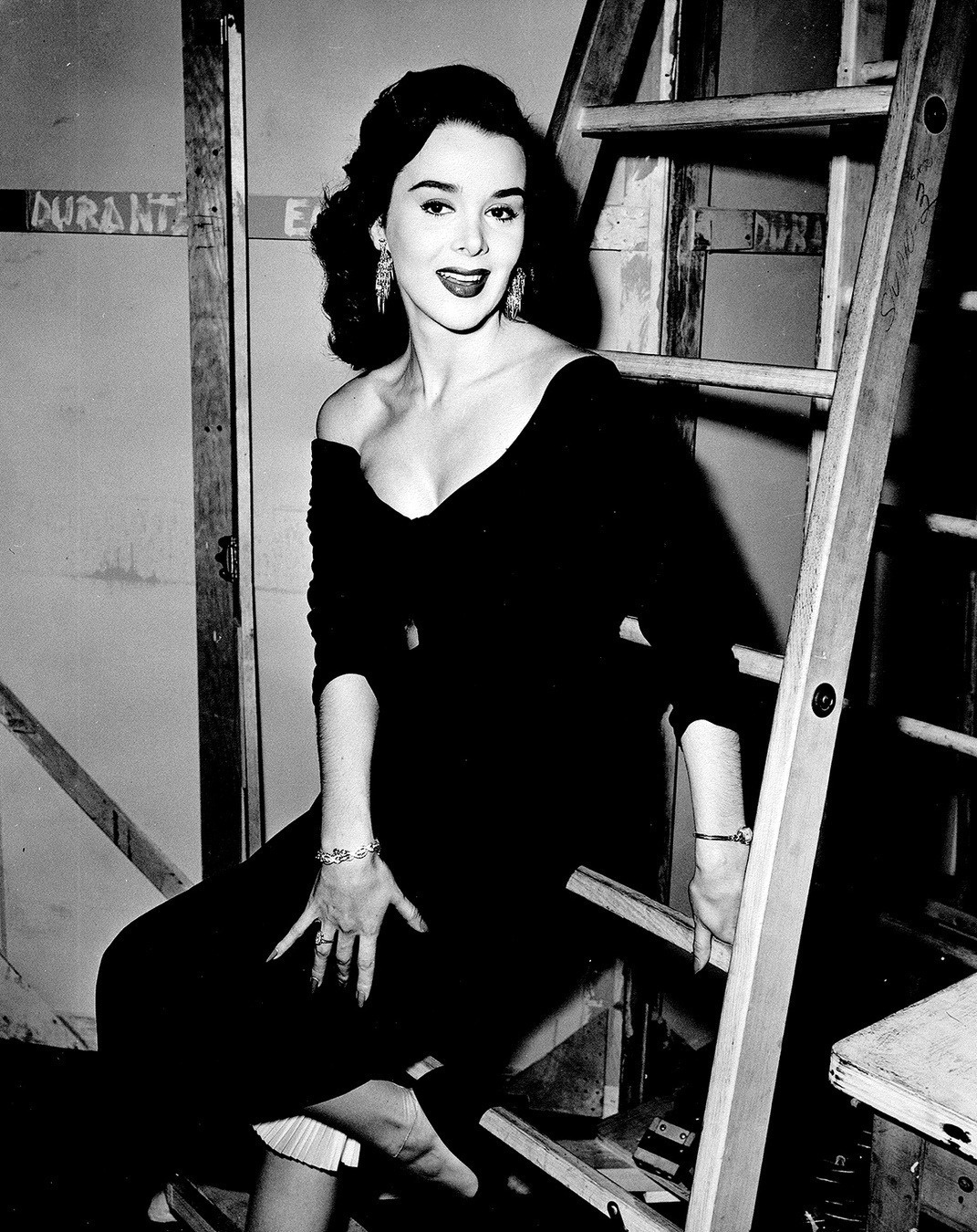
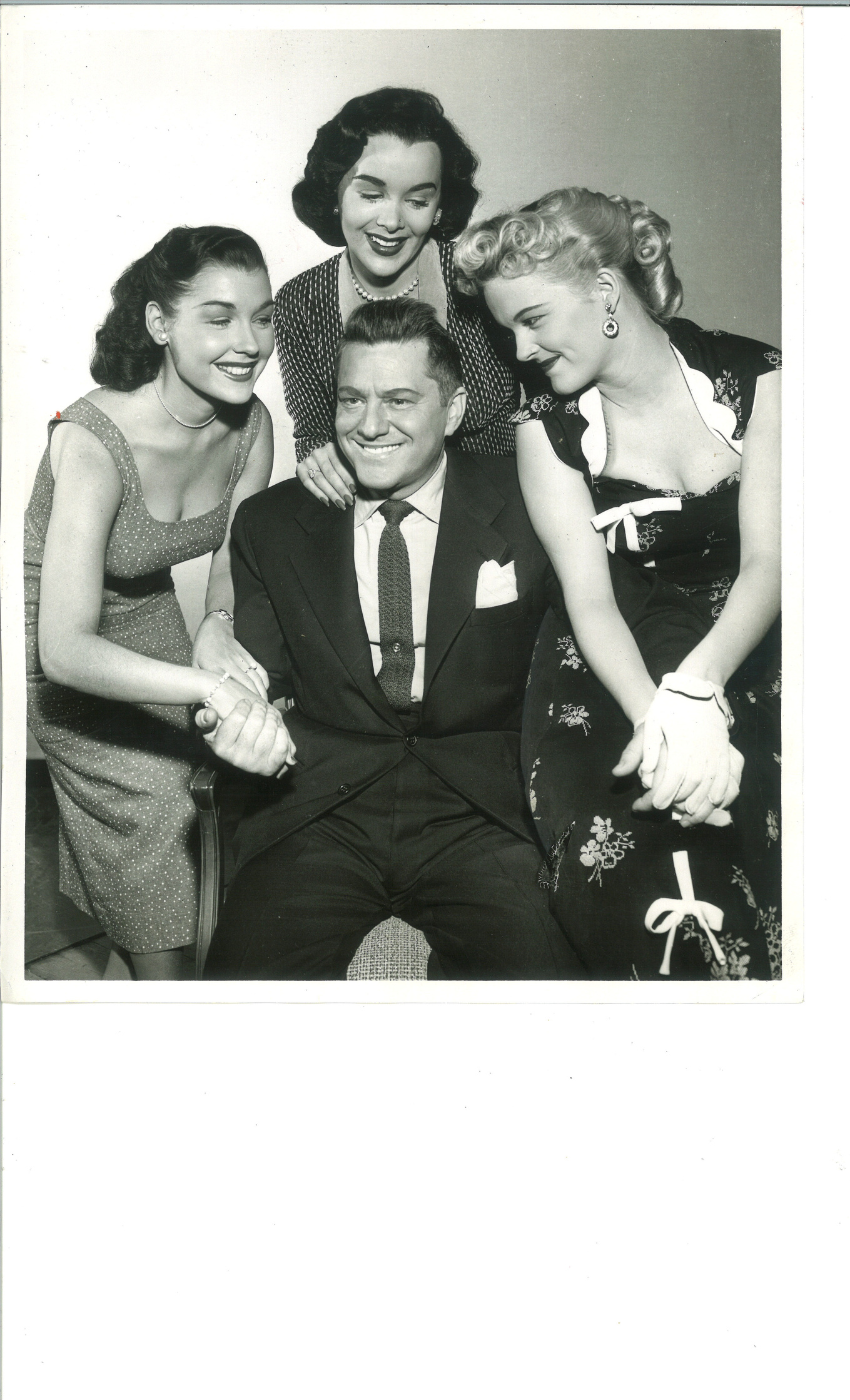
Suzanne Alexander and Linda Danson on It’ 119
s a Great Life ->
On April 9, 1955, columnist Gene Inge wrote an article on
Suzanne titled “Beauty Queen Gets Change to Go Dramatic” where he asked readers “She’s beautiful, but can she act?” It was the first nationally distributed profile on her, which she took advantage of by telling readers that she was serious about being a dramatic actress despite her modeling gigs. Although Suzanne
didn’t appear in Guys and Dolls (1955), she was chosen by Samuel Goldwyn to tour with the cast as one of the Goldwyn Girls after Pat Sheehan had left to star in Man with the Gun (1955). Suzanne traveled to countries like Australia, Brazil, Argentina, and Japan with stars Marlon Brando and Frank Sinatra. She was a guest of honor at parties, dances, and premiere, met with Presidents, and was showered with gifts. It was a year where she truly felt like a star. During the tour, she was interviewed by columnist Bob Krauss, who said
that she had “the biggest, darkest, deepest, friendliest
121
eyes you ever saw.” It was during the tour that she met actress Jann Darlyn, who would later model on Queen for a Day as well. Jann remembers Suzanne
fondly, describing her as a “sweet, but shy girl.” The tour concluded and the models returned to Hollywood on June 24, 1956, having visited 15 countries, 55 cities, and three continents. Of the experience, Suzanne
said “They [men] followed us wherever we went.”
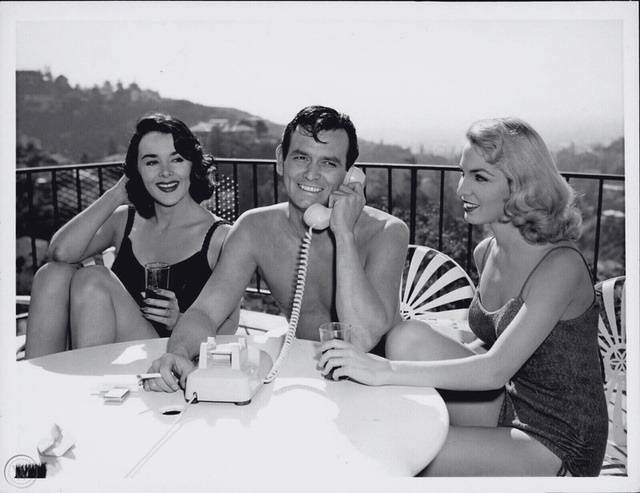
Suzanne Alexander on Richard Diamond, Private Detective - February 15, 1959
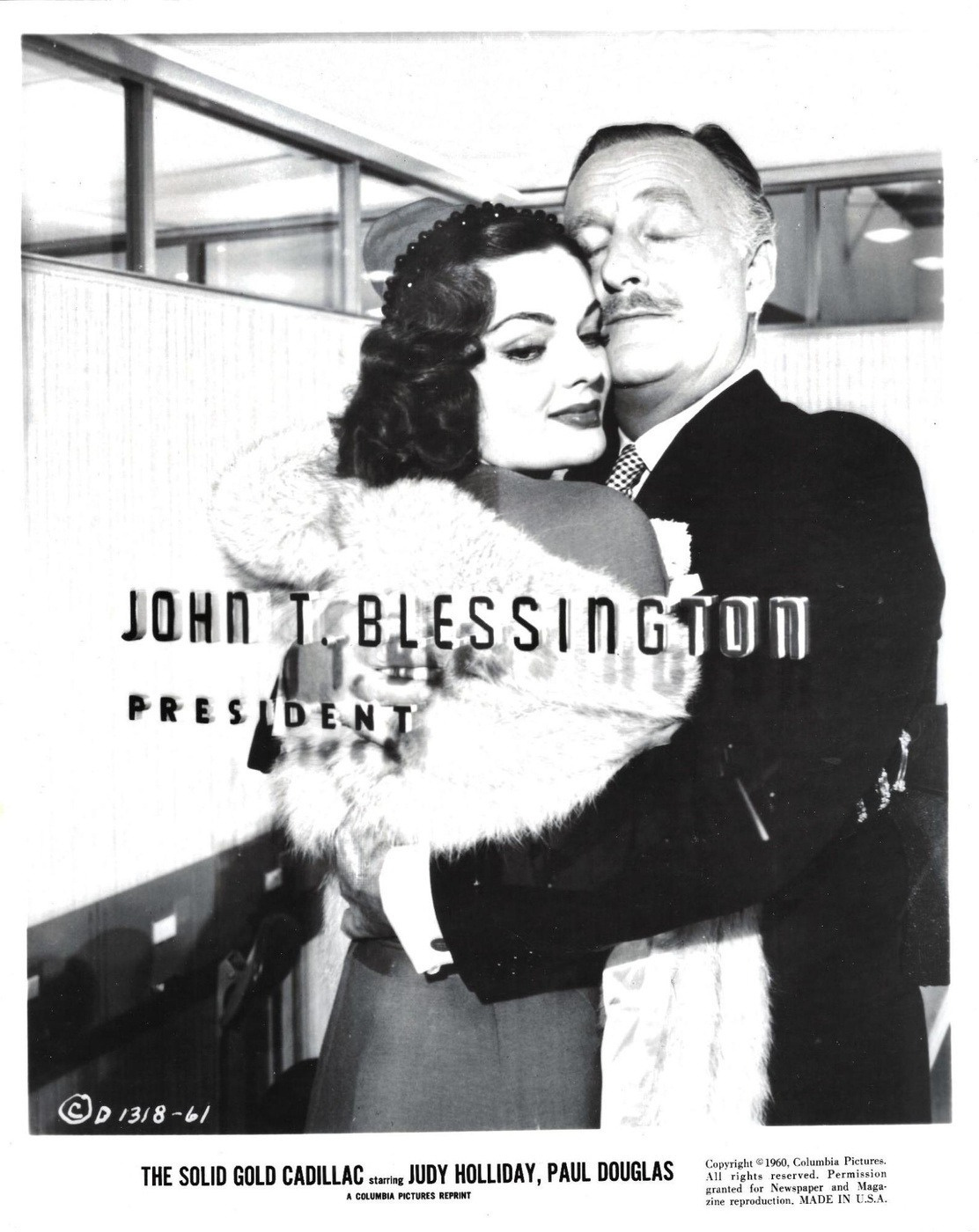
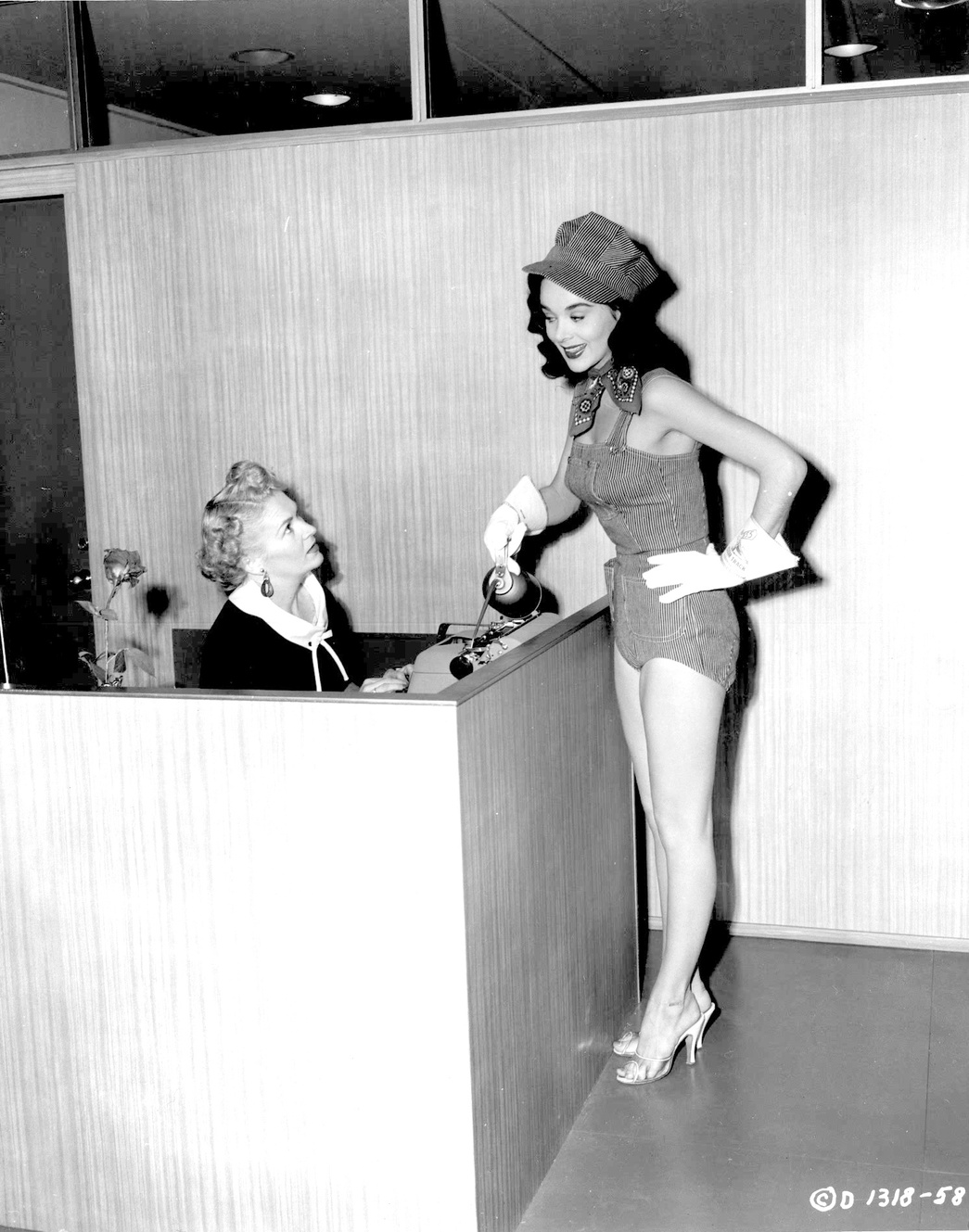
Suzanne Alexander in Solid Gold Cadillac (1956) ->
122
In what was perhaps Suzanne’s greatest opportunity -and disappointment- came when an agent saw her at a café with her mother and asked her if she would audition for Mike Todd’s Around the World in 80 Days (1956). Suzanne was one of the selected women who tested for the role -which is preserved at the Library of Congress- of Princess Aouda in 1955 after Donna Reed had rejected it, and she was the clear frontrunner. The other women who auditioned included Marla English, Jacqueline Park, Lisa Davis, Eleanor Tanen, Audrey Conti, Joan Elan, Sylvia Lewis, and Eugenia Paul. The role was then narrowed down to Suzanne and Marla, who did their final screen tests with actor David Niven on September 16, 1955.
Nobody –other than Suzanne’s mother- wanted Suzanne for the role more than the movie ’s producer Mike Todd. Suzanne first met Mike in August 1953 after founding his postproduction company Todd-AO. He had hired Suzanne that year to do screen tests for footage that he would use to present his recently developed
125
widescreen technology to studios. Although that
hadn’t done much for Suzanne’s career, Mike hoped that Around the World in 80 Days (1956) would be a win-win for both parties.
Unfortunately, the producers chose Shirley MacLaine instead, who had rejected the offer twice before reconsidering. Had Shirley -whom would acknowledge years later that she was miscast- not changed her mind in accepting the role, Suzanne
would’ve been cast as Princess Aouda. It was a major setback in Suzanne’s career, but she continued to have success on Queen for a Day -where she was earning $250 a week- and Juke Box Jury. The latter series -which she later shared hosting duties with Jean Moorhead- concluded shortly thereafter. The
rights to the series are owned by Peter Potter’s former secretary, Ann Folsom.
126
Mike Todd had promised her that he’d find parts for her as he continued producing movies, but his eventual marriage to Elizabeth Taylor followed by his premature death on March 22, 1958 in an airplane accident ended the proposal. It was another stumble in
Suzanne’s career, and it was then that she realized that success in Hollywood can change in an instant. She regretted the direction that her career had taken, and she wished that she had continued the low-budget sci- fi genre where she had her greatest onscreen success.
Although disappointed, Suzanne didn’t let this ordeal keep her from what she enjoyed doing. She continued to pursue complex, in-depth roles on television. On May 3, 1956, she appeared in Four Star
Playhouse -opposite Dick Powell- as Willie ’s intoxicated date. That same year, she appeared on The Bob Cummings Show in what was a rare comedic role for her as a catty secretary named Louise.
127
In Crossroads a year later, she starred as Celeste in
an episode titled “Anatole of the Bayous” set in New Orleans, Louisiana. She had an active role in this episode that included stopping a fight between and islander and a settler, alerting Anatole Martin -a minister- of a wicked deed that her love interest was planning to do, and helping bring peace between the islanders and the settlers. Her brother, Will, had become a recurring player in the series and had recommended his sister for a part. It was the only
role Suzanne got with her brother’s help, as both siblings swore to carve their own paths in Hollywood.
128
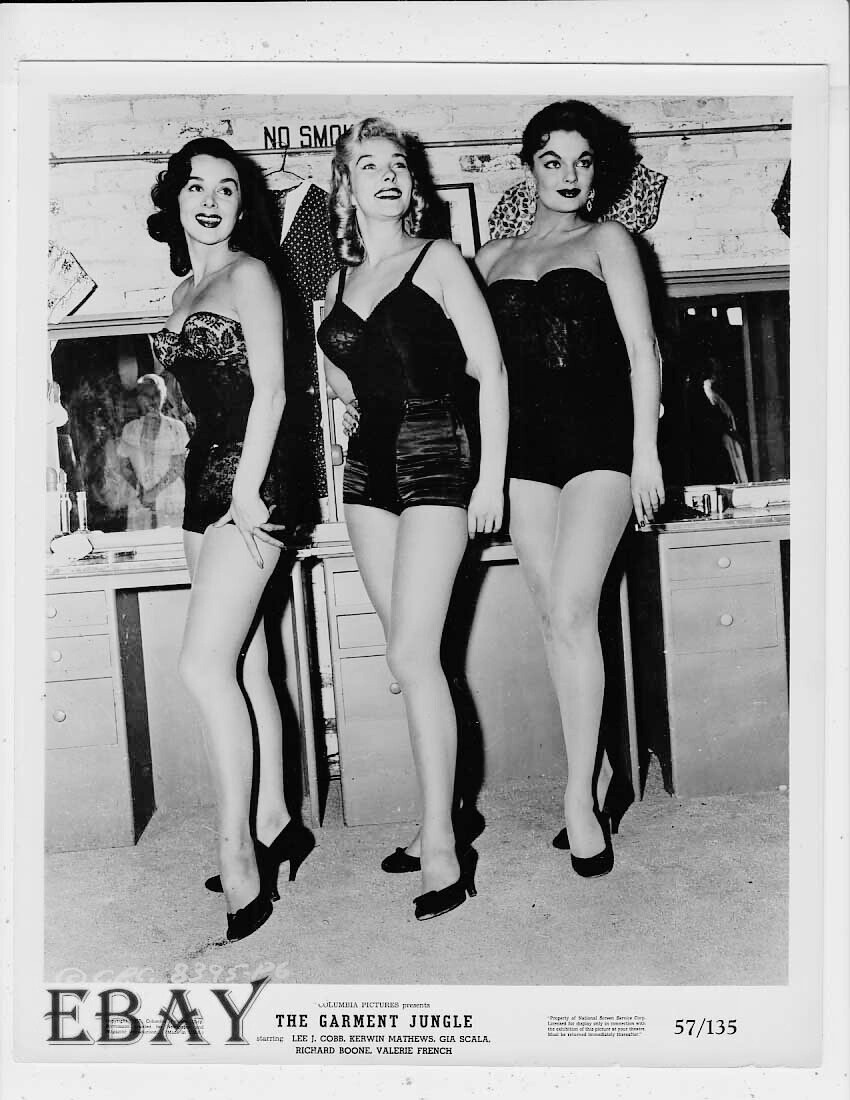
Suzanne Alexander and Kathy Marlowe in The Garment Jungle (1957) ->
Suzanne didn’t have another substantial role in movies, instead being casted in walk-on roles in Solid Gold Cadillac (1956) and I Married a Woman (1958). The
latter wasn ’t a good experience, as Suzanne was given the news about her father’s death during rehearsals. Furthermore, it was her first onscreen role in years where she had no dialogue and a lot of her brief presence onscreen was behind a camera that her
character was holding. It didn’t help that she - as well as the other gorgeous women in the cast- were upstaged by blonde bombshell Diana Dors.
She had a better experience in Solid Gold Cadillac, where the gowns she wore by Jean Louis earned the movie an Academy Award for Best Costume Design. Her role was as an unnamed model employed by the fictitious International Projects Corporation; dressed
as an unconventional -and in her words, “a happy”-engineer, her character advertises the company ’s diesel engine.
130
She played Joanne in The Garment Jungle (1957), where she was reunited with former and current colleagues June Kirby, Madelyn Darrow, Millicent Deming, and Jann Darlyn. The producer, Harry Kleiner, said that he hired Suzanne because she was
“slender, but not too slender.” Although she only had one line, she did partake in a lot of publicity for the
movie’s release which included newspaper and magazine pictorials. Sadly, her one line “That must be the boss ’ son” was so insignificant and unimportant that even her co-stars Kathy Marlowe and Marilyn Hanold have no recollection of her being in the film.
131
Suzanne Alexander on Crossroads (April 20, 1956) ->
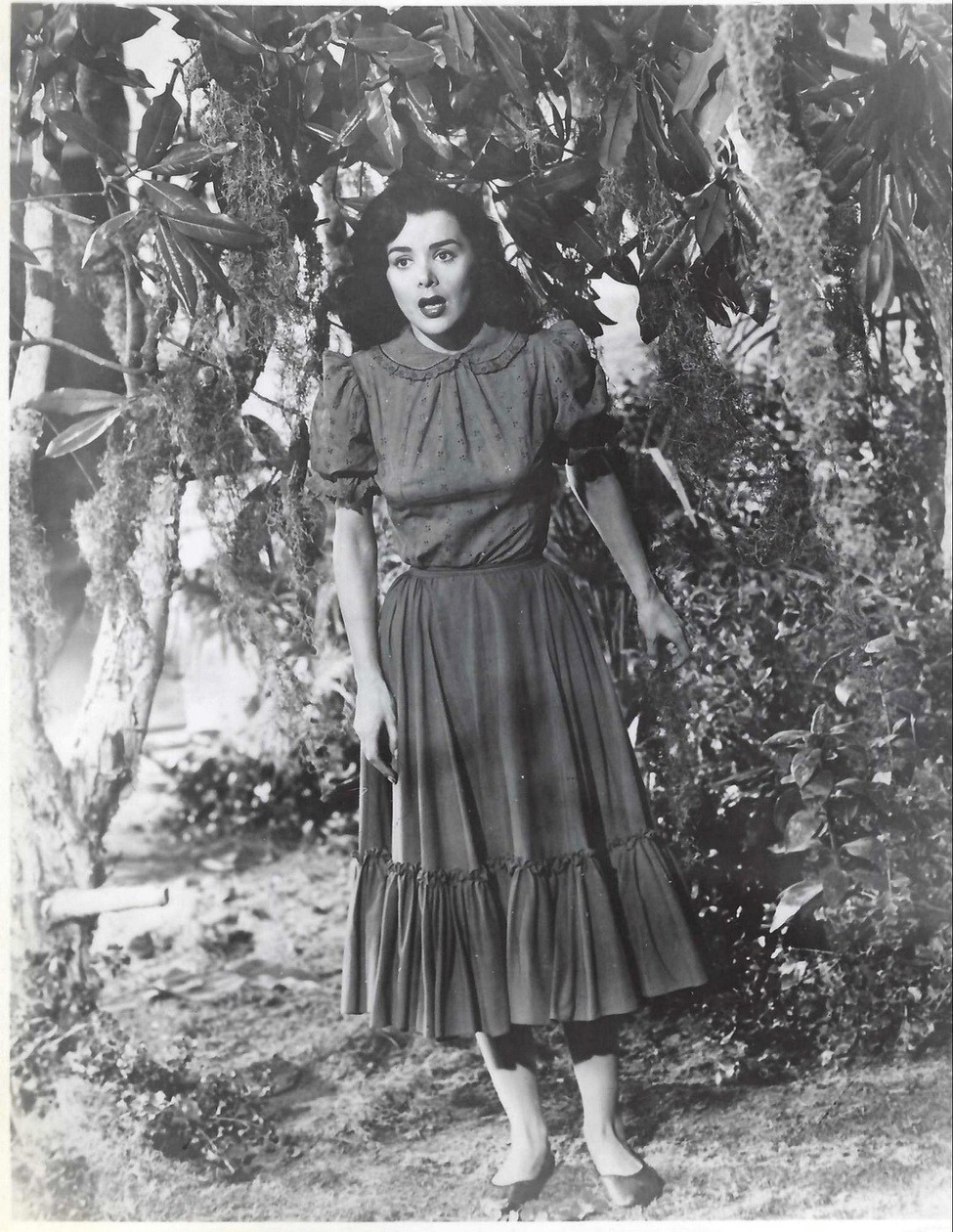
It was mid-1958 when Suzanne was offered to take part in a pilot of Steve Canyon, based on the successful comic strip by Milton Caniff. She would portray Nurse Jeets, a no-nonsense nurse who cares for wounded soldiers. Although she was meant to be a recurring character, her role was written out of the series because producers wanted scripts that focused on the characters in the original comic
strips. It wouldn’t have done much for her career anyways, as the series was cancelled after two seasons.
Although disappointed, she had a lot of additional television work that year that kept her busy. She had a role on an episode of The Loretta Young Show titled Air Stewardess where she -as Andrea Dodd- portrays the lazy, complaining, and unsympathetic roommate of an airlines stewardess. After hearing echoes of the
airplanes from the nearby airport, she says “we really outta move.” This and other television appearances of Suzanne’s are preserved at the UCLA
133
Film & Television Archive.
James Bacon did a story on her titled “TV Gal Seen, Not Heard” in 1959, which documented her career on Queen for a Day. It was a last-ditch effort -during an uneventful week in news- to revive her waning
career, with her saying “I’ve wanted to be an actress and model ever since I can remember” while giving intimate details about her life that included her habit of talking to herself before rehearsals and using a
secret “modeling formula” to mentor models. Arguably her greatest advice to actresses in this
interview was “In acting, you always have to remember that the audience has never heard the line before, and you have to deliver it so they understand
it.”
134
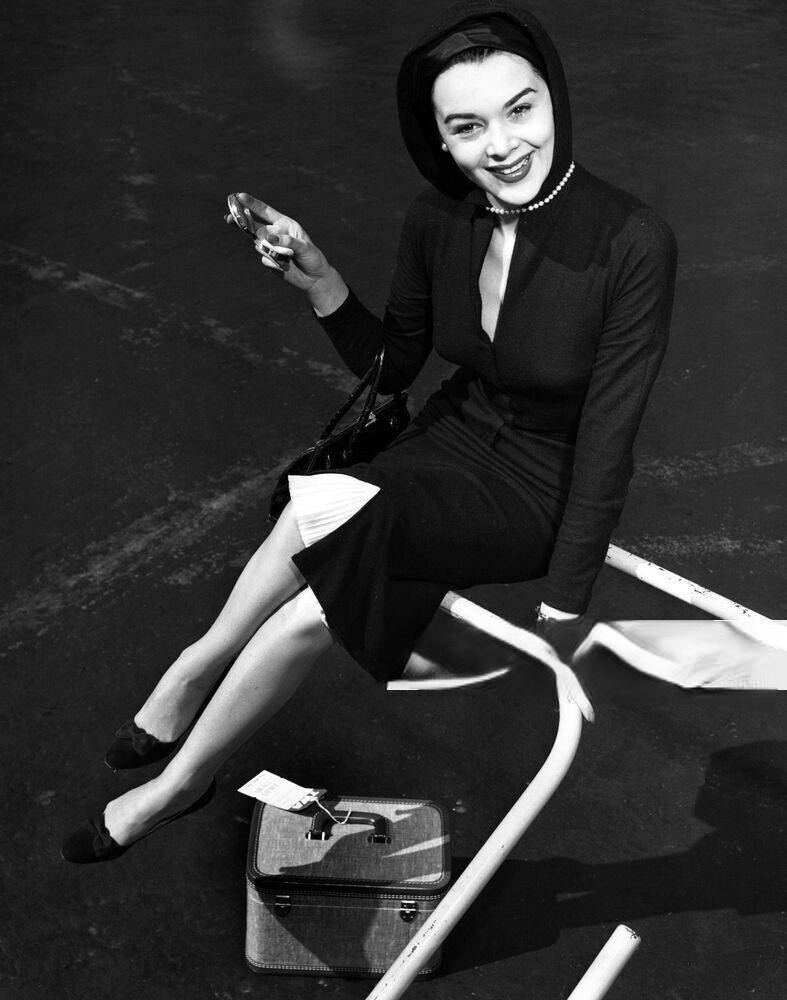
She did some modeling for a cosmetics company called Rogue and did -in what would be her last acting role onscreen for thirteen years- a guest role on Richard Diamond, Private Detective as an unnamed brunette who - along with a blonde played by Gloria Tennes- refuses to use the pool with Richard
because “girls from California don’t swim.”
Unfortunately, her career began to fade as the decade ended; with fewer acting roles being offered to her, she did an international tour for the Rose Marie Reid
Swimming Suit Company called “Swimshapes by the Ounce ” with co-star and friend Carol Silversparre. They traveled to Australia to promote the swimwear at the Reef Hotel on March 14, 1959. Marianne and Charlotte Guice were models -and twins- who participated in the three-week tour. They remembered Suzanne as being modest and unassuming. Marianne spoke about how Suzanne would do anything asked by the modeling agency, while Charlotte recalled a more troubling incident where a stewardess accidentally spilled
136
coffee on her. Suzanne did another tour with the company a year later, only it was throughout Europe. Mona Nardone, another model on this tour, remembered the models buying Rolex watches for their spouses and boyfriends while Suzanne -who was single- bought one for her brother.
As the 1960’s approached, Suzanne changed her appearance to reflect the changes of the decade. She
trimmed her hair in favor of a “bob cut” that had been made famous by Vidal Sassoon while changing her red lipstick to a shade of pink. She premiered this look in TV Guide on August 13, 1960 in the hopes that she wouldn't be left behind in the prior decade like a lot of her contemporaries were.
Additional models were hired on Queen for a Day, but none of them were as popular with audiences as Suzanne was. She had a likeable persona that people
loved. She was a headliner on Queen for a Day’s 18th anniversary on April 27, 1962 and continued to star on the series until its conclusion on October 2, 1964.
137
Suzanne married Rexford “Rex” Colbert -known as one of Hollywood’s eligible bachelors- on September 28, 1963 at the All Saints Episcopal Church in Beverly Hills, California, after being pressured by her mother to do so in the hopes that he - who was employed with Metro-Goldwyn-Mayer as an executive- could boost
Suzanne’s career. He was 17 years older than her though, and they barely knew each other. Suzanne approached her mother on the day of her wedding,
saying “I don’t wanna do this.” Her mother replied, “We’ve already paid for it. You’re wearing the dress. It ’s going to happen.” She was giving Suzanne her freedom, but in Suzanne’s eyes, her mother was abandoning her.
Their marriage was short-lived, and they divorced in
May 1966. It certainly didn’t boost Suzanne’s career either, as her husband wanted her to abandon her career in lieu of a traditional life as a wife and mother. Suzanne -and her mother of course-resented the idea, which contributed to their eventual divorce. Rex never remarried, and became
138
eventual divorce. Rex never remarried, and became a hotelier and restaurateur in Southern California. He died on April 2, 2002 in Los Angeles, California.
"I’ m surprised that her mother [Gwendolyn] would let
her marry Rex. She was so controlling of Suzanne.
She must’ve had a lot of faith that he could boost
Suzanne’ s career.” – Jolene Brand in 2021
She decided to reevaluate her career as an actress, and took courses in design. She secured employment with an apparel company where she designed outerwear. She continued to do modeling though, and made her last appearance onscreen on an episode of
Mod Squad titled “The Wild Weekend” as a saleslady in a flashback that Pete and Sally were having. Although she had a mere four lines, she looked
fantastic; with her “Manhattan Rose” lipstick, only Suzanne could make a cameo look glamourous. In a
decade where a lot of her colleagues “aged out” of the industry, Suzanne had continued to pursue her dream.
139
While Suzanne was chasing the fading dream, her brother Will had become a successful character actor. He appeared on The Good Life, Ironside, Bonanza, and Perry Mason. He usually portrayed guards, officers, detectives, reporters, and sailors. Although he had offered to help Suzanne, she always refused as she was determined to maintain her independence. Will
married Elaine Devry, an actress and Mickey Rooney’s ex-wife who had respectable roles in The Atomic Kid (1954) and China Doll (1958) before establishing herself as a character actress. They eventually retired from the industry and lived in Grants Pass, Oregon far from Hollywood. Will died on April 23, 1992 in Grants Pass, Oregon.
“She was a sweet girl who had a very tragic ending.”
– Elaine Devry in 2021
140
Suzanne always wanted a sister, which is what she found in Elaine Devry. They had a lot in common; they
were gorgeous actresses, both were born in the 1930’s, and they were against using nepotism, seminude modeling, and dating to further their careers. They were very close, and it was good for Suzanne to have another role-model besides her mother. In addition, Suzanne was impressed that Elaine was willing to forfeit her alimony with Mickey Rooney in order to marry Will. It showed dedication and love, and Suzanne was glad that her brother whom she was close with had somebody like that in his life.
As the 1970’s progressed, so did Suzanne’s troubles. In an era where most models were forcibly retired after
reaching their 30’s, Suzanne struggled trying to act and model in her 40’s, facing mounting financial woes and the sorrow of being phased out of an industry that she had known for decades. She fell into a depression, unwilling to seek treatment for fear of the stigma that she felt she would endure. She spent her days in a modest apartment in Los Angeles,
141
California waiting by the telephone for anything offered to her.
“She was more than a co-worker though. She was a
friend. She was the bridesmaid at my wedding. I even
named my daughter after her … I think that the reason
her acting career didn ’t launch was because she
didn’t like it enough. She always said that she loved
acting, but that was just her trying to please her
mother.” – Carol Silversparre in 2021
142
On September 21, 1975, Suzanne arrived at the Sheraton Palace Hotel in San Francisco, California for a convention. She was there to model coats that she designed for an apparel company who was showcasing at the San Francisco International Antique Show. In a frantic state, she locked herself in her third-floor room and leaped to her death. There was no note left, and people were in disbelief. Her mother collapsed after hearing the news, and her co-
workers didn’t Suzanne Alexander on Mod Squad -February 15, 1972 notice any signs of distress beforehand. Some of her friends believed that her suicide was cocaine-induced while others suspected that she was murdered.
Suzanne was interred at Forest Lawn Memorial Park
“Hollywood Hills” in Los Angeles, California. Her mother - who blamed herself for her daughter’s death- would be buried next to her two years later.
Suzanne’s funeral was attended by her family, friends,, and co-stars.. The San Francisco Examiner
143
and the San Francisco Chronicle published obituaries
for her that didn’t do her justice. Although there was confusion and disputes about her reasons for having committed suicide, people who knew her agreed that earth lost an incredible star that day and an even better person. She was a kind, sincere, and humble woman who was more talented than anyone would ever know.
144