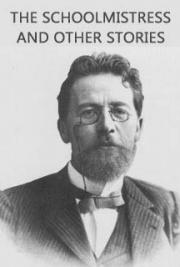
Anton Pavlovich Chekhov (1860 ndash; 1904) was a Russian short-story writer, playwright and physician, considered to be one of the greatest short-story writers in world literature. His career as a dramatist produced four classics and his best short stories are held in high esteem by writers and critics Chekhov practised as a doctor throughout most of his literary career: "Medicine is my lawful wife," he once said, "and literature is my mistress." Chekhov renounced the theatre after the disastrous reception of The Seagull in 1896; but the play was revived to acclaim in 1898 by Constantin Stanislavski's Moscow Art Theatre, which subsequently also produced Uncle Vanya and premiered Chekhov's last two plays, Three Sisters and The Cherry Orchard. These four works present a special challenge to ...
The technique of "close reading" was created by critics such as F.R. Leavis and Cleanth Brooks, and it's not a coincidence that it came to the fore in the wake of High Modernism. If one didn't engage in "close reading" of authors such as James Joyce, Virginia Woolf, or William Faulkner, one couldn't read them at all. Old techniques such as reading for the plot result in one getting to the bottom o...
In Ion, Plato presents a dialogue between his influential teacher Socrates and a distinguished rhapsode, Ion. While Socrates considers himself “a common man who only speak the truth” (47), Ion is proud and boastful, regarding himself as a rhapsode who can “speak about Homer better than any man” (47). The primary issues between these two contradictory characters’ are the difference betwee...
This is an HTML version of the ebook and may not be properly formatted. Please view the PDF version for the original work.
An excerpt is a selected passage of a larger piece, hence this is not the complete book.
HTML Format is ideal for: Immediate preview in any browser, Translations
PDF Format is ideal for: PC's & Macs, iPhone, and Printing
The ePub format is ideal for the Sony Reader, Barnes & Noble Nook, BeBook, Bookeen, COOL-ER, Hanlin eReader, Hanvon and many other ebook readers
Note: For VIP Members Only.
Mobipocket Format is ideal for: Amazon Kindle, Mobile Phones, Blackberry, Palm, IRex, ILiad, Hanlin, BeBook and other mobile devices
Note: For VIP Members Only.
The Text (TXT) format is the simplest format and can be read in any word processor. Plus it is printable.
Standard Members enjoy free HTML views and5 PDF/TXTaccesses per month. For Unlimited Access, please upgrade.
Comments for "The schoolmistress and other stories"
A Haunted House
By: Virginia Woolf.
The technique of "close reading" was created by critics such as F.R. Leavis and Cleanth Brooks, and it's not a coincidence that it came to the fore in the wake of High Modernism. If one didn't engage in "close reading" of authors such as James Joyce, Virginia Woolf, or William Faulkner, one couldn't read them at all. Old techniques such as reading for the plot result in one getting to the bottom o...
Ion
By: Plato.
In Ion, Plato presents a dialogue between his influential teacher Socrates and a distinguished rhapsode, Ion. While Socrates considers himself “a common man who only speak the truth” (47), Ion is proud and boastful, regarding himself as a rhapsode who can “speak about Homer better than any man” (47). The primary issues between these two contradictory characters’ are the difference betwee...