

Sophist
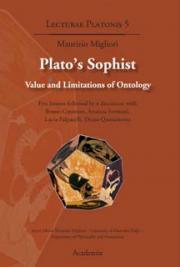
Sophist is a free 173-page philosophy (academic) ebook by Plato., published Mar 2012. It is free to download in PDF, ePub, and Kindle formats — no payment required. Downloaded 543 times.

 Add to Library
Book Description HTML
The Sophist (Greek: Σοφιστής) is a Platonic dialogue from the philosopher's late period, most likely written in 360 BC. Having criticized his Theory of Forms in the Parmenides, Plato presents a new conception of the forms in the Sophist more mundane and down-to-earth than its predecessor. The dialogue clarifies the epistemological and metaphysical puzzles of the Parmenides; thus, Plato refers to that text - a dialogue between Parmenides and young Socrates, which was written probably much earlier than the Sophist. Furthermore, he shows his expertise in dialectic, as he applies it in this dialogue in order to define the sophist. Moreover, he solves the puzzle of the false and the right opinion, as well as of the justified true belief that had been inquired in the Theaetetus. In addit...
Last updated: March 10, 2012
Reader Reviews

Other books by author...
-
Lysis or friendship Philosophy (Academic) by Plato.Lysis or friendship
Reads:
598Pages:
40Published:
Mar 2012Lysis is a dialogue of Plato which discusses the nature of friendship. It is generally classified as an early dialogue. The main characters are Socrates, the...
Formats: PDF, Epub, Kindle, TXT
-
Laches of Courage Philosophy (Academic) by Plato.Laches of Courage
Reads:
561Pages:
44Published:
Mar 2012The Laches is a Socratic dialogue written by Plato. Participants in the discourse present competing definitions of the concept of courage.
Formats: PDF, Epub, Kindle, TXT
-

Ion Philosophy (Academic) by Plato.Ion
Reads:
510Pages:
26Published:
Mar 2012In Ion, Plato presents a dialogue between his influential teacher Socrates and a distinguished rhapsode, Ion. While Socrates considers himself “a common man w...
Formats: PDF, Epub, Kindle, TXT
-
Statesman Philosophy (Academic) by Plato.Statesman
Reads:
474Pages:
141Published:
Mar 2012The Statesman (Greek: Πολιτικός, Politikos), also known by its Latin title, Politicus, is a Socratic dialogue written by Plato. The text describes a conversat...
Formats: PDF, Epub, Kindle, TXT