

Menexenus
Menexenus is a free 27-page philosophy (academic) ebook by Plato., published Mar 2012. It is free to download in PDF, ePub, and Kindle formats — no payment required. Downloaded 373 times.

 Add to Library
Book Description HTML
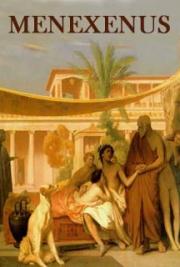
The Menexenus is a Socratic dialogue of Plato, traditionally included in the seventh tetralogy along with the Greater and Lesser Hippias and the Ion. The characters are Socrates and Menexenus, who is not to be confused with Socrates\' son Menexenus. The Menexenus of Plato\'s dialogue appears also in his Lysis and the Phaedo. In the Lysis, he is identified as the "son of Demophon" (207b).\r\nThe Menexenus consists mainly of a lengthy funeral oration, satirizing the one given by Pericles in Thucydides\' account of the Peloponnesian War. In this way the Menexenus is unique among the Platonic dialogues, in that the actual \'dialogue\' serves primarily as exposition for the oration. For this reason, perhaps, the Menexenus has come under some suspicion of illegitimacy.\r\nPerhaps the most inter...
Last updated: March 10, 2012
Reader Reviews

Other books by author...
-
Lysis or friendship Philosophy (Academic) by Plato.Lysis or friendship
Reads:
598Pages:
40Published:
Mar 2012Lysis is a dialogue of Plato which discusses the nature of friendship. It is generally classified as an early dialogue. The main characters are Socrates, the...
Formats: PDF, Epub, Kindle, TXT
-
Laches of Courage Philosophy (Academic) by Plato.Laches of Courage
Reads:
561Pages:
44Published:
Mar 2012The Laches is a Socratic dialogue written by Plato. Participants in the discourse present competing definitions of the concept of courage.
Formats: PDF, Epub, Kindle, TXT
-
Ion Philosophy (Academic) by Plato.Ion
Reads:
510Pages:
26Published:
Mar 2012In Ion, Plato presents a dialogue between his influential teacher Socrates and a distinguished rhapsode, Ion. While Socrates considers himself “a common man w...
Formats: PDF, Epub, Kindle, TXT
-
Statesman Philosophy (Academic) by Plato.Statesman
Reads:
474Pages:
141Published:
Mar 2012The Statesman (Greek: Πολιτικός, Politikos), also known by its Latin title, Politicus, is a Socratic dialogue written by Plato. The text describes a conversat...
Formats: PDF, Epub, Kindle, TXT