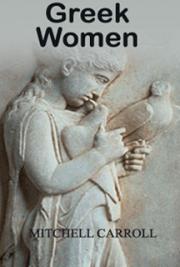
Their father controlled them before they were married
Their spouse controlled them once they were married
What did girls do?
They learnt to read- in school or at home
They learnt important household skills-spinning, weaving, sewing, cooking and other household jobs
Learnt simple facts on mythology, religion and occasionally musical instruments
Spent most of their time in her household with other women- only leaving the house to perform religious duties
What about marriage?
Girls got married in their teens, often to a man in his 30's
After a woman got married, she and her husband would give offerings to the god's and share a cake with her husband
Her father would chose her husband- for mos...
Their father controlled them before they were married
Their spouse controlled them once they were married
What did girls do?
They learnt to read- in school or at home
They learnt important household skills-spinning, weaving, sewing, cooking and other household jobs
Learnt simple facts on mythology, religion and occasionally musical instruments
Spent most of their time in her household with other women- only leaving the house to perform religious duties
What about marriage?
Girls got married in their teens, often to a man in his 30's
After a woman got married, she and her husband would give offerings to the god's and share a cake with her husband
Her father would chose her husband- for mos...
Freeborn women in ancient Rome were citizens (cives),[2] but could not vote or hold political office.[3] Because of their limited public role, women are named less frequently than men by Roman historians. But while Roman women held no direct political power, those from wealthy or powerful families could and did exert influence through private negotiations.[4] Exceptional women who left an undeniab...
The author sets before the reader a lifelike picture of the deities of classical times as they were conceived and worshipped by the ancients themselves, and thereby to awaken in the minds of young students a desire to become more intimately acquainted with the noble productions of classical antiquity. The aim was to render the legends, which form the second portion of this work, a picture of old G...
This is an HTML version of the ebook and may not be properly formatted. Please view the PDF version for the original work.
An excerpt is a selected passage of a larger piece, hence this is not the complete book.
HTML Format is ideal for: Immediate preview in any browser, Translations
PDF Format is ideal for: PC's & Macs, iPhone, and Printing
The ePub format is ideal for the Sony Reader, Barnes & Noble Nook, BeBook, Bookeen, COOL-ER, Hanlin eReader, Hanvon and many other ebook readers
Note: For VIP Members Only.
Mobipocket Format is ideal for: Amazon Kindle, Mobile Phones, Blackberry, Palm, IRex, ILiad, Hanlin, BeBook and other mobile devices
Note: For VIP Members Only.
The Text (TXT) format is the simplest format and can be read in any word processor. Plus it is printable.
Standard Members enjoy free HTML views and5 PDF/TXTaccesses per month. For Unlimited Access, please upgrade.
Comments for "Greek Women"
Women in Rome
By: Alfred Brittain
Freeborn women in ancient Rome were citizens (cives),[2] but could not vote or hold political office.[3] Because of their limited public role, women are named less frequently than men by Roman historians. But while Roman women held no direct political power, those from wealthy or powerful families could and did exert influence through private negotiations.[4] Exceptional women who left an undeniab...
The myths and legends of Ancient Greece
By: E. M. Berens
The author sets before the reader a lifelike picture of the deities of classical times as they were conceived and worshipped by the ancients themselves, and thereby to awaken in the minds of young students a desire to become more intimately acquainted with the noble productions of classical antiquity. The aim was to render the legends, which form the second portion of this work, a picture of old G...