

Philosophy (Academic) Books
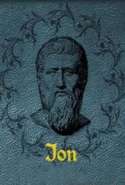
Ion
In Ion, Plato presents a dialogue between his influential teacher Socrates and a distinguished rhapsode, Ion. While Socrates considers himself “a common man who only speak the truth” (47), Ion is proud and boastful, regarding himself as a rhapsode who can “speak about Homer better than any...
Statesman
The Statesman (Greek: Πολιτικός, Politikos), also known by its Latin title, Politicus, is a Socratic dialogue written by Plato. The text describes a conversation among Socrates, the mathematician Theodorus, another person named Socrates (referred to as "Young Socrates"), and an unnamed...
The Meno
Meno (Ancient Greek: Μένων) is a Socratic dialogue written by Plato. It attempts to determine the definition of virtue, or arete, meaning virtue in general, rather than particular virtues, such as justice or temperance. The first part of the work is written in the Socratic dialectical style...
The Gorgias
Gorgias is a Socratic dialogue written by Plato around 380 BC. In this dialogue, Socrates seeks the true definition of rhetoric, attempting to pinpoint the essence of rhetoric and unveil the flaws of the sophistic oratory popular in Athens at this time. The art of persuasion was widely considered...
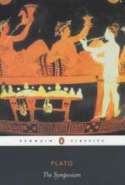
Symposium
The Symposium (Ancient Greek: Συμπόσιον) is a philosophical text by Plato dated c. 385–380 BC.[1] It concerns itself at one level with the genesis, purpose and nature of love, and (in later day interpretations) is the origin of the concept of Platonic love. Love is examined in a...
Sophist
The Sophist (Greek: Σοφιστής) is a Platonic dialogue from the philosopher's late period, most likely written in 360 BC. Having criticized his Theory of Forms in the Parmenides, Plato presents a new conception of the forms in the Sophist more mundane and down-to-earth than its predecessor...
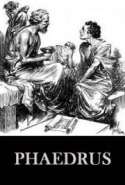
Phaedrus
The Phaedrus (Greek: Φαῖδρος), written by Plato, is a dialogue between Plato's main protagonist, Socrates, and Phaedrus, an interlocutor in several dialogues. The Phaedrus was presumably composed around 370 BC, around the same time as Plato's Republic and Symposium. Although ostensibly...
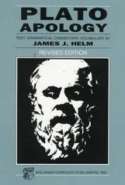
Apology
The Apology is Plato's version of the speech given by Socrates as he unsuccessfully defended himself in 399 BC[1] against the charges of "corrupting the young, and by not believing in the gods in whom the city believes, but in other daimonia that are novel" (24b). "Apology" here has its earlier...
Euthyphro
Euthyphro (Ancient Greek: Εὐθύφρων, "Euthuphron": right-minded or sincere;[1] English pronunciation: /ˈjuːθɪfroʊ/) is one of Plato's early dialogues, dated to after 399 BC. Taking place during the weeks leading up to Socrates' trial, the dialogue features Socrates and Euthyphro, a...
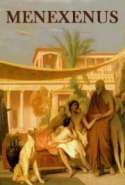
Menexenus
The Menexenus is a Socratic dialogue of Plato, traditionally included in the seventh tetralogy along with the Greater and Lesser Hippias and the Ion. The characters are Socrates and Menexenus, who is not to be confused with Socrates\' son Menexenus. The Menexenus of Plato\'s dialogue appears also...